
REVIEW · CYCLING AND E-BIKE TOURS
Okunoshima Rabbit Island Cycling Tour with Local Guide
One quiet ride, then a startling history. Okunoshima Rabbit Island mixes wild rabbits with wartime ruins on a small cycling loop in Hiroshima’s Seto Inland Sea. You get the pretty island moments and the serious context that most people miss.
What I like is the way the tour keeps both threads in balance, rabbits first, but never only rabbits. I also like that your local guide, Junko, has a warm, patient teaching style and clearly cares about helping you understand what happened here. That combo makes this more than a cute detour.
One consideration: several major sites on the route are view-only because entry is prohibited. You will still get the sights, but you should expect short looks from a distance rather than a long, hands-on visit.
In This Review
- Key things to know before you go
- Two themes, one island: why Okunoshima feels unforgettable
- The cycling format: why two hours works so well
- Stop-by-stop: lighthouse, rabbits, and wartime ruins
- Stop 1: Okunoshima Lighthouse (view-only)
- Stop 2: Okunoshima Island (the heart of the experience)
- Stop 3: Okuno Shrine (rabbits in a sacred setting)
- Stop 4: Nagaura Poison Gas Storage Ruins (another view-only stop)
- Stop 5: Power Plant Ruins (view-only, but meaningful)
- Stop 6: Northern Cannon Battery Remnants (closest look of the bunch)
- The rabbits part: what you should expect in real life
- Price and value: $59.12, and what that covers
- Logistics that actually matter on an island day
- Who should book this cycling tour, and who might not
- Should you book the Okunoshima Rabbit Island cycling tour?
- FAQ
- How long is the Okunoshima Rabbit Island Cycling Tour?
- What does the tour cost, and what is included?
- Is the ferry included in the price?
- What is the meeting point for the tour?
- Is this a private tour?
- What happens if it rains?
- Do I need a certain fitness level?
Key things to know before you go
- Wild rabbits on a cycling route, including a shrine area where rabbits are part of daily life
- Junko as a local guide, with a strong focus on explaining the island’s wartime past
- View-only stops at key poison-gas related ruins and the lighthouse area
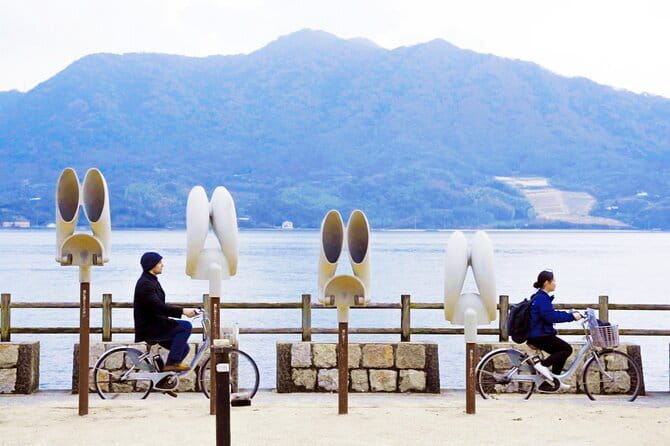
- A compact island loop (Okunoshima is about 4 km around), perfect for a 2 hour ride
- Small group size, maximum 5 people, which usually keeps questions flowing
- Value math works, because biking, fees, taxes, and travel insurance are included
Cover Hiroshima on two wheels instead
- Hiroshima 2hr Peace Cycling Tour with Local Guide
★ 5.0 · 321 reviews - Hiroshima: Peace Cycling Tour with Local Guide
★ 4.8 · 286 reviews - Hiroshima 3hr Peace Cycling Tour with Local Guide
★ 5.0 · 131 reviews - Hiroshima: Best of Hiroshima Guided Bike Tour
★ 4.9 · 89 reviews
Two themes, one island: why Okunoshima feels unforgettable

Okunoshima, in the warm waters of the Seto Inland Sea, is famous for a reason that sounds almost too charming. Hundreds of wild rabbits live here, and they often appear in the places you expect to slow down and take in the view. The island feels calm in motion, like a break from the city pace.
Then the tour turns the page. Okunoshima was once removed from maps due to its wartime history, and the cycling route walks you toward remnants tied to that darker chapter. It is an unusual travel pairing: healing-looking nature moments, followed by reminders of what was hidden and why.
I like that the experience does not force a choice between cuteness and seriousness. You can enjoy the rabbits, then learn the context without it feeling like a lecture you have to endure. If you want a day that mixes emotion with facts, this hits the mark.
The cycling format: why two hours works so well
This is a shared group tour, paced for a smooth half-day feel even though it is only about 2 hours. The ride is not about distance bragging. It is about being in the right places, at the right speed, to see rabbits and key sites without burning your whole day.
The bicycle is included, so you do not have to rent one on the spot. You also get an easy ticket setup, since the tour uses a mobile ticket. That matters because small logistics reduce stress when you are already dealing with ferry timing to reach the island.
Group size is small, up to 5 people. For me, that is a sweet spot. You are not getting swallowed by a large crowd, and you can ask questions when something strikes you. Based on the feedback tied to Junko, the tour’s teaching style also works well when there is space for dialogue.
One practical note: you should have moderate physical fitness. The island is small, but you are still cycling, stopping, and walking short distances between points.
Stop-by-stop: lighthouse, rabbits, and wartime ruins

This tour is built around a sequence of six stops. Each one has a job to do: set the scene, show the everyday rabbit presence, then bring you toward the wartime remnants.
- Hiroshima in a Nutshell: Morning Bike Adventure★ 5.0 · 524 reviews
- Hiroshima City 4hr Private Walking Tour with Licensed Guide★ 5.0 · 437 reviews
- From Hiroshima: Hiroshima & Miyajima 1 Day Tour with Lunch★ 4.7 · 395 reviews
- Japanesel Archery Experience HIROSHIMA CASTLE SHARAKU★ 5.0 · 387 reviews
- Hiroshima and Miyajima Day Trip with Itsukushima Shrine & Ferry★ 5.0 · 378 reviews
Stop 1: Okunoshima Lighthouse (view-only)
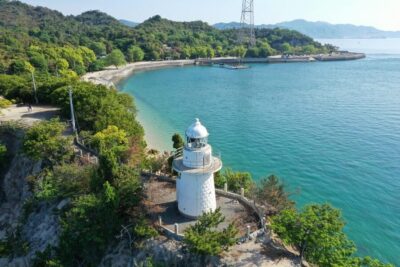
You start at Okunoshima Lighthouse, and you will view it from a short distance because entry is prohibited. That is a bit of a letdown if you came expecting to get close, but it also keeps the tour moving. You get the visual landmark and the surrounding scenery without turning the stop into a long detour.
If you hate waiting around, this kind of quick, view-focused start is actually a plus. If you love getting right up to structures, temper expectations here.
Stop 2: Okunoshima Island (the heart of the experience)
Next comes the long stretch, about 1 hour on Okunoshima Island itself. This is the portion where you feel the island’s scale and where the rabbit factor really becomes real.
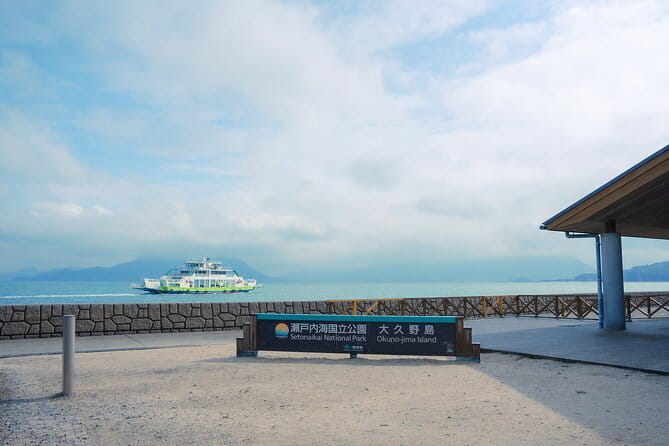
You also get the basic geography: Okunoshima is a small island with a circumference of about 4 km, a little west of the Shimanami Kaido, in the Seto Inland Sea National Park area. Even if you are not a map person, you will feel how compact it is. That compactness is exactly why cycling works here.
This hour is also where the story shifts from postcard to place with meaning. You are moving through quiet areas where rabbits are part of daily life, while the guide explains why the island’s past was so hard to surface.
Stop 3: Okuno Shrine (rabbits in a sacred setting)
Stop three is Okuno Shrine, the only shrine on the island, and it is now also home to rabbits. Expect a short visit, about 10 minutes, but with a memorable contrast: shrine space with wild rabbits sharing the area.
For me, this is one of the stops that makes the island feel real. Rabbits are not just a “sight” here. They are integrated into how people experience the place, including in spiritual space.
If you are the kind of person who likes quiet photo moments, arrive ready to slow down. The shrine stop is short, but it can leave a bigger impression than its time suggests.
Stop 4: Nagaura Poison Gas Storage Ruins (another view-only stop)
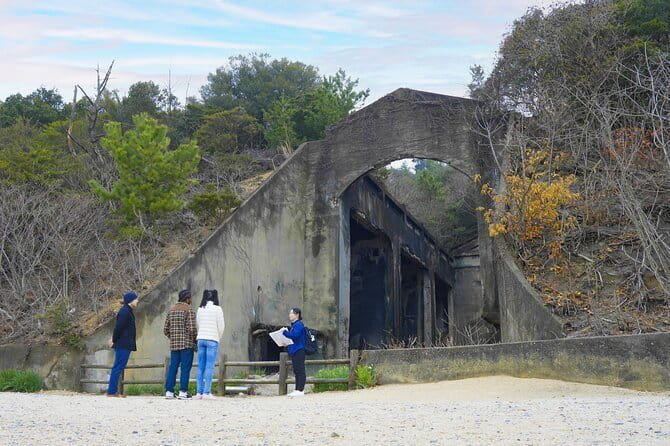
Then you head to Nagaura Poison Gas Storage Ruins. This used to be a storage facility for tanks filled with poison gas. For safety reasons, entry is prohibited, so you view it from a short distance.
This is one of those stops where the tour’s value is the context the guide provides. You are not “touristing” a ruin. You are learning what it was used for and why the island’s map history matters.
If you are sensitive to heavy topics, this is the part you might feel most strongly. It is also the part that makes the rabbits more complicated, because you start to understand why the island’s peaceful present sits above a buried past.
Stop 5: Power Plant Ruins (view-only, but meaningful)
Stop five is the Power Plant Ruins, used when poison gas was secretly made here. Again, entry is prohibited for safety reasons, and you view from a short distance.
What I appreciate here is that it connects dots. Even without stepping onto restricted areas, the guide explains why this place existed, and how the island’s wartime function linked to the rest of the ruins you are seeing.
From a pacing standpoint, the short viewing window keeps the tour from dragging. From an emotional standpoint, it helps you build understanding without overwhelming you with time trapped in one heavy site.
Stop 6: Northern Cannon Battery Remnants (closest look of the bunch)
Finally, you reach the Northern Cannon Battery Remnants. This time you can see it closely, and it gets about 15 minutes. Compared to the view-only stops, this one gives you a more direct physical sense of what remains.
It is a strong ending. By the time you get here, you are already primed by the earlier history stops, and you can focus on how the ruins look and what they imply about the island’s role.
The rabbits part: what you should expect in real life

The headline for this tour is rabbits, and it earns its reputation. The island’s rabbit population is part of what makes Okunoshima feel like a place where you can breathe out. They appear in and around the places you stop, including the shrine area.
Based on the standout feedback about Junko, the tour also does something important with the rabbit theme. It treats the rabbits as part of the island’s living present, while still respecting that Okunoshima is not just a cute animal sanctuary.
So you get that “wild rabbits in their own environment” feeling, without turning the history into background noise. If you go only chasing bunny photos, you may feel like you are missing half the point. If you like learning and also like animals, you’ll likely feel satisfied.
Price and value: $59.12, and what that covers
At $59.12 per person, this tour is priced like a focused add-on, not a full day excursion with a meal break and multiple long admissions. For the money, you get:
- Bicycle use
- All fees and taxes
- Travel insurance
You do not get food and beverages. You should plan to bring snacks or budget for what you eat outside the tour window.
Also, there is a ferry fee you pay separately: the Tadanoumi to Okunoshima ferry costs 360 yen. This is an important value detail. When you compare prices across islands and tours, the ferry can swing the real total cost more than you expect.
Even with that extra step, the included items help this feel fair. You are paying for guided time, bike logistics, and risk coverage through the included travel insurance, all wrapped into a 2 hour experience.
Logistics that actually matter on an island day
Meeting point is KYUKAMURA OHKUNOSHIMA at 5476-4 Tadanoumichō, Takehara, Hiroshima 729-2311. The tour ends in front of the hotel, so you do not have to reorient at the end.
Confirmation happens within 48 hours of booking, based on availability. That is useful if your schedule is tight.
Weather policy is also clear. If the Japan Meteorological Agency forecasts a 60% or higher chance of rain by 12:00 PM the day before, the tour is cancelled with no cancellation fees. If it cancels due to poor weather, you are offered a different date or a full refund. I like that the rule is specific, which helps you plan.
One more small reality check: the lighthouse and multiple ruins have entry prohibited rules. That means the tour is not designed to be a “wander and explore” free-for-all. You get guided viewing and explanation.
Who should book this cycling tour, and who might not
This works especially well if you want a guided way to understand Okunoshima without getting lost in trivia. If you care about animals and you also care about context, it is a strong pairing.
It is also a good fit if you like structure. The stop times are short, which keeps the tour from turning into a long sit-down. And the small group size can make the guidance feel personal.
If you dislike weather dependence, cycling in the sun, or view-only stops, you might prefer a different style of tour. The cancellation rules help, but you still should be ready to adjust plans if rain moves in.
Should you book the Okunoshima Rabbit Island cycling tour?
I would book it if you want:
- Wild rabbits with real island context
- A guide like Junko who explains why the island’s past was hidden
- A compact 2 hour cycling plan that fits into a larger Hiroshima trip
I would hesitate if:
- You need lots of time entering and exploring sites up close
- You strongly prefer food stops and longer breaks
- You do not want any chance of a weather-based cancellation
If you strike the right balance, this is one of those rare tours where cute and complicated coexist. You come away with bunny memories, plus a clearer picture of how Okunoshima got its reputation and what it took to hide parts of its story.
FAQ
How long is the Okunoshima Rabbit Island Cycling Tour?
The tour runs for about 2 hours.
What does the tour cost, and what is included?
It costs $59.12 per person. Included are bicycle use, all fees and taxes, and travel insurance.
Is the ferry included in the price?
No. The ferry fee from Tadanoumi to Okunoshima is 360 yen, and it is not included.
What is the meeting point for the tour?
You meet at KYUKAMURA OHKUNOSHIMA (5476-4 Tadanoumichō, Takehara, Hiroshima). The tour ends in front of the hotel.
Is this a private tour?
No. It is a shared group tour, and other participants may join the same departure. The group maximum is 5 travelers, and a minimum of 2 participants is required to operate.
What happens if it rains?
If the Japan Meteorological Agency forecasts a 60% or higher chance of rain by 12:00 PM the day before, the tour will be cancelled with no cancellation fees. If cancelled due to poor weather, you will be offered a different date or a full refund.
Do I need a certain fitness level?
Yes. Travelers should have a moderate physical fitness level since it involves cycling and moving between stops.
Bicycles and E-Bikes We Have Ridden




Newest Hiroshima write-ups from the Loving Japan desk



Cycling and E-Bike Tours, side by side.
 ★ 5.0Hidden Kyoto E-Biking tourFrom $1161,843 reviews
 ★ 5.0Tokyo Guided Small-Group Biking TourFrom $1061,250 reviews
 ★ 5.0Tokyo Great Cycling TourFrom $99811 reviews
 ★ 5.0Tokyo Top Highlights 3h Guided E-bike TourFrom $63714 reviews
 ★ 5.03h Tokyo E-Bike Tour: Hidden Gems, and Local Life with guideFrom $63670 reviews
 ★ 5.0Arashiyama Bamboo Forest & Hidden Gems Bike Tour (Early Bird)From $106613 reviews
 ★ 5.05 Top Highlights of Kyoto Full Day Bike Tour (E-bike option)From $172511 reviews
 ★ 5.0Full Day Biking Tour Exploring the Best of KyotoFrom $119498 reviews
Filed on these lists too