
REVIEW · WALKING TOURS
One-Day Walking Tour : Enjoy Kyoto to the fullest!
Kyoto in one day feels impossible. This one-day walking route strings together Arashiyama bamboo, Kinkaku-ji, Gion, and Fushimi Inari with a guide who helps you understand what you are seeing and how to get there without fuss. I love the early start for the bamboo area, and I love how the private guide keeps the day moving at a comfortable pace.
The main tradeoff is simple: this is a long walking day. You will cover a lot of ground, and on very hot days you need to take it seriously, wear good shoes, and use every bit of shade and water the guide recommends.
In This Review
- Key highlights at a glance
- A One-Day Kyoto Plan That Actually Makes Sense
- Meeting at Kyoto Station (and Why the Start Matters)
- Stop 1: Arashiyama Bamboo Forest Street in Morning Light
- Stop 2: Kinkaku-ji Golden Pavilion and Its Shogun-Story
- Stop 3: Gion District Walk and Possible Geisha Sightings
- Stop 4: Fushimi Inari Taisha’s Torii Tunnel
- Pacing, Fitness, and Why Heat Can Change Everything
- Price and Value: What You Get for $131.14 Plus Extras
- How the Guide Experience Shapes the Day
- Best Fit: Who This Kyoto Walk Is For
- Should You Book This One-Day Kyoto Highlights Tour?
- FAQ
- How long is the one-day Kyoto walking tour?
- Where do I meet, and does the tour end at the same place?
- What is included in the tour price?
- What admission and transport costs should I budget for?
- Is this tour private?
- What if bad weather cancels the tour?
Key highlights at a glance
- Arashiyama bamboo before peak crowds, with morning light that makes photos pop
- Kinkaku-ji Golden Pavilion, a must-see Kyoto icon with a clear historical storyline
- Gion district walk, where you might spot geisha heading between places
- Fushimi Inari’s torii gate tunnel, famous vermillion gates in a concentrated one-hour visit
- Private, guide-led navigation, including help with trains and buses so you do not waste time
Still weighing up options in Kyoto? These are the ones our reviewers rated highest.
- PERFECT KYOTO 1-Day Bus Tour
★ 5.0 · 13,518 reviews - Kyoto: Fushimi Inari, Kinkakuji, Bamboo Grove 1 Day Bus Tour
★ 4.8 · 4,316 reviews - Kyoto: Tea Ceremony in a Traditional Tea House in Kiyomizu
★ 4.9 · 3,519 reviews - Kyoto Geisha Walking Tour: Gion District & Hidden Gems
★ 4.7 · 3,273 reviews
A One-Day Kyoto Plan That Actually Makes Sense
Kyoto can be overwhelming on day one. Sites are spread out, bus routes can feel like puzzles, and it is easy to spend half your trip figuring out transit instead of enjoying temples. This tour is built around a smart, end-to-end flow, starting at Kyoto Station and working your way through some of the city’s best-known sights.
What makes it work for most people is that you are not just hopping between landmarks. You get a guide who explains why each stop matters, and you move at a human pace instead of rushing between checkmarks. It is also private, so you can set a tone that fits your group, whether you move quickly or take more time at one place.
You should still know what you are signing up for. You will walk quite a bit, and the tour lasts about 8 hours. If you like slow museum days or long café breaks, you may find this a bit intense. If you want a strong Kyoto overview without planning every step, it hits the sweet spot.
Meeting at Kyoto Station (and Why the Start Matters)
You meet at Kyoto Station, Kyoto Station Building 901 Higashishiokōjichō, Shimogyo Ward, Kyoto at 9:00 am. The tour ends back at the meeting point, which is a nice finish because you do not have to solve your way home after a long day.
Starting from Kyoto Station is practical. It is the hub where most visitors end up anyway, so the day feels anchored instead of scattered. It also sets you up for efficient public transit, which is a big part of the value here, because the route uses buses and trains rather than a private car.
One extra detail that helps: you get a mobile ticket. That means less paper chaos when you are lining up for transport or entering places.
If you have ever spent your first hours in Japan double-checking which platform you are on, you will appreciate the guide’s role here. In multiple guide stories, people praised the way their guide handled train system navigation and kept the group on schedule without making it feel like a sprint.
Stop 1: Arashiyama Bamboo Forest Street in Morning Light
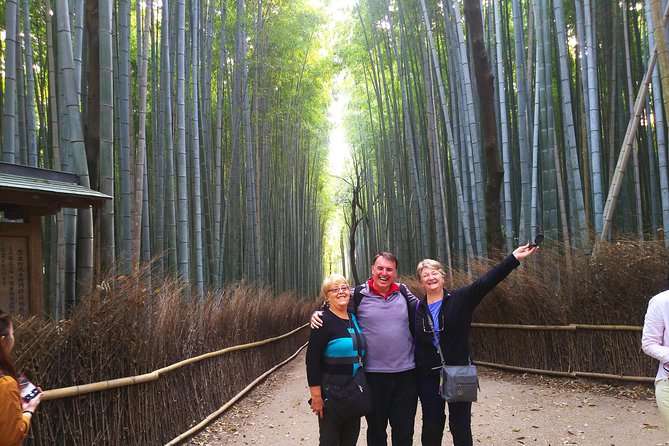
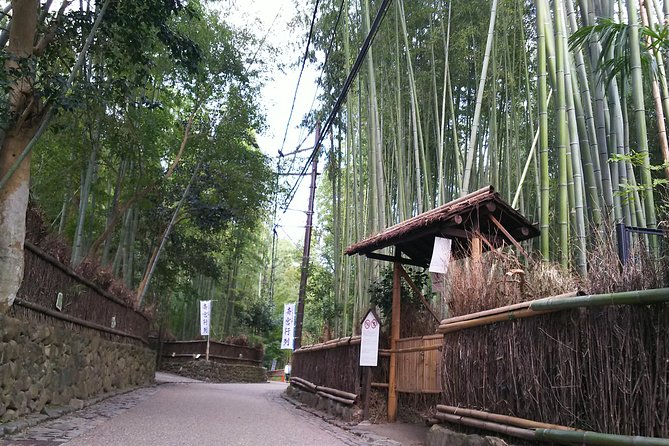
Your first major stop is Arashiyama Bamboo Forest Street. The big advantage is timing. You walk through the bamboo area early, before it gets crowded. That means calmer air, softer light, and fewer bottlenecks for photos.
The bamboo grove is one of those Kyoto scenes that can look gorgeous from a distance, but it hits harder when you feel it up close, with the morning quiet around you. The tour gives you about 1 hour here, and you can use it to slow down, take photos from different angles, and enjoy the moment before the wave of day-trippers arrives.
Admission here is listed as free, so your cost is not growing while you are still settling into Kyoto mode.
The only consideration is that bamboo photos are popular for a reason. If you wait too late in the day, it can feel like you are moving through a photo line. Starting early is the antidote.
- PERFECT KYOTO 1-Day Bus Tour★ 5.0 · 13,518 reviews
- Kyoto: Fushimi Inari, Kinkakuji, Bamboo Grove 1 Day Bus Tour★ 4.8 · 4,316 reviews
- Kyoto: Tea Ceremony in a Traditional Tea House in Kiyomizu★ 4.9 · 3,519 reviews
- Kyoto Geisha Walking Tour: Gion District & Hidden Gems★ 4.7 · 3,273 reviews
- Kyoto: Tea Ceremony Ju-An at Jotokuji Temple★ 4.9 · 3,207 reviews
Stop 2: Kinkaku-ji Golden Pavilion and Its Shogun-Story
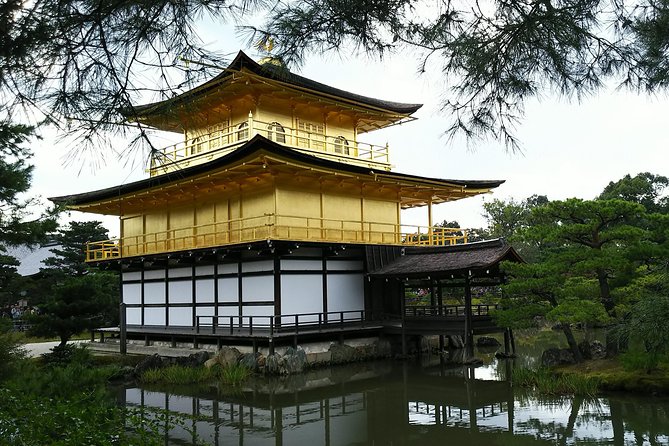
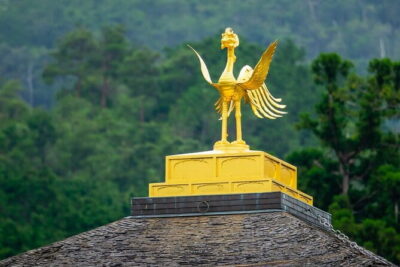
Next up is Kinkaku-ji Temple, the Golden Pavilion. This stop is where the tour shifts from scenery to story.
You spend about 1 hour at Kinkaku-ji, and the guide context matters. The main building is covered with gold leaf, and the site once served as the villa of a retired shogun. After his death, it was converted into a temple, which gives you a clear thread to follow as you look around.
This is not just a shiny postcard. It is a symbol of how power, culture, and religion overlap in Japan. When you understand that background, it becomes easier to see why Kinkaku-ji is such a strong Kyoto landmark.
Kinkaku-ji has an admission fee of ¥500 per person, which is not included in the tour price. That is worth budgeting for since it is one of the few paid moments in the day.
Practical tip for your visit: plan to focus your photos and attention on the main building and the immediate viewing areas, because a one-hour block goes fast once you factor in walking, crowd positioning, and time to absorb what you are seeing.
Stop 3: Gion District Walk and Possible Geisha Sightings
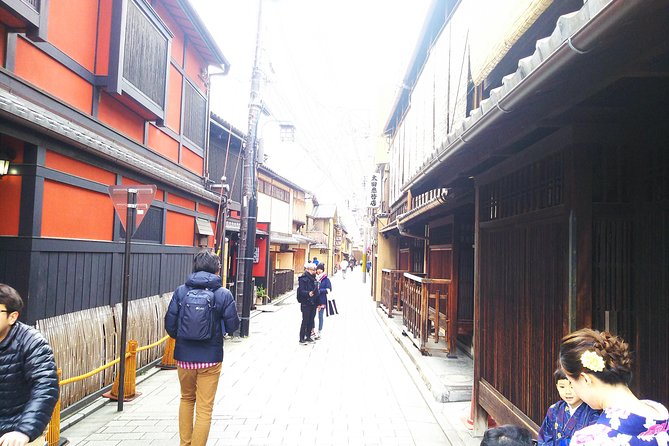
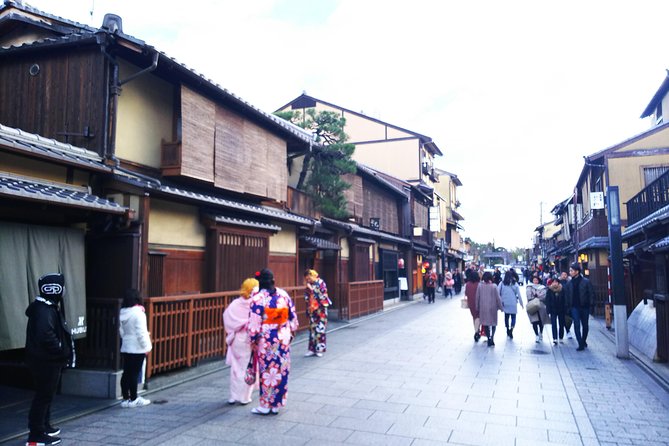
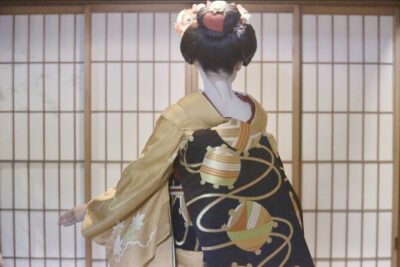
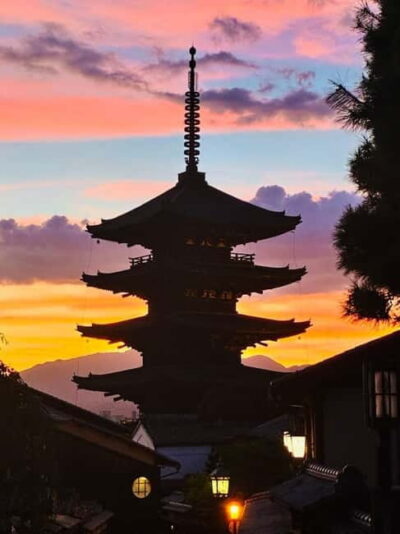
Then you walk into Gion, the famous historic district associated with geisha culture. This stop is shorter, about 40 minutes, but it is timed to feel like a real neighborhood walk rather than a quick roadside stop.
The appeal is obvious: you might see geisha moving between places, and the tour description frames it as a matter of luck. They often travel from boarding houses to tea houses where they perform, so if your timing is right, you may catch a glimpse.
Gion is also where Kyoto looks different depending on the angle. You get that sense of old-street atmosphere, with narrow lanes and a mood that feels more lived-in than the big temple gates.
Admission here is free, so you are not paying for the atmosphere.
Here is the consideration you should respect: geisha sightings are not guaranteed. If your top goal is seeing performers, go in with flexible expectations. The real value of Gion is the walk itself, the street rhythm, and the chance to notice how Kyoto’s old-world spaces still function in daily life.
Stop 4: Fushimi Inari Taisha’s Torii Tunnel
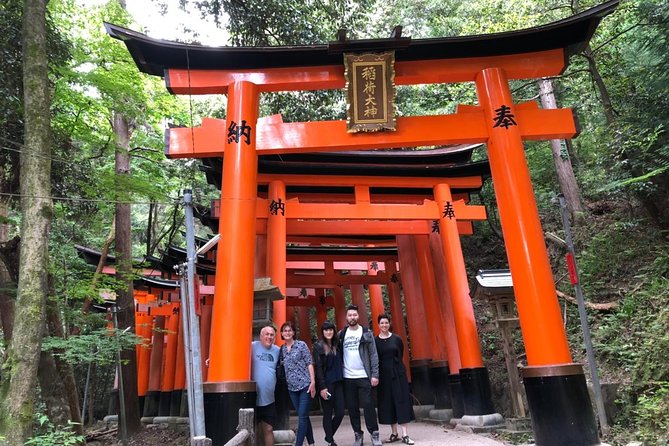
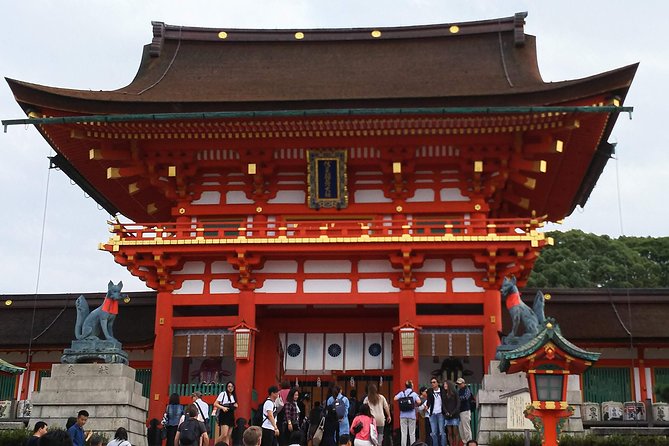
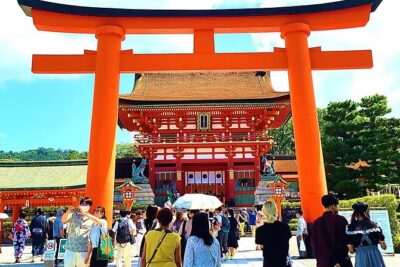
The final big landmark is Fushimi Inari-taisha Shrine, famous for its tunnel of thousands of vermillion torii gates. This is the Kyoto scene that looks impossible until you see it in person.
You get 1 hour here, and it is a good amount for experiencing the gates, soaking up the scale, and taking photos without feeling like you are trapped in a maze all day. The gates are offered by worshippers as a token of good luck, tied to the shrine’s spiritual tradition.
Admission is listed as free for this stop, which is nice because it helps keep the day’s costs more predictable.
The best practical advice for Fushimi Inari is also the simplest: wear shoes you trust. You are already walking heavily by this point, and this area rewards comfortable footing so you can keep moving comfortably through the gate corridor and along the shrine grounds.
Also, consider when you arrive. Later in the day, the area can feel busier. One of the strengths of this tour is that it sequences stops so you are not spending your energy only in the most crowded parts.
Pacing, Fitness, and Why Heat Can Change Everything
This tour is listed as requiring moderate physical fitness and a “quite a bit of walking.” That is not marketing fluff. Your day is structured around short stays at several major sites, which means you are always moving to the next viewpoint.
Some guide stories mention walking on the order of 20,000 steps, and one hot-day account emphasized how important it was to stay hydrated and take advantage of shade. That lines up with what you should expect in Kyoto summers, even if you do not know exactly what the weather will do.
So here is how I suggest you prepare:
- Start with good shoes, the kind that handle long days without foot-buzzing discomfort
- Bring water and use it even if you do not feel thirsty yet
- Wear sun protection, because temple shade is not always guaranteed
Because you are with a guide, you also benefit from someone who can adjust pace. Several stories praised guides who kept a steady schedule without making it feel rushed, even when weather made things harder.
If you prefer a slow, sit-down pace, this may feel like too much. If you like a full-day highlight mission with meaningful context, this format fits.
Price and Value: What You Get for $131.14 Plus Extras
The tour price is $131.14 per person, and it is often booked about 60 days in advance. That booking lead time matters because Kyoto has limited capacity for certain guided schedules, especially around peak seasons.
Now the value question: you could theoretically DIY these sights. Kyoto is doable by transit if you are comfortable with schedules, train stations, and walking routes. But the tour price buys three big things:
- A guide who interprets what you see, not just where to go
- Less time spent navigating, including help with trains and buses
- A structured pacing plan, with time at each highlight instead of guesswork
There is also a private-tour difference. Since it is only your group, you are not stuck with the speed or attention span of strangers. Multiple guide reviews highlighted that their pace and planning felt efficient, with clear timing and smooth transitions.
What about the costs you still need to pay? Two items are explicitly listed as not included:
- Temple admission fee: ¥500 per person
- Public transportation fare: ¥1,500 per person
Meals are not included.
So your real budget is not just the tour price. Plan for those fixed extras. If you already know you will spend time at Kinkaku-ji anyway and you will use transit for the day, the price becomes easier to justify.
The one drawback to consider is that convenience is not cheap. If you are the kind of traveler who loves planning and prefers to move on your own, this might feel expensive. One unhappy review described feeling cheated because they expected a more hands-on, trip-like tour rather than being taken between stations. That is a reminder to set your expectations: this is walking plus public transit, with guidance and context, not a car-and-driver day.
How the Guide Experience Shapes the Day
In this tour type, the guide is not a minor detail. It is the difference between seeing Kyoto and understanding it while you are moving.
Many praised guides for strong English, clear explanations tied to each stop, and good pacing. People also mentioned guides helping with trains and bus navigation, plus pointing out photo spots so you spend less time guessing where to stand.
Some guides were also praised for flexibility. One account described a family trip where the guide adjusted the day and even skipped lunch planning to keep the schedule workable. Another account praised how a guide kept everyone comfortable during extreme heat by prioritizing hydration and shade.
Not every experience has to be perfect. One less enthusiastic comment asked for a more interactive storytelling style, noting a potential language gap. That is your cue to take charge of your side of the conversation. If you have questions, ask them. If you want the tour to feel more like a dialogue, say so early.
And if you care most about specific themes, like samurai culture at Kinkaku-ji or the everyday mood of Gion, tell the guide. They can often steer explanations to match what you are after.
Best Fit: Who This Kyoto Walk Is For
This tour suits you if:
- You are short on time and want a solid Kyoto overview in one day
- You like history and culture context alongside the main sights
- You are okay with a long walking day and want that structure
- You want the transit puzzle solved for you, at least for the route between stops
It may not suit you if:
- You want a slow pace with frequent long rests
- You dislike crowded viewpoints or walking between multiple landmarks
- You want total independence with no guide planning at all
It also works well for families and groups, since private touring means the guide can shape the pace for your group. Just remember the day’s length still applies.
Should You Book This One-Day Kyoto Highlights Tour?
Yes, if you want a focused, efficient Kyoto day built around four heavy hitters: Arashiyama bamboo, Kinkaku-ji, Gion, and Fushimi Inari. You are paying for a guide who keeps your day coherent, helps with public transit navigation, and adds meaning so the sights do not blur together.
Skip it or rethink it if you are expecting a relaxed stroll with minimal walking, or if you believe you can handle the entire day solo for a fraction of the cost and you do not care about interpretation. Also, if heat and long walking are dealbreakers, plan your expectations carefully.
My practical bottom line: book it if you want convenience plus context, and you are ready for a full 8-hour walking day.
FAQ
How long is the one-day Kyoto walking tour?
It runs for about 8 hours.
Where do I meet, and does the tour end at the same place?
You meet at Kyoto Station Building 901 Higashishiokōjichō at 9:00 am, and the tour ends back at the meeting point.
What is included in the tour price?
The guide fare is included.
What admission and transport costs should I budget for?
Admission is ¥500 per person for the temple stop(s) where it applies, and public transportation fare is ¥1,500 per person. Meals are not included.
Is this tour private?
Yes. It is a private tour/activity with only your group participating.
What if bad weather cancels the tour?
This experience requires good weather. If it is canceled due to poor weather, you will be offered a different date or a full refund.
Newest Kyoto write-ups from the Loving Japan desk

Walking Tours, side by side.
 ★ 4.7Kyoto Geisha Walking Tour: Gion District & Hidden GemsFrom $253,273 reviews
 ★ 5.0Tokyo Tsukiji Fish Market Food and Culture Walking TourFrom $993,184 reviews
 ★ 4.9Gion Magical Night Walking Tour with Geisha TriviaFrom $242,393 reviews
 ★ 5.0Imperial Palace and Shogun Historical Walking TourFrom $222,251 reviews
 ★ 4.7Gion Geisha District Walking Tour – Stories of GeishaFrom $202,187 reviews
 ★ 4.5Night Walk in Gion: Kyoto’s Geisha DistrictFrom $212,003 reviews
 ★ 4.9Shinjuku Local Bar and Izakaya Guided Walking TourFrom $341,794 reviews
 ★ 5.0Tsukiji Fish Market Food and Walking tourFrom $301,724 reviews
Filed on these lists too