
REVIEW · SAMURAI, NINJA AND SWORD EXPERIENCES
Osaka: Learn Bushido – Trial Slashing with Samurai Sword
Samurai sword practice beats any photo op. This 1-hour session has you in samurai clothing fast, then guided through respectful bowing, stance training, and a real trial cut that feels worlds more real than watching from afar. Two things I really like: you get hands-on movement coaching, not just a demo, and the instruction is built around bushido manners, not random sword tricks.
You also leave with more than a story. There are plenty of photos during the cutting moment, plus the team sends the images to your email afterward, so you can relive it without awkward souvenir shopping. One consideration: the activity is not a sit-and-watch show, so you should be ready for light physical practice while wearing dogi and hakama.
In This Review
- Key Things You’ll Appreciate Most
- Where Samurai Honor Is, and Why It’s Easy to Pair With Osaka Castle
- Timing: The Lesson Is 1 Hour, But Your Day Will Feel Longer
- Start Like a Samurai: Costume, Bowing, and the Dojo Setup
- The Etiquette Lesson That Actually Helps You Swing Better
- Learning the Named Basics: Iai Training, Battou, Chiburui, and Nottou
- The Real Sword Part: Swing With Weight, Not Arm Power
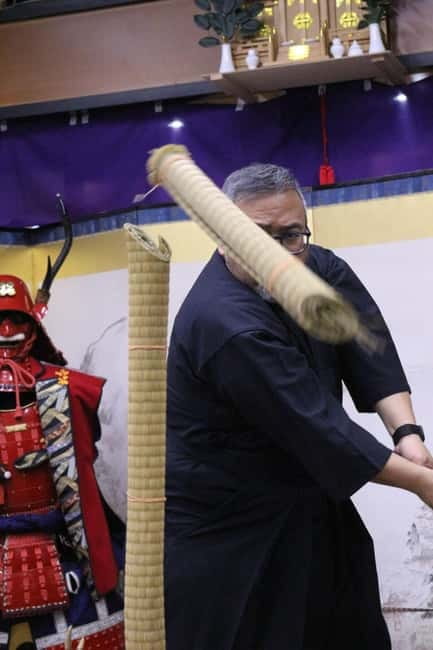
- The Test Cutting: Rolled Straw, and the Tatami-Style Twist
- Photos, Costumes, and Why the Camera Moment Feels Well Managed
- Price and Value: Why $92 Includes More Than You’d Expect
- Who This Suits Best (and Who Should Rethink It)
- How to Get the Most Out of Your Samurai Sword Trial
- Should You Book Samurai Honor for Bushido and Trial Slashing?
- FAQ
- Where is the meeting point?
- What is the exact location of the activity?
- How early should I arrive?
- How long is the experience?
- How many people are in a group?
- What language do instructors guide in?
- What’s included in the price?
- Do they pick you up from the hotel or station?
- What should I bring?
- What do you do for the trial slashing?
- Is it suitable for children?
Key Things You’ll Appreciate Most
- Small group attention (up to 4 people) so you get corrected as you practice
- The bushido basics first, bowing to the shrine and learning samurai etiquette alongside sword skills
- Real technique training with named moves like battou, chiburui, and nottou
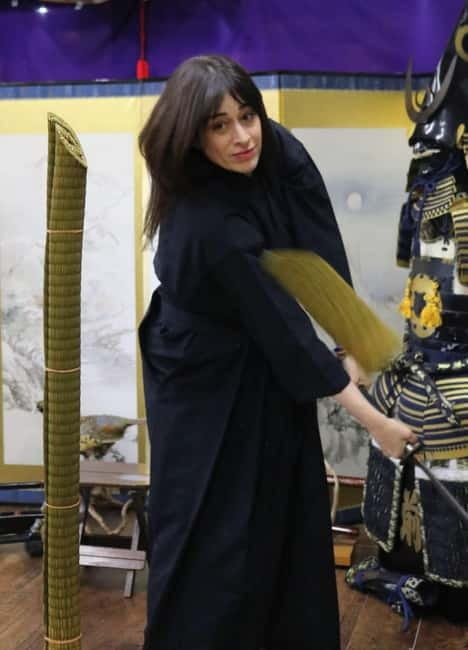
- A true test cut using a real Japanese sword, with a target like rolled straw (and sometimes a tatami-style cut)
- Photos handled for you, including the cutting moment, sent by email afterward
- Convenient meeting point near Osakajokoen, with clear signage like the Honor of the Samurai rack
Blade work and stagecraft, other sessions
- Samurai Training Experience KENDO in Osaka
★ 5.0 · 515 reviews - OSAKA NIGHT FUSION Japanese Taiko Kabuki Samurai Dance Show
★ 4.8 · 155 reviews - Osaka: Samurai Training Experience KENDO in Osaka
★ 5.0 · 111 reviews - Osaka: A Modern Samurai, Kabuki, Taiko, & Dance Show
★ 4.5 · 66 reviews
Where Samurai Honor Is, and Why It’s Easy to Pair With Osaka Castle
This experience happens at Bushi no Homare (Samurai Honor), inside the Excellence Takayama building (Excellence Takayama 1F), in Joto-ku, Osaka. The meeting landmark is a wooden sign that reads Honor of the Samurai, in front of the store area with activity pamphlets and even kimonos and hakama hanging up.
What makes the location practical is that it sits close enough to Osaka Castle area that you can plan it as a same-day add-on after your sightseeing. One helpful detail: the experience is easy to find from Osakajokoen Station, described as just across the river, and the building also has a calligraphy room in the same space. That means the setting feels more like a training hall than a staged tourist workshop.
If you are walking in from the castle grounds, do yourself a favor and give extra time to locate the entrance. Arrive early anyway, because the session runs on a tight flow once you start changing.
Timing: The Lesson Is 1 Hour, But Your Day Will Feel Longer
The booking says duration 1 hour, and the flow is structured: prep and change, explanation, stances, practice movements, and then trial slashing. However, you should plan your schedule like it might take longer than the on-paper time, mostly because you’ll be changing clothes and getting guided for safety and form.
You also need to show up 30 minutes before your reserved start time for instructions and changing. That early arrival matters because you will be learning how to move in the costume, how to handle the sword safely, and when it’s your turn.
So think of it like a short class with real coaching. You are there to do the work, not just take a quick picture and leave.
Start Like a Samurai: Costume, Bowing, and the Dojo Setup
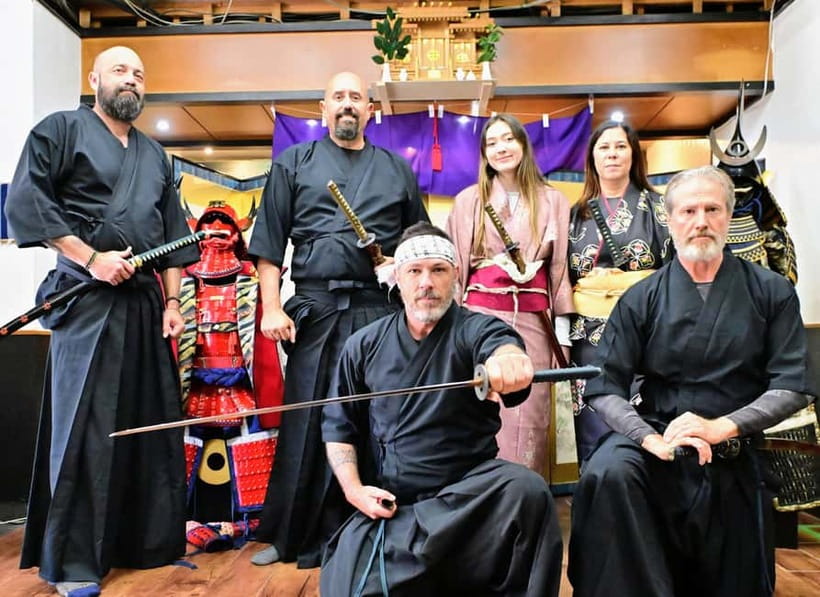
You begin with a strong visual and mental reset. You change into dogi and hakama, and you go from tourist mindset to training mindset quickly. Then the class starts with bowing, based on the idea that training has a spiritual and discipline core.
A shrine is enshrined in the dojo, and the routine is built around that focus: training begins and ends with bowing. It might sound formal on paper, but in practice it sets expectations fast. You understand right away that this is about control, respect, and doing things correctly.
One more detail I like is the pacing of explanations. Instead of tossing you a sword immediately, you learn why samurai treated the sword as something serious: the sword is portrayed as the soul of the samurai, and it cannot be sold, even if life is hard. Even if you treat that as tradition rather than literal fact, the message is clear: the sword carries responsibility.
- Osaka Go Karting Tour with Funny Costume★ 5.0 · 2,658 reviews
- Osaka Castle: Museum and Tower Entry Ticket★ 4.5 · 2,380 reviews
- Osaka: Shinsekai Food Tour with 13-15 Dishes at 5 Eateries★ 4.8 · 2,204 reviews
- Osaka Food Tour: 13 Dishes at 5 Local Eateries★ 5.0 · 2,149 reviews
- Hungry Osaka Street Food Tour:15 Tastings & 3 Drinks with a Local★ 5.0 · 1,727 reviews
The Etiquette Lesson That Actually Helps You Swing Better
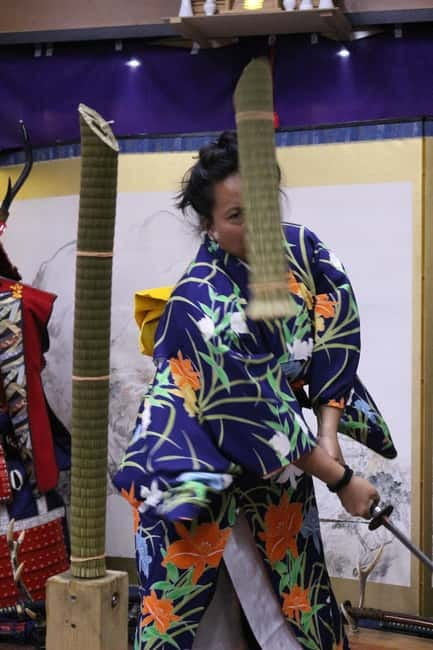
Sword technique is physical, but it also depends on posture and intention. This lesson treats etiquette as part of the mechanics.
You’ll get instruction on the relationship between a samurai and the Japanese sword, including how sword ownership is tied to responsibility and self-respect. It’s not presented as a history lecture only, but as a way to shape your movements. When you understand the mindset, you are less likely to rush or swing with the wrong energy.
Then you move into practical body work. There’s a segment where you practice walking with the sword belt and the samurai-style gestures. That sounds like a small thing, but it helps you settle your stance and balance. In sword training, balance is everything, and these small movements are often what make the later cuts feel more controlled.
Learning the Named Basics: Iai Training, Battou, Chiburui, and Nottou
This is where the experience gets satisfyingly technical without becoming confusing. You practice with an iai practice sword first, so you can learn the sequence safely.
The training focuses on named actions that structure what you do with the blade:
- Battou: pulling the sword out of the scabbard for the cut
- Chiburui: the symbolic process of removing blood from the blade after cutting
- Nottou: returning the sword to the sheath
Even if the ritual parts are not your personal style, I like that the instructor uses them to teach discipline. The sequence stops you from doing random, out-of-order motions. You learn that good cutting is not just swinging hard, it is clean steps with timing.
Then comes the stance work. You practice basic kata and stances, including middle stance, upper stance, lower stance, eight-phase stance, and side stance. You can think of these as a toolkit. Once you know the stances, the cut is easier to repeat because you’re not starting from scratch every time.
The Real Sword Part: Swing With Weight, Not Arm Power
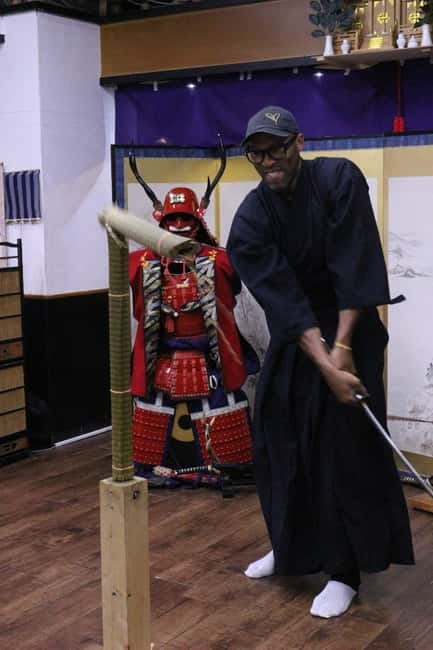
After the practice sword work, you move to cutting technique with a real Japanese sword. The lesson emphasizes swinging with the weight of the blade instead of muscling it with your arm strength.
You’ll learn to pay attention to how the sword moves from the stance. There’s even a cue described as the sword making a sound called hi-nari when the swing is right. That kind of feedback is useful because it gives you something concrete to aim for, not just vague coaching.
One of the most praised parts of this experience is how patiently the instructor guides each person through the motions. The class is set up so you go step by step: you learn the movement, the sensei checks it, and then you progress to more advanced motions once you’re consistent.
If you are worried about looking clumsy, don’t. The structure is designed for beginners. You get correction, not just a countdown to the final cut.
The Test Cutting: Rolled Straw, and the Tatami-Style Twist
The trial slashing is the headline for good reason. This is where you finally try a cut with a real sword, after practicing the basics.
The target is described as rolled straw, which is a clear, satisfying first test. The goal is to cut cleanly and safely using the correct mechanics, not to show off strength.
At the same time, some sessions in this setting are described as cutting a target that looks like bamboo, which turns out to be tatami mat shaped for the cut. If your class uses tatami-style targets, the experience is still the same idea: controlled cutting, measured form, and a real moment when your technique meets the object.
Either way, you’ll be ready for the moment because you’re not thrown into it cold. The course builds you up, and the final cut feels earned.
Photos, Costumes, and Why the Camera Moment Feels Well Managed
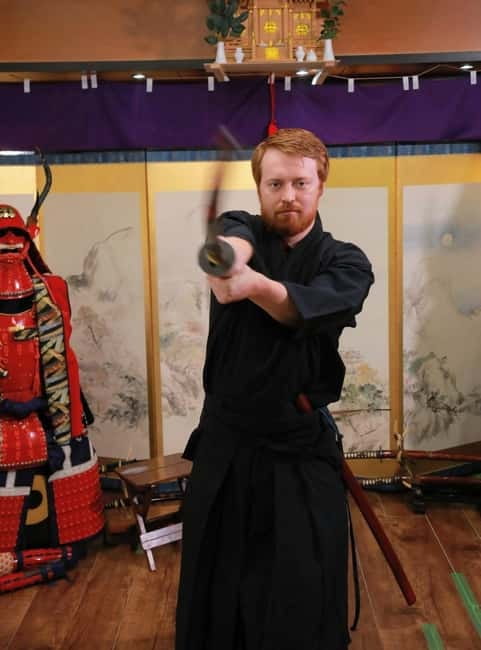
This activity is photo-friendly in a smart way. There’s a dedicated photo shooting component, including the moment of test cutting, and the team sends the data to a designated email address afterward.
That part matters more than people expect. In sword experiences, you often feel like the camera is an interruption. Here, the photos are integrated into the session, so you can focus on technique while someone else captures the key frame.
One practical bonus: the team is described as taking photos with your phone as well, and the experience includes lots of images. If you like having something you did and not just something you watched, this is worth it.
Price and Value: Why $92 Includes More Than You’d Expect
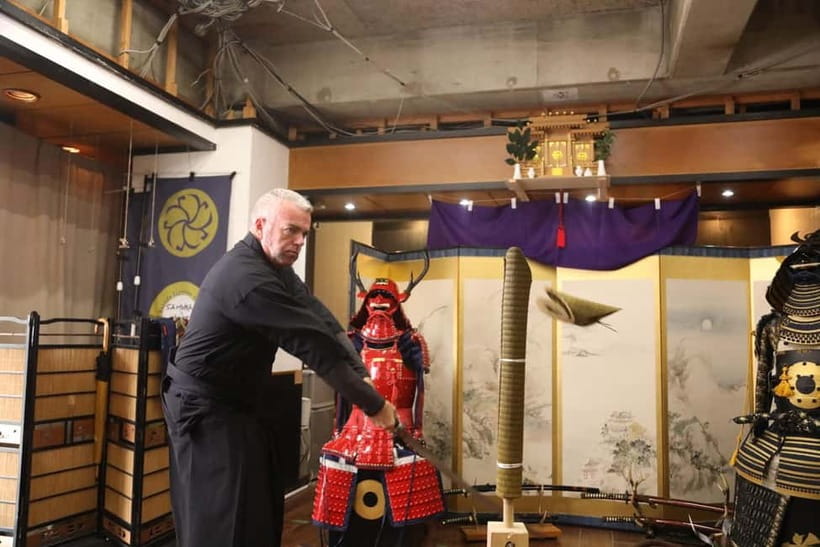
At $92 per person for about 1 hour, the price feels like it depends heavily on what’s included. Here, the package adds up because it covers:
- Samurai clothing (dogi and hakama)
- A certified professional instructor
- Tax and tips
- Photo shooting, with images sent by email
Transportation and pick-up are not included, so you’ll handle getting there. But once you are at Samurai Honor, you’re not paying extra for the main pieces: coaching, costume, and the cutting moment documentation.
Small group size (limited to 4 participants) is another value driver. When you pay the same as someone else, but you get more direct attention, the experience feels less rushed and more personal.
If you want to compare to typical paid cultural classes, the big difference is that you get to actually handle the process with real movement and a real blade in a controlled way.
Who This Suits Best (and Who Should Rethink It)
This experience is a good match if you want a memorable Osaka Castle area activity that’s more active than most museum stops. It’s also a great pick if you want cultural context tied directly to practice, since you learn bushido spirit and etiquette alongside the sword basics.
It is also a strong choice for families in the sense that some families enjoy it as a shared milestone, but there are clear limits. It is not suitable for children under 10, and it is also not suitable for people over 95 or those with altitude sickness.
Wear-your-life also matters. You need to bring a T-shirt, and you must follow the rules about what’s not allowed (no strollers, and no food or drinks during the experience). If you hate tight time windows and have zero tolerance for instructions, you might find it a bit intense. This is a training session, not a casual roaming event.
How to Get the Most Out of Your Samurai Sword Trial
If you want your cut to feel smooth, focus on these practical things before you start:
- Arrive early, so changing and instructions don’t push you into rushing
- Listen for form corrections, especially on stance and how you swing from the weight of the blade
- Treat the bow and ritual steps seriously, because they set your posture and pace
- Ask if the instructor needs you to adjust your stance, don’t wait until you feel awkward
- Plan your photos in your mind, so you can keep moving confidently when the camera moment comes
Also, keep expectations realistic. You are learning basics and making a safe trial cut, not training to become a swordsman. The satisfaction comes from doing it correctly for your level.
Should You Book Samurai Honor for Bushido and Trial Slashing?
I think you should book this if you want a short, well-run, hands-on activity near Osaka Castle that blends bushido manners with real sword practice. The high points are consistent: small-group instruction, patient coaching, meaningful technique training, and a satisfying trial cut with photos handled for you.
Skip it if you want a purely observational experience, or if the physical movement while wearing traditional clothing would be uncomfortable for you. It’s also not a fit for very young kids, and the age limits are real.
If you are in Osaka and you want one standout activity that turns culture into action, this is a strong choice.
FAQ
Where is the meeting point?
You meet at Samurai Honor at a landmark wooden sign that reads Honor of the Samurai, in front of the store rack with activity pamphlets.
What is the exact location of the activity?
The activity is at Bushi no Homare (Samurai Honor), Excellence Takayama 1F, 2-3-19 Shiginonishi, Joto-ku, Osaka-shi, Osaka 536-0014. The address on Apple Maps is reported as incorrect, so use Google Maps.
How early should I arrive?
Arrive 30 minutes before your reserved experience time for instructions and changing clothes.
How long is the experience?
The experience duration is 1 hour. Check availability for starting times.
How many people are in a group?
The group is small, limited to 4 participants.
What language do instructors guide in?
The default language for interpreters is English. Japanese is also offered, and other languages may be available if you request them and staff schedule allows it.
What’s included in the price?
Included are samurai clothing, a certified professional instructor, tax, tips, and photo shooting (with images sent to a designated email address).
Do they pick you up from the hotel or station?
No. Pick up and drop off at the train station or hotel is not included, and transportation is also not included.
What should I bring?
Bring a T-shirt.
What do you do for the trial slashing?
You try cutting a target using a real Japanese sword, described as rolled straw.
Is it suitable for children?
It is not suitable for children under 10. It is also not suitable for people over 95 years or those with altitude sickness.
Blade Work and Stagecraft


Newest Osaka write-ups from the Loving Japan desk

Samurai, Ninja and Sword Experiences, side by side.
 ★ 4.5Samurai Restaurant Show Ticket with 2 DrinksFrom $551,307 reviews
 ★ 5.0Kyoto Samurai ExperienceFrom $1191,294 reviews
 ★ 4.6Samurai Ninja Museum Guided tour and ExperienceFrom $271,010 reviews
 ★ 4.9Kendo and Samurai Experience with Uniform and GearFrom $103815 reviews
 ★ 4.9Samurai Sword Class by Experts in Traditional ArtsFrom $64657 reviews
 ★ 4.5Skip the lines Basic Ticket at SAMURAI NINJA MUSEUM KYOTOFrom $28632 reviews
 ★ 5.0Samurai Sword & Archery Class from Samurai DescendantFrom $193603 reviews
 ★ 5.0Samurai Training Experience KENDO in OsakaFrom $131515 reviews
Filed on these lists too