
REVIEW · WALKING TOURS
Private & Custom KYOTO Walking Tour – your Travel Companion
Kyoto is a city where one wrong turn can cost you an hour. This private, custom walking tour focuses on the big sights like Kinkaku-ji and Kiyomizu-dera, while a guide handles route-finding so you don’t waste energy with maps. I like that you can personalize the itinerary, plus you get practical help like photo tips and vendor communication. One drawback to plan for: entrance fees and meals are not included, so your total day cost will rise.
You’ll also be moving through very different Kyoto “moods” in a single day, from golden pavilion grounds to torii-lined trails to Arashiyama’s bamboo area. The provided sample route is packed with classics, but it’s a private group experience, so you should be able to adjust pacing and priorities.
In This Review
- Key things to know before you book
- Why a private, custom Kyoto walk beats a fixed group route
- Price and what you actually get for $265.82 per group
- Your day at a glance: how this 8-hour route is paced
- Kinkaku-ji and Kiyomizu-dera: the “wow” temple start
- Sannenzaka, Ninenzaka, and Yasaka Shrine for old-street atmosphere
- Fushimi Inari-taisha and the torii trail reality check
- Arashiyama plus Tenryuji and the bamboo forest break
- Nishiki Market and Gion: food-street browsing and geisha district context
- Ginkakuji, Sanjusangendo, and the quieter side of Kyoto icons
- Kyoto Imperial Palace and Nijo Castle for the Edo and imperial timeline
- Eikando Zenrinji Temple, and why this stop can feel like a reset
- Who this Kyoto walking tour is best for
- What to ask your guide on day one
- Should you book this Kyoto walking tour?
- FAQ
- How long is the Kyoto walking tour?
- How many people are in a group?
- What is the price for the tour?
- Is pickup offered?
- Do I need to buy temple or shrine admission tickets?
- Is private transportation included?
- Do I get a mobile ticket?
- What are the opening hours for the activity?
- Is the tour refundable if I cancel?
Key things to know before you book
- Private, custom route: Your walk can be tailored to your interests instead of a fixed checklist.
- Guide navigation included: Less time lost, more time seeing. No map wrestling required.
- Tickets assistance, not ticket cost: You get help with booking, but admission is typically on you.
- A full classics sampler: Kinkaku-ji, Kiyomizu-dera, Fushimi Inari, Arashiyama, Gion, and more.
- Walking plus transit likely: Private transportation isn’t included, so expect to use public options between areas.
- Quality can vary by guide: Names like Jinshi, Rio, Femi, Karl, Karim, and Dalivanh show up in strong feedback, while a few reports mention direction or local know-how issues.
Still weighing up options in Kyoto? These are the ones our reviewers rated highest.
- PERFECT KYOTO 1-Day Bus Tour
★ 5.0 · 13,518 reviews - Kyoto: Fushimi Inari, Kinkakuji, Bamboo Grove 1 Day Bus Tour
★ 4.8 · 4,316 reviews - Kyoto: Tea Ceremony in a Traditional Tea House in Kiyomizu
★ 4.9 · 3,519 reviews - Kyoto Geisha Walking Tour: Gion District & Hidden Gems
★ 4.7 · 3,273 reviews
Why a private, custom Kyoto walk beats a fixed group route
Kyoto is famous for temples and shrines, but the real trick is linking them in a smart order. This tour is built for that. A private guide shapes your route, so you’re not just marching to whatever time slot fits the group schedule.
I also like that the “companion” concept is practical. The tour info points to help with taking photos, communicating with local vendors, booking restaurants, and getting access to top landmarks. That matters in Kyoto because the best moment is often small and quick, like a perfect angle for the Golden Pavilion or the right stall at Nishiki Market.
The other advantage is stress reduction. The experience is explicitly about not getting lost, and the route is managed for you. If you’re visiting for a limited time, that time saving is real value.
Price and what you actually get for $265.82 per group
The price is listed as $265.82 per group for up to 5 people, and the duration is about 8 hours. That pricing structure can be a good deal if you’re traveling as a small family or a group of friends, since you’re splitting one guide cost.
Just remember what’s not included. Entrance fees are not included, and the tour also doesn’t include meals. Private transportation isn’t included either, so you should expect to pay your own way for any transit between neighborhoods.
If you’re trying to budget, think of it like this: you’re paying for a guide, navigation, and itinerary management. In exchange, you get a day that can feel smoother and more personal than a standard group tour.
Your day at a glance: how this 8-hour route is paced
The sample itinerary is long on purpose, with 13 stops and a mix of “big ticket” landmarks and classic Kyoto neighborhoods. You’ll see a structured flow, but the whole point of a custom tour is that your guide can adjust.
Timing is listed per stop, including shorter moments like Fushimi Inari-taisha (15 minutes) and longer temple stops like Arashiyama (about 1 hour) and Nijo Castle (about 45 minutes). That tells you the guide likely prioritizes key photo moments and efficient sightseeing.
One practical note: because private transportation is not included, the walking itself may feel uneven day to day. Some segments may be mostly stroll, while others may involve walking to transit, riding, and then walking again. If you have mobility limits, you’ll want to set expectations with your guide early.
- PERFECT KYOTO 1-Day Bus Tour★ 5.0 · 13,518 reviews
- Kyoto: Fushimi Inari, Kinkakuji, Bamboo Grove 1 Day Bus Tour★ 4.8 · 4,316 reviews
- Kyoto: Tea Ceremony in a Traditional Tea House in Kiyomizu★ 4.9 · 3,519 reviews
- Kyoto Geisha Walking Tour: Gion District & Hidden Gems★ 4.7 · 3,273 reviews
- Kyoto: Tea Ceremony Ju-An at Jotokuji Temple★ 4.9 · 3,207 reviews
Kinkaku-ji and Kiyomizu-dera: the “wow” temple start
Most Kyoto days start strong, and this one begins with Kinkaku-ji (Golden Pavilion). It’s a Zen temple and was also the retirement villa of Shogun Ashikaga Yoshimitsu. That double identity is part of the appeal, old power meets spiritual architecture in a single view.
Admission is not included, and the stop is about 30 minutes. That’s enough time to orient yourself, take photos, and see the main pavilion areas without turning it into a marathon.
Next is Kiyomizudera (Pure Water Temple), with a wooden stage that juts out about 13 meters above the hillside below. The stop is listed as 45 minutes, which is good because this is one of those places where the approach matters as much as the hall itself.
Admission is also not included here. If you want the best experience, go in ready for crowd flow, then use your guide to find the most comfortable photo angles.
Sannenzaka, Ninenzaka, and Yasaka Shrine for old-street atmosphere
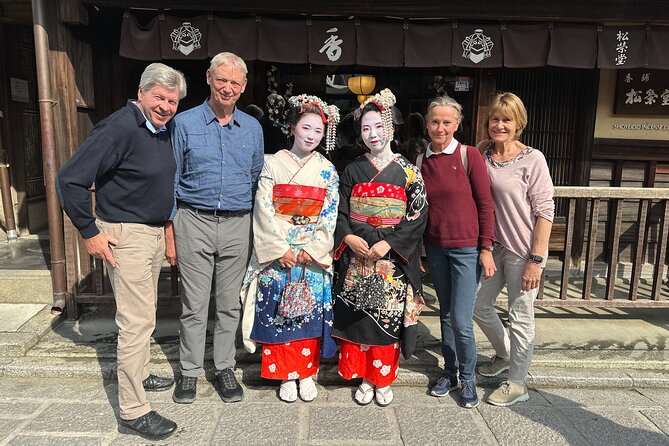
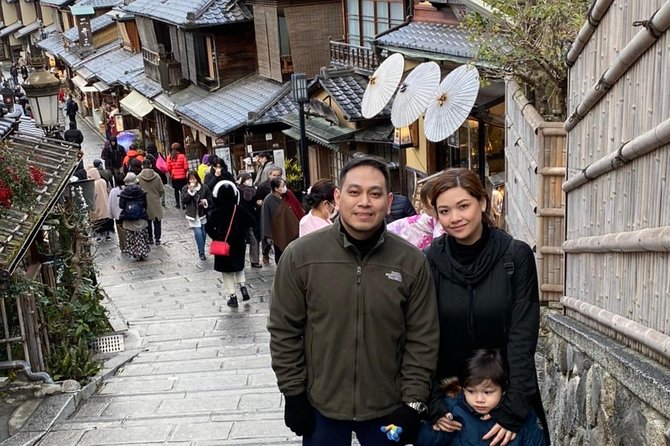
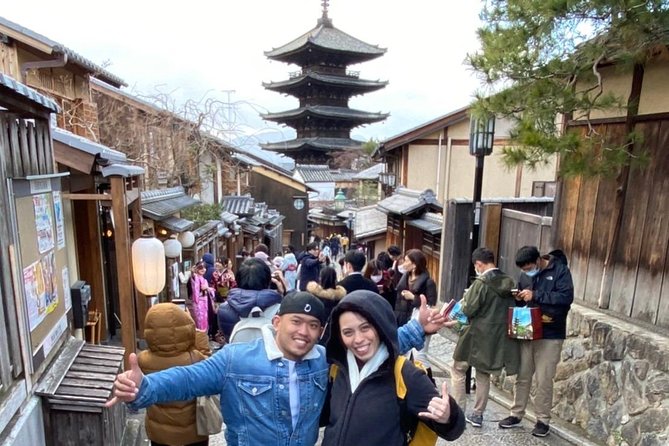
After the temple-heavy start, the route shifts to preserved streets. Sannenzaka and Ninenzaka are described as protected districts, and the stop is about 45 minutes. This is where Kyoto starts to feel like you’re walking through the setting of an old story, with lanes that reward slow steps.
The good part is that admission is free, so you can spend time browsing without feeling like every minute is ticket-driven. The drawback is that this area can be busy, and the best browsing time may depend on the hour.
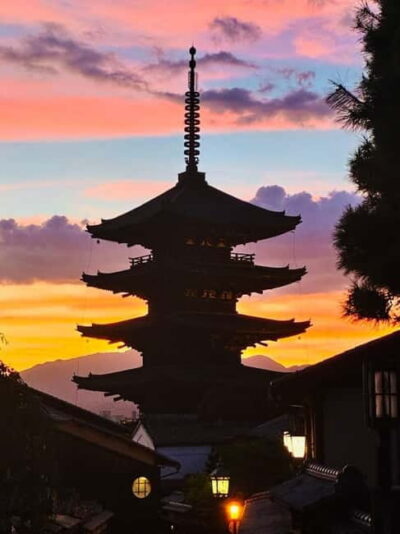
Then you hit Yasaka Shrine, also called the Gion Shrine, for about 30 minutes. It’s known for the Gion Matsuri in July, one of Japan’s best-known festivals. Even if you’re not visiting in summer festival season, the shrine gives you that Gion context before you reach the geisha district.
Admission is not included, so factor that into your budget. I also recommend using your guide to explain what you’re seeing on-site, because the shrine details are easy to miss if you’re just speed-walking.
Fushimi Inari-taisha and the torii trail reality check
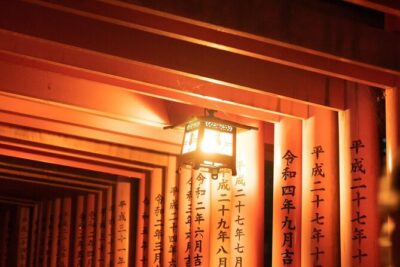
Fushimi Inari-taisha is built for that instant wow moment, thanks to its huge network of vermillion torii gates. The description makes it clear the experience is all about walking trails behind the main building, not just posing at the front.
Your listed time here is only about 15 minutes, and admission is free. That’s enough for the main impression, but it’s not enough if you want a longer torii walk. If you care about depth here, you should ask your guide to extend the time or adjust the rest of the route.
This is also a place where timing matters. If you arrive when foot traffic is heavy, the photos you want may take planning. The practical value of having a private guide is that they can help you navigate crowd flow and choose the best walking sections for your group.
Arashiyama plus Tenryuji and the bamboo forest break
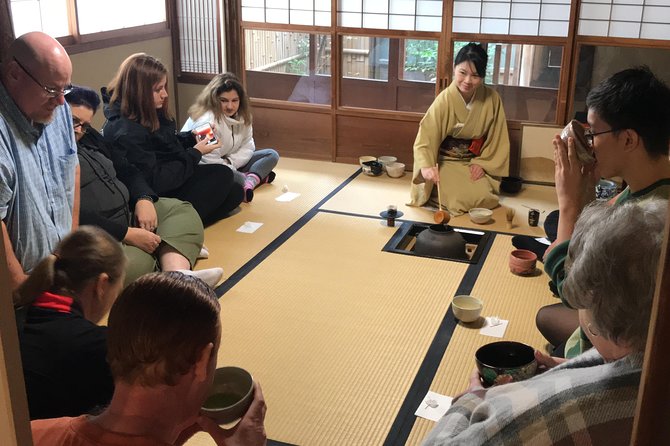
Then you switch scenes to the northwest, heading to Arashiyama, described as a major sightseeing district with temples, shrines, and bamboo. The time slot is about 1 hour, and admission is not included for the Arashiyama area listed.
Within Arashiyama, the itinerary calls out the Bamboo Forest and Tenryuji Temple. Tenryuji is described as Kyoto’s five Zen temples founded in 1339. That founding detail helps you understand why this place has staying power, it’s not just a photo stop.
Since admission is not included, budget for entry if you want to go inside temple spaces. Also, because the stop is limited, plan to focus on what you most want from Arashiyama: bamboo atmosphere, temple interior, or simply the street-life between them.
Nishiki Market and Gion: food-street browsing and geisha district context
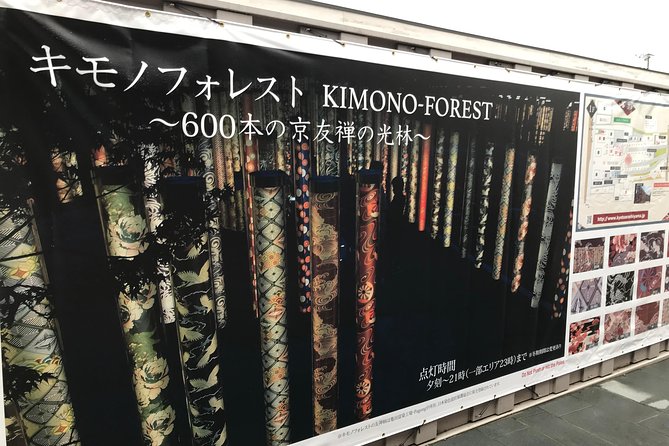
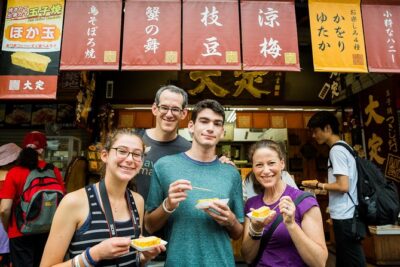
Kyoto’s shopping street energy shows up next at Nishiki Market Shopping District. It’s described as a narrow, five-block street lined with more than 100 shops and restaurants, known as Kyoto’s kitchen. The stop is about 40 minutes, and it’s free.
This is a great “pause” stop because it’s less about formal admissions and more about tasting or browsing. Your guide can help with what to try and how to order, which can be a big help if you don’t speak Japanese and you want to eat without guesswork.
Then the route goes to Gion, for about 30 minutes. This is Kyoto’s famous geisha district, and the stop is free. Even if you’re not expecting to see someone on the street, the neighborhood layout and atmosphere are the point.
A sensible approach here is to use the guide for background. You’ll get more out of Gion when someone explains what parts are “seen” versus what’s simply the surrounding cultural setting.
Ginkakuji, Sanjusangendo, and the quieter side of Kyoto icons
After Gion, you continue with additional landmark temples. Ginkakuji (Silver Pavilion) is next, about 30 minutes, and admission is not included. It was built by Shogun Ashikaga Yoshima, described as the grandson of Yoshimitsu. That family connection ties this stop directly to the earlier Golden Pavilion start.
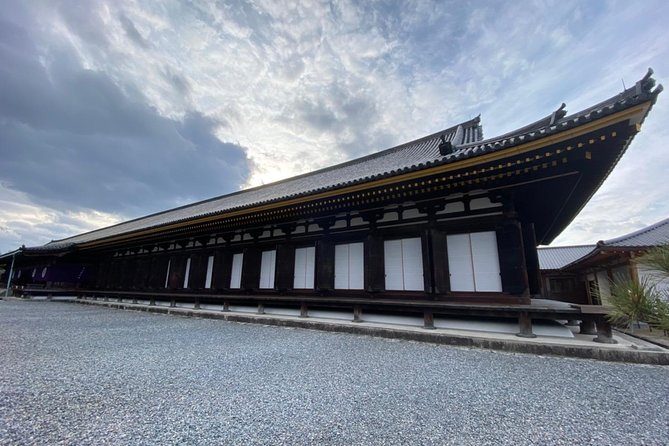
Then you go to Sanjusangendo Temple, about 30 minutes. This temple is famous for its 1001 statues of Kannon, the goddess of mercy. This is the kind of sight where the sheer scale matters more than any single object, so 30 minutes is probably just enough for a meaningful look if you pace yourself.
Admission is not included here too. If the group wants the best experience, ask your guide to point out the “what to notice” spots so you don’t just walk and look without landmarks for your attention.
Kyoto Imperial Palace and Nijo Castle for the Edo and imperial timeline
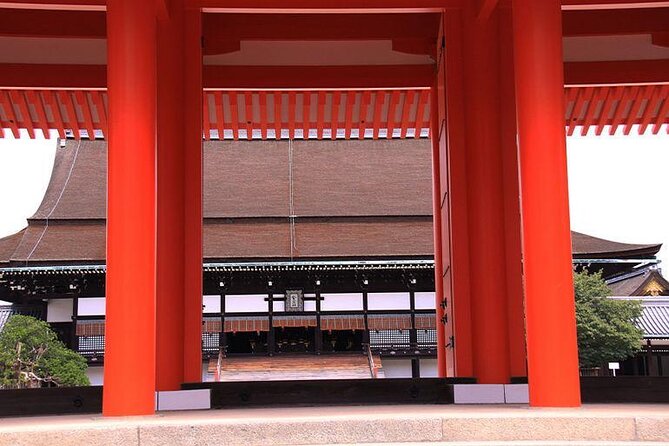
Next up is a history shift toward governance and power. The route includes Kyoto Imperial Palace, where the imperial family lived until 1868, when the emperor and capital moved to Tokyo. This stop is about 30 minutes and listed as free.
The palace grounds are space-heavy compared to the dense street areas earlier in the day. That makes it easier to breathe, and it’s a nice contrast when you’ve spent hours among shrines and temple gates.
Then comes Nijo Castle, about 45 minutes. It was built in 1603 as Tokugawa Ieyasu’s Kyoto residence, and the palace buildings were completed by his grandson Iemitsu. Admission is not included.
This stop is valuable because it rounds out Kyoto’s identity beyond the tourist temples. You get a more complete picture of why Kyoto mattered politically for so long.
Eikando Zenrinji Temple, and why this stop can feel like a reset
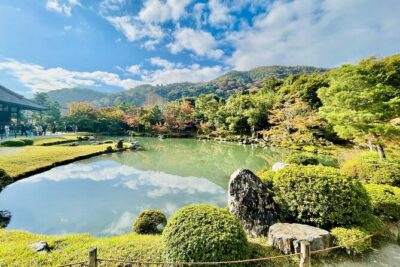
The last listed temple stop is Eikando (Zenrinji Temple), about 45 minutes. It belongs to the Jodo sect of Buddhism and is located just north of the Nanzenji temple complex. It’s also described as famous for its autumn colors or autumn scenery, which gives you a seasonal reason to pay attention.
Admission is not included. Even if you visit outside peak autumn, temples like this can feel slower and more contemplative than the big “headline” sights. That can be a good reset before you wrap up the day.
This stop makes sense at the end because your feet will be tired. A slower, scenic temple experience is a better landing than trying to cram in another high-stress crowd zone.
Who this Kyoto walking tour is best for
This works best for people who want Kyoto classics with less navigation stress. If you’re the type who likes ticking off major sights but still wants a bit of personalization, a private guide is the right format.
It’s also a strong option for couples, small families, or friend groups up to 5, because the per-group price can be reasonable compared with solo private guiding.
I’d be extra careful if you have mobility concerns. The itinerary is heavy, with multiple landmark areas in one day, and private transportation isn’t included. You might find public transit and extra walking needed.
Finally, consider your tolerance for variable guide quality. Some guides mentioned in feedback include Jinshi, Rio, Femi, Karl, Karim, and Dalivanh, and those names are tied to people praising energy, patience, and communication. On the flip side, a few reports raise concerns about getting lost, direction errors, or gaps in Kyoto context. That’s not something you can fully predict, so your best protection is being clear about what you want, and asking your guide questions early in the day.
What to ask your guide on day one
Because the tour is customizable, your first questions shape the day. Ask these early, while you still have flexibility:
- Which stops are must-do for my group, and which can be adjusted if we’re running late?
- Can you help me plan around ticket timing and crowded areas, especially for Kinkaku-ji and Kiyomizudera?
- For Fushimi Inari, do we want a short highlight walk or more torii trail time?
- What are 2 food stops you recommend around Nishiki Market based on our preferences?
- Where should we take our photos so we’re not fighting the crowd flow?
This is where the tour’s “travel companion” style can pay off. If your guide knows the rhythm of Kyoto, your day feels smoother. If they are learning the route, your questions can help steer you back on track.
Should you book this Kyoto walking tour?
Book it if you want a private, personalized Kyoto day built around the greatest hits, and you prefer spending time with a guide handling navigation and practical details. The price for up to 5 people can also be good value if you’re splitting costs and you’re committed to visiting multiple major sites.
Skip it, or at least ask more questions first, if you expect the entrance fees and meals to be handled for you, because they are not included. Also think twice if you strongly need a long, deep visit to Fushimi Inari or any single temple, since the listed stop times are often brief by design.
If you want a Kyoto day that feels organized, with a guide who helps you understand what you’re seeing and how to move through the city, this is a solid pick. Just go in ready to pay your own admissions, and make your priorities clear from the first stop.
FAQ
How long is the Kyoto walking tour?
The tour is listed as about 8 hours.
How many people are in a group?
The tour price covers a group of up to 5 people, and it is described as a private tour/activity for your group.
What is the price for the tour?
The listed price is $265.82 per group.
Is pickup offered?
Pickup is offered, and the activity notes that it is near public transportation as well.
Do I need to buy temple or shrine admission tickets?
Admission fees are listed as not included for the stops where tickets apply. Some areas are marked as free, but several major sights are not.
Is private transportation included?
No. Private transportation is not included.
Do I get a mobile ticket?
Yes. The experience includes a mobile ticket.
What are the opening hours for the activity?
The activity is shown as available Monday to Sunday, 6:00 AM to 10:00 PM, with listed dates from 07/01/2019 to 01/18/2027.
Is the tour refundable if I cancel?
No. The experience is listed as non-refundable and cannot be changed for any reason.
Newest Kyoto write-ups from the Loving Japan desk
Walking Tours, side by side.
 ★ 4.7Kyoto Geisha Walking Tour: Gion District & Hidden GemsFrom $253,273 reviews
 ★ 5.0Tokyo Tsukiji Fish Market Food and Culture Walking TourFrom $993,184 reviews
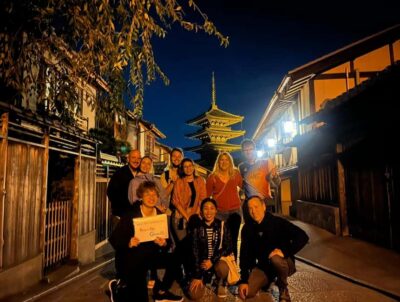 ★ 4.9Gion Magical Night Walking Tour with Geisha TriviaFrom $242,393 reviews
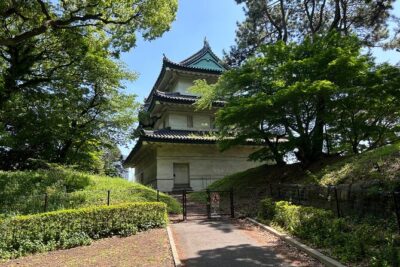 ★ 5.0Imperial Palace and Shogun Historical Walking TourFrom $222,251 reviews
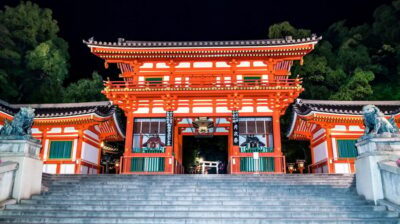 ★ 4.7Gion Geisha District Walking Tour – Stories of GeishaFrom $202,187 reviews
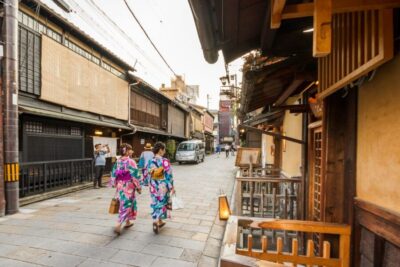 ★ 4.5Night Walk in Gion: Kyoto’s Geisha DistrictFrom $212,003 reviews
 ★ 4.9Shinjuku Local Bar and Izakaya Guided Walking TourFrom $341,794 reviews
 ★ 5.0Tsukiji Fish Market Food and Walking tourFrom $301,724 reviews