
REVIEW · GION, GEISHA AND MAIKO EXPERIENCES
Private Dinner with a Geisha
A geiko at dinner changes everything.
This Kyoto night is built around a rare, private encounter with a geiko or maiko, plus a guided walk through Gion and an in-room dance performance tied to the meal. You get context first, then the entertainment happens right where you are eating.
Two things I really like about this experience: the chance for one-on-one conversation (or close to it) and the way the evening flows from Gion streets into a traditional dinner setting. There is also a strong emphasis on cultural explanation from your English-speaking guide, often people highlight guides like Mia, Miyah, or Mie for making it fun and clear.
The main thing to consider is that the dinner is traditional and often fixed. If you are picky, vegetarian, or sensitive to seafood, you may not get the flexibility you want, and that can make or break the value for you.
In This Review
- Quick hits before you book
- Meeting in front of Minamiza, right on Shijo Street
- Gion walk with a guide who sets context before the performance
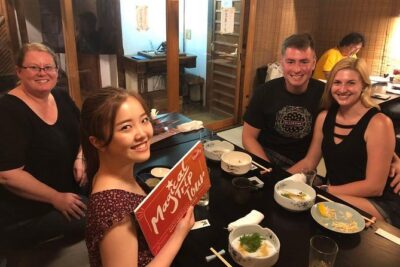
- Kaiseki dinner in a private room, half course or full course
- When the geiko or maiko joins: conversation, music, games, and dance
- The role of your guide, and how to get the most out of translation
- Price and value: what $381.49 per person is really paying for
- Timing, duration, and what your evening will feel like
- Who should book this, and who should skip
- Should you book Private Dinner with a Geisha in Kyoto?
- FAQ
- What time does the tour start in Kyoto?
- Where do I meet the guide?
- How long does the dinner experience last?
- Is this a private tour or shared group?
- What do I eat during the dinner?
- Do drinks come with the dinner?
- What age rules apply for drinking alcohol?
- Can you accommodate dietary requirements?
- What is the cancellation policy?
Quick hits before you book
- Gion first, then dinner: a guided walk sets the scene before you sit down.
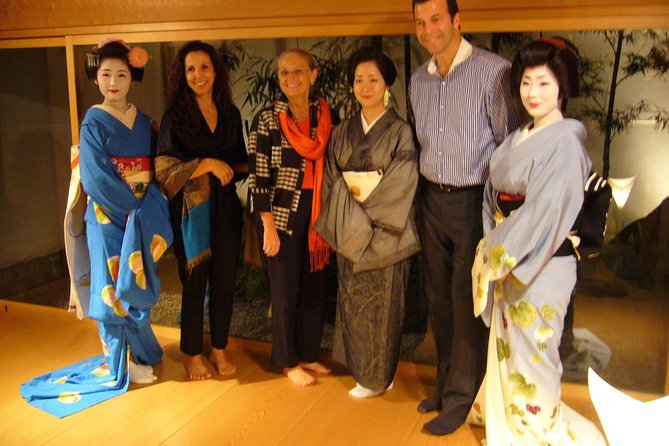
- Geiko or maiko at your table: conversation, singing, music, and dancing are part of the meal.
- Private-room kaiseki: half or full-course kaiseki depends on your option.
- Tea house upgrade adds drinks: sake and beer are included if you choose the private tea house option.
- Guides like Mia, Miyah, or Mie: many groups praise clear English and lively storytelling.
- Food is traditional, not customizable: plan for fixed courses and Japanese flavors.
Evening walks through the old quarters, compared
- Kyoto Geisha Walking Tour: Gion District & Hidden Gems
★ 4.7 · 3,273 reviews - Kyoto: Gion Magical Night Walking Tour with Geisha Trivia
★ 4.9 · 2,393 reviews - Kyoto: Gion Geisha District Walking Tour – Stories of Geisha
★ 4.7 · 2,187 reviews - Best of Kyoto: Gion, Geisha, Pagodas & Cobblestones
★ 4.9 · 2,058 reviews
Meeting in front of Minamiza, right on Shijo Street
Your evening starts at 5:00 pm, meeting in front of the main gate of the Minamiza Kabuki Theatre, facing Shijo Street. It sounds like a small detail, but I like it because it gives you an easy, central landmark in Kyoto, right where you can orient yourself fast.
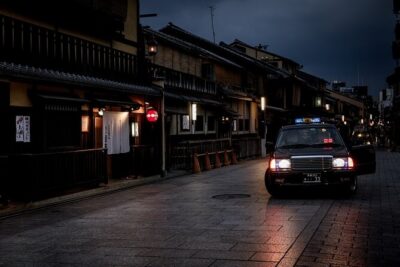
Once you’re with your guide, the vibe shifts into “Kyoto at human speed.” This is not a rushed, grab-and-go stop. The plan is to walk through Gion, learn what you’re seeing, and then transition into the dinner venue where the entertainment happens.
If you’re the type who likes a clear beginning to your night, this start time and meeting spot help. Also, the tour is described as private, meaning you and your group handle the experience together, without mixing into a large crowd.
Gion walk with a guide who sets context before the performance
After meeting, you head into Gion for a guided walk. Several schedules around this experience place the walking portion around 45 minutes, and the overall timing lands around 3 to 3.5 hours total for the night.
This part matters more than it might sound. Kyoto’s geiko district is full of details that can look like decoration if you don’t know what you’re looking at. Your guide explains the traditions, and they also help you separate the myths from the realities of this world. That context makes the later conversation and dance feel less like a show and more like a window into daily life and training.
This is also where you get the best practical benefit: you learn how to ask questions respectfully. One theme that shows up in the experience is that you’ll be talking with a geiko or a maiko, and the guide helps translate meaning, not just words.
In reviews, the guide is often the hero of the evening. People highlight guides like Mia or Miyah for being funny, friendly, and ready with answers, even when there are teenagers in the group. That matters because a good guide keeps energy up and keeps the experience from turning awkward.
Kaiseki dinner in a private room, half course or full course
Next comes dinner at a Japanese restaurant or tea house. You’ll have a half or full kaiseki meal, described as a multi-course tradition with tempura, seafood, and vegetables. If you’re choosing the private tea house option, you also get drinks included, with sake and beer added to the meal.
Here is the practical reality: this is an evening for people who want the real Kyoto food experience, not a buffet where you swap ingredients. If you love trying new flavors, you’ll likely find the kaiseki courses feel like a guided meal, with variety across the night instead of one big plate.
If you are cautious with seafood or you eat with strict limits, I’d plan carefully. The experience is set up for traditional meals, and even when dietary requests are provided at booking, not every course may match your needs. One of the clearest cautions from feedback is that if you are vegan or vegetarian, you should expect limitations and consider whether kaiseki as served will fit your comfort level.
Timing is another small but real factor. Some groups note that dinner service can feel slow, which usually comes down to how many people the venue is juggling. Since you are in a private-room setting, you can still enjoy the atmosphere, but don’t assume everything happens at top speed.
- PERFECT KYOTO 1-Day Bus Tour★ 5.0 · 13,518 reviews
- Kyoto: Fushimi Inari, Kinkakuji, Bamboo Grove 1 Day Bus Tour★ 4.8 · 4,316 reviews
- Kyoto: Tea Ceremony in a Traditional Tea House in Kiyomizu★ 4.9 · 3,519 reviews
- Kyoto Geisha Walking Tour: Gion District & Hidden Gems★ 4.7 · 3,273 reviews
- Kyoto: Tea Ceremony Ju-An at Jotokuji Temple★ 4.9 · 3,207 reviews
When the geiko or maiko joins: conversation, music, games, and dance
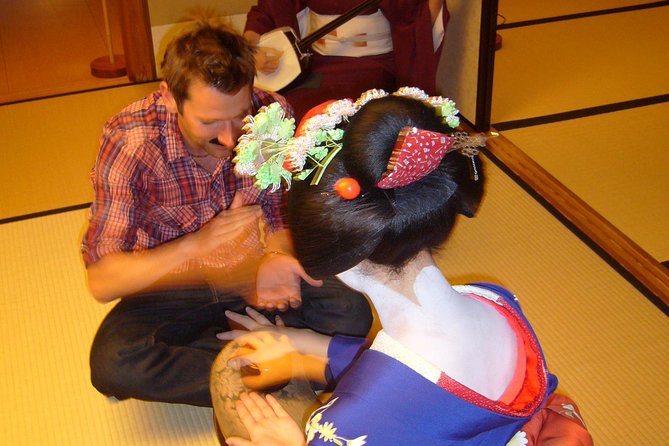
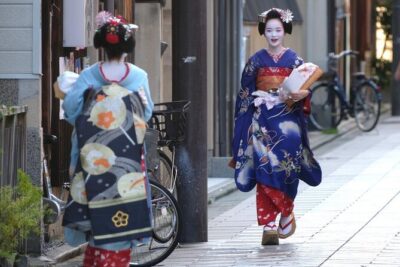
At the dinner, a geiko, a maiko, or both entertain you. The structure is simple: you talk during the meal, there is entertainment with singing and musical instruments, and there is dancing as part of the program tied to dinner time.
This is where the experience earns its reputation. Many people describe the most memorable moments as the personal conversation. You’re not just watching from a distance. You’re asking questions, learning about traditions, and hearing stories that are not meant for public performances.
Several specific entertainment elements show up repeatedly:
- Music and performance during the meal, including traditional instruments.
- Singing and short performances that fit the pace of the dining room.
- Games with guests, including at least one reported drinking game where the tone is playful and lighthearted.
- Dancing by the geiko or maiko, often with multiple dances depending on the evening.
You should also know what “private encounter” really means here. The performance space can be small because you’re in a restaurant room. Some reviews mention the dancer having limited room to move, so if you are expecting a huge stage feel, adjust your expectations. Still, the closeness is part of what makes it special.
One of my favorite parts to prepare for is question topics. People asked about daily life and the path to becoming a geiko, along with how training works and what it takes. There are also questions about kimono details and even small personal routines, like how hair and makeup are managed overnight. Those questions get the most interesting answers because they connect your curiosity to their world.
The role of your guide, and how to get the most out of translation
Your tour includes a professional guide. This is not a “walk and leave you at the door” situation. The guide helps you understand what you are seeing in Gion, and they translate during the dinner so you can actually connect with the geiko or maiko.
Guides like Mia, Miyah, Mie, or Mei are repeatedly praised for clear English and for staying upbeat. In at least one account, the guide had trained as a geiko, which helped provide a deeper level of insight. You should not count on that for every booking, but it shows the kind of experience the operator aims for.
If you want value, come with a few questions and a light, respectful attitude. The best answers tend to come when you ask things that relate to what you’ve been told on the walk, such as:
- What life is like during training and study
- How traditions are practiced today
- The difference between geiko and maiko roles (the guide can frame this properly for you)
- What guests often misunderstand about the profession
Also, keep your tone calm. This isn’t a nightclub environment. The guide and the performers are working with cultural boundaries, so gentle focus helps everyone.
Price and value: what $381.49 per person is really paying for
At $381.49 per person, this is a splurge. But I’d frame the value like this: you are paying for access and for structure.
You are not just paying for dinner. You’re paying for:
- a guide (walk plus dinner translation)
- private group handling
- a geiko or maiko accompaniment
- and an exclusive dinner-time performance
That combination is the reason this costs what it costs. A normal Kyoto dinner can be lovely, but it does not include a dedicated cultural guide, a private conversation setup, or planned entertainment by a geiko or maiko in the room.
What makes it worth it for the right person:
- You genuinely want to understand the living culture behind Gion, not just take pictures.
- You enjoy asking questions and listening.
- You’re okay with a traditional meal that may not match your usual diet.
What can make it feel overpriced:
- You care more about the food than the cultural interaction, and you find the fixed kaiseki menu hard to eat.
- You need strong dietary accommodations, especially vegetarian or vegan limits.
- You expect a long, big production show. Some evenings are more compact, depending on room setup.
If you want to maximize value, choose the option that matches your priorities. The private tea house option includes sake and beer, which adds clear payoff if you drink.
Timing, duration, and what your evening will feel like
This activity is listed around 3 hours 30 minutes. One schedule description talks about a 3-hour block combining the walk plus the private party accompaniment.
Plan on an evening that feels like an experience, not just a meal. You’ll spend time walking, then you’ll settle in for dinner, conversation, and entertainment. The night is also guided, which means you do not spend energy figuring out what is happening. That matters after a full day of sightseeing.
If you are traveling with teens, this can be a good fit. Reviews mention guides keeping teenagers engaged, and one reported playful interaction that even younger family members enjoyed. It’s also a good “Kyoto highlight” night when you want one meaningful cultural moment instead of yet another temple photo stop.
Who should book this, and who should skip
This tour is best for people who want an authentic-feeling Kyoto evening and who are comfortable with traditional norms.
You’ll likely enjoy it if:
- You love cultural explanations and Q&A
- You enjoy traditional dining, including seafood-friendly menus
- You’re excited by close-up performance and conversation
- You want a private group setup rather than a crowded evening
You might skip or rethink it if:
- You are vegetarian or vegan, or you have strict dietary needs
- You are very picky about seafood or raw fish (some people noted stomach issues)
- You want fully customizable food options
- You need a large stage production rather than a compact restaurant-room performance
One more small consideration: communication during the evening is important. If you’re in a bigger group, the guide’s voice and translation can be harder to hear depending on room layout, and that can affect your enjoyment.
Should you book Private Dinner with a Geisha in Kyoto?
My take: if you want a real Gion story told up close, this is one of the stronger ways to do it. The best version of the evening is built around the guide’s translation, the conversation with a geiko or maiko, and a traditional kaiseki meal in a private setting.
Book it if you can handle fixed traditional courses and you’re excited to ask questions. Consider the private tea house option if you want the extra drinks included and you like a slightly more celebratory dinner mood.
Skip or choose another option if food restrictions are a deal-breaker for you. In this kind of setting, the meal is part of the cultural experience, and you should expect fewer substitutions than you might get in more flexible restaurants.
If you do book, send dietary needs early and keep expectations clear. Then show up curious and respectful, and you’ll be in the right mindset to enjoy what this night is really about.
FAQ
What time does the tour start in Kyoto?
The tour starts at 5:00 pm.
Where do I meet the guide?
You meet in front of the main gate of the Minamiza Kabuki Theatre, facing Shijo Street. The meeting point is listed at 198 Nakanochō, Higashiyama Ward, Kyoto, 605-0075, Japan.
How long does the dinner experience last?
It’s listed as about 3 hours 30 minutes.
Is this a private tour or shared group?
It’s a private tour/activity, so only your group participates.
What do I eat during the dinner?
You’ll have a half or full kaiseki meal with multiple courses, including tempura, seafood, and vegetables.
Do drinks come with the dinner?
Drinks are included only if you choose the private tea house option. For that option, sake and beer are included. Drinks may be available for purchase otherwise.
What age rules apply for drinking alcohol?
The minimum drinking age is 20 years in Japan.
Can you accommodate dietary requirements?
You can advise specific dietary requirements at booking. However, the dinner is described as a traditional kaiseki set meal, so it may be limited.
What is the cancellation policy?
The experience is non-refundable and cannot be changed for any reason. If canceled, you won’t receive a refund.
Evenings in the Old Quarters



Newest Kyoto write-ups from the Loving Japan desk
Gion, Geisha and Maiko Experiences, side by side.
 ★ 4.7Kyoto Geisha Walking Tour: Gion District & Hidden GemsFrom $253,273 reviews
 ★ 4.9Gion Magical Night Walking Tour with Geisha TriviaFrom $242,393 reviews
 ★ 4.7Gion Geisha District Walking Tour – Stories of GeishaFrom $202,187 reviews
 ★ 4.9Best of Kyoto: Gion, Geisha, Pagodas & CobblestonesFrom $242,058 reviews
 ★ 4.5Night Walk in Gion: Kyoto’s Geisha DistrictFrom $212,003 reviews
 ★ 5.0Kyoto Night Foodie Tour in Gion (9+ dishes + 6 Sake tastings)From $1631,762 reviews
 ★ 5.0Kyoto Gion Geisha District Walking Tour – The Stories of GeishaFrom $251,441 reviews
 ★ 5.0Kyoto Gion: 2-Hour Geisha Culture & History Walking TourFrom $231,186 reviews
Filed on these lists too