
REVIEW · AKIHABARA, ANIME AND OTAKU CULTURE
Ramen Making from Scratch +Akihabara Tour –Cooking Class
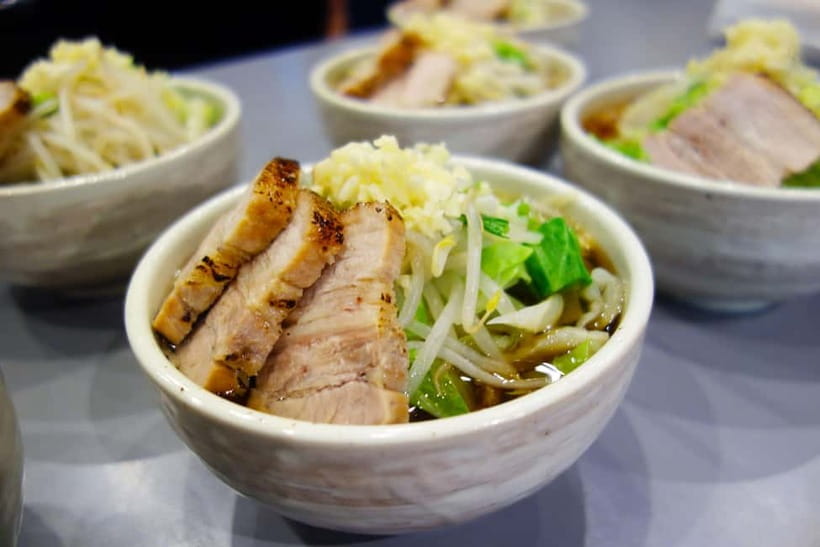
A ramen class in Tokyo is fun, but this one has a twist: Jiro-style ramen taught in English. You get hands-on practice making noodles from flour and building a bowl with real Japanese ingredients, not just watching. One thing to consider is that it is not vegan or vegetarian friendly, and you need to handle getting yourself to the kitchen studio.
You’ll start in Akihabara, stroll through the streets, then do a supermarket walk where the ingredients for your ramen day get explained. The class is small (limited to 6), so you can ask questions while an English-speaking instructor guides you through broth, noodles, and toppings. The only real downside I see is timing and location: you meet at Akihabara Station, but the class ends at a different place, and you should not plan to show up late.
In This Review
- Key highlights you will care about
- Why this Akihabara ramen class feels more “real” than most
- Akihabara walking tour: the fun warm-up before the kitchen
- The supermarket walk: where ramen ingredients stop being a mystery
- The train ride to Patia Kitchen Studios (and why you should prep your transit card)
- Patia Kitchen Studios: a real-feeling kitchen setup
- Cooking class: fresh noodles, broth building, and toppings that actually matter
- Jiro-style ramen focus, taught in English
- Chashu flexibility: pork by default, chicken with notice
- What is included, and what that means for your budget
- How this class fits different types of schedules
- Best for: ramen fans and skill builders
- Less ideal for: picky dietary needs and some mobility situations
- Practical tips so you get the most out of the session
- Should you book this ramen class?
- FAQ
- Where is the meeting point and when does the tour start?
- How long is the experience?
- How big is the class?
- Is the class taught in English?
- What parts are included in the experience?
- What is not included?
- Can you make a chashu substitution from pork to chicken?
- Is there transportation to the kitchen studio included?
- Is the class suitable for vegans or vegetarians?
- Is the ramen class appropriate for young children or people with mobility needs?
Key highlights you will care about
- English instruction for Jiro-style ramen, a rare find in Tokyo cooking classes
- Noodle-making from flour, not just assembling toppings
- Akihabara walking tour + supermarket ingredient stop, so cooking starts with context
- Patia Kitchen Studios, central, spacious, and near public transit
- Small group size (up to 6), better for hands-on guidance
- Pork chashu with a change option, if you request chicken more than 48 hours ahead
Deeper into Akihabara, if that is your afternoon
- Official Street Go-Kart Tour – Akihabara
★ 5.0 · 1,578 reviews - Tokyo Go Kart: Asakusa, Skytree, and Akihabara **IDP MUST**
★ 5.0 · 988 reviews - Akihabara Anime & Game Adventure Walking Tour (Group or Private)
★ 5.0 · 404 reviews - Tokyo: Gameboy Mod Workshop at Akihabara
★ 5.0 · 253 reviews
Why this Akihabara ramen class feels more “real” than most
Tokyo food lessons can fall into two buckets. Some are basically a tasting with a cooking demo. Others are hands-on, but the experience starts after you already have the ingredients. This class tries to connect the whole chain, from shopping to cooking to eating, inside one tight half-day window.
You start in Akihabara, the electric playground of gadgets and pop culture. That setting matters more than it sounds, because your guide uses the walk to explain modern food-culture habits and the kinds of ingredients Japanese cooks reach for. Then you walk into a local supermarket, where you get to see the building blocks your bowl will need. Instead of learning recipes as abstract “steps,” you connect them to what you actually buy in Japan.
And then you get to do the main event: making ramen noodles from flour, plus preparing broth and toppings with an English-speaking instructor. The result is not just a meal, it is a repeatable skill set you can carry home.
Akihabara walking tour: the fun warm-up before the kitchen
You meet at 11AM at JR Akihabara Station, outside the Central Ticket Gate. From there, you take a short walk through Akihabara with your guide. This part is about 20 minutes, so it is not a long sightseeing detour. It is enough time to get your bearings and to start noticing the food-related details that make the whole cooking experience feel grounded in today’s Tokyo.
What I like about this section is that it is not random. Your guide is setting you up for the supermarket stop by pointing out the everyday atmosphere around you: the fast pace, the mix of old-meets-new, and the way people shop and snack casually between errands.
Also, Akihabara is easy to reach, but it can be easy to get lost inside the station maze. If you arrive early, you can avoid stress. If you are more than about 10 minutes late, the group departs, and you will be asked to go straight to the studio instead. No refunds apply for delays, so plan a cushion.
The supermarket walk: where ramen ingredients stop being a mystery
Next comes the supermarket segment, again about 20 minutes. This is the part that often gets skipped in “make ramen” classes, and it is one of the best reasons this experience earns its money.
You will check out ingredients that match the ramen you will cook that day. Your guide explains what you are looking at and how those items fit into the final bowl. In other cooking classes, flour is just flour and broth is just broth. Here, you start seeing how Japanese grocery packaging and ingredient choices translate to flavor at the end.
Even if you already cook at home, this stop is useful because it teaches you the logic behind the ingredients. You are not only learning what to add. You are learning why those ingredients make the style work.
Practical tip: use the supermarket time to ask questions about substitutions. The class is not vegetarian or vegan, so if you have dietary needs, your options may be limited. Still, you can ask how flexible ramen components are in general when you cook later.
Cook it yourself instead. Other kitchens in Tokyo
- Sushi Making Tokyo Roll and Authentic Japanese Sushi Class★ 5.0 · 3,971 reviews
- Tokyo: Sushi Making Class in a Happi Coat near a Famous Spot★ 4.9 · 1,377 reviews
- Tokyo Sushi Making Class in Tsukiji with Professional Chef★ 5.0 · 1,177 reviews
- Ramen & Gyoza Cooking Class in Tokyo with Local Supermarket Visit★ 5.0 · 823 reviews
- Tsukiji Fish Market Guided Tour and Sushi Making with Pro Chef★ 5.0 · 775 reviews
The train ride to Patia Kitchen Studios (and why you should prep your transit card)
After shopping, you take a train to Patia Kitchen Studios, with a ride time around 15 to 30 minutes. This is one of those “small logistics” pieces that can make or break your morning if you are not ready.
Transportation from Suehirocho Station to the studio is not included, so you will need your own Suica or another IC card for the train portion. If you do not have one yet, the guide can help you buy a ticket.
Why I bring this up: Japanese trains are smooth, but they are not always intuitive on your first try. Having your IC card ready keeps you from turning your cooking class into a mini scavenger hunt.
Also note that the class ends at the kitchen studio, which is not the same location as the Akihabara meeting point. So when you plan the rest of your day, do not assume you will “drop back” near Akihabara.
Patia Kitchen Studios: a real-feeling kitchen setup

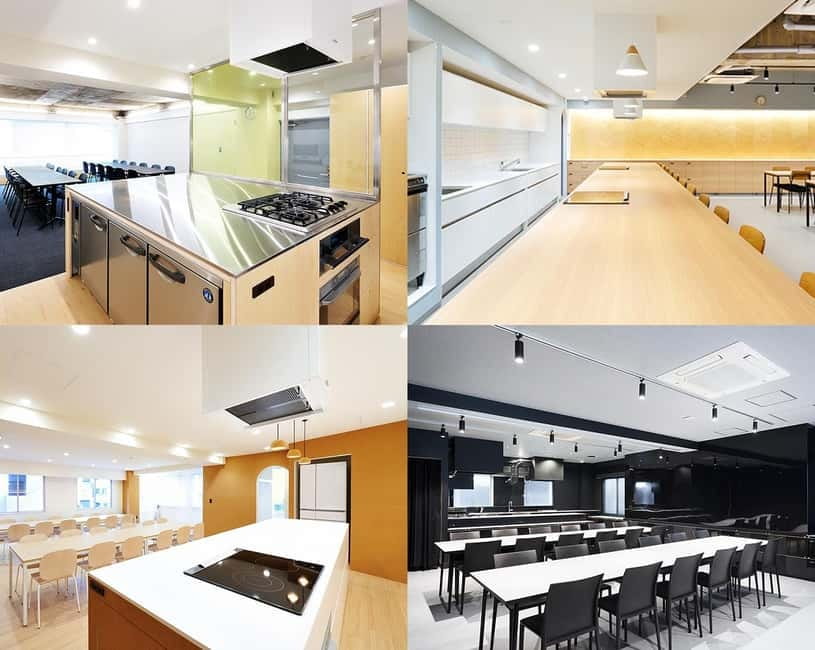
Patia Kitchen Studios is described as central Tokyo, spacious, and relaxing, with a convenient location near public transit. It is also a venue known through Japanese TV for Jiro-style ramen, which matters because it signals that this is not a one-off demo kitchen.
You walk into a kitchen environment that feels made for group cooking, not cramped desk work. That’s important because ramen is hands-on. Mixing, shaping, and timing dough and broth steps all go more smoothly when the workspace is practical.
You are also in a small group limited to 6 participants, which makes the kitchen feel more like a workshop than a production line.
Cooking class: fresh noodles, broth building, and toppings that actually matter
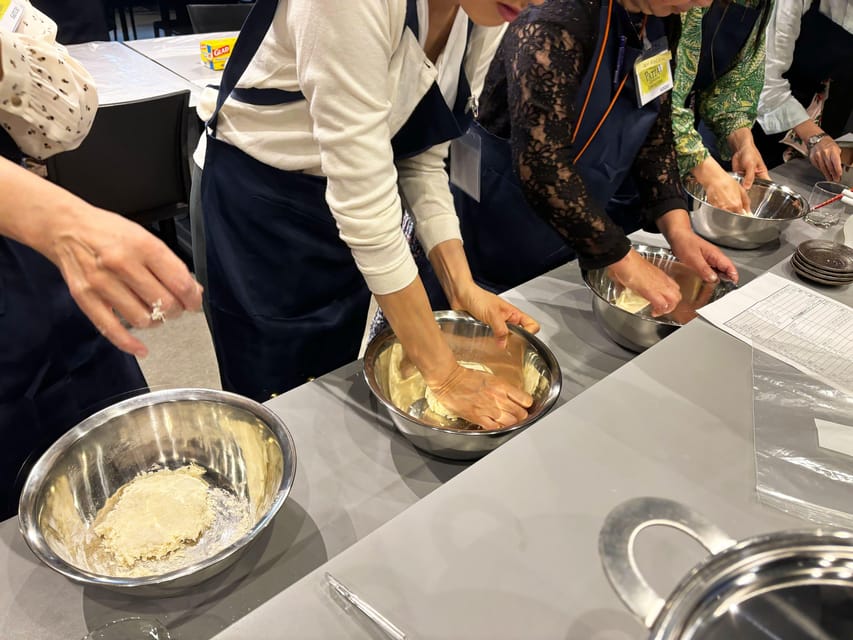
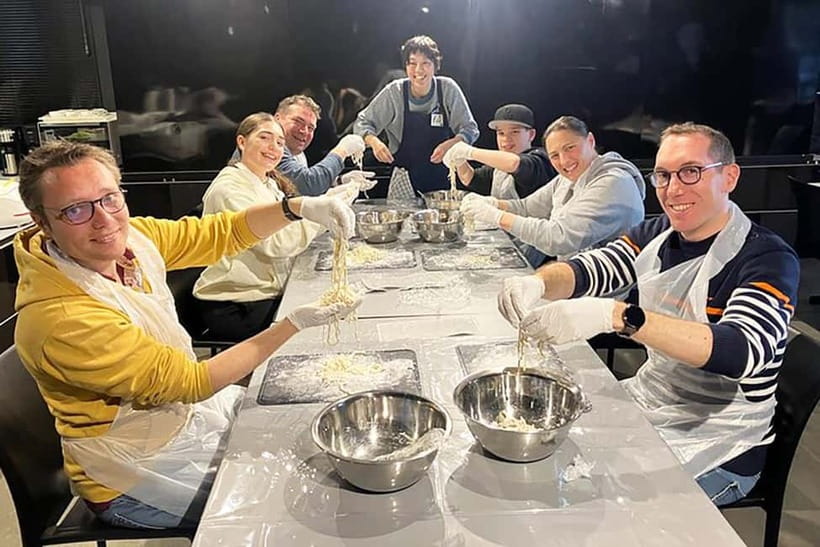
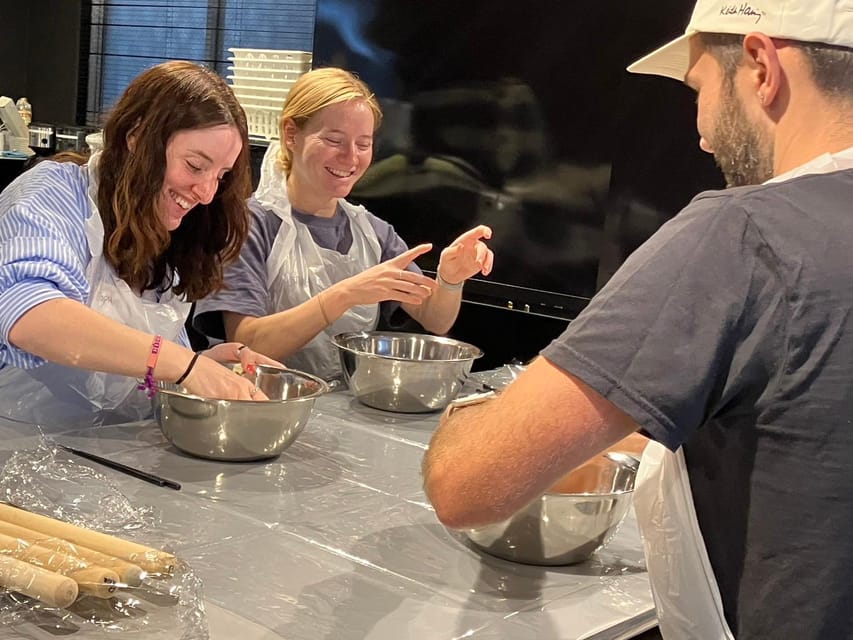
The cooking portion runs about 90 minutes, and it is where you earn the title of “ramen maker.” You will be guided through:
- Preparing the broth
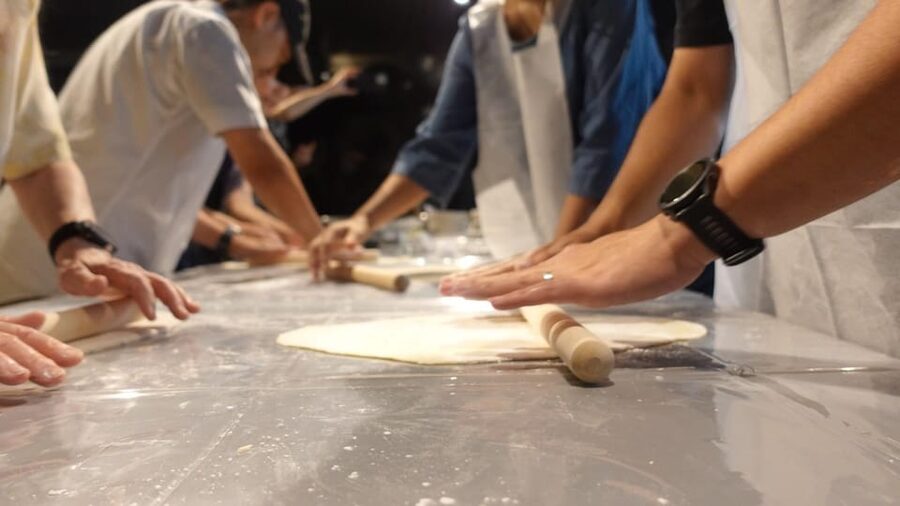
- Making fresh noodles from flour
- Assembling the bowl with toppings
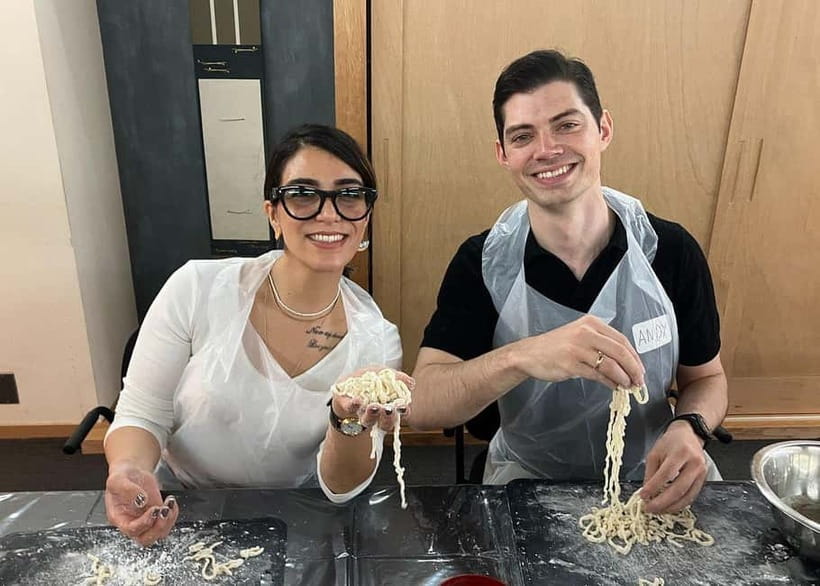
What makes this class feel valuable is that you are not only doing the final assembly. You get to create the base elements yourself, especially the noodles. Learning how to make noodles from scratch changes your understanding of ramen. Store-bought noodles are convenient, but fresh noodles teach you about texture, thickness, and how dough behaves before it hits hot water.
Jiro-style ramen focus, taught in English
This is the only class highlighted as one where you can learn Jiro Style Ramen in English. That is a big deal, because “Jiro style” often gets discussed with jargon that can be hard to translate when instruction is not in your language.
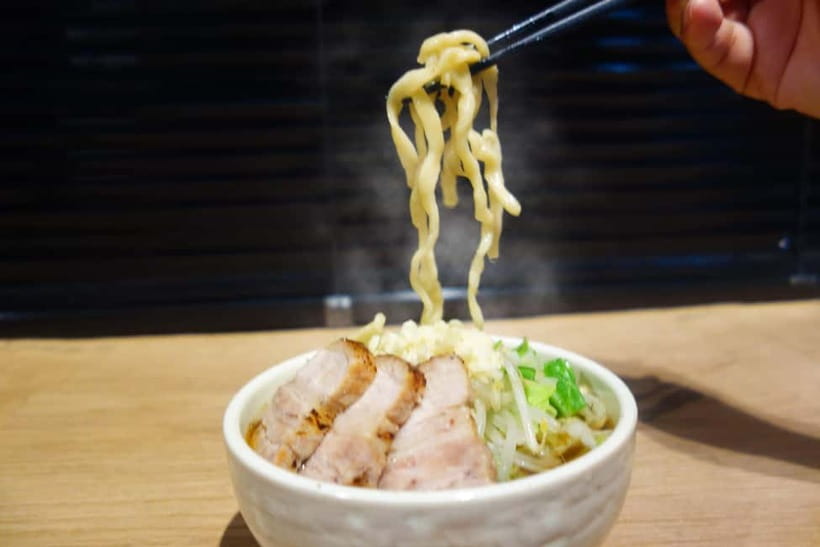
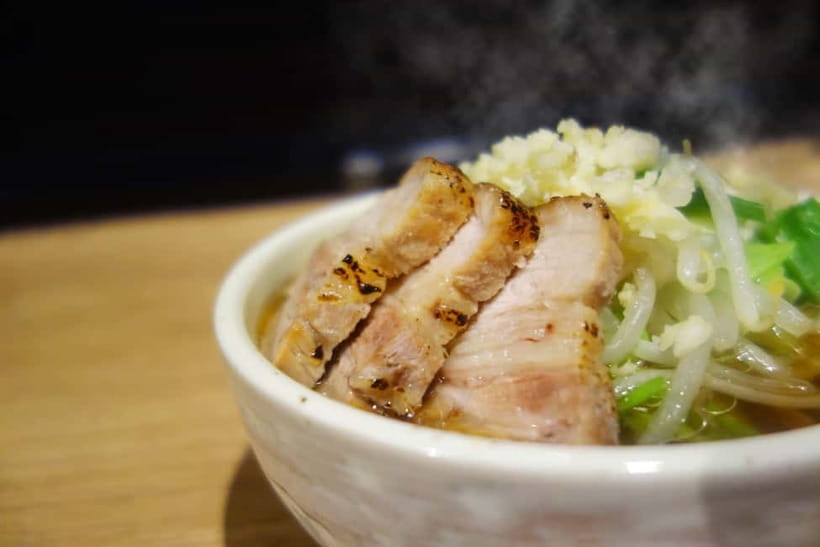
Here, you get the method explained clearly so you can actually reproduce the approach. You finish with a bowl of Jiro-style ramen you made, which is the best proof of the class structure. When your work ends up on your plate, it is easier to remember what to do next time.
Chashu flexibility: pork by default, chicken with notice
By default, the chashu is pork. If you let the organizers know more than 48 hours in advance, you can switch the chashu from pork to chicken. This is a helpful option if you avoid pork but still want the same ramen style.
What I recommend: if you want the chicken change, do it early in your planning cycle. Short-notice changes are not mentioned as available, so treat the 48-hour window as your target.
What is included, and what that means for your budget
The price is $120 per person for about 3 hours. That sounds like a lot until you break down what is actually included.
You get:
- Grocery store walk-in
- Cooking experience
- Food and beverage
- Later-downloadable photographs during the experience
So you are paying for more than a recipe. You are paying for the guide plus an English instructor, the ingredient shopping component, the kitchen space, and the fact that you eat a bowl made by your hands.
In Tokyo, you can find cheaper meals. You can also find noodle demos. What is harder to find is a class that covers the full chain: ingredient inspection in a supermarket, noodle-making from flour, broth work, then eating your own Jiro-style bowl in a small group. That is where the value comes from.
If you love ramen and want skills you can repeat, this price starts to look fair. If you are mainly there for a snack and photos, there may be less cost-effective options.
How this class fits different types of schedules
Best for: ramen fans and skill builders
You’ll enjoy this most if ramen is a “let’s do it” food for you. If you want to understand what makes a style work, and you like cooking tasks where timing and texture matter, you are in the right place.
The small group size helps too. With only up to 6 participants, it is easier to get personal attention, and you are more likely to keep up as steps stack.
Less ideal for: picky dietary needs and some mobility situations
The class is not available for vegan or vegetarian options, and it is not suitable for children under 5, people with back problems, or wheelchair users. Baby strollers are also not allowed, and smoking is not permitted.
If you are traveling with someone who needs mobility accommodations, this is not the type of class where you can quietly “adjust on the spot.” You will likely want a different format that is easier to adapt.
Practical tips so you get the most out of the session
You only have a 3-hour block, so small choices matter.
- Arrive early to reduce the risk of being late. The departure rule is strict, and late arrivals mean you go straight to the studio.
- Wear comfortable shoes. The Akihabara walk is short, but you still do a real neighborhood stroll.
- Keep your questions ready. The ingredient stop and the cooking time are when questions help the most.
- If pork is an issue for you, ask for the chicken chashu option well before the 48-hour mark.
- Plan your next activity around being dropped at the studio, not back at Akihabara.
Should you book this ramen class?
I think you should book this if you want hands-on ramen skills and you care about doing it in a way that is understandable in English. The combination of Akihabara context, the supermarket ingredient walk, and then making noodles from flour is a strong mix. Add the fact that it focuses on Jiro-style ramen, and you have a lesson that feels specific rather than generic.
Skip it if you cannot eat pork and you did not request the chicken switch in time. Skip it too if you need vegan or vegetarian accommodations, or if mobility limits make workshop-style kitchen time difficult. Also consider the logistics: there is no hotel pickup, and you are responsible for getting yourself to the studio area.
If ramen is on your Tokyo “must learn” list, this one is a solid way to turn a single afternoon into something you can actually cook again later.
FAQ
Where is the meeting point and when does the tour start?
The meeting point is 11AM at JR Akihabara Station, outside the Central Ticket Gate.
How long is the experience?
The duration is 3 hours.
How big is the class?
It is a small group limited to 6 participants.
Is the class taught in English?
Yes. The instructor language is English.
What parts are included in the experience?
Included are a grocery store walk-in, the cooking experience, food and beverage, and later-downloadable photographs during the experience.
What is not included?
Hotel pickup and drop-off are not included.
Can you make a chashu substitution from pork to chicken?
Yes, if you request it more than 48 hours in advance, the chashu can be changed from pork to chicken.
Is there transportation to the kitchen studio included?
No. Transportation from Suehirocho Station to the studio is not included. You should use your own Suica or other IC card for the train. If you do not have one, the guide will help you buy a ticket.
Is the class suitable for vegans or vegetarians?
No. Vegan and vegetarian options are not available.
Is the ramen class appropriate for young children or people with mobility needs?
It is not suitable for children under 5, people with back problems, and wheelchair users. Baby strollers are also not allowed.
Kitchens You Can Book Into


Akihabara After the First Stop





Newest Tokyo write-ups from the Loving Japan desk





Akihabara, Anime and Otaku Culture, side by side.
 ★ 5.0Official Street Go-Kart Tour – AkihabaraFrom $611,578 reviews
 ★ 5.0Tokyo Go Kart: Asakusa, Skytree, and Akihabara **IDP MUST**From $99988 reviews
 ★ 5.0Akihabara Anime & Game Adventure Walking Tour (Group or Private)From $90404 reviews
 ★ 5.0Gameboy Mod Workshop at AkihabaraFrom $360253 reviews
 ★ 4.8Owl Cafe Tokyo Akiba FukurouFrom $35154 reviews
 ★ 5.0Akihabara Tailor-made Private Tour for Anime FansFrom $132142 reviews
 ★ 5.0Tokyo Cute Bento Cooking Class – Make a Kawaii Character LunchboxFrom $66126 reviews
 ★ 5.0Original Street Kart Experience from AkihabaraFrom $51111 reviews