
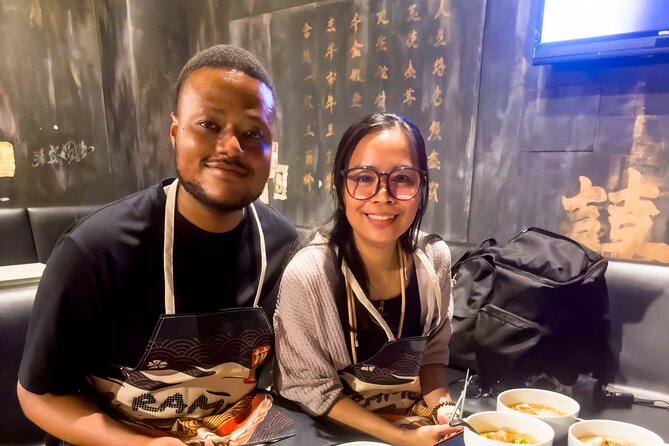
REVIEW · SHIBUYA, SHINJUKU AND HARAJUKU WALKS
Shibuya: Ramen Dojo Tokyo | Make All 3 (Tonkotsu/Shoyu/Miso)
Making ramen in Shibuya beats another night out. In this hands-on workshop near Shibuya Station, I love that you create fresh noodles and then taste a true ramen side-by-side showdown of tonkotsu, shoyu, and miso.
One thing to plan for: it is a wheat-based class with common allergens (wheat, egg, soy, chicken, and pork), and it is stairs only. If you have a sensitive stomach, celiac, or strict dietary needs, you’ll want to check carefully before booking.
In This Review
- Key points to know before you go
- Shibuya Ramen Dojo Tokyo: the idea that makes this class feel different
- Location and getting there, from Shibuya Station to the studio stairs
- The 90-minute flow: what happens when, minute by minute
- Noodle making with a professional machine, plus the “feel” of the dough
- Chicken chashu work: topping prep you can actually repeat later
- Comparing tonkotsu, shoyu, and miso in one tasting window
- What you are really getting for $64 in Tokyo value terms
- English guidance, small group size, and instructor quality
- Practical tips so your class goes smoothly
- Dietary fit and who should book (or skip)
- After class: what to do in Shibuya with ramen on your mind
- Should you book Ramen Dojo Tokyo in Shibuya?
Key points to know before you go
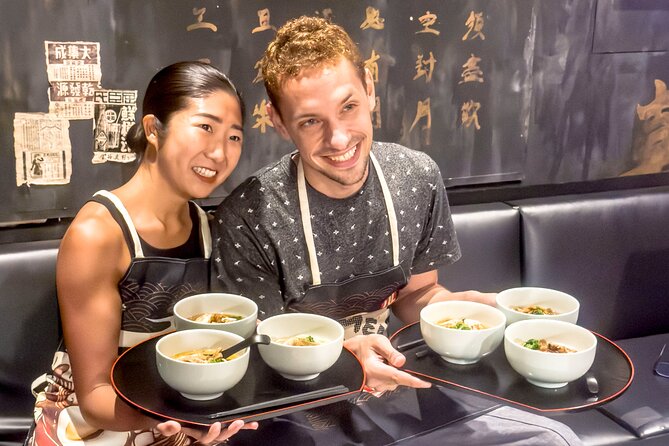
- Three ramen styles in one session, so you can compare broth flavors instead of guessing later
- Hands-on noodle making with a professional machine, plus guidance that keeps it beginner-friendly
- Chicken chashu work and soup-base adjustments, not just assembly from start to finish
- Small group size (max 8), with English instruction and fast help when you get stuck
- You eat what you make, usually feeling satisfied after all three mini bowls
- Photo-friendly pacing, with a dedicated tasting and picture window at the end
Other routes through the west side of Tokyo, compared
- Tokyo: Shinjuku Food Tour (13 Dishes at 4 Local Eateries)
★ 5.0 · 6,603 reviews - Tokyo Bar Hopping Tour in Shinjuku (All-You-Can-Drink + Dinner)
★ 5.0 · 3,587 reviews - Official Street Go-Kart in Shibuya
★ 5.0 · 3,435 reviews - Tokyo: Shinjuku Food Tour (15 Dishes and 4 Eateries)
★ 4.9 · 2,033 reviews
Shibuya Ramen Dojo Tokyo: the idea that makes this class feel different
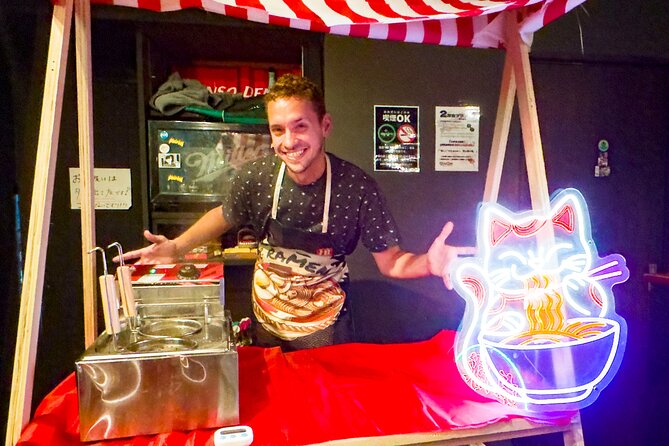
Tokyo has endless ramen shops, but this experience gives you the maker’s view. You’re not just eating ramen, you’re building it, noodle by noodle, then tuning the broth strength as you assemble three mini bowls.
What makes it click in Shibuya is the format. You do real prep tasks like cutting fresh noodles and finishing chicken chashu, then you compare tonkotsu, shoyu, and miso in one go. That comparison matters because ramen is all about balance, and once you taste the differences back-to-back, it sticks.
A small but important bonus: it is not a long, full-day commitment. You get 90 minutes of concentrated cooking, then you can head right back into Shibuya.
Location and getting there, from Shibuya Station to the studio stairs
The studio sits near Shibuya Station, and it’s about a 10-minute walk. The exact address is 1F, 2-16-29 Ohashi, Meguro-ku, Tokyo 153-0044, Japan.
Plan your route with the stairs in mind. Accessibility is described as stairs only, so if stairs are a challenge for you, this is likely not your best fit.
Also note the timing rule: doors open 10 minutes before class start. They ask you not to arrive earlier because there is no waiting area and early entry is not allowed.
The 90-minute flow: what happens when, minute by minute

This workshop moves fast but not chaotic. The structure is clearly paced, with a start-to-finish rhythm that keeps first-timers from falling behind.
Here’s how the time is laid out:
- Check-in & briefing (10 min): You get oriented, then learn what you’ll make and how the tasting will work.
- Chicken chashu prep (5 min): You start working on the chicken component for your ramen topping.
- Noodle making (20 min): You knead, roll, and cut fresh noodles using the equipment provided and guided steps.
- Chicken chashu finishing (10 min): You complete the chashu so it is ready to top your bowls.
- Boiling noodles / soup preparation (10 min): This is where the hot components come together so you can assemble and taste.
- Plating (5 min): You build your three bowls.
- Tasting / photo time (30 min): This is the best payoff stretch, with time to eat, compare, and take pictures.
Two details that help your expectations:
- The session is hands-on, but some broth-related prep is handled by the team so you can still finish within 90 minutes. One student noted that broth elements can be pre-prepared because they take time.
- You still do the important parts, especially around noodles and finishing, so it feels like your ramen, not someone else’s dinner.
A bowl somewhere else in Tokyo
- Ramen & Gyoza Cooking Class in Tokyo with Local Supermarket Visit★ 5.0 · 823 reviews
- Tokyo: Ramen Tasting Tour with 6 Mini Bowls of Ramen★ 4.9 · 432 reviews
- Tokyo: Easy Ramen Cooking Experience in Kabukicho, Shinjuku★ 4.6 · 321 reviews
- Ramen and Sushi Cooking Class with Sake Pairing Set in Tokyo★ 5.0 · 291 reviews
- Professional Ramen & Gyoza with Ramen Chef in a restaurant!★ 5.0 · 223 reviews
Noodle making with a professional machine, plus the “feel” of the dough
Your biggest skill gain here is noodle work. You use a professional noodle machine to knead, roll, and cut fresh noodles, and the instructor guidance is the difference between you thinking you can do it and you actually doing it.
A lot of classes teach cooking as “watch and copy.” This one leans more toward “try it, then adjust.” Several reviews mention clear, step-by-step directions, and one person specifically noted an instructor encouraging hand technique over relying only on electronic equipment. In practice, that means you’ll likely get both: machine help plus coaching on the right texture and handling.
What I think you’ll enjoy is how quickly you go from dough to something real. Even if you’ve never touched dough before, you’ll see progress within the 20-minute noodle making block.
Chicken chashu work: topping prep you can actually repeat later
Ramen classes sometimes stop at assembly. Here, the chicken chashu is part of your hands-on tasks, starting with prep and then moving into a finishing phase.
It’s also the part that makes your bowls feel complete. Reviews repeatedly call out the quality of the final ramen and the fact that the three bowls are filling. That is what good chashu does in a bowl, it brings fat, savoriness, and texture, not just looks.
If you’re curious about the cooking style, keep an open mind. One student mentioned an instructor using a blowtorch during finishing, which suggests there may be quick, flame-based steps depending on the day’s method. Either way, the key point is that the chashu is worked through in your session, not dumped in front of you fully finished.
Comparing tonkotsu, shoyu, and miso in one tasting window
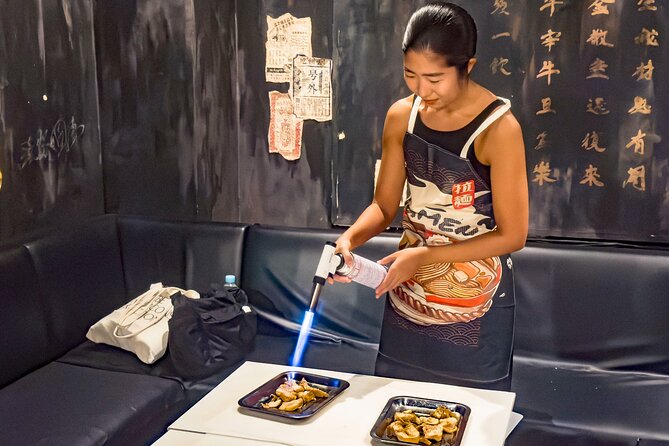
The tasting highlight is three mini bowls in one session: tonkotsu, shoyu, and miso. The best part is that you eat them side by side, so you can actually notice what changes when the broth changes.
You also get flavor control. The class description says you adjust the soup base to your preferred strength, and that matters. People often order ramen and accept the broth intensity as a given. Here, you learn the idea that strength and seasoning are adjustable choices.
Quick context so your brain can latch onto it:
- Tonkotsu is typically rich and creamy, and the “heaviness” hits quickly.
- Shoyu leans soy sauce-forward, with a clearer savory profile.
- Miso tends to feel deeper and more rounded, often with a slightly sweet or earthy note.
Even if you’ve had these before, tasting them in one sitting after making noodles and toppings gives you a better mental map for how to order ramen later at shops in Tokyo or at home.
And yes, it’s built for photos. The schedule includes a 30-minute tasting and photo time block, and the experience welcomes pictures and encourages social sharing with #RamenDojoTokyo.
What you are really getting for $64 in Tokyo value terms
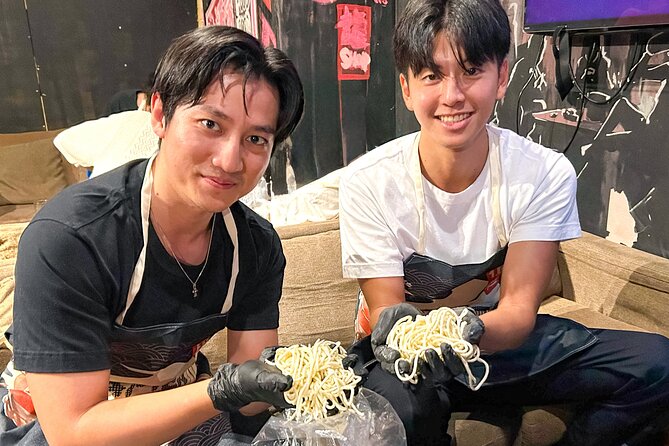
$64 per person is not cheap, but it also isn’t just paying for food. You’re paying for:
- A small-group, guided workshop (max 8 guests)
- English instruction with attentive support
- Equipment access (including the noodle machine and tools used in the process)
- Ingredients used during the session
- Three mini bowls that become your meal
- A digital recipe sent after class
In Tokyo, you can absolutely spend far less on ramen. But you won’t usually get instruction, equipment access, and the chance to make three styles in one sitting. What you’re buying is the skill plus the comparison tasting, and you walk away with a recipe file you can actually use.
One review also hinted that lunchtime bookings can feel especially efficient, like you’re getting a class and a meal at the same time. That lines up with the schedule and the fact that drinks are not included, so ramen becomes the main focus.
English guidance, small group size, and instructor quality
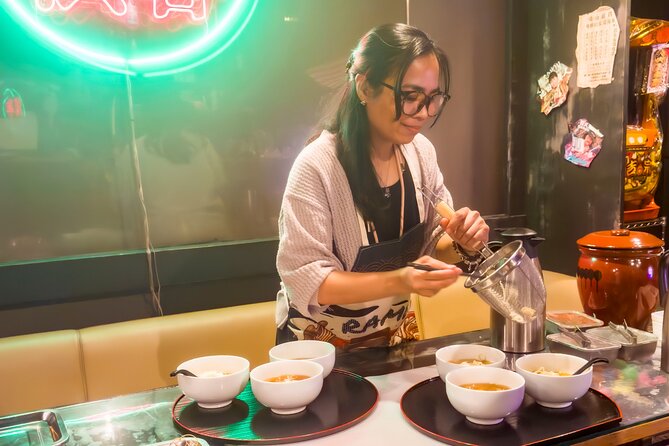
The class is taught in English, with some Japanese support from the instructors. Group size is capped at 8 guests, which is why you’re not stuck shouting across a room.
Across the reviews, the instruction style gets consistent praise. Names come up again and again, including instructors like Kai, Kazuki, Kensei, KazuKi, Arata, Atari, Kuzuki, Ivy, Rin-san, and Onodera. While you can’t pick your guide, the pattern is clear: people feel comfortable, directions are clear, and questions get answered quickly.
One practical tip: if you want to learn something specific, ask during the briefing or early in the noodle stage. The later you leave questions, the more you’ll feel rushed into cooking.
Practical tips so your class goes smoothly
This is the part that makes a big difference between a fun session and a stressful one.
- Bring a hungry appetite. Several reviews say to go hungry and that the three bowls are filling. The schedule is short, so if you arrive already full, you may not enjoy the comparison tasting.
- Expect flour. Aprons are loaned, but you might still get flour on your clothes during noodle making. Wear something you’re okay with getting a little dusted.
- Wear shoes that work with stairs. The studio is stairs only.
- Plan your timing around the start time. Doors open 10 minutes early. They ask you not to arrive earlier than that, and arriving 5+ minutes late may mean you join in progress or not be able to join, for safety and class flow.
If you have asthma or flour sensitivity, don’t ignore it. One review described a coughing fit during the class and said the staff were kind and accommodating. Still, if flour is a strong trigger for you, consider whether this workshop matches your needs.
Dietary fit and who should book (or skip)
This workshop is not built for every dietary situation. Ingredients listed include wheat (gluten), egg, soy, chicken, and pork, and the team states they cannot guarantee complete cross-contamination prevention.
So, here’s the clean way to decide:
- If you have severe allergies to wheat (gluten), egg, or soy, or you have celiac disease, this is not suitable.
- If you need strict dietary compliance, like fully strict vegan or religious diets, the information says it may not be possible.
- Partial accommodations may be possible for no chicken/pork, vegetarian, and vegan, but advance inquiry is required.
Also watch for the “airborne flour sensitivity” note. Flour exposure is part of making noodles from scratch, so if that’s a problem for you, be cautious.
Good fit for most people is: no severe allergen restrictions, you’re okay with wheat-based cooking, and you want a fun skill-building meal.
After class: what to do in Shibuya with ramen on your mind
The session starts and ends at the same location, so you can keep moving. Once you’re done, you are free to explore Shibuya without worrying about transfers.
One small detail from reviews: someone mentioned a lounge area with ping pong at night. That’s not central to the class, but it suggests the space may have a relaxed vibe beyond just the cooking room.
The practical takeaway: plan a short Shibuya route after your class. You’ll want time to walk off the noodles, then look for a ramen shop the next day with your new flavor compare lens.
Should you book Ramen Dojo Tokyo in Shibuya?
I’d book it if you want more than dinner. This is a hands-on, beginner-friendly ramen workshop that teaches real noodle making and chashu prep, then lets you taste three broth styles side by side. The small group setup and English instruction make it feel approachable, and the final bowls are presented as a meal you’ll actually enjoy.
I would not book it if you have severe allergen needs or celiac, or if you cannot do stairs or are very sensitive to flour exposure. Also think twice if you want a low-effort experience, because the fun here comes from doing the work.
If you like cooking, ramen comparisons, and learning a skill you can repeat, this one earns its spot in a Tokyo itinerary.
One More Bowl


West Tokyo on Foot: Seven More



Newest Tokyo write-ups from the Loving Japan desk




Shibuya, Shinjuku and Harajuku Walks, side by side.
 ★ 5.0Shinjuku Food Tour (13 Dishes at 4 Local Eateries)From $866,603 reviews
 ★ 5.0Tokyo Bar Hopping Tour in Shinjuku (All-You-Can-Drink + Dinner)From $1063,587 reviews
 ★ 5.0Official Street Go-Kart in ShibuyaFrom $763,435 reviews
 ★ 4.9Shinjuku Food Tour (15 Dishes and 4 Eateries)From $852,033 reviews
 ★ 4.9Shinjuku Local Bar and Izakaya Guided Walking TourFrom $341,794 reviews
 ★ 5.0Tokyo Shinjuku Chopsticks Making ClassFrom $201,763 reviews
 ★ 5.0Tokyo Shinjuku Sumo Show & Experience with PhotoFrom $791,750 reviews
 ★ 4.9Street Kart Experience in ShibuyaFrom $741,484 reviews
Filed on these lists too