
REVIEW · ASAKUSA, SENSO-JI AND TOKYO SKYTREE
Sushi Making with Interactive Samurai Experience at JIN-ASAKUSA
Samurai gear meets sushi lessons. In Asakusa, JIN-ASAKUSA turns a classic sushi class into interactive sushi making with a Sengoku-era vibe, chef sword show moments, and serious bite-size tastings.
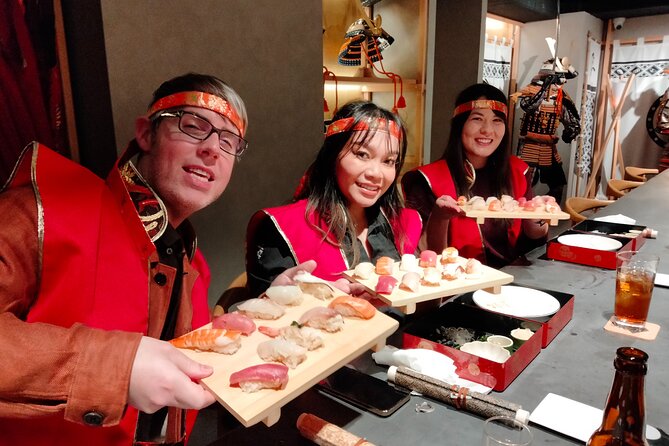
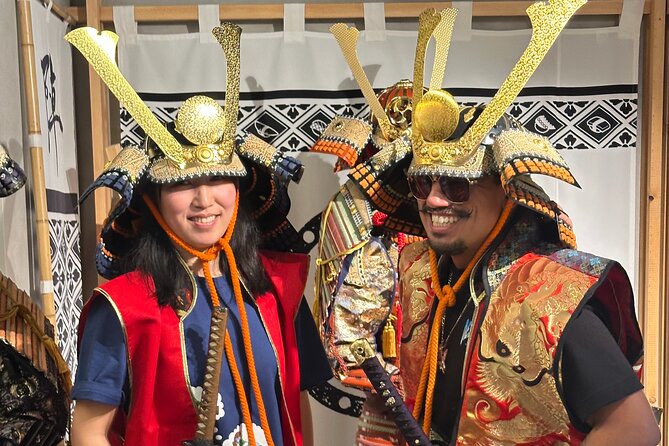
You start with dressing up like a warrior, then learn sushi technique at the counter while the chef keeps the energy up.
I especially like the private group setup. It is just your party, so you are not fading into a big room of strangers, and the chef can keep instructions moving.
I also like the tasting-heavy format, with plenty of ingredients such as crab, salmon, caviar, and Wagyu, plus Japanese omelet and Kobe beef.
One consideration: this is part cooking class and part game show. If you want a quiet, slow, technique-only session with no quiz battle or stage-style moments, the pacing may feel a bit too lively.
In This Review
- Quick hits before you go
- Sushi Making with Samurai Energy in Asakusa
- Course Options: SHOGUN vs Trio Chef Live (What You Actually Get)
- Premium Int. Ent. SHOGUN (Standard and Dessert versions)
- Trio Experience Chef Live (Standard and Dessert versions)
- Which should you pick?
- The 2-Hour Flow: From Samurai Dressing to Your Final Bites
- What You Learn: More Than Just Nigiri Assembly
- You get taught the core technique for sushi from scratch
- You get demonstration support for other Japanese staples
- The quiz battle turns memory into muscle
- The Tasting Lineup: Crab, Salmon, Caviar, Wagyu, and More
- Samurai Sword Show and Chef Energy: Why It Feels Like a Show
- Photo Time, Fun Battles, and Who This Suits Best
- Price and Value: Is $49.27 Worth It?
- Logistics That Matter: Location, Timing, and Getting There
- Should You Book JIN-ASAKUSA Sushi Making with Samurai Experience?
- FAQ
- How long is the sushi making experience?
- What is the price per person?
- Is this experience private?
- What ticket format do I receive?
- What course options are available?
- What kinds of sushi and items are included in the Trio Chef Live course?
- Does the experience include tasting?
- Is transportation to the venue included?
- Are drinks included?
- What happens if I need to cancel?
Quick hits before you go
- Dress like a samurai at the start, then learn at your own station
- Chef-led sushi making from scratch, with demonstrations running alongside your practice
- Food quiz battle with an “Aim for SHOGUN” style challenge and a prize winner moment
- Lots to taste beyond what you make, including crab, salmon, caviar, and Wagyu
- Two menu styles: SHOGUN courses focused on more varieties, Trio Chef Live focused on a set lineup (including nigiri, futomaki, and a sushi donut)
Still on the Sumida side? A few more Asakusa options
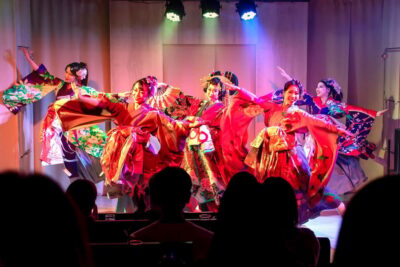
- Tokyo: Japanese Dance Cabaret Theater Asakusa-Kaguwa Ticket
★ 4.8 · 2,270 reviews - Tokyo: Meiji Shrine, Asakusa, Skytree Bus Tour and Cruise
★ 4.7 · 1,986 reviews - Tokyo: Roll and Authentic Sushi Making Class in Asakusa
★ 4.9 · 1,957 reviews - Tokyo: Asakusa Walking Tour with Sensoji Temple Visit
★ 4.8 · 1,583 reviews
Sushi Making with Samurai Energy in Asakusa
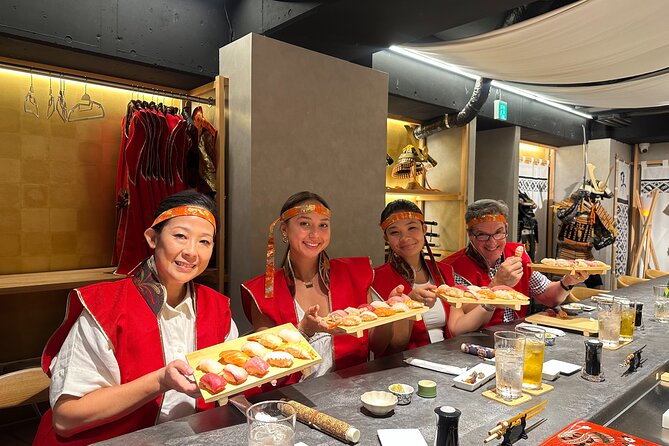
Tokyo has cooking classes. This one adds a layer of theater that actually helps you stay engaged. At JIN-ASAKUSA in Asakusa, the space is themed around the Sengoku period, with samurai gear and sword-show energy built right into the flow.
That matters because sushi classes can be a little intimidating at first. Here, you learn while the experience keeps moving. One moment you are getting ready for sushi basics, the next you are watching the chef demonstrate and then jumping back in. The overall effect is hands-on, approachable, and fun without feeling like a gimmick.
The “samurai” part is more than costume for photos, too. It sets the tone for why everyone is clapping, reacting, and paying attention. You are not just learning how to shape rice and top fish, you are learning in a setting that makes you want to remember the steps.
And if you care about good photos, you will get your fill: samurai styling at the beginning, then lots of close-up counter time once you are making your own sushi.
Course Options: SHOGUN vs Trio Chef Live (What You Actually Get)
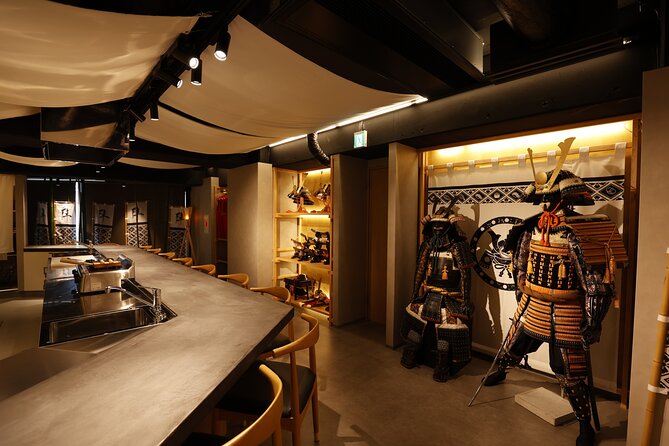
JIN-ASAKUSA offers different course formats. The biggest difference is how many types you get to make and what the included menu lineup looks like.
Premium Int. Ent. SHOGUN (Standard and Dessert versions)
This is the SHOGUN track. You get the samurai sword show and demonstrations, plus a sushi lesson where you can learn to make 10 different types of sushi (as described in the overview). You also get a food quiz battle as part of the entertainment, aimed at SHOGUN.
The SHOGUN course also includes lots of tasting, with standout ingredients listed such as crab, salmon, caviar, and Wagyu beef, plus Japanese omelet and Kobe beef.
If you choose the version that includes dessert, you are adding a sweet finish on top of everything else. It is the same overall concept, just a different wrap-up.
Cook it yourself instead. Other kitchens in Tokyo
- Sushi Making Tokyo Roll and Authentic Japanese Sushi Class★ 5.0 · 3,971 reviews
- Tokyo: Sushi Making Class in a Happi Coat near a Famous Spot★ 4.9 · 1,377 reviews
- Tokyo Sushi Making Class in Tsukiji with Professional Chef★ 5.0 · 1,177 reviews
- Ramen & Gyoza Cooking Class in Tokyo with Local Supermarket Visit★ 5.0 · 823 reviews
- Tsukiji Fish Market Guided Tour and Sushi Making with Pro Chef★ 5.0 · 775 reviews
Trio Experience Chef Live (Standard and Dessert versions)
This is the Trio track, and it is more structured around a smaller set of hands-on items.
From the provided contents for the Trio Chef Live course:
- 3 kinds of appetizers
- 5 types of nigiri sushi (5 pieces total)
- 1 futomaki (thick sushi roll)
- 1 sushi donut
- Chef demonstrations: futomaki sushi demonstration plus Japanese sword show, and a dashimaki (Japanese omelet) demonstration
This option gives you a very clear “make this, then eat this” path. If you like knowing exactly what is coming, this version can feel calmer.
Which should you pick?
- If you want to maximize variety and game energy, the SHOGUN format is the obvious match.
- If you prefer a tight, specific menu you can mentally track (nigiri, roll, donut, plus omelet demo), Trio Chef Live is easier to plan around.
The 2-Hour Flow: From Samurai Dressing to Your Final Bites
This experience runs about 2 hours. That is a sweet spot. Long enough to learn, practice, and eat, not so long that you feel stuck.
Here is the typical arc, based on how the activities are described:
- Meet and get started at JIN-ASAKUSA
- Dress up in samurai-style gear for the themed experience
- Chef demonstrations happen alongside your lesson
- A sword show and futomaki-related demonstration are included
- A dashimaki (Japanese omelet) demonstration is also part of the program
- Your sushi hands-on time
- You learn to shape and assemble sushi from scratch
- Depending on your course, that includes multiple sushi types and set pieces (like 5 nigiri in Trio)
- Food quiz battle
- The fun part is that it is tied to the SHOGUN theme
- There is also a winner moment where the prize is chef-made sushi (described directly in the experience descriptions)
- Eat what you made and taste more
- You get to taste the sushi you prepare
- You also get additional items like Japanese omelet and Kobe beef, plus multiple featured ingredients such as crab, salmon, caviar, and Wagyu beef
The pacing is the key. Even if you are a sushi beginner, you are not sitting through long lectures. You are doing steps, then seeing the chef’s technique, then doing another round.
What You Learn: More Than Just Nigiri Assembly
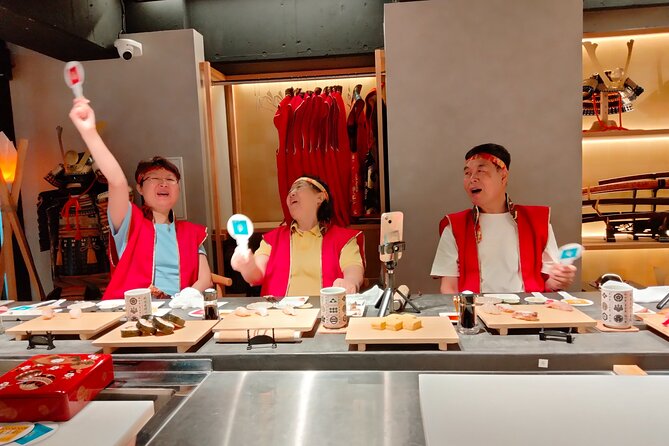
Sushi lessons often focus on one thing, rice plus fish, then you leave. What I like here is that the training is broader than that.
You get taught the core technique for sushi from scratch
The experience is described as learning sushi from scratch, with instruction directly from a Japanese sushi chef. You are not relying on pre-made items. That is important if you want your learning to stick.
You get demonstration support for other Japanese staples
Two demonstrations stand out in the details you are given:
- Futomaki demonstration, with the thick roll element
- Dashimaki (Japanese omelet) demonstration, so you can see how that egg-based component fits into a Japanese meal
In a short class, seeing those demos helps you understand how chefs balance flavors and texture, not just how to shape food.
The quiz battle turns memory into muscle
A quiz battle might sound like a gimmick, but it has a practical benefit: you pay attention. When questions are tied to what you just learned, it is easier to remember the reasons behind techniques. In the descriptions, the quiz is linked to SHOGUN, and the winning outcome is tied to food, which makes it feel like learning, not just play.
From the high praise around the experience, the energy level is a major part of why people describe it as memorable. If you learn better when you are having fun, this setup should work for you.
The Tasting Lineup: Crab, Salmon, Caviar, Wagyu, and More
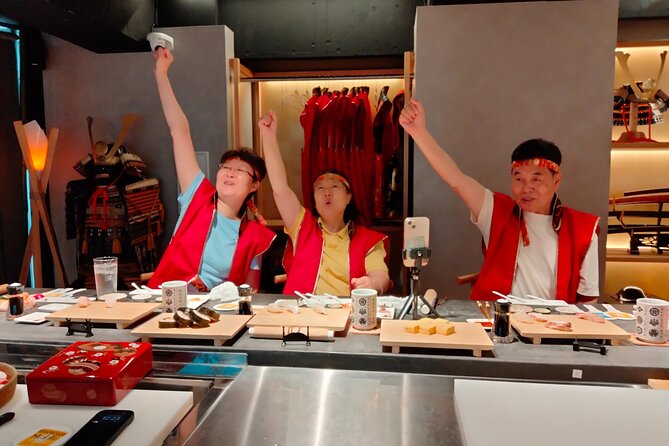
Here is where the value stacks up. Sushi making is one piece, but you also get to taste a lot more than just what you shaped.
The experience description includes a tasting lineup featuring:
- crab
- salmon
- caviar
- Wagyu beef
And beyond that, you also get Japanese omelet and Kobe beef included in the course format.
What makes this important for you is that it helps you connect what you make to what “good” tastes like. If you are used to sushi from a restaurant, you know the vibe. In this class, you can try the same high-quality ingredients in the context of learning. That connection often makes the lesson feel more real.
Also, because you are tasting multiple types of ingredients, you get a better sense of balance: richness, saltiness, and the way fish textures change depending on the topping.
Samurai Sword Show and Chef Energy: Why It Feels Like a Show
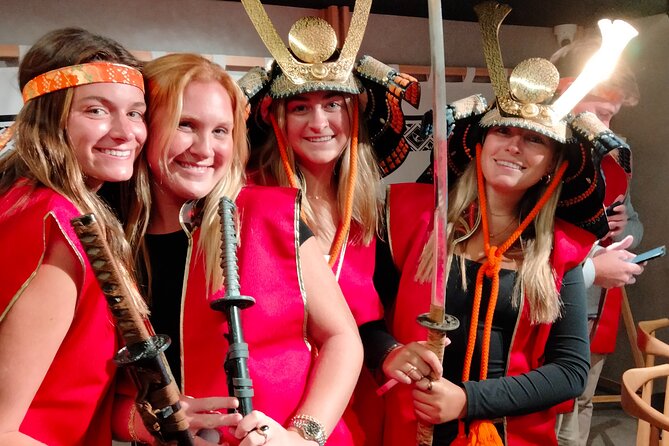
Let’s be honest. Some food shows are just loud. This one uses the show elements in a way that keeps the room focused.
The program includes:
- a Japanese sword show by the chef
- a futomaki demonstration
- a dashimaki omelet demonstration
- a food quiz battle
The combination is what makes it feel like you are in a themed world, but still learning real food steps. The best kind of entertainment is the kind that nudges you into staying present.
A note from the experience descriptions: the staff are set up for easy understanding, including English support. That matters because sushi terminology can be a headache if you get stuck translating in your head. Having an English-speaking explanation keeps the whole thing enjoyable instead of confusing.
Photo Time, Fun Battles, and Who This Suits Best
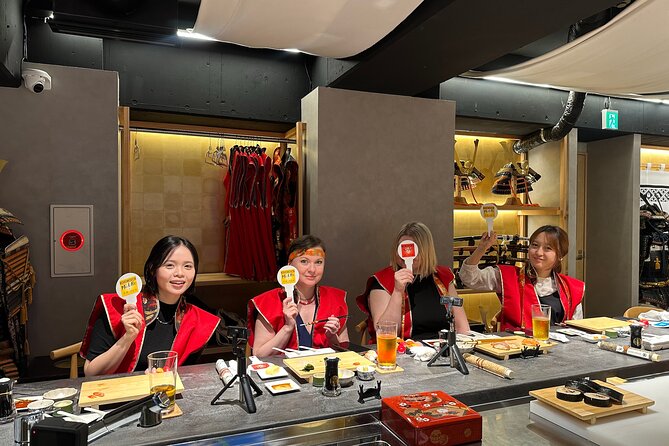
This experience is especially friendly if you like your Tokyo activities to be both social and structured.
It works well for:
- couples and friends who want shared memories
- people who are learning sushi for the first time and want a lively guide
- anyone who likes food plus a theatrical theme
- groups that want a private setting rather than a mixed crowd experience
From the descriptions, there is also a strong photo-friendly element. Dressing like a samurai at the start gives you instantly shareable pictures, and the counter setup gives you shots of the action while you make sushi.
One more practical point: because the class is private, you are less likely to feel rushed by a large group schedule. That is a major quality-of-experience difference when you are learning hands-on skills.
Price and Value: Is $49.27 Worth It?
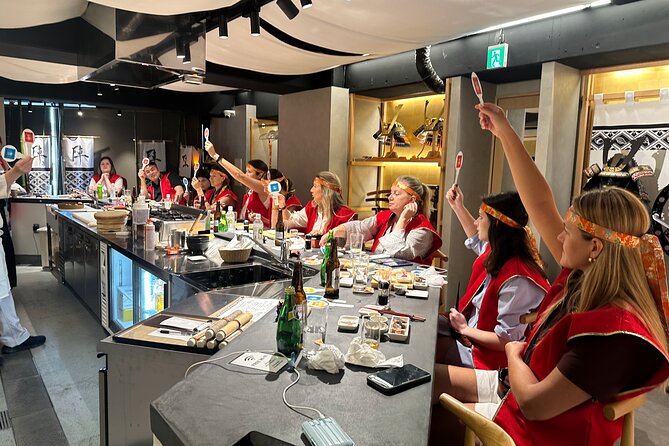
At $49.27 per person, this can be a very good deal in Tokyo, mostly because the experience is not only “watch and learn.”
Why the value is strong:
- You get a private group experience (your group only)
- You get chef-led instruction and hands-on sushi making
- The program includes demos, a sword show, and a quiz battle
- You taste plenty of ingredients, not just one small sampling
- The menu includes premium-feeling items listed like crab, caviar, and Wagyu, plus Japanese omelet and Kobe beef
- Service charge and consumption tax are included in the price
So you are paying for more than sushi. You are paying for instruction plus food plus entertainment, inside a themed setting.
Two things that affect value for you:
- Which course you pick (SHOGUN vs Trio) changes the number and type of items you make
- If you truly care about making multiple sushi types, the SHOGUN format described as teaching 10 different types is the one to consider
If you want a straightforward sushi meal, you could find cheaper. But if you want a structured skill-building experience with tasting and fun built in, the pricing looks reasonable.
Logistics That Matter: Location, Timing, and Getting There
The meeting point is:
JIN-ASAKUSA 陣-浅草, 111-0033 Tokyo, Taito City, Hanakawado, 1-chōme1014 CREAL浅草スカイビュースクエア 4F
The key practical points:
- It is near public transportation
- Transportation to the venue is not included, so plan your train or taxi route
- You receive a mobile ticket
- Confirmation is received within 48 hours of booking, subject to availability
Also, the experience is commonly booked about 50 days in advance on average. If your dates are tight or you want a specific course type, booking earlier gives you more control.
Should You Book JIN-ASAKUSA Sushi Making with Samurai Experience?
I think you should book if you want a sushi class that does not feel stiff or academic. This is for people who like hands-on cooking, a themed atmosphere, and a clear reason to stay engaged for the full 2 hours.
It is a great match if:
- you are new to sushi making and want coaching that stays upbeat
- you want a private format rather than a mixed crowd
- you want to taste high-end ingredients named in the course listing, not just a tiny sample
I would hesitate if:
- you prefer a quiet, purely technical workshop with minimal entertainment elements
- you only want a simple meal and are not interested in demonstrations and quiz-style interaction
If you are torn between the courses, decide based on how you like to learn. Pick the SHOGUN course if you want more variety in making. Pick Trio Chef Live if you want a set lineup, still fun, but more predictable.
FAQ
How long is the sushi making experience?
It lasts about 2 hours.
What is the price per person?
The price is $49.27 per person.
Is this experience private?
Yes. It is a private tour/activity, and only your group participates.
What ticket format do I receive?
You receive a mobile ticket.
What course options are available?
There are SHOGUN options (standard and with dessert) and Trio Experience Chef Live options (standard and with dessert).
What kinds of sushi and items are included in the Trio Chef Live course?
Trio Chef Live includes 3 kinds of appetizers, 5 types of nigiri sushi (5 pieces total), 1 futomaki, and 1 sushi donut, plus chef demonstrations including futomaki and a Japanese sword show, and a dashimaki demonstration.
Does the experience include tasting?
Yes. You can taste the food you prepare, and the experience description also includes Japanese omelet and Kobe beef, along with listed tasting ingredients such as crab, salmon, caviar, and Wagyu beef.
Is transportation to the venue included?
No. Transportation to the activity venue is not included.
Are drinks included?
Additional drink orders are not included, except water and green tea.
What happens if I need to cancel?
This experience is non-refundable and cannot be changed for any reason.
Kitchens You Can Book Into


Asakusa and the Skytree, Keep Going

Newest Tokyo write-ups from the Loving Japan desk






Asakusa, Senso-ji and Tokyo Skytree, side by side.
 ★ 4.5TOKYO SKYTREE® Admission ticketFrom $1311,192 reviews
 ★ 4.8Japanese Dance Cabaret Theater Asakusa-Kaguwa TicketFrom $492,270 reviews
 ★ 4.7Meiji Shrine, Asakusa, Skytree Bus Tour and CruiseFrom $1221,986 reviews
 ★ 4.9Roll and Authentic Sushi Making Class in AsakusaFrom $581,957 reviews
 ★ 4.8Asakusa Walking Tour with Sensoji Temple VisitFrom $221,583 reviews
 ★ 5.0Tokyo Asakusa Rickshaw TourFrom $421,375 reviews
 ★ 4.5Tokyo Panoramic 1 Day: Meiji Shrine, Asakusa, Odaiba and SKYTREE®From $851,222 reviews
 ★ 5.0Tokyo Go Kart: Asakusa, Skytree, and Akihabara **IDP MUST**From $99988 reviews