
REVIEW · SHIBUYA, SHINJUKU AND HARAJUKU WALKS
Tokyo: Calligraphy Experience at Japanese Room in Shibuya
Ink meets calm, one character at a time. A hands-on Japanese calligraphy workshop in Shibuya keeps things gentle and practical, from grinding ink on an inkstone to learning proper stroke flow and etiquette. I love the inkstone prep step because it slows you down fast, and I love that the lesson ends with your own take-home character on decorative paper.
The vibe is friendly and un-rushed, led by the instructor Sowa (also called Soba in some feedback), who explains not just how to write, but what the character building blocks mean. One consideration: since the session is about 1 hour, you’ll leave with a single finished character, not a full calligraphy crash course.
With a small class size of up to 8 people, plus a mobile ticket and a location near public transportation, this is easy to fit between sightseeing days in Tokyo. If you want a quiet cultural activity you can actually do with your hands, this one makes sense.
In This Review
- Key things that make this Shibuya calligraphy class feel different
- Where this Shibuya calligraphy workshop fits in Tokyo time
- Meeting Sowa and settling into a calm, small-class pace
- Inkstone to ink: the start that teaches patience without lectures
- Stroke practice and etiquette, so your brushwork looks intentional
- Choosing your character: name-based writing or a prepared option
- What happens on the final paper, and what you take home
- Price and value: is $32.84 worth it?
- Location and getting there near Shibuya
- Who should book this, and who might not love it
- Should you book this Shibuya Japanese calligraphy workshop?
- FAQ
- How long is the calligraphy experience?
- What does it cost?
- How many people are in the group?
- Where is the meeting point in Shibuya?
- Is there a mobile ticket?
- What happens at the beginning of the workshop?
- Do I get to practice before writing my final character?
- How do I choose the character to write?
- Can I take the calligraphy piece home?
- Is it near public transportation?
- What is the cancellation policy?
Key things that make this Shibuya calligraphy class feel different
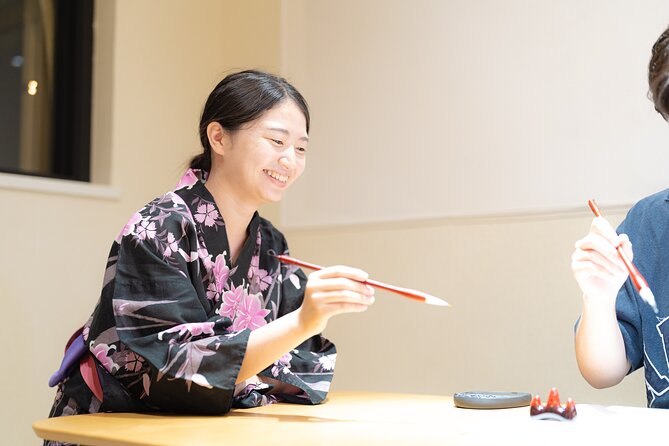
- Inkstone practice first: you grind and mix ink the traditional way before touching the brush.
- Etiquette plus technique: you learn basics that keep your strokes and tools respectful and controlled.
- Guided stroke drills: you practice simple brush movements before the final piece, so the last step feels doable.
- Character choice that feels personal: pick from a prepared list or write a character based on your own name.
- Real context for kanji: the instructor breaks down characters, often starting with smaller parts like radicals, and adds cultural context.
- Small group calm: with a maximum of 8 people, you get more attention than you would in a big demo.
Other routes through the west side of Tokyo, compared
- Tokyo: Shinjuku Food Tour (13 Dishes at 4 Local Eateries)
★ 5.0 · 6,603 reviews - Tokyo Bar Hopping Tour in Shinjuku (All-You-Can-Drink + Dinner)
★ 5.0 · 3,587 reviews - Official Street Go-Kart in Shibuya
★ 5.0 · 3,435 reviews - Tokyo: Shinjuku Food Tour (15 Dishes and 4 Eateries)
★ 4.9 · 2,033 reviews
Where this Shibuya calligraphy workshop fits in Tokyo time
Shibuya is a great base if you want Tokyo energy in one direction and calmer, focused activities in the other. This workshop gives you a break from constant walking and constant screens. Even if you are only in the city for a few days, you can still pull off this kind of slow craft, because the session runs about an hour.
I also like that the meeting point is a real address in Shibuya (2-chōme-14-13). That matters in Tokyo, where “near Shibuya” can mean a lot of ground to cover. Here, you get a specific starting point, and it is near public transportation, so you can plan without guessing.
Meeting Sowa and settling into a calm, small-class pace
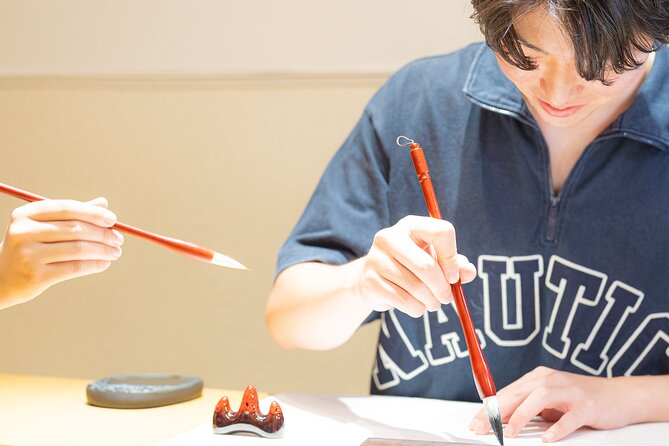
The tone here is repeatedly described as calm and easy to follow. That is not a throwaway. When you are learning calligraphy for the first time, the hardest part is often feeling self-conscious while everyone else is working the brush. A small group size of up to 8 helps keep the room manageable and gives the instructor room to check your form.
Sowa (also referenced as Soba) comes across as friendly and encouraging. In feedback, people praised the step-by-step approach, plus the way Sowa connects what you are doing to real cultural meaning. That combination is key. If you only get technique, calligraphy can feel like copying shapes. If you only get culture, the brush can feel pointless. This format gives you both.
If you are going with kids, the experience also seems well suited to families who want a hands-on activity that is not just watching. The class is short enough to hold attention, and practice is built in before the final piece.
Inkstone to ink: the start that teaches patience without lectures
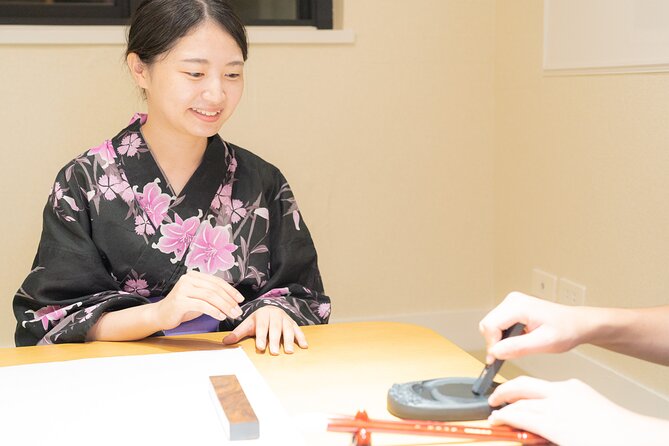
The workshop begins with a tool ritual that most tourist activities skip. You prepare ink using a traditional inkstone. The core idea is simple: you grind and mix the ink correctly, then you are ready to write. It turns the first few minutes into a kind of warm-up, where your hands learn the feel of the materials and your brain switches gears.
This step is also practical for beginners. If you start by writing right away, you might not realize how much the ink quality, flow, and brush feel affect your strokes. Spending time with the inkstone makes the later writing step easier to understand.
You also learn the correct process for grinding and mixing ink. Even if you do not remember every detail later, you’ll walk away with a better sense of why calligraphy looks the way it does, and why the tools matter.
Make something to take home. Other workshops
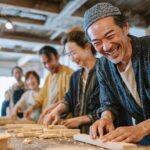
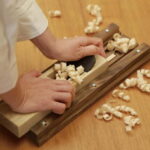
- Chopstick Making Workshop in Ginza★ 4.8 · 1,366 reviews
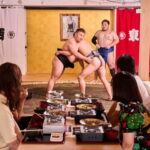
- Tokyo Sumo Experience: Chanko & Mochi with a Former Pro★ 4.8 · 567 reviews
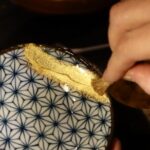
- Kintsugi Experience: Art of Golden Joinery in Tokyo★ 5.0 · 467 reviews
- Tokyo Chopstick Making Workshop with Artisan★ 5.0 · 466 reviews
- Tokyo: Matcha Making Experience with Mochi Sweets in Asakusa★ 4.9 · 388 reviews
Stroke practice and etiquette, so your brushwork looks intentional
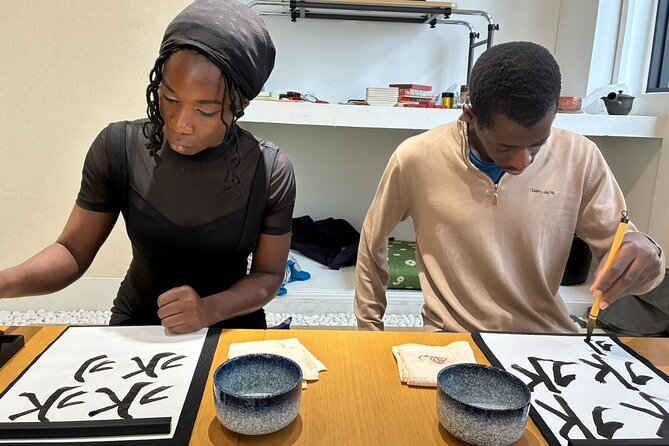
After the ink is ready, your instructor guides you through basic techniques and etiquette. Etiquette matters here because calligraphy is not only about making a character. It is about doing it respectfully, with care for the tools and for the space.
In feedback, people described the session as doable for anyone, largely because you practice strokes before committing to the final work. That sequencing is smart. You get a chance to learn how to control pressure and direction without the pressure of ruining a finished piece.
If you are the type who wants structure, you’ll likely like the way the instructor explains strokes and then gives you practice time at your own pace. One person specifically highlighted that the class starts from fundamentals, including breaking down kanji elements like radicals. That kind of progression helps you avoid random copying and start writing with meaning.
Choosing your character: name-based writing or a prepared option
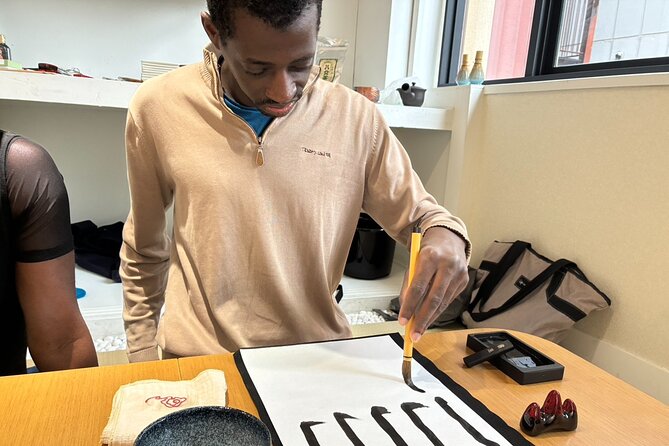
The final stage is where the class becomes personal. You choose a character to write on decorative paper. You can select from a prepared list, or you can choose one based on your own name.
That choice does two useful things. First, it makes the workshop feel like a keepsake, not a souvenir you can buy elsewhere. Second, it gives you a clear goal. When you know which character you are aiming for, your practice strokes become more focused.
In feedback, people appreciated that the instructor offered cultural references and context around kanji. That helps when your character is unfamiliar, or when you want more than surface-level answers. If you pick a character tied to your name, this context can be especially helpful, since you often feel more invested in getting it right.
What happens on the final paper, and what you take home
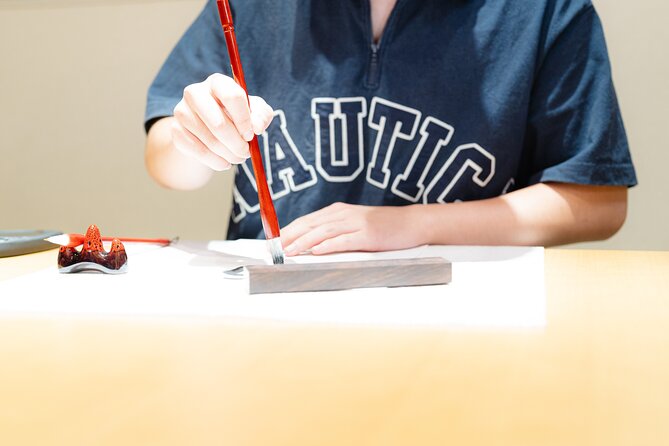
Your completed calligraphy piece is made on decorative paper. The workshop is designed so you take your finished work home, which makes the effort feel real. You are not just learning a skill, you are producing something you can display or share.
What I’d plan for as a practical matter is protecting the paper until you get home. You might want to transport it flat in a folder or sleeve so the edges do not get bent. The workshop itself does not spell out packaging details, but basic care like that helps your keepsake survive transit.
If you want to make it extra memorable, take a quick photo when it is finished before you pack it away. It is a nice way to remember the exact look of your character, especially if ink dries and slightly changes appearance over time.
Price and value: is $32.84 worth it?
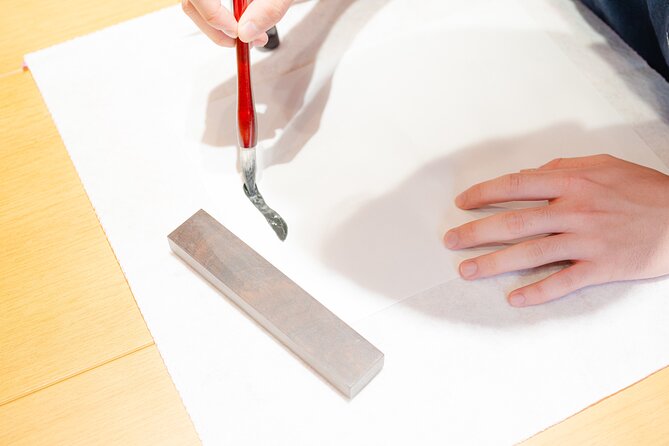
At $32.84 per person for about an hour, this workshop is priced in the “serious short activity” category. It is not a free museum program, and it is not a high-end multi-hour class. So the value comes down to what you get for that time.
Here is the value case, based on what the experience includes:
- You get hands-on instruction, not just a demo.
- You learn ink preparation using an inkstone, then write your own character.
- You get etiquette and technique, plus practice time before the final step.
- You take home the finished piece.
That is a lot of output for a one-hour session. Also, with a maximum group size of 8, you are not fighting for attention. If you compare this to the cost of a single guided attraction that gives you no physical take-home item, the calligraphy piece gives you something tangible.
If you are someone who likes crafts, cultural context, and a calmer break in the day, this price is reasonable. If you are looking for something that lasts half a day or teaches multiple characters in depth, you may find the time short. But the format is designed for first-timers who want a meaningful result quickly.
Location and getting there near Shibuya
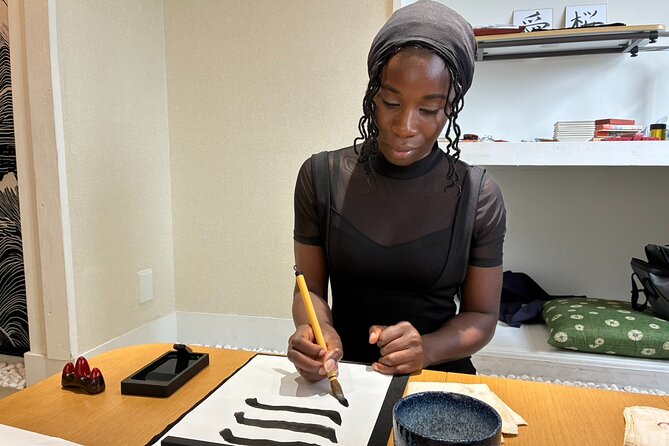
The meeting point is at 2-chōme-14-13 Shibuya, Tokyo 150-0002, Japan. The activity is near public transportation, which helps a lot in Tokyo. You can avoid long taxi rides or time-consuming transfers, and you can anchor your day around a simple plan.
It also returns back to the meeting point. That is helpful for scheduling. After the workshop, you do not need to fight your way back across town just to rejoin your sightseeing route.
A mobile ticket is included, and confirmation is received at booking. In practice, that makes it easier to manage your phone for check-in and keep all your trip stuff in one place.
Who should book this, and who might not love it
This is best for people who:
- want a calm, hands-on cultural activity
- are curious about kanji and want more than just copying strokes
- like taking home something they actually made
- prefer smaller classes where the instructor can guide you directly
It may not be the best fit if you:
- want advanced calligraphy training over multiple sessions
- only want a quick photo moment and zero hands-on time
- expect a longer lesson that covers lots of characters
The biggest selling point is the pacing: you learn basics, practice first, then write one character. That structure makes the workshop feel achievable even if your brush control is brand new.
Should you book this Shibuya Japanese calligraphy workshop?
I think you should book it if you want a real Tokyo craft experience, not a scripted show. The inkstone start, the etiquette and stroke practice, and the final character on decorative paper create a full cycle in about an hour. Plus, the instructor style, including the way Sowa explains character parts and adds cultural context, is a major reason people leave feeling confident.
If you are deciding between a craft workshop and another sightseeing block, choose this when you want a calmer reset. It is a short session, it has a small group size, and you leave with something you can see later and remember the day you made it.
FAQ
How long is the calligraphy experience?
It runs about 1 hour (approx.).
What does it cost?
The price is $32.84 per person.
How many people are in the group?
The experience has a maximum of 8 travelers.
Where is the meeting point in Shibuya?
It starts at 2-chōme-14-13 Shibuya, Tokyo 150-0002, Japan.
Is there a mobile ticket?
Yes, the tour uses a mobile ticket.
What happens at the beginning of the workshop?
You learn the introduction to Japanese calligraphy tools, then you prepare ink using an inkstone by grinding and mixing it correctly.
Do I get to practice before writing my final character?
Yes. You practice basic techniques and strokes in a relaxed setting before making your final piece.
How do I choose the character to write?
You can choose a character from a prepared list, or you can choose one based on your own name.
Can I take the calligraphy piece home?
Yes. You create your character on decorative paper and take the work home.
Is it near public transportation?
Yes, the meeting point is near public transportation.
What is the cancellation policy?
You can cancel for free up to 24 hours in advance for a full refund. If you cancel less than 24 hours before the start time, the amount paid is not refunded.
Made by Hand, and Yours to Keep

West Tokyo on Foot: Seven More


Newest Tokyo write-ups from the Loving Japan desk






Shibuya, Shinjuku and Harajuku Walks, side by side.
 ★ 5.0Shinjuku Food Tour (13 Dishes at 4 Local Eateries)From $866,603 reviews
 ★ 5.0Tokyo Bar Hopping Tour in Shinjuku (All-You-Can-Drink + Dinner)From $1063,587 reviews
 ★ 5.0Official Street Go-Kart in ShibuyaFrom $763,435 reviews
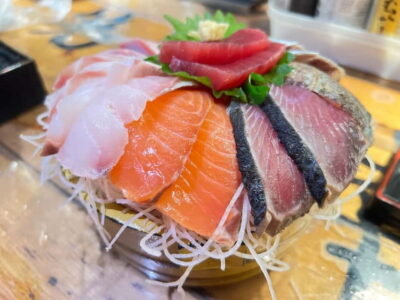 ★ 4.9Shinjuku Food Tour (15 Dishes and 4 Eateries)From $852,033 reviews
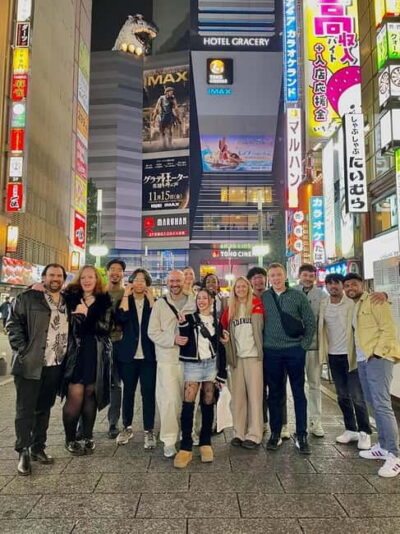 ★ 4.9Shinjuku Local Bar and Izakaya Guided Walking TourFrom $341,794 reviews
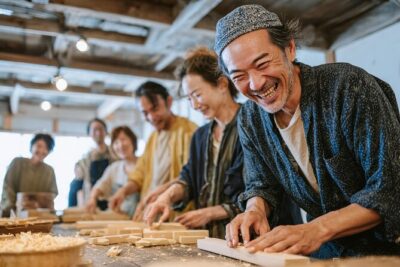 ★ 5.0Tokyo Shinjuku Chopsticks Making ClassFrom $201,763 reviews
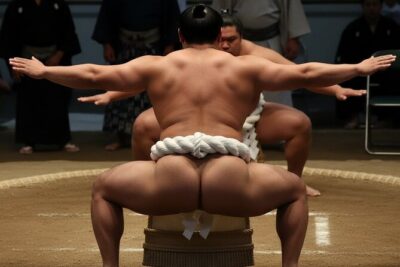 ★ 5.0Tokyo Shinjuku Sumo Show & Experience with PhotoFrom $791,750 reviews
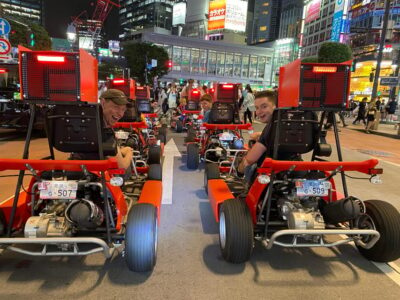 ★ 4.9Street Kart Experience in ShibuyaFrom $741,484 reviews
Filed on these lists too