
REVIEW · JAPANESE CRAFT AND CALLIGRAPHY WORKSHOPS
Tokyo: Calligraphy on Kanji Fan & Scroll with Drink
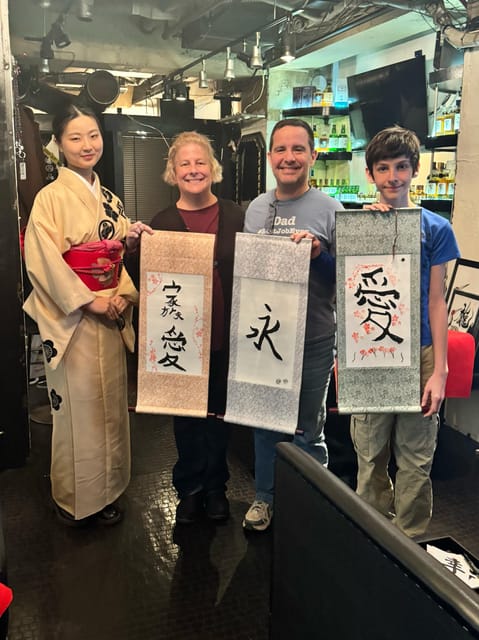
A pen stroke can calm a whole day. In Roppongi, Shodo Cafe 7557 turns Japanese shodō into a relaxing 80 minute workshop where you leave with real art and a custom stamp. I like the calm, patient teaching from Kana and Tomi, and I also love that you do multiple keepsakes, not just one try. One thing to know up front: your first strokes may look a little wobbly, because brush control takes practice.
I like that this class is beginner friendly but still gives you meaning behind what you write. You’ll work at your own pace with English guidance, plus a matcha latte or another included drink to keep the mood steady.
In This Review
- Key Things That Make This Workshop Worth It
- Finding Shodo Cafe 7557 in Central Tokyo
- What You Actually Do in 80 Minutes (And Why It Feels Different)
- The First Step: Brush Strokes, Tools, and the Meaning Behind Each Character
- Writing Your Kanji on a Uchiwa Fan
- Creating Your Kakejiku Hanging Scroll (A Real Home Decoration)
- The Hanko Stamp and Hiragana Keepsake You Make Yourself
- Your Included Drink Break: Matcha Latte and More
- The Take-Home List (Yes, It’s a Lot)
- The Personalized Touch: Names in Kanji and an Animated Video
- Who This Workshop Suits Best (And Who Might Want Something Else)
- Making the Most of Your First Kanji Try
- Practical Logistics Without the Headache
- Should You Book Shodo Cafe 7557?
- FAQ
- How long is the calligraphy workshop?
- What do I make during the workshop?
- What drink is included?
- Can I use my name or choose another word?
- What language is instruction in?
- What souvenirs come with the class?
- Is it wheelchair accessible, and who should not book?
Key Things That Make This Workshop Worth It
- Roppongi location that’s easy to reach, just a few minutes from Roppongi Station
- English instruction with supportive coaching so beginners can keep up
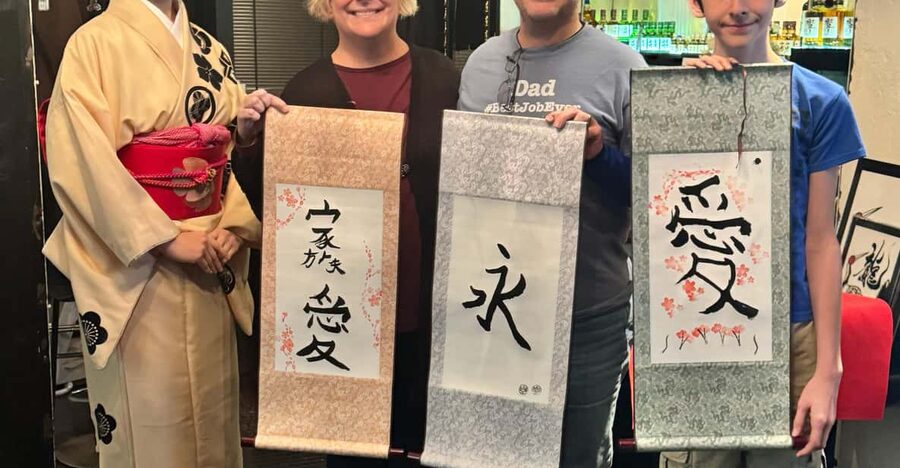
- Hands-on creations: uchiwa fan, kakejiku hanging scroll, and a personalized hanko stamp
- Write kanji with purpose, learning basic strokes and the meaning behind characters
- A bag full of take-home gifts, including kanji items you can actually use later
- Personal touches like an animated video of your name in kanji when you share names in advance
Make something to take home. Other workshops
- Tokyo Shinjuku Chopsticks Making Class
★ 5.0 · 1,763 reviews - Chopstick Making Workshop in Ginza
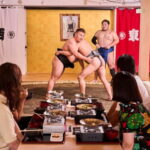
★ 4.8 · 1,366 reviews - Tokyo Sumo Experience: Chanko & Mochi with a Former Pro
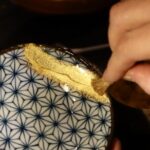
★ 4.8 · 567 reviews - Kintsugi Experience: Art of Golden Joinery in Tokyo
★ 5.0 · 467 reviews
Finding Shodo Cafe 7557 in Central Tokyo
This workshop runs in a studio in the Crest Roppongi Building on the 2nd floor, very close to the National Art Center area. If you’re coming by train, you use the Toei Oedo Line, hop off at Roppongi Station (Exit 7), then follow the simple street path toward Bijutsukan Dori. The directions are straightforward: cross toward Family Mart, keep to the right, and look for a big crane sign on the left.
In practical terms, this matters because you’re not spending half your day commuting. You can fit this into a busy Tokyo itinerary without feeling like you need to plan your whole life around it.
What You Actually Do in 80 Minutes (And Why It Feels Different)
This isn’t a “watch and copy” demo. You get guided brushwork, then you produce finished pieces you can take home. That hands-on structure is the key to why people love it so much: you’re not just learning characters, you’re building muscle memory and confidence.
The pacing is also kind. Your session is listed as around 80 minutes (with an activity window between 60 minutes and 2 hours), which gives enough time to try, adjust, and make something you’ll feel proud to carry back. The vibe stays calm, and the instructors are known for taking time with each person, including those who are brand new to kanji.
The First Step: Brush Strokes, Tools, and the Meaning Behind Each Character
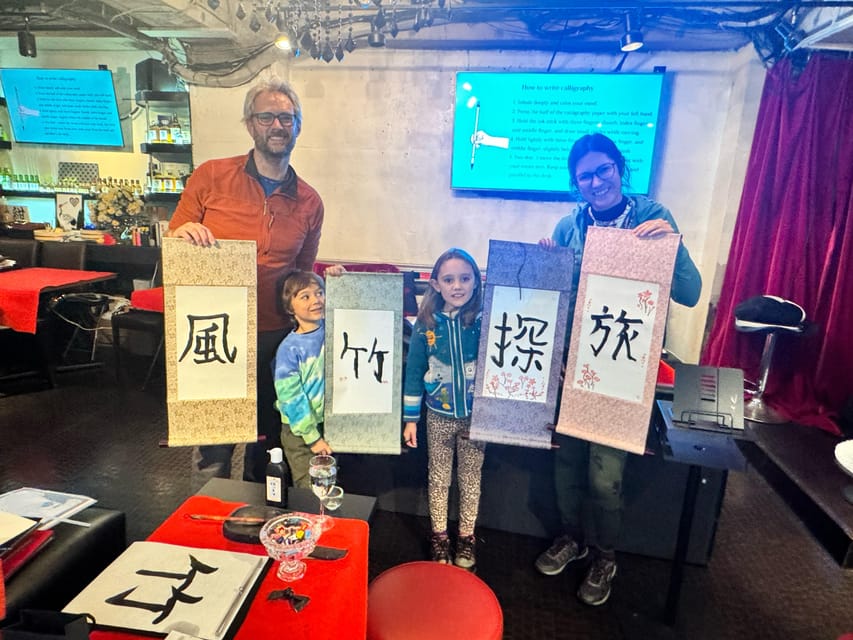
You start by getting oriented to the tools and learning the core shapes that make Japanese calligraphy work. You’ll practice basic brush strokes and learn why each character is built the way it is. That matters because kanji can look like abstract artwork when you’re new. Once you understand how strokes connect and how they’re supposed to feel on the paper, writing stops being random.
English instruction helps you connect the dots fast. The instructors, including Kana, are praised for being patient and helpful as people work through the first messy attempts. In one example, the teaching includes practice you can repeat until you feel ready to write your actual character on your souvenirs.
- Mt Fuji and Hakone 1-Day Bus Tour Return by Bullet Train★ 5.0 · 26,383 reviews
- 1-Day Tokyo Bus Tour★ 5.0 · 14,250 reviews
- Tokyo: teamLab Planets TOKYO Digital Art Museum Entry Ticket★ 4.6 · 9,779 reviews
- Mt Fuji & Hakone Cruise, Drum Show Bullet Train 1 Day from Tokyo★ 4.0 · 7,413 reviews
- Tokyo: Shinjuku Food Tour (13 Dishes at 4 Local Eateries)★ 5.0 · 6,603 reviews
Writing Your Kanji on a Uchiwa Fan
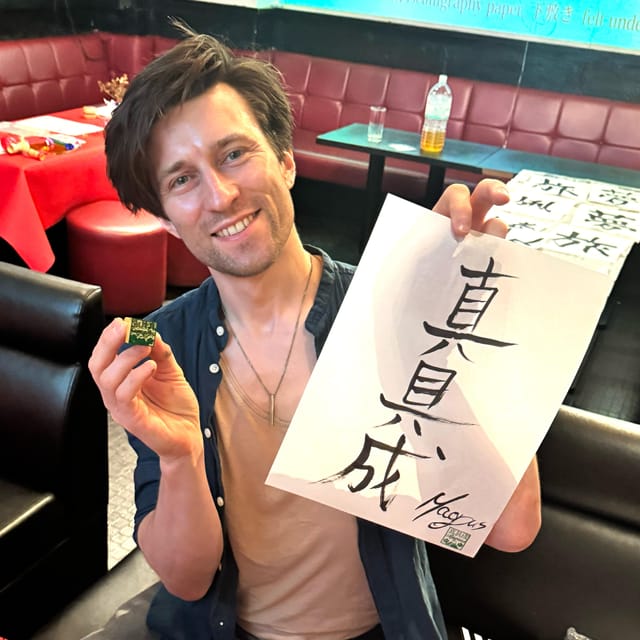
Next up: the uchiwa, the traditional Japanese paper fan. You’ll write your name or a favorite word in kanji on it, guided by the instructors. This is a smart choice for a class like this because a fan has a clear layout. It helps you see the character as a shape you can control, not a blur you guess at.
Also, working on a curved, fan-shaped format forces you to think about brush pressure and direction. You’ll learn that calligraphy isn’t about drawing in the normal sense. It’s more like controlling movement. If you press too hard, you lose delicacy. If you lift too early, the character won’t land with the right flow.
If you’re nervous, don’t be. One repeated theme is that the teachers keep you moving step by step. Your goal is progress, not perfection on the first try.
Creating Your Kakejiku Hanging Scroll (A Real Home Decoration)
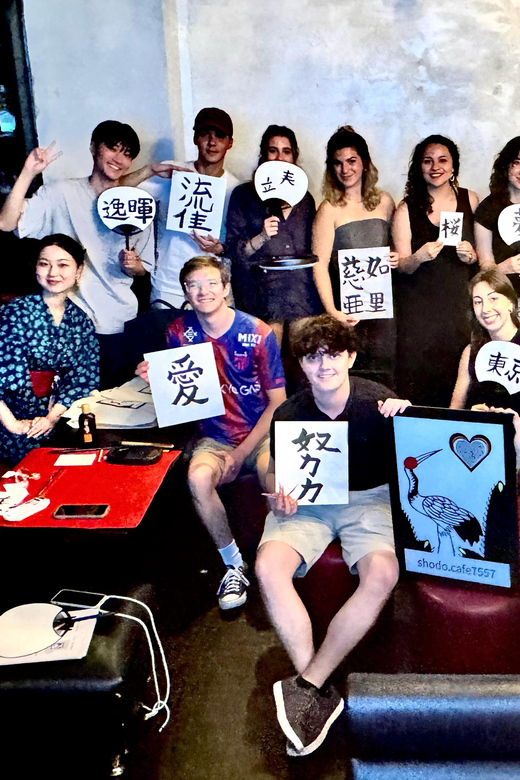
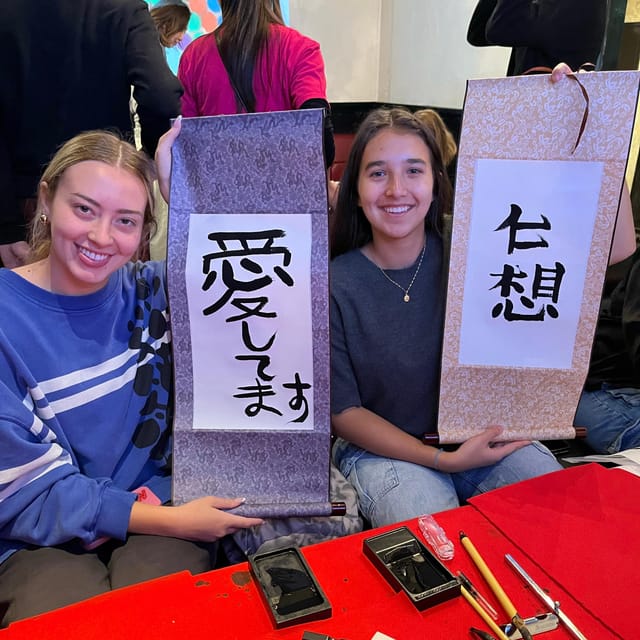
Then you move to the kakejiku, the hanging scroll. This is where the session starts to feel special. The scroll is a bigger canvas than the fan, and it’s the kind of piece you can display at home without needing framing tricks.
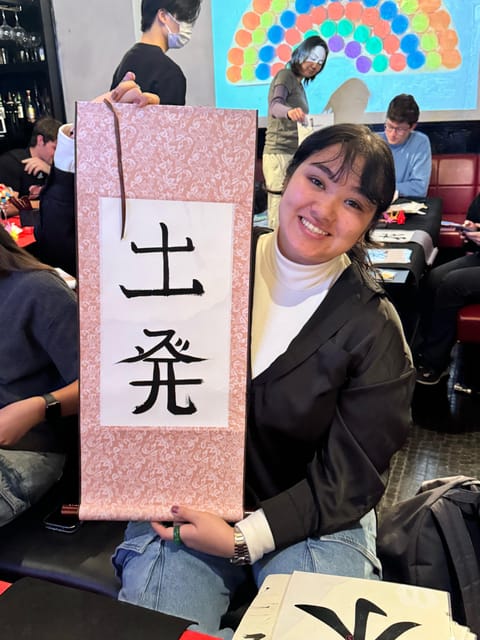
You’ll write your personalized kanji here too, again with guidance on stroke order and the meaning behind what you’re creating. It’s a good moment to slow down, because the scroll rewards careful work. If you rush, the brushwork looks uneven. If you take the time to get the character’s structure right, the result looks like something you’d see in a calligraphy display.
One detail worth noting: the instructors also explain the character meanings as you go. That makes the finished piece feel more than decorative. It becomes a souvenir with context, because you understand what you wrote and why it’s written that way.
The Hanko Stamp and Hiragana Keepsake You Make Yourself
This is the personalized souvenir that people talk about most: making your own hanko stamp. You’ll create a Japanese hiragana hanko stamp of your name. It’s not just a novelty. It’s a meaningful way to learn that Japanese writing systems are not just symbols on paper. They have roles in identity and everyday life.
Hanko-making also gives you a different learning payoff than the brushwork. Brush calligraphy is about movement and style. A stamp is about precision. You’ll learn how the character design needs to read clearly when stamped, so the training shifts from “how does it look” to “how does it transfer.”
After the class, you’ll still have something you can use or show off. It’s the kind of souvenir that turns into a conversation starter the first time you press your name stamp on a card or keepsake.
Your Included Drink Break: Matcha Latte and More
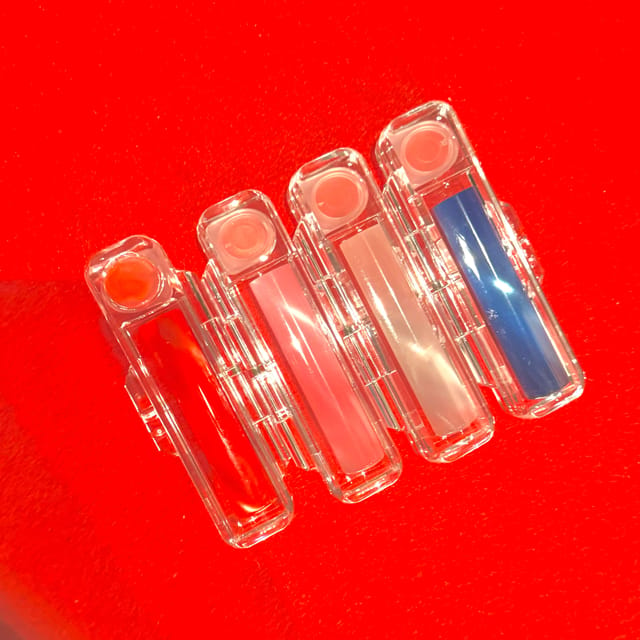
You’re offered a drink during the session, including matcha latte, green tea, coffee, soda, or beer. This sounds simple, but it changes the experience. Calligraphy asks for focus and fine motor control. A drink break helps you stay comfortable without breaking the flow.
If you’re a matcha fan, this is a great time to order it because you’re literally making art that connects to Japanese aesthetics. If you don’t do matcha, the class gives you other options, so you won’t feel forced.
The Take-Home List (Yes, It’s a Lot)
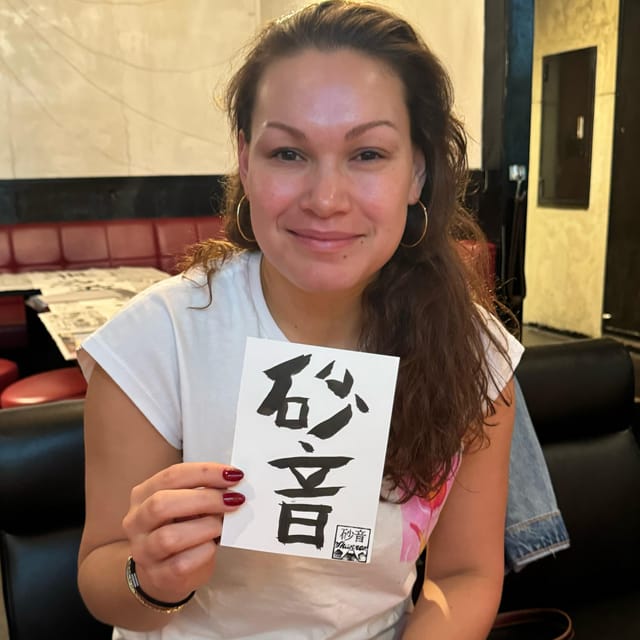
This workshop is built around leaving with finished items, not just a single scroll. Your included materials include instruction plus tools, and your souvenirs include a kanji tote bag, kanji keychain, kanji coaster, and a kanji pouch. You also take home your original kakejiku and uchiwa.
There’s also a kanji keychain listed more than once in the details, but the clear point is that you get multiple giftable items, with your kanji on them. These are the kinds of souvenirs that actually earn their space in your day, because you can use them on the spot or pack them without worrying about fragile wrapping.
Value-wise, this is where the price starts to make sense. At $53 per person, you’re not just paying for the lesson. You’re paying for materials, guidance, the finished art, and a set of wearable or useful items plus your hanko stamp. Compared to buying calligraphy as a finished product in a shop, this feels like a bargain because you’re doing the work and getting the tools of expression.
The Personalized Touch: Names in Kanji and an Animated Video
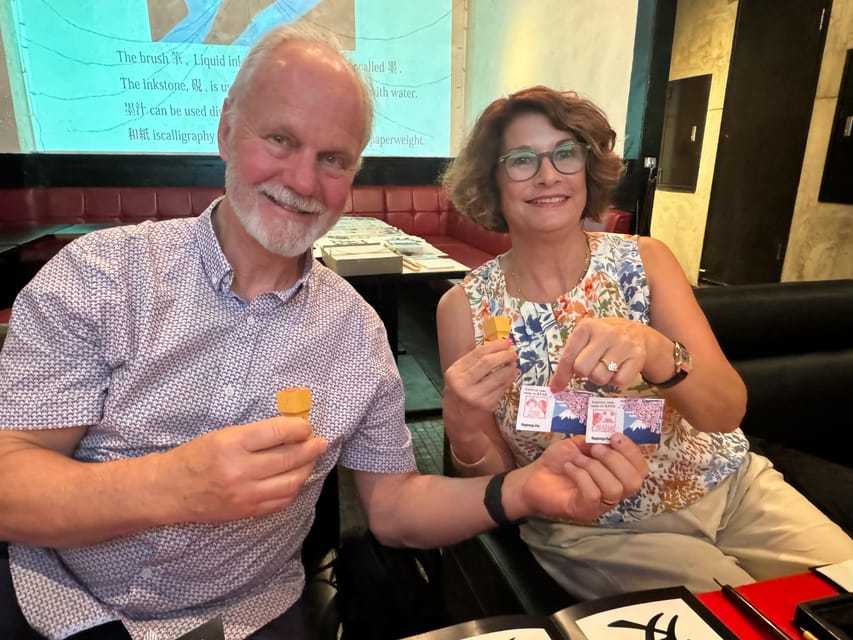
One of the more delightful extras is the name personalization. When you book, you provide the names of all participants in English. If you share your names in advance, the studio prepares a special item tied to your names in kanji, described as an animated video with your names and their meaning.
You’ll get this during the workshop or delivered afterwards. Either way, it’s a nice added layer because the class isn’t generic. Your pieces feel tied to you, and the studio clearly makes an effort to match the experience to your identity rather than giving everyone the same worksheet.
Who This Workshop Suits Best (And Who Might Want Something Else)
This class works well for:
- Beginners who want to learn basic stroke structure without feeling judged
- Kanji lovers who want to connect characters to meaning, not just pronunciation
- Families and mixed-age groups, since the experience is described as welcoming for all ages
- People who want a calm, hands-on activity in central Tokyo
If you’re looking for an advanced, long-form calligraphy training session, this may not feel deep enough. The time is limited, and the goal is to produce finished souvenirs. You’ll learn the fundamentals, not master advanced styles in one sitting.
One more consideration: it isn’t suitable for people over 95 years. If you’re in that age bracket, ask the provider about alternatives. For most people, though, the studio is listed as wheelchair accessible.
Making the Most of Your First Kanji Try
Here are a few ways to get better results in the time you have:
- Pick a character or word that you actually care about. You’ll pay more attention when it matters to you.
- Go in expecting a first round of practice to feel awkward. The class is designed for that learning curve.
- Watch how Kana and Tomi guide stroke order, then copy their timing. Calligraphy is about rhythm.
- Don’t fight the brush. Instead, control pressure and direction. That’s the trick for making strokes look intentional.
If you’re the kind of person who gets stressed by making mistakes, you’ll still be okay here. The instruction style is described as patient and supportive, and people are encouraged to keep trying until they feel confident.
Practical Logistics Without the Headache
This is a straightforward workshop to schedule because it’s in one studio and easy to reach. You do not need hotel pickup. You’ll meet at Shodo Cafe 7557, in Crest Roppongi Building 2F near the National Art Center.
The class is conducted in English, so you’re not relying on translation apps mid-stroke. You also have a clear time window and a short duration, which is handy when Tokyo days already feel full.
Should You Book Shodo Cafe 7557?
Yes, if you want a Tokyo experience that’s calm, hands-on, and genuinely personal. The biggest draw for me is the combo of guided brushwork plus multiple finished items: fan, hanging scroll, and a hanko stamp. Add the included drink and the extra name personalization, and the value becomes hard to ignore.
You should consider skipping it only if you want advanced calligraphy training or you’re not interested in taking home physical art. Otherwise, this is exactly the kind of cultural activity that turns a day in Tokyo into something you can hold in your hands later.
FAQ
How long is the calligraphy workshop?
The experience is about 80 minutes, with the activity lasting between 60 minutes and 2 hours depending on timing.
What do I make during the workshop?
You’ll create a kakejiku (hanging scroll) and a uchiwa (paper fan), and you’ll also make a personalized hanko stamp using hiragana of your name.
What drink is included?
A matcha latte is included, and you can also choose green tea, coffee, soda, or beer.
Can I use my name or choose another word?
Yes. You can write your name or your favorite word in kanji, and you can also include a translated name.
What language is instruction in?
The instruction is in English.
What souvenirs come with the class?
Included items include your personalized hiragana hanko stamp, a kanji keychain, kanji coaster, kanji pouch, and a kanji tote bag, plus your finished kakejiku and uchiwa.
Is it wheelchair accessible, and who should not book?
The workshop is listed as wheelchair accessible. It is not suitable for people over 95 years.
Made by Hand, and Yours to Keep

Newest Tokyo write-ups from the Loving Japan desk



Japanese Craft and Calligraphy Workshops, side by side.
 ★ 5.0Tokyo Shinjuku Chopsticks Making ClassFrom $201,763 reviews
 ★ 4.8Chopstick Making Workshop in GinzaFrom $251,366 reviews
 ★ 5.0Chopsticks Making Workshop in Gion with Engraving OptionFrom $15958 reviews
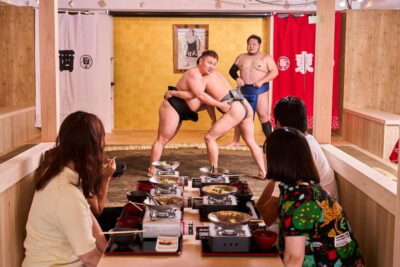 ★ 4.8Tokyo Sumo Experience: Chanko & Mochi with a Former ProFrom $103567 reviews
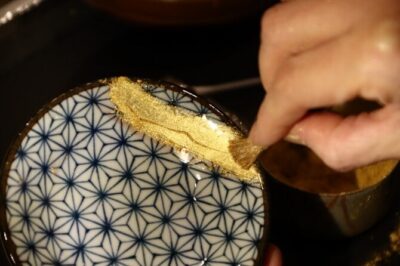 ★ 5.0Kintsugi Experience: Art of Golden Joinery in TokyoFrom $59467 reviews
 ★ 5.0Tokyo Chopstick Making Workshop with ArtisanFrom $26466 reviews
 ★ 4.9Matcha Making Experience with Mochi Sweets in AsakusaFrom $22388 reviews
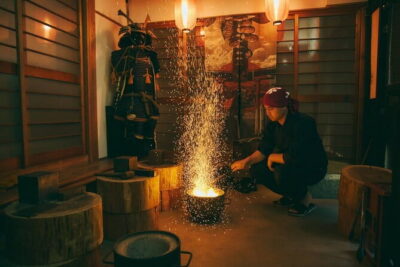 ★ 4.8Authentic knife making experience at a blacksmith in KyotoFrom $154350 reviews
Filed on these lists too