
REVIEW · TOKYO TOWER, GINZA AND THE IMPERIAL PALACE
Tokyo: Discover the Art of Kintsugi in Ginza
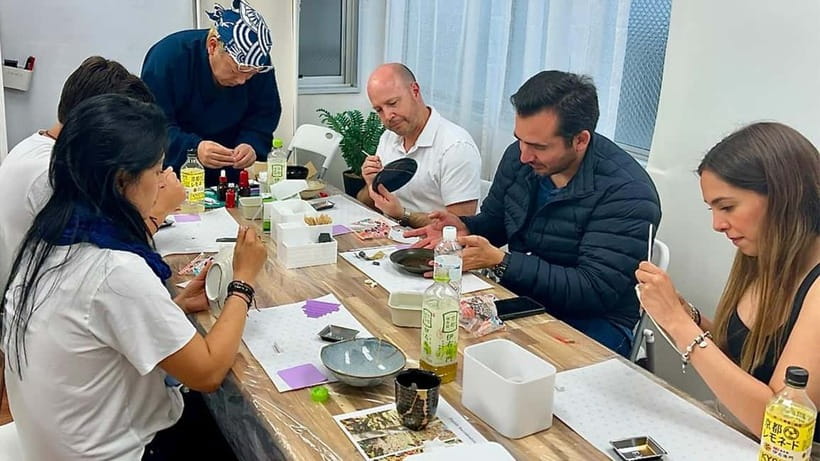
Gold lines on broken pottery, right in Ginza. This 90-minute Kintsugi workshop turns a fragile moment into something you can actually take home, with step-by-step help from instructors like Teki Sensei and Tatsu. You do it in a cozy private room near Ginza Station, so the whole thing feels calm and focused even when Tokyo outside is loud and fast.
I especially like two things: the hands-on pace with clear guidance, and the fact that you leave with a finished ceramic piece that’s carefully packaged for your trip. One consideration to keep in mind is that this class uses a faster method, synthetic lacquer and metallic powder instead of natural gold, so it is not the full month-long traditional process.
In This Review
- Key things to know before you go
- Finding Cafe AOU Ginza Forest, then settling into the private room
- What you repair in 90 minutes, and what makes this Kintsugi method faster
- How the workshop flows, from cracks to lacquer seams
- Instructor style: clear teaching plus Ginza conversation
- Your take-home ceramic: packaging, handling, and gifting
- Price and value in Ginza: $75 buys more than a craft demo
- Who should book this Kintsugi workshop, and who should skip it
- The practical logistics that actually affect your day
- Should you book Tokyo: Discover the Art of Kintsugi in Ginza?
- FAQ
- How long is the Kintsugi workshop?
- What is included in the price?
- Where do I meet for the workshop?
- What language is the instructor?
- Can I take my repaired ceramic piece home?
- Is the repaired ceramic microwave-safe?
Key things to know before you go
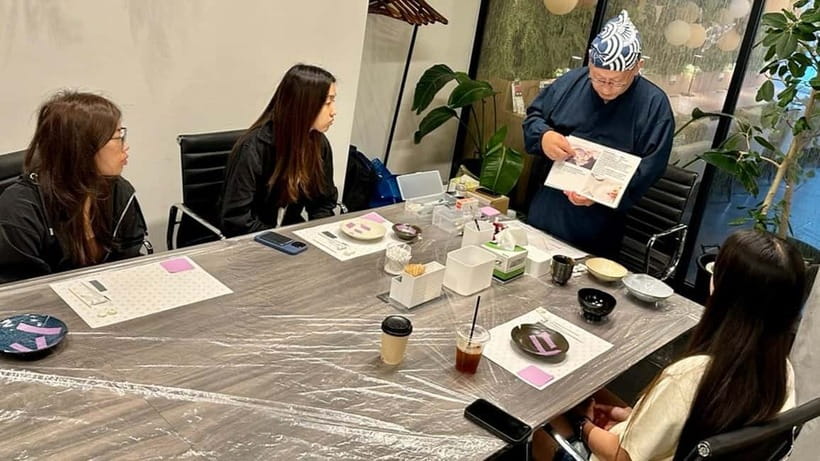
- 3-minute feel near Ginza Station, in a private room dedicated to the workshop
- Small group up to 8 people, so you get real attention while you work
- Take-home souvenir, you repair a ceramic piece during the session
- Materials and tools included, so you are not hunting for supplies or guesswork
- English and Japanese instructor support, with conversation built into the lesson
- Synthetic lacquer method, finished within 90 minutes for same-day results
The central Tokyo landmarks, reviewed one by one
- Flagship 2-Hours Official Street Go-Kart Tour – Tokyo Bay Shop
★ 5.0 · 4,974 reviews - Tokyo: Imperial Palace and Shogun Historical Walking Tour
★ 5.0 · 2,251 reviews - Tokyo: Meiji Shrine, Asakusa, Skytree Bus Tour and Cruise
★ 4.7 · 1,986 reviews - Tokyo Panoramic 1 Day: Meiji Shrine, Asakusa, Odaiba and SKYTREE®
★ 4.5 · 1,222 reviews
Finding Cafe AOU Ginza Forest, then settling into the private room
Your meeting point is Cafe AOU Ginza forest, on the ground level of the Daiwa Ginza Building. The location is a big plus, because you can show up, check in, and get to work without a complicated commute or long wandering around office towers.
Once you are inside, the workshop space is set up for doing the craft, not just watching it. That matters in Tokyo, where it is easy to feel like you are always squeezing into the next thing. Here, you get a dedicated room and a small group setup, which keeps the session from feeling rushed in the wrong way.
What you repair in 90 minutes, and what makes this Kintsugi method faster
Kintsugi is the Japanese art of repairing broken ceramics with lacquer, then highlighting the repaired seams so the damage becomes part of the story. In this workshop, you get a ceramic piece to restore and learn the key techniques with guidance right in the room.
Here is the tradeoff: traditionally, authentic Kintsugi takes about a month to complete. This class shortcuts that timeline by using synthetic lacquer and substituting metallic powder for gold. The upside for you is simple, you finish and take home your restored piece within the full 90 minutes, which makes it a realistic activity even on a tight itinerary.
Also plan to treat the result like art, not cookware. The repaired item is not microwave-safe, and you are recommended to use it for decorative purposes only. If you love the idea of making a functional plate for daily use, you may want to adjust expectations.
How the workshop flows, from cracks to lacquer seams
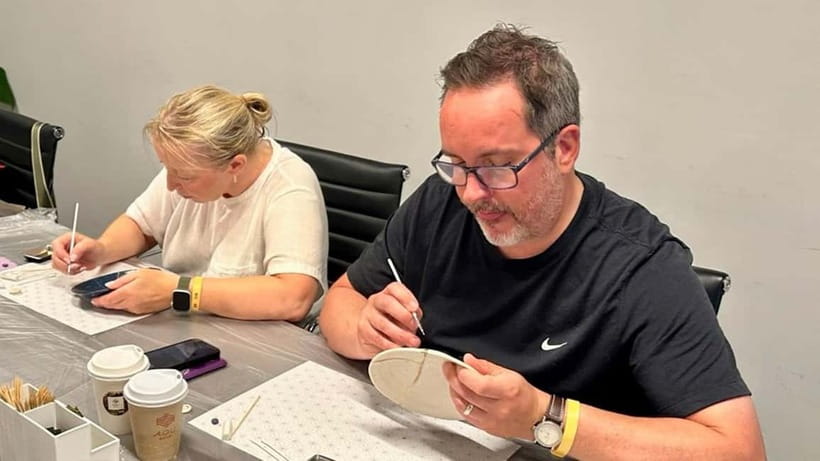
The structure is straightforward: you get clear step-by-step instructions, you follow along, and the instructor checks your progress as you go. Because this is a small group, you are not stuck waiting while a single person dominates the bench time.
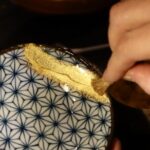
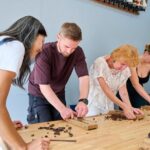
You start with the ceramic piece provided for the workshop. Some sessions include a choice of options like different colored cracked plates, and you can expect the instructor to help you pick and then guide your work from there. From that point on, you are focused on the creative process: joining the broken areas using lacquer, then finishing the seams with the metallic powder effect that gives Kintsugi its signature look.
The materials and tools are all provided, so you can concentrate on technique rather than logistics. That is a big deal for first-timers, because Kintsugi has a reputation for being fussy and slow. In a single sitting, you get the essentials, then you get to see your own result turn from broken to intentionally repaired.
Make something to take home. Other workshops
- Tokyo Shinjuku Chopsticks Making Class★ 5.0 · 1,763 reviews
- Chopstick Making Workshop in Ginza★ 4.8 · 1,366 reviews
- Tokyo Sumo Experience: Chanko & Mochi with a Former Pro★ 4.8 · 567 reviews
- Kintsugi Experience: Art of Golden Joinery in Tokyo★ 5.0 · 467 reviews
- Tokyo Chopstick Making Workshop with Artisan★ 5.0 · 466 reviews
Instructor style: clear teaching plus Ginza conversation
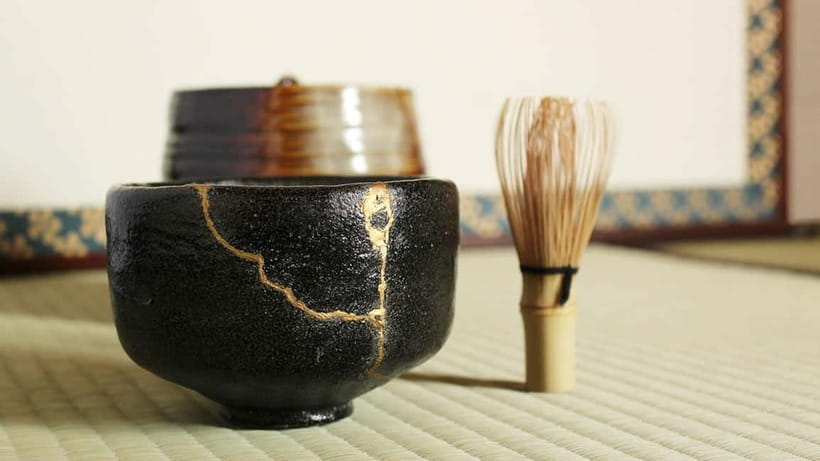
The lesson is taught by an English and Japanese instructor, and the vibe is practical and friendly. You are not just hearing facts, you are being guided through decisions as you work, especially when you need help getting the technique right.
Instructors like Tatsu and Teki Sensei are known for mixing instruction with conversation. If you like learning about a city while you do a craft, this is a good match, since Ginza stories and context naturally come up alongside the technique.
One practical point: the session is limited to 8 participants, which usually means more individual support. Still, any group workshop can have slight timing hiccups, so expect that you might not always have every second for hands-on perfection. The goal is balance, learning the technique and completing a take-home piece in 90 minutes.
Your take-home ceramic: packaging, handling, and gifting
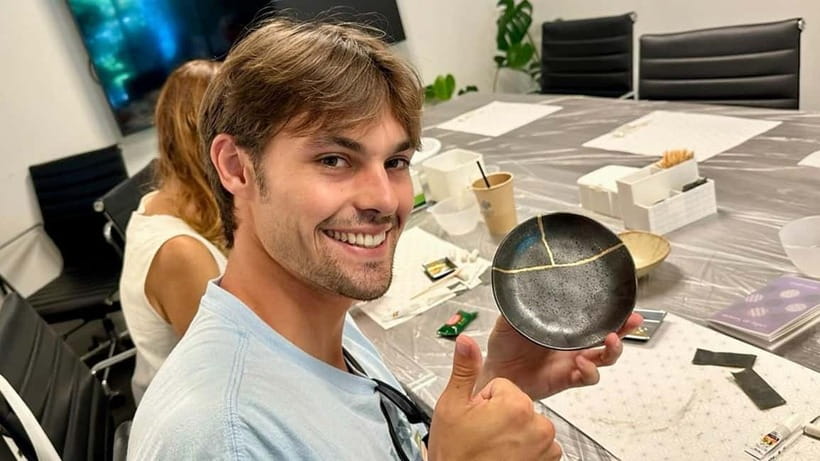
When you finish, you take your repaired ceramic piece home, and that is the real souvenir value. The workshop also includes packaging designed to keep your piece safe for travel, which is important in Japan when you are moving between neighborhoods with trains and stairs.
This is also a great gift idea, because Kintsugi repairs are personal by nature. No two repaired seams look exactly the same, even when you start with a provided piece, so your final result feels uniquely yours.
Do handle it with care after the workshop. It is meant for display and thoughtful use, not for everyday microwaving, and the instructions specifically note that it is not microwave-safe. If you bring it into your day-to-day kitchen life, keep it gentle: treat it like something you would show off rather than something you would heat.
Price and value in Ginza: $75 buys more than a craft demo
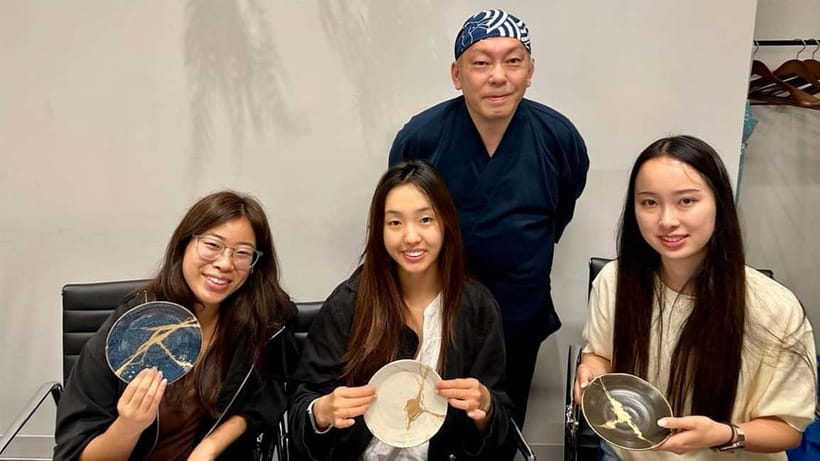
At $75 per person for 90 minutes, you are paying for much more than a photo opportunity or a quick demo. You get a private-room workshop near Ginza Station, a small group capped at 8 people, an instructor who can work with you in English or Japanese, and all tools and materials included.
The biggest value add is that you create something tangible in the session. Many “culture experiences” are mostly watching. Here, you do the repair work and take home the finished ceramic, so the time turns into a real keepsake rather than a memory that fades fast.
You also get a complimentary soft drink. It is not a life-changing bonus, but it helps the session feel like a complete experience rather than a strict workshop-only exchange. When you are in central Tokyo, that small comfort matters.
Who should book this Kintsugi workshop, and who should skip it
This workshop is a strong fit if you:
- want a hands-on art experience in central Tokyo
- enjoy making a tangible souvenir you cannot buy in a store
- are visiting Ginza and want something cultural that is not just shopping
- are comfortable working closely in a small group
It is not suitable for children under 10. It also is not suitable for people with mobility impairments, people with a cold, babies under 1, or people who are hearing-impaired. If any of those apply, you will want to choose another activity that better matches your needs.
It is also worth saying out loud: this is primarily decorative. If your goal is to use your repaired piece as daily tableware in a microwave, the workshop is not the right match.
The practical logistics that actually affect your day
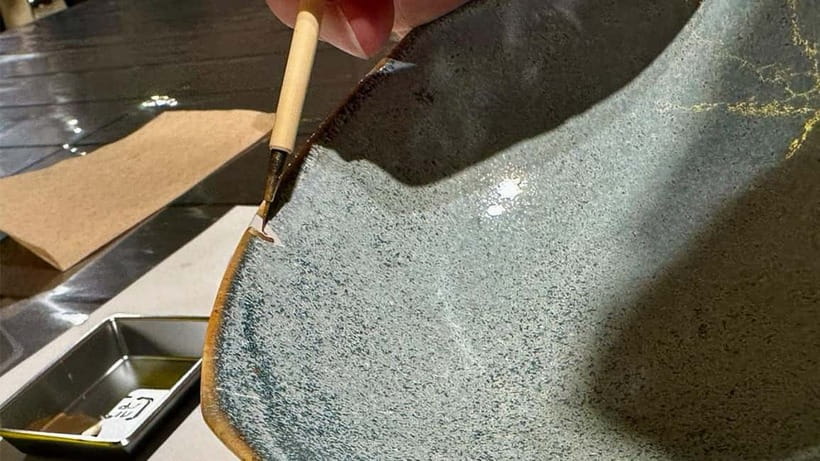
You are in and out in 90 minutes, and the workshop is held in a private room near Ginza Station. That makes it easier to plan around, especially if you want to pair it with a Ginza stroll afterward.
The venue can change depending on availability and the number of reservations, and you will be notified by email one day before the workshop. That is rare enough to be manageable, but it is still something to watch for so you do not arrive at the wrong door.
If you want to be extra smooth, aim to arrive at Cafe AOU Ginza forest before the start time so you can check in and settle. Tokyo can be efficient, but buildings are dense, and a few minutes of buffer keeps your session stress-free.
Should you book Tokyo: Discover the Art of Kintsugi in Ginza?
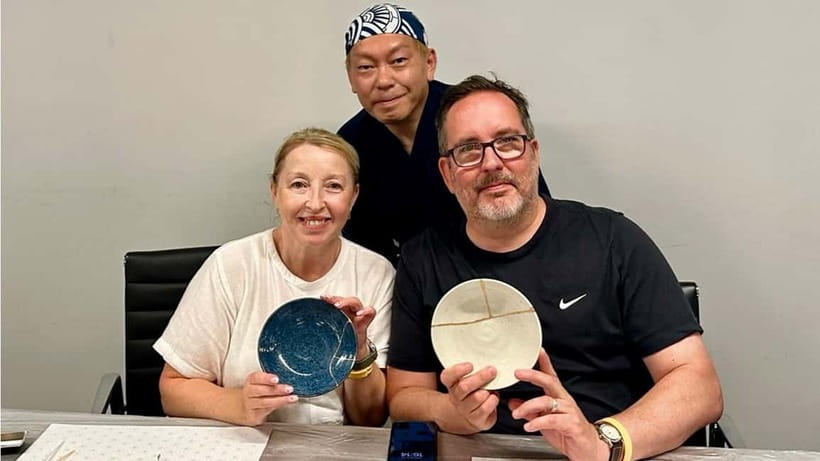
I think this is a book-worthy class if you want a calm, creative break in the middle of Tokyo, and you like the idea of making an object that carries meaning. The small group size, the private-room setup near Ginza Station, and the fact that you finish and take home your repaired ceramic all add up to good value for $75.
Skip it if you are chasing the full traditional timeline and materials. This workshop is designed for same-day results using synthetic lacquer and metallic powder, so you will not get the month-long gold-standard process. And if you need microwave-safe tableware, this is not the experience to choose.
If you are flexible, curious, and ready to slow down for a craft, this one is a smart way to experience a Japanese aesthetic with your hands, not just your eyes.
FAQ
How long is the Kintsugi workshop?
The workshop lasts 90 minutes.
What is included in the price?
You get the 90-minute Kintsugi workshop, all necessary tools and materials, a ceramic piece to restore, expert instructor guidance, and a complimentary soft drink.
Where do I meet for the workshop?
Meet at Cafe AOU Ginza forest, on the ground level of the Daiwa Ginza Building.
What language is the instructor?
The instructor speaks English and Japanese.
Can I take my repaired ceramic piece home?
Yes, you will take home the repaired ceramic piece.
Is the repaired ceramic microwave-safe?
No, the repaired item is not microwave-safe.
Made by Hand, and Yours to Keep
Central Tokyo Landmarks



Newest Tokyo write-ups from the Loving Japan desk



Tokyo Tower, Ginza and the Imperial Palace, side by side.
 ★ 5.0Flagship 2-Hours Official Street Go-Kart Tour – Tokyo Bay ShopFrom $644,974 reviews
 ★ 4.6Tokyo Tower: Admission TicketFrom $93,661 reviews
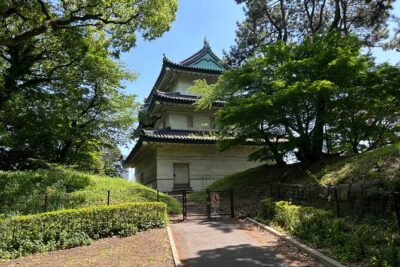 ★ 5.0Imperial Palace and Shogun Historical Walking TourFrom $222,251 reviews
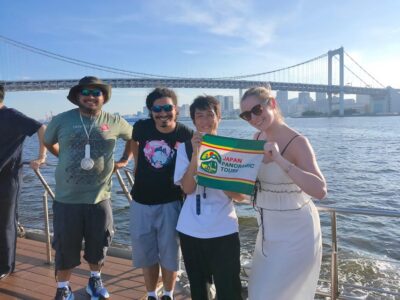 ★ 4.7Meiji Shrine, Asakusa, Skytree Bus Tour and CruiseFrom $1221,986 reviews
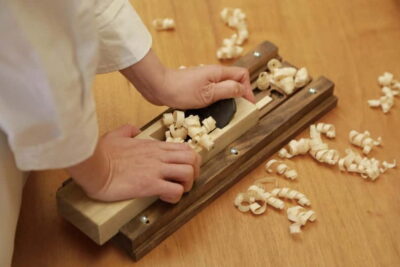 ★ 4.8Chopstick Making Workshop in GinzaFrom $251,366 reviews
 ★ 4.5Tokyo Panoramic 1 Day: Meiji Shrine, Asakusa, Odaiba and SKYTREE®From $851,222 reviews
 ★ 4.9Imperial Palace Japanese History Walking TourFrom $32987 reviews
 ★ 4.9Imperial Palace and Shogun Walking TourFrom $16935 reviews
Filed on these lists too