
REVIEW · SUMO WRESTLING EXPERIENCES
Tokyo: Grand Sumo May Tournament
Sumo makes more sense with an expert beside you. I love the guided Ryogoku walk that turns the neighborhood into context, and I love that the earphone commentary helps you follow every bout and ritual instead of guessing. One possible drawback: this is a premium day, so if you just want the cheapest way to sit in the stands, the total cost may feel steep.
The payoff is a full sumo “story” arc, not just ticket time, with an organized walkthrough of the Kokugikan and a meal afterward if you choose chanko-nabe. Plan on a solid half-day, with comfortable shoes for the walking portion and a bit of patience if the day runs tight.
In This Review
- Key moments that make this sumo day work
- Ryogoku first, because sumo is local
- The 1:00 to 3:00 sumo landmarks walk (optional), from stables to a Yokozuna shrine
- Kokugikan walkthrough from 3:00 to 6:00, murals, prizes, museum time, then bouts
- The seat question: chair option vs flat-floor first level
- Live English commentary through earphones, so you follow the rituals and rules
- Headsets for groups of 3 or more
- About special viewing options
- Chanko-nabe dinner near the arena, what to expect
- Price and value: paying for access plus understanding
- How to plan your day around timing and seat comfort
- Who should book this Grand Sumo tournament experience in Tokyo
- Should you book this sumo day tour?
- FAQ
- FAQ
- What is the duration of the Tokyo Grand Sumo May Tournament tour?
- Is the tournament ticket included?
- Do I get help understanding what happens during the matches?
- Is there a walking tour before the arena?
- What is included with the arena visit?
- Is chanko-nabe dinner included?
- Does the dinner include fish?
- Do I have seat options?
- Do you provide tour materials or information about wrestlers?
- What is the cancellation window?
Key moments that make this sumo day work
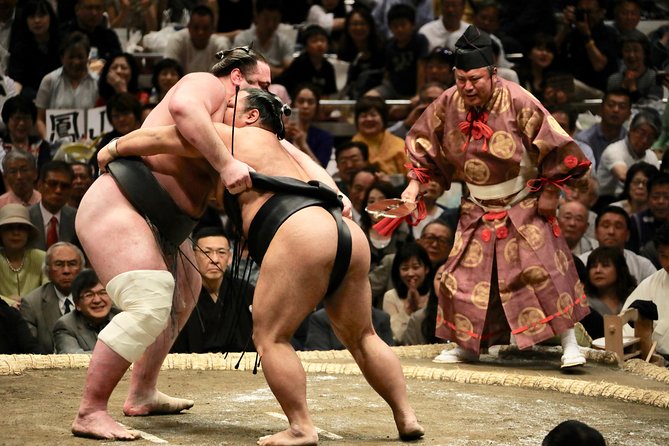
- Ryogoku neighborhood history first so the arena action has meaning the moment you sit down
- Kokugikan inside-the-building orientation that includes the sumo museum and big visual displays
- Live English commentary through personal earphones so you do not miss what is happening
- Seat options with chair seating (balcony chair B or C) that can make a long day easier
- Chanko-nabe dinner near the arena if you want the wrestlers’ signature hot pot without figuring it out yourself
- Tournament info package plus cheer-up goods to help you follow the ranks and pick a wrestler to root for
Morning practice or an evening show. Both reviewed
- Tokyo: Sumo Show and Dining Experience
★ 4.8 · 2,742 reviews - the SUMO show
★ 5.0 · 1,960 reviews - Tokyo Shinjuku Sumo Show & Experience with Photo
★ 5.0 · 1,750 reviews - Tokyo: Sumo Show and Experience in Shinjuku
★ 4.8 · 1,001 reviews
Ryogoku first, because sumo is local
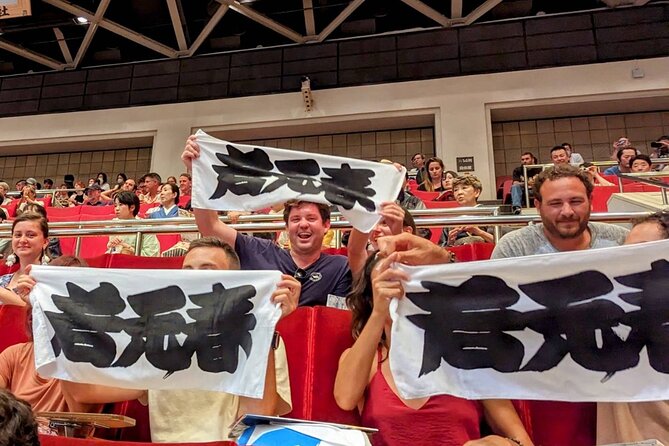
Ryogoku is Tokyo’s sumo center, and this tour makes you start there instead of arriving cold. You meet in the area, then you spend time on foot learning how sumo fits into the town, where stables, shrines, and old-school traditions shape what you see later.
This matters because sumo is not just strength and speed. It is a full set of rituals, rankings, and routines that feel like a performance even when the action is quick. When you understand the basics ahead of time, you can watch the match and also read what is going on around it.
This day also has a practical advantage: with a guide handling the flow, you are not standing around wondering where to go next, or how to find the museum, murals, and viewing areas inside the Kokugikan.
The 1:00 to 3:00 sumo landmarks walk (optional), from stables to a Yokozuna shrine
If you choose the history portion, you are in good hands for turning match day into a learning day. You spend about two hours walking around Ryogoku, visiting sumo-related spots tied to the sport’s past.
The highlights you should look for during this walk:
- Sumo stables outside the arena. Even when you only see the exterior, it changes how you picture what a wrestler’s life might look like.
- A sumo shrine experience near the Kokugikan area. One guide example is that Ken accompanied the group in sharing sumo lore at a shrine site, including a sumo song moment.
- A focus on the kind of landmarks that give you “why this matters” context when you later see rings, awards, and ceremonies inside the stadium.
You also get a real benefit that you cannot get from showing up alone: your guide connects the dots. Instead of treating every object as decoration, you learn what it represents and why the sport holds onto tradition so tightly.
Who this part is for:
If you are the type who likes explanations, this is the best use of your time. If you are purely here for the matches and do not care about backstory, you might skip this option and go straight to the arena.
Kokugikan walkthrough from 3:00 to 6:00, murals, prizes, museum time, then bouts
The heart of the day is at Ryogoku Kokugikan. After the walking portion, you head into the arena and get a planned route.
Before the bouts start, the guide walks you through key areas, including:
- Murals (listed as about 10 meters)
- Championship prizes (also listed as about 10 meters)
- The sumo museum (about 15 minutes)
- Paintings and photos connected to successive Yokozuna
This part is more than sightseeing. It sets you up to notice what you will see during the event. When you know what awards represent and how Yokozuna history is displayed, the tournament feels like an ongoing storyline, not a one-off spectacle.
Then the tour moves into watching the tournament. You get to see the bouts with live guidance, and your guide helps you understand what you are looking at as the day unfolds.
- Mt Fuji and Hakone 1-Day Bus Tour Return by Bullet Train★ 5.0 · 26,383 reviews
- 1-Day Tokyo Bus Tour★ 5.0 · 14,250 reviews
- Tokyo: teamLab Planets TOKYO Digital Art Museum Entry Ticket★ 4.6 · 9,779 reviews
- Mt Fuji & Hakone Cruise, Drum Show Bullet Train 1 Day from Tokyo★ 4.0 · 7,413 reviews
- Tokyo: Shinjuku Food Tour (13 Dishes at 4 Local Eateries)★ 5.0 · 6,603 reviews
The seat question: chair option vs flat-floor first level
Comfort can make or break a tournament day. This tour offers a chair option, and that can matter if you tend to get stiff.
- With the chair option, you sit on the balcony with chair seats.
- Without it, if you stay on the first floor, you may sit on a flat floor rather than using chairs.
Seating is assigned so that you are seated either in chair B or chair C, depending on the seating map.
If you want an easier time watching for three straight hours, seriously consider the chair option. Tournament days can involve standing for ceremonies too, but having the option to sit comfortably while watching the match action helps.
Live English commentary through earphones, so you follow the rituals and rules
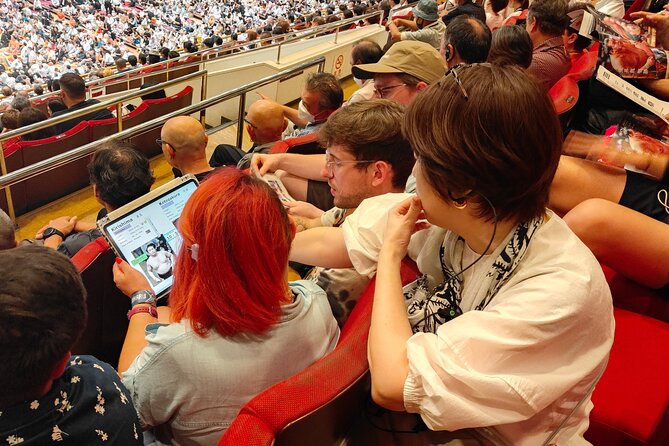
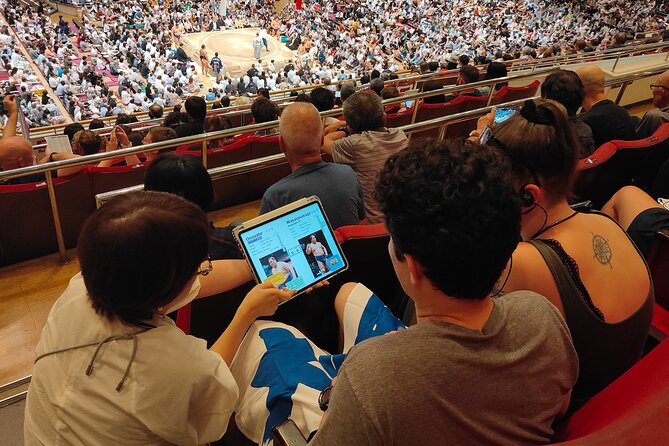
This is the main reason the tour is worth its premium feel. In the arena, the guide provides real-time commentary, and you hear it clearly through personal earphones.
That has two big advantages for you:
- You do not need to translate in your head. If you are even mildly confused about ranking, decision types, or the flow of a bout, commentary solves it fast.
- You notice the ritual beats. Sumo includes more than the push and shove. There are routines around the start, ceremonies, and the way the match resets between bouts.
You also benefit from the guide explaining ring entering ceremonies, including the ceremonies involving grand champions and top division wrestlers. That is the kind of moment that feels important even if you do not know the details yet. With the explanation, it turns into something you can appreciate properly.
Headsets for groups of 3 or more
A practical note: for groups of three or more, headsets are provided so you can hear the guide even from a distance. This matters because in a large arena, “everyone hears the guide” is not guaranteed unless the operator plans for audio.
About special viewing options
The operator also notes a newly added option tied to a specific date in the tournament schedule, describing it as giving you a chance to view sumo from various angles, including its inception. If you care about maximizing variety in what you see, check the available viewing options for your specific tournament dates when you book.
Chanko-nabe dinner near the arena, what to expect
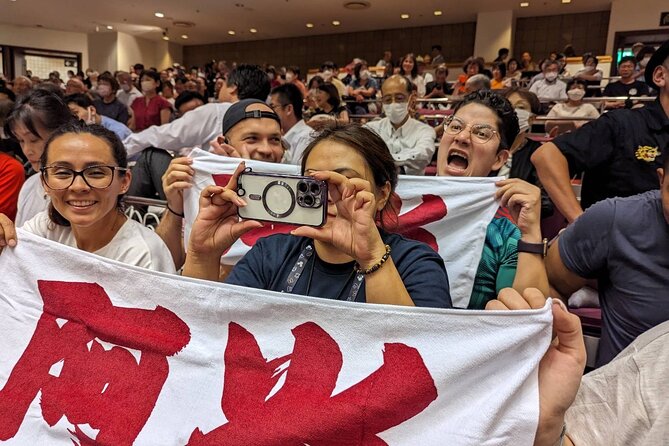
After the bouts, you can add dinner. The tour can take you to one of the best chanko-nabe restaurants near the Kokugikan area, typically on a tight walk schedule from the match.
What is included and what to watch:
- The chanko-nabe meal itself is part of the option.
- Drinks are not included, so you will order separately.
- The dish is a hot pot that wrestlers traditionally eat to gain weight and build muscle, so it is hearty by design.
One important tip from real dining experience: chanko-nabe often includes a lot of fish in the mix. If you are not a fish eater, you should know this before you commit to the dinner option. If seafood is a dealbreaker for you, consider skipping dinner or asking about ingredients in advance where possible.
The upside of having dinner organized is time and energy. You are not scrambling to find a place right after the tournament when everyone is hungry and the area is crowded with match-day foot traffic.
Price and value: paying for access plus understanding
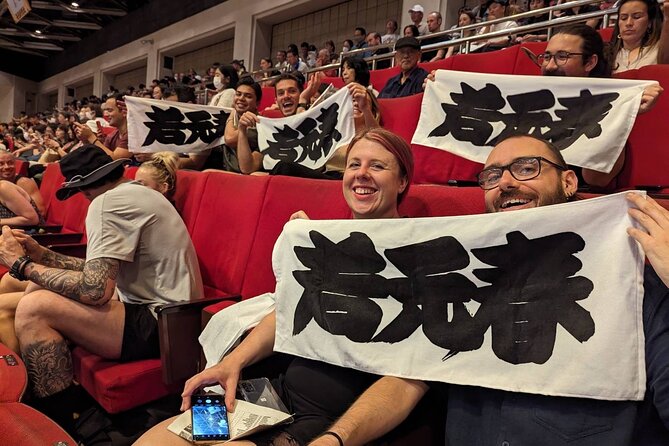
At $198.20 per person, this is not a budget sumo ticket. Some people compare the tour price to the face value of a tournament ticket and feel the gap is big. That is a fair way to think about it.
But here is what you are actually paying for, based on what this experience includes:
- An English-guiding sumo expert guide
- All fees and taxes
- A structured walkthrough of the arena and museum areas, not just sitting down
- Personal earphones for live commentary during the tournament
- An information package with tournament info, sumo rankings, and profiles of prominent wrestlers
- Cheer-up goods so you can actively root for a wrestler
- Mobile ticket delivery
So the value equation looks different depending on your goal:
- If your goal is pure attendance with zero explanation, the markup might feel hard to justify.
- If your goal is to leave the arena understanding what you just watched, including rituals, decision flow, and wrestler context, the guide-driven parts are what you are buying.
My practical take: for many first-timers, the commentary plus pre-bout orientation is what turns a “nice show” into a “now I get it.” And that is what you will carry forward if you want to keep following sumo after Japan.
How to plan your day around timing and seat comfort
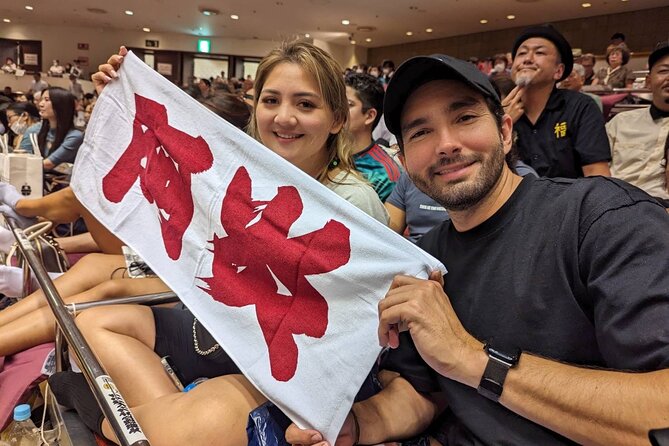
This tour is built as a roughly six-hour experience. The typical flow is:
- Early afternoon history walk (optional) for about two hours
- Arena time and bouts for about three hours
- Optional chanko-nabe dinner for about one hour after
That structure is useful because it separates learning time from match time. You are not trying to read signs in the stadium while something important happens. You get the arena orientation first, then you settle in to watch.
A few planning tips that make a real difference:
- Wear comfortable shoes. You will do walking time around Ryogoku before you get to the Kokugikan.
- Decide on the chair option if you want maximum comfort during long bouts viewing.
- Bring curiosity. This is a day where asking questions helps. Even if your guide is calm and quiet by style, the structure is set up for explanations.
Group size is capped at a maximum of 35 travelers, so you are not in an enormous crowd tour situation. It still can be lively, but you should expect enough attention for questions and audio clarity thanks to the earphone and headset setup.
Who should book this Grand Sumo tournament experience in Tokyo
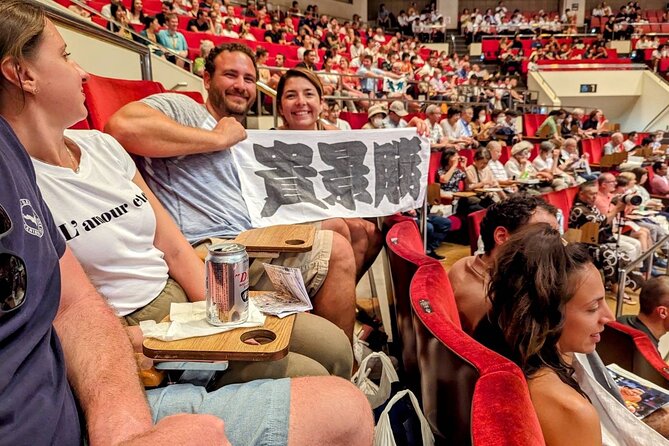
This tour is a great fit if you fall into one of these groups:
- You love traditional Japanese culture and want to understand what you are seeing, not just watch it.
- You are a sports fan who also enjoys rules, ranking systems, and the “why” behind match flow.
- You are visiting Tokyo for the first time and want one event where a guide genuinely changes your experience.
It is also a good choice if you worry about getting tickets on your own. Tournament tickets for major sumo events can sell out quickly, so pairing your day with a guided experience can reduce stress.
Who might skip it:
- If you speak fluent Japanese and plan to study the bouts and ceremonies yourself, you could do it independently.
- If you dislike fish and you want dinner, you may want to skip the chanko option or confirm what is in the pot before booking.
Should you book this sumo day tour?
Book it if you want the full Ryogoku experience: the neighborhood context, the Kokugikan walkthrough, and the live English commentary that helps you actually follow the action. The best part of this tour is that you do not sit in the dark, you sit in the story.
Skip it if your only goal is to see sumo, you already know the basics, and you are trying to minimize cost. In that case, you might prefer handling the arena entry on your own.
If you are on the fence, pick based on one question: after the tournament, do you want to be able to explain what happened, or just remember what you saw? This tour is built for the first answer.
FAQ
FAQ
What is the duration of the Tokyo Grand Sumo May Tournament tour?
The experience runs about 6 hours total.
Is the tournament ticket included?
Yes. Viewing bouts at the arena includes the admission ticket.
Do I get help understanding what happens during the matches?
Yes. Your English guide provides live commentary during the tournament using personal earphones.
Is there a walking tour before the arena?
Yes, there is an optional history and culture walking portion in Ryogoku that runs about 2 hours, before arena viewing.
What is included with the arena visit?
You get a guided walkthrough inside Ryogoku Kokugikan, including stops such as the sumo museum and areas featuring murals, championship prizes, and displays tied to Yokozuna history, followed by viewing bouts with commentary.
Is chanko-nabe dinner included?
The chanko-nabe dinner is an optional add-on. Drinks are not included and must be ordered separately.
Does the dinner include fish?
The tour’s chanko-nabe can include a lot of fish mixed into the hot pot, so if you do not eat fish, consider that before choosing the dinner option.
Do I have seat options?
Yes. There is a chair option that uses chair seats on the balcony. Without the chair option, you may sit on a flat floor on the first level. Seating may be assigned as chair B or C when using chair seating.
Do you provide tour materials or information about wrestlers?
Yes. You receive an information package with tournament information, sumo ranking, and profiles of prominent wrestlers, plus cheer-up goods to root for a wrestler.
What is the cancellation window?
Free cancellation is available up to 24 hours in advance for a full refund. If you cancel less than 24 hours before the start time, the amount paid is not refunded.
Practice Rooms and Show Nights
Newest Tokyo write-ups from the Loving Japan desk

Sumo Wrestling Experiences, side by side.
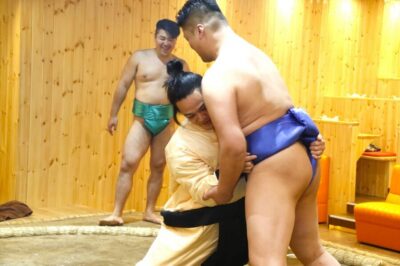 ★ 4.8Sumo Show Experience with Chicken Hot Pot and a PhotoFrom $1036,678 reviews
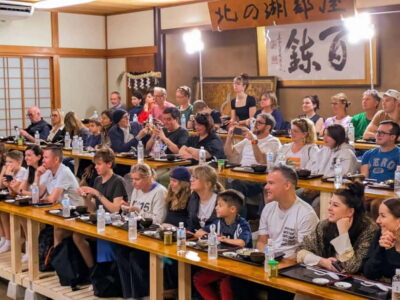 ★ 4.8Sumo Show and Dining ExperienceFrom $792,742 reviews
 ★ 5.0the SUMO showFrom $891,960 reviews
 ★ 5.0Tokyo Shinjuku Sumo Show & Experience with PhotoFrom $791,750 reviews
 ★ 4.8Sumo Show and Experience in ShinjukuFrom $691,001 reviews
 ★ 4.6Sumo Tournament Tour with Chair Seat TicketsFrom $141753 reviews
 ★ 4.5Sumo Show & Experience w/ Optional Kimono & Hot PotFrom $77609 reviews
 ★ 5.0Authentic Sumo Experience in Tokyo: Enter the SanctuaryFrom $171603 reviews
Filed on these lists too