
REVIEW · SHIBUYA, SHINJUKU AND HARAJUKU WALKS
Tokyo Ikebana Wellness Art Experience near Shinjuku
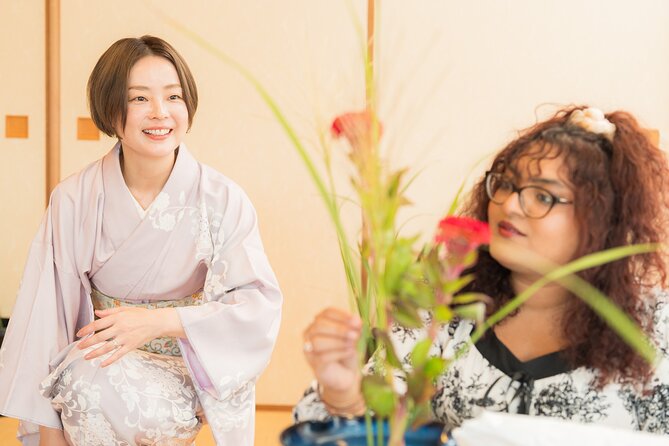
Tokyo’s flower art is quieter than you expect. This Ikebana workshop near Shinjuku turns fresh stems into a calm, hands-on lesson, guided start to finish by Ai-sensei in a bright Japanese-style room. I love that it is beginner-friendly with step-by-step coaching, and you also get a take-home arrangement so the lesson keeps going in your hotel room.
One thing to consider: since you are making something with living materials, you’ll want to plan for careful carrying back to your place, especially if you’re traveling light or using public transit right after.
In This Review
- Key Details You Can Use Right Away
- Arriving at M Square in Nakano (Near Shinjuku, Not in the Middle of Chaos)
- What 1 Hour 30 Minutes Feels Like for a First-Time Ikebana Lesson
- The 600-Year Backstory, Explained in Plain Terms
- Building Your Arrangement: The Moment It Clicks
- Ai-sensei’s Teaching Style: Gentle, Specific, and Focused on Balance
- The Workshop Room Experience: Clean, Bright, and Very Japanese
- Taking Your Arrangement Home, and Why It’s a Smart Souvenir
- Price and Value: $52.71 for 1.5 Hours and Materials
- Who This Workshop Suits Best (And Who Might Skip It)
- Should You Book This Tokyo Ikebana Wellness Experience?
- FAQ
- How long is the Ikebana workshop?
- What is the meeting point for the workshop?
- Where does the experience end?
- Do I need any prior experience to join?
- Can I take my arrangement home?
- How many people are in the group?
- Do I need a passport number or flight information if I’m already in Japan?
- What is the cancellation policy?
Key Details You Can Use Right Away
- Beginner-proof format (no experience needed): You learn the basics and the “why” behind the shapes as you build your own arrangement.
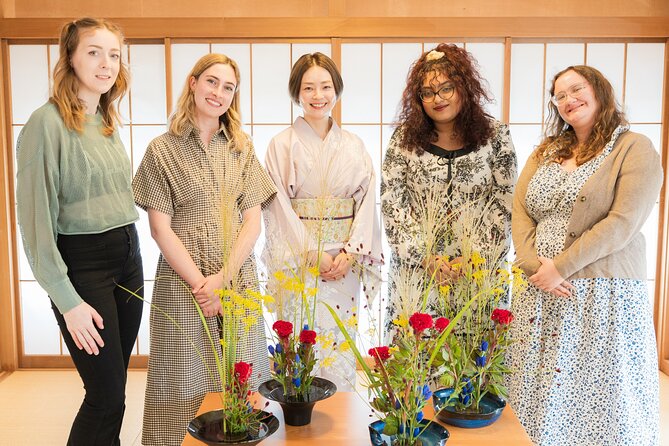
- Small group, max 5 people: Expect more personal attention and quicker help when you get stuck.
- 1 hour 30 minutes, mobile ticket: Simple time commitment, plus you receive a mobile ticket for the session.
- Learn the 600-year background: The workshop includes an introduction to Ikebana’s history and cultural context, with instructor photos.
- Hands-on flower arrangement with step-by-step guidance: You follow the procedure, then refine balance and placement.
- Take-home flowers as your souvenir: You bring your finished work with you, not just photos.
Other routes through the west side of Tokyo, compared
- Tokyo: Shinjuku Food Tour (13 Dishes at 4 Local Eateries)
★ 5.0 · 6,603 reviews - Tokyo Bar Hopping Tour in Shinjuku (All-You-Can-Drink + Dinner)
★ 5.0 · 3,587 reviews - Official Street Go-Kart in Shibuya
★ 5.0 · 3,435 reviews - Tokyo: Shinjuku Food Tour (15 Dishes and 4 Eateries)
★ 4.9 · 2,033 reviews
Arriving at M Square in Nakano (Near Shinjuku, Not in the Middle of Chaos)
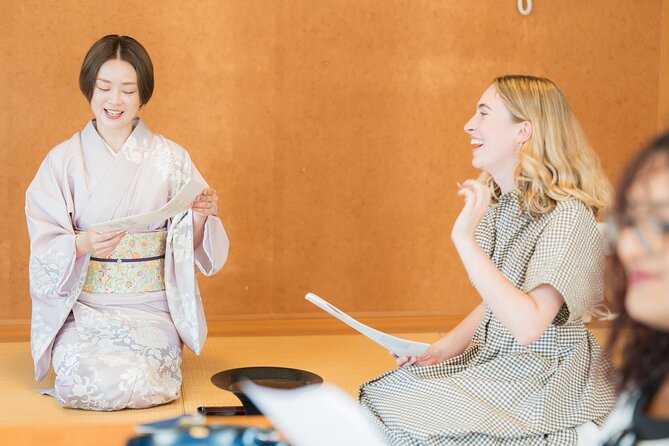
This experience meets in Nakano City, at M Square (3-chōme 8, Nakano). The practical upside is that you are still in greater Tokyo, where transit is easy to reach, but you avoid the feeling of being stuck in a crowded, stressful meeting point right at the busiest core.
Start time is 1:00 pm, and the activity ends back where you began. That loop matters. You can plan the rest of your afternoon without worrying about a long walk to a second stop or hunting down a new location after class.
For logistics, keep your expectations simple: near public transportation, small room, and a short class rhythm. If you’ve got a day built around Shinjuku, this is the kind of add-on that still leaves you room to eat, wander, or head to your next neighborhood without burning half a day.
What 1 Hour 30 Minutes Feels Like for a First-Time Ikebana Lesson
The workshop runs about 1 hour 30 minutes, which is a sweet spot. Long enough to learn the basics, short enough that you do not feel like you must become an Ikebana person immediately.
Here is the typical flow you can expect:
- A welcome and setup, so you know what you are working with.
- An introduction covering the history and cultural background of Ikebana, supported by photos of the instructor’s work.
- A hands-on building phase, where you create your own arrangement with step-by-step guidance.
- A wrap-up moment where you see how different people shape the same materials.
Because it is designed for all ages and beginners, the pacing is forgiving. You are not expected to show up with flowers already figured out in your mind. Instead, you follow the procedure, then adjust until the arrangement looks balanced to you.
The 600-Year Backstory, Explained in Plain Terms

Ikebana is often described like a sophisticated art, and that can be intimidating. This workshop handles that problem by giving you context first, including Ikebana’s 600-year-old history and the cultural background behind the practice.
You also get practical explanations before you start cutting and arranging. Expect discussion of things like vases and tools, plus an overview of main styles and the basics that help your arrangement hold its shape. In other words, you learn the rules before you break them in your own way.
One fun, memorable historical detail that comes up in the class is the connection between tea culture and the roots of the art. You may hear references such as Sen no Rikyu for tea, and how the story connects to a monk named San. Even if you only catch the highlights, it makes the whole session feel more connected to real Japanese culture than just a craft project.
Make something to take home. Other workshops
- Tokyo Shinjuku Chopsticks Making Class★ 5.0 · 1,763 reviews
- Chopstick Making Workshop in Ginza★ 4.8 · 1,366 reviews
- Tokyo Sumo Experience: Chanko & Mochi with a Former Pro★ 4.8 · 567 reviews
- Kintsugi Experience: Art of Golden Joinery in Tokyo★ 5.0 · 467 reviews
- Tokyo Chopstick Making Workshop with Artisan★ 5.0 · 466 reviews
Building Your Arrangement: The Moment It Clicks
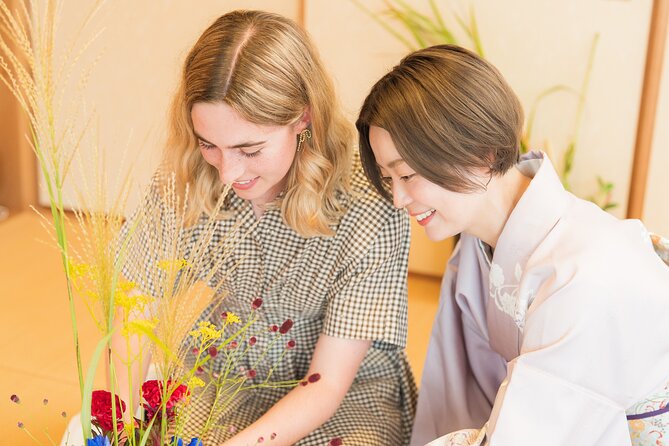
This is the part most people come for, and it is also where the workshop earns its reputation. You’ll be holding fresh materials, learning how to treat stems, and using guidance to make choices about height, direction, and structure.
What I like about the way the workshop is described is that it focuses on the steps that actually change the result:
- How to handle flower materials in a way that keeps them looking natural.
- How to think about placement so the arrangement feels intentional, not random.
- How small adjustments shift the mood, like changing the height of a focal flower, repositioning a branch, or even removing a single leaf.
That last point is more important than it sounds. In a lot of beginner crafts, the instructions say, do X and you’ll get Y. Ikebana is more honest. It teaches you that the same flowers can express different ideas depending on how you shape the space around them.
Even if you start with an anxious, I might mess this up feeling, the process is designed to reduce that quickly. You get help when you need it, and the small group size keeps questions from getting lost.
Ai-sensei’s Teaching Style: Gentle, Specific, and Focused on Balance
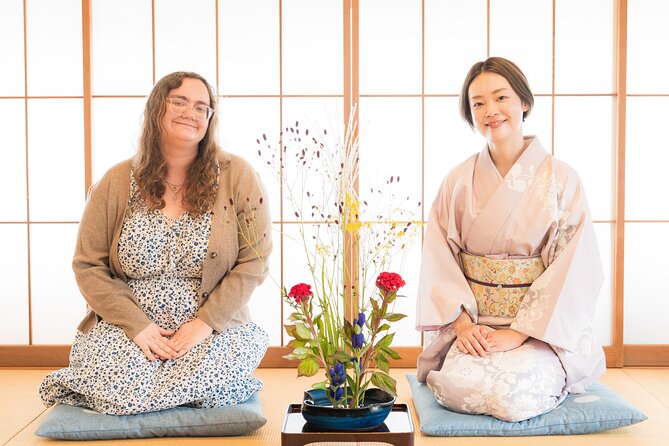
The instructor is Ai-sensei, and that name comes up again and again in the feedback. The consistent theme is that guidance is not just friendly, it is detailed. You are shown what to do, then you’re supported as you do it.
A key strength for beginners is English instruction. Multiple participants highlight that Ai-sensei teaches in English and explains procedures clearly. That matters in Japan, where even “simple” directions can feel confusing if you do not speak the language.
You’ll also hear advice that sounds small but adds up:
- Direction of branches, and how angle changes the feel.
- How cutting and trimming affects proportion.
- How to balance leaves and stems so the arrangement looks stable.
And it is not only about technique. The workshop also helps you pay attention to space and proportion, the idea of creating a form that feels calm rather than cluttered. Several people describe the experience as a quiet reset away from the daily rush, which makes sense once you’re actually working with fresh stems in a focused room.
The Workshop Room Experience: Clean, Bright, and Very Japanese
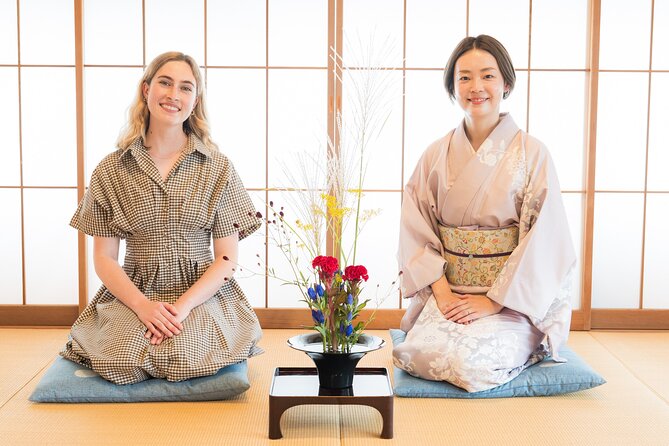
You’re not learning Ikebana at a cramped table under fluorescent lighting. The venue is described as clean with good access from the station, and participants specifically note the Japanese-style room and that it feels open and bright.
That sounds aesthetic, but it changes the experience in a practical way. When a room is calm and easy to see, you can actually pay attention to the details you’re shaping, like leaf placement and line of a branch. That reduces frustration for beginners.
It also helps the lesson land emotionally. If you’re spending most of your trip in loud streets and fast train platforms, this kind of quiet space feels like a break you can take back with you in your posture and mindset.
Taking Your Arrangement Home, and Why It’s a Smart Souvenir
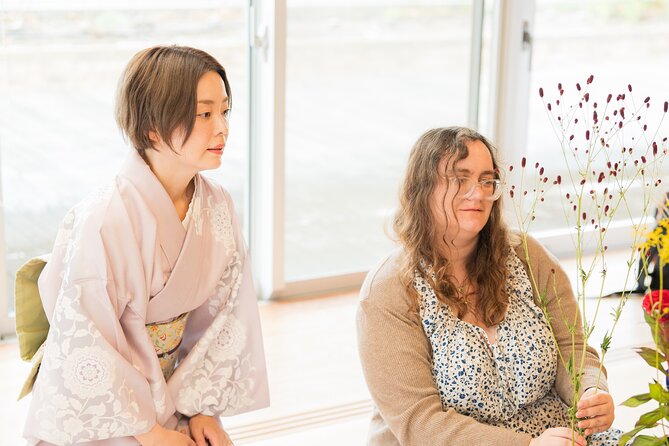
The workshop includes a major perk: you can take your arrangement home. That means your souvenir is not just an object you buy, it is a thing you made.
For value, this is one of the best tradeoffs in Tokyo. Many cultural activities end with a certificate or a photo. Here, you get something that lives with you for a while, and it can transform a hotel room or apartment corner into something more personal.
Just be realistic: your arrangement is made with fresh flowers, so you’re carrying living stems. Plan your transit accordingly. If you are going straight to dinner, you might want a steady route, minimal transfers, and a careful way to keep the arrangement upright.
Also note: the workshop is designed so most people can participate, and the take-home part encourages you to slow down and enjoy the result without needing additional setup on your next day.
Price and Value: $52.71 for 1.5 Hours and Materials
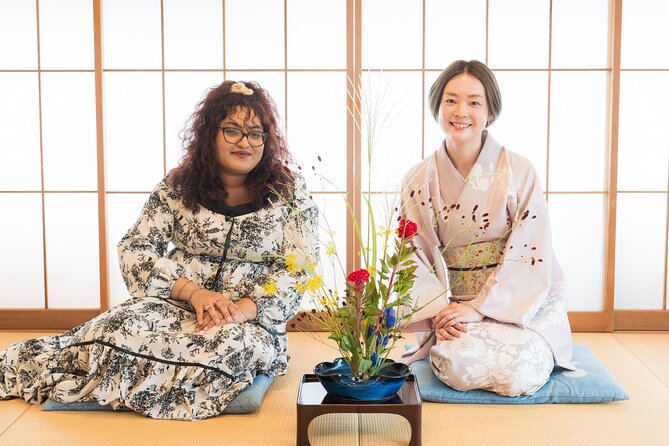
At $52.71 per person, this is not free. But in Tokyo, it also does not feel overpriced for what you get.
Here’s why the value makes sense:
- You are paying for hands-on instruction in a small group (max 5).
- The workshop includes learning components: history, tools, styles, and how to shape the arrangement.
- You get a finished piece to take home, using fresh materials.
If you compare it to buying a mass-produced souvenir, this is more personal. If you compare it to a self-guided craft shop visit, the coaching is the difference. Ikebana has a lot of invisible rules, and getting those explained in a beginner-friendly way is what you are really paying for.
Booked in advance on average about 22 days, so it fits well if you like planning ahead for a Tokyo day that feels meaningful, not random.
Who This Workshop Suits Best (And Who Might Skip It)
This workshop is a strong match if:
- You want a cultural activity near Shinjuku that does not require prior experience.
- You like small-group teaching and clear step-by-step guidance.
- You want something calm and hands-on that also gives you a real take-home result.
- You enjoy learning context, not just doing the final craft step.
It may not be the best choice if:
- You want a purely sightseeing day with lots of walking and views. This is meant to be a seated, focused workshop.
- You get overwhelmed by tasks that involve delicate materials. You can still participate as a beginner, but you should be comfortable following instructions and working carefully.
Should You Book This Tokyo Ikebana Wellness Experience?
If you’re the type of traveler who likes your Tokyo days to include something quieter and more personal, I think this is an easy yes.
Book it if you want:
- A beginner-friendly introduction to Japanese flower arrangement
- A small-group lesson with Ai-sensei
- A take-home arrangement that continues the experience back at your place
Consider a different activity if you only want visual sightseeing and do not care about making anything yourself. But if you’re open to learning, shaping, and then carrying fresh flowers home, this workshop is one of the more memorable ways to slow down and see Japanese aesthetics up close.
FAQ
How long is the Ikebana workshop?
It lasts about 1 hour 30 minutes.
What is the meeting point for the workshop?
The meeting point is in Tokyo at 164-0001, Nakano City, Nakano, 3-chōme 8, M Square.
Where does the experience end?
It ends back at the meeting point.
Do I need any prior experience to join?
No. The workshop is designed for beginners and people of all ages.
Can I take my arrangement home?
Yes. You can bring your arrangement with you.
How many people are in the group?
The experience has a maximum of 5 travelers.
Do I need a passport number or flight information if I’m already in Japan?
No. If those fields are requested, you should enter N/A for passport number and flight information when you are already in Japan.
What is the cancellation policy?
This experience is non-refundable and cannot be changed for any reason. If you cancel or ask for an amendment, the amount you paid will not be refunded.
Made by Hand, and Yours to Keep



West Tokyo on Foot: Seven More



Newest Tokyo write-ups from the Loving Japan desk


Shibuya, Shinjuku and Harajuku Walks, side by side.
 ★ 5.0Shinjuku Food Tour (13 Dishes at 4 Local Eateries)From $866,603 reviews
 ★ 5.0Tokyo Bar Hopping Tour in Shinjuku (All-You-Can-Drink + Dinner)From $1063,587 reviews
 ★ 5.0Official Street Go-Kart in ShibuyaFrom $763,435 reviews
 ★ 4.9Shinjuku Food Tour (15 Dishes and 4 Eateries)From $852,033 reviews
 ★ 4.9Shinjuku Local Bar and Izakaya Guided Walking TourFrom $341,794 reviews
 ★ 5.0Tokyo Shinjuku Chopsticks Making ClassFrom $201,763 reviews
 ★ 5.0Tokyo Shinjuku Sumo Show & Experience with PhotoFrom $791,750 reviews
 ★ 4.9Street Kart Experience in ShibuyaFrom $741,484 reviews
Filed on these lists too