
REVIEW · TOKYO TOWER, GINZA AND THE IMPERIAL PALACE
Tokyo: Imperial Palace East Gardens and Tokyo Station Tour
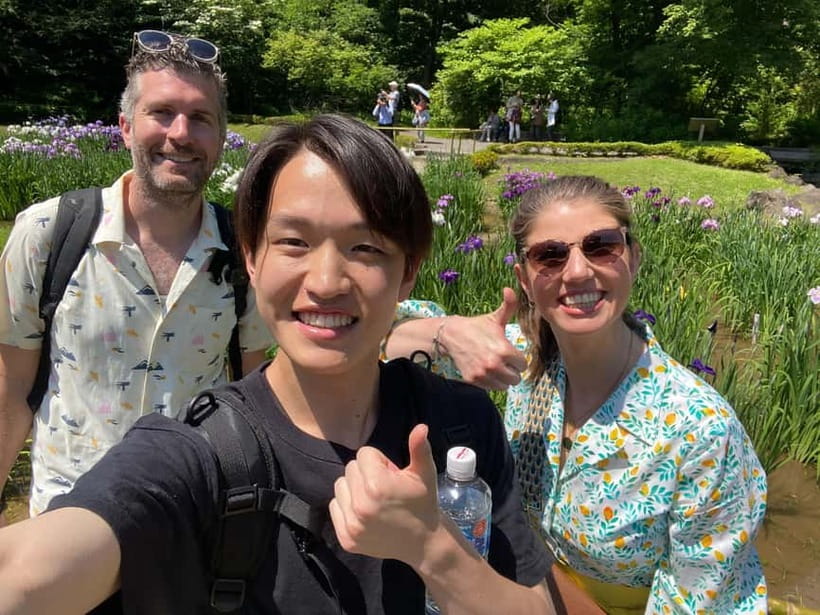
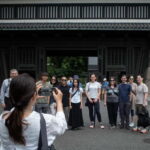
Moats, bridges, and Tokyo’s power map. This walking tour links the Imperial Palace East Gardens to restored Tokyo Station, with guide Yuki-san making samurai-era details easy to picture. I like the way the explanation stays grounded in what you can actually see, not just dates and names.
Two things I really appreciate are the Nijubashi Bridge viewpoints and the contrast walk through Marunouchi, where modern architecture and public art show up right after castle ruins. It all ends at Tokyo Station, so you finish with a classic photo stop that feels like a reward, not a chore.
One consideration: this is a moderate walk, so comfortable shoes matter, and you cannot bring backpacks (plus it helps to wear a hat and pack water for warm or rainy days).
In This Review
- Key things to know before you go
- From East Gardens to Tokyo Station, the story you can walk
- Meeting at Starbucks in Wadakura, and starting without stress
- Ninomaru Garden: the palace grounds that teach layout
- Imperial Palace East Gardens: moats, gates, and the Nijubashi moment
- Ote-mon Gate and Hyakunin Bansho Guardhouse, where details matter
- Honmaru area, Kokyo Gaien National Garden, and a scale model you can grasp
- Marunouchi on foot: modern buildings with old-city context
- The red-brick finish: Tokyo Station exterior, restored and photogenic
- Pricing and value: why $38 can feel fair here
- Who this tour suits, and who might want something else
- What to bring for a smooth Imperial Palace to Station walk
- Should you book this Imperial Palace East Gardens and Tokyo Station tour?
- FAQ
- Where does the tour start?
- How long is the tour?
- Is there an admission fee for the Imperial Palace East Gardens?
- What languages are available for the guide?
- Is the tour wheelchair accessible?
- What should I bring with me?
- What is not allowed during the tour?
- Can I cancel or pay later?
Key things to know before you go
- Imperial Palace East Gardens, zero admission fee for this stop, with a guided route through key sites
- Nijubashi Bridge views timed into the walking path so you get the postcard angle without rushing
- Edo Castle layout in plain sight via stops like Ote-mon Gate, Hyakunin Bansho Guardhouse, and the scale model
- Marunouchi contrast walk combining modern buildings and art with old-city context
- Restored Tokyo Station exterior as a satisfying endpoint, easy to connect to the rest of your trip
- Guide support in several languages, plus wheelchair accessibility
The central Tokyo landmarks, reviewed one by one
- Flagship 2-Hours Official Street Go-Kart Tour – Tokyo Bay Shop
★ 5.0 · 4,974 reviews - Tokyo: Imperial Palace and Shogun Historical Walking Tour
★ 5.0 · 2,251 reviews - Tokyo: Meiji Shrine, Asakusa, Skytree Bus Tour and Cruise
★ 4.7 · 1,986 reviews - Tokyo Panoramic 1 Day: Meiji Shrine, Asakusa, Odaiba and SKYTREE®
★ 4.5 · 1,222 reviews
From East Gardens to Tokyo Station, the story you can walk
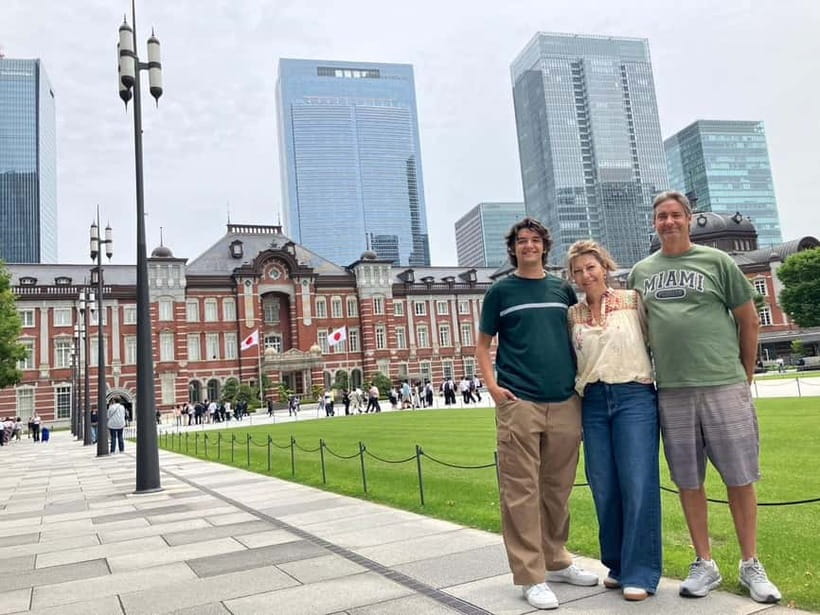
This tour is built like a guided timeline. You start in the calm of the Imperial Palace East Gardens, surrounded by moats and garden spaces that hint at the Edo shogunate era. Then you move into Marunouchi, where the city’s financial and design energy shows up in steel, glass, and curated outdoor art.
What I like most is that the walk is not just about sightseeing. It helps you connect places, so you understand why the old Edo Castle footprint matters and how the city’s center reshaped itself over time.
The pace is about 150 minutes, which is long enough to learn a lot, but short enough that it still feels manageable. If you’re the type who likes history you can physically trace, you’ll get a lot out of this route.
Meeting at Starbucks in Wadakura, and starting without stress
You meet at スターバックス コーヒー 皇居外苑 和田倉噴水公園店. Starting at a clearly recognizable landmark keeps the beginning simple, especially if you’re not sure how to find the palace area entrance on your own.
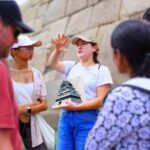
Once you gather, the guide sets the tone quickly. In particular, Yuki-san’s explanations tend to feel practical and human, with humor that helps you remember the “why” behind what you’re seeing. That matters in this part of Tokyo, because the palace grounds can look similar if you’re wandering without a plan.
Practical tip: arrive a few minutes early and check your footwear. This is an outdoor walk with limited places to duck away, so you want your shoes fully broken in and ready for a steady stroll.
Ninomaru Garden: the palace grounds that teach layout
After you start, you’ll reach Ninomaru Garden. This is one of the places where the tour earns its keep, because it gives you a sense of how the palace grounds functioned within the larger Edo Castle system.
Ninomaru is not just a pretty stop. The garden setting helps you understand how power and daily life were organized in layers, with spaces designed for observation, movement, and controlled access. When a guide points out the connections between garden design and castle planning, it clicks faster than reading a poster.
A drawback to know: gardens mean you may want to pause for photos, and that can slow the group if you stop too often. If you want the best balance, take a photo, listen for the key point, then move on. You’ll get more “aha” moments without feeling rushed at every corner.
Slower gardens, if the schedule allows
- Tokyo: Zen Meditation at a Private Temple with a Monk★ 5.0 · 510 reviews
- Imperial Palace East Garden and Edo Castle Walking Tour in Tokyo★ 5.0 · 510 reviews
- Tokyo: Imperial Palace East Gardens Walking Tour★ 4.8 · 353 reviews
- Tokyo Castle, Imperial Palace, Shogun & Garden Walking Tour★ 5.0 · 211 reviews
- Tokyo Zen Meditation at Private Temple with Monk★ 5.0 · 178 reviews
Imperial Palace East Gardens: moats, gates, and the Nijubashi moment
The core segment is the Imperial Palace East Gardens guided tour, around 30 minutes. This is where you see the landscape features that connect the Imperial Palace today back to the earlier defensive structure of the Edo Castle.
You’ll get the feel of the moats and garden edges that once helped shape security and movement. Even if you’re not a hardcore fortress fan, these water-and-path lines help you visualize how Tokyo’s central power center was designed.
One of the best parts is the scenic view of Nijubashi Bridge. The bridge works like a visual anchor, because it frames the palace area in a way that’s easy to understand at a glance. If your timing is good and the weather cooperates, it’s one of those view stops where you’ll instantly see why this spot matters.
Ote-mon Gate and Hyakunin Bansho Guardhouse, where details matter
As you continue, the tour stops at key landmarks such as Ote-mon Gate and Hyakunin Bansho Guardhouse. These aren’t random points along the route. They help you translate the idea of “castle rules” into real architecture and site layout.
The Ote-mon Gate stop gives you a sense of scale and entrance design. Then the Hyakunin Bansho Guardhouse helps you picture the everyday logic of guarding and movement. It’s the kind of context that makes later viewpoints feel less abstract.
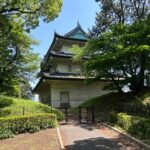
Also included is insight into Edo Castle ruins and the Fujimi-yagura watchtower. Even without stepping into a reconstructed ruin, you can still understand the role of watchtowers and why positions like these mattered. This is where the guide’s storytelling style really helps, because the explanation stays tied to what you see in front of you.
Honmaru area, Kokyo Gaien National Garden, and a scale model you can grasp
Next you walk through the Honmaru area and Kokyo Gaien National Garden. This part helps you connect “the palace story” to “the castle footprint story,” so you don’t just remember names, you remember shapes.
One standout included detail is the viewing of the Edo Castle main keep scale model. That model is useful because it turns a confusing big concept into something you can judge. You’ll likely find yourself comparing what the model shows to what you see around you on the ground, and that comparison is where learning sticks.
If you’re traveling with limited time and you want one guided way to understand the layout of Edo Castle, this stop does a lot of work for your brain. The tour also includes cultural insights into samurai-era architecture and garden design, so it doesn’t treat the place like a static landmark.
Marunouchi on foot: modern buildings with old-city context
After the Imperial area, you move into Marunouchi. You’ll have a short on-foot transition into the district, then a guided exploration.
This is the contrast section. Marunouchi is where Tokyo’s modern identity is obvious, and that’s the point. You go from palace grounds designed for control and observation into a neighborhood built for offices, design, and city life.
The tour also highlights modern architecture and art, so you’re not wandering through business streets without a reason. When your guide connects the “why” of the old layout to where people work and move today, the district feels less like a maze and more like a continuation.
Practical note: in this segment you may want to keep your camera handy, but don’t let photos steal all your time. The value here is in understanding the contrast in one walk, not collecting random street shots.
The red-brick finish: Tokyo Station exterior, restored and photogenic
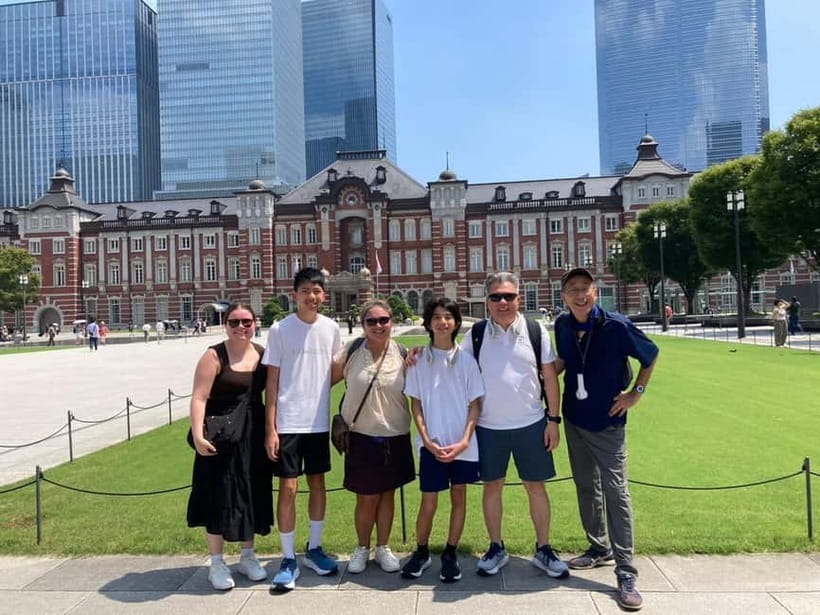
The tour concludes at Tokyo Station, ending in the area around the station. Tokyo Station is one of those places that works for almost everyone, because it’s iconic, easy to navigate afterward, and it’s a satisfying endpoint after a history-focused morning.
You’ll get a guided look at Tokyo Station exterior, so you’re not just “passing by.” Finishing here also makes the tour practical for planning, because Tokyo Station is a hub for trains all over the region. Once you finish the walk, you can keep moving without having to backtrack across the city.
If the weather turns, Tokyo Station is a relief point. Even when you’re done with the tour, you’ll still have options nearby for food and indoor time.
Pricing and value: why $38 can feel fair here
At $38 per person, this tour is fairly priced for a 150-minute guided experience that covers a dense set of landmarks. You’re paying for more than a walk. You’re paying for someone to connect architecture, garden design, and Edo Castle context into explanations you can actually remember.
A big value point: entry to the Imperial Palace East Gardens is included with no admission fee required for this stop. That means your money goes toward guidance, pacing, and interpretations, rather than paying extra just to stand in line somewhere.
You also get an English-speaking guide with knowledge of Japanese history and culture, and the tour is available in multiple languages. So if your group has different language needs, you’re not stuck trying to make sense of everything alone.
For me, the best value angle is the route. It’s not only garden time, it’s garden plus Edo Castle elements plus Marunouchi and Tokyo Station. If you want a single afternoon that gives you both the old and the new in one connected storyline, this price makes more sense.
Who this tour suits, and who might want something else
This tour fits history buffs who want more than museums. It also fits cultural explorers who like architecture and city planning, because the route helps you “read” Tokyo’s central area.
It’s also a strong choice for first-timers. The Imperial Palace East Gardens start point gives you a calm, central anchor, then you transition into Marunouchi and finish at Tokyo Station, which many visitors already want to see.
Where it might not be ideal is if you hate walking in open air or if you prefer spending long, quiet stretches at one place. This tour is guided and structured, so you’ll move through multiple stops rather than lingering for an hour at a single viewpoint.
Also, because smoking is not allowed and flash photography is not allowed, plan for normal phone or camera shooting without quick bursts.
What to bring for a smooth Imperial Palace to Station walk
You’ll be happier if you prepare for real walking. Bring comfortable shoes first, then add a hat for sun or rain protection, plus sunscreen. Water is important too, since this is an outdoor route.
If weather is changeable, wear clothing suited to the conditions. The guide will keep you moving, and you won’t want to stop because you feel overheated or unprepared.
One more rule: no flash photography, and no backpacks. That means your plan should be a small day bag you can carry comfortably without breaking the baggage rule.
If you want fewer headaches, keep your camera strap secure and keep your essentials easy to grab, since you’ll want to capture the Nijubashi viewpoint and exterior shots near Tokyo Station.
Should you book this Imperial Palace East Gardens and Tokyo Station tour?
Book it if you want one organized walk that explains Tokyo’s central story from Edo Castle roots to modern Marunouchi and the restored look of Tokyo Station. The guide style, including humor and clear explanations like Yuki-san’s approach, is a major part of why this tour works.
Skip it if you want lots of free time to wander alone without structure, or if you’re not up for moderate walking in open air. Also, check whether your bag setup fits the no backpacks rule.
If you’re deciding between doing the palace area on your own and taking a guide, I’d lean toward the guided option here. This route is dense, and having someone point out the right landmarks, bridge views, and scale model makes the whole experience click much faster.
FAQ
Where does the tour start?
The tour starts at スターバックス コーヒー 皇居外苑 和田倉噴水公園店.
How long is the tour?
The duration is about 150 minutes.
Is there an admission fee for the Imperial Palace East Gardens?
No admission fee is required for the Imperial Palace East Gardens as part of this tour.
What languages are available for the guide?
The live guide is available in English, Japanese, Spanish, Chinese, and French.
Is the tour wheelchair accessible?
Yes, the tour is listed as wheelchair accessible.
What should I bring with me?
Bring comfortable shoes, a hat, a camera, sunscreen, and water, plus weather-appropriate clothing.
What is not allowed during the tour?
Smoking is not allowed. Flash photography is not allowed. Backpacks are also not allowed.
Can I cancel or pay later?
You can reserve now and pay later. You can cancel up to 24 hours in advance for a full refund.
Gardens Worth Slowing For

Central Tokyo Landmarks



Newest Tokyo write-ups from the Loving Japan desk






Tokyo Tower, Ginza and the Imperial Palace, side by side.
 ★ 5.0Flagship 2-Hours Official Street Go-Kart Tour – Tokyo Bay ShopFrom $644,974 reviews
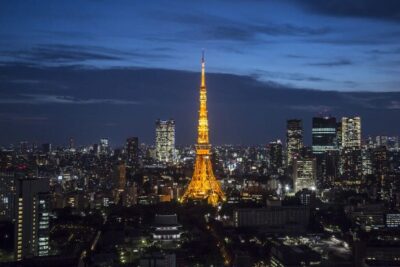 ★ 4.6Tokyo Tower: Admission TicketFrom $93,661 reviews
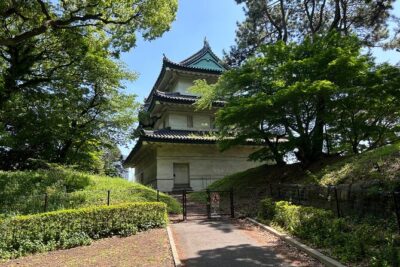 ★ 5.0Imperial Palace and Shogun Historical Walking TourFrom $222,251 reviews
 ★ 4.7Meiji Shrine, Asakusa, Skytree Bus Tour and CruiseFrom $1221,986 reviews
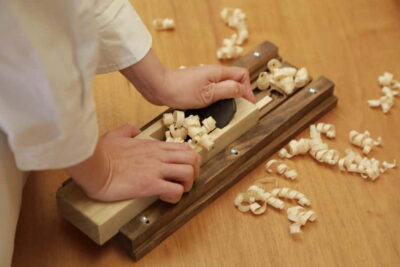 ★ 4.8Chopstick Making Workshop in GinzaFrom $251,366 reviews
 ★ 4.5Tokyo Panoramic 1 Day: Meiji Shrine, Asakusa, Odaiba and SKYTREE®From $851,222 reviews
 ★ 4.9Imperial Palace Japanese History Walking TourFrom $32987 reviews
 ★ 4.9Imperial Palace and Shogun Walking TourFrom $16935 reviews
Filed on these lists too