
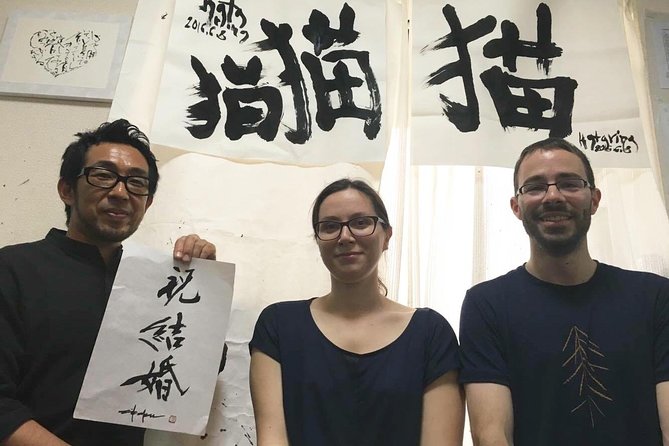
REVIEW · JAPANESE CRAFT AND CALLIGRAPHY WORKSHOPS
Tokyo Japanese Calligraphy Experience with a Master Artist
Brush, ink, and calm in Tokyo. This hands-on shodo experience puts you at Eizuru Matsumura’s classroom, where you learn Japanese calligraphy the real way, with quiet focus and direct coaching. You practice brush strokes on paper using the tools of the trade, guided at a pace that works even if your Japanese is limited.
What I really like is that it is not a lecture. You get English support plus the equipment you need, so you can spend the time doing the work instead of figuring out supplies. In the studio, the mood is intentionally calm, and recent participants called out the gentle background music and the patience of the master and translator.
One thing to plan for: the lesson time is listed as about 1 hour 30 minutes, so it is tight and practical, not a long, slow masterclass. Also, the meeting point is Umeyashiki Station, and hotel pickup is not included unless you add an extra 6000 yen.
In This Review
- Key things that make this shodo class worth your time
- A shodo class in a real studio, not a tourist performance
- Meet Eizuru Matsumura at 球鶴書道教室
- The flow of a 90-minute shodo session
- What you actually learn from brush strokes
- English support that keeps the class from feeling confusing
- Price and value: why this costs $92.24 and what you get
- Getting there from Umeyashiki Station without stress
- Who this shodo experience fits best
- Things to consider before you book
- Should you book this Tokyo Japanese calligraphy workshop?
- FAQ
- Where does the shodo class take place?
- How long is the experience?
- What is included in the price?
- Is hotel pickup included?
- Do I need to bring anything?
- How many people are in the group?
- What is the minimum age?
- Is the activity near public transportation?
- When will I get confirmation after booking?
- Can I cancel for a refund?
Key things that make this shodo class worth your time
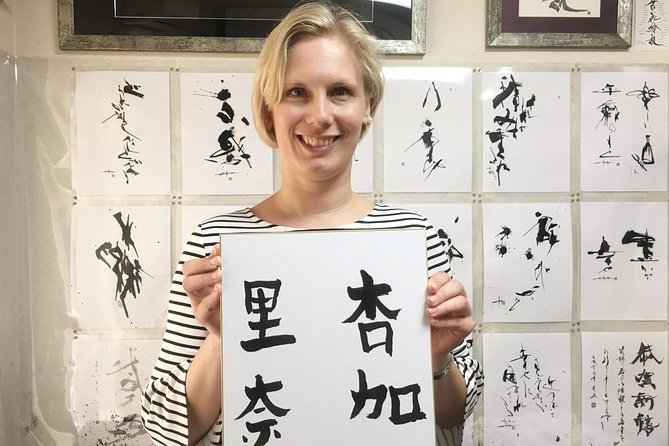
- Master-level instruction: Eizuru Matsumura is an artist, workshop lecturer, and TV event presence, practicing calligraphy since he was 31.
- You practice, not just watch: brush strokes on paper are the core of the session, with guidance as you go.
- Small group feel (up to 10): more room for correction and questions.
- English help on site: an English guide and professional support help you follow the process.
- A contemplative setting: a quiet studio with calming ambiance makes it easier to slow down.
- A keepable souvenir: at least one recent participant specifically mentioned taking their finished work home.
Make something to take home. Other workshops
- Tokyo Shinjuku Chopsticks Making Class
★ 5.0 · 1,763 reviews - Chopstick Making Workshop in Ginza
★ 4.8 · 1,366 reviews - Tokyo Sumo Experience: Chanko & Mochi with a Former Pro
★ 4.8 · 567 reviews - Kintsugi Experience: Art of Golden Joinery in Tokyo
★ 5.0 · 467 reviews
A shodo class in a real studio, not a tourist performance
Tokyo has plenty of “culture experiences” that feel like set pieces. This one is built around a working classroom atmosphere where doing the strokes matters more than posing with a prop.
Shodo is sometimes described like art, sometimes like meditation. In practice, it is both, because the brush forces you to pay attention to pressure, speed, and direction. If you have ever tried to draw and gotten frustrated that it looks nothing like what’s in your head, you will recognize the learning curve here right away.
The good news: you are not sent in blind. You are in a studio setting where a master teacher leads you through the basics so you can get something meaningful done in the time you have.
Meet Eizuru Matsumura at 球鶴書道教室
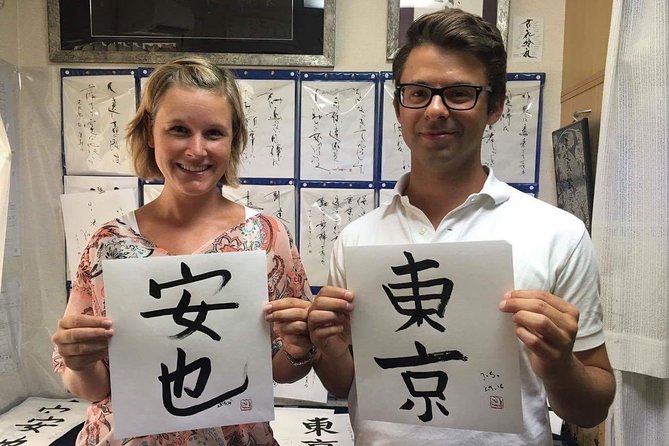
Your classroom stop is 球鶴書道教室. It is set up for instruction across levels, from basic to more creative calligraphy, so you are not penalized for being a beginner.
The instructor, calligrapher Eizuru Matsumura, is not just a teacher. He has been practicing calligraphy since age 31, and he has created the official logo for the Kyokushin Karate World Tournament pamphlet. That matters because it signals he works beyond tradition alone, bringing calligraphy into real-world design contexts too.
You also get more than technique. A master who teaches workshops and events typically explains what a stroke is supposed to communicate. In a short lesson, that kind of explanation helps you stop thinking of calligraphy as random scribbling and start treating it as controlled movement.
The flow of a 90-minute shodo session
The schedule is simple, and that’s a plus. You go to the studio for the main class, then you return to the meeting point at the end.
Even though the duration is listed as about 1 hour 30 minutes, you should mentally budget for a structured class. Expect time for introductions, tool setup, learning how to hold and move the brush, and then practice on paper until you produce something you can take home.
Here is what “hands-on guidance throughout” usually means in practice. You begin by learning how to execute basic strokes. Then you repeat and refine, with the instructor and English support adjusting your technique so your lines improve rather than just change.
Several participants also referenced the master’s personality, including humor and a patient teaching style. That is not fluff. In calligraphy, small corrections matter, and feeling comfortable enough to try again makes the whole session work.
- Mt Fuji and Hakone 1-Day Bus Tour Return by Bullet Train★ 5.0 · 26,383 reviews
- 1-Day Tokyo Bus Tour★ 5.0 · 14,250 reviews
- Tokyo: teamLab Planets TOKYO Digital Art Museum Entry Ticket★ 4.6 · 9,779 reviews
- Mt Fuji & Hakone Cruise, Drum Show Bullet Train 1 Day from Tokyo★ 4.0 · 7,413 reviews
- Tokyo: Shinjuku Food Tour (13 Dishes at 4 Local Eateries)★ 5.0 · 6,603 reviews
What you actually learn from brush strokes
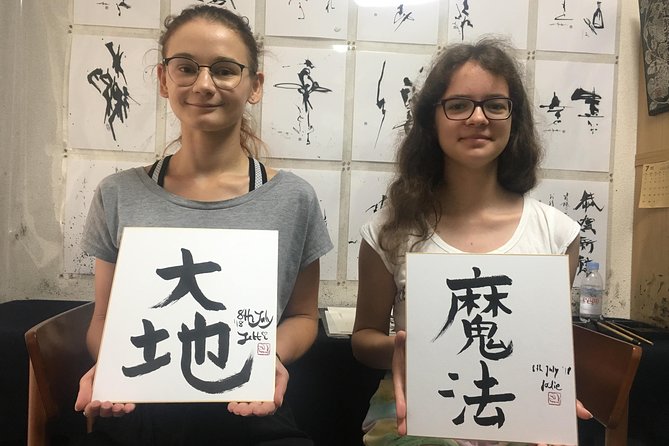
Shodo is not only about the final character. You learn the logic of stroke order and the feel of the brush, which is why the lesson keeps you doing the work.
Japanese calligraphy is an “age-old art form,” but the practical value is timeless. You learn how to control motion. You learn how to slow down without losing energy. You learn how to place a mark with intention instead of rushing to finish.
You also get cultural context, including how calligraphy fits both traditional and contemporary Japanese life. The background piece you hear in class tends to connect the practice to broader culture, not just aesthetics. That’s where this experience becomes more than a craft souvenir.
If you want one takeaway, it is this: calligraphy trains your eye and hand together. When you see your stroke improve after a correction, it clicks fast.
English support that keeps the class from feeling confusing
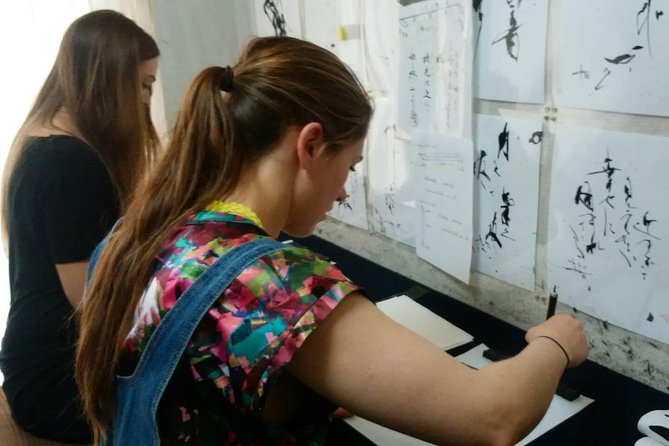
A strong translation can make or break a cultural workshop. This one includes an English guide, and recent participants specifically mentioned interpreters who met them at Umeyashiki Station and helped them get oriented.
Names that came up in recent feedback include Kyoko, Michiko, and Yoko. Having an interpreter who meets you at the station is especially helpful in Tokyo, where station exits can be a maze and street signage is only half the story.
Inside the studio, the translator role typically becomes more than words. They help you understand the instructor’s corrections quickly, so you do not spend your practice time translating in your head. That is a big reason the session feels productive rather than chaotic.
Price and value: why this costs $92.24 and what you get
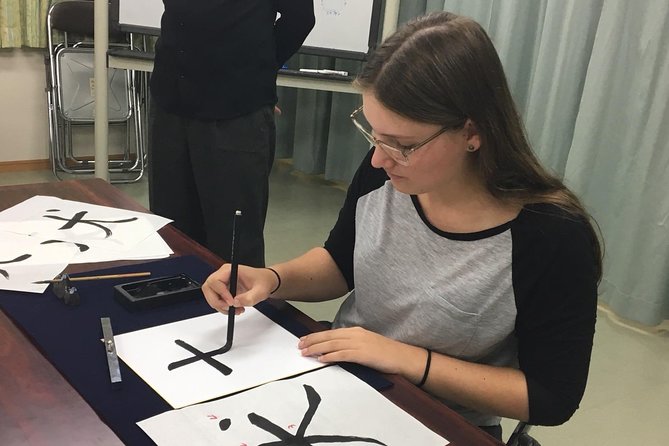
At $92.24 per person, this is priced as a guided, hands-on private-style workshop within a small group. The cost is not just paying for ink and paper, because those are only part of it.
What’s included is the big value driver. You get a professional guide, English support, and all necessary equipment. You are also paying for the instructor’s time, training, and guidance from a working master.
What is not included is also important. Food and drinks are not part of the class. If you add hotel pickup, it costs an additional 6000 yen, and without pickup you are expected to meet at Umeyashiki Station.
For many people, the best way to judge value is simple. If you would otherwise pay for a studio session, an instructor, and translation help separately, this bundle is a lot more efficient. Even if you only end up keeping one character, the instruction quality is the main product.
Getting there from Umeyashiki Station without stress
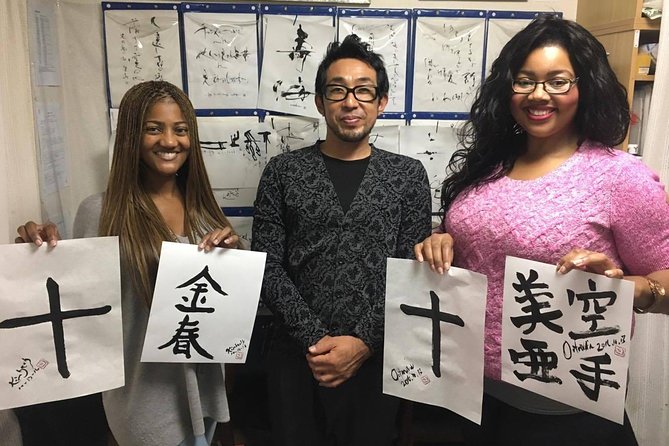
Your start point is Umeyashiki Station, and you end back at the meeting point. The studio is described as a five-minute walk from Umeyashiki Station on the Keikyu Line, in Ota City.
That walk is short, but it still matters. Tokyo station exits can feel confusing at first, and a five-minute walk is not guaranteed if you pick the wrong exit and have to backtrack. If you are arriving near class time, give yourself a little buffer to confirm the route.
If you prefer not to deal with transit, you might consider paid pickup only if it is being offered for your booking. The tour information notes an added 6000 yen for hotel pickup, which suggests you can reduce travel friction that way.
Who this shodo experience fits best
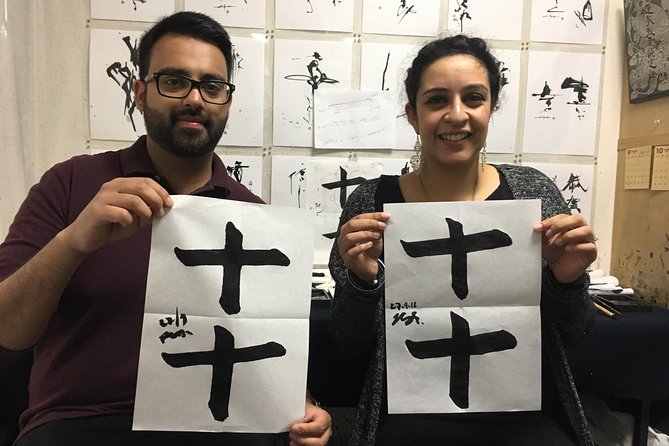
This class is a good match if you want a meaningful activity that is calm and focused. It also works well if you like structured beginner lessons where someone corrects your technique quickly.
The minimum age is 7 years, and children must be accompanied by an adult. That makes it family-friendly in the practical sense that kids can participate, as long as they have an adult staying engaged with the process.
Because group size is limited to a maximum of 10, it is also a decent choice if you do not want a “everyone in a line” vibe. You get enough attention that your strokes can improve during the session.
If you are someone who likes contemporary Japan as much as tradition, you might enjoy the master’s background, including his involvement in events and design work like a tournament pamphlet logo. It signals that shodo is not stuck in a museum box.
Things to consider before you book
You are learning a physical skill with a brush. That means the session rewards effort, not perfection. If you expect your first attempt to look exactly like a finished poster character, you may feel disappointed. Instead, treat it like learning handwriting with feedback.
Also note the timing. The class is listed as about 1 hour 30 minutes, with the main session described in the schedule as 1 hour for the classroom stop. That is enough time to learn something real, but it is not enough for a long, do-it-your-way creative marathon.
Finally, it helps to be comfortable taking public transit to a specific meeting point. The activity is near public transportation, but it is not described as a door-to-door experience.
Should you book this Tokyo Japanese calligraphy workshop?
If you want a high-quality cultural class with hands-on instruction, I think this is an easy yes to consider. You get master-level teaching, English support, and the core tools for shodo, all within a small group setting.
Book it if you like practical learning, calm activities, and taking home a real result. I would also book it if you want a change of pace from temples and shopping, something quiet where your hands get busy and your brain gets a breather.
Skip it only if you are looking for a long-duration art session where you can fully explore creative experimentation for hours. This is a guided lesson that aims for a meaningful outcome within about 90 minutes.
FAQ
Where does the shodo class take place?
The experience starts at Umeyashiki Station and the class happens at 球鶴書道教室. It is described as about a five-minute walk from Umeyashiki Station on the Keikyu Line.
How long is the experience?
The duration is approximately 1 hour 30 minutes.
What is included in the price?
Included are a professional guide, all necessary equipment, and an English guide.
Is hotel pickup included?
No. Hotel pickup is not included, but the tour information says you can add 6000 yen for hotel pickup.
Do I need to bring anything?
The tour includes all necessary equipment, so you should not need to bring the calligraphy tools yourself.
How many people are in the group?
The class has a maximum of 10 travelers.
What is the minimum age?
The minimum age is 7 years, and children must be accompanied by an adult.
Is the activity near public transportation?
Yes. The meeting point is near public transportation.
When will I get confirmation after booking?
Confirmation is received within 48 hours of booking, subject to availability.
Can I cancel for a refund?
Yes, free cancellation is available. You must cancel at least 24 hours before the experience’s start time for a full refund.
Made by Hand, and Yours to Keep


Newest Tokyo write-ups from the Loving Japan desk


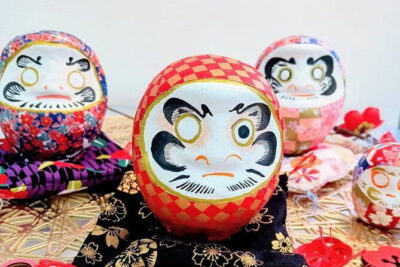

Japanese Craft and Calligraphy Workshops, side by side.
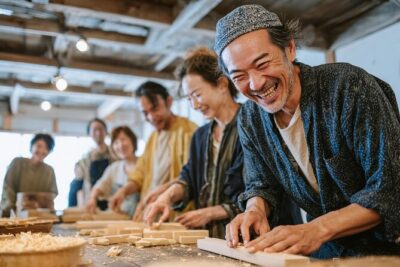 ★ 5.0Tokyo Shinjuku Chopsticks Making ClassFrom $201,763 reviews
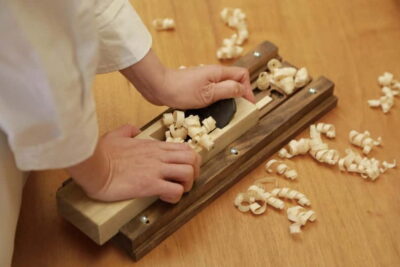 ★ 4.8Chopstick Making Workshop in GinzaFrom $251,366 reviews
 ★ 5.0Chopsticks Making Workshop in Gion with Engraving OptionFrom $15958 reviews
 ★ 4.8Tokyo Sumo Experience: Chanko & Mochi with a Former ProFrom $103567 reviews
 ★ 5.0Kintsugi Experience: Art of Golden Joinery in TokyoFrom $59467 reviews
 ★ 5.0Tokyo Chopstick Making Workshop with ArtisanFrom $26466 reviews
 ★ 4.9Matcha Making Experience with Mochi Sweets in AsakusaFrom $22388 reviews
 ★ 4.8Authentic knife making experience at a blacksmith in KyotoFrom $154350 reviews
Filed on these lists too