
REVIEW · JAPANESE CRAFT AND CALLIGRAPHY WORKSHOPS
Tokyo: Kintsugi Art Repair Workshop
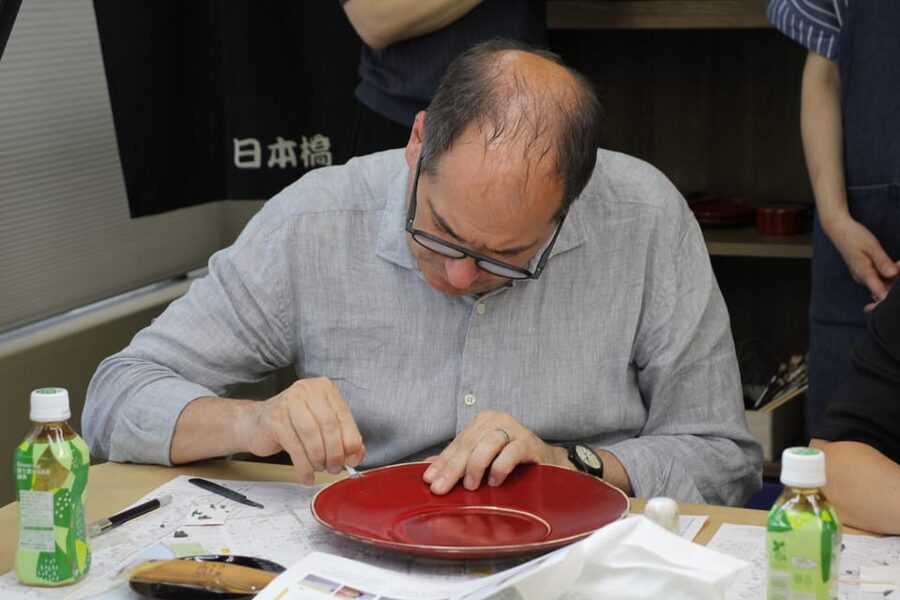
Broken pottery can look like jewelry. In this Tokyo Kintsugi workshop, you learn to repair ceramics with lacquer and gold, and you leave with a souvenir that feels personal. I especially love the gold seams you create up close, and the small-group calm that makes the class feel unhurried.
One thing to plan for is the time limit. If you bring a heavily damaged vessel, your piece might not be fully finished within the scheduled 90 minutes, and they cannot extend the end time.
In This Review
- Key Points That Matter Before You Go
- Kintsugi Repair in Tokyo, With Real Technique and Real Hands-On Time
- Nihonbashi Mutoh Main Store: Where the Workshop Feels Grounded
- Choosing Your Piece and Getting Set Up With Materials
- The Kintsugi Process You’ll Actually Do, From Break to Gold Finish
- Small Group Size and English Support That Makes It Go Smooth
- Rules for Brought-In Ceramics: Size, Cracks, and the Mug-Handle Reality
- How to Fit This Into a Tokyo Day Without Stress
- Price and Value: Why $125 Can Make Sense Here
- Who Should Book This Workshop (and Who Might Not Love It)
- Should You Book the Tokyo Kintsugi Repair Workshop?
- FAQ
- What is the duration of the Kintsugi Art Repair Workshop?
- How much does it cost?
- Is English support available during the workshop?
- Do I need to bring any materials or tools?
- Can I bring my own ceramic vessel to repair?
- What items are not repairable?
- Is the finished piece usable for food?
- What is the age requirement?
- What is the cancellation policy?
Key Points That Matter Before You Go
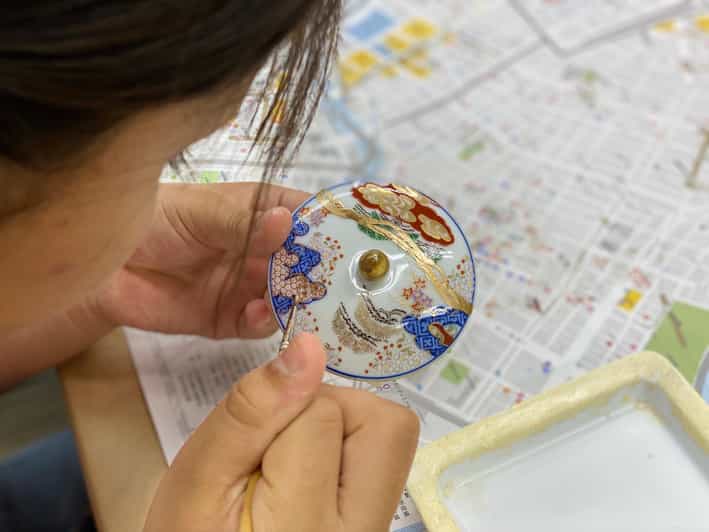
- Small group size (up to 5) means you get hands-on help, not just a demonstration
- English interpretation plus a professional instructor keeps the technique clear from start to finish
- Materials are provided, so you just show up in comfortable clothes
- You take home a finished piece designed as decorative art, with limited everyday use
- Size and damage limits apply if you bring your own ceramic vessel
Make something to take home. Other workshops
- Tokyo Shinjuku Chopsticks Making Class
★ 5.0 · 1,763 reviews - Chopstick Making Workshop in Ginza
★ 4.8 · 1,366 reviews - Tokyo Sumo Experience: Chanko & Mochi with a Former Pro
★ 4.8 · 567 reviews - Kintsugi Experience: Art of Golden Joinery in Tokyo
★ 5.0 · 467 reviews
Kintsugi Repair in Tokyo, With Real Technique and Real Hands-On Time
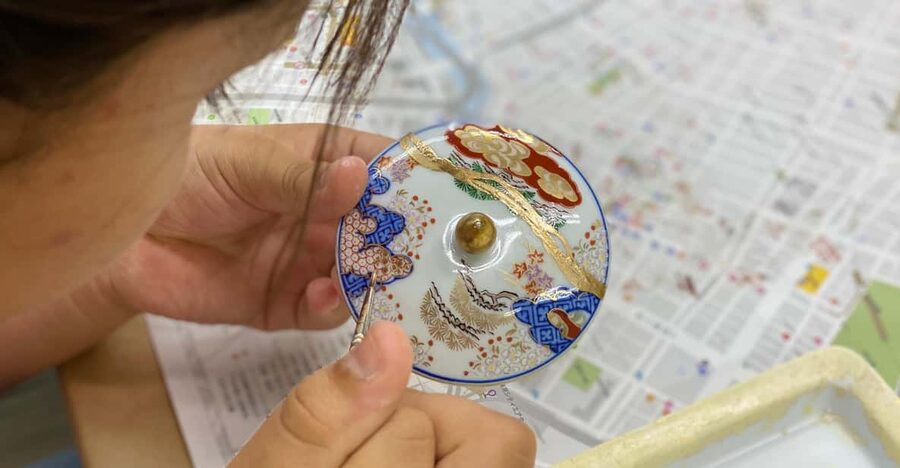
Kintsugi is about turning breaks into part of the design. Instead of hiding cracks, you highlight them with lacquer and metallic finish, so the repaired lines become the visual story. In this workshop, you get that philosophy in a practical way, because you actually do the steps, not just watch someone else do them.
You’ll be working on ceramics, with instruction led by a professional instructor and English support on top. The pace is comfortable, and the setting is quiet enough that you can concentrate on tiny details, like how the seam looks before it dries. The result is that your finished piece feels like you made it, not like you stamped out a craft project.
The workshop also fits modern Tokyo schedules. It runs about 90 minutes, and it is designed as a focused session, not a half-day event. That matters if you are trying to pack in temples, markets, and food stalls without turning your trip into a sprint.
Nihonbashi Mutoh Main Store: Where the Workshop Feels Grounded
The meeting point is Nihonbashi Mutoh Main Store, in the 日本橋滄浪閣 building, in central Tokyo. If you are basing yourself near Asakusa, this is an easy hop by subway, about 15 minutes.
What I like about this location choice is that it keeps the workshop from feeling like a far-flung detour. You can add it to a day that already includes shopping and strolling in downtown areas. It also lands you in a part of Tokyo where the old and practical still mix, rather than only tourist-photo zones.
Plan to arrive at least 5 minutes early. They start promptly, so don’t treat arrival time like a suggestion. Once you’re inside, you get oriented to the materials and the process, and the instructor guides you step by step at your worktable.
Choosing Your Piece and Getting Set Up With Materials
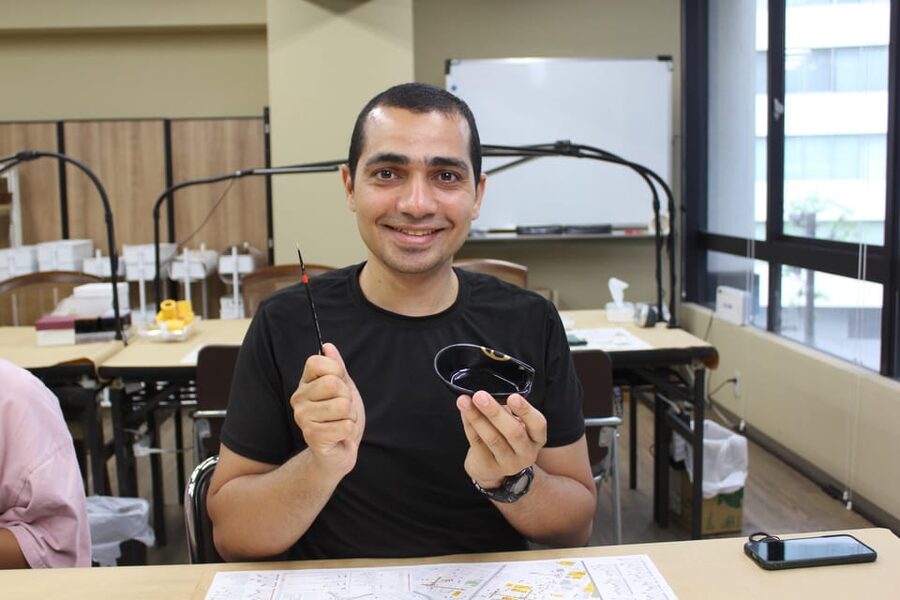
You do not need to bring tools or materials. The workshop includes what you need, and that is a big part of the value at this price. You show up with comfortable clothes, then they handle the supplies and the setup.
There’s usually a choice of ceramic for the session, since the experience includes a souvenir. If you want to bring your own cherished object, that is also an option, but the workshop is specific about what can be restored. They focus on ceramic vessels, and they only repair within certain size and damage limits.
Here’s where you should pay attention. The workshop caps what can be worked on if you bring your own piece: up to a φ15cm size and up to 15cm in height, with 1 to 2 cracks. If the damage is too large for the allotted time or falls outside those rules, you might not finish the repair during the scheduled session. And there’s one more hard stop: chipped or cracked mug handles are not repairable.
If you’re worried about matching your expectations, the safest move is to come with an open mind about what the workshop can complete within 90 minutes, or choose to start with the provided souvenir piece.
- Mt Fuji and Hakone 1-Day Bus Tour Return by Bullet Train★ 5.0 · 26,383 reviews
- 1-Day Tokyo Bus Tour★ 5.0 · 14,250 reviews
- Tokyo: teamLab Planets TOKYO Digital Art Museum Entry Ticket★ 4.6 · 9,779 reviews
- Mt Fuji & Hakone Cruise, Drum Show Bullet Train 1 Day from Tokyo★ 4.0 · 7,413 reviews
- Tokyo: Shinjuku Food Tour (13 Dishes at 4 Local Eateries)★ 5.0 · 6,603 reviews
The Kintsugi Process You’ll Actually Do, From Break to Gold Finish
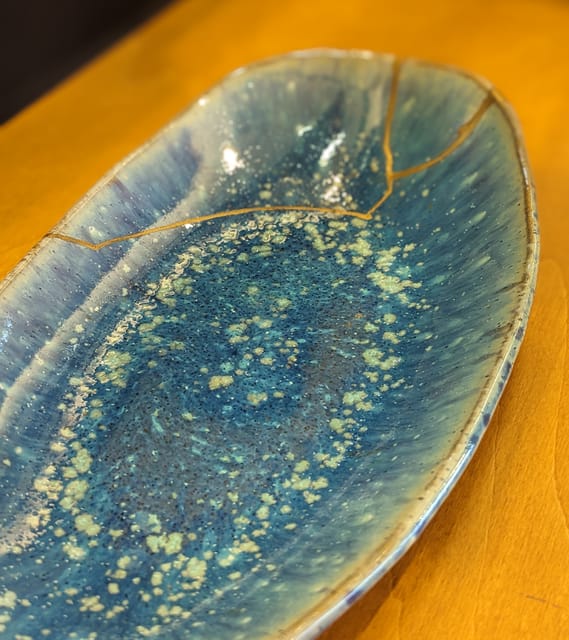
Kintsugi can sound poetic. In practice, it’s methodical. You work through a series of steps that turn unstable broken edges into a clean, intentional seam.
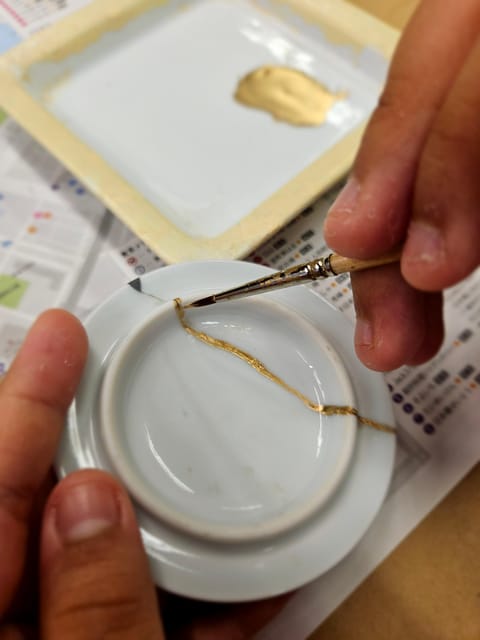
A key part of the process is reuniting the broken parts safely. You tape the puzzle pieces together first so the alignment stays where it should while you work. After that, materials are used to adhere the joined areas, and gaps may be filled depending on how big the chip is.
If your piece has missing chunks, you may see filling done with putty or clay-like material, then shaped and smoothed so the repair doesn’t look jagged. Sanding comes next, so the surface feels right to the touch. Then the metallic finish is applied along the repaired lines so the crack becomes a design feature rather than a flaw.
What makes this workshop satisfying is that you don’t just learn one step. You follow a full repair workflow, and you get coached on what matters at each stage. The instructor explains the history and meaning as you go, but the emphasis stays on doing, which is exactly what you want from a hands-on craft class.
One note on timing: this workshop is a quick format compared to traditional schedules. Traditional Kintsugi can take a much longer period to complete. In this class, the experience is designed to fit into 1 to 1.5 hours, but the materials may still need time to fully set afterward.
Small Group Size and English Support That Makes It Go Smooth
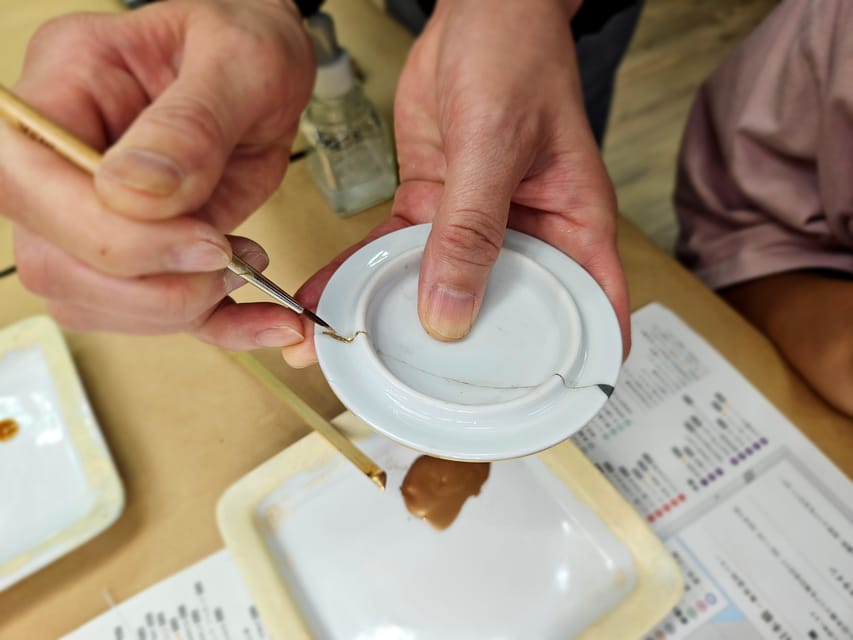
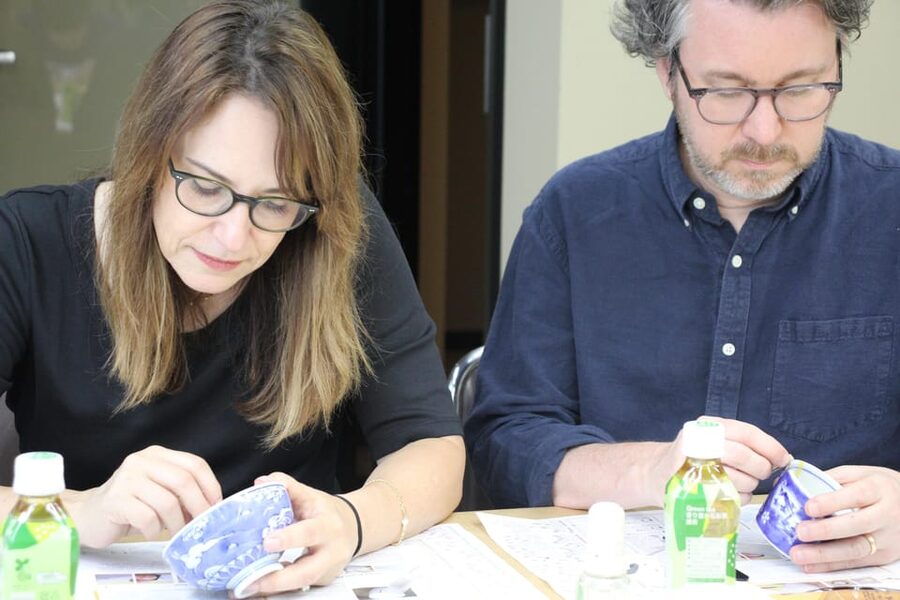
This is a small group workshop, limited to 5 participants. That’s not just a comfort detail. It changes the whole experience because the instructor can give closer attention to your work.
I like workshops where you can ask questions without feeling rushed, and that’s the vibe here. The instruction style is hands-on, patient, and supportive, with help at your table rather than vague “watch and hope” guidance.
English interpretation is included, which matters because Kintsugi has lots of small technique choices. You’ll want to understand terms related to aligning cracks, applying materials, and finishing seams. Having English support helps you avoid the common craft-class problem where you follow directions but don’t really know why each step matters.
Some sessions may feel especially personalized. On at least some dates, the group can be very small, even down to just two participants. That kind of setup makes the session feel more like a guided private lesson, which is a great use of your time in Tokyo.
Rules for Brought-In Ceramics: Size, Cracks, and the Mug-Handle Reality
If you plan to bring your own piece, read the limits carefully. This is the part that can surprise people if they assume all ceramics are fair game.
What’s allowed:
- The item must be a ceramic vessel
- Size limit: up to φ15cm and up to 15cm height
- Cracks: typically 1 to 2
What is not repairable:
- Chipped and cracked mug handles
What about completion time:
- If the crack or chip is larger, your piece might not finish within the 90-minute session. They cannot extend the end time for those who have not finished, so you should treat 90 minutes as a real constraint.
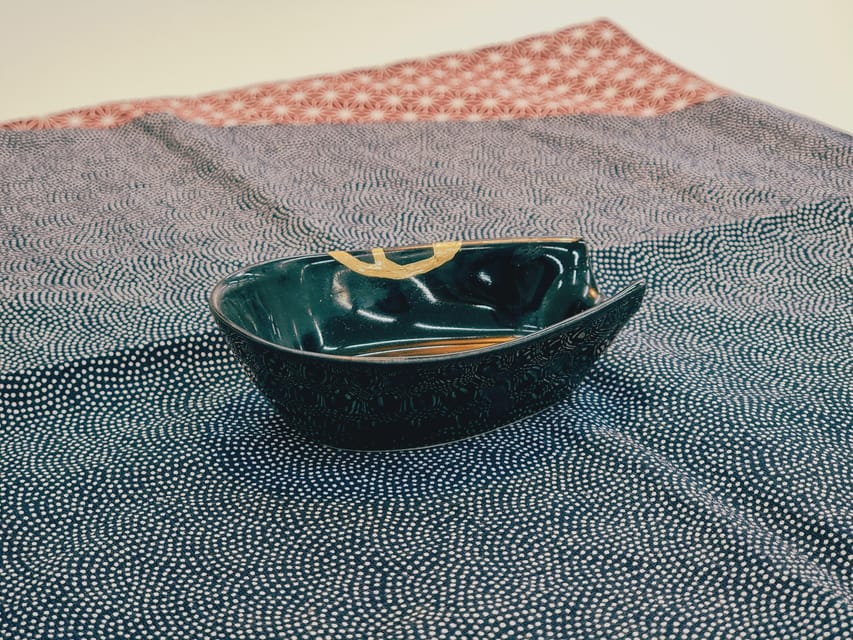
Also, the workshop describes the finished piece as primarily decorative. It can be used to hold dry food items, but don’t expect it to be treated like a brand-new everyday mug. Think of it as something you display, use lightly, and enjoy because you made it.
How to Fit This Into a Tokyo Day Without Stress
This is one of those Tokyo activities that works even if your itinerary is packed. The experience runs about 90 minutes. That means you can slot it into a morning or early afternoon and still keep time for Asakusa-area wandering, shopping, and food stops.
Because the location is about 15 minutes by subway from Asakusa, it’s also a practical choice if you don’t want to cross the entire city for one class. You get a break from the constant “go go go” of sightseeing, since Kintsugi work asks for focus and slows your pace naturally.
One practical tip: treat your workshop time as the anchor. Arrive early, get comfortable, and avoid rushing right before it. When you are focused, the gold seam decisions make more sense, and the final look has less chance of being rushed.
If you’re the type who likes a calm cultural activity between bigger sights, this hits that sweet spot. It’s quiet, hands-on, and you leave with something tangible.
Price and Value: Why $125 Can Make Sense Here
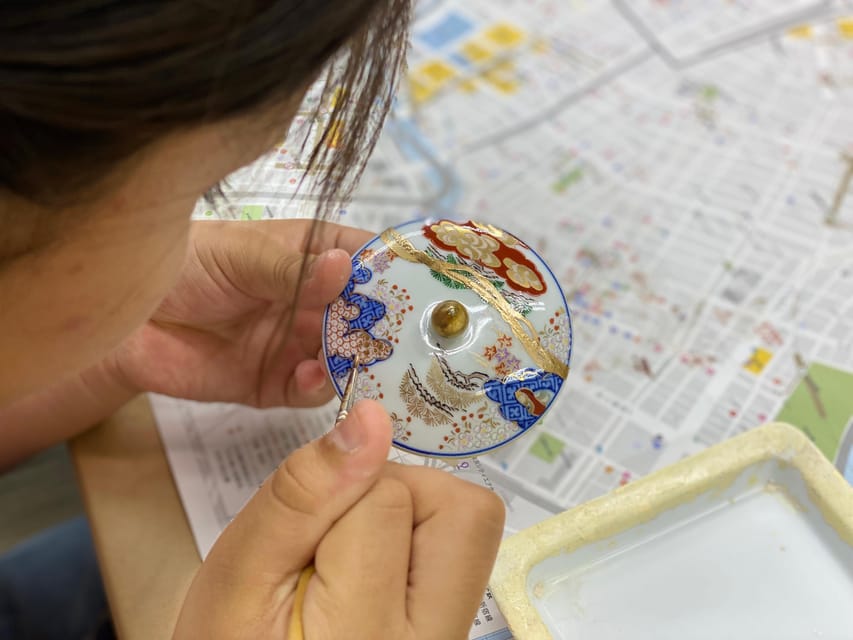
At $125 per person for about 90 minutes, this workshop is not the cheapest craft activity in Tokyo. But the value is in what’s included and what you take home.
You get:
- A professional instructor and experience fees
- Souvenir(s) associated with the activity
- Materials provided, so you do not need to buy supplies or hunt for tools
- English interpretation
- Small group support for hands-on guidance
The big value lever is the instructor time plus the materials plus the finished artifact. You are paying for real technique coaching and a process that takes care, not just for a decorative souvenir.
It also pays off if you want more than a one-time souvenir. The experience is designed to teach you the repair workflow, so you walk away with practical knowledge you can use later if you ever have another broken ceramic piece.
If you compare this to buying a pre-made Kintsugi-style object in a shop, the workshop price often ends up feeling reasonable because you get both the artifact and the story of making it. And in Tokyo, a good craft class can be an experience you remember every time you see the repaired item on your shelf.
Who Should Book This Workshop (and Who Might Not Love It)
This workshop is best for people age 13 and up. If you are traveling with kids under 13, it is not suitable, and minors must be accompanied by a guardian.
You’ll probably enjoy it most if you:
- Want a hands-on cultural activity, not just a lecture
- Like making something you can bring home
- Prefer small groups and real guidance
- Want a focused class that fits in 1 to 1.5 hours
It may not be the best fit if you’re expecting a long, deep dive into traditional timelines and every theory detail. The format is short by design, and the goal is that you finish within the workshop time, or at least within the feasible setup for the piece you choose.
Also, if you bring a fragile sentimental object, do it with realistic expectations. The workshop can be very supportive, but there are hard rules on what can be repaired and a firm end time.
Should You Book the Tokyo Kintsugi Repair Workshop?
Yes, if you want a calm, hands-on craft experience in central Tokyo that ends with a real artifact in your hands. The combination of small-group instruction, English support, and materials provided makes this unusually convenient for travelers who don’t want extra shopping or complicated prep.
Book it especially if you like the idea of practicing a technique that turns damage into design. That philosophy lands best when you do the steps yourself, and this workshop is built for exactly that.
Hold off or ask questions first if your main goal is repairing a large, complex damage case that you expect to finish perfectly in 90 minutes. The size and crack limits, plus the no-extension rule, are the deciding factor.
If you want a meaningful souvenir without stealing half your day, this is a strong choice for Tokyo.
FAQ
What is the duration of the Kintsugi Art Repair Workshop?
The experience lasts about 90 minutes.
How much does it cost?
It costs $125 per person.
Is English support available during the workshop?
Yes. The instructor provides English interpretation.
Do I need to bring any materials or tools?
No. All materials are provided. You just need to wear comfortable clothes.
Can I bring my own ceramic vessel to repair?
Yes, you can restore a ceramic vessel you bring, as long as it fits the workshop limits (up to φ15cm, up to 15cm height, and typically 1 to 2 cracks).
What items are not repairable?
Chipped and cracked mug handles are not repairable.
Is the finished piece usable for food?
It can be used to hold dry food items, but it is primarily intended for decorative purposes.
What is the age requirement?
The experience is for ages 13 and up. Minors must be accompanied by a guardian. It is not suitable for children under 13.
What is the cancellation policy?
You can cancel up to 3 days in advance for a full refund.
Made by Hand, and Yours to Keep

Newest Tokyo write-ups from the Loving Japan desk



Japanese Craft and Calligraphy Workshops, side by side.
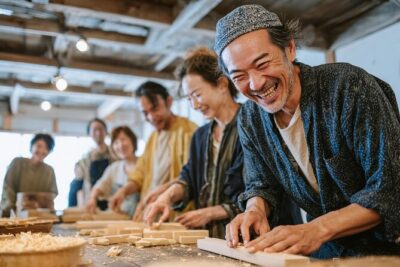 ★ 5.0Tokyo Shinjuku Chopsticks Making ClassFrom $201,763 reviews
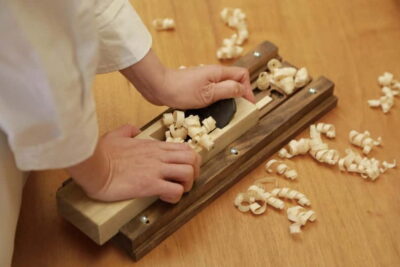 ★ 4.8Chopstick Making Workshop in GinzaFrom $251,366 reviews
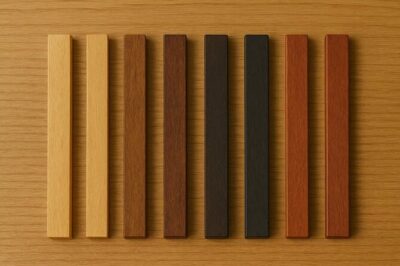 ★ 5.0Chopsticks Making Workshop in Gion with Engraving OptionFrom $15958 reviews
 ★ 4.8Tokyo Sumo Experience: Chanko & Mochi with a Former ProFrom $103567 reviews
 ★ 5.0Kintsugi Experience: Art of Golden Joinery in TokyoFrom $59467 reviews
 ★ 5.0Tokyo Chopstick Making Workshop with ArtisanFrom $26466 reviews
 ★ 4.9Matcha Making Experience with Mochi Sweets in AsakusaFrom $22388 reviews
 ★ 4.8Authentic knife making experience at a blacksmith in KyotoFrom $154350 reviews
Filed on these lists too