
REVIEW · JAPANESE CRAFT AND CALLIGRAPHY WORKSHOPS
Tokyo: Knife Making Workshop (Sharpening, Engraving)
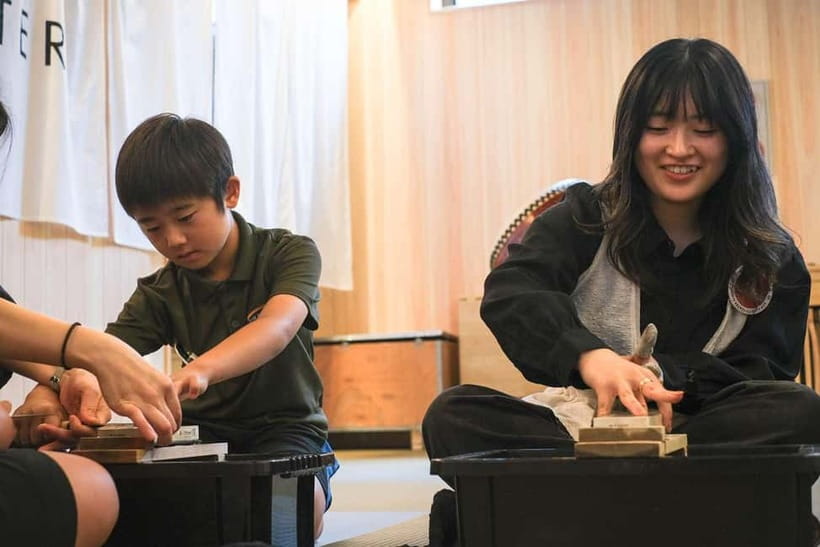
Sharpening a knife feels weirdly calming. In Tokyo, this Japanese knife workshop turns a shop-basic blade into something personal, with English help, hands-on sharpening, and a short history talk about knives and swords.
I love that you start working fast, not after a long lecture, and you get guidance step by step.
One possible drawback is that the process takes real concentration, so if you want a quick craft with zero effort, this may feel like hard work.
I also really like the souvenir side, especially the parts that feel cultural and hands-on. You get a name badge written in Japanese letters, you can learn basics as you go, and you finish by engraving your handle and assembling it with a traditional hammer.
Here’s the main consideration: upgrades and engraving choices can add small costs and time. Some knife types cost extra, and sharpening quality depends on how carefully you follow the coach’s corrections.
In This Review
- Key moments worth marking on your Tokyo calendar
- Finding BUB Activity Center and settling in on the 5th floor
- Your 90 minutes: tea first, then sharpening, engraving, and assembly
- Choosing your knife type: what to consider before you start
- Sharpening practice with real coaching (not guesswork)
- Engraving your handle in Japanese letters without freezing up
- The assembly moment: attaching the handle with a traditional hammer
- What you take home: knife, packaging, snacks, and a key-holder
- A real-world tip for travel day
- Price and value: why $161 can make sense in Tokyo
- Who should book, and who might feel it’s not for them
- Final verdict: should you book this Tokyo knife workshop?
- FAQ
- How long is the Tokyo knife making workshop?
- What knife do I take home?
- Can I engrave my name in Japanese?
- Is the workshop taught in English?
- Can friends or family watch if they do not participate?
- Is the activity wheelchair accessible?
Key moments worth marking on your Tokyo calendar
- Start with culture, tea, and a clear intro to Japanese knives and sword history
- Choose from up to 5 knife types, including upgrade options for select larger styles
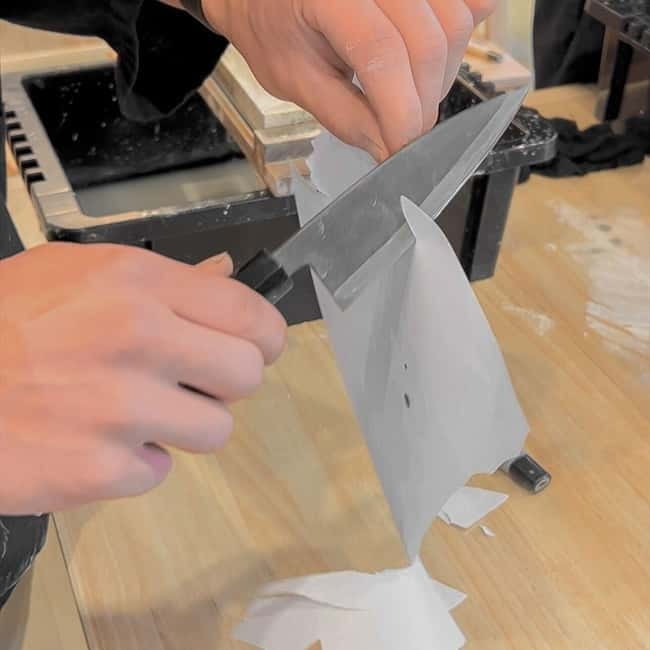
- Sharpen with coaching, English-speaking staff correct your movements in real time
- Engrave your name in Japanese, then assemble using a traditional hammer
- Take home a real-use knife plus extra keepsakes, with neat packaging and snacks
Make something to take home. Other workshops
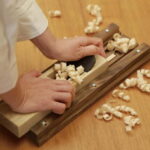
- Tokyo Shinjuku Chopsticks Making Class
★ 5.0 · 1,763 reviews - Chopstick Making Workshop in Ginza
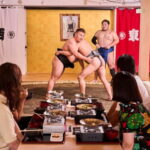
★ 4.8 · 1,366 reviews - Tokyo Sumo Experience: Chanko & Mochi with a Former Pro
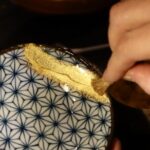
★ 4.8 · 567 reviews - Kintsugi Experience: Art of Golden Joinery in Tokyo
★ 5.0 · 467 reviews
Finding BUB Activity Center and settling in on the 5th floor
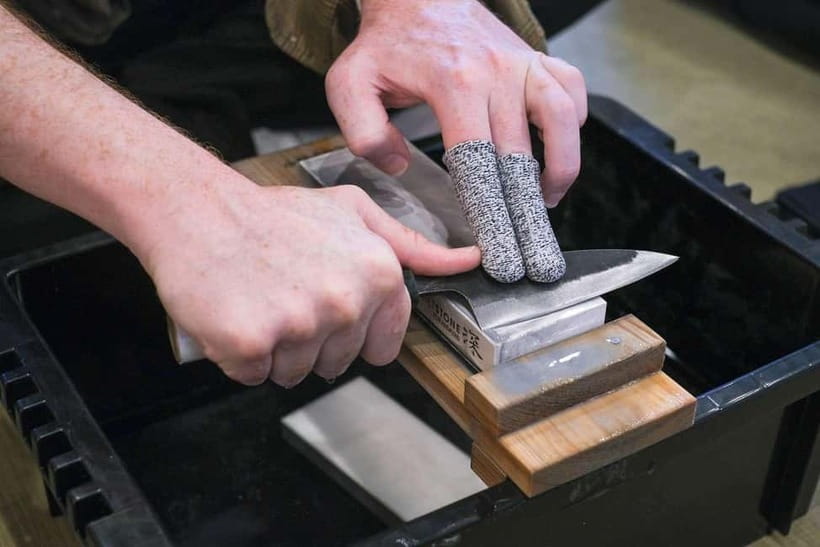
This workshop takes place at BUB Activity Center in Asakusa, in the Heiwa Building. The detail that matters is simple: you take the elevator up to the 5th floor. It’s the kind of location where showing up a few minutes early helps, since you want time to find the elevator and get seated without rushing.
Once you’re in, the room is set up for doing work with your hands. You’ll be given a light version of a haori (a kimono-style jacket) to protect your clothes in case of accidental stains. You’ll also receive a badge with your name written in Japanese letters, which makes the whole thing feel personal right from the start.
If you’re the type who likes to get your bearings early, you’ll appreciate the flow here. You settle in, they explain what you’re doing, and only then you start the sharpening process. That pacing is a big deal with something tactile like knife work.
Your 90 minutes: tea first, then sharpening, engraving, and assembly
The workshop runs about 90 minutes, and the structure is built around three phases: introduction, making, and finishing.
First comes the welcome and light refreshments. You sit down with tea or juice, and you’re offered a few soft drink options too. Then you get the cultural context. The instructor covers Japanese knives and swords, including background that helps you understand why Japanese blades are shaped and used differently than Western styles. Based on what the guides emphasize in the class, the goal is not trivia. It’s to help you make better choices about sharpening and care once you leave.
Next is the hands-on work. You choose the blade type and the size you want for your sharpening session. Then you work through the sharpening steps, which are intentionally meditative. You’re not just rubbing steel. You’re building patience and focus, and the staff stays close to adjust your movements. A couple of English-speaking guides are on hand to keep it friendly and practical, including guide names like Agata, Mori, Lisa, and Joe appearing in the class experience many times.
Finally, you move into the finish work. You engrave your name on the handle in Japanese characters (and you may be able to do other simple engraving ideas depending on time and staff guidance). After that, the handle is attached using a traditional hammer. That “construction” moment matters, because it’s not just decor. You’re making a functioning knife souvenir.
By the end, you get to see the transformation in front of you, and the class atmosphere keeps it from feeling intimidating.
Choosing your knife type: what to consider before you start
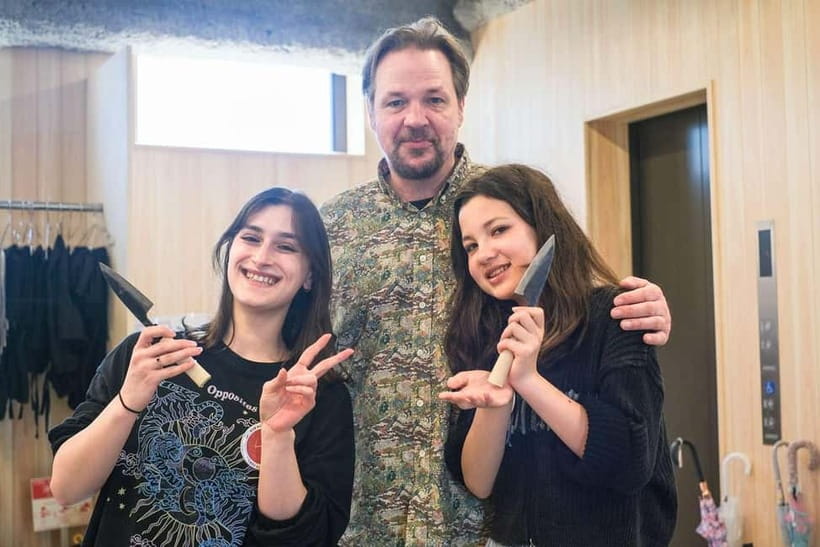
One of the best parts of this workshop is that you’re not forced into a single blade. You can pick from up to 5 knife types, and some have a small additional charge. Larger styles mentioned include usuba, deba, and petit yanagiba.
So how should you decide?
- If you cook a mix of everyday tasks, the standard multi-tasking knife is the safest choice. You’ll still learn the sharpening fundamentals, and you’re taking home a usable kitchen tool.
- If you already have a reason to want a particular style (for example, you’re curious about a more specialized Japanese cooking blade), the upgrade options can make sense.
- If you’re traveling and want to keep packing and logistics simple, avoid overthinking the upgrade. The standard knife plus your engraving still makes a strong souvenir.
Also, pay attention to the class framing. The staff helps you choose, and the sharpening and care lesson is designed to connect to real kitchen use. In other words, they’re not teaching you to sharpen one weird blade. They’re giving you a basic skill set you can carry forward.
- Mt Fuji and Hakone 1-Day Bus Tour Return by Bullet Train★ 5.0 · 26,383 reviews
- 1-Day Tokyo Bus Tour★ 5.0 · 14,250 reviews
- Tokyo: teamLab Planets TOKYO Digital Art Museum Entry Ticket★ 4.6 · 9,779 reviews
- Mt Fuji & Hakone Cruise, Drum Show Bullet Train 1 Day from Tokyo★ 4.0 · 7,413 reviews
- Tokyo: Shinjuku Food Tour (13 Dishes at 4 Local Eateries)★ 5.0 · 6,603 reviews
Sharpening practice with real coaching (not guesswork)
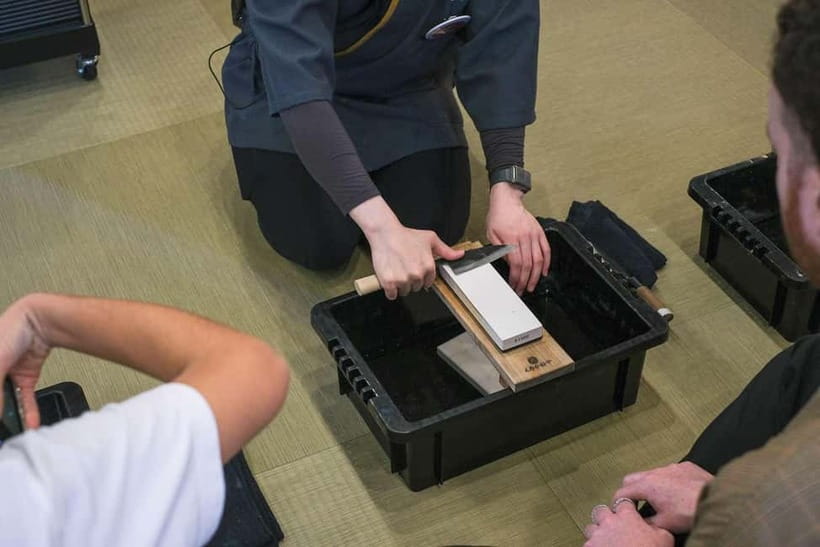
Sharpening steel can look easy on video. In real life, it asks for control, and that’s where this class earns its high marks.
The workshop is set up with close attention from the staff, and they correct technique politely but directly. You’ll feel it in the details: how you position the blade, how you keep angle consistency, and how you move during the process. Even if you don’t have prior experience, the class is designed for beginners.
What I like about this coaching style is that it keeps you from getting stuck. You can sense the difference between guesswork and guided work. When the instructors step in, the process becomes more meditative and less frustrating. Reviews repeatedly mention this exact rhythm: staff stay patient, help with hand position, and keep English clear.
If you’re worried about whether you’ll produce a good result, here’s a practical way to think about it. Your goal is not “become a master” in one session. Your goal is to understand the movements and leave with a sharpened knife, plus the basics to care for it. The staff focuses on both.
And yes, it is hard work. That’s part of the point. Your hands do the work, and you see progress as the blade changes.
Engraving your handle in Japanese letters without freezing up
Engraving is the moment where the workshop becomes personal. You engrave your name on the handle in Japanese characters. If you want to go beyond your name, the class also suggests you can engrave a picture or an idea from your imagination, and staff can assist.
This part is deceptively tricky. It’s detail work, and mistakes are easy when you’re excited and rushing. The good news is that you’re not left alone with a tool and a blank surface. Staff guide the process, and bilingual help makes the instructions easier to follow, even if your Japanese is limited.
You’ll also learn small basics along the way, like how the writing relates to what you see in Japanese knives and crafts. That context turns “scratching letters” into a meaningful cultural souvenir.
One small consideration: a few comments suggest that engraving options could be expanded. So if you’re the type who wants a lot of customization choices, you might feel a little constrained by what the class time allows. Still, the engraved handle plus your sharpening work creates a finished piece you’ll actually want to show and use.
The assembly moment: attaching the handle with a traditional hammer
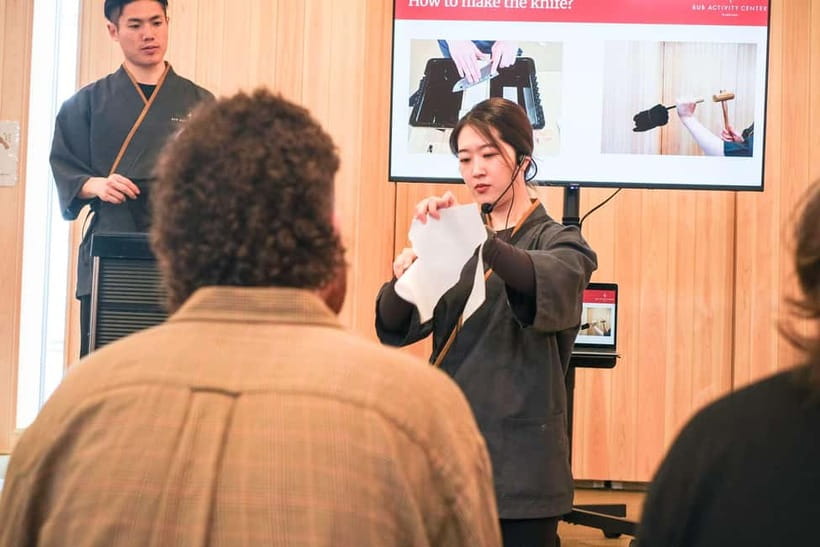
After engraving, you attach the handle using a traditional hammer. This is a great stop in the workflow because it turns the project into a complete product instead of a half-finished workshop sample.
It also changes the pacing. Sharpening is repetitive and precise. Hammer assembly is decisive. You can feel the progress as the knife becomes whole, and the class helps keep that momentum going so you don’t lose time.
This is also where the classroom energy tends to peak. You see your work come together, you get a tool that looks finished, and you get a sense of pride that’s hard to fake. Even if your sharpening technique isn’t perfect, the end result is a functional, personalized knife.
What you take home: knife, packaging, snacks, and a key-holder
The take-home package is one of the reasons this workshop feels like better-than-average value.
Included in the experience:
- A standard size knife (multi-tasking) to take home
- Your customized crafting experience
- Japanese snacks and tea/drinks
- Bilingual staff assistance
- Aesthetic packaging
- A customized key-holder with a unique design
That knife and packaging combination matters if you plan to gift your souvenir or want it to look presentable right away. The aesthetic packaging helps protect your item and makes the experience feel like more than just a class.
Also, you’re not just leaving with a decoration. You’re leaving with something you can bring into your kitchen routine, if you take care of it.
A real-world tip for travel day
Transport can be the stressful part with blades. The class guidance says to place your knife box into your check-in luggage, or ask the staff to ship it if that’s easier. That single line can save you time and worry at the airport.
If you’re planning to do other shopping in Tokyo right after, keep that in mind. It’s easier to carry the day’s purchases when you’re not also juggling knife wrapping and uncertainty.
Price and value: why $161 can make sense in Tokyo
At $161 per person for about 90 minutes, this isn’t a budget “try it once” activity. The value comes from what’s included and what you actually do.
You’re paying for:
- A hands-on skill session with staff correction
- A personalized engraved handle
- Assembly using traditional methods
- A take-home knife (not just a sharpened demo piece)
- Snacks, tea or juice, and packaging
- A customized key-holder
Plus, the class is designed for beginners. You’re not paying extra for expertise to explain things in English. Multiple instructors, including names like Agata, Mori, Lisa, and Joe, show up in the experience descriptions as supportive and energetic.
Where costs can shift:
- Some knife types cost extra, including usuba, deba, and petit yanagiba
- Transportation to and from the workshop is not included
- Meals are not included
So is it worth it? If you want a souvenir that’s personal and actually connected to cooking, yes. If you’re only looking for a photo moment or prefer passive sightseeing, this may feel like too much work for the time.
Who should book, and who might feel it’s not for them
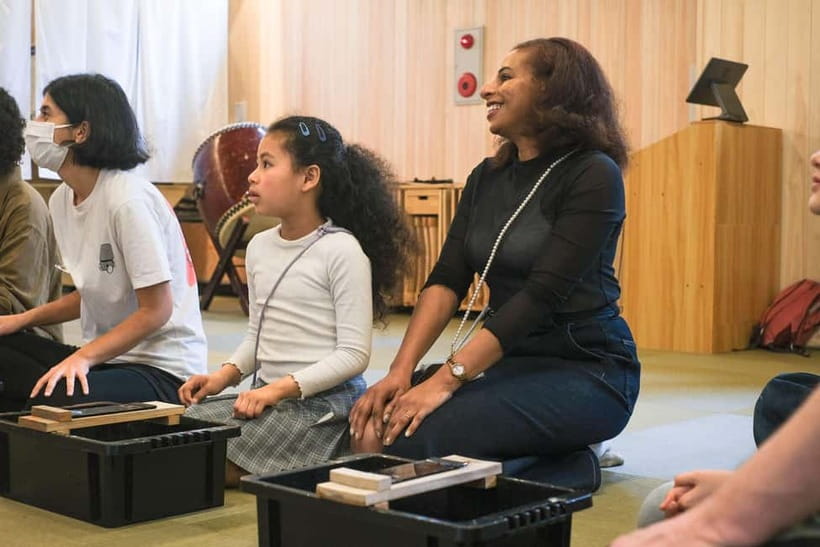
This workshop fits best if you’re one of these travelers:
- You love hands-on cultural activities where you make something real
- You’re interested in Japanese cooking tools and knife care
- You want a short, guided workshop with English support and patient instruction
- You’d like an experience you can remember every time you cook
It also works well as a couple activity. There’s an observation option on site, and staff can accommodate a non-participating partner or family member with an observation fee. That’s a smart approach if you want separate souvenir goals without forcing two full workshops.
If you’re traveling with a strong preference for quick, low-effort experiences, the sharpening portion can feel intense. The class is meant to be focused and skill-building. It rewards patience.
Final verdict: should you book this Tokyo knife workshop?
Book it if you want a Tokyo memory that combines craft, culture, and a take-home tool you’ll use or display with pride. The strongest reasons are the practical coaching during sharpening, the cultural intro about knives and swords, and the finish work that makes your engraved handle feel like yours.
Skip it or rethink it if you mainly want a short, casual souvenir without real effort. Also, if you’re sensitive to extra costs for upgrades, stick with the standard knife option and focus on your engraving.
If your itinerary includes Asakusa and you want one activity that feels different from typical museum time, this is a very solid choice. You’ll leave with a personalized knife, plus the basics to care for it, and that combo is hard to beat in 90 minutes.
FAQ
How long is the Tokyo knife making workshop?
The experience takes about 90 minutes (approximately 1.5 hours).
What knife do I take home?
You take home a standard size knife (multi-tasking) that’s included in the price. You can also choose other knife types during the workshop, and bigger types may require an additional fee.
Can I engrave my name in Japanese?
Yes. You’ll have the chance to engrave your name in Japanese letters on the knife handle. Staff support is available if you want help with Japanese basics.
Is the workshop taught in English?
Yes. The instructor and staff provide English support, and bilingual staff help keep explanations clear.
Can friends or family watch if they do not participate?
Yes, an observation option is available for friends or family who want to watch instead of join. An observation fee is required on site.
Is the activity wheelchair accessible?
Yes, the experience is wheelchair accessible.
Made by Hand, and Yours to Keep

Newest Tokyo write-ups from the Loving Japan desk



Japanese Craft and Calligraphy Workshops, side by side.
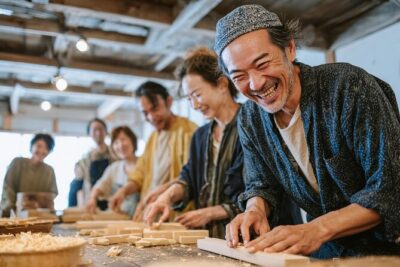 ★ 5.0Tokyo Shinjuku Chopsticks Making ClassFrom $201,763 reviews
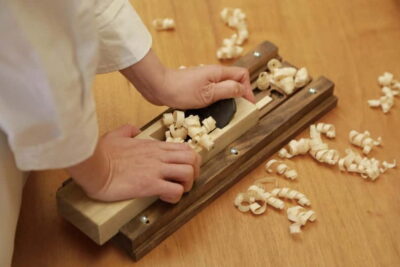 ★ 4.8Chopstick Making Workshop in GinzaFrom $251,366 reviews
 ★ 5.0Chopsticks Making Workshop in Gion with Engraving OptionFrom $15958 reviews
 ★ 4.8Tokyo Sumo Experience: Chanko & Mochi with a Former ProFrom $103567 reviews
 ★ 5.0Kintsugi Experience: Art of Golden Joinery in TokyoFrom $59467 reviews
 ★ 5.0Tokyo Chopstick Making Workshop with ArtisanFrom $26466 reviews
 ★ 4.9Matcha Making Experience with Mochi Sweets in AsakusaFrom $22388 reviews
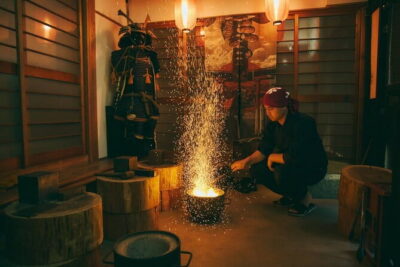 ★ 4.8Authentic knife making experience at a blacksmith in KyotoFrom $154350 reviews
Filed on these lists too