
REVIEW · JAPANESE CRAFT AND CALLIGRAPHY WORKSHOPS
Tokyo Omotesando Original Perfume Making Experience/Workshop
Perfume making in Tokyo feels oddly calming. In Omotesando at Magnolia Fragrance, you get hands-on help to create a scent from 80 fragrances, then take home a customized bottle that actually smells like your trip. I like the friendly, step-by-step guidance and the chance to play with Japanese-style notes like bamboo, cherry blossom, and green tea.
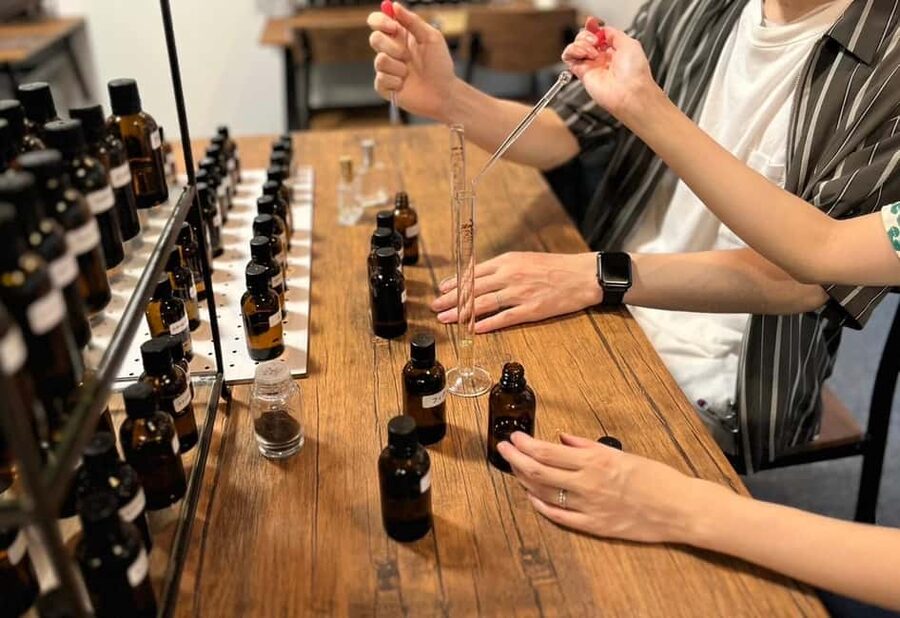
What I love most is the practical blending setup. You use tools like a dropper and graduated cylinder, so the process feels more like careful mixing than guesswork, with staff support when you need it.
One thing to consider is logistics. The workshop is in a B1F space inside the ARCH-ATRIUM building, and it can be a little tricky to locate at first, plus it is not suitable for wheelchair users (and it has age limits for very young and very old visitors).
In This Review
- Key things to know before you go
- Why Omotesando works so well for a perfume workshop
- Getting to Magnolia Fragrance, the Omotesando B1F maze
- The core of the workshop: picking your fragrances and building a blend
- Measuring and mixing: using a dropper and graduated cylinder
- Custom bottle label: turning your blend into a personal keepsake
- Price and value: is $49 worth 90 minutes of perfume craft?
- Who this workshop is best for, and who should skip it
- Booking, timing, and what to expect once you arrive
- Should you book this Omotesando perfume making workshop?
Key things to know before you go
- Choose from about 80 fragrances to build your own personal perfume
- Use a dropper and graduated cylinder for measuring and blending
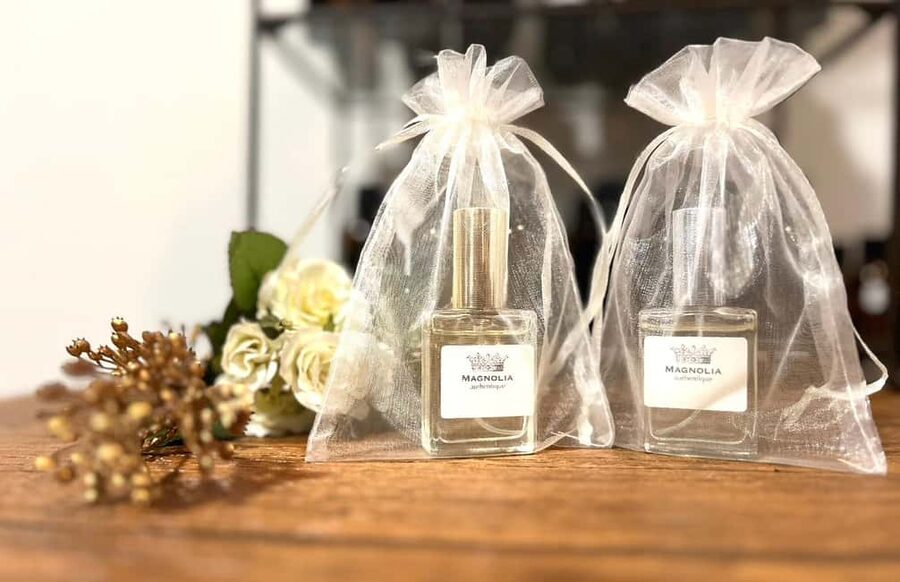
- Customize your bottle label with the fragrance used, the date, your name, and more
- Take home a 25cc bottle as a real, usable souvenir
- Bilingual staff support in Japanese and English
- Omotesando location makes it a great add-on before or after shopping and cafés
Make something to take home. Other workshops
- Tokyo Shinjuku Chopsticks Making Class
★ 5.0 · 1,763 reviews - Chopstick Making Workshop in Ginza
★ 4.8 · 1,366 reviews - Tokyo Sumo Experience: Chanko & Mochi with a Former Pro
★ 4.8 · 567 reviews - Kintsugi Experience: Art of Golden Joinery in Tokyo
★ 5.0 · 467 reviews
Why Omotesando works so well for a perfume workshop
If you already know Tokyo has a lot of shops, this workshop adds something more human. Omotesando is busy, polished, and very walkable, which matters because your 90-minute session is part craft, part sensory play, and part calm break from transit lines and crowds. Magnolia Fragrance sits about a 5-minute walk from Omotesando Station, so you do not have to lose a half day to get there.
The setting also helps you focus. Instead of roaming from store to store, you stay in one place and build something with intention. You pick fragrances, try combinations, and end with a bottle you can keep. That “I made this” feeling is the big draw here, and it is reinforced by the fact that you leave with your own perfume, not just a paper certificate.
And you will notice the fragrance style the moment you start browsing the lineup. The options include notes that feel distinctly Japanese, such as bamboo, cherry blossom, and green tea. Even if you are not chasing a traditional profile, it is fun to smell familiar themes translated into perfume form. That makes the experience work for first-timers and for people who already know what they like.
One more quiet bonus: this is a session you can do solo or with a loved one. The workflow is guided, but it is still personal. You are not copying a recipe you cannot control. You are choosing your own balance.
Getting to Magnolia Fragrance, the Omotesando B1F maze
The workshop meeting point is not in a street-front shop window. It is on the B1F of the ARCH-ATRIUM building, and that changes how you should navigate.
Plan to approach from Omotesando Station’s A5 exit. Then:
- Head onto the road next to the Apple Store.
- Turn left at the corner where you see Flying Tiger.
- With Afternoon Tea on your left, go straight, passing Shiawase no Pancake.
- Turn left onto the road between Tonkatsu Maisen and Zakka+Bar DEARYOU.
- After a while, you will see a paid parking lot. Turn right into that area.
- Your shop is on the B1F of ARCH-ATRIUM on your left.
Once you are at the building, go to the back and find the door with a black sign to reach the entrance. The building level note matters: Genpodo Acupuncture Clinic is on the 1st floor, so do not get stuck looking there. Press the intercom to reach B1F.
If this feels like a lot, you are not wrong. The good news is that the workshop is only about a 5-minute walk from the station, so even if you detour, you are not wandering across Tokyo. My practical tip is simple: give yourself a little buffer time so you can locate the building calmly before your session.
The core of the workshop: picking your fragrances and building a blend
The whole experience is designed to move fast enough to stay fun, but structured enough that you do not feel lost. Your session runs 90 minutes, and it is run with staff support in Japanese and English. That language support matters, because perfume blending can get technical the moment you ask questions about notes, strength, and how certain scents interact.
Here is how the creative part likely feels once you are inside: you are presented with a large set of fragrance options, about 80 different fragrances. You then choose the ones that match your mood or your idea of a “signature” scent. You might start by picking something recognizable, like a floral or tea-like profile, then add a second note for depth.
A lot of the enjoyment comes from how varied the options are. Some scents will read as clearly floral or clearly fresh, but you can also end up with unexpected combinations that still smell like they belong together. That is exactly the point of having such a large selection.
You are not stuck with a single style either. The experience is flexible enough for both feminine-leaning and more unisex or masculine-leaning preferences. Staff support helps you steer your blend toward something you actually want to wear or keep smelling.
One thoughtful touch is the “typically Japanese” choices. Even if you do not plan to wear it daily, those notes give you a memory you can smell later. Bamboo, cherry blossom, and green tea are not just labels. They are sensory anchors that can pull you back to a season or a moment.
- Mt Fuji and Hakone 1-Day Bus Tour Return by Bullet Train★ 5.0 · 26,383 reviews
- 1-Day Tokyo Bus Tour★ 5.0 · 14,250 reviews
- Tokyo: teamLab Planets TOKYO Digital Art Museum Entry Ticket★ 4.6 · 9,779 reviews
- Mt Fuji & Hakone Cruise, Drum Show Bullet Train 1 Day from Tokyo★ 4.0 · 7,413 reviews
- Tokyo Mt Fuji 5th St & Hakone Cruise Bus Tour w/Bullet Train★ 4.4 · 5,024 reviews
Measuring and mixing: using a dropper and graduated cylinder
This is where the workshop shifts from casual hobby to real craft. You blend your perfume using a dropper and graduated cylinder. That setup keeps things from becoming purely random.
If you have ever tried to mix scents without any measuring tools, you know how easy it is to overdo one note. One heavy aroma can dominate fast. The graduated cylinder approach helps you understand proportions, and the dropper helps you adjust with control. Staff support is there to guide you if you want help balancing.
This tool-based method also makes the session feel like it has momentum. You are not just sniffing and deciding for the whole time. You are actively creating, correcting, and refining. That is probably why the experience comes across as relaxing and not stressful. People often want a hands-on activity in Tokyo that does not require nerves.
Another practical detail is the way you taste-test the blend as you go. The scent you end up with is your choice, but it is also influenced by the staff’s feedback. That prevents the classic souvenir problem: buying something that sounds cool but smells wrong at home. Here, you end up with something you shaped and therefore have a better chance of loving long after the workshop.
Custom bottle label: turning your blend into a personal keepsake
The final step is not just packaging. It is personalization.
You customize your perfume bottle label with:
- the fragrance used
- the date
- your name
- and additional details
That label piece is what turns your creation into a proper memento. A generic bottle is nice, but it fades. A labeled bottle becomes a story you can reread, even months later. You can look at it and remember the vibe of the day: Omotesando, your selected notes, and the exact moment you made the blend.
You also take home an original perfume (25cc). That size is meaningful because it is enough to use, not just display. If you like the scent, you can actually bring it into your routine. And if it is more of a memory scent, you can still keep it for special wear, travel days, or gifting.
In other words, you are not leaving with something fragile or unhelpful. You are leaving with a functional souvenir.
Price and value: is $49 worth 90 minutes of perfume craft?
At $49 per person, this workshop competes with other Tokyo activities that are mostly entertainment. The real value is that you leave with product, plus you get guidance. You are not just paying for time in a room.
You receive:
- an original 25cc perfume bottle
- selection from about 80 fragrances
- staff support
- blending help using a dropper and graduated cylinder
- a customizable bottle label
That combination matters. Many souvenirs can cost similar money but give you no process and no customization. Here, the process is the point, and the customization sticks through the label. If you care about making your trip feel specific, not generic, this is the kind of activity that does that well.
Also, the Omotesando location can quietly add value. It is easy to combine with a walk for shopping and cafés, since you are already near a major station. Even if you treat this as a simple “one neat thing to do,” you can still fit it into an efficient day.
My balanced take: if you hate hands-on activities or you know you do not like smelling lots of different scents, you might find it less enjoyable. But if you are even mildly curious about fragrance and want a souvenir with personality, the price feels fair for what you get.
Who this workshop is best for, and who should skip it
This is a strong match if you want a guided activity that ends with something you can keep and use. It is especially good if:
- you like personal crafting with a clear finish
- you enjoy exploring scent profiles
- you want a Tokyo memory that you can actually smell later
- you are shopping in Omotesando and want a break from store hopping
It also works well for couples or friends because the instructions and process keep things flowing, even when everyone is choosing their own fragrance balance.
But it is not for everyone. It is not suitable for:
- children under 5 years
- wheelchair users
- people over 95 years
So if accessibility is part of your planning, check this early. If you are within the age range and you can get around on your own, you should be fine.
Language is another factor. The staff speaks Japanese and English, so you do not have to worry about missing key steps. Still, if you have strong preferences for certain scents, it helps to be ready to describe what you like in plain terms (fresh, floral, tea-like, woody, and so on).
Booking, timing, and what to expect once you arrive
Your start time depends on availability, and the session duration is 90 minutes. You will want to arrive a few minutes early because you have to reach a back entrance and then press the intercom to get to B1F.
Once you are in, the staff support is a big reason people rate the experience highly. You should expect an explanation of how to sample, how to blend, and how to use the measuring tools. Then you spend most of your time choosing fragrances, building your mixture, and refining it.
By the end, you have your labeled bottle and a scent that represents your choices. The “take home” part is what makes it feel like more than a class. You get a product with your name on it.
Should you book this Omotesando perfume making workshop?
Yes, if you want a Tokyo souvenir with real personality. This one is built around choice, guided by staff, and finished with a customized 25cc bottle you can actually use. At $49 for a 90-minute session, the value is strongest when you care about fragrance and like activities that turn into a tangible result.
I would skip it if you dislike scent testing or you prefer tours that are mostly sightseeing. Perfume is sensory work. It is fun for many people, but it is still about smelling lots of different options.
If you are planning a day in Omotesando anyway, this is a smart add-on. It gives you something creative, calm, and personal, in the middle of a very walkable, design-forward neighborhood.
Made by Hand, and Yours to Keep




Newest Tokyo write-ups from the Loving Japan desk






Japanese Craft and Calligraphy Workshops, side by side.
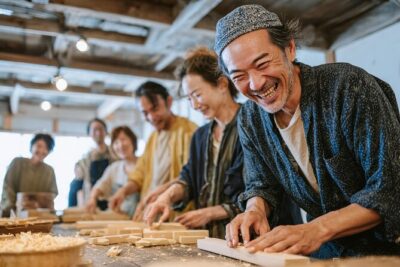 ★ 5.0Tokyo Shinjuku Chopsticks Making ClassFrom $201,763 reviews
 ★ 4.8Chopstick Making Workshop in GinzaFrom $251,366 reviews
 ★ 5.0Chopsticks Making Workshop in Gion with Engraving OptionFrom $15958 reviews
 ★ 4.8Tokyo Sumo Experience: Chanko & Mochi with a Former ProFrom $103567 reviews
 ★ 5.0Kintsugi Experience: Art of Golden Joinery in TokyoFrom $59467 reviews
 ★ 5.0Tokyo Chopstick Making Workshop with ArtisanFrom $26466 reviews
 ★ 4.9Matcha Making Experience with Mochi Sweets in AsakusaFrom $22388 reviews
 ★ 4.8Authentic knife making experience at a blacksmith in KyotoFrom $154350 reviews
Filed on these lists too