
REVIEW · SUMO WRESTLING EXPERIENCES
Tokyo Sumo Morning Practice: Viewing & Exclusive Interaction
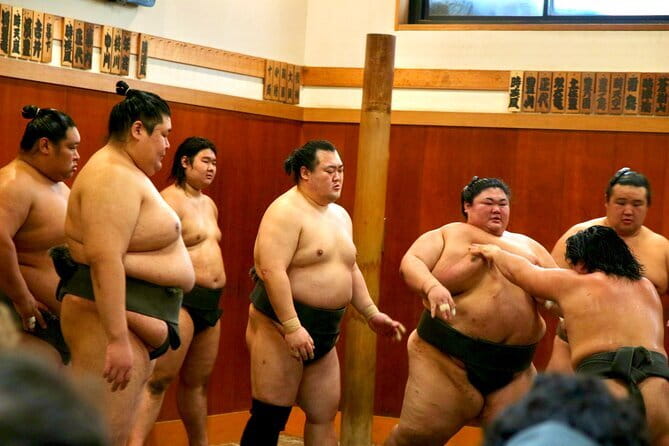
Sumo is loud in the mind, even when it’s quiet outside. This Tokyo morning practice experience takes you to an active sumo stable, so you don’t just watch from a distance, you learn the rules, see the training up close, and then meet the wrestlers through an English guided Q&A. The early start also means you get a calm, respectful atmosphere you do not get at most tourist shows.
I especially like the hands-on cultural context you get before training starts, so the rituals make sense fast. I also love the exclusive interaction afterwards, including photo time and a chance to ask real questions with the wrestlers (handled through the guide), which turns a fast viewing into a memorable connection.
One thing to consider: it is a strict, early-morning experience with rules, including no food and no flash, video, or audio recording. If you want to snack on a tour or you hate quiet manners, you might find it a bit intense.
In This Review
- Key highlights you will actually feel in the experience
- Narihira Park and the quiet start that changes everything
- The walk to an active stable, where the training feels real
- Zabuton cushions vs stools, and how to choose your comfort
- Etiquette rules that keep the morning respectful (and your photos allowed)
- Pre-practice guidance: learning the rules before you judge what you see
- Exclusive interaction: Q&A and photos with active wrestlers
- Tournament season note: earlier practice and shorter viewing time
- Banzuke ranking sheet souvenir: more than a paper keepsake
- The final Deep Q&A at the park, plus where you go next
- Price and value: what you are really paying for at $93
- Who this tour fits best, and who may want a different option
- Should you book this sumo morning practice?
- FAQ
- Where do I meet for the tour?
- How long is the Tokyo sumo morning practice experience?
- What is included in the price?
- What souvenir do I receive?
- Is food provided during the tour?
- What are the key photography and recording rules?
- What is allowed during the training viewing?
- How does the schedule change during the Grand Sumo Tournament?
- Is this tour suitable for young children?
Key highlights you will actually feel in the experience
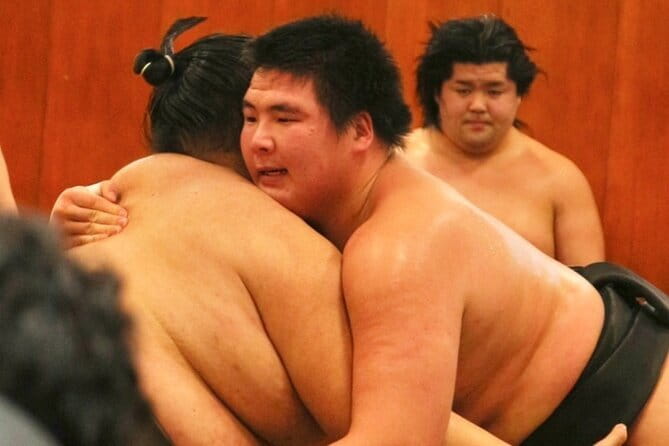
- Active stable access: you see real training, not a staged performance.
- Flexible seating with zabuton floor cushions in front and stools in back.
- Rider-to-ringer style Q&A: guided questions with active wrestlers plus a final guide session at the park.
- Official Banzuke souvenir in a special folder, tied to sumo rankings.
- Photo time with wrestlers after training, guided so it stays respectful.
Morning practice or an evening show. Both reviewed
- Tokyo: Sumo Show and Dining Experience
★ 4.8 · 2,742 reviews - the SUMO show
★ 5.0 · 1,960 reviews - Tokyo Shinjuku Sumo Show & Experience with Photo
★ 5.0 · 1,750 reviews - Tokyo: Sumo Show and Experience in Shinjuku
★ 4.8 · 1,001 reviews
Narihira Park and the quiet start that changes everything
This tour begins where the day is still waking up: Narihira Park. The meeting point is near the multipurpose restroom at the park, and your guide checks your name and sets the tone right away. That opening matters, because sumo is not only sport. It is ritual, etiquette, and routine, and most people miss that if they arrive cold.
Expect a short introduction to sumo history, rules, and manners before you even reach the stable. This is practical stuff, like how to behave in the training space and how to understand what you are seeing. If you have ever thought sumo looks mysterious but did not know where to start, this primer gives you a clear mental map.
You will likely also notice the group is set up for respect rather than entertainment. You are not there to talk through everything. You are there to observe and learn. That difference is a big part of why this experience scores so highly.
The walk to an active stable, where the training feels real
After that introduction, you take a short walk to an active sumo stable. This is the part that many visitors cannot do on their own. A stable is a working environment, and you generally cannot just wander in. Here, you arrive with the proper access, and the stable team understands you are there to watch politely.
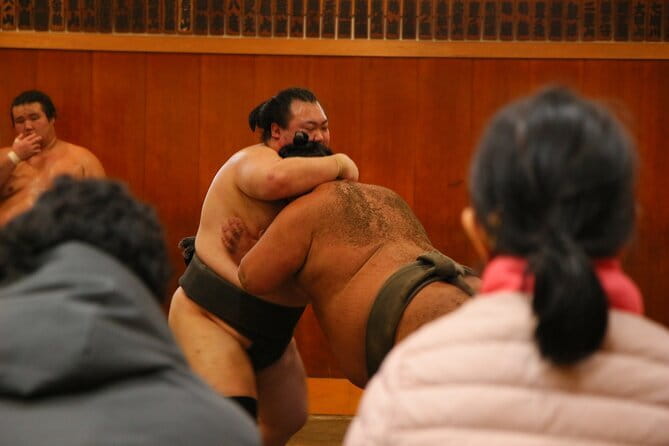
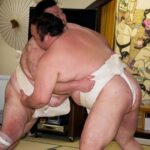
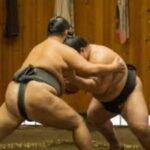
Once you are inside, the atmosphere shifts fast. Training is physical, intense, and close. You get to see bodies moving with purpose, and you can feel how serious the routine is. Even if you do not know every technique, the rhythm is obvious: warm-up, practice drills, and the repeated focus that pro wrestlers run every day.
Zabuton cushions vs stools, and how to choose your comfort
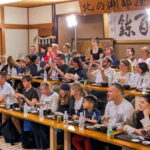
Inside the stable, you get flexible seating options. You can sit on traditional floor cushions, zabuton, typically in the front for the most immersive view. Or you can use stools available at the back if you prefer not to sit on the floor.
This choice matters more than it sounds. Front-row zabuton gives you the best sightlines for the smallest details, like how wrestlers adjust posture and foot placement. Stools make the experience easier on your knees and back, and they help you stay relaxed, so you can concentrate on the rituals and not on discomfort.
If you want the closest experience and you are comfortable sitting on the floor for a while, go zabuton. If not, do not “tough it out.” The stools are there for a reason, and the goal is that you enjoy training, not that you suffer through it.
- Mt Fuji and Hakone 1-Day Bus Tour Return by Bullet Train★ 5.0 · 26,383 reviews
- 1-Day Tokyo Bus Tour★ 5.0 · 14,250 reviews
- Tokyo: teamLab Planets TOKYO Digital Art Museum Entry Ticket★ 4.6 · 9,779 reviews
- Mt Fuji & Hakone Cruise, Drum Show Bullet Train 1 Day from Tokyo★ 4.0 · 7,413 reviews
- Tokyo: Shinjuku Food Tour (13 Dishes at 4 Local Eateries)★ 5.0 · 6,603 reviews
Etiquette rules that keep the morning respectful (and your photos allowed)
This tour is structured to protect the stable environment. That means you follow clear rules while you watch.
Key restrictions:
- No food
- No flash photography
- No video recording
- No audio recording
- No alcohol and drugs
Photography is allowed, but you need to keep it quiet during practice and follow seating and positioning rules. The no flash part is especially important because flash can be disruptive, and it also helps keep the room calm for training.
If you want photos, plan like a photographer with manners. Keep your phone or camera ready, but wait for moments where you can shoot without calling attention. Quiet focus is part of the culture here, and it helps you get better interaction later as well.
Pre-practice guidance: learning the rules before you judge what you see
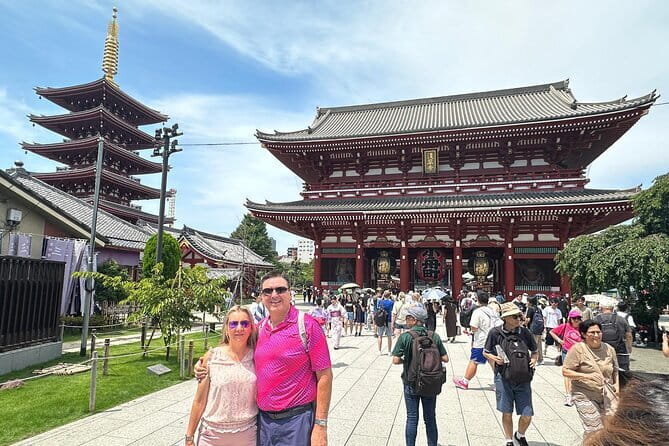
One of the smartest parts of this tour is that it does not throw you into sumo with zero context. Your guide explains history, rules, and etiquette at the start, right after you meet at Narihira Park.
This changes how you watch. Instead of just thinking, “Wow, that’s strong,” you start noticing how sumo is organized: the discipline around training, the seriousness of the space, and the ritual meaning behind movement and timing. Even if you are only casually into sports, this makes the experience click.
Also, guides you may encounter include people named Sarah, Sana, Haru, Momo, and Ryoko, based on past guest experiences. If your guide is one of them, you are in good hands for English guidance and practical explanations.
Exclusive interaction: Q&A and photos with active wrestlers
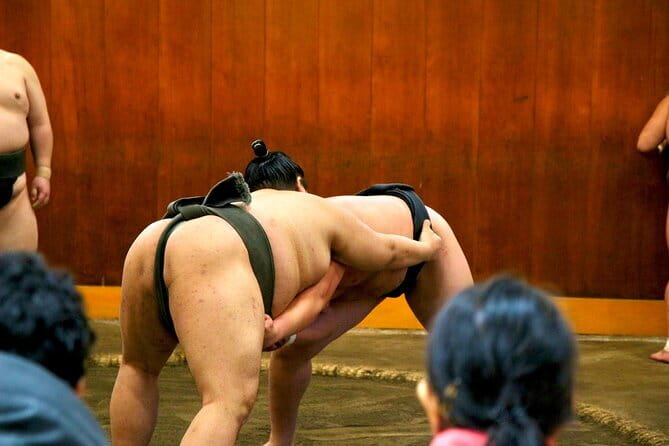
This is the big reason to choose this over a typical viewing-only option. After training, you get a rare opportunity to directly talk with the wrestlers and take commemorative photos together, with your guide facilitating the flow.
The Q&A is not just small talk. Through the guide, you can ask about daily life, training, or mindset as athletes. That is where the tour becomes personal. You stop treating sumo as a distant legend and start hearing how these athletes think about routine, discipline, and effort.
Photos are similarly guided to keep things respectful. It’s not a chaotic free-for-all. It is a structured chance to capture a moment with people who are truly working.
If you have ever wondered what it feels like to ask questions in a culture where hierarchy and etiquette matter, this tour gives you a supported bridge. Your guide handles the timing, the tone, and the translation approach so you can focus on asking good questions.
Tournament season note: earlier practice and shorter viewing time
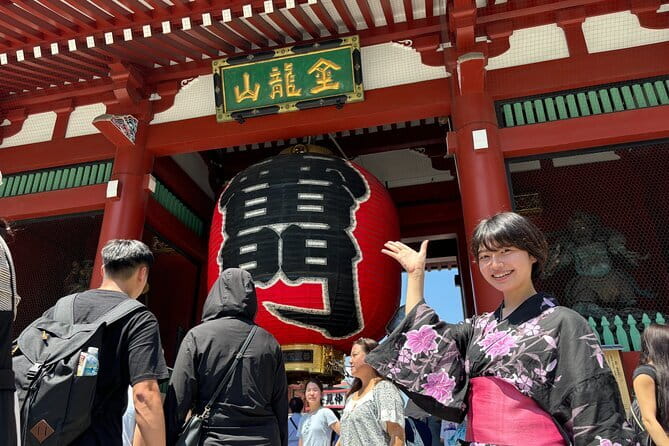
There is one schedule wrinkle to know. During the Grand Sumo Tournament, which runs for about two weeks in January, May, and September, practice starts 30 minutes earlier, and the viewing time is about 1 hour.
That is not a problem, but it affects your mental plan. If you are traveling during tournament season, be ready for a tighter viewing window. Your tour still aims to deliver the full experience, but the training rhythm shifts compared with non-tournament periods.
Banzuke ranking sheet souvenir: more than a paper keepsake
After training, you return to Narihira Park for a special closing session. Here, you receive an official Banzuke ranking sheet, placed in a specially designed souvenir folder.
This is a meaningful souvenir because Banzuke is tied to rankings in sumo. Instead of getting a generic “Tokyo souvenir,” you leave with something that connects to the sport’s formal structure. It is a small paper object, but it carries real context, especially after you have watched training and heard explanations about rules and etiquette.
If you like collecting items that have a story, this one fits perfectly. It also works as a conversation starter when you are back home, because you can tell people how you got it and what you learned along the way.
The final Deep Q&A at the park, plus where you go next
Instead of rushing you into a meal stop, the tour keeps the momentum with a Deep Q&A session at the park. Your guide stays to answer your lingering questions about sumo traditions, and they may also offer personalized tips for your Tokyo time.
This part is surprisingly useful. When you watch training up close and then talk with wrestlers, you usually end up with a second layer of questions, not just “How big are they?” but “Why do they do that?” and “What does this ritual mean in practice?”
You wrap up around 11:00 AM, which is a smart timing choice. You will be well positioned to continue exploring nearby areas like Tokyo Skytree or Asakusa. This matters because the tour itself is only 3 hours, so you are not locking up half your day.
Price and value: what you are really paying for at $93
At $93 per person for a 3-hour experience, the cost is not cheap, but it also is not random. You are paying for access, guidance, and interaction that you cannot easily replicate.
What makes the price feel justified:
- Stable visit fee included, meaning real, organized access to an active training space
- English-speaking guide who sets etiquette and explains what you are seeing
- Souvenir included, including an official Banzuke in a folder
- Exclusive wrestlers interaction, with Q&A and photo time guided for respectful communication
- Multiple instruction points, not just a walk-in watch, including the Deep Q&A back at the park
If your main goal is to simply see sumo from far away, you could find cheaper ways. But if you want context plus direct human answers, the structure here is built around that. You are paying for conversation access, not only sightseeing.
Also, think about what you get out of an early start. You are not competing with crowds in the same way, and your morning is focused. That focus tends to make the whole experience feel more valuable, even though it is short.
Who this tour fits best, and who may want a different option
This tour is a strong fit if you:
- Want authentic access to real sumo practice
- Like learning cultural etiquette, not only watching sport action
- Enjoy structured Q&A and guided photo time
- Are comfortable with rules like no flash and no recording
- Are happy to start early and stay on schedule for about 3 hours
It may be a rough fit if you:
- Need food during the tour, since food is not allowed
- Hate quiet, respectful behavior in a working environment
- Are uncomfortable sitting on the floor for any length of time (stools help, but floor seating is available and likely common)
- Are traveling with children under 6, since it is not suitable for kids under that age
Should you book this sumo morning practice?
Book it if you want the closest honest version of sumo training you can get in Tokyo, plus a real chance to ask questions and take photos with active wrestlers through a guide. The mix of steady explanations at the start, flexible seating during practice, the official Banzuke souvenir at the end, and the Deep Q&A back at the park makes it feel like more than a single viewing session.
Skip it if you primarily want casual sightseeing, snacks, and lots of recording time. The rules are there for respect, and the tour is designed for calm attention, not for a “do whatever” experience.
If you like sports that come with ritual, and you want a Tokyo morning that feels both Japanese and genuinely educational, this is an easy yes.
FAQ
Where do I meet for the tour?
Meet near the multipurpose restroom at Narihira Park. Your guide will check your name there and hand out materials related to sumo.
How long is the Tokyo sumo morning practice experience?
The tour lasts about 3 hours.
What is included in the price?
Included items are the sumo stable visit fee, guidance by an English-speaking guide, and a special souvenir.
What souvenir do I receive?
You receive an official Banzuke ranking sheet in a souvenir folder.
Is food provided during the tour?
No. Food is not allowed during the experience.
What are the key photography and recording rules?
Flash photography is not allowed. Video recording and audio recording are also not allowed.
What is allowed during the training viewing?
Photography is allowed, as long as you remain quiet during practice and follow the rules regarding flash and seating position.
How does the schedule change during the Grand Sumo Tournament?
During the tournament period, practice starts 30 minutes earlier, and the viewing time is about 1 hour.
Is this tour suitable for young children?
No. It is not suitable for children under 6 years old.
Practice Rooms and Show Nights

Newest Tokyo write-ups from the Loving Japan desk
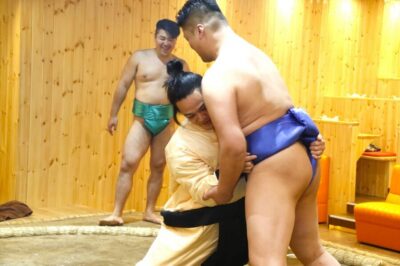
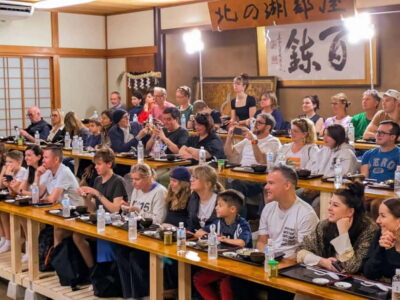
Sumo Wrestling Experiences, side by side.
 ★ 4.8Sumo Show Experience with Chicken Hot Pot and a PhotoFrom $1036,678 reviews
 ★ 4.8Sumo Show and Dining ExperienceFrom $792,742 reviews
 ★ 5.0the SUMO showFrom $891,960 reviews
 ★ 5.0Tokyo Shinjuku Sumo Show & Experience with PhotoFrom $791,750 reviews
 ★ 4.8Sumo Show and Experience in ShinjukuFrom $691,001 reviews
 ★ 4.6Sumo Tournament Tour with Chair Seat TicketsFrom $141753 reviews
 ★ 4.5Sumo Show & Experience w/ Optional Kimono & Hot PotFrom $77609 reviews
 ★ 5.0Authentic Sumo Experience in Tokyo: Enter the SanctuaryFrom $171603 reviews
Filed on these lists too