
REVIEW · SUMO WRESTLING EXPERIENCES
Tokyo: Sumo Morning Practice Viewing Tour at a Real Stable
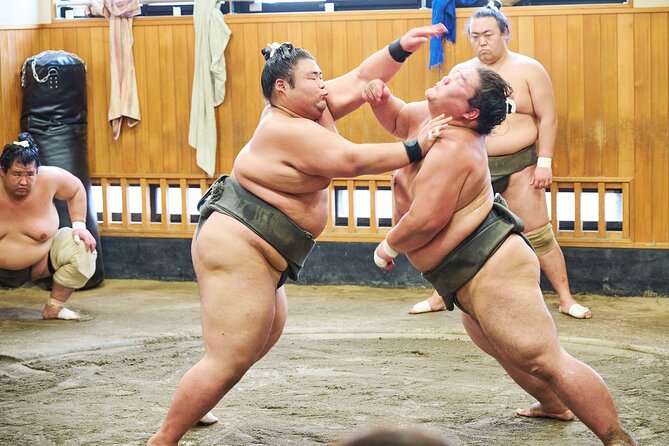
Sumo practice feels real because it is. This Tokyo tour gives special access to a working sumo training stable for a morning session, plus clear guidance on sumo rules and traditions so you can actually follow what you are seeing. I also like the photo chance, so it is not just watching from a distance.
The main thing to consider is timing. You start at 8:30 am, so if mornings are hard for you, plan your day accordingly.
In This Review
- Key Highlights Worth Getting Up For
- A Working Sumo Morning at 8:30 am
- Why Training Feels Different From a Sumo Show
- Getting There: Kiyosumi-shirakawa Meeting Point Made Easy
- What You Actually Do During the 2-Hour Practice Visit
- Inside the Stable: What the Guide Helps You Notice
- Photo Time: Getting the Shot Without Getting in the Way
- Time, Group Size, and Why It Matters for Comfort
- Price and Value: Is $118.92 a Fair Deal?
- Who Should Book This Sumo Morning Practice Tour?
- Should You Book It?
- FAQ
- What time does the Tokyo sumo morning practice tour start?
- How long does the tour last?
- Where is the meeting point?
- Will I have to arrange transportation to the start point?
- Do I get a ticket on my phone?
- Can I take photos with the sumo wrestlers?
- Will the guide explain sumo rules and traditions during the visit?
- How many people are in the group?
- What is the cancellation policy?
- Will I be able to ask questions during the training?
Key Highlights Worth Getting Up For
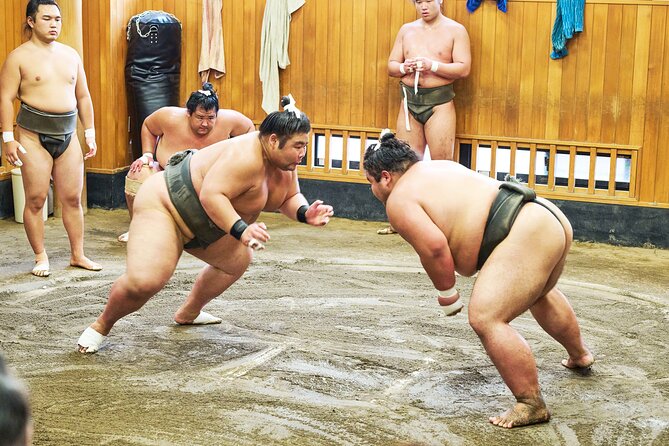
- Real stable access for a morning training session, not a staged performance
- Photos with sumo wrestlers, so you leave with real memories
- A guide who explains sumo rules, rituals, and traditions as you watch
- Quiet training time with smarter Q&A, including a WhatsApp-based question setup in at least one guided experience
- Near public transportation and a straightforward meeting spot by Kiyosumi-shirakawa
- Group size capped at 50, which helps keep the experience manageable
Morning practice or an evening show. Both reviewed
- Tokyo: Sumo Show and Dining Experience
★ 4.8 · 2,742 reviews - the SUMO show
★ 5.0 · 1,960 reviews - Tokyo Shinjuku Sumo Show & Experience with Photo
★ 5.0 · 1,750 reviews - Tokyo: Sumo Show and Experience in Shinjuku
★ 4.8 · 1,001 reviews
A Working Sumo Morning at 8:30 am
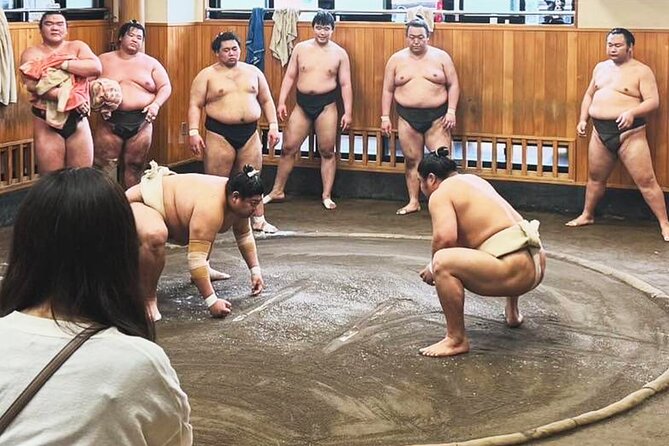
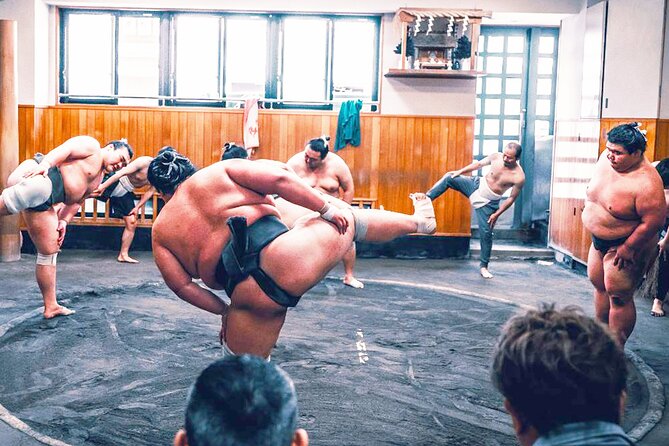
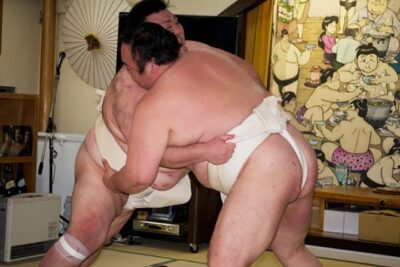
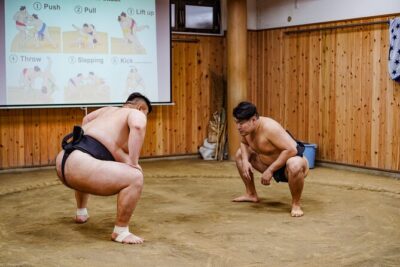
This is the kind of Tokyo experience that cuts through the usual show-and-tell. Instead of sitting in a venue designed for spectators, you go to a real training stable and watch morning practice up close. That early session matters. You are seeing training at the pace and focus that wrestlers use when no one is there to clap.
The duration is about 2 hours, which is a sweet spot. Long enough to feel like you got something real, short enough that it does not steal your whole day. And because it wraps back at the meeting point, you are not stuck planning an awkward return.
Why Training Feels Different From a Sumo Show
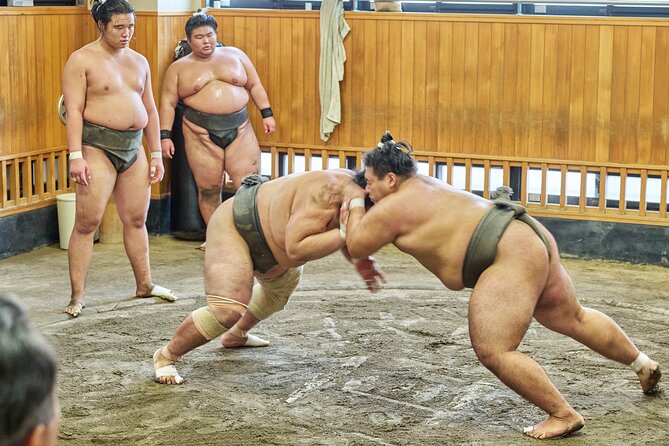
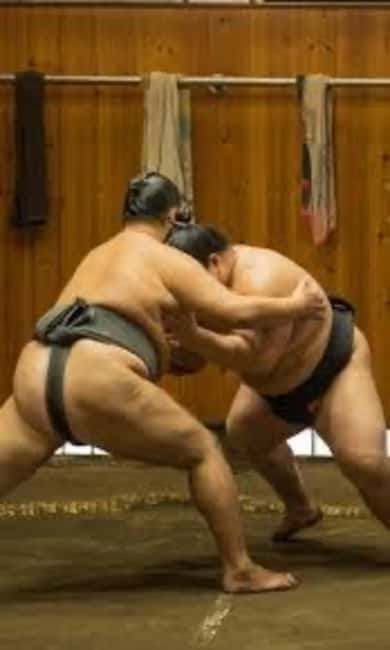
Sumo fans know the big matches are one world. Training is another. In practice, you get a calmer view of technique, rhythm, and repetition. You are not watching the full spectacle of a tournament day. You are watching the work that builds toward it.
That is where the guide adds real value. During the training session, your guide explains sumo rules and traditions so your brain has handles. You will be better at spotting what is happening and why it matters, instead of just thinking, I see bodies moving fast. The reviews also point out that this is not a performance. It is a chance to be a fly on the wall in a working routine.
Getting There: Kiyosumi-shirakawa Meeting Point Made Easy
The meeting point is near Kiyosumi-shirakawa Station at 1-chōme-6-13 Shirakawa, Koto City, Tokyo (135-0021). The tour starts at 8:30 am, and the experience ends back at the same meeting point.
Two practical tips if you want the smoothest morning:
- Arrive a little early. The meeting address is specific, and you do not want to be sprinting with sleepy legs.
- Use the station as your anchor. The tour is described as near public transportation, so you can route yourself there without guesswork.
One review praised how the guide was waiting at an easily identifiable meeting point, which is exactly what you want for an early start.
- Mt Fuji and Hakone 1-Day Bus Tour Return by Bullet Train★ 5.0 · 26,383 reviews
- 1-Day Tokyo Bus Tour★ 5.0 · 14,250 reviews
- Tokyo: teamLab Planets TOKYO Digital Art Museum Entry Ticket★ 4.6 · 9,779 reviews
- Mt Fuji & Hakone Cruise, Drum Show Bullet Train 1 Day from Tokyo★ 4.0 · 7,413 reviews
- Tokyo: Shinjuku Food Tour (13 Dishes at 4 Local Eateries)★ 5.0 · 6,603 reviews
What You Actually Do During the 2-Hour Practice Visit
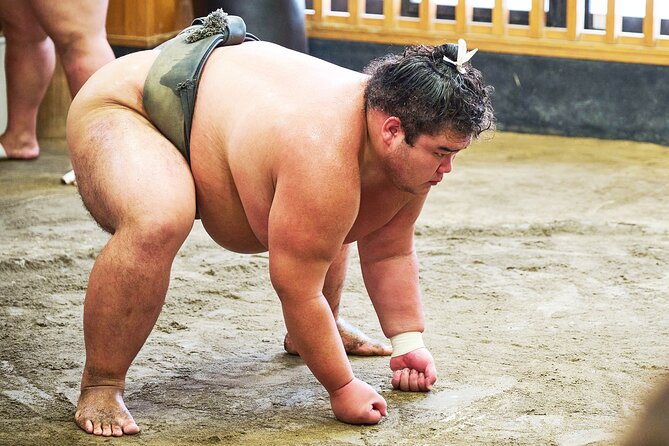
Because the itinerary is built around one main stop, it can help to think of it in stages.
First, your guide takes you to the stable for the observation portion. This is where the access matters. You are not just strolling up to a street corner and hoping to peek in. You are joining a guided visit designed to let you watch inside a working environment.
Then comes the core: watching the training. This is not an action-packed tour with constant movement. It is more like settling in, watching carefully, and learning as things happen. The time frame is about 1 hour 30 minutes for the training segment, and the full tour is around 2 hours including the rest of the flow.
Finally, you get time for photos with sumo wrestlers. That is a big highlight for most people, because it turns observation into something you can share. Just keep your expectations realistic. Even with photo access, this is still a training setting, so you should be ready for a quiet, respectful vibe.
Inside the Stable: What the Guide Helps You Notice
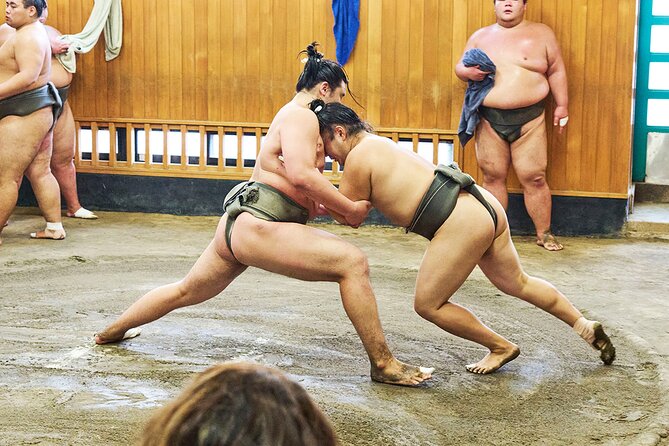
This is where your expectations should shift from entertainment to understanding.
Your guide provides commentary throughout, including explanations of sumo rules, rituals, and traditions. That means you are not relying on random guesses. You are getting context in the moment, which is when it clicks best.
In one guided experience, the group had a special workaround for questions. Since no one is allowed to speak during the training, the guide set up a WhatsApp group so participants could ask questions without disrupting practice. That is a smart and very practical solution. It also changes how you can engage. Instead of trying to blurt things out in the moment, you can jot questions down mentally, then ask through the group.
Photo Time: Getting the Shot Without Getting in the Way
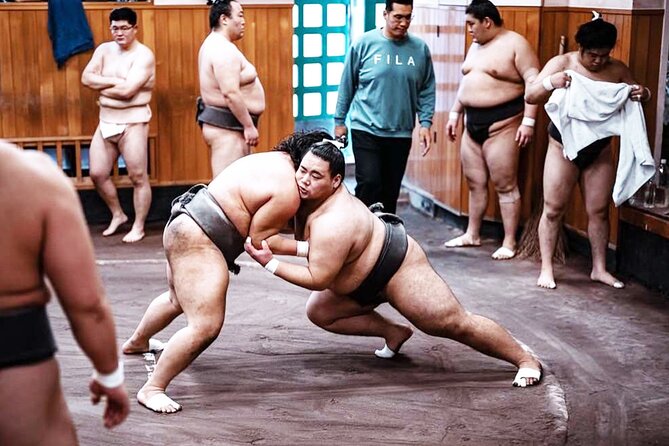
Photo opportunities are one of the most clearly stated highlights, and they make sense. Seeing wrestlers in training is memorable, and photos help you remember details later.
But here is the real advice: treat it like a privilege, not a right. You are in a working space, and you are being invited in. Keep your posture calm, your phone ready, and your movements controlled. If the guide sets a time for photos, follow that signal. If there is limited time, do not linger, review settings endlessly, or block others.
If you want better photos, arrive with your camera basics already set. In the stable, you are not likely to have time for a lot of trial and error.
Time, Group Size, and Why It Matters for Comfort
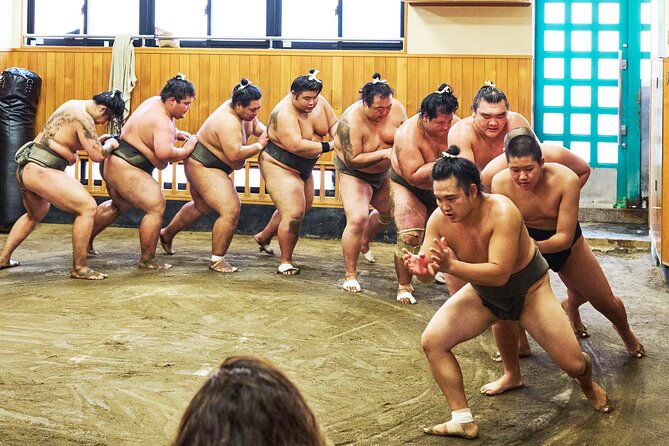
The group size is capped at 50 travelers. That is not tiny, but it is also not a huge crowd. In a setting where you may need to move carefully and stay quiet, a larger group can feel chaotic fast. A cap like this helps keep the experience orderly.
The early start is also part of the comfort equation. You are choosing morning training, which means you trade late sleeping for a closer, more authentic feel. For people who like structured tours, this pacing works well: meet, observe, learn, photo moment, then you are done.
If you are the type who gets anxious in unfamiliar places, this experience is still a good fit because the guide meets you at a clear location, and the tour ends where you started.
Price and Value: Is $118.92 a Fair Deal?
At $118.92 per person, this is not a cheap activity. So the question is value, not just cost.
For the price, you are getting:
- access to a real training stable, which is the core value you cannot easily recreate on your own
- guided commentary that explains what you are seeing
- a chance to take photos with sumo wrestlers
- an experience length that fits into a morning window
If you have only seen sumo in arenas or tourist-focused settings, the stable access alone can justify the spending. This is not just information. It is a rare behind-the-scenes window into how wrestlers train. Also, the tour includes an admission ticket with no extra admission cost listed, which helps keep the total feeling straightforward.
That said, if you are mainly in Tokyo for nightlife or you hate early mornings, the price will feel harsher. You are paying partly for an experience that requires you to show up early and behave quietly.
Who Should Book This Sumo Morning Practice Tour?
This tour is a great fit if you:
- want a more authentic side of sumo beyond a match day
- like learning with a guide rather than trying to figure everything out alone
- care about seeing athletes in training and not just in a ring with a performance setup
- would enjoy a photo moment that feels connected to the real setting
It is also ideal for first-timers to sumo culture. Your guide explains the rules and traditions, which helps you understand the basics quickly. And because the tour is near public transportation, you are not signing up for a complicated private-transfer day.
If you do not like being quiet in a shared setting, you may find the no-speaking training portion a bit limiting. But that quiet is exactly what makes the experience feel genuine.
Should You Book It?
If you are the kind of person who prefers real routines over staged shows, I think you should book this. The combination of working stable access, guided explanations, and photo opportunities is the right blend for a first Tokyo sumo experience.
Skip it only if you strongly dislike early mornings or you are hoping for a high-energy, talk-everywhere walking tour. This is calmer. You will learn by watching and listening, and you will get your moments at the right times.
FAQ
What time does the Tokyo sumo morning practice tour start?
The start time is 8:30 am.
How long does the tour last?
The tour lasts about 2 hours.
Where is the meeting point?
Meet at Kiyosumi-shirakawa Sta. 1-chōme-6-13 Shirakawa, Koto City, Tokyo 135-0021, Japan.
Will I have to arrange transportation to the start point?
It is described as near public transportation, so you should be able to reach the meeting area easily by transit.
Do I get a ticket on my phone?
Yes, the experience offers a mobile ticket.
Can I take photos with the sumo wrestlers?
Yes, the experience includes an opportunity to take photos with sumo wrestlers.
Will the guide explain sumo rules and traditions during the visit?
Yes. The guide explains sumo rules, rituals, and traditions while you observe training.
How many people are in the group?
The tour has a maximum of 50 travelers.
What is the cancellation policy?
You can cancel for free up to 24 hours in advance of the experience start time for a full refund.
Will I be able to ask questions during the training?
The training is quiet, and the experience includes guided commentary. In at least one guided experience, the guide used a WhatsApp group so you could ask questions without speaking during training.
Practice Rooms and Show Nights


Newest Tokyo write-ups from the Loving Japan desk
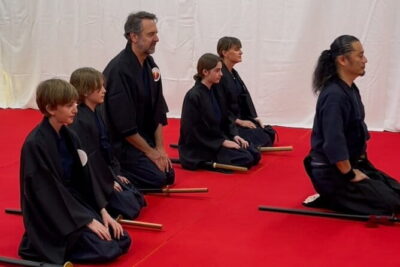

Sumo Wrestling Experiences, side by side.
 ★ 4.8Sumo Show Experience with Chicken Hot Pot and a PhotoFrom $1036,678 reviews
 ★ 4.8Sumo Show and Dining ExperienceFrom $792,742 reviews
 ★ 5.0the SUMO showFrom $891,960 reviews
 ★ 5.0Tokyo Shinjuku Sumo Show & Experience with PhotoFrom $791,750 reviews
 ★ 4.8Sumo Show and Experience in ShinjukuFrom $691,001 reviews
 ★ 4.6Sumo Tournament Tour with Chair Seat TicketsFrom $141753 reviews
 ★ 4.5Sumo Show & Experience w/ Optional Kimono & Hot PotFrom $77609 reviews
 ★ 5.0Authentic Sumo Experience in Tokyo: Enter the SanctuaryFrom $171603 reviews
Filed on these lists too