
REVIEW · SUMO WRESTLING EXPERIENCES
Tokyo Sumo Morning Training/ Sumo Practice with Wrestlers
Sumo practice in Tokyo feels oddly personal. I love that you get rare access to a stable early in the day, then a guide helps you make sense of what you are seeing. I also like the small but memorable touch of a photo with a sumo wrestler at the end. The main drawback to plan for is that this is not a guaranteed top-star show, the schedule and who is training can vary by day.
What makes this tour work is the mix of hands-on explanation and strict etiquette. You learn why the routine looks the way it does, then you watch the wrestlers move with that calm intensity that only shows up when you are close enough to hear the effort. One thing to be ready for: seating is sometimes on the floor, and the practice day can be cold, especially while waiting outdoors before you enter.
If your expectations are that you will watch non-stop full bouts like a tournament highlight reel, you might feel a bit underwhelmed. Think of this instead as a training day window, with moments of action inside a larger culture of discipline, warmups, and respect.
In This Review
- Key Points You’ll Care About
- Entering the Stable: Why This Morning Practice Feels Different
- Tokyo Schedule Reality: How the Timing Typically Plays Out
- Stop 1 Orientation: The Quick Briefing That Changes What You Notice
- Stop 2 Inside the Stable: Quiet Watching With Real Structure
- Stable Etiquette: The Rules That Keep It Respectful and Smooth
- Women and the Dohyō: What’s Included, What’s Restricted
- Shoes, Clothing, and What to Wear for a Sumo Morning
- The Price Question: Is $99.10 Worth It?
- Best for Sumo Fans, Culture Seekers, and Patient Watchers
- What I’d Watch For on Arrival
- Should You Book This Tokyo Sumo Morning Practice Tour?
- FAQ
- How long is the Tokyo sumo morning training experience?
- Where does the tour meet and where does it end?
- Does the schedule or meeting time ever change?
- Is admission to the stable included?
- Can I eat during the visit?
- Are phones allowed, and can I record video?
- Can women enter the dohyō (sumo ring)?
- Do men need to remove shoes?
- Can I leave the stable during the practice?
- What should I do if I don’t get my meeting details?
Key Points You’ll Care About
- Stable access in Tokyo, not just a distant viewpoint or a museum-style intro
- Guide explanation throughout, with clear context for what grips, rituals, and routines mean
- Up-close viewing rules that protect the wrestlers focus, including quiet behavior and no flashes
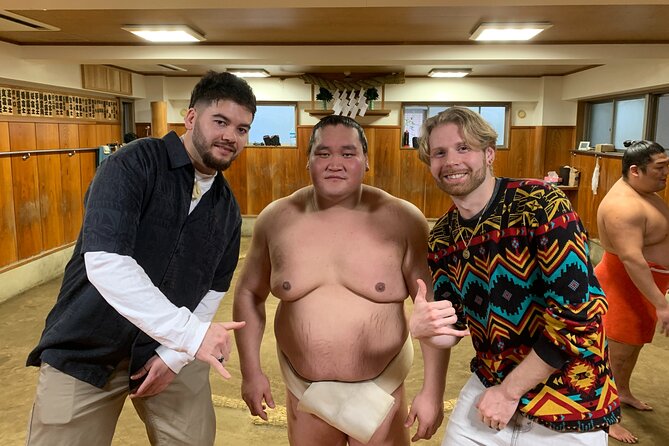
- Photo included with a sumo wrestler, so you leave with more than memories
- Women can join, but dohyō entry is restricted, with designated seating areas instead
- Timing varies with the stable schedule, and it can be shorter around grand tournaments
Morning practice or an evening show. Both reviewed
- Tokyo: Sumo Show and Dining Experience
★ 4.8 · 2,742 reviews - the SUMO show
★ 5.0 · 1,960 reviews - Tokyo Shinjuku Sumo Show & Experience with Photo
★ 5.0 · 1,750 reviews - Tokyo: Sumo Show and Experience in Shinjuku
★ 4.8 · 1,001 reviews
Entering the Stable: Why This Morning Practice Feels Different
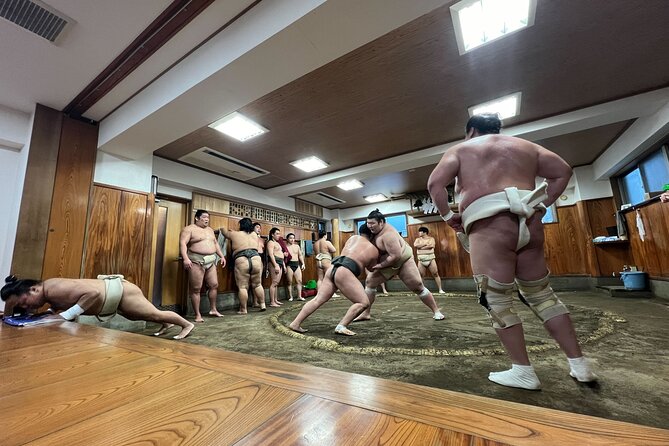
Sumo is easy to watch on TV. It is much harder to understand until you see how it is practiced. This tour gives you that missing piece by getting you into a stable setting where training is not a performance, it is a job.
You start the experience with a short orientation and then move into the stable where the routine is already underway. The best part is that the guide does not just lecture from afar. You can ask questions along the way, and the explanations tend to match what you are seeing at that exact moment.
Also, this is not a large spectacle. The group size is capped at 25 travelers, which matters. Smaller groups usually mean you can actually watch without constant jostling, and the guide can answer practical questions instead of rushing through a script.
Tokyo Schedule Reality: How the Timing Typically Plays Out
This tour runs about 1 hour total, with two clear phases. The early part is a brief meeting and explanation, then you head to the stable. The stable viewing portion is the longer stretch where you sit, watch, and learn.
A key detail that keeps you from getting surprised: the morning practice time and location can vary by tour date. After you book, you receive the specific meeting point and time. If you do not hear anything, you are told to contact Japan Wonder Travel.
Plan like a grown-up about time. If you arrive late or miss the meeting point, you cannot expect compensation or a refund. Sumo stables run on tight routines, and the experience is designed around arriving before the session gets going.
And yes, the stable practice can be slightly shorter or longer than expected. If a Grand Tournament is coming up, the schedule may shift, and the tour duration can end up shorter than the “about 1 hour” estimate.
Stop 1 Orientation: The Quick Briefing That Changes What You Notice
The first stop is essentially your setup. You meet your guide and get an explanation about sumo before you go to the stable. Even if it feels fast, this step pays off once you are inside, because you start recognizing what the wrestlers are doing, not just watching body movement.
From what you can expect on the ground, the briefing is short, around 5 minutes, then you move on. One practical tip: use the restroom before arriving at the meeting point. Inside the stable, the rules are strict and you do not want to scramble mid-session.
If you are an early-morning type, great. If not, this is still worth doing. You will get more from the practice when you have even a basic map in your head, like what training is meant to strengthen and why the warmups matter.
- Mt Fuji and Hakone 1-Day Bus Tour Return by Bullet Train★ 5.0 · 26,383 reviews
- 1-Day Tokyo Bus Tour★ 5.0 · 14,250 reviews
- Tokyo: teamLab Planets TOKYO Digital Art Museum Entry Ticket★ 4.6 · 9,779 reviews
- Mt Fuji & Hakone Cruise, Drum Show Bullet Train 1 Day from Tokyo★ 4.0 · 7,413 reviews
- Tokyo: Shinjuku Food Tour (13 Dishes at 4 Local Eateries)★ 5.0 · 6,603 reviews
Stop 2 Inside the Stable: Quiet Watching With Real Structure
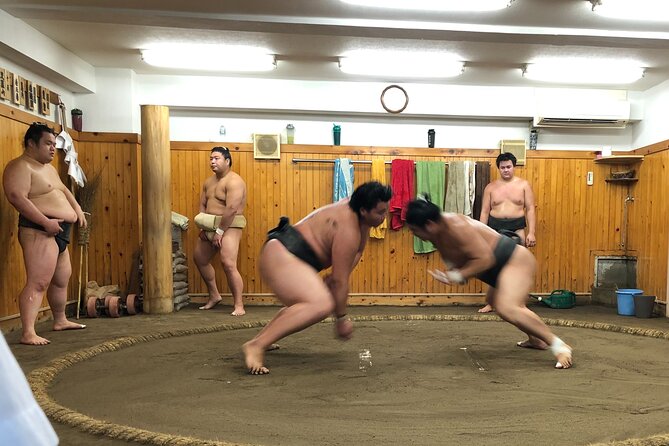
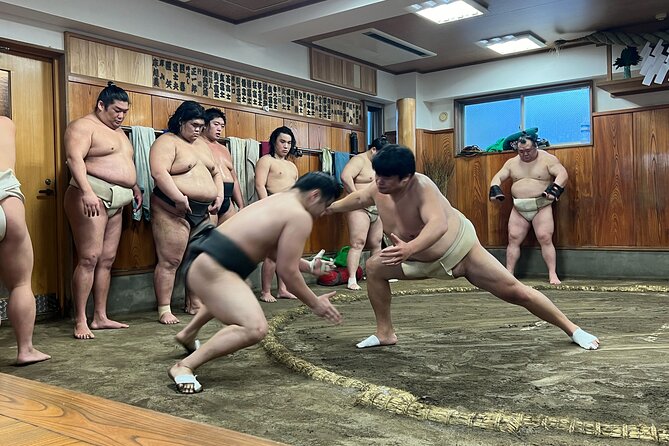
Once you enter the stable, the real experience begins. This is where you watch the wrestlers go through their daily routine, up close. You do not get to wander. You are expected to watch quietly and respectfully until the end of the practice.
Two things define this stage. First, there is the actual training. You will likely see warmups and practice patterns, and you may notice how focused the wrestlers are on precision and rhythm. Multiple reviews highlight the intensity and the feeling of precision strength and dedication.
Second, there is the guide guidance. Some visitors specifically mentioned English commentary via headset, which is especially helpful here because the stable environment is not a classroom. You need the explanation, not just the view.
A word on expectations: several people felt the commentary was heavy or felt like there was limited “sumo action.” That does not mean the tour is broken, it means the experience is built for education and observation. This is sumo training, not a wrestling show.
Stable Etiquette: The Rules That Keep It Respectful and Smooth
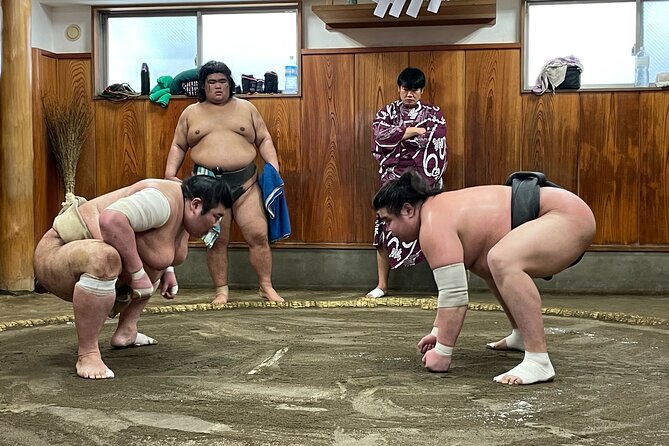
The stable has rules for good reason. They protect the wrestlers concentration and keep the space calm. If you follow them, the experience tends to flow better for everyone.
Here is what you should remember:
- No eating. Water and sports drinks are allowed.
- Phones must be on silent.
- No flash. Photos are allowed, but without flash or shutter sounds.
- No videos.
- You cannot stretch your legs toward the ring. Showing the soles of your feet is considered impolite.
- Do not interfere with the wrestlers focus. Keep your body still and your gaze where it belongs.
Also, a practical comfort point: some stables may not have chairs. You might have to sit on the floor for the viewing time, so wear something you can tolerate for a while.
And there is a hard boundary: you cannot leave the stable in the middle of practice. Once you exit, you cannot re-enter. If you think you need a quick break, it is better to address it before the session starts.
Women and the Dohyō: What’s Included, What’s Restricted
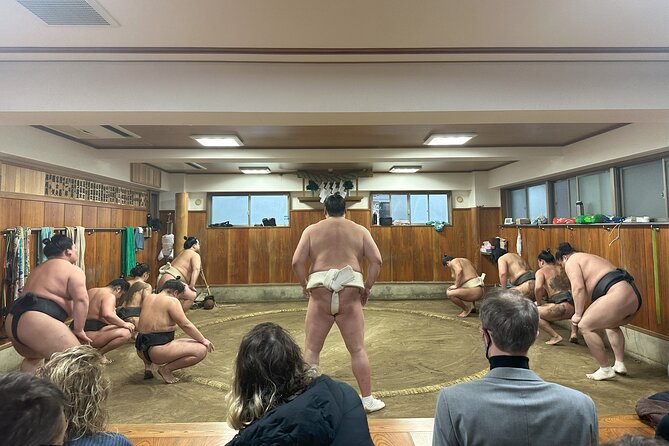
This matters more than people expect. The tour allows women to participate, but there is a cultural and religious restriction at this facility. Women are not permitted to enter the dohyō (sumo ring).
That said, women are not sent away from the experience. They can fully participate from designated seating areas. So you still get the stable access, the viewing, the guide explanations, and the training context. You just do not step onto the ring area.
If you are traveling as a group and want fairness in planning, make sure everyone understands this rule ahead of time. It helps you avoid disappointment on arrival.
Shoes, Clothing, and What to Wear for a Sumo Morning
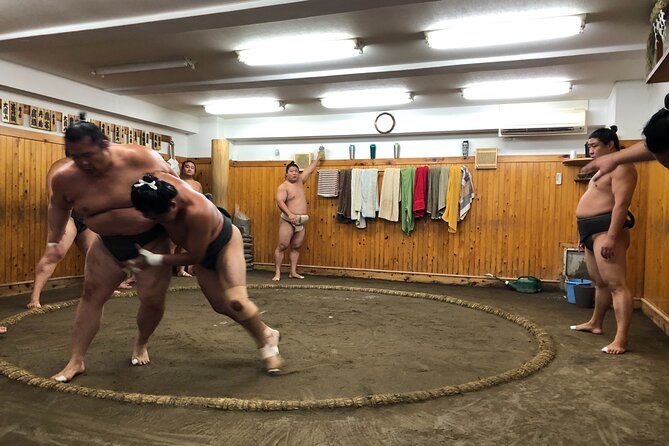
The stable has one more rule that affects everyone: men must remove their shoes before stepping onto the dohyō. Even if you are not on the ring yourself, you will still be navigating a space with footwear restrictions, so it is smart to wear clothing that is easy to keep on and easy to sit in.
Come in comfortable clothes, and expect floor seating. Reviews mention sitting cross-legged for extended periods can be a challenge, especially in colder months. If you hate stiff posture after 30 minutes, bring a cushion if allowed by the tour rules at the time of entry, or at least wear something supportive underneath.
Also, cellphones and recording restrictions are real. If your instinct is to film everything, you will need to switch that habit off. The experience is built around watching, not documenting.
The Price Question: Is $99.10 Worth It?
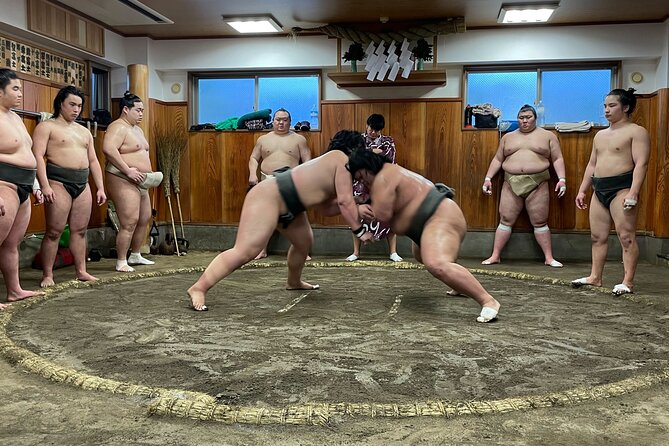
For many Tokyo experiences, the price is the question. Here, the value depends on what kind of sumo you want.
At about $99.10 per person for roughly 1 hour, you are paying for:
- Access to a real stable setting in Tokyo
- A guide who explains what you are seeing
- Up-close observation with strict, respectful logistics
- A photo with a sumo wrestler as a souvenir
If you are mainly chasing the spectacle of tournament bouts, you may feel this is expensive for what looks like limited action. That complaint shows up in a few low-rated comments, and it usually comes from expecting more ring combat and less interpretation.
If you are interested in how wrestlers actually train, and you like learning the why behind the movements, this is a fair price. You are buying context and proximity, not tickets to a public wrestling match.
One more value factor: the stable is described as one where a Yokozuna trains, but you are not guaranteed he will be there. That uncertainty can be a plus or a minus. If he is present, it feels like a lottery win. If not, you still get daily training, which is the point of sumo as a craft.
Best for Sumo Fans, Culture Seekers, and Patient Watchers
This tour is a strong fit if you:
- Want to see sumo training in a stable, not just photos or highlights
- Like learning in real time from a guide
- Can handle quiet rules and waiting a bit outdoors
- Enjoy Japanese discipline and etiquette as much as the sport itself
It is less ideal if:
- You want a constant stream of action like a match
- You get restless when sitting still on the floor
- You are very sensitive to cold mornings, since waiting outdoors can happen
Also, if your trip is built around exact timing, remember practice schedules can shift. The short duration is a benefit if you are efficient, but it is also why delays or changes can feel more noticeable.
What I’d Watch For on Arrival
When you arrive, treat it like a ceremony. Read the room. Follow the guide’s cues. Keep your posture respectful. The stable environment has a rhythm, and you are part of it.
To maximize your experience:
- Bring warm layers for the wait outside in winter months
- Keep your phone muted and out of the way
- Mentally prepare to sit on the floor if chairs are not provided
- Use the guide time to ask questions that match what you are seeing right now
If you are the kind of person who enjoys noticing details, this is where you’ll shine. You start seeing sumo as training systems, not just big men colliding.
Should You Book This Tokyo Sumo Morning Practice Tour?
Book it if you want an authentic stable-style sumo experience with a guide, quiet etiquette, and a real photo souvenir. This is best for people who enjoy the daily grind of elite athletes and who appreciate culture and routine as much as action.
Skip it if you need a guaranteed top-star appearance, or if you are shopping for a show with non-stop matches. Also skip if you cannot sit still and keep your phone quiet for about an hour, plus any waiting time before entry.
If you do book, go in with the right mindset. You are not here for entertainment. You are here for training, tradition, and a close-up look at how sumo is built.
FAQ
How long is the Tokyo sumo morning training experience?
The experience lasts about 1 hour (approx.), with a short orientation period and then about 55 minutes watching the practice at the stable.
Where does the tour meet and where does it end?
The meeting point is 1-chōme-2-8 Chitose, Sumida City, Tokyo 130-0025, Japan. The activity ends back at the meeting point.
Does the schedule or meeting time ever change?
Yes. The location and time of the morning sumo practice may vary depending on the tour date. After booking, specific meeting point and time details are sent to you.
Is admission to the stable included?
The itinerary lists the stable admission ticket as free, and the tour includes entry to the sumo training area.
Can I eat during the visit?
Eating is not allowed inside the stable. Water and sports drinks are allowed.
Are phones allowed, and can I record video?
Cellphones must be on silent. Photos are allowed without flash or shutter sounds, but videos are not allowed.
Can women enter the dohyō (sumo ring)?
Women are welcome to join, but female participants are not permitted to enter the dohyō. Women can participate from designated seating areas.
Do men need to remove shoes?
Yes. Men must remove their shoes before stepping onto the dohyo (sumo ring).
Can I leave the stable during the practice?
No. You cannot leave the sumo stable in the middle of the practice, and once you leave you cannot re-enter.
What should I do if I don’t get my meeting details?
If you do not receive a message from Japan Wonder Travel with the meeting point and time, you should contact them.
Practice Rooms and Show Nights


Newest Tokyo write-ups from the Loving Japan desk


Sumo Wrestling Experiences, side by side.
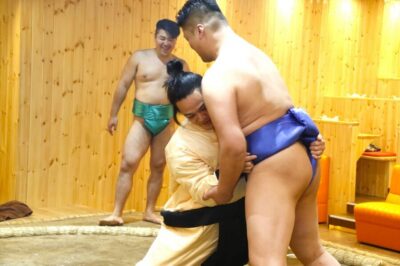 ★ 4.8Sumo Show Experience with Chicken Hot Pot and a PhotoFrom $1036,678 reviews
 ★ 4.8Sumo Show and Dining ExperienceFrom $792,742 reviews
 ★ 5.0the SUMO showFrom $891,960 reviews
 ★ 5.0Tokyo Shinjuku Sumo Show & Experience with PhotoFrom $791,750 reviews
 ★ 4.8Sumo Show and Experience in ShinjukuFrom $691,001 reviews
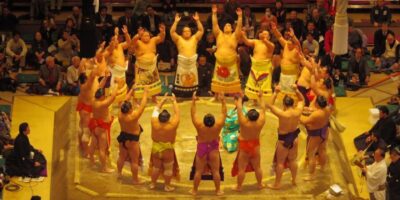 ★ 4.6Sumo Tournament Tour with Chair Seat TicketsFrom $141753 reviews
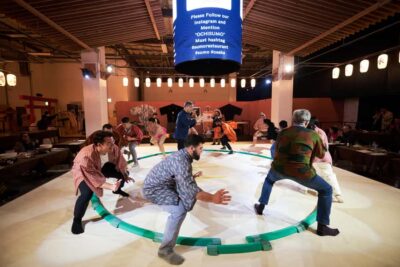 ★ 4.5Sumo Show & Experience w/ Optional Kimono & Hot PotFrom $77609 reviews
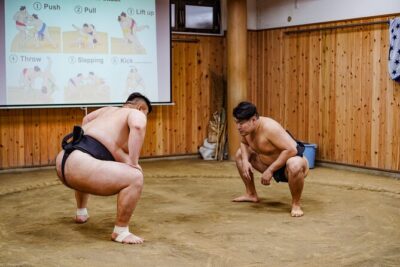 ★ 5.0Authentic Sumo Experience in Tokyo: Enter the SanctuaryFrom $171603 reviews
Filed on these lists too