
REVIEW · ASAKUSA, SENSO-JI AND TOKYO SKYTREE
Tokyo: Winter Kimono Experience in Asakusa
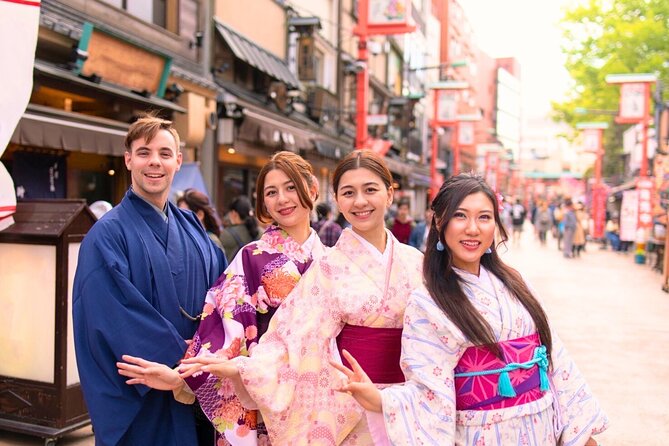
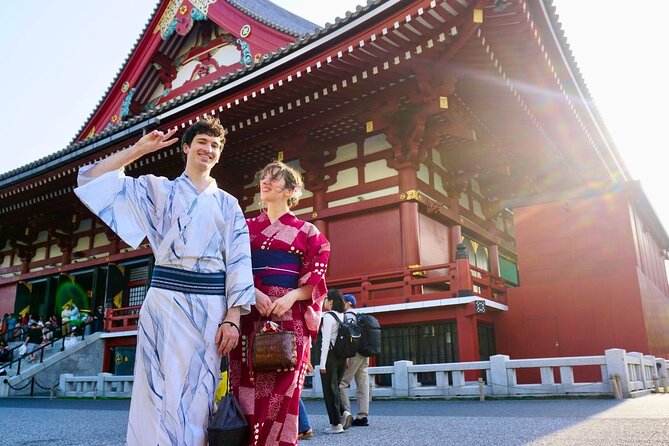
Kimono day in Asakusa feels like time travel. This winter kimono experience puts you in a real garment, then sends you walking through the big Senso-ji sights, including Kaminarimon and the Nakamise shopping lane. It is built for photos, but it also gives you actual time to explore at your own pace.
I love the pro dressing help. Kazune, who grew up in Asakusa, walks you through wearing it comfortably and looking right, and other staff are described as Japanese National Certified Kimono Dresser level. I also love the photo-minded approach, with on-site recommendations and hands-on help so you get more than random selfies.
One possible drawback: finding the shop can be tricky even though it is only a short walk from Senso-ji. Arrive at least 10 minutes early, and use the exact meeting address so you do not waste your prime dressed time hunting doors.
In This Review
- Key things you should know before you go
- Winter Kimono in Asakusa, a short walk to Senso-ji
- Meet Kazune at the shop and get dressed the right way
- Choosing your winter kimono styles, colors, and belts
- Walking Kaminarimon and Nakamise in your kimono
- Senso-ji Temple routes: gates, halls, and side spots
- Photo help you can actually use, plus a souvenir keepsake
- Timing, return deadline, and how not to feel rushed
- Price and value for a winter kimono, max 5 people
- Who should book this (and who might want to skip)
- Practical tips so your kimono time stays stress-free
- Should you book the Tokyo winter kimono experience in Asakusa?
- FAQ
- Where is the kimono shop meeting point?
- How close is the shop to Senso-ji Temple?
- What time should I arrive before my booking?
- Is there a time limit for returning the kimono?
- What is included in the photo experience?
- What is the group size?
- Is a mobile ticket used?
Key things you should know before you go
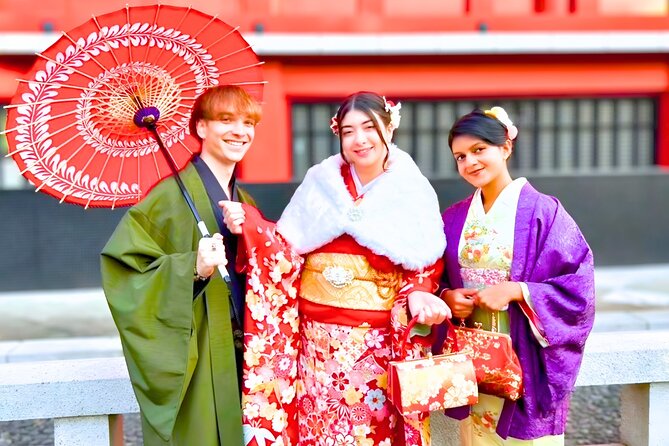
- Kazune and certified dressers help you put the kimono on correctly, so you do not fight the fit.
- Winter-appropriate look means you can enjoy Asakusa in kimono style even in colder months.
- You roam Senso-ji area landmarks around gates and approach streets, not just a quick photo stop.
- Photo spot guidance and a souvenir photo help you come away with real keepsakes.
- Small group size (max 5) keeps the experience more personal and less chaotic.
Still on the Sumida side? A few more Asakusa options
- Tokyo: Japanese Dance Cabaret Theater Asakusa-Kaguwa Ticket
★ 4.8 · 2,270 reviews - Tokyo: Meiji Shrine, Asakusa, Skytree Bus Tour and Cruise
★ 4.7 · 1,986 reviews - Tokyo: Roll and Authentic Sushi Making Class in Asakusa
★ 4.9 · 1,957 reviews - Tokyo: Asakusa Walking Tour with Sensoji Temple Visit
★ 4.8 · 1,583 reviews
Winter Kimono in Asakusa, a short walk to Senso-ji
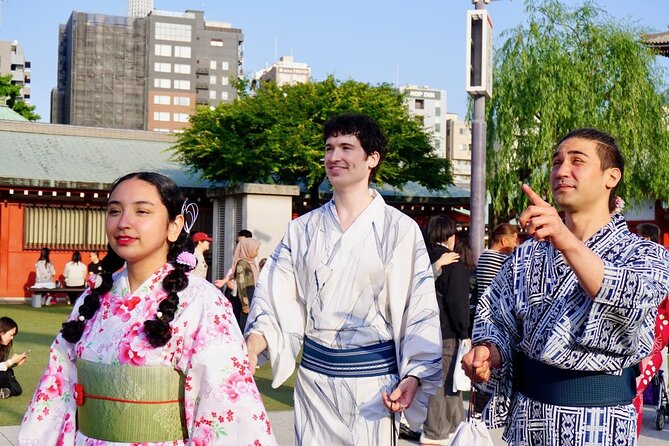
Asakusa is one of Tokyo’s easiest neighborhoods to enjoy slowly, and wearing a kimono turns that slow pace into something memorable. The best part is the location logic: you meet at a kimono shop just a 3-minute walk from Senso-ji Temple, right near the Kaminarimon gate area.
This is also the right kind of activity for winter. You are not dealing with a light costume that makes cold weather feel worse. Instead, you get to experience the season in traditional style while still walking around a place that already feels like a postcard.
Meet Kazune at the shop and get dressed the right way
Your day starts at the kimono shop in Asakusa, and the tone is friendly and practical. Kazune, who grew up in Asakusa, is specifically mentioned as the person who helps you dress correctly, checking fit and comfort so you can move and pose without constantly adjusting your clothing.
The team also includes staff described as Japanese National Certified Kimono Dresser, which matters because a kimono fit is not just about looking pretty. If the sleeves sit oddly, the belt is too loose, or the layers are off, your whole experience gets annoying fast. Professional help saves time and prevents the end-of-day frustration of realizing you spent half your outing pulling at the outfit.
One small tip that helps: show up at least 10 minutes before your booking time. The shop needs that buffer to prepare you properly, especially when multiple people are being dressed around similar times. And if you are coming with friends, it can help to arrive together so nobody gets stuck waiting in regular clothes.
Choosing your winter kimono styles, colors, and belts
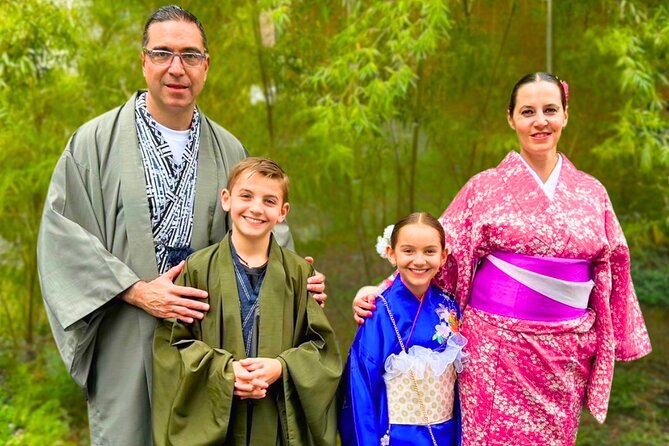
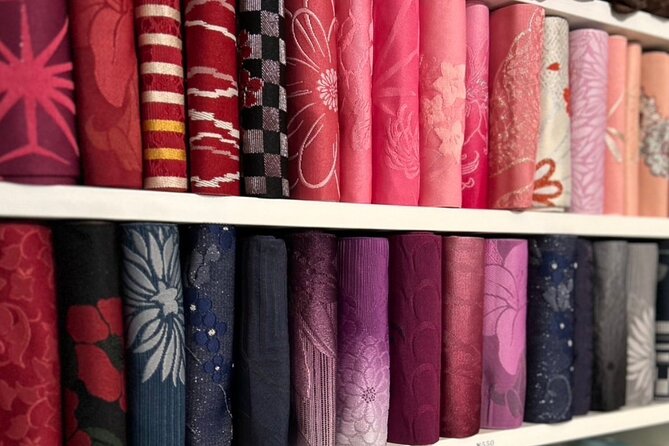
At the shop, you choose from a collection of real kimonos. The experience is flexible in a way I really appreciate: you can pick different style options, rather than being assigned one look and hoping it works for your photos.
In past feedback, people highlighted the big variety of colors and belts, which is more important than it sounds. Belts and styling choices can change the whole vibe of your photos, from soft and classic to bold and festive. If you care about pictures with specific color tones, this is where you get control.
You will also get guidance on how the outfit should sit on your body. Comfort matters here, because you are going to walk through busy shrine and temple lanes in Japan’s winter air.
Rental shops we have actually walked into
- Let’s make kimono !(Kimono is a gift for you★ 5.0 · 252 reviews
- Tokyo: Matcha and Kimono Experience★ 4.7 · 219 reviews
- Tokyo: Asakusa Kimono Dressing and Matcha Experience★ 4.9 · 173 reviews
- Asakusa: Kimono Tea Ceremony with Matcha and Sweet★ 4.9 · 153 reviews
- Matcha Kimono Tea Ceremony in Tokyo★ 5.0 · 104 reviews
Walking Kaminarimon and Nakamise in your kimono
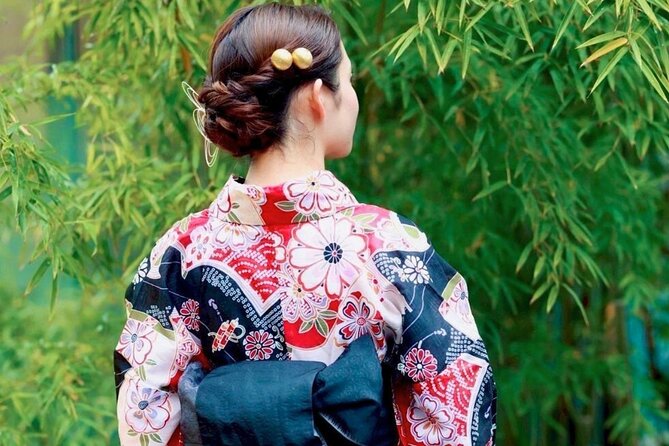
Once you are dressed, you start moving through the Asakusa approach areas. The first named stop is Kaminarimon Gate, the iconic red lantern entrance that most people recognize even if they have never been to Tokyo before. In kimono, that gate photo reads instantly as “this is really Japan,” not just a costume shot.
From there, you head toward Nakamise Shopping Street at the Kaminarimon side. This is one of Tokyo’s best-known snack and souvenir streets, and wearing a kimono here makes the whole experience feel less like shopping and more like wandering.
One practical note: Nakamise gets busy, so give yourself room. If you want clean photos, plan to step slightly aside when crowds crest and pose more between waves. Your kimono dressing also means you might move a little slower than you would normally, so you will enjoy the slower pace more than trying to rush through.
Senso-ji Temple routes: gates, halls, and side spots
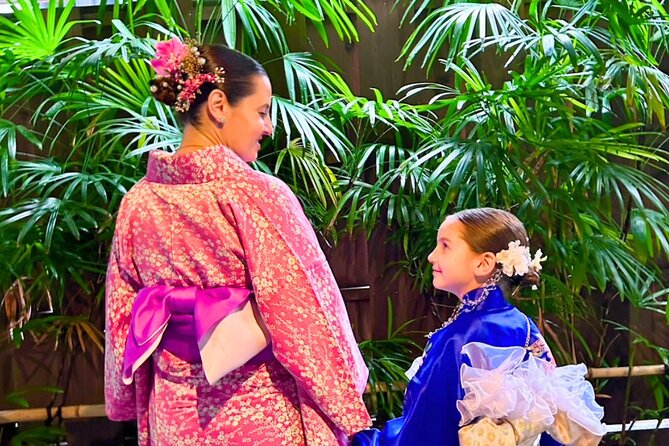
The main event is the Senso-ji complex. The itinerary includes a string of key landmarks that help you cover the area without turning this into a map-and-memorize project.
You will pass through or near major points like:
- Senso-ji Temple itself
- Asakusa Shrine
- Hozomon (a major gate hall area)
- Senso-ji Yogodo and Senso-ji Shinokuyama
- Nitemmon gate
You also walk past Azumabashi Bridge and the Asakusa Culture Tourist Information Center along the way. Those stops are helpful because they break up the dense temple lanes. They also give you spots where the background changes, which is how you end up with a set of photos that looks like a real mini journey instead of ten nearly identical temple shots.
What I like about this kind of routing is that it naturally buffers you against indecision. Instead of spending your time staring at your phone wondering where to go, you follow a prepared path and still get free time to explore at your own pace.
If you want to do temple photos responsibly, keep a little distance from worshippers and staff. Also, remember you are in a working religious site, not a theme park photo set.
Photo help you can actually use, plus a souvenir keepsake
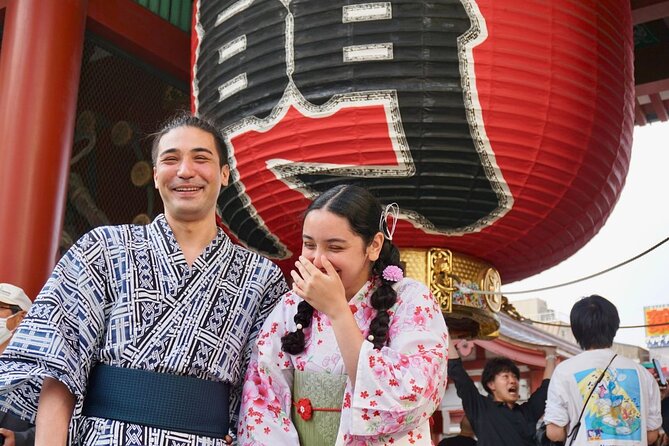
This experience is openly photo-focused, and it has two practical ingredients: on-site photo spot recommendations and help from the staff while you walk and stop.
The itinerary is built around recognizable points where photos make sense, but the staff recommendations are what help you avoid wasting time at places that do not photograph well for your height or your outfit. In past experiences, people also mentioned that staff members took pictures and even helped with videos. That is valuable, because it solves the classic kimono problem: you want more than one person in your photos, but you do not want to play photographer the whole day.
The overview also notes a souvenir photo included with the experience. Even if you still plan to take plenty of your own shots, having a provided keepsake is one less thing to worry about.
Timing, return deadline, and how not to feel rushed
This is a 1-day experience. The exact number of hours is not spelled out, but you can expect a sequence: shop check-in, dressing, then walking and exploring through the Asakusa and Senso-ji area with breaks to take photos.
One timing rule matters a lot for planning: you must return the kimono to the shop by 17:30 the same day. If you want more time in the outfit, the shop says you can return it the next day for a small extra fee arranged directly at the shop.
If you are trying to fit other Asakusa plans on the same day, map them backward from 17:30. Winter light fades early in Tokyo, and once it gets dark, you might start rushing or feel like you are missing shots you wanted earlier in the evening.
Price and value for a winter kimono, max 5 people
At $31.63 per person, this sits in the “good value if you care about the experience” category. You are not paying just for fabric. You are paying for:
- professional kimono dressing help
- outfit selection from a real collection
- time to roam around top Asakusa landmarks
- photo guidance
- a souvenir photo
- and a small group limit (max 5), which usually means less waiting and more attention from the dressing team
If you were to rent a kimono on your own, you would still need to figure out how to wear it, where to go, and how to get decent photos. This experience removes a lot of guesswork with staff support and a prepared route.
One thing to keep in mind: some people can find meeting instructions confusing in any neighborhood as busy as Asakusa. You reduce that risk by arriving early, using the exact meeting point address, and keeping your phone charged for navigation.
Who should book this (and who might want to skip)
This experience fits best if you:
- want a real kimono fitting with help, not a DIY struggle
- care about photos at famous Asakusa and Senso-ji landmarks
- like guided structure but still want free time to wander
It may not be ideal if you fall outside the provided limits. It is noted as not for:
- people over 210 cm
- people over 160 kg (264 lbs)
- pregnant women
That is worth checking early so you do not end up disappointed.
Also consider group vibe. With a maximum of 5 travelers, it is set up to feel more personal. If you prefer a large group energy, this might feel smaller than you expect, but that can also be why the experience feels smoother.
Practical tips so your kimono time stays stress-free
Here are the small things that make a big difference in Asakusa kimono season.
- Arrive early: plan to be at the shop at least 10 minutes before your time slot.
- Use the exact address: even though the shop is about a 3-minute walk from Senso-ji, doors and lanes can be easy to misread when you are dressed and busy taking pictures.
- Plan your route in layers: you will cover several named Senso-ji stops, so expect a walking day. Comfortable shoes are smart, even if your outfit is traditional.
- Watch your return time: kimono must be returned by 17:30, unless you arrange the next-day return at the shop.
- Treat the photos like a ritual: temple and shrine areas are busy. Step aside when needed, be mindful around worshippers, and you will get better shots without interrupting anyone.
Should you book the Tokyo winter kimono experience in Asakusa?
If your goal is a winter kimono day that includes real dressing help and a guided path through the best-known Asakusa sights, I think you should strongly consider booking. The combination of professionally fitted kimono, recognizable locations like Kaminarimon and the Senso-ji complex, and staff help with photo spots makes it a lot easier to get the pictures you want without turning your trip into a logistics puzzle.
I would only hesitate if you strongly dislike meeting places that require careful navigation, or if you need tons of flexibility to extend the outfit beyond 17:30 without coordinating with the shop. For most people, though, the structured route plus room to roam is the sweet spot.
FAQ
Where is the kimono shop meeting point?
You meet at f.2-chōme-8-10 Kaminarimon, Taito City, Tokyo 111-0034, Japan, and the activity ends back at the meeting point.
How close is the shop to Senso-ji Temple?
The shop is about a 3-minute walk from Senso-ji Temple.
What time should I arrive before my booking?
Please arrive at least 10 minutes before your booking time so the team can prepare everything.
Is there a time limit for returning the kimono?
Yes. You must return the kimono to the shop by 17:30 on the same day. Next-day return is possible for a small extra fee arranged at the shop.
What is included in the photo experience?
You get free time to explore Asakusa and take photos, plus the on-site team can recommend photo spots. A souvenir photo is also included.
What is the group size?
This experience has a maximum of 5 travelers.
Is a mobile ticket used?
Yes, this activity uses a mobile ticket.
Rental Counters, Compared



Asakusa and the Skytree, Keep Going


Newest Tokyo write-ups from the Loving Japan desk
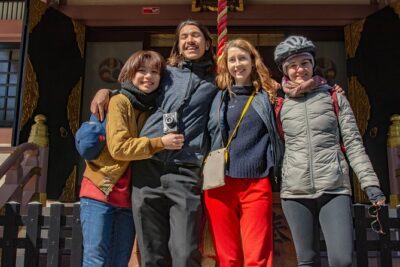
Asakusa, Senso-ji and Tokyo Skytree, side by side.
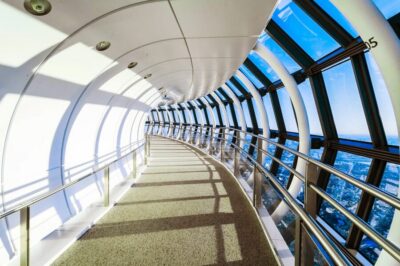 ★ 4.5TOKYO SKYTREE® Admission ticketFrom $1311,192 reviews
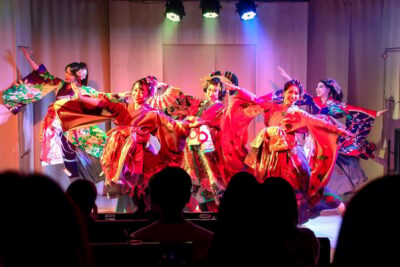 ★ 4.8Japanese Dance Cabaret Theater Asakusa-Kaguwa TicketFrom $492,270 reviews
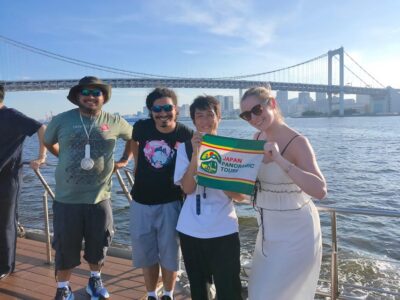 ★ 4.7Meiji Shrine, Asakusa, Skytree Bus Tour and CruiseFrom $1221,986 reviews
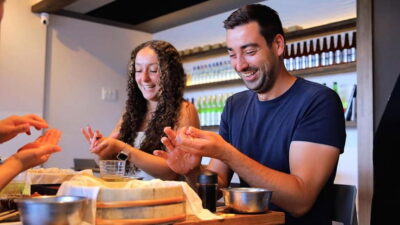 ★ 4.9Roll and Authentic Sushi Making Class in AsakusaFrom $581,957 reviews
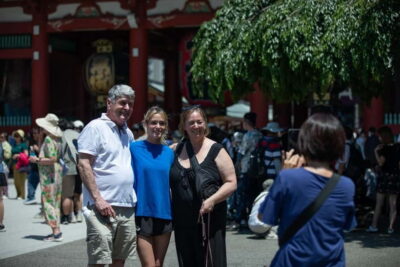 ★ 4.8Asakusa Walking Tour with Sensoji Temple VisitFrom $221,583 reviews
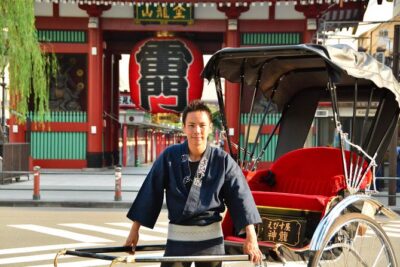 ★ 5.0Tokyo Asakusa Rickshaw TourFrom $421,375 reviews
 ★ 4.5Tokyo Panoramic 1 Day: Meiji Shrine, Asakusa, Odaiba and SKYTREE®From $851,222 reviews
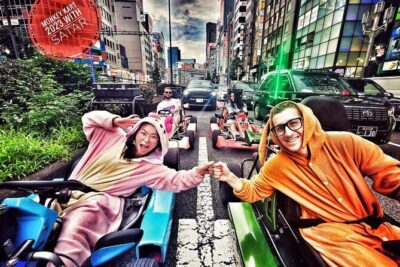 ★ 5.0Tokyo Go Kart: Asakusa, Skytree, and Akihabara **IDP MUST**From $99988 reviews
Filed on these lists too