
REVIEW · SHOW
Traditional Japanese Music show & Experience Tour in Osaka
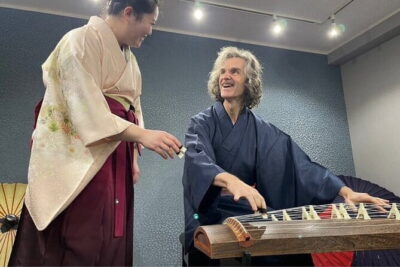
Fingers on shamisen, in Osaka. This Traditional Japanese Music show & Experience tour brings you close to hogaku with a live performance by professional musicians, then hands you the instruments for your own try. It follows a simple rhythm, concert first, practice next, and photos at the end, with the program changing by day.
I love two things most. First, the live instruments sound bigger and clearer when you are not sitting far away. Second, you get a real chance to play, not just watch, since an instrument is provided for your experience time.
One thing to consider: it is only about 60 minutes total, so it is not a long evening concert. If you want hours of music, plan something else after. Also, the exact instrument mix can vary depending on the day.
In This Review
- Key points before you go
- How Hogaku Feels Different When You Are Up Close
- The 60-Minute Flow: Concert, Try Playing, Photos
- Instruments You’ll Meet: Shamisen, Koto, Wadaiko, and More
- Ask Questions Like You Mean It
- Small Group Size Changes Everything
- Photos at the End: Turn Practice Into a Real Keepsake
- Timing in Osaka: Wednesday 11:00 vs Friday 18:30
- Price and Value: What $46.12 Buys You in Real Terms
- Meeting Point in Minamisenba: How to Find It Fast
- Who This Tour Suits Best
- Practical Tips So You Get the Most Out of Your Hour
- Should You Book This Traditional Japanese Music Experience in Osaka?
- FAQ
- How long is the Traditional Japanese Music show and experience tour?
- What traditional instruments can I experience?
- Are photos included?
- Do I need to bring an instrument?
- What is the group size limit?
- Where do I meet for the tour?
- Is private transportation included?
- Is there free cancellation?
- Is the tour wheelchair accessible or can I bring a service animal?
Key points before you go
- A tight 60-minute format: 25 minutes concert, 25 minutes hands-on playing, 10 minutes photos
- Professional musicians, Q and A built in: ask questions as you like
- Instrument time is real: you can handle and play traditional instruments, not just hold them for photos
- Small group, up to 7: closer listening and better attention during practice
- Program varies by day: Wednesday and Friday can feel different
- Mobile ticket: you can keep things simple on the day
Still weighing up options in Osaka? These are the ones our reviewers rated highest.
- Osaka Go Karting Tour with Funny Costume
★ 5.0 · 2,658 reviews - Osaka Castle: Museum and Tower Entry Ticket
★ 4.5 · 2,380 reviews - Osaka: Shinsekai Food Tour with 13-15 Dishes at 5 Eateries
★ 4.8 · 2,204 reviews - Osaka Food Tour: 13 Dishes at 5 Local Eateries
★ 5.0 · 2,149 reviews
How Hogaku Feels Different When You Are Up Close
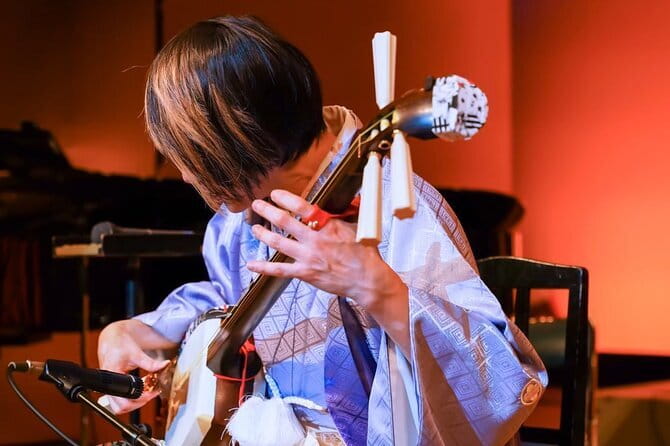
In Osaka, this type of music is not just background. When the shamisen and wadaiko are played nearby, you feel the texture of the sound, not just hear it. That is the whole point of hogaku, and the format is designed so you experience it through listening and action.
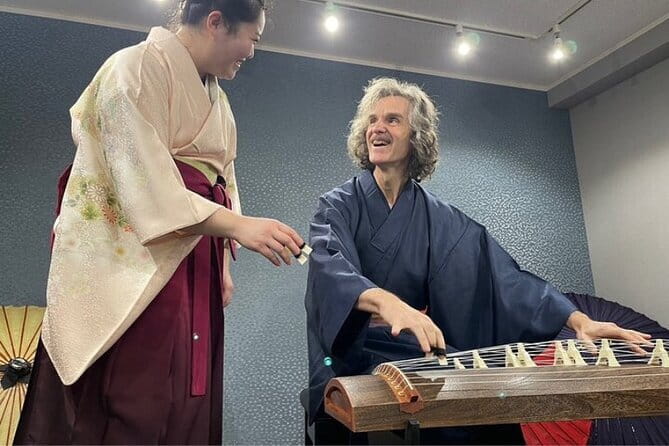
I like that the tour treats you like a participant. You start with a short concert, so you get the musical language in your ears first. Then you switch to doing. That hands-on piece changes how you understand the performance, because you notice details you would miss from the audience seat, like timing, hand position, and how sound responds to small movements.
The setting is also practical. This is not about getting lost in a long schedule. You get a focused hour, back to the meeting point at the end, and you can easily plug it into a day of Osaka sightseeing.
The 60-Minute Flow: Concert, Try Playing, Photos
The schedule is clean and easy to plan around. You will spend about 25 minutes on an authentic Japanese music concert. During that first segment, you can settle in and pay attention to what each instrument is doing. The show covers a variety of traditional instruments, so you are not trapped in one sound world for the whole hour.
Next comes the most fun part for many people, the 25 minutes of trying traditional instruments yourself. This is where the tour earns its keep. You are not paying just for entertainment value. You are paying for a guided, structured practice window where the music stays understandable, not mysterious.
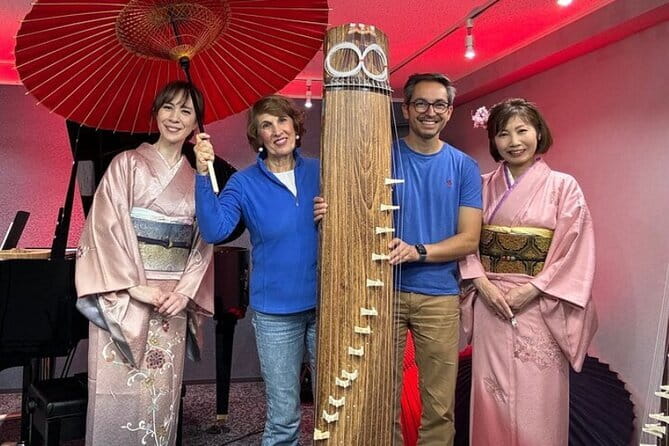
Then you finish with about 10 minutes for photos with the instruments and performers. This is your chance to turn the experience into something you can remember, and it also helps you feel comfortable around the instruments, since you have already spent time with them.
A small practical note: since the concert content can change depending on the day, the flow stays consistent, but what you hear and play may shift.
Instruments You’ll Meet: Shamisen, Koto, Wadaiko, and More
You can expect a mix of classic instruments, including shamisen, koto, and wadaiko. Each one has a different personality. The shamisen is string music with a sharp, expressive bite. The koto feels more fluid and melodic, and it often sounds delicate even when played with power. Then wadaiko brings the rhythm up front, because drums in Japanese music can feel physical, like the beat has weight.
The tour also mentions you will experience additional traditional instruments beyond those three. That matters because it keeps your hour from turning into one repeated lesson. You get comparison. You hear how different timbres and techniques work, and you see how musicians switch roles depending on the piece.
Another reason this instrument variety is valuable: it helps you decide what you want to chase later, if anything. Maybe you love the drum rhythm. Maybe you want to hear more shamisen performances. Even if you do not become an instrument nerd in one hour, you leave with a clearer map of what exists in Japanese traditional music.
- Osaka Go Karting Tour with Funny Costume★ 5.0 · 2,658 reviews
- Osaka Castle: Museum and Tower Entry Ticket★ 4.5 · 2,380 reviews
- Osaka: Shinsekai Food Tour with 13-15 Dishes at 5 Eateries★ 4.8 · 2,204 reviews
- Osaka Food Tour: 13 Dishes at 5 Local Eateries★ 5.0 · 2,149 reviews
- Hungry Osaka Street Food Tour:15 Tastings & 3 Drinks with a Local★ 5.0 · 1,727 reviews
Ask Questions Like You Mean It

One of the best parts of this tour is the chance to ask professional musicians questions. That is not a vague promise. It is baked into the experience, and it is one reason the format works so well in a small group.
With only up to 7 participants, you can actually get answers that fit what you are curious about. If you wonder how a musician prepares, how sound is produced, or what to listen for in a specific instrument, you are more likely to get a useful reply than a rushed one.
If you want to get extra value, go in with one or two questions ready. For example: What makes one style sound different from another? Or, What should beginners focus on first when trying the instrument? You will often learn more from a focused question than from trying to absorb everything at once.
Small Group Size Changes Everything
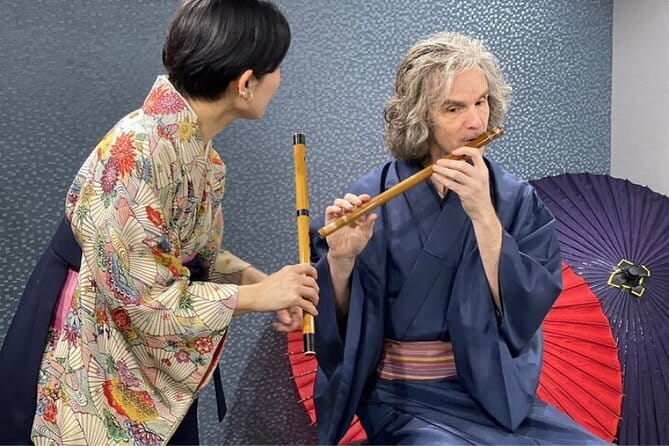
Maximum group size is 7. That might sound like a minor detail, but in a hands-on music setting it matters a lot. It keeps the practice time manageable, and it helps the musicians guide you without losing track of who needs help.
You also get better listening. In larger groups, sound can become chaotic. Here, you can hear the instruments clearly and watch the technique. That is huge with traditional instruments where small hand motion affects tone.
And since the tour is designed for most travelers to participate, you do not need to be a musician to enjoy it. The structure suggests beginners are expected. The key is to stay relaxed during your playing time and follow the guidance you are given.
Photos at the End: Turn Practice Into a Real Keepsake
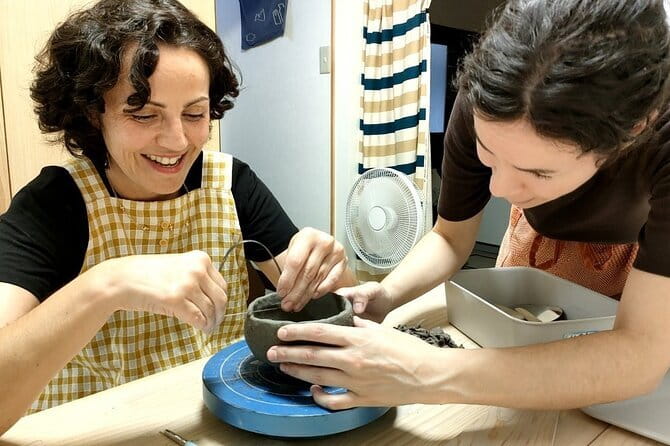
The tour includes photos at the end, about 10 minutes with the instruments and performers. The timing is smart. You have already experienced the instruments, so photos do not feel like a random afterthought. You know what you were trying to do earlier, and that makes the pictures more meaningful.
You can also use the photo time to get a better sense of scale. Some instruments look one way in photos, and another way in person. Holding them helps you understand what you saw in the concert.
Tip: when you take your photos, also take one shot where you can see the instrument body and your hand position. If you come home and share photos, those angles make people appreciate what you actually did.
Timing in Osaka: Wednesday 11:00 vs Friday 18:30
There are two scheduled options listed: Wednesday at 11:00 and Friday at 18:30. Both are short and easy to fit, but they support different travel moods.
The Wednesday 11:00 slot is great if you like a morning start and want something indoor that still feels cultural. You can often pair it with lunch plans nearby after you are done.
The Friday 18:30 slot works well if you want an evening activity before dinner. It is also a good choice if you have done other sightseeing earlier in the day and want a structured stop that gives you a clear return time.
Because the concert content varies by day, you might see different pieces or different instrument emphasis between the two dates. If you are the type who wants variety, consider how your overall schedule fits, then pick the time that makes the most sense.
Price and Value: What $46.12 Buys You in Real Terms

At $46.12 per person, this is not a budget-only snack, but it also is not an all-day premium workshop. The value comes from three things packed into one hour:
1) A live concert by professional musicians
2) Hands-on playing time with traditional instruments
3) Instrument-included experience plus a short photo session
If you tried to do these separately, it would likely cost more or take more time. Here, you get listening, instruction, and participation without needing to book multiple activities.
The mobile ticket also keeps friction low. You do not have to overthink day-of logistics. And since the tour ends back at the meeting point, you can plan your next move without complicated route juggling.
One more value angle: the maximum group size of 7 means the price buys access, not just admission. You are not competing for attention during the practice segment.
Meeting Point in Minamisenba: How to Find It Fast
The meeting point is アルファ 心斎橋3-chōme-5-27 Minamisenba, Chuo Ward, Osaka, 542-0081, Japan. The location is near public transportation, which helps if you are bouncing between spots around Shinsaibashi and Minami.
Because your tour ends back at the meeting point, you can treat it as a fixed anchor in your day. If you are walking around already, this kind of anchor is a lifesaver. You do not have to plan a separate pickup, and you do not need private transportation.
Practical prep: on the day, have your mobile ticket ready. Keep your phone battery charged, since that is how your access is handled.
Who This Tour Suits Best
This is a strong pick if you want culture with hands-on participation. It is also ideal if you have seen plenty of temples and want one activity that feels more personal.
You will likely enjoy it if:
- you like music and want to hear traditional instruments up close
- you want to try playing, even if you are a complete beginner
- you appreciate small group experiences where questions are welcome
- you want a compact plan that takes about an hour
It is less ideal if you are chasing a long-form concert evening. Think of it as a focused sampler plus instruction, not a full-length performance night.
Practical Tips So You Get the Most Out of Your Hour
Go in with an open attitude. Traditional instruments can feel different when you first try them. Your goal is not perfection. Your goal is getting the technique basics and learning what you are supposed to listen for.
Wear something comfortable for handling instruments. The experience includes time where you will be physically involved, so avoid overly restrictive outfits.
Bring your camera, since photos are part of the experience, but also remember you have limited time. Use the 10-minute window wisely: take group shots first, then switch to instrument-focused photos.
If you have special requests or questions, the tour invites you to contact them. That is worth doing before your day if you have a specific concern, like timing questions or how you want to approach the playing segment.
Also, service animals are allowed. If you travel with one, plan to be clear about your needs when you confirm your booking.
Should You Book This Traditional Japanese Music Experience in Osaka?
If you want a short, high-impact cultural activity, I think this one is an easy yes. The standout value is that you do not just watch traditional music, you play it, and you can ask questions to professional musicians in a small group.
Book it if you:
- like being close to performances
- enjoy hands-on learning
- want something that fits a busy Osaka day in about 60 minutes
Skip it if you are looking for a long sit-down concert, because the structure is deliberately compact and the program content varies by day.
If you are deciding between the two time slots, pick the one that supports your day best. Either way, you are getting a live concert, instrument time, and photos, all centered on classic Japanese hogaku instruments.
FAQ
How long is the Traditional Japanese Music show and experience tour?
It is about 60 minutes total, including 25 minutes of concert time, 25 minutes to try playing instruments, and 10 minutes for photos with the instruments and performers.
What traditional instruments can I experience?
The tour includes instruments such as shamisen, koto, and wadaiko, and it also mentions more instruments depending on the day.
Are photos included?
Yes. You will have about 10 minutes for photos with the instruments and performers at the end of the activity.
Do I need to bring an instrument?
No. An instrument for the experience is included.
What is the group size limit?
The activity has a maximum of 7 travelers, and it requires a minimum of 2 participants to run.
Where do I meet for the tour?
Meet at アルファ 心斎橋3-chōme-5-27 Minamisenba, Chuo Ward, Osaka, 542-0081, Japan. The tour ends back at the meeting point.
Is private transportation included?
No. Private transportation is not included.
Is there free cancellation?
Yes. You can cancel up to 24 hours in advance for a full refund.
Is the tour wheelchair accessible or can I bring a service animal?
Service animals are allowed, and most travelers can participate. The details about wheelchair accessibility are not provided in the tour information.
Newest Osaka write-ups from the Loving Japan desk



Show, side by side.
 ★ 4.0Mt Fuji & Hakone Cruise, Drum Show Bullet Train 1 Day from TokyoFrom $1497,413 reviews
 ★ 4.8Sumo Show Experience with Chicken Hot Pot and a PhotoFrom $1036,678 reviews
 ★ 4.8Sumo Show and Dining ExperienceFrom $792,742 reviews
 ★ 5.0the SUMO showFrom $891,960 reviews
 ★ 5.0Tokyo Shinjuku Sumo Show & Experience with PhotoFrom $791,750 reviews
 ★ 4.5Samurai Restaurant Show Ticket with 2 DrinksFrom $551,307 reviews
 ★ 4.0Mt Fuji & Hakone Cruise, Drum Show Bus 1 Day from TokyoFrom $1221,287 reviews
 ★ 4.8Sumo Show and Experience in ShinjukuFrom $691,001 reviews