
REVIEW · KYOTO TEA CEREMONIES AND MATCHA
2 Types of Japanese Sweets making and Tea Ceremony
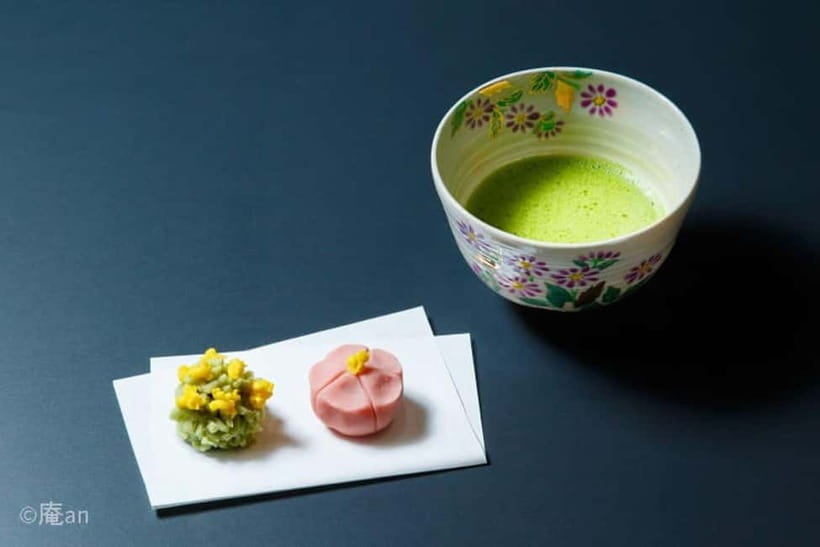
Three Japanese treats in two hours. You get a hands-on Japanese sweets workshop in Honshu, built around Ohigashi, Nerikiri, and matcha tea. I love the quality touch of Kyoto-style white/red bean paste from long-established makers. I also like that you use single-origin special Matcha, and you get to make your own cup.
The main drawback to consider is the vibe. One feedback point I can’t ignore is that the room can feel like a classroom, and when the group is larger, it can get noisy.
Still, the structure is friendly and straightforward, and the guide, including Maiko, tends to be attentive and upbeat with English support when needed. If you want a practical, no-stress way to try Japanese sweets and matcha culture, this is a solid pick.
In This Review
- Key Highlights You’ll Care About
- Getting There: Gojo Station, Quick Walk, Clear Start
- Ohigashi and Wasanbon: The Dried Sweet Skill Test
- Nerikiri Making: Two Seasonal Sweets With Real Bean Paste
- Matcha Setup: Grinding Single-Origin Tea, Not Just Drinking It
- Tea Ceremony, Casual Style: What You Can and Can’t Expect
- Price and Value: Is $28 Worth It?
- Who This Workshop Fits Best
- Small Details That Make a Big Difference
- Should You Book This Japanese Sweets and Matcha Workshop?
- FAQ
- Where is the meeting point?
- How long is the experience?
- What is included in the price?
- What do I make during the workshop?
- Is the workshop in English?
- Are there any extra costs?
- Is the venue wheelchair accessible?
- What time does the workshop run?
Key Highlights You’ll Care About
- Kyoto bean paste (white/red) used for your Nerikiri, giving the sweets a more authentic flavor base.
- Two seasonal Nerikiri sweets made with bean paste, including a flower-shaped style (Kinton Nerikiri).
- Wasanbon sugar powers the Ohigashi, the dried sweet portion of the experience.
- Single-origin Matcha plus grinding, so you taste something you helped prepare.
- Tea ceremony included, but keep expectations on a casual, guided side.
- Honest English support from the instructor, with interpretation provided as much as possible.
Sit down somewhere quieter. Other tea rooms we booked
- Kyoto: Tea Ceremony in a Traditional Tea House in Kiyomizu
★ 4.9 · 3,519 reviews - Kyoto: Tea Ceremony Ju-An at Jotokuji Temple
★ 4.9 · 3,207 reviews - Kyoto: 45-Minute Tea Ceremony Lesson Experience
★ 4.3 · 2,378 reviews - Kyoto: Table-Style Tea Ceremony at a Kyo-Machiya
★ 4.9 · 1,211 reviews
Getting There: Gojo Station, Quick Walk, Clear Start
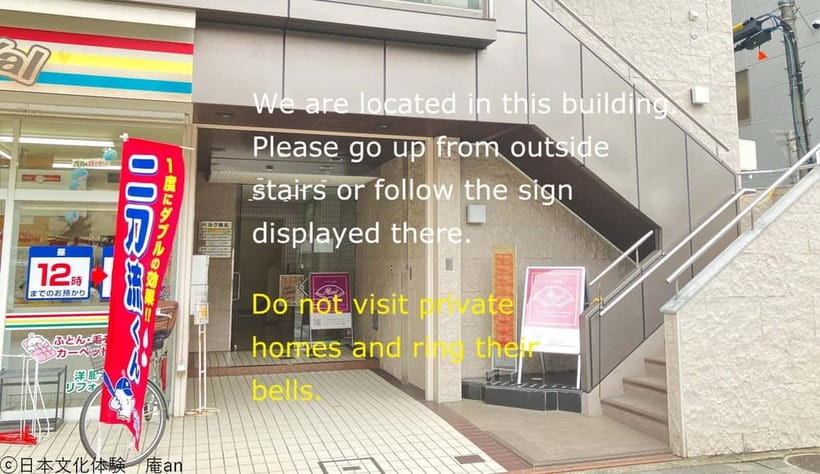
This workshop is based in Kyoto area, Honshu, and the meeting point is easy to find if you know your exits. Plan on a one-minute walk from Exit 1 of the Karasuma Line Gojo Station. The store entrance faces Gojo-dori, so you are not hunting down an alley.
I like that the timing is tight and predictable. The total experience is 125 minutes, so it fits nicely between sightseeing blocks without eating your whole day. The program starts with a short intro to traditional sweets, then you jump into making.
Logistics matter here. There is wheelchair accessibility, but there’s no elevator, so you will need stairs in the building. Also, the event won’t be held for late arrivals, so if you are moving from another part of Kyoto, give yourself buffer time.
Language is another practical point. Instruction is Japanese, and English translation is provided as much as possible. If you need more English support, you can contact the operator ahead of time. If you are the kind of person who likes to understand every step, that planning helps.
Ohigashi and Wasanbon: The Dried Sweet Skill Test
You start with Ohigashi, the dried-type Japanese sweets made from traditional Japanese sugar called Wasanbon. This portion is usually where the experience turns from watching to doing, because you are learning the structure behind the texture.
What makes Ohigashi interesting is that it is not just a single flavor. It is about how sugar sets, how you handle the sweet shape, and how the sweetness carries. Wasanbon is a big part of that, because it is traditional Japanese sugar, and it affects the final sweetness feel.
In the flow of the workshop, you begin with an explanation about traditional sweets, then you move into the Ohigashi-making portion. After that, there is a break. I like that break timing, because it helps you reset before the bean-paste stages, which can be the most hands-on.
One practical tip: wear something you can move in. Even though it is not messy street cooking, you will be working with sweets and tools, and you’ll want mobility for shaping and careful handling.
Ohigashi is also a smart gateway if you are new to wagashi. It gives you the foundation for what comes next, especially the idea that Japanese sweets are built around seasonal cues and precise texture, not just sweetness.
Nerikiri Making: Two Seasonal Sweets With Real Bean Paste
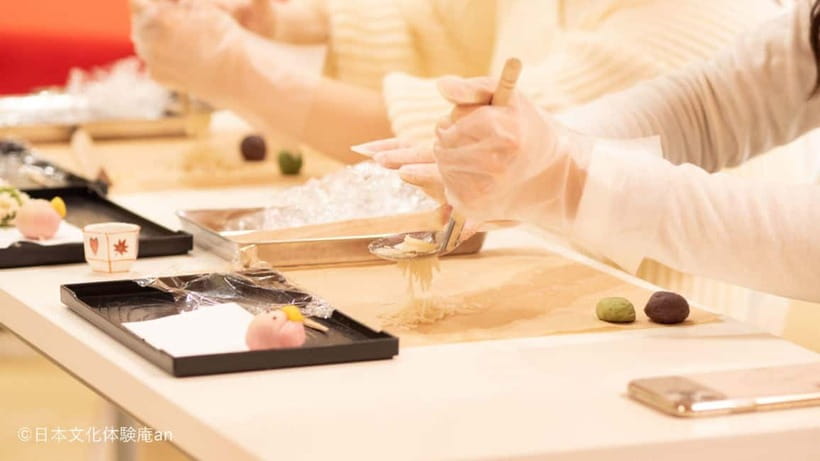
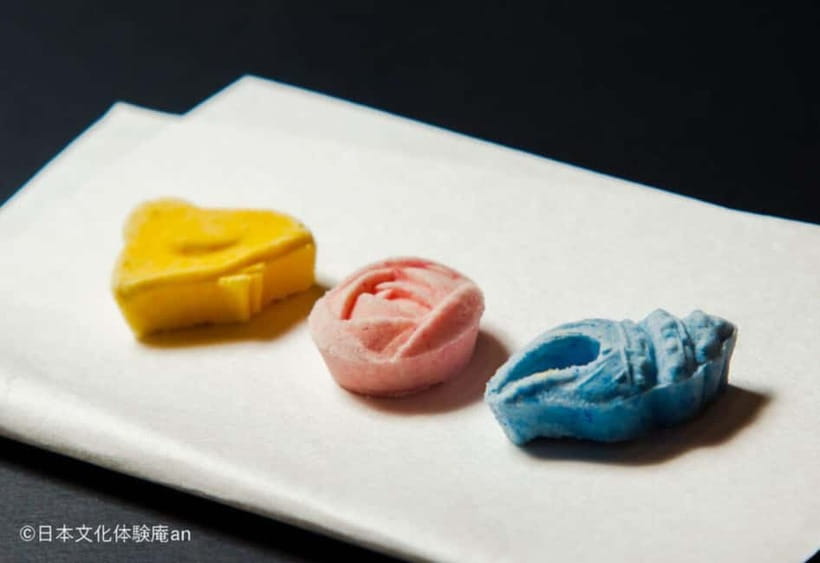
Next comes Nerikiri, where the workshop really earns its keep. You make two Japanese sweets that match the season. That seasonal choice is not just decorative. It affects flavor, color planning, and the overall presentation theme you’ll take home.
Your Nerikiri uses white/red bean paste produced by Kyoto’s long-established shops. That matters, because bean paste quality changes the result. If the paste is well-made, it is easier to shape, and it tastes more rounded rather than one-note.
You get a flower-shaped style, including Kinton Nerikiri. Kinton is associated with a classic look, so you are not just copying random shapes. You are learning a recognizable Japanese sweets style that looks great in photos and tastes like it belongs with matcha.
There is also break time in the middle of the Nerikiri portion. That break helps if you need a moment to relax your hands and refocus before the final shaping and presentation stage.
Here’s how I’d manage your expectations: Nerikiri is about technique. You will likely not get a perfect finish like a top wagashi craftsperson, but that is not the point. The value is that you leave understanding how these sweets are put together, and you get to eat something you actually made.
If you are picky about presentation, know that the workshop offers optional add-ons. Adding color is available for 200 JPY. If you want a more “show-ready” look for your sweets, that can be worth it.
- PERFECT KYOTO 1-Day Bus Tour★ 5.0 · 13,518 reviews
- Kyoto: Fushimi Inari, Kinkakuji, Bamboo Grove 1 Day Bus Tour★ 4.8 · 4,316 reviews
- Kyoto: Tea Ceremony in a Traditional Tea House in Kiyomizu★ 4.9 · 3,519 reviews
- Kyoto: Tea Ceremony Ju-An at Jotokuji Temple★ 4.9 · 3,207 reviews
- Kyoto: 45-Minute Tea Ceremony Lesson Experience★ 4.3 · 2,378 reviews
Matcha Setup: Grinding Single-Origin Tea, Not Just Drinking It
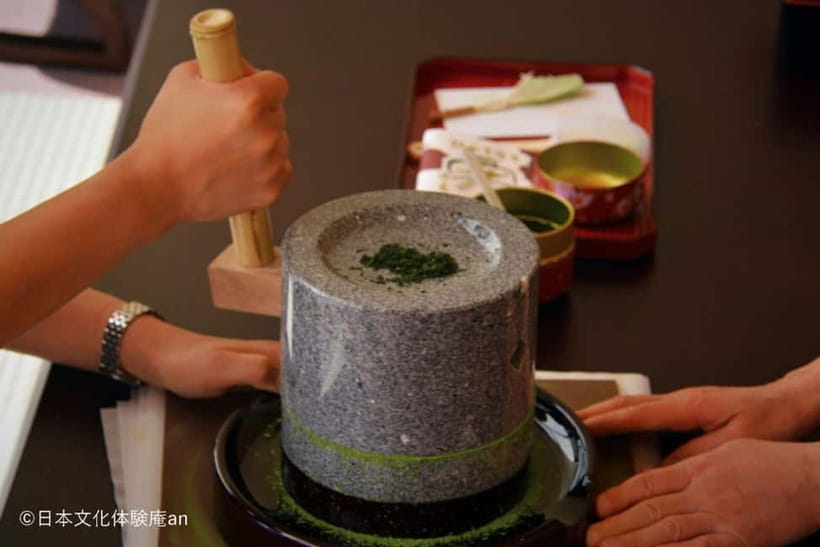
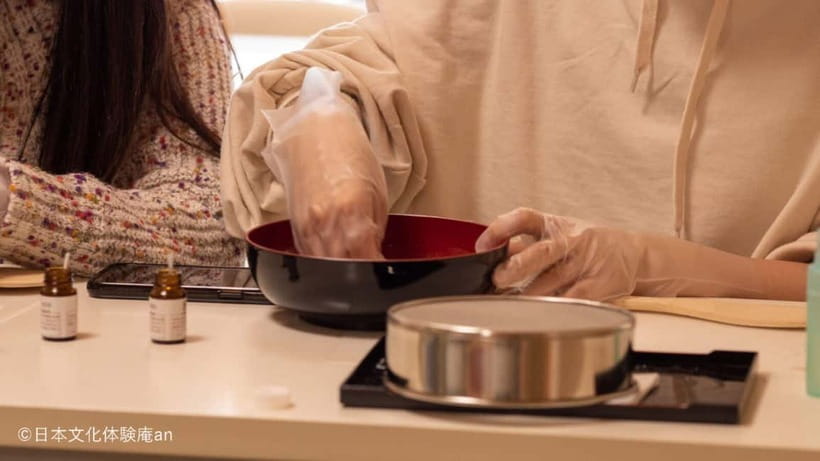
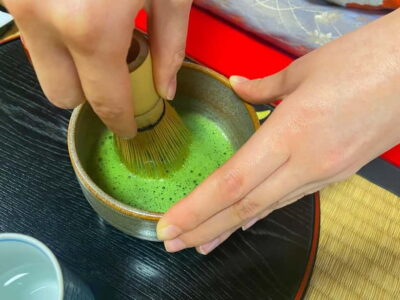
After sweets, the program shifts to matcha. You get an explanation about tea, then a matcha grinding demonstration. And yes, this is where you get involved, not only watching.
The matcha itself is a highlight. The workshop uses single-origin special Matcha. That means you are tasting a more focused tea profile, rather than a generic blended matcha approach. Even if you are not a tea nerd, single-origin often shows up as clearer taste, more distinct character, and less blandness.
In many workshops, the tea lesson can feel like a quick lecture. Here, the matcha section includes grinding and then a tea ceremony experience. In plain terms, you will learn the mechanics and then apply them.
I also like that the tea part comes after you are already in a making mindset. You just shaped sweets, now you do the parallel skill with tea preparation. Your brain stays in hands-on mode.
One practical note for taste: matcha strength changes with preparation. If you want it stronger or lighter, pay attention during the steps and ask if you are unsure. Since English support is available as much as possible, you are not stuck guessing if your Japanese is rusty.
Tea Ceremony, Casual Style: What You Can and Can’t Expect
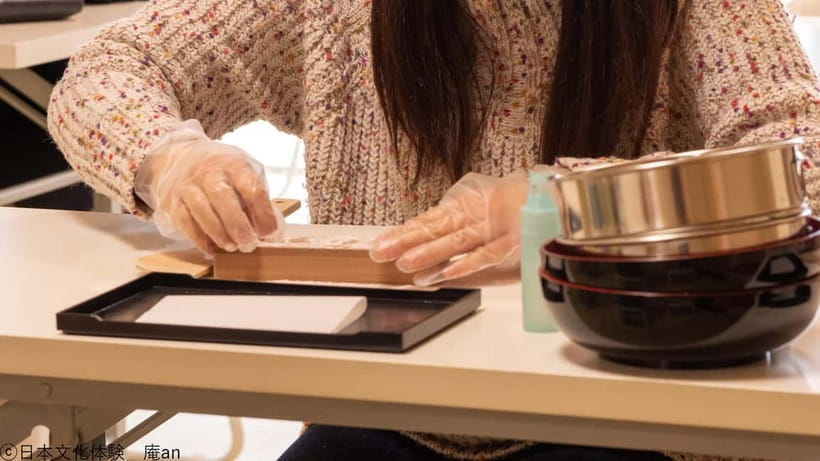
This experience includes a tea ceremony experience. But based on how the workshop is described and how people have talked about it, it is more of a guided and casual style than a strict, formal ceremony.
That’s not a negative. It can actually be a plus if you want cultural context without feeling intimidated. The lesson is there to help you understand what you are doing and why it matters, while keeping the pace comfortable.
The workshop includes picture time later, which tells you the structure is designed for a shared experience. That can be great for capturing your sweets and your tea moment, especially if you like souvenirs that prove you made something real.
Keep one thing in mind: the room can be shared with other participants. One concern that pops up is that groups can be noisy, which can reduce the calm feeling you might associate with tea. If you want a quieter vibe, try to choose a time slot that feels less likely to overlap with the largest groups.
Also, if you are expecting an ultra-traditional, multi-step ceremony, you might find it more straightforward here. You still get the essence: you learn tea basics, grind matcha, and enjoy your cup.
Price and Value: Is $28 Worth It?
At $28 per person for 125 minutes, this workshop sits in the midrange for hands-on wagashi plus matcha. The “value” question is really about what you leave with and how much active time you get.
You are not just watching sweets being made. You make:
- Ohigashi (dried-type sweet using Wasanbon sugar)
- Two seasonal Nerikiri sweets with Kyoto bean paste
- Matcha, including grinding and a tea ceremony experience
So your money covers multiple skill blocks, not one single craft.
Now, there are optional add-ons that can increase the total if you want them:
- Adding color: 200 JPY
- Sweets take-out box: 100 JPY
- Experience completion certificate: 300 JPY
If you want a clean “package” with minimal extra spending, you can skip those. If you want your sweets to travel well, the take-out box may be a comfort purchase. If you like certificates as proof, budget the 300 JPY.
I think the biggest value marker is the ingredient plan. Kyoto bean paste plus single-origin matcha puts the experience closer to what you would buy and eat, not just a basic cooking class.
Who This Workshop Fits Best
This is a great fit if you:
- Want a hands-on Japanese sweets experience without needing prior wagashi skills
- Like matcha and want to do more than taste it
- Prefer a structured, timed workshop that runs about two hours
It also works well for couples and solo travelers who want a shared activity that still feels manageable. The pace includes breaks, so you are not stuck working nonstop.
It might be less ideal if you strongly prefer quiet, private cultural experiences. One concern raised is that the room can be full and noisy, making the session feel more like a classroom. If that would bother you, consider choosing a less crowded start time (the workshop operates from 10:00 to 17:00).
Also, the workshop is Japanese-language based, with English translation as much as possible. If you need heavy English support for complex questions, contact the operator ahead of time to see what they can arrange.
Small Details That Make a Big Difference
A few things help you enjoy this more:
- Arrive early. The event can’t be adjusted for delays, and late participants can miss entry.
- Bring comfortable clothes. You will shape sweets and handle tools, so mobility helps.
- Think about take-away needs. If you want to continue exploring after, you may want the take-out box option.
- Decide on optional extras before you start. Adding color and certificates are extra costs, but they can make your final keepsake more impressive.
If you are traveling with kids, note that children who sit on their parents’ laps are free of charge if they are under 2 years old. That can make the workshop easier to plan for family travel.
Finally, if you are sensitive to noise, remember the experience is in a shared room. You may get a better vibe if you pick a time slot that feels calmer for your schedule.
Should You Book This Japanese Sweets and Matcha Workshop?
Yes, I’d book it if you want an active introduction to Japanese sweets, plus a hands-on matcha moment, all in a compact 125 minutes. The ingredient choices, Kyoto bean paste and single-origin Matcha, make the experience feel more legit than a generic demo-based class.
I’d think twice if you are coming specifically for a serene, traditional tea ritual atmosphere. This is guided and casual, and room noise can happen depending on how many people are in the session. It is still cultural, still tasty, and still very doable, but it may not match your idea of a quiet, formal ceremony.
If your goal is to leave with two seasonal Nerikiri sweets, a Wasanbon-based Ohigashi creation, and a better understanding of matcha and tea, this workshop is a strong value.
FAQ
Where is the meeting point?
It is about a one-minute walk from Exit 1 of the Karasuma Line Gojo Station. The store entrance faces Gojo-dori.
How long is the experience?
The experience lasts about 125 minutes.
What is included in the price?
You get a set of experiences that includes making two types of Japanese sweets and a tea ceremony experience (with matcha).
What do I make during the workshop?
You make Ohigashi (a dried-type sweet using Wasanbon sugar), you make two seasonal Nerikiri sweets using white/red bean paste, and you grind matcha and enjoy the tea ceremony experience.
Is the workshop in English?
The instruction is in Japanese, and English translation is provided as much as possible. You can contact the operator if you want to add English support.
Are there any extra costs?
Yes. Adding color is 200 JPY, a sweets take-out box is 100 JPY, and an experience completion certificate costs 300 JPY. These are not included in the base price.
Is the venue wheelchair accessible?
The experience is listed as wheelchair accessible, but there is no elevator, and you will need to take stairs to reach the venues.
What time does the workshop run?
Operation hours are 10:00 to 17:00. Reservations received after 17:00 are processed the next day.
Kyoto by the Bowl
Newest Kyoto write-ups from the Loving Japan desk
Kyoto Tea Ceremonies and Matcha, side by side.
 ★ 4.9Tea Ceremony in a Traditional Tea House in KiyomizuFrom $493,519 reviews
 ★ 4.9Tea Ceremony Ju-An at Jotokuji TempleFrom $293,207 reviews
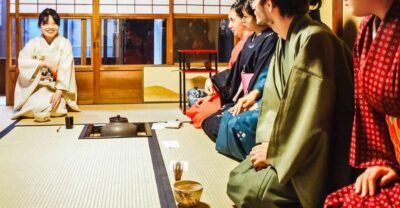 ★ 4.345-Minute Tea Ceremony Lesson ExperienceFrom $222,378 reviews
 ★ 5.0World Heritage Kyoto & Nara Uji Authentic Matcha ExperienceFrom $1291,573 reviews
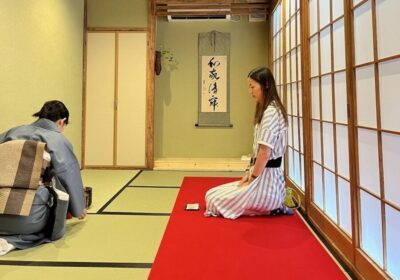 ★ 4.9Tea Ceremony ExperienceFrom $251,426 reviews
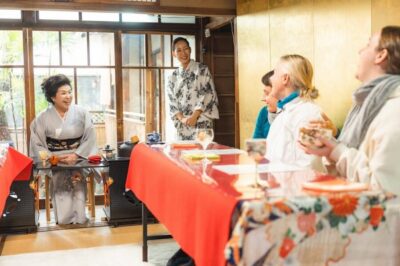 ★ 4.9Table-Style Tea Ceremony at a Kyo-MachiyaFrom $451,211 reviews
 ★ 4.8Kenrokuen Tea Ceremony ExperienceFrom $351,139 reviews
 ★ 5.0Kimono Tea Ceremony at Kyoto Maikoya, NISHIKIFrom $65911 reviews
Filed on these lists too