
REVIEW · GION, GEISHA AND MAIKO EXPERIENCES
Authentic Kyoto Gion Geisha/Maiko Cultural Experience
Small Gion nights feel like a secret. In this 90-minute experience, I love the small group setup and the English-speaking guide who translates and adds context as you go, which turns a confusing tradition into something you can actually follow. One thing to keep in mind, you cannot choose whether you meet a maiko (apprentice) or a geiko (established performer), so the exact vibe depends on the day.
You’ll start with a short walk through the Gion streets, then move inside a tatami room for close-up watching. I especially like the matcha tea ceremony element, plus the built-in photo time, because you get memories you will actually want to keep, not just blurry street shots from far away.
In This Review
- Key points that make this Gion experience worth it
- Gion after dark: why the teahouse night works better than street-only watching
- The Hanamikoji Street walk: a quick orientation you’ll feel grateful for
- Inside the tatami room: maiko or geiko, conversation, and live performance
- Matcha tea ceremony plus sweet extras: the cultural pause that makes it feel real
- Etiquette and pacing: the socks, tatami rules, and photo moments you should plan for
- Price and value: is $155.22 for 90 minutes fair?
- Who should book this, and who might want a different plan
- Quick practical details that help you show up ready
- Should you book this Gion maiko and geiko teahouse experience?
- FAQ
- How long is the Gion maiko and geiko cultural experience?
- What is the group size for this experience?
- Where do we meet for the tour?
- Where does the tour end?
- Can I choose whether I meet a maiko or a geiko?
- What happens during the teahouse portion?
- Is there an English-speaking guide?
- What should I wear or bring for entering the teahouse?
- Are there age limits for this tour?
Key points that make this Gion experience worth it
- Max 10 people keeps the room feeling calm, not like a performance stampede.
- English translation plus context helps you understand what you are seeing and asking.
- Maiko or geiko dance in a teahouse setting gives you a closer, more respectful view of the craft.
- Matcha ceremony in a tatami room adds a real Japanese hospitality moment, not just a show.
- Photography is allowed during the experience, so you can document what you came for.
- Socks and tatami etiquette matter, and you get clear guidance once you arrive.
Evening walks through the old quarters, compared
- Kyoto Geisha Walking Tour: Gion District & Hidden Gems
★ 4.7 · 3,273 reviews - Kyoto: Gion Magical Night Walking Tour with Geisha Trivia
★ 4.9 · 2,393 reviews - Kyoto: Gion Geisha District Walking Tour – Stories of Geisha
★ 4.7 · 2,187 reviews - Best of Kyoto: Gion, Geisha, Pagodas & Cobblestones
★ 4.9 · 2,058 reviews
Gion after dark: why the teahouse night works better than street-only watching
Kyoto’s Gion can feel like two different experiences at once. On the street, you might glimpse performers from a distance, surrounded by people trying to do the same thing. In this teahouse experience, the focus shifts from spotting to understanding, and that changes everything.
The big value here is that the program is built around live performance plus conversation, inside a controlled setting. You are not just standing around. A guide helps you read the room, what to pay attention to, and how to ask questions appropriately, which is exactly what most people miss when they try to navigate Gion on their own.
Also, the small group size matters in a practical way. With up to 10 people, you can hear the tea master and dance/music cues without constant shoulder-checking. You can ask follow-ups and still stay on schedule. For a 90-minute experience, that attention to pacing is where the quality shows.
The Hanamikoji Street walk: a quick orientation you’ll feel grateful for
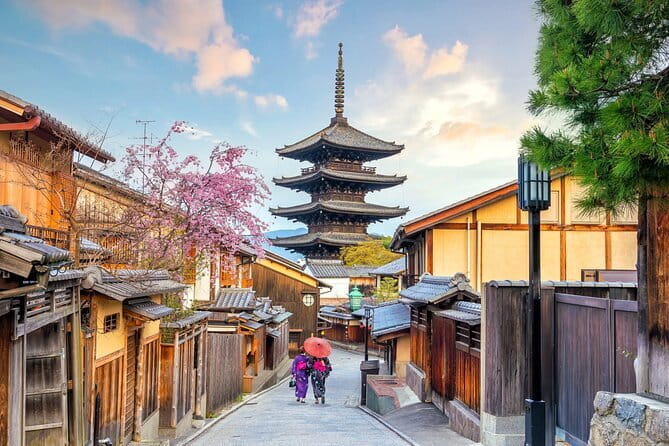
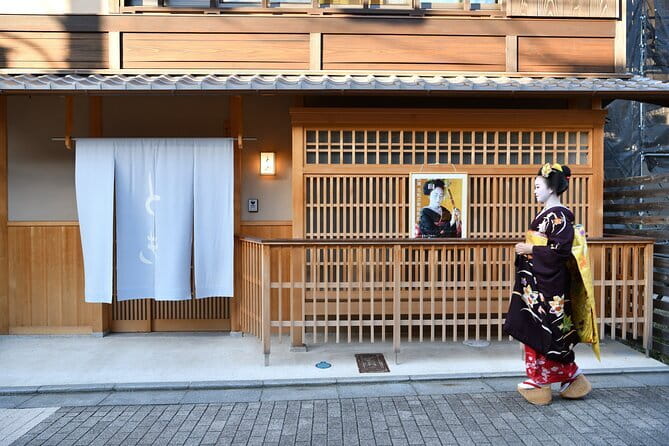
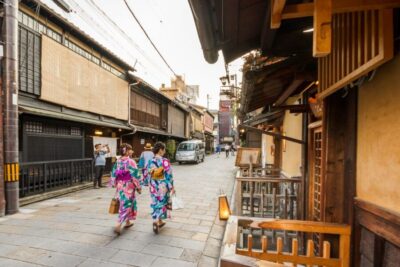
Before you reach the teahouse, you start at Gion-Shijo Station (1 Chome Miyagawasuji, Higashiyama Ward). Then your English-speaking guide leads you through the Gion area, including Hanamikoji Street, one of the district’s signature lanes.
This short walk is not filler. It gives you names, context, and visual cues that make the teahouse portion easier to understand. When someone points out what you are looking at on the street, the experience becomes less about guessing and more about comprehension. That matters in Gion, where the details are subtle and easy to miss if you only follow the crowd.
You’ll spend about 15 minutes on this street introduction. It’s brief enough that you still get plenty of time indoors, but long enough that you get your bearings before you sit down for the main event.
Inside the tatami room: maiko or geiko, conversation, and live performance
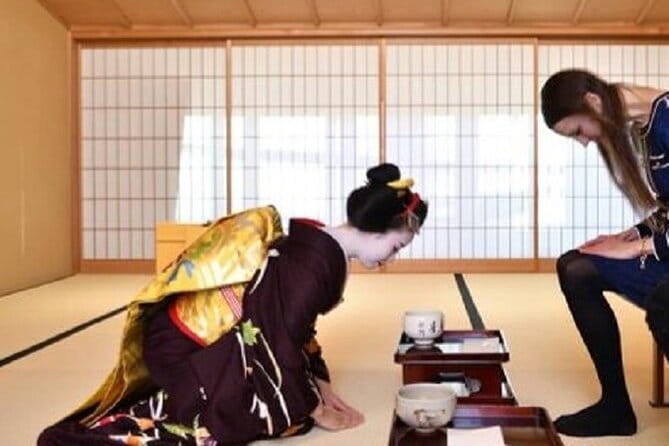
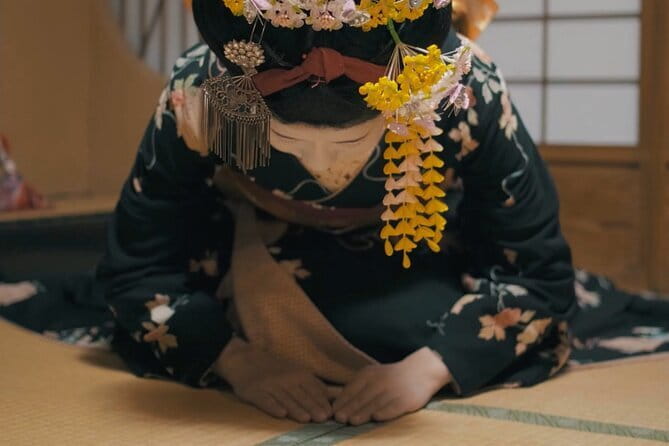
The heart of the experience happens at the teahouse in Gion. The setting is specifically described as a tatami room, and the vibe is intimate. You will be seated in a small group (maximum 10), and then you get to watch traditional performing arts in a way that feels closer and more personal than most public viewing.
Here is what you should expect once you are inside:
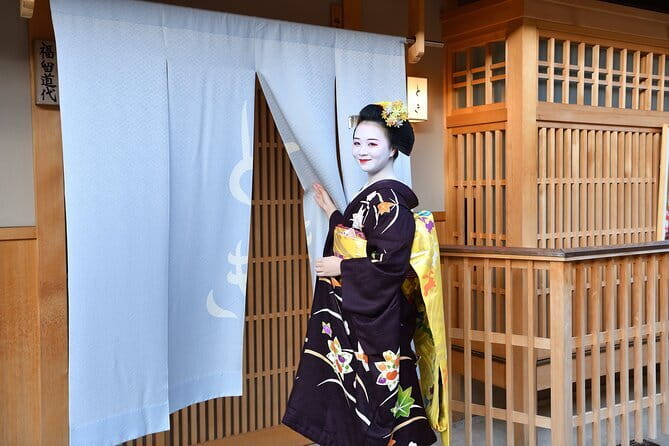
- You may meet a maiko or geiko during the teahouse time. The performer is not something you select in advance, and you will be accompanied by that person depending on the day.
- You will have time for intimate conversation with the maiko or geiko along with the owner or tea-side host figure.
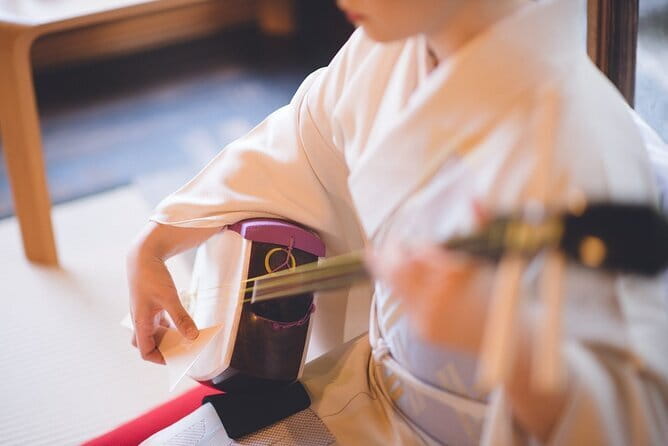
- You will watch traditional dance as part of the program.
- You will participate in a ceremonial matcha tea moment afterward.
- You will have photo opportunities during the experience, designed to help you capture the memory without turning it into a free-for-all.
One detail that shows up strongly in feedback: the best moments often come from the Q&A. Being able to ask direct questions helps you connect what you see to what the performers actually do and how the tradition is understood in daily life. And with translation on top of that, you are not stuck trying to decode everything on your own.
A small practical note: the teahouse pairing is handled by the day’s schedule. If you dream of meeting a maiko specifically, keep expectations flexible. The experience still centers on the same core elements, just through the performance style and persona of the performer present that evening.
- PERFECT KYOTO 1-Day Bus Tour★ 5.0 · 13,518 reviews
- Kyoto: Fushimi Inari, Kinkakuji, Bamboo Grove 1 Day Bus Tour★ 4.8 · 4,316 reviews
- Kyoto: Tea Ceremony in a Traditional Tea House in Kiyomizu★ 4.9 · 3,519 reviews
- Kyoto Geisha Walking Tour: Gion District & Hidden Gems★ 4.7 · 3,273 reviews
- Kyoto: Tea Ceremony Ju-An at Jotokuji Temple★ 4.9 · 3,207 reviews
Matcha tea ceremony plus sweet extras: the cultural pause that makes it feel real
The matcha portion is not an afterthought. It’s described as a tea ceremony experience included with your teahouse time, and in this kind of setting, it works as a reset. The dance and conversation come first, then you get to slow down and appreciate the etiquette and pacing that go with tea service.
Based on what people highlight, you may also see added food elements like sweets paired with the tea. Mentions include things such as matcha ice cream and small flour-based sweets alongside matcha. Even if the exact items vary by day, the key idea stays the same: you’re tasting Japanese hospitality, not just watching a performance and walking away.
If you love food and drink culture, this is the part that often feels most Kyoto. Matcha is familiar enough to order anywhere, but the ceremony context is what makes it meaningful. You are being guided through it, so it lands as tradition you can understand, not just a beverage you take a sip of.
Etiquette and pacing: the socks, tatami rules, and photo moments you should plan for
This tour is built for comfort and clarity, but the teahouse environment does have expectations. Here are the practical rules you should follow so you do not feel stressed once you arrive:
- Wear socks. That’s a specific instruction, and it matters because you will enter and sit on tatami.
- If your feet, clothes, or bag get wet (rainy weather happens in Kyoto), wipe the water off with a towel before entering.
- Help keep tatami spaces clean, meaning take care with where you place items and your movements inside.
These rules might sound fussy, but they actually make the experience smoother. When everyone follows the basics, the room stays calm and respectful, which also helps you get better access to the performer and the tea master.
On the photo side, this experience includes picture taking during the event. That is a big deal, because many culture-focused activities discourage photography or limit it heavily. Here, you get a clear opportunity to document the moment. Still, treat it like part of the ceremony flow, not a sightseeing scramble.
Timing also keeps things pleasant. The total duration is about 1 hour 30 minutes, with the street portion taking around 15 minutes and the teahouse portion taking the rest. That means you are not stuck for hours waiting on the next cue, and it fits neatly into a Kyoto evening plan.
Price and value: is $155.22 for 90 minutes fair?
At $155.22 per person, you are paying for several things at once: a guided walking introduction, teahouse access, a translated conversation, and live dance plus a tea ceremony in a room designed for this kind of interaction.
Is it inexpensive? No. But it is also not just a ticket to watch something from afar. You are paying for:
- A small group (up to 10), which is usually where the experience shifts from “crowd viewing” to “real exchange.”
- English translation, which can dramatically change how much you get out of the conversation and performance.
- A guided setting in tatami surroundings, meaning you are not trying to navigate etiquette blindly.
If you are doing this as part of a multi-day Kyoto plan, I’d look at it like a high-value cultural evening rather than a quick activity. The people-friendly pacing, the chance to ask questions, and the fact that you leave with a better understanding of geisha culture are the reasons many consider it worth the cost.
Booking is also worth noting. It’s typically booked about 17 days in advance on average, so if you are traveling in peak season, plan ahead rather than waiting until the last minute.
Who should book this, and who might want a different plan
This tour is a strong match if you want three things:
- A small, guided Gion experience that focuses on cultural context, not just sightseeing.
- A chance to watch live traditional dance and participate in a matcha tea moment in a real teahouse setting.
- Photo-friendly memories, plus the ability to ask questions with translation.
It may feel less ideal if you want total control over who you meet. You cannot pick maiko vs geiko, and the performer depends on the day.
It also may not be a fit for very young kids. Children ages 0 to 5 cannot join, and if you are traveling with anyone under 18 you’ll need written parental permission. Any participant under 15 or not yet in middle school must join with a parent or guardian. If you fall into those categories, double-check timing so everyone can meet the requirements comfortably.
Quick practical details that help you show up ready
Start point:
- Gion-Shijo Station (1 Chome Miyagawasuji, Higashiyama Ward)
Where it ends:
- The tour ends at the teahouse in Gion, around Gionmachi Minamigawa (Higashiyama Ward).
Ticket:
- You get a mobile ticket.
Tour size:
- Maximum 10 travelers.
What you’re included:
- Teahouse experience with maiko or geiko traditional dance viewing, tea ceremony, and photo taking (plus other tea-room elements as scheduled).
- An English-speaking guide.
What you are not included:
- Any fees beyond what’s listed in included items.
Should you book this Gion maiko and geiko teahouse experience?
If you want a respectful, guided look at geisha culture in a setting that feels intentionally designed for close listening, I think this is a smart choice. The combination of small group, English translation, and live performance plus matcha tea is the winning formula, especially if you care more about understanding than collecting a checkbox.
I’d book it if:
- You like structured cultural experiences with clear etiquette.
- You want to ask questions and get real context, not just watch.
- You want photos that match what you experienced, not just street glimpses.
I’d consider skipping or swapping for a different activity if:
- You only care about meeting a specific type of performer and need that guarantee.
- You’re trying to keep costs low for a short evening.
- You dislike any rules around socks and tatami spaces, since those are part of the reality here.
FAQ
How long is the Gion maiko and geiko cultural experience?
The tour lasts about 1 hour 30 minutes (approx.).
What is the group size for this experience?
The experience has a maximum of 10 travelers.
Where do we meet for the tour?
You start at Gion-Shijo Station, at 1 Chome Miyagawasuji, Higashiyama Ward, Kyoto 605-0801, Japan.
Where does the tour end?
The tour ends at the teahouse in Gion, around Gionmachi Minamigawa, Higashiyama Ward, Kyoto 605-0074, Japan.
Can I choose whether I meet a maiko or a geiko?
No. Maiko or geiko cannot be selected. You’ll be accompanied by either a maiko or geiko depending on the day.
What happens during the teahouse portion?
Inside the teahouse, you can enjoy intimate conversation with the maiko or geiko and the owner in a small group, watch a traditional dance, participate in a matcha tea ceremony, and take photos in a tatami room.
Is there an English-speaking guide?
Yes. An English-speaking guide is included.
What should I wear or bring for entering the teahouse?
You should wear socks. If your feet, clothes, or bag are wet, wipe off water before entering. Help keep tatami spaces clean.
Are there age limits for this tour?
Children aged 0 to 5 cannot join. For participants under 18, written parental permission is necessary, and anyone under 15 or not yet enrolled in middle school must be joined by a parent or guardian.
Evenings in the Old Quarters




Newest Kyoto write-ups from the Loving Japan desk

Gion, Geisha and Maiko Experiences, side by side.
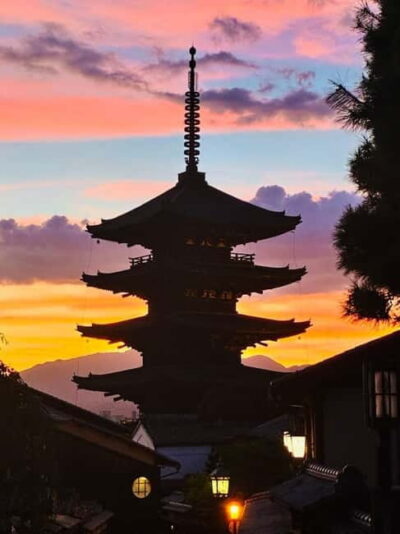 ★ 4.7Kyoto Geisha Walking Tour: Gion District & Hidden GemsFrom $253,273 reviews
 ★ 4.9Gion Magical Night Walking Tour with Geisha TriviaFrom $242,393 reviews
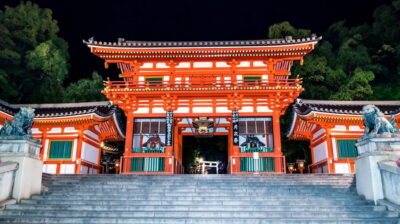 ★ 4.7Gion Geisha District Walking Tour – Stories of GeishaFrom $202,187 reviews
 ★ 4.9Best of Kyoto: Gion, Geisha, Pagodas & CobblestonesFrom $242,058 reviews
 ★ 4.5Night Walk in Gion: Kyoto’s Geisha DistrictFrom $212,003 reviews
 ★ 5.0Kyoto Night Foodie Tour in Gion (9+ dishes + 6 Sake tastings)From $1631,762 reviews
 ★ 5.0Kyoto Gion Geisha District Walking Tour – The Stories of GeishaFrom $251,441 reviews
 ★ 5.0Kyoto Gion: 2-Hour Geisha Culture & History Walking TourFrom $231,186 reviews
Filed on these lists too