
REVIEW · HIROSHIMA AND MIYAJIMA DAY TRIPS
Calligraphy Workshop at Traditional Folk Craft Shop in Hiroshima
Calligraphy can calm your whole trip. In Hiroshima, you’ll write your own characters at the 50-year-old craft shop Takumi, with handmade Kumano brushes and patient guidance from Sensai Ryosei that turns practice into a quiet, almost meditative break.
Two things I especially like are how traditional the tools feel, and how the instruction is gentle enough for first-timers. You start with basic strokes, then move into hiragana and kanji, finishing with a piece you can take home.
One possible drawback: the session is about 45 minutes, so you’ll create one final artwork, not a long practice session. Also, it’s on the 5th floor of a mall, so plan a little extra time getting up there.
In This Review
- Key Points You’ll Care About
- Takumi Craft Shop: A Hiroshima Workshop You Can Combine With Peace Park
- Getting Set Up: Tools, Materials, and a Calming Start
- The 45-Minute Flow: Strokes, Hiragana, Kanji, Then Your Word
- Kumano Brushes: Why the Tool Choice Matters
- Takumi’s Ukiyo-e Setting: A Small Atmosphere Boost
- Your Take-Home Piece: Fan (Uchiwa) or Shikishi Board
- Photo Service: Get Your Work Captured Without Stress
- Price and Value: What $32.81 Buys You Here
- Who This Hiroshima Calligraphy Workshop Is Perfect For
- A Practical Plan: When to Fit This Into Your Day
- Should You Book This Calligraphy Workshop at Takumi?
- FAQ
- Where does the calligraphy workshop start?
- How long does the workshop last?
- What does the price include?
- Do I need to bring my own calligraphy materials?
- Is this workshop suitable for beginners?
- What can I write for my final artwork?
- What can I take home from the workshop?
- Is there an optional photo service?
- Can I cancel for a full refund?
Key Points You’ll Care About
- Kumano-made brushes: traditional tools used in Hiroshima, a key brush-making area
- Sensai Ryosei’s hands-on coaching: calm, step-by-step help for beginners
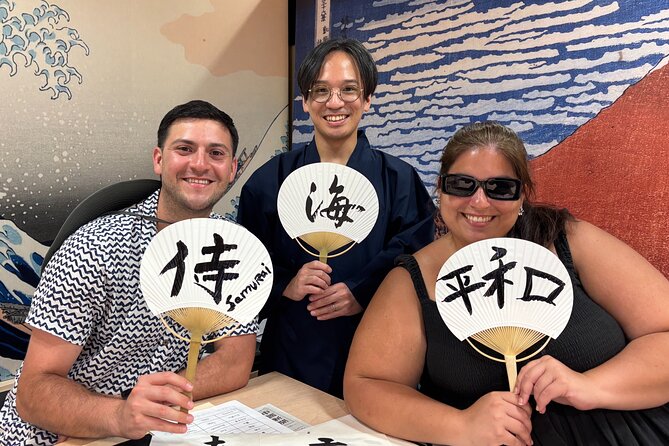
- Takumi craft shop atmosphere: a studio-like space with ukiyo-e prints on the wall
- You choose your final word: write on either a hand fan (uchiwa) or a shikishi board
- Free optional photo service: photos taken during the session, sent digitally afterward
Pairing the city with Miyajima. Other itineraries
- Hiroshima: Hiroshima and Miyajima UNESCO Sites 1-Day Tour
★ 4.9 · 2,330 reviews - Hiroshima / Miyajima Full-day Private Tour with Government Licensed Guide
★ 5.0 · 1,298 reviews - Hiroshima Historical Walking Tour – Why A-Bomb was Dropped
★ 4.8 · 893 reviews - Hiroshima Peace (Heiwa) Walking Tour at World Heritage Sites
★ 5.0 · 872 reviews
Takumi Craft Shop: A Hiroshima Workshop You Can Combine With Peace Park
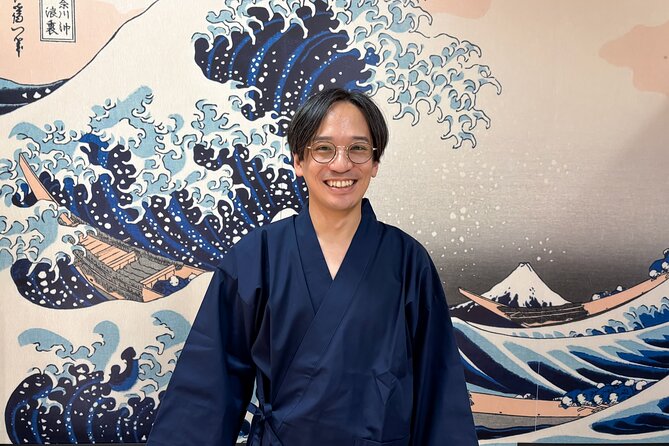
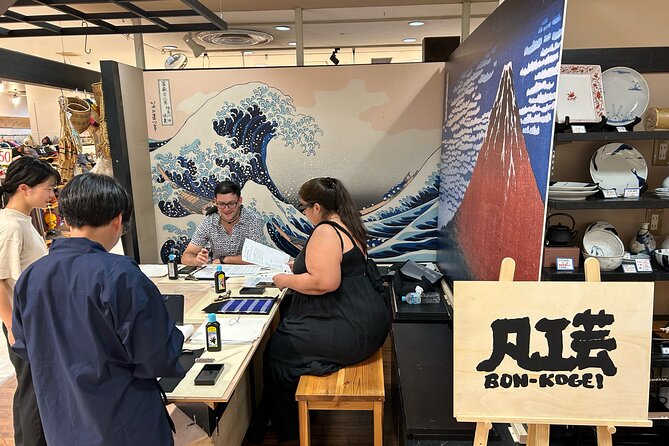
This calligraphy workshop is based at Takumi, a long-running folk craft shop that has been around for about 50 years. The space feels artsy right away, with a wall decorated in ukiyo-e prints, so you’re not just sitting at a table, you’re actually in a creative room.
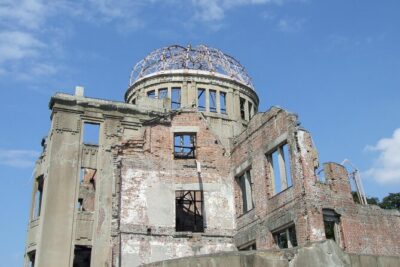
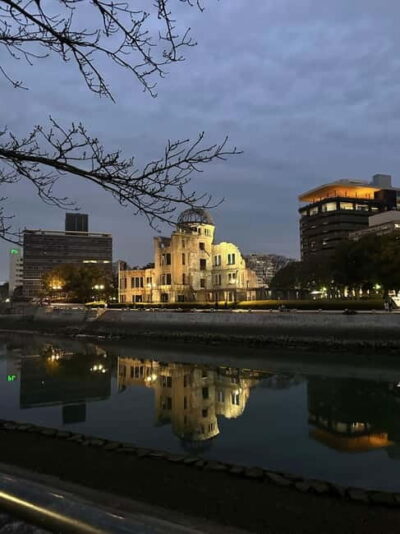
The location is practical too. You’re about a 5-minute walk from the Atomic Bomb Dome and roughly 3 minutes from Hiroden Hondori Station, so this can slot neatly into a day that includes Peace Park. It’s also on the 5th floor of Sanmall Mall, with UNIQLO on the 2nd floor, which helps you find it fast.
If you like experiences that are close to major sights but still feel local and hands-on, this fits that sweet spot. It’s not a staged performance, it’s a small craft lesson where you make something personal.
One more detail worth noting: Takumi is described as Hiroshima’s leading craft shop, so the surroundings match the activity. Even if you finish in 45 minutes, you’re still in a place that’s clearly about traditional goods from across Japan.
Getting Set Up: Tools, Materials, and a Calming Start
You don’t need to study beforehand, and you don’t need special supplies. The workshop provides the full kit, including the brush, ink, and paper or writing surface, so your only job is to show up and write.
That matters because calligraphy can look intimidating from the outside. With all materials included, you can focus on the main thing: learning how the brush moves, not how to hunt for the right tools.
Once you’re seated, the instructor introduces the calligraphy tools and how they work. That usually sounds simple, but it’s actually the foundation. When you understand how ink flows and how the brush tip behaves, everything that follows feels more controlled.
The vibe is quiet and unhurried. You’ll be guided in a way that encourages you to slow down, pay attention, and let the strokes happen rather than forcing them.
The 45-Minute Flow: Strokes, Hiragana, Kanji, Then Your Word
The workshop runs about 45 minutes, so the plan is focused and efficient. You’ll move through a mini sequence that takes you from basics to your final piece without feeling rushed.
First comes practice of basic strokes like dots, lines, and sweeps. This is the part that helps you understand calligraphy as movement, not just character shapes. If you’ve never written in Japanese before, this is where you start building muscle memory.
Then you try writing hiragana and kanji. Hiragana is often the easiest entry point because it’s usually taught as a starting system, while kanji can be more challenging because it looks complex at first glance. Here, the instructor keeps it doable through guided steps, so you’re not left to figure it out alone.
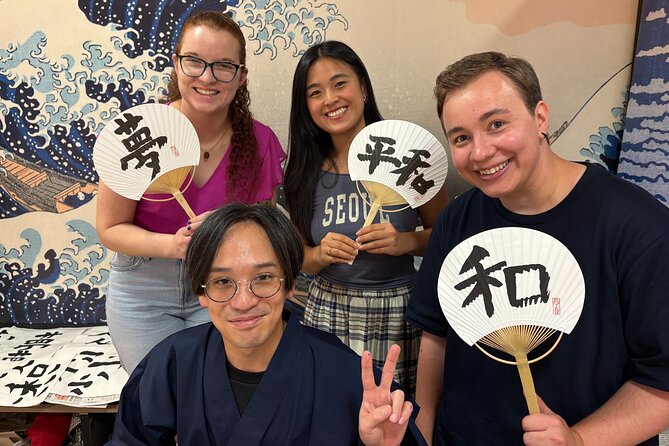
After the practice, you create a final artwork with a word of your choice. That’s a big value point. You’re not just copying a sample for show, you’re making something personal you can actually display or gift later.
Because time is limited, you’ll want to choose your word thoughtfully. If you’re traveling in Japan and you’re unsure what character matches your idea, you might find it helps to pick a simple, meaningful word before you arrive.
Make something to take home. Other workshops
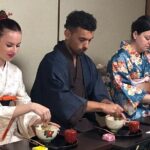
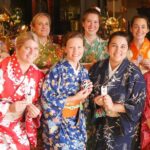
- An Amazing set of Cultural experience: Kimono, Tea Ceremony and Calligraphy★ 5.0 · 69 reviews
- Cultural Activities :Kimono, tea ceremony, Calligraphy and Amulet★ 5.0 · 44 reviews
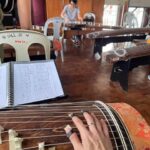
- Experience the Soul of Hiroshima: A Peaceful Koto Workshop★ 5.0 · 32 reviews
Kumano Brushes: Why the Tool Choice Matters
A key highlight here is the use of handmade brushes from Kumano, Hiroshima. Kumano is known as one of Japan’s top brush-making towns, so the tools connect you directly to local craft tradition.
For you, that means your writing feels more accurate. When the brush is made well, the ink behavior and the brush tip response are more consistent, and you can see the stroke form as you create it. It’s easier to learn when the tool is predictable.
It also makes the workshop more than a souvenir factory. You’re using craft heritage materials, not generic supplies, and that changes the whole learning experience. Even if your characters aren’t perfect, you can still see the results of good brush technique.
I like that the workshop doesn’t hide behind tradition, either. It uses tradition as the teaching tool, with instruction that keeps it beginner-friendly.
Takumi’s Ukiyo-e Setting: A Small Atmosphere Boost
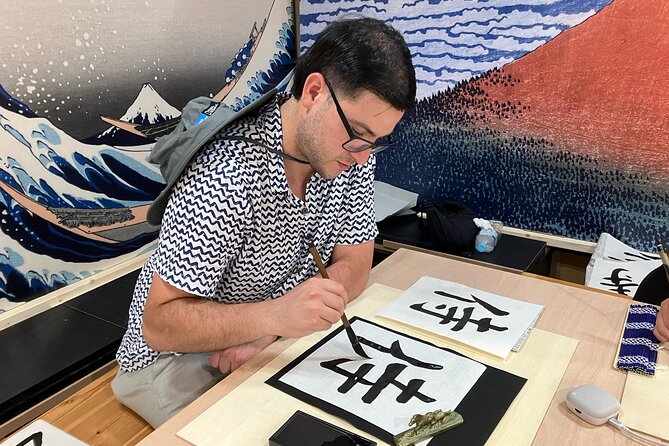
One of the subtle advantages is the setting at Takumi. There’s a decorative wall with ukiyo-e prints, so you’re writing in an art-forward environment.
That sounds like fluff until you try to do any slow, detail-focused activity in a harsh, plain setting. Here, you’re in a place that visually supports the calm pace of calligraphy, which makes it easier to concentrate.
It also helps your photos. Since the environment is already artistic, your calligraphy does not look like it’s sitting in a blank classroom.
If you’re doing this on the same day as Peace Park, the shift from heavy history to something quietly creative can feel surprisingly balanced. It’s not meant to replace anything, it just gives your brain a different kind of focus.
Your Take-Home Piece: Fan (Uchiwa) or Shikishi Board
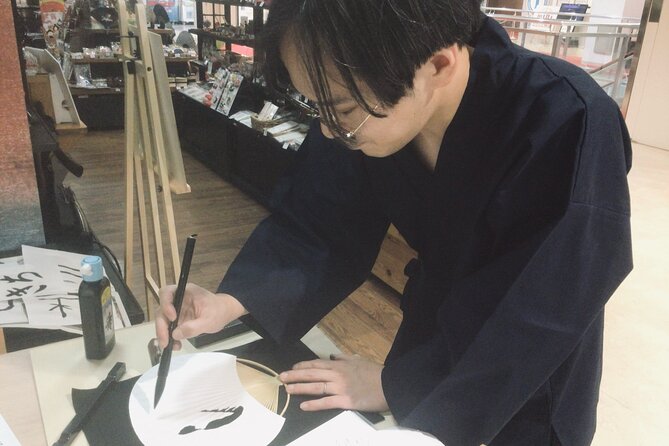
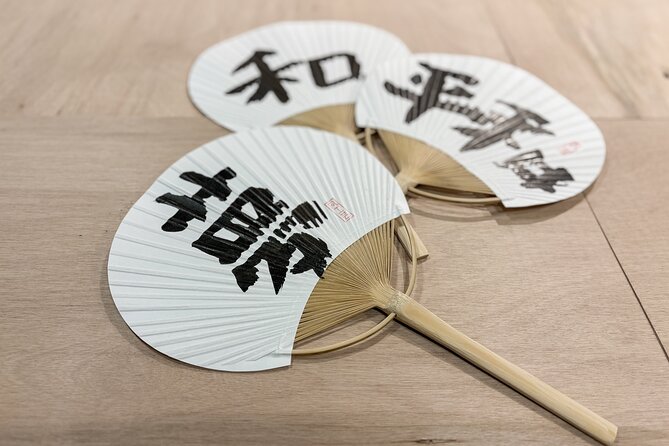
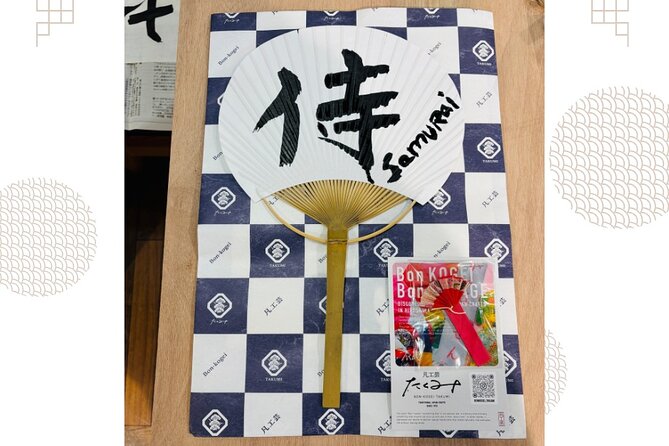
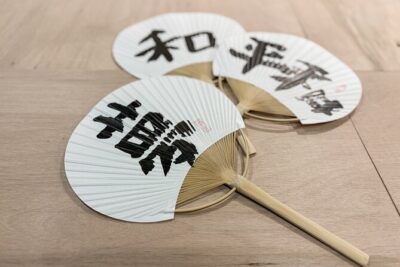
Your final calligraphy is created on one of two classic options: a traditional Japanese hand fan (uchiwa) or a shikishi calligraphy board. You pick which format you’d rather take home, and both make great souvenirs because the artwork stays meaningful.
The fan option is practical and visual. A finished uchiwa is easy to display and easy to remember, and it feels connected to everyday Japanese culture. It’s also a great choice if you want something light to pack.
The shikishi option is more like a display piece. It’s ideal if you want something that looks more formal on a wall shelf or in a display frame. If you’re the type who likes neat, structured souvenirs, this tends to land well.
In both cases, you write your own chosen word. That’s the part that turns it from a “thing you bought” into something you made. You’re not relying on someone else’s handwriting, you’re creating the character shapes with your own brushwork.
Photo Service: Get Your Work Captured Without Stress
There’s an optional photo service during the session. If you want it, the staff can take photos while you’re writing and send them digitally afterward, free of charge.
This is useful because calligraphy timing matters. People often feel awkward trying to photograph while they’re learning brush control. With a photo service, you can focus on the strokes and still have images for later, including shots that show the final piece.
If you’re taking a trip photo album seriously, this helps you document the experience without juggling your camera mid-lesson.
Price and Value: What $32.81 Buys You Here
The price is $32.81 per person for an experience that includes the venue usage fee and all calligraphy tools. You also get a take-home calligraphy fan souvenir as part of the workshop.
For value, I look at three things: instruction, materials, and what you walk away with. Here you get coached step-by-step, traditional brush tools, and an original piece you made with your own word. That’s a lot of “useful” output for a short session.
Also, the workshop is placed in a very central area, near major landmarks and public transit. You’re not paying for a long transfer or a complicated routing scheme, which keeps the overall day cost reasonable.
One more value angle: it’s private for your group. That usually means less waiting and fewer shared interruptions, so your short 45 minutes stay focused.
If you’re trying to keep travel spending under control while still getting one hands-on craft activity, this sits in a good zone. It’s not expensive, but it also doesn’t feel like a quick gimmick.
Who This Hiroshima Calligraphy Workshop Is Perfect For
This works well for first-timers. The lesson includes introductions to the tools, basic strokes practice, and guided writing of hiragana and kanji, which gives you a ramp you can climb without prior study.
It’s also a strong pick if you’re into Japanese culture but prefer doing instead of just watching. Calligraphy is a skill you can feel in your hands, not just something you read about.
I also think it’s a great fit for travelers who want a break from sightseeing. The activity is calming and has a meditative feel, so it’s a good “reset” between busier city moments.
If you’re traveling with someone who likes arts and crafts, this is a rare option that can suit both beginners and more curious learners. You’ll likely come away with a better understanding of how strokes form, even if you don’t master calligraphy in one lesson.
And if you’re worried you might mess up, don’t overthink it. The instructor’s approach is described as gentle and patient, so the goal is learning and creating your piece, not producing a perfect result.
A Practical Plan: When to Fit This Into Your Day
Because it’s close to Peace Park and central transit, timing it is easier than you might think. If you’re doing morning sightseeing, schedule calligraphy for late morning or early afternoon so you can still have time for a walk afterward.
The location on the 5th floor can affect your timing. Give yourself a little buffer so you can find the shop calmly and settle in, especially if you’re also navigating crowds near the Dome area.
Also, consider what you’ll do next after you finish. Your take-home fan or shikishi is a finished art piece, so you’ll want an easy way to store it until you’re done exploring.
Should You Book This Calligraphy Workshop at Takumi?
Book it if you want a short, meaningful craft experience that’s close to Hiroshima’s biggest sights. I’d especially recommend it if you like calm, hands-on learning and you want a take-home souvenir you actually made yourself with traditional Kumano brushes.
Skip it only if you’re looking for a longer class or a deep, multi-session program. This is designed for a single, complete piece in about 45 minutes, so it won’t replace extended calligraphy training.
If you’re traveling for culture, calm, and a personal keepsake, this workshop is a strong choice in Hiroshima.
FAQ
Where does the calligraphy workshop start?
It starts at Bonkogei Takumi at 2-chōme-2-18 Kamiyachō, Naka Ward, Hiroshima, 730-0031, Japan, and it ends back at the same meeting point.
How long does the workshop last?
The workshop duration is about 45 minutes.
What does the price include?
The price includes all calligraphy tools and the venue usage fee, plus an original calligraphy fan souvenir.
Do I need to bring my own calligraphy materials?
No. All tools are provided, so you can just bring yourself.
Is this workshop suitable for beginners?
Yes. The workshop includes step-by-step guidance and is described as perfect for first-timers, including practice of basic strokes and trying hiragana and kanji.
What can I write for my final artwork?
You create a final artwork with a word of your choice.
What can I take home from the workshop?
You take home your original handmade artwork. Your final piece is made on either a traditional Japanese hand fan (uchiwa) or a shikishi board.
Is there an optional photo service?
Yes. The provider can take photos during the session and send them to you digitally afterward for free.
Can I cancel for a full refund?
Yes. Free cancellation is available up to 24 hours before the experience’s start time for a full refund. If you cancel less than 24 hours before, the amount paid is not refunded.
Made by Hand, and Yours to Keep
Hiroshima and Miyajima Together
Newest Hiroshima write-ups from the Loving Japan desk
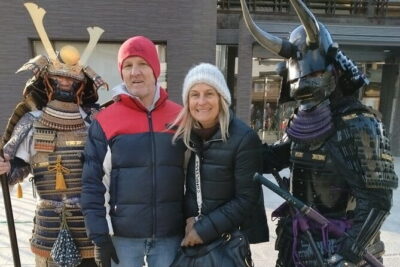
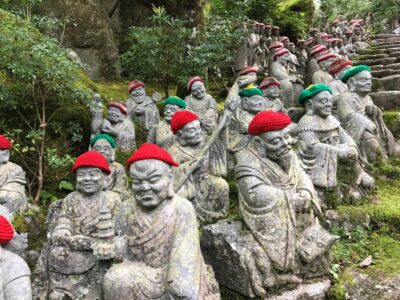
Hiroshima and Miyajima Day Trips, side by side.
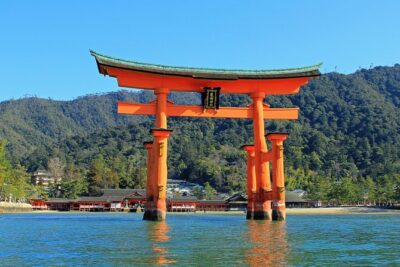 ★ 5.0Peaceful Hiroshima & Miyajima UNESCO 1 Day Bus TourFrom $1295,309 reviews
 ★ 4.9Hiroshima and Miyajima UNESCO Sites 1-Day TourFrom $1222,330 reviews
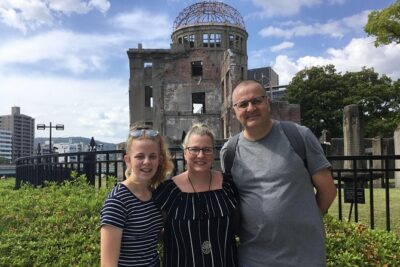 ★ 5.0Hiroshima / Miyajima Full-day Private Tour with Government Licensed GuideFrom $2021,298 reviews
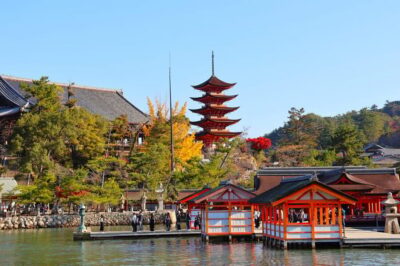 ★ 4.7Osaka/Kyoto: Hiroshima Miyajima Bus Tour & Shinkansen TicketFrom $277919 reviews
 ★ 4.8Hiroshima Historical Walking Tour – Why A-Bomb was DroppedFrom $35893 reviews
 ★ 5.0Hiroshima Peace (Heiwa) Walking Tour at World Heritage SitesFrom $94872 reviews
 ★ 5.0Hiroshima in a Nutshell: Morning Bike AdventureFrom $72524 reviews
 ★ 5.0Hiroshima City 4hr Private Walking Tour with Licensed GuideFrom $122437 reviews
Filed on these lists too