
REVIEW · KYOTO TEA CEREMONIES AND MATCHA
An Amazing set of Cultural experience: Kimono, Tea Ceremony and Calligraphy
Kimono, matcha, and calligraphy, all on Miyajima. You start near the ferry, step into a Zen temple setting at Tokujuji, and spend about 1.5 hours learning three classic Japanese arts in one go. It is hands-on, guided, and designed for real participation, not just watching from the back.
I especially love the kimono dressing. The team helps you pick something that fits, adds the right accessories, and builds in photo time so you look great without fuss. I also like the practical way the tea ceremony is taught, from watching the motions to making matcha yourself.
One consideration: it is a short, structured experience. If you want lots of quiet time to explore the temple grounds at your own pace, you will likely wish it were longer.
In This Review
- Key takeaways before you go
- Miyajima and Tokuji, the setting that makes it feel real
- Where you meet, and how the walk to the temple works
- Kimono dressing at Okeiko Japan Miyajima, more than a photo op
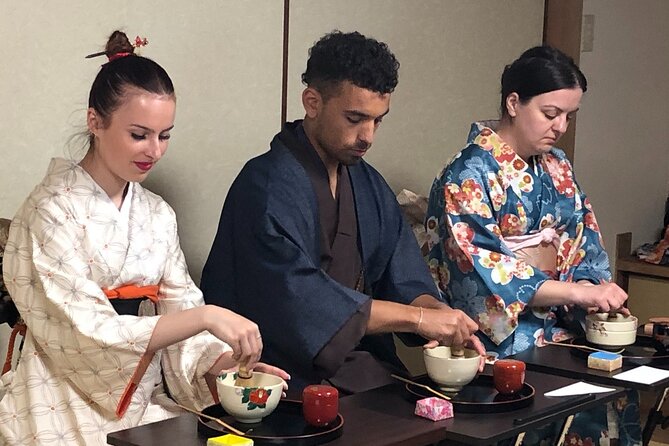
- Making matcha yourself, then learning the tea ceremony flow
- Calligraphy practice, including names and simple kanji
- Group size, attention, and what the experience feels like
- Price and value for a bundled cultural mini-course
- Best fit: who will love this, and who might want to adjust plans
- Should you book this kimono, tea ceremony, and calligraphy experience?
- FAQ
- How long is the experience?
- Where does the experience start?
- How do I get there from Miyajima ferry?
- What activities are included?
- Is it held at a temple?
- What is the group size?
- What is the minimum age?
- What ticket format do I use?
- Can I cancel for a full refund?
- Is it convenient for public transportation?
Key takeaways before you go
- Small group size (max 8), which means more attention while you dress and practice
- Two start times (morning and afternoon), helpful for heat and timing on Miyajima
- Kimono fitting with help on robe, obi, and accessories, not just a quick costume change
- Hands-on tea, including making your own matcha and learning key ceremony steps
- Calligraphy practice you take home, with a keepsake-style souvenir from your writing
Sit down somewhere quieter. Other tea rooms we booked
- Hiroshima Local guided Hiking Tour&Open-air Tea Ceremony
★ 5.0 · 213 reviews - Kimono and Tea Ceremony in Miyajima
★ 5.0 · 73 reviews - An Amazing set of Cultural experience: Kimono, Tea Ceremony and Calligraphy
★ 5.0 · 69 reviews - Hiroshima: Morning Hiking Tour with Open-air Tea Ceremony
★ 4.8 · 58 reviews
Miyajima and Tokuji, the setting that makes it feel real
Miyajima is the kind of place where culture does not feel staged. You are at a historic Zen temple, Tokuji, and that matters for how the activities land in your day. A tea ceremony taught in a studio can feel like a performance. A tea ceremony taught on temple grounds, with gardens around you, feels like it belongs there.
This is also why I like the mix of activities. Kimono dressing is visual and fun, but tea and calligraphy add the slower, skill-based side. Together, they give you more than photos. They give you a sense of how Japanese arts are practiced: careful posture, small movements, and attention to detail.
Where you meet, and how the walk to the temple works
You meet at Okeiko Japan Miyajima, at 741-1 Miyajimachō, Hatsukaichi, Hiroshima. It is about a 5-minute walk from the Miyajima ferry port in the direction of Tokujuji.
That short walk is a big part of the convenience. You do not need long transfers or complex route planning once you are already on the island. And since it is listed as near public transportation, it is manageable even if your day includes other Miyajima stops.
Bring your mobile ticket. The experience uses a mobile ticket system, and you should receive confirmation at booking. In practice, it means you can focus on showing up and participating, not hunting down paper tickets.
Kimono dressing at Okeiko Japan Miyajima, more than a photo op
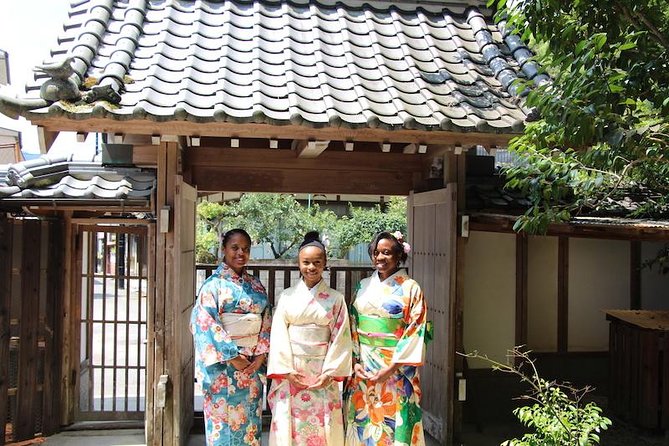
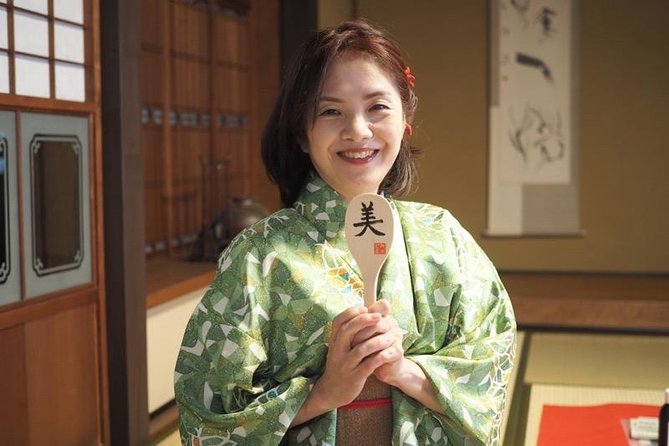
The kimono portion is often the first thing people talk about, and for good reason. This is not a quick, stand-still costume change. The team helps you choose from kimono options in your size, then assists with the full outfit: robe, obi, and accessories. You also get guidance with things like socks and sandals, so you are not improvising in a pair of slippery wooden-style shoes.
What makes it feel special is the care and the pace. The staff take time to get you dressed properly, and you end up looking like you belong in the setting, not like a tourist in borrowed clothing. One review even notes that the men in the group enjoyed it, which tells you the experience is welcoming and not strictly “for one type of traveler.”
Practical tip: plan to wear comfortable clothes underneath and expect the fit to be adjusted. Kimono dressing is part of the lesson. You will likely feel the difference between kimonos you can wear casually and kimonos you are guided into correctly.
Photo time is built in. You get pictures while you are in the gardens and dressed for the part. If you are the type who usually avoids posed shots, this is still worth it, because the photos are taken during the flow of the experience, not as an awkward afterthought.
Possible drawback to keep in mind: you might feel warm depending on the day. Reviews mention arriving early to beat heat on the island. If you are going in warmer months, I would lean toward the morning start time when possible.
- Hiroshima Peace (Heiwa) Walking Tour at World Heritage Sites★ 5.0 · 872 reviews
- Hiroshima in a Nutshell: Morning Bike Adventure★ 5.0 · 524 reviews
- Hiroshima City 4hr Private Walking Tour with Licensed Guide★ 5.0 · 437 reviews
- From Hiroshima: Hiroshima & Miyajima 1 Day Tour with Lunch★ 4.7 · 395 reviews
- Japanesel Archery Experience HIROSHIMA CASTLE SHARAKU★ 5.0 · 387 reviews
Making matcha yourself, then learning the tea ceremony flow
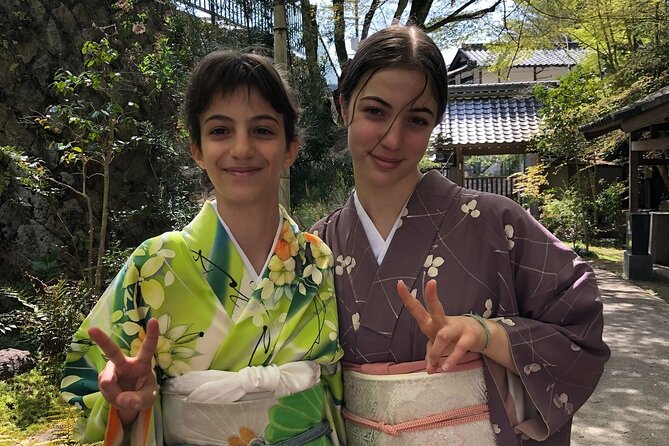
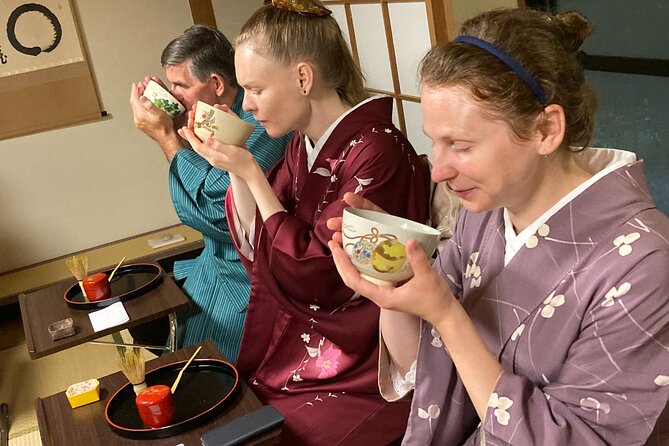
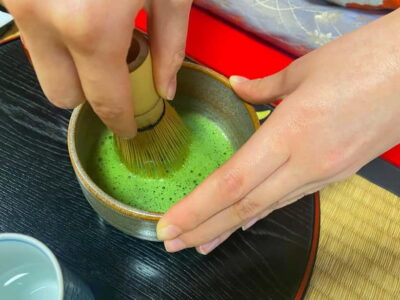
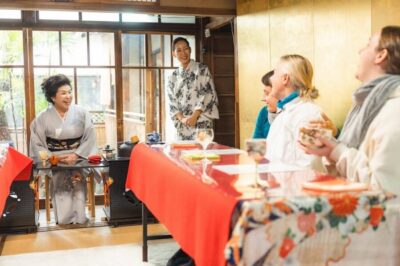
The tea ceremony section has two parts: you watch and learn, then you do. You learn how the motions work, how the steps connect, and the small mannerisms that turn a drink into a ritual.
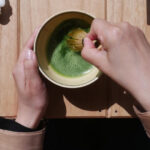
Then you whisk your own matcha. That moment is what turns it from “a cultural show” into “a skill you can remember.” Reviews highlight that the process is interesting and interactive, with clear explanations (including in English, praised by at least one guest).
You also get to see and use tea tools that are described as beautiful, including tea bowls attributed to local artisans. You are not just sipping. You are seeing how specific items and handling make the ceremony feel intentional.
A good thing to know: the tea ceremony is hands-on, but it is not long and heavy. You are there for about 1.5 hours total, so the lesson stays focused on the core moves. If you want a short, meaningful crash course, this fits well.
Calligraphy practice, including names and simple kanji
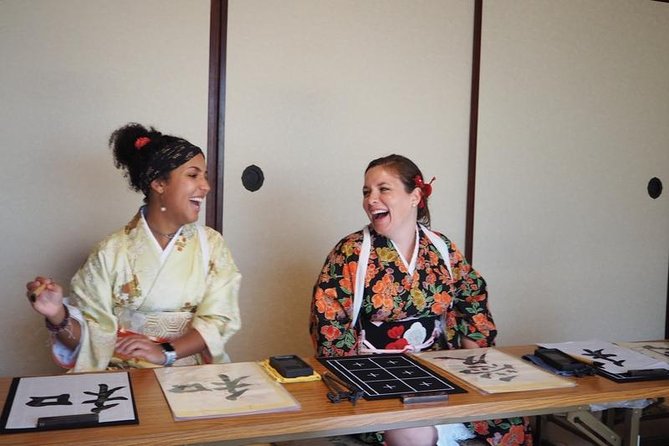
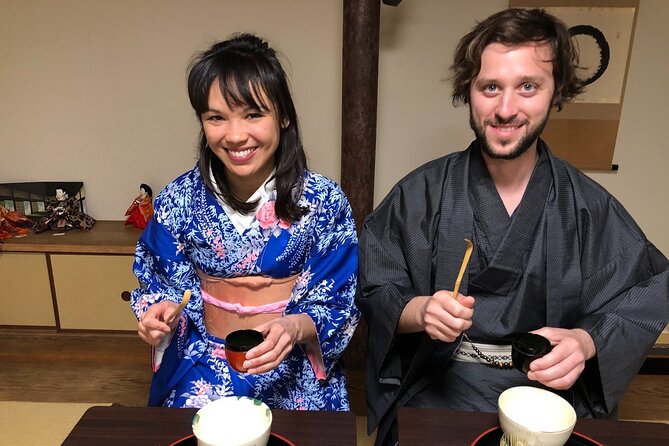
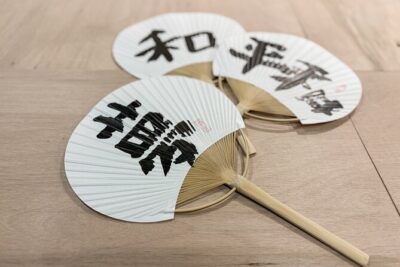
After tea, you move into calligraphy. The class is built for real participation. You practice kanji (and, in some cases, your name) and learn that the first strokes are harder than they look.
That is part of the charm. Calligraphy is one of those arts where you immediately notice your own errors, and the teacher help makes the process less intimidating. Reviews say you write a few symbols and your name, and that the souvenir result is thoughtfully handled for you afterward.
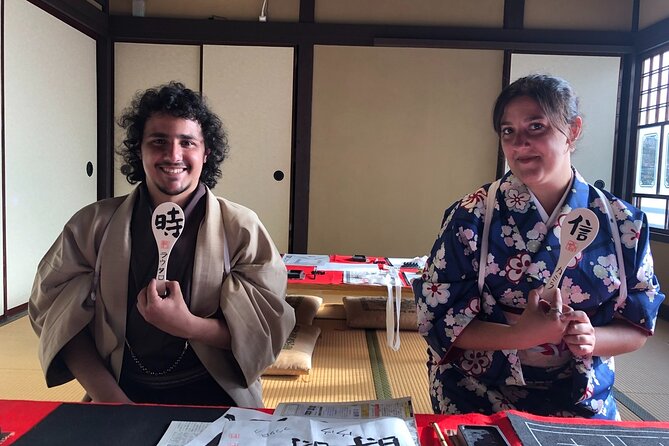
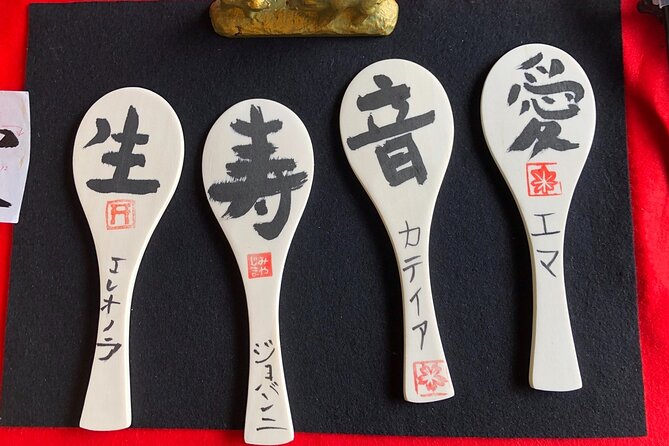
One review mentions calligraphy practice using wooden spoons, with the finished work wrapped for a souvenir. Even if your exact keepsake format differs slightly day to day, you can expect a take-home item that connects your effort to a physical memory.
Practical tip: go in with a beginner mindset. Your goal is to learn the motions, not to produce perfect calligraphy. The value here is the coaching and the fun of trying.
Group size, attention, and what the experience feels like
This is capped at max 8 travelers, which is a sweet spot for activities like kimono dressing and hands-on tea and calligraphy. With a smaller group, the staff can help with fit adjustments, keep you moving through each step, and take more photos without it becoming chaotic.
The atmosphere also comes through in the reviews. People repeatedly mention warm hospitality, a relaxed environment, and friendly explanations. One guest even called it a highlight while looking for a lighter day after sightseeing. That tells me this experience is a good “pause” on a trip, not just another checkbox activity.
You should also consider the pacing. It is structured, with clear phases (kimono, tea, calligraphy) and photo time woven in. If you prefer long, independent temple exploration, you may want to pair this with extra time at Miyajima on your own. If you want guided cultural practice in a short time, you will appreciate how efficient it is.
Price and value for a bundled cultural mini-course
At $132.14 per person, this is not a bargain-basement activity. But you are not buying one class. You are buying a packed cultural experience: kimono dressing, tea ceremony instruction and matcha making, calligraphy practice, temple setting time, and professional-style photo time.
When you break it down, the value comes from the bundle effect. A kimono outfit alone often costs more than a lesson. Add hands-on tea instruction, then calligraphy coaching, and you start to see why guests call it a trip highlight. And because it is a small group, the staff attention is part of what you are paying for.
One more value clue: the experience lists an admission ticket free for the Okeiko Japan Miyajima stop. Even without assuming anything beyond what is stated, that suggests you are getting a straightforward, included entry component rather than juggling extra fees.
If you are deciding when to book, note that the average booking window is 38 days in advance. That implies it is popular enough that planning ahead can help you lock in the start time you want.
Best fit: who will love this, and who might want to adjust plans
This experience is ideal if you:
- Want a short, guided cultural lesson on Miyajima without spending hours switching between activities
- Enjoy dressing up and want photos taken for you as part of the process
- Like hands-on learning, especially where you get to do it immediately, like whisking matcha and practicing strokes in calligraphy
- Travel with partners or friends who will also enjoy a small-group format
It may be less ideal if you:
- Want unstructured time to wander the temple grounds for a long stretch
- Get uncomfortable with wearing layered clothing and spending time adjusting to fit details
- Are looking for an in-depth academic lecture. This is skill-focused and experience-based, not a long study session
Should you book this kimono, tea ceremony, and calligraphy experience?
I think you should book it if you want a concentrated hit of Japanese arts in a place that feels authentic. The combo works because each part supports the others: kimono puts you in the visual tradition, tea teaches you the rhythm of ceremony, and calligraphy shows you how practice turns into a keepsake.
Book it especially if you care about value beyond selfies. The emphasis on staff guidance, photos, and a take-home result means you leave with more than a memory. You leave with the feeling of having learned something real, even as a beginner.
If your trip already includes a lot of temple time, do not automatically skip this. The tone is different. You are not just touring. You are participating, with a small group and clear instruction throughout.
FAQ
How long is the experience?
The experience is listed at approximately 1 hour 30 minutes.
Where does the experience start?
The meeting point is Okeiko Japan Miyajima, 741-1 Miyajimachō, Hatsukaichi, Hiroshima 739-0588, Japan.
How do I get there from Miyajima ferry?
The meeting point is about a 5-minute walk from the Miyajima ferry port toward Tokujuji.
What activities are included?
You’ll learn to wear a kimono, make your own matcha and experience a tea ceremony, and do calligraphy practice.
Is it held at a temple?
Yes. The experience is described as taking place at a historic Zen temple in Miyajima, with entry to Tokuji Temple.
What is the group size?
The experience has a maximum of 8 travelers.
What is the minimum age?
The minimum age is 6.
What ticket format do I use?
It uses a mobile ticket.
Can I cancel for a full refund?
Free cancellation is available up to 24 hours in advance for a full refund, based on local time.
Is it convenient for public transportation?
Yes, it is listed as near public transportation.
Rental Counters, Compared
Kyoto by the Bowl
Newest Hiroshima write-ups from the Loving Japan desk
Kyoto Tea Ceremonies and Matcha, side by side.
 ★ 4.9Tea Ceremony in a Traditional Tea House in KiyomizuFrom $493,519 reviews
 ★ 4.9Tea Ceremony Ju-An at Jotokuji TempleFrom $293,207 reviews
 ★ 4.345-Minute Tea Ceremony Lesson ExperienceFrom $222,378 reviews
 ★ 5.0World Heritage Kyoto & Nara Uji Authentic Matcha ExperienceFrom $1291,573 reviews
 ★ 4.9Tea Ceremony ExperienceFrom $251,426 reviews
 ★ 4.9Table-Style Tea Ceremony at a Kyo-MachiyaFrom $451,211 reviews
 ★ 4.8Kenrokuen Tea Ceremony ExperienceFrom $351,139 reviews
 ★ 5.0Kimono Tea Ceremony at Kyoto Maikoya, NISHIKIFrom $65911 reviews