
REVIEW · KYOTO TEA CEREMONIES AND MATCHA
Cultural Activities :Kimono, tea ceremony, Calligraphy and Amulet
Three traditions in a temple garden. This Hiroshima-Miyajima experience packs kimono dressing, Japanese calligraphy, a tea ceremony, and amulet-making into about two hours, all in a centuries-old temple setting.
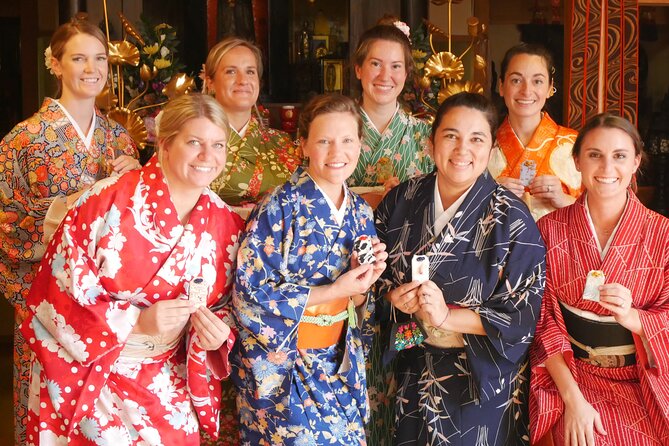
I love that you get fitted with a provided kimono and traditional apron, and the teachers photograph you during the lessons and send the images by email afterward.
I also really like the hands-on structure. You learn how to write your name in Japanese through calligraphy, then you finish with amulet making that feels more special than a typical souvenir workshop.
One possible drawback to plan for, the time is tight, with roughly half an hour per activity, so this is a satisfying introduction, not a deep training course.
In This Review
- Key things to know before you go
- Tokuju-ji Temple gardens: the calm setting for your cultural mini-course
- A Buddha story you will actually remember: Kinseki Jizo and its meaning
- How the Soto-syu temple atmosphere links Miyajima to Shinto
- Getting dressed in a kimono and apron, then settling in for lessons
- Japanese calligraphy lesson: writing your name in a temple setting
- Tea ceremony: matcha and manners, explained in plain steps
- Amulet-making class: a rare souvenir you will actually treat like a ritual
- Price and value: does $171.73 make sense for three activities?
- Timing and logistics that affect your day on Miyajima
- Who will love this most, and who might want something different
- Should you book this Miyajima cultural set?
- FAQ
- What cultural activities are included?
- How long does the experience take?
- Where is the meeting point?
- Are photos included?
- Is the kimono provided?
- What is the minimum age?
- Is free cancellation available?
Key things to know before you go
- Two-hour total timing keeps it focused, roughly half an hour per activity
- Small group size (up to 10) helps you get real attention during each craft
- Kimono plus traditional apron are provided, so you are dressed the part without extra prep
- Teachers take photos during the lessons and email them to you afterward
- Tokuju-ji Temple visit includes admission, with a short temple introduction in the gardens
- Mobile ticket makes check-in simpler on the day
Sit down somewhere quieter. Other tea rooms we booked
- Hiroshima Local guided Hiking Tour&Open-air Tea Ceremony
★ 5.0 · 213 reviews - Kimono and Tea Ceremony in Miyajima
★ 5.0 · 73 reviews - An Amazing set of Cultural experience: Kimono, Tea Ceremony and Calligraphy
★ 5.0 · 69 reviews - Hiroshima: Morning Hiking Tour with Open-air Tea Ceremony
★ 4.8 · 58 reviews
Tokuju-ji Temple gardens: the calm setting for your cultural mini-course
Your tour starts at Okeiko Japan Miyajima at 741-1 Miyajimachō, Hatsukaichi, Hiroshima 739-0588. From there, you head into Tokuju-ji Temple, a site founded about 300 years ago.
What I like here is that the setting does real work. You are not just sitting at a table for three crafts, you are stepping into a temple space tied to everyday beliefs and local traditions.
A Buddha story you will actually remember: Kinseki Jizo and its meaning
At Tokuju-ji, you get a chance to learn about the main Buddha, Kinseki Jizo, known for protection related to children and pregnancy. The temple also shares an old story about an elderly couple who prayed to Jizo for a baby. When their wish came true, they built the temple in gratitude.
Even if you only catch the main points, the story makes the rest of the experience feel more grounded. The calligraphy and amulet-making do not feel like random skills. They feel like parts of a culture where people express hopes, respect, and community through simple rituals.
How the Soto-syu temple atmosphere links Miyajima to Shinto
Tokuju-ji belongs to the Soto-syu sect. In Miyajima, temples are connected in some way to the presence of Itsukushima Shrine, and you may notice elements that you typically associate with Shinto.
This is a nice bonus for your travel brain. Japan is not always neatly separated by labels. Even a short cultural lesson can show how religions and practices share space, symbols, and storytelling.
- Hiroshima Peace (Heiwa) Walking Tour at World Heritage Sites★ 5.0 · 872 reviews
- Hiroshima in a Nutshell: Morning Bike Adventure★ 5.0 · 524 reviews
- Hiroshima City 4hr Private Walking Tour with Licensed Guide★ 5.0 · 437 reviews
- From Hiroshima: Hiroshima & Miyajima 1 Day Tour with Lunch★ 4.7 · 395 reviews
- Japanesel Archery Experience HIROSHIMA CASTLE SHARAKU★ 5.0 · 387 reviews
Getting dressed in a kimono and apron, then settling in for lessons
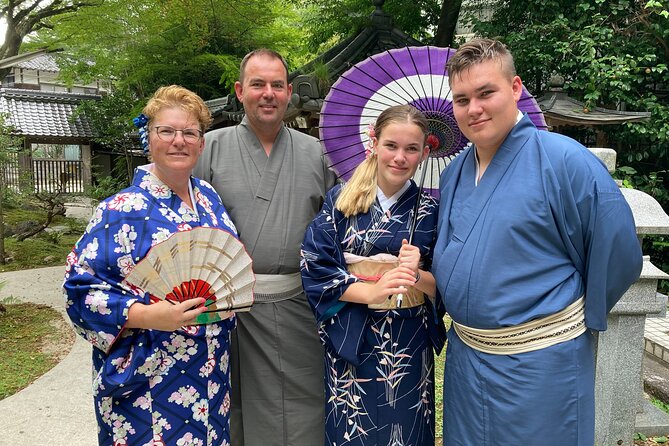
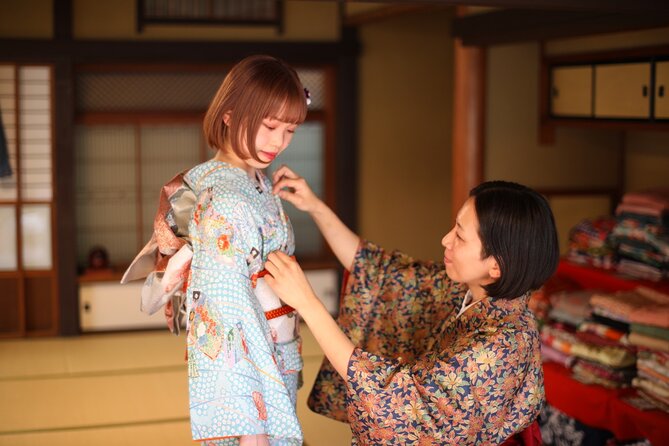
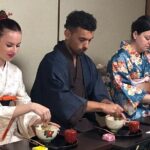
Once you arrive, you are set up to wear a provided kimono and a traditional apron. This is one of the easiest “instant culture” wins on the island. You do not need to rent anything, and the teachers guide you through the process so you can focus on the actual activities.
The best part is what the outfit does for your mindset. It slows you down. It makes you pay attention to posture, rhythm, and small steps, which is exactly what calligraphy, tea, and amulet-making require.
You also get the benefit of a photo plan. Your teachers take photos during the lessons and send them to you later by email. So you are not juggling a camera the whole time.
Japanese calligraphy lesson: writing your name in a temple setting
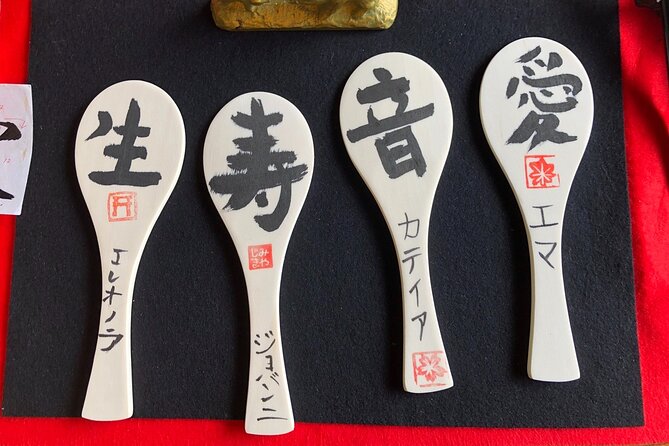
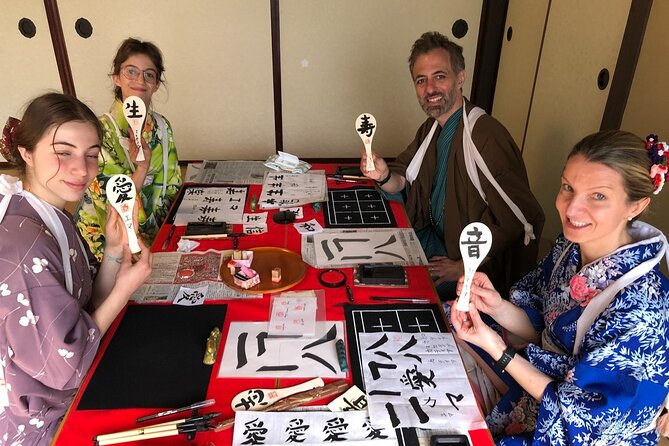
The calligraphy portion is built around something personal: writing your name in Japanese. You will spend about half an hour on this activity, and it is paced for beginners.
This is the sort of lesson that teaches more than penmanship. You start to understand how Japanese calligraphy is about control and intention, not about being perfect. When you walk away with your own name written in characters, it turns into something you can look at later and remember what you learned.
Tip for getting more value out of this: slow down when you are writing. If you rush, the strokes stop making sense. If you go steady, you feel the difference quickly.
Tea ceremony: matcha and manners, explained in plain steps
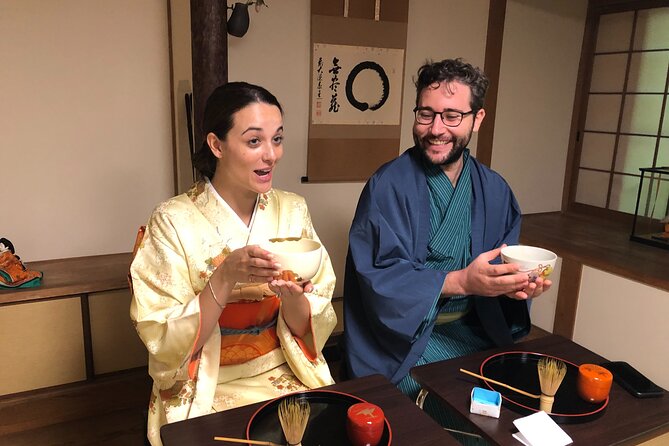
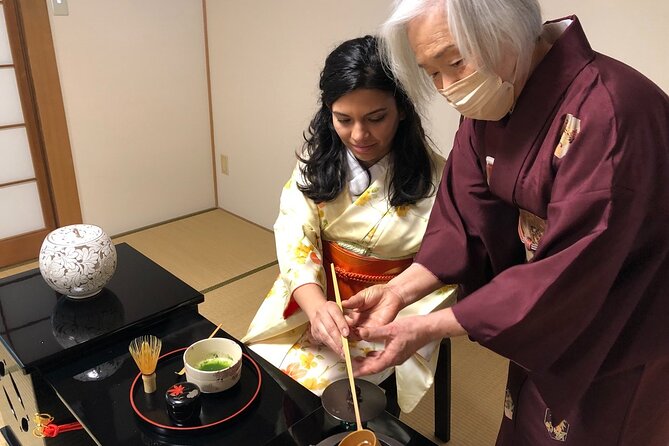
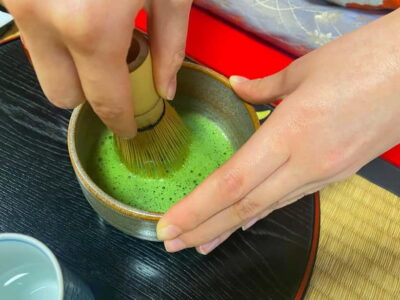
Next up is the tea ceremony. Like the other sections, it runs around half an hour, which means you will learn the basics without the session stretching into a long cultural marathon.
What is useful here is the hands-on nature. You are not just hearing about the ceremony. You are doing it. That tends to stick better, especially when you are already wearing the kimono and moving through a calm temple space.
And since your teachers are taking photos during the activities, you can concentrate on the flow of the ceremony instead of snapping pictures at the wrong moment.
Amulet-making class: a rare souvenir you will actually treat like a ritual
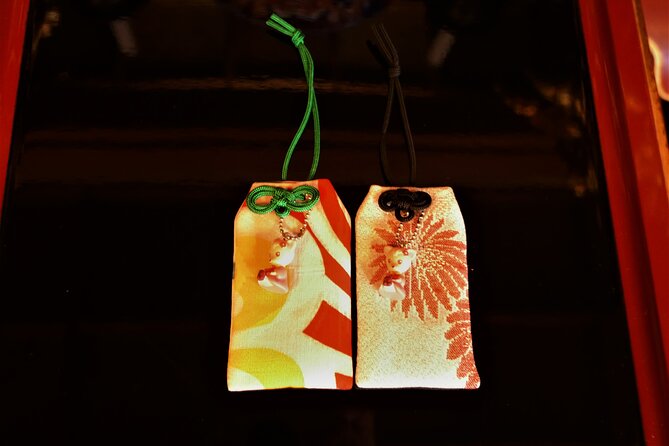
The final activity is amulet-making. You spend about half an hour creating your own amulet, and this is the part that many people end up talking about afterward because it feels less like a generic craft and more like a meaningful object.
There is a real practical reason to like this workshop style. You are not just buying something pre-made. You participate in making it, so you can bring it home as a memory with a purpose, not just a picture in your camera roll.
Also, amulet-making is not offered everywhere. Having it included in a short, well-organized package makes this tour more valuable than it looks at first glance.
Price and value: does $171.73 make sense for three activities?
The price is $171.73 per person, and the experience lasts about two hours. That sounds like a lot until you count what is included.
You get:
- A kimono and a traditional apron provided for the sessions
- Calligraphy instruction focused on writing your name in Japanese
- A tea ceremony activity
- Amulet-making
- Admission included for about 20 minutes at Tokuju-ji Temple
- Photos taken during the lessons, delivered by email
- Mobile ticket for the day
When you break it down, you are paying for three guided activities plus the “costs behind the scenes” like admission, materials, and teacher time. Rough math puts it at around $55 to $60 per activity, and those are not cookie-cutter crafts, they are structured cultural lessons tied to a real temple setting.
One more value factor: the group size is capped at 10. In a small group, you are more likely to get corrections and encouragement when you need it. That matters for calligraphy and for getting the tea steps right.
Finally, this tour often gets booked ahead, averaging about 52 days in advance. If your dates are fixed, I would not treat it as a last-minute “maybe.”
Timing and logistics that affect your day on Miyajima
The meeting point is Okeiko Japan Miyajima, and the experience ends back at the same location. It is listed as near public transportation, which helps if you are moving around Hiroshima-Miyajima without a car.
Duration is about two hours. That makes it a smart choice when you want Miyajima culture without sacrificing your whole day. It also pairs well with temple wandering and scenic time, since you are already at a temple and in a garden area.
Also note the age rule: minimum age is 6, and children must be accompanied by an adult. If you are traveling with kids, this format can work well because the activities are short, hands-on, and clearly separated.
Who will love this most, and who might want something different
This experience is ideal if you want a taste of Japanese traditions with direct instruction. If you like learning by doing, not just watching, you will probably feel satisfied.
It also works well if you care about photos but do not want to spend the whole day behind a phone. The teachers taking photos during the lessons, then emailing them later, is a practical win.
Who might want to look elsewhere? If you are hoping for a very long, deep workshop where you master one craft, the timing may feel brief. You are getting a thoughtful introduction, not weeks of training.
Should you book this Miyajima cultural set?
Yes, I think you should book it if you want a compact, authentic-feeling cultural program in Hiroshima that actually teaches you things you can take home. The combination of kimono dressing, calligraphy, tea, and amulet-making in a real temple setting gives you variety without chaos.
Book it especially if:
- you want small-group attention
- you like hands-on learning
- you want a meaningful souvenir you helped create
- you want photos handled for you
If your schedule is tight on Miyajima, this tour is a smart move because it respects your time. Two hours is enough to learn, participate, and walk away with a few lasting objects and memories, rather than just a general feeling.
FAQ
What cultural activities are included?
You get three activities: a Japanese calligraphy lesson (writing your name in Japanese), a tea ceremony, and an amulet-making class. You also wear a provided kimono and traditional apron during the lessons.
How long does the experience take?
The tour lasts about 2 hours. The temple stop includes about 20 minutes with admission included, and each activity is roughly half an hour.
Where is the meeting point?
You meet at Okeiko Japan Miyajima, 741-1 Miyajimachō, Hatsukaichi, Hiroshima 739-0588, Japan. The experience ends back at the meeting point.
Are photos included?
Yes. Your teachers take photos during the lessons and send them to you by email.
Is the kimono provided?
Yes. You wear a provided kimono and a traditional apron during the activities.
What is the minimum age?
The minimum age is 6. Children must be accompanied by an adult.
Is free cancellation available?
Yes. You can cancel for a full refund as long as you cancel at least 24 hours before the experience’s start time (local time).
Rental Counters, Compared
Kyoto by the Bowl
Newest Hiroshima write-ups from the Loving Japan desk
Kyoto Tea Ceremonies and Matcha, side by side.
 ★ 4.9Tea Ceremony in a Traditional Tea House in KiyomizuFrom $493,519 reviews
 ★ 4.9Tea Ceremony Ju-An at Jotokuji TempleFrom $293,207 reviews
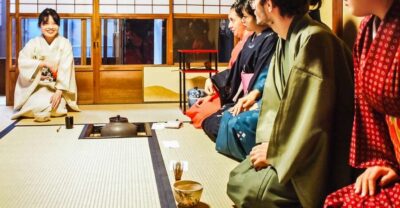 ★ 4.345-Minute Tea Ceremony Lesson ExperienceFrom $222,378 reviews
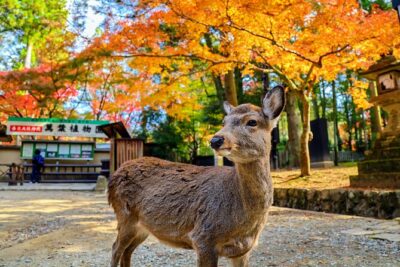 ★ 5.0World Heritage Kyoto & Nara Uji Authentic Matcha ExperienceFrom $1291,573 reviews
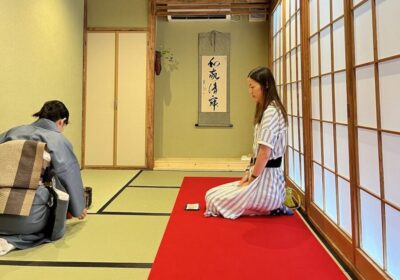 ★ 4.9Tea Ceremony ExperienceFrom $251,426 reviews
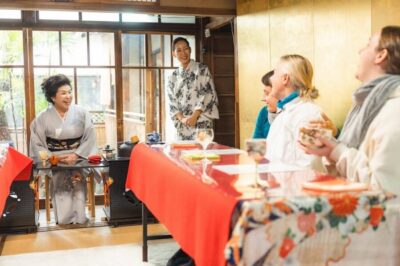 ★ 4.9Table-Style Tea Ceremony at a Kyo-MachiyaFrom $451,211 reviews
 ★ 4.8Kenrokuen Tea Ceremony ExperienceFrom $351,139 reviews
 ★ 5.0Kimono Tea Ceremony at Kyoto Maikoya, NISHIKIFrom $65911 reviews