
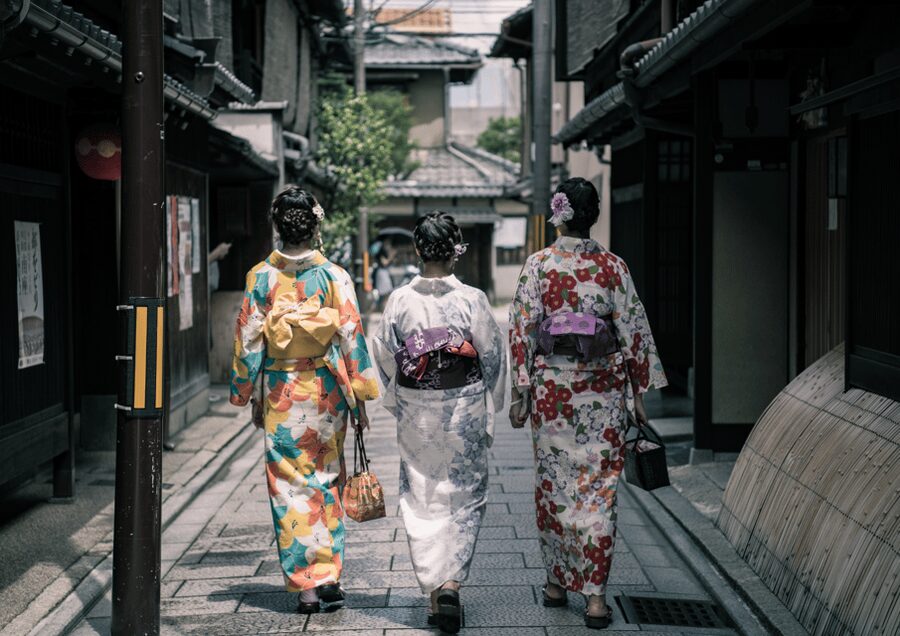
REVIEW · GION, GEISHA AND MAIKO EXPERIENCES
Gion Walking Tour, Geisha Show and Japanese Game in Kyoto
Gion hits different at nightfall, and this tour keeps it personal. I like the small group size because it makes the walk feel human, not rushed, and you get real time to ask questions during the second half. I also love the maiko-focused show plus fan game, which turns Kyoto culture from something you watch into something you try. One possible drawback is that the experience is tightly timed, so if you want long wandering time on your own, you will feel the schedule.
The route starts at a classic Gion landmark, the Izumo-no-Okuni Statue above Gion Shijo Station, and your guide shows up holding a white board that says GuideMe Japan. Then you spend the first hour getting historical context for Gion, and the second hour shifts into a close-up maiko dance performance with Q and A time. Small details matter here, like the tea and Japanese snack, because it helps the whole evening feel like a shared moment rather than a ticket-and-vanish event. If you are sensitive to crowds, do note that Gion can still be busy even when you go with a guide.
In This Review
- Key Takeaways
- Gion, the Easy Way to Understand It
- Meeting at Izumo-no-Okuni, Then Getting Your Bearings Fast
- The 1-Hour Gion Walk: History, Etiquette, and Street-Level Context
- The Maiko Dance Show: What You Get in the Second Hour
- Playing the Traditional Fan Game with the Geisha Apprentice
- Small Group Size, English Guidance, and the Feeling of Being Accounted For
- Included Extras That Make the Tour Feel Like an Experience, Not a Transaction
- Price and Value: Is $108 Worth It for 2 Hours?
- Who Should Book This Gion Tour
- Should You Book This Tour?
- FAQ
- How long is the tour?
- Where is the meeting point?
- Is the tour guide available in English?
- What happens during the first hour?
- What happens during the second hour?
- Is tea and a snack included?
- What is the cancellation policy and can I pay later?
Key Takeaways
- Two-part format: a 1-hour Gion walk for context, then 1 hour with a maiko for performance and questions
- Very small group: limited to 6 participants, so interaction actually happens
- Hands-on culture: you play a traditional Japanese fan game with the maiko
- Comfort first: tea and a Japanese snack are included
- Easy meeting point: Izumo-no-Okuni Statue, right above Gion Shijo Station, with a GuideMe Japan sign
Evening walks through the old quarters, compared
- Kyoto Geisha Walking Tour: Gion District & Hidden Gems
★ 4.7 · 3,273 reviews - Kyoto: Gion Magical Night Walking Tour with Geisha Trivia
★ 4.9 · 2,393 reviews - Kyoto: Gion Geisha District Walking Tour – Stories of Geisha
★ 4.7 · 2,187 reviews - Best of Kyoto: Gion, Geisha, Pagodas & Cobblestones
★ 4.9 · 2,058 reviews
Gion, the Easy Way to Understand It
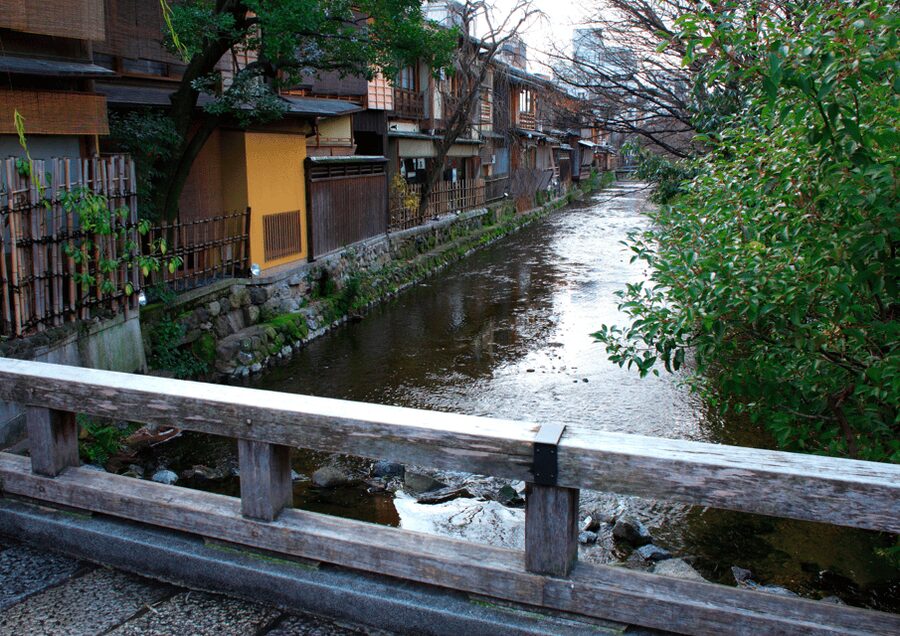
Kyoto’s Gion is famous for a reason. But if you just stroll on your own, it is easy to miss the why behind the streets. This tour starts by giving you that frame in the first hour, so the alleys and details stop feeling random and start feeling intentional.
I like that the pace is built for learning, not speedwalking. You get a guided loop around the main Gion area with historical insight, which helps you connect what you see to the role geiko and maiko play in Gion culture. And since the group is limited to 6 people, you are not fighting for space to ask something or to hear the guide.
One more practical note: Gion can be photogenic in a very distracting way. When you have a guide pointing things out, you end up looking with purpose instead of just scrolling your camera roll.
Meeting at Izumo-no-Okuni, Then Getting Your Bearings Fast
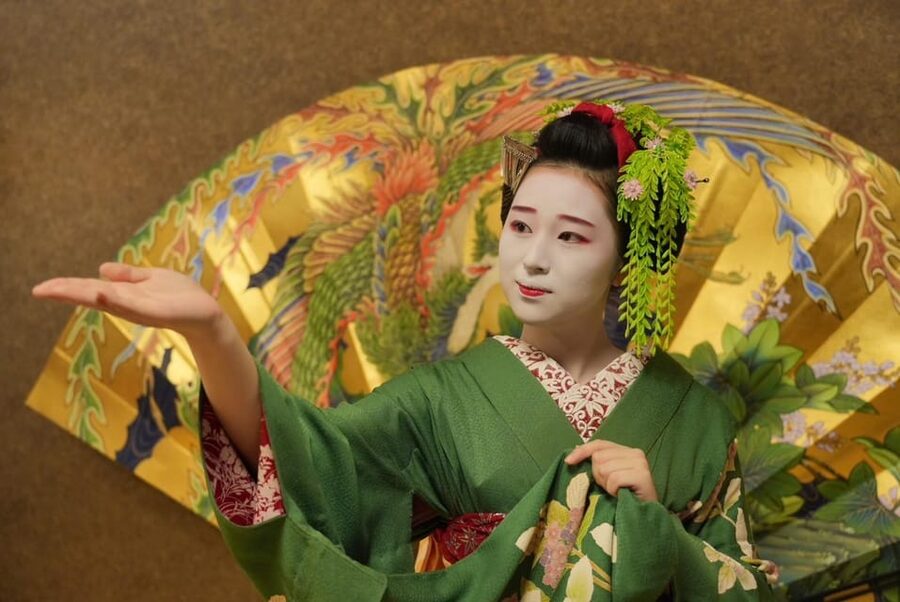
Your meeting point is the Izumo-no-Okuni Statue right above Gion Shijo Station. Your guide will be holding a white board that says GuideMe Japan, which makes it simpler than hunting down a person among a crowd.
From a value standpoint, that matters. A good tour does two things: it gives you content and it wastes less of your time. Meeting right by Gion Shijo means you can get moving quickly, and you avoid the classic Kyoto problem of spending your first 20 minutes trying to locate your group.
Then the tour line heads into Gion. This is not just a walk for walking’s sake. It is your warm-up for understanding the setting where the maiko performance will happen. In other words, the first hour sets up the second hour so you do not experience it like separate events.
The 1-Hour Gion Walk: History, Etiquette, and Street-Level Context
The first hour is your guided tour of Gion, with historical insight as you go. This is where the experience earns its keep, because Gion is layered. The district looks like a postcard from the outside, but on the ground it is a living tradition with rules, rhythms, and symbolism.
I especially like that you are guided around the main area of Gion, not just the busiest one street. That approach helps you understand how the district works as a network. When you only see the most crowded lanes, you can end up thinking that is all there is. With a guide, you start noticing how space, signs, and architecture relate to daily life.
You are also in an information-rich mode. Your guide is explaining what you are seeing while you are seeing it, so the learning sticks. And because the group stays small, you can ask follow-up questions instead of waiting for a break in the schedule.
Tip for you: if you have questions you want answered before the show, save them for this hour. Once the maiko portion starts, your attention will naturally shift, and you will have less room for general history.
- PERFECT KYOTO 1-Day Bus Tour★ 5.0 · 13,518 reviews
- Kyoto: Fushimi Inari, Kinkakuji, Bamboo Grove 1 Day Bus Tour★ 4.8 · 4,316 reviews
- Kyoto: Tea Ceremony in a Traditional Tea House in Kiyomizu★ 4.9 · 3,519 reviews
- Kyoto Geisha Walking Tour: Gion District & Hidden Gems★ 4.7 · 3,273 reviews
- Kyoto: Tea Ceremony Ju-An at Jotokuji Temple★ 4.9 · 3,207 reviews
The Maiko Dance Show: What You Get in the Second Hour
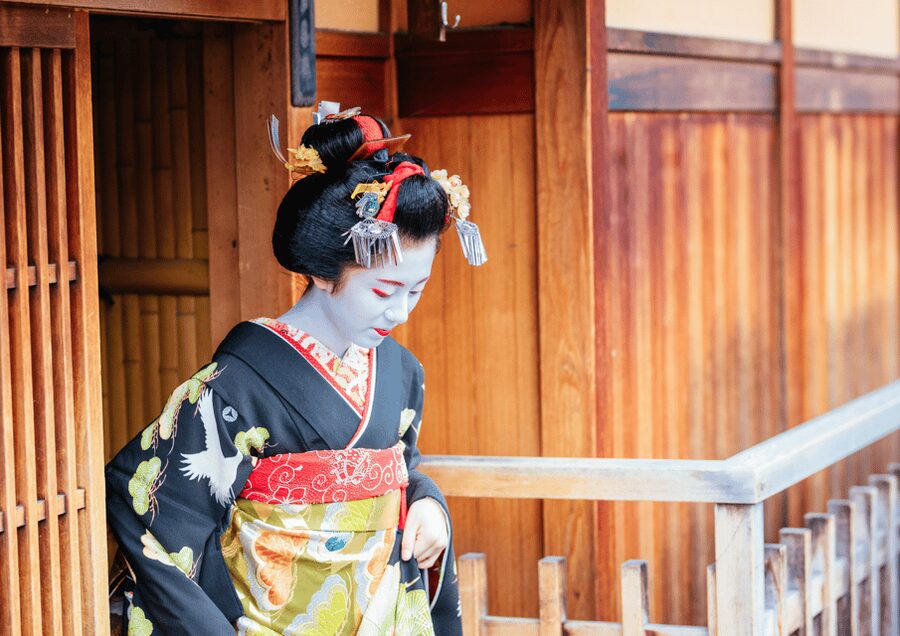
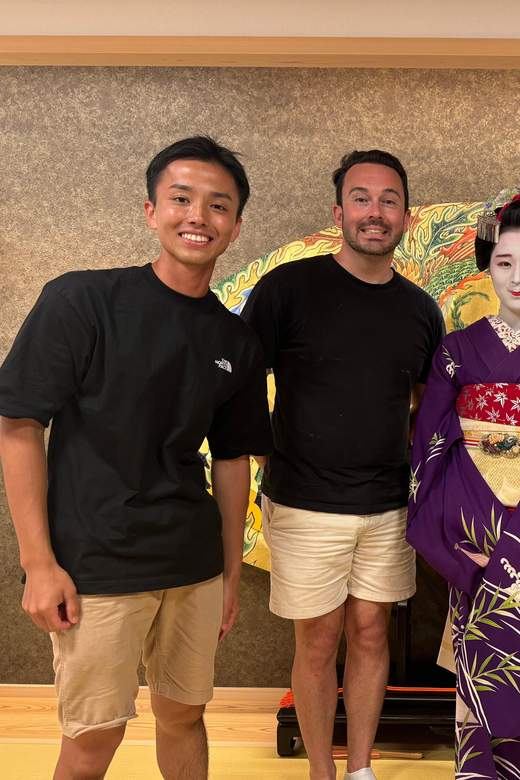
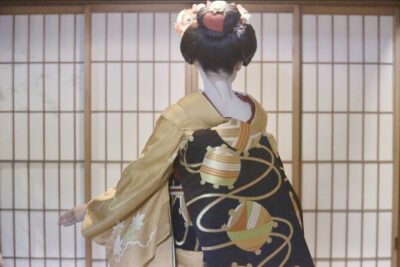
The second hour is the show portion, where you see a maiko, the geisha apprentice, perform. This is not a passive lecture. The plan is built around watching the dance, then having time to ask questions about her current life.
This is the heart of the tour, and it is why the format works. A 2-hour experience can feel too short for some topics, but here it is focused. One hour for orientation, one hour for performance and interaction. That structure gives you a complete arc: understand the context, then witness the art.
In the show setting, you also get tea and a Japanese snack included in the experience. That small detail changes the vibe. It slows you down. It makes it easier to be present instead of just looking for the next moment to capture.
And the interaction part is key. You have time to ask questions about the maiko’s life, which turns the experience from entertainment into learning. Based on what guides like Ai Iwata and Rin have been praised for, the Q and A is handled patiently in English, so you are not left guessing what questions are worth asking or how to word them.
One consideration: this is a formal cultural setting. Even if you are excited, you will want to keep your expectations grounded. Listen first, ask respectfully, and treat it like being invited into someone’s world rather than a show for your attention.
Playing the Traditional Fan Game with the Geisha Apprentice
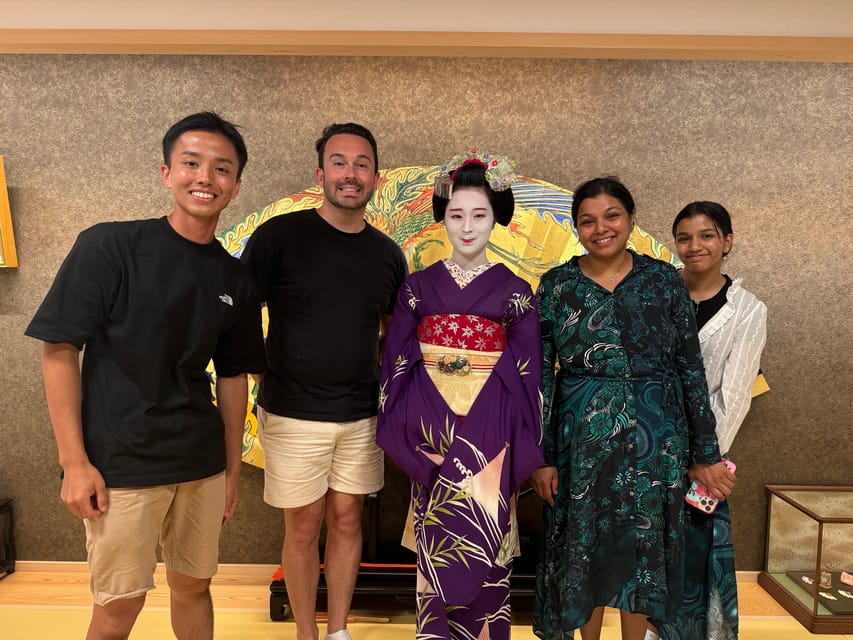
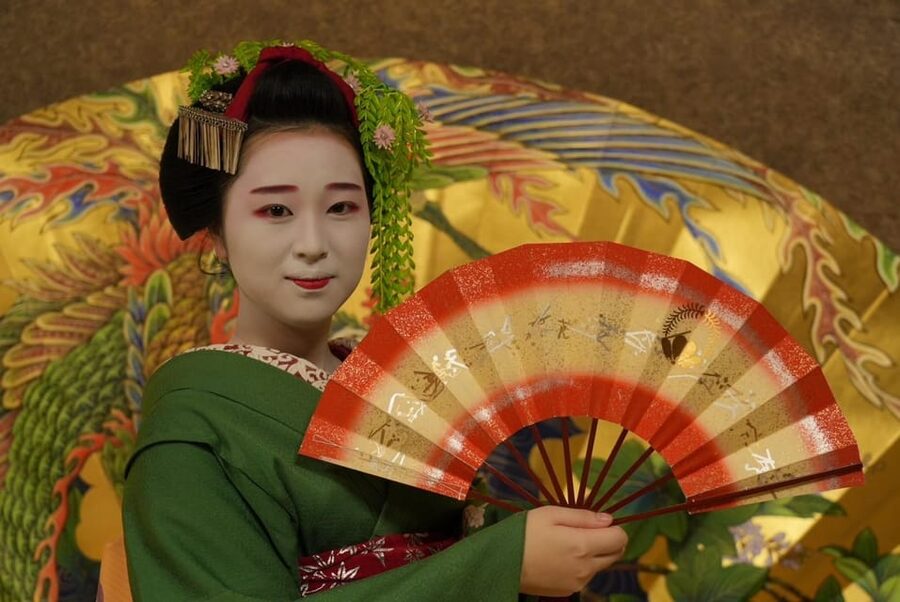
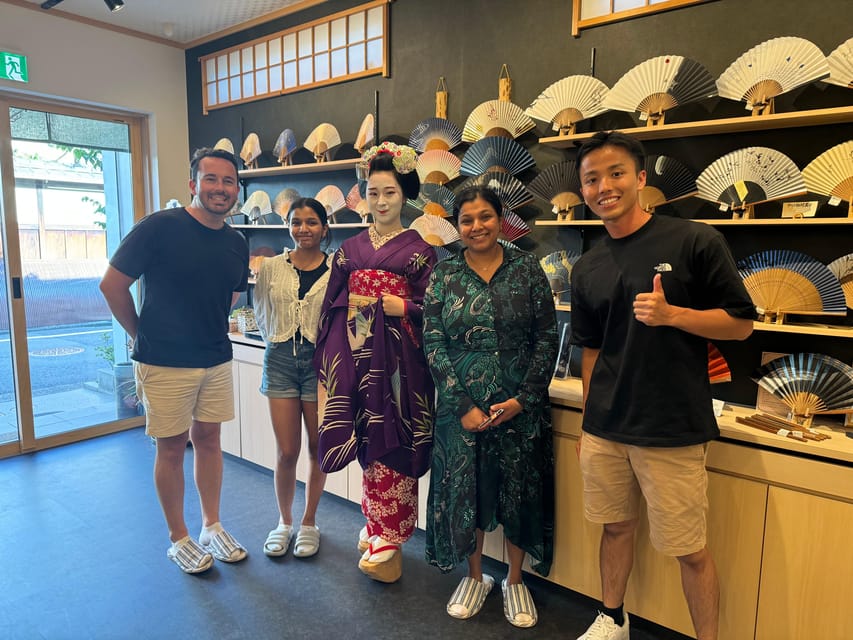
After the dance, you play a traditional Japanese fan game with the geisha apprentice. If you like experiences where you participate instead of just observe, this is the moment you will likely remember most.
Why? Because it is interactive in a way that feels cultural, not forced. The goal is not performance like a talent show. It is participating in a traditional pastime alongside the person who just shared her artistry. It also gives you an easy way to connect through play, which can be more memorable than another photo-op.
For many people, this is the true difference between a standard Gion walk and a tour that feels unique. You do not just see the traditions. You try them. And in a short 2 hours, that hands-on piece adds real value.
Practical tip: pay attention when you are taught. Fan games can be small-rule, fast-moving, and easy to get tangled in if you are distracted. If you want to enjoy it, focus for the first few moves. Once you get the rhythm, it becomes fun quickly.
Small Group Size, English Guidance, and the Feeling of Being Accounted For
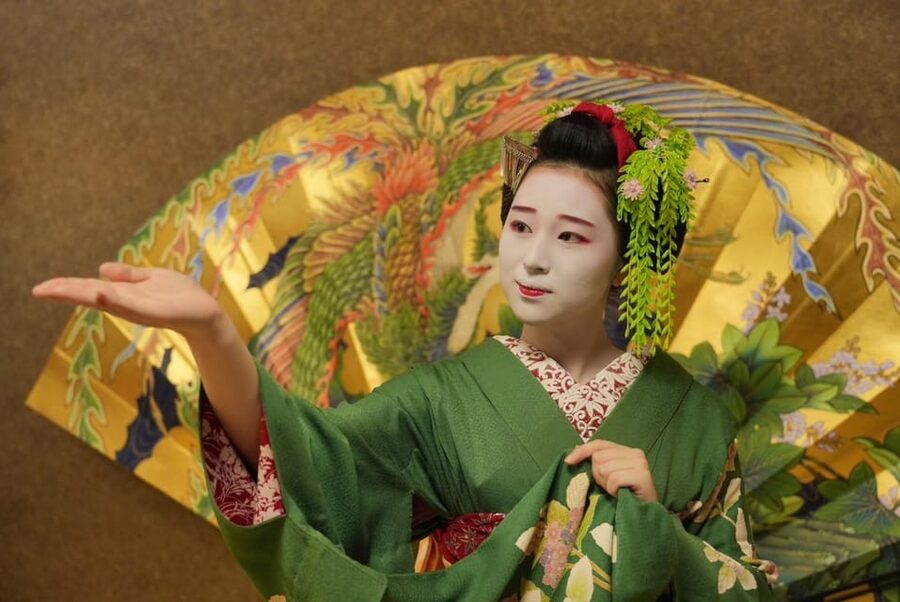
This tour is limited to 6 participants, and the guide is English-speaking. Those two facts combine into something that matters more than it sounds like: you are actually part of the experience.
In larger groups, a guide has to triage, and participants have to wait their turn. Here, you can follow along without missing key points, and your questions do not feel like interruptions. Reviews repeatedly highlight guides such as Ai Iwata, Rin, Tang, and Yoshino for warm explanations and patience, which is exactly what you want when you are learning about a cultural world that has its own etiquette.
Also, because the tour is only 2 hours, you are not dragged from one place to another. You are guided, then you enjoy the core moments, then you finish. That matters in Kyoto, where time can disappear fast.
Potential drawback to consider: some participants noted that the route can include brief pit stops at designated shops. If you prefer zero shopping stops, you may want to mentally frame those moments as quick breaks, not the main event.
Included Extras That Make the Tour Feel Like an Experience, Not a Transaction
The included items are simple and smart:
- Tea and a Japanese snack
- A 1-hour walking tour of Gion
- A 1-hour maiko dance show and Q and A time
- A traditional Japanese fan game with the geisha apprentice
When I look at value, I focus on what is bundled. Here, you are paying for a guide, time in a performance setting, interaction with the performer, and the social extras that keep the pace human. You are not just buying entry to a place. You are buying time with context and participation.
Yes, you will still need to handle personal spending like meals. The tour data notes that additional expenses such as food are not included. So if you are hungry before or after, plan accordingly and do your meal runs outside the 2-hour window.
Price and Value: Is $108 Worth It for 2 Hours?
$108 per person sounds specific, and it is. For a 2-hour Kyoto evening, the fair question is what you get for that money beyond the obvious.
You get:
- A guided walk that sets the context for what you are about to see
- A maiko dance performance experience
- Q and A time about her life
- Tea and a Japanese snack
- A fan game you play with the maiko
That combination is the value story. Many experiences in Kyoto are either education or entertainment. This one is both, with interaction. And the small group size is part of what you are paying for. If you hate feeling like a number in a crowd, that alone can justify a higher price.
If you are the type of traveler who likes cultural depth, but you also want your evening to feel special, this tour hits a sweet spot. It is short enough to fit into a busy Kyoto schedule, but structured enough that you will leave feeling like you learned something and participated in something, not just watched.
Who Should Book This Gion Tour
This tour is a great match if:
- You want a maiko-focused experience in Kyoto
- You like small group tours where you can ask questions
- You value hands-on cultural participation, not just sightseeing
- You want a compact 2-hour plan that still feels complete
It may not be ideal if:
- You want a long, self-paced wandering tour with no structured stop points
- You dislike any shop breaks that can happen along the walk
- You want a purely educational history class, with no performance interaction
Families can be a good fit too, especially because the format is short and the fan game adds a playful element. Reviews also mention families enjoying the experience across ages, which makes sense for a two-part, activity-driven evening.
Should You Book This Tour?
If you want a Gion experience that feels close-up and intentional, I would book it. The biggest reasons are the structure and the interaction: a guided walk to make sense of the district, then a maiko show with Q and A time, plus a traditional fan game you actually play.
The only reason I would pause is if you strongly prefer zero scheduled breaks or long free time. In that case, you might prefer a different tour style where you control the pace.
If you are curious about Gion culture and you like the idea of asking questions directly, this is the kind of activity you will feel good about repeating in your memory later. It is exactly the sort of Kyoto evening that turns into a story you tell.
FAQ
How long is the tour?
The tour lasts 2 hours.
Where is the meeting point?
You meet at the Izumo-no-Okuni Statue right above Gion Shijo Station. Your guide will be holding a white board that says GuideMe Japan.
Is the tour guide available in English?
Yes, the live tour guide speaks English.
What happens during the first hour?
The first hour is a walking tour of Gion with historical insight.
What happens during the second hour?
The second hour includes a maiko (geisha apprentice) dance show, plus time to ask questions about her current life.
Is tea and a snack included?
Yes. Tea and a Japanese snack are included.
What is the cancellation policy and can I pay later?
You can cancel up to 24 hours in advance for a full refund. You can also reserve now and pay later, so you can book without paying today.
Evenings in the Old Quarters




Newest Kyoto write-ups from the Loving Japan desk


Gion, Geisha and Maiko Experiences, side by side.
 ★ 4.7Kyoto Geisha Walking Tour: Gion District & Hidden GemsFrom $253,273 reviews
 ★ 4.9Gion Magical Night Walking Tour with Geisha TriviaFrom $242,393 reviews
 ★ 4.7Gion Geisha District Walking Tour – Stories of GeishaFrom $202,187 reviews
 ★ 4.9Best of Kyoto: Gion, Geisha, Pagodas & CobblestonesFrom $242,058 reviews
 ★ 4.5Night Walk in Gion: Kyoto’s Geisha DistrictFrom $212,003 reviews
 ★ 5.0Kyoto Night Foodie Tour in Gion (9+ dishes + 6 Sake tastings)From $1631,762 reviews
 ★ 5.0Kyoto Gion Geisha District Walking Tour – The Stories of GeishaFrom $251,441 reviews
 ★ 5.0Kyoto Gion: 2-Hour Geisha Culture & History Walking TourFrom $231,186 reviews
Filed on these lists too