
REVIEW · GION, GEISHA AND MAIKO EXPERIENCES
Guided Gion Tour: Explore Kyoto’s Historic Geisha District
Gion looks like a living museum. This private guided walk links Yasaka Shrine lantern lanes with Kyoto’s preserved streets, so you can understand what you’re seeing instead of just snapping photos. You also get flexibility, since the route is designed around spots like Gion and nearby landmarks.
Two things I like a lot are the practical pacing and the sight access. You’ll visit key places with free entry stops, and you’ll spend time on Hanamikoji Street, the visual heart of the geisha district.
One consideration: seeing a geisha or maiko is possible, but it’s not something the tour controls, and it does not include reserved time to meet them. Plan for the neighborhood experience first, and treat sightings as a bonus.
In This Review
- Key Points That Make This Gion Tour Work
- Entering Gion, Kyoto’s Most Recognizable Old Neighborhood
- What Your Private Guide Actually Brings to the Walk
- The Two-Hour Route: Yasaka to Hanamikoji
- Stop 1: Gion, Where You Start Looking Like a Local
- Stop 2: Izumo no Okuni Statue, Kabuki’s Founder in Plain Sight
- Stop 3: Chion-in Temple Gate, Massive Wood and Carved Detail
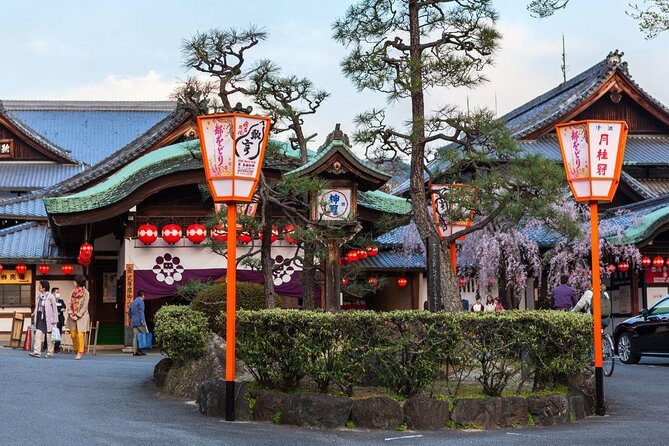
- Stop 4: Yasaka Shrine, Lantern Lanes and Festival Energy
- Stop 5: Maruyama Park, Green Space That Breaks Up the City
- Stop 6: Hanamikoji Street, the Geisha District’s Center Line
- Geisha and Maiko Spotting: What You Can Expect
- Photo-Friendly Stops That Actually Make Sense
- Morning Calm vs Night Glow: When to Book
- Price and Value for a Group up to 8
- Logistics That Matter on the Ground
- A Quick Reality Check on Pace and Guide Variability
- Who This Gion Tour Suits Best
- Should You Book This Gion Tour?
- FAQ
- How long is the Gion guided tour?
- What is the price?
- Is pickup offered?
- Does the tour include a mobile ticket?
- Where does the tour take place?
- What stops are included on the itinerary?
- Is admission included for the sights?
- Will I meet a geisha or maiko during the tour?
- Are tours available at different times of day?
- Is this tour refundable if I cancel?
Key Points That Make This Gion Tour Work
- Private group up to 8 with a guide who can answer questions as you go
- Photo-focused route built around Yasaka Shrine, Maruyama Park, and Hanamikoji Street
- Free-entry stops at the major sights on the itinerary
- Geisha and maiko spotting is not guaranteed, but your guide knows where to look
- 2 hours is a comfortable window to cover classic Gion without turning it into a sprint
- Daytime flexibility, including options like earlier or later street views
Evening walks through the old quarters, compared
- Kyoto Geisha Walking Tour: Gion District & Hidden Gems
★ 4.7 · 3,273 reviews - Kyoto: Gion Magical Night Walking Tour with Geisha Trivia
★ 4.9 · 2,393 reviews - Kyoto: Gion Geisha District Walking Tour – Stories of Geisha
★ 4.7 · 2,187 reviews - Best of Kyoto: Gion, Geisha, Pagodas & Cobblestones
★ 4.9 · 2,058 reviews
Entering Gion, Kyoto’s Most Recognizable Old Neighborhood
Gion is the part of Kyoto most people picture first. Narrow lanes, traditional wood houses, and shrines that feel woven into everyday life make it one of the easiest places to understand Kyoto through walking.
The best thing about this tour style is that it doesn’t treat Gion like a checklist. It ties together street scenes, major landmarks, and the little cultural context that explains why the neighborhood looks the way it does. You’re not just wandering, you’re getting the story while your feet do the work.
What Your Private Guide Actually Brings to the Walk
A private guide is what turns a good street stroll into a memorable one. Here, you get a private group experience where you can ask questions freely, and you can tailor the pace to your comfort level.
In feedback, the guide experience shows up as punctuality and clear explanations. Ahmed Abu Tayeh is listed as the provider, and guides like Ahmed and Mat are described as attentive, helpful, and able to connect local customs to what you’re seeing on the ground. One review specifically called out how much meaning the commentary added, which is exactly what you want when you’re walking through historic areas.
One practical note: even with a solid plan, weather can change everything. A hot day can make a 2-hour walk feel longer, so take your time, drink water, and don’t be shy about asking for a brief reset.
The Two-Hour Route: Yasaka to Hanamikoji
This is built as an efficient route that still leaves room to breathe. The timeline is roughly 2 hours total, with a longer stretch in Gion itself and shorter stops around the surrounding landmarks.
The stops also make sense together. You start in Gion, then connect to temple and shrine architecture, and finish with the geisha district’s most photographed street.
- PERFECT KYOTO 1-Day Bus Tour★ 5.0 · 13,518 reviews
- Kyoto: Fushimi Inari, Kinkakuji, Bamboo Grove 1 Day Bus Tour★ 4.8 · 4,316 reviews
- Kyoto: Tea Ceremony in a Traditional Tea House in Kiyomizu★ 4.9 · 3,519 reviews
- Kyoto: Tea Ceremony Ju-An at Jotokuji Temple★ 4.9 · 3,207 reviews
- Kyoto: 45-Minute Tea Ceremony Lesson Experience★ 4.3 · 2,378 reviews
Stop 1: Gion, Where You Start Looking Like a Local
Your walk begins in the Gion area, the classic old district known for preserved architecture and the chance to spot geisha or maiko. There’s also an explicit mention that you might catch a geisha in the Hanami street area, so you’ll likely be walking with eyes up, not just down at your map.
Highlights at this start point include the old-street feel and an easy entry into the neighborhood’s rhythm. This is where you get the lay of the land, and where your guide’s advice can matter most, like which lanes tend to feel more like everyday Gion and where a calm pause is worth it.
Stop 2: Izumo no Okuni Statue, Kabuki’s Founder in Plain Sight
Next up is the Statue of Izumo no Okuni, a free stop that connects Kyoto to Japanese performance culture. Izumo no Okuni is tied to the founding of kabuki theater, so it’s a quick cultural detour that adds meaning to your sightseeing.
It’s a good example of how this tour mixes beauty with context. You’re not only looking at old streets, you’re also learning how Kyoto’s culture links to national arts.
Stop 3: Chion-in Temple Gate, Massive Wood and Carved Detail
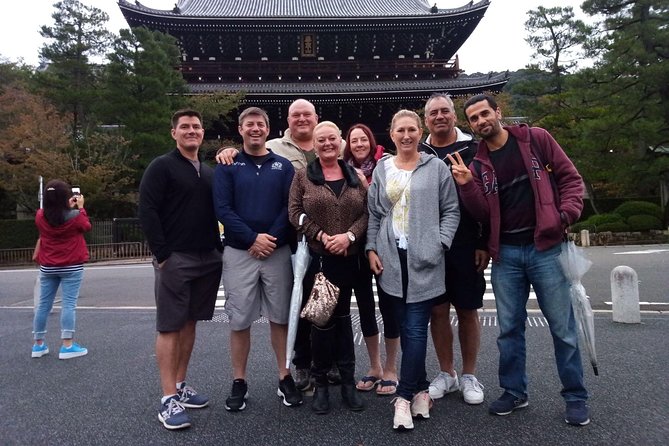
Then comes the Chion-in Temple gate area. The draw here is the sheer scale of the wooden entrance and the intricate carvings, which make a strong impression even if you’re not deep into temple architecture.
Even in a shorter stop, this is worth it because gates are where temples announce themselves. Seeing the gate up close helps you understand why temple compounds feel so distinct from ordinary streets, even when everything is only a short walk away.
Stop 4: Yasaka Shrine, Lantern Lanes and Festival Energy
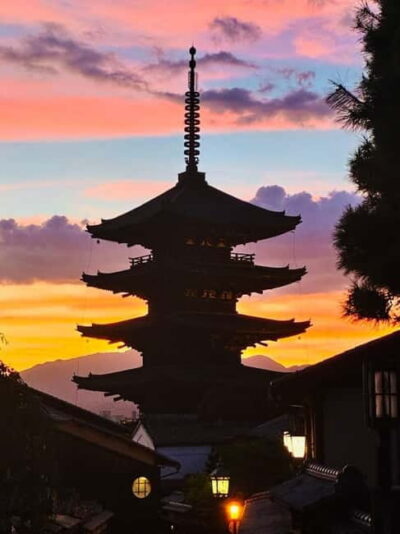
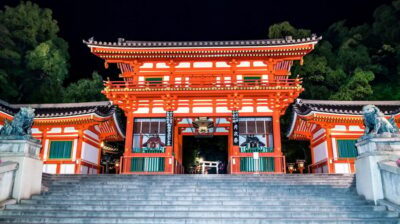
After the temple, you head to Yasaka Shrine, another free stop with serious atmosphere. Yasaka is known for lively festivals and paths that can look especially striking when lanterns are involved, so even if you don’t catch a festival day, the area still feels alive.
The tour positions Yasaka as a key emotional anchor of the walk. It’s one of those places where people slow down naturally, and your guide can point out what to notice beyond the obvious shrine buildings.
Stop 5: Maruyama Park, Green Space That Breaks Up the City
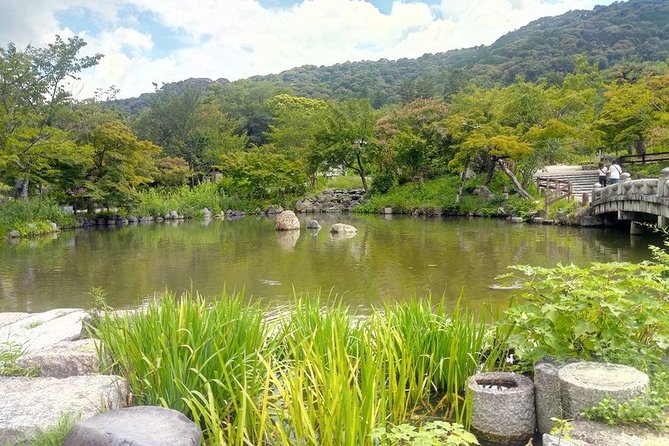
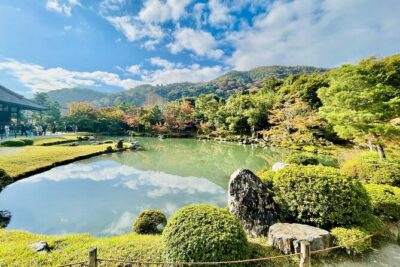
Next is Maruyama Park, a calmer breather in the middle of sightseeing. You can expect ponds and seasonal scenery like cherry blossoms, plus peaceful paths that are a nice contrast to the denser streets of Gion.
This stop helps keep the tour comfortable. Even if you’re there in a cooler or non-bloom season, the park gives you a chance to rest your legs and reset your focus for the final stretch.
Stop 6: Hanamikoji Street, the Geisha District’s Center Line
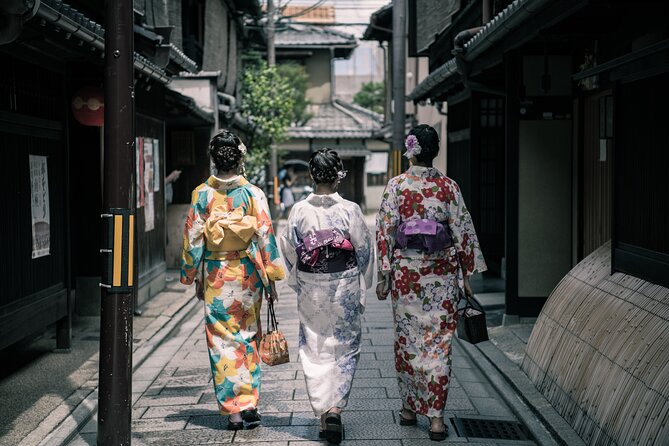
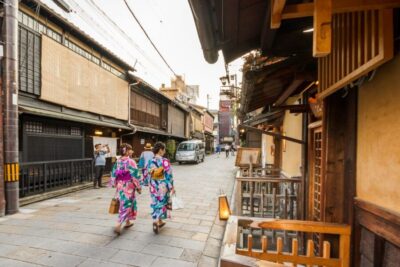
Finally, you end on Hanamikoji Street, often considered the heart of Gion’s geisha district. This is where the classic look hits: traditional teahouses and elegant machiya houses line the street, and the architecture does most of the talking for you.
This is also the part that tends to feel most “Kyoto-famous.” If you want photos that look like the postcards but still feel real, this is where you should bring your camera and slow down.
Geisha and Maiko Spotting: What You Can Expect
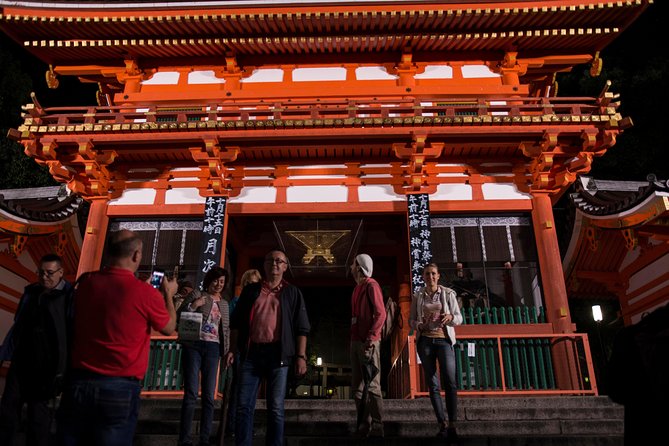
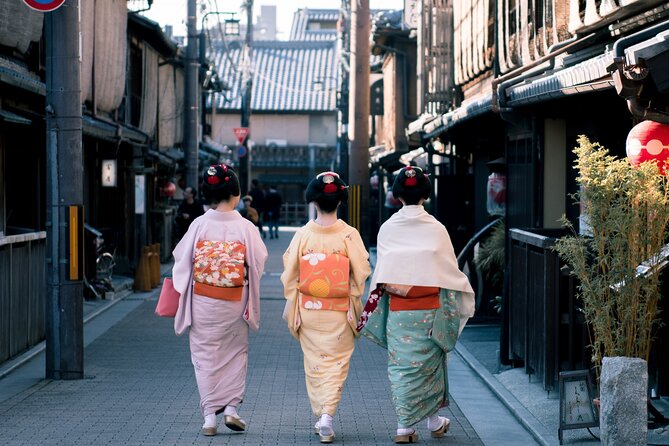
Let’s handle this upfront. A geisha or maiko sighting is possible in Gion, and your guide may help you spot them as you walk. But it’s not guaranteed, and the tour does not include any scheduled time with geisha or maiko.
That matters because it sets the right kind of hope. If your goal is specifically to meet performers, you’ll need a different kind of experience. If your goal is to experience the neighborhood while keeping an eye out for sightings, this tour fits well, especially since your guide knows where they’re more likely to appear in the district.
Some feedback also points out that sightings can happen and sometimes you can catch a real maiko while walking the area. Treat that as a bonus rather than a promise.
Photo-Friendly Stops That Actually Make Sense
This tour is built for photography, but not in a way that feels like you’re being dragged from one angle to another. Each stop is visually distinct, so you get variety without adding long detours.
- Yasaka Shrine gives you lantern-lane vibes and festival mood.
- Chion-in gate gives you the kind of close-up structure shots that are hard to appreciate from far away.
- Maruyama Park lets you switch from stone and wood to greenery and ponds.
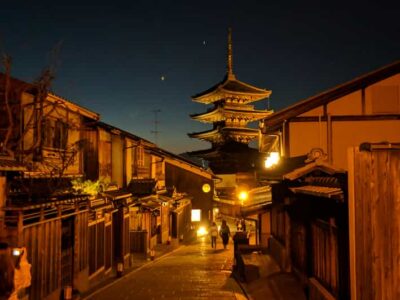
- Hanamikoji Street gives you that classic Kyoto street look with traditional buildings in one long frame.
If you care about photos, here’s a simple trick: spend your best effort near the end of the walk on Hanamikoji Street, when you’re warmed up and your rhythm is set. You’ll also have more context by then, so your pictures feel connected to what you learned.
Morning Calm vs Night Glow: When to Book
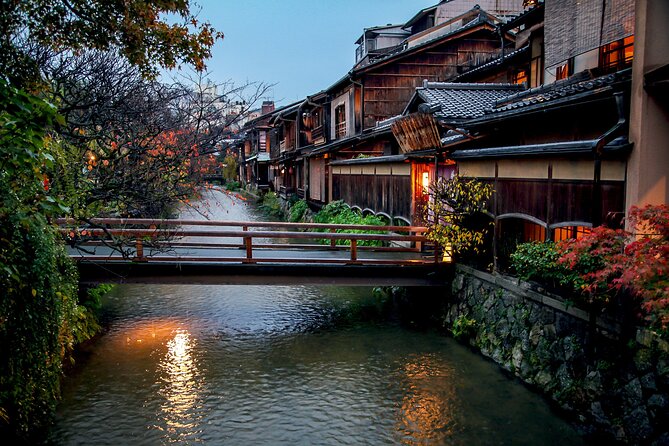
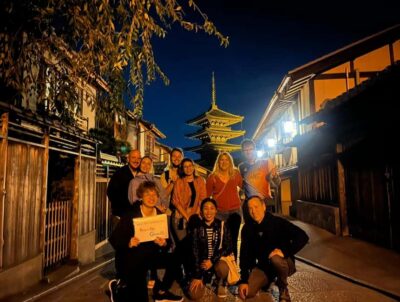
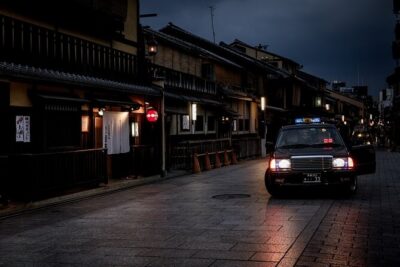
You can choose tours throughout the day, including options that favor early hours for fewer crowds or later hours for a more transformed street scene. In Gion, timing changes the feel fast, and streetlights can shift the atmosphere into something more intimate and dramatic.
If you’re sensitive to crowds, an earlier start helps. If you love mood and lighting, going later is where you might see Gion look more like what people imagine.
Either way, this is one reason the tour feels flexible. You can pick the daypart that matches your energy level and your photo style, while keeping the same overall route.
Price and Value for a Group up to 8
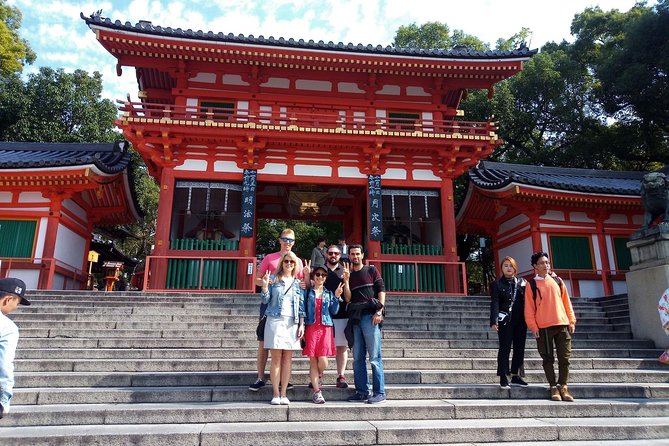
The price is $350 per group for up to 8 people. That’s not a “per person cheap” deal, so the value depends on how you travel.
Here’s when it’s a smart buy:
- You’re a small family or a group of friends who wants the same guide together.
- You’ll use the Q and A time to get meaning from places like temple gates and shrines, not just pictures.
- You want pickup offered and a private setup that avoids coordinating multiple people on public transport.
If you’re traveling solo, you might decide it’s less cost-effective than a standard walking tour. But if you can fill the group capacity, it can become a very reasonable way to get a guided Kyoto experience without turning Gion into a chaotic meet-up.
Logistics That Matter on the Ground
This tour is designed to be easy to join. It offers pickup, uses a mobile ticket, and is near public transportation. Confirmation happens at the time of booking, which reduces last-minute uncertainty.
Duration is around 2 hours, which is a sweet spot in Kyoto. Long enough to cover multiple landmarks, short enough that you’re not spending your whole day only in one district.
Also, this is described as suitable for most travelers. That said, it’s still a walking experience with outdoor time, so if you plan to go in summer heat, bring water and dress for comfort.
A Quick Reality Check on Pace and Guide Variability
Most feedback praises guide performance, including punctual meeting and clear explanations. Ahmed and Mat are mentioned in positive ways for being informative and considerate, and one review underlined how much you might miss without guidance.
Still, not every experience will match expectations. One lower rating mentioned that the guide felt less present and less informative, and another review described that on a very hot day, some family members struggled with the pace and commentary. If you’re traveling with kids, older relatives, or anyone with heat sensitivity, I’d recommend choosing the cooler time of day and asking the guide to slow down early if needed.
Who This Gion Tour Suits Best
I’d point this tour toward people who want:
- A private, question-friendly walk in Kyoto’s most famous historic geisha district
- A tight route that connects Gion with nearby cultural landmarks
- Photo stops that feel purposeful, not random
- The chance to spot geisha or maiko, without expecting a guaranteed encounter
It’s less ideal if your top priority is a guaranteed performance encounter. Since there is no scheduled time with geisha or maiko, your experience will be strongest if you treat sightings as a bonus.
Should You Book This Gion Tour?
Book it if you want a guided walk that makes Gion understandable fast. The route is packed with high-recognition places like Yasaka Shrine and Hanamikoji Street, and the private format lets you ask why things look the way they do.
Skip it or consider another style of experience if you need a guaranteed geisha or maiko meeting. This is a neighborhood experience with photo-worthy stops and the possibility of sightings, not a controlled performer appointment.
If you can travel as a group and fill most of the capacity up to 8, you’re also more likely to feel good about the $350 group price. In short, it’s a strong choice for people who want Gion with context, not just a walk past pretty streets.
FAQ
How long is the Gion guided tour?
The tour runs for about 2 hours.
What is the price?
It costs $350 per group, up to 8 people.
Is pickup offered?
Yes, pickup is offered.
Does the tour include a mobile ticket?
Yes, the tour uses a mobile ticket.
Where does the tour take place?
The tour takes place in Kyoto, Japan, focused on the Gion district and nearby landmarks.
What stops are included on the itinerary?
The itinerary includes Gion, the Statue of Izumo no Okuni, Chion-in Temple gate, Yasaka Shrine, Maruyama Park, and Hanamikoji Street.
Is admission included for the sights?
The stops listed are free admission stops.
Will I meet a geisha or maiko during the tour?
The tour does not include scheduled time with geisha or maiko. You may be lucky to spot them in the district.
Are tours available at different times of day?
Yes, tours are available throughout the day, with options that can include early morning or later street views.
Is this tour refundable if I cancel?
Yes. Free cancellation is available up to 24 hours before the experience start time for a full refund.
Evenings in the Old Quarters


Newest Kyoto write-ups from the Loving Japan desk
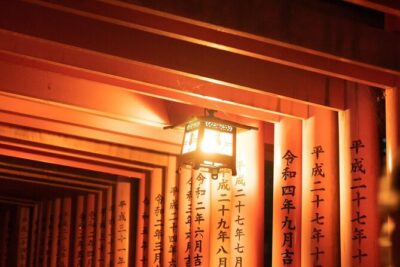
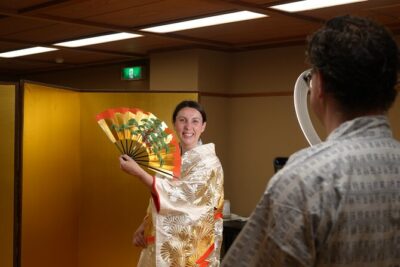
Gion, Geisha and Maiko Experiences, side by side.
 ★ 4.7Kyoto Geisha Walking Tour: Gion District & Hidden GemsFrom $253,273 reviews
 ★ 4.9Gion Magical Night Walking Tour with Geisha TriviaFrom $242,393 reviews
 ★ 4.7Gion Geisha District Walking Tour – Stories of GeishaFrom $202,187 reviews
 ★ 4.9Best of Kyoto: Gion, Geisha, Pagodas & CobblestonesFrom $242,058 reviews
 ★ 4.5Night Walk in Gion: Kyoto’s Geisha DistrictFrom $212,003 reviews
 ★ 5.0Kyoto Night Foodie Tour in Gion (9+ dishes + 6 Sake tastings)From $1631,762 reviews
 ★ 5.0Kyoto Gion Geisha District Walking Tour – The Stories of GeishaFrom $251,441 reviews
 ★ 5.0Kyoto Gion: 2-Hour Geisha Culture & History Walking TourFrom $231,186 reviews
Filed on these lists too