
REVIEW · HIROSHIMA PEACE MEMORIAL PARK AND MUSEUM
Hiroshima: Peace Memorial Park and Atomic Bomb Dome Tour
History gets quiet here. The Hiroshima Peace Memorial Park makes the tragedy feel close, and the Atomic Bomb Dome gives your visit a single, unforgettable focus while your guide explains what the city chose to remember and how it rebuilt its public life afterward. You also get to hear how Hiroshima became a global peace symbol, not just a museum stop with photos and head nods.
One thing to plan for: this tour is mostly walking memorial grounds, and it is not suitable for people with mobility impairments or wheelchair users. Also, this is a serious subject, so bring a bit of emotional patience for the moments that hit hardest.
In This Review
- Key moments you will not want to rush
- Gates of Peace: where your walk turns into a vow
- Prayer Fountain and the Flame of Peace, why the site design hits
- Children’s Peace Monument and Sadako Sasaki, cranes that refuse to fade
- Korean Atomic Bomb Victims Cenotaph, remembering beyond one chapter
- Peace Bell and Aioi Bridge, the view you come for
- Finish at the Hiroshima Atomic Bomb Hypocenter Monument
- Price and logistics for a $23, 2-hour walking tour that actually works
- Should you book this Hiroshima Peace Memorial Park and Atomic Bomb Dome tour?
- FAQ
- How long is the Hiroshima Peace Memorial Park and Atomic Bomb Dome tour?
- Where do I meet the guide?
- What is included in the tour?
- Is food served during the tour?
- What languages are the guides available in?
- What should I bring and wear?
- Is smoking allowed, and is the tour wheelchair-friendly?
Key moments you will not want to rush
- Gates of Peace first, so the day starts with intent, not sightseeing
- Flame of Peace stop that ties remembrance to a current message of hope
- Children’s Peace Monument and Sadako Sasaki, with the thousand paper cranes story front and center
- Cenotaphs that broaden the story, including Korean A-bomb victims
- Aioi Bridge to Atomic Bomb Dome approach, the kind of view you want to see with context
- Peace Bell and prayer points, where you are invited to participate, not just observe
The Peace Memorial Park and Museum, further guided visits
- Hiroshima Historical Walking Tour – Why A-Bomb was Dropped
★ 4.8 · 893 reviews - Hiroshima Peace (Heiwa) Walking Tour at World Heritage Sites
★ 5.0 · 872 reviews - Hiroshima: Miyajima Peace Memorial Icons of Peace and Beauty
★ 4.9 · 361 reviews - Hiroshima/Guided Virtual Tour of Peace Park/PEACE PARK TOUR VR
★ 5.0 · 157 reviews
Gates of Peace: where your walk turns into a vow
The tour starts at the Gates of Peace at the front side of the Italian restaurant Mario, and it wastes no time. After a short guided intro, you step into the memorial area with a clear purpose: pay tribute first, then learn.
I like this start because it sets the tone. You are not bouncing between photo angles and snack breaks. You are being guided through a place designed to make you slow down, notice details, and understand why certain spots matter.
Also, it helps that the guide is actively engaged. In past tours, guides like Syed were described as setting a good pace and answering questions, and that matters here because you will want to ask, Why this here? What does that mean?
Prayer Fountain and the Flame of Peace, why the site design hits
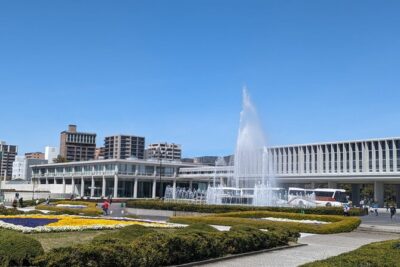
Early on, you pass the Prayer Fountain, which works like a gentle “before you continue” moment. Then you move into the main heart of the memorial park for a longer stretch that centers on the Flame of Peace and key park landmarks.
The Flame of Peace stop is powerful because it connects the past to the present in a way that feels intentional. You are not just learning facts, you are seeing a symbol built for ongoing reflection. Your guide also covers how Hiroshima rebuilt itself from the ashes into a global peace symbol, which helps keep the visit from feeling stuck in 1945.
If you want one practical tip: bring water and take short pauses when you need them. This park is outdoor, and the tour runs in all weather conditions, so you are doing real walking in real air.
Children’s Peace Monument and Sadako Sasaki, cranes that refuse to fade
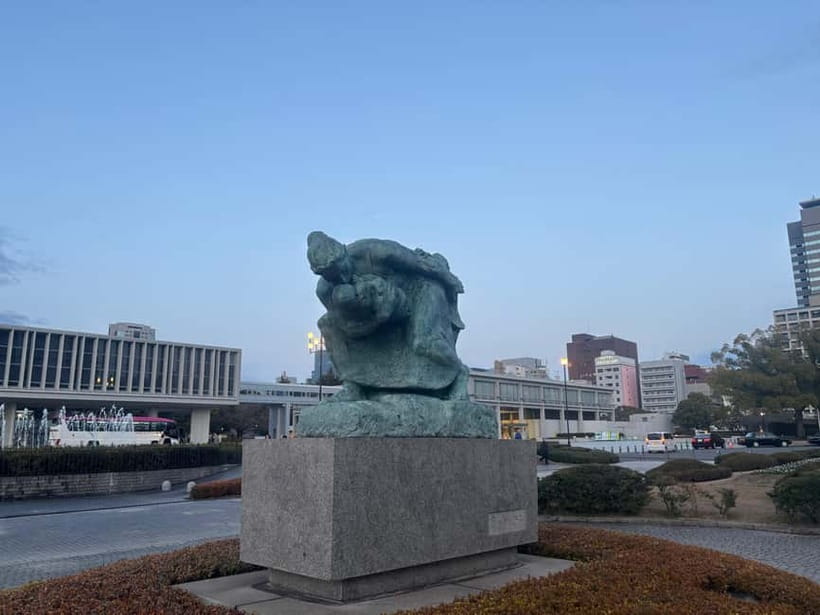
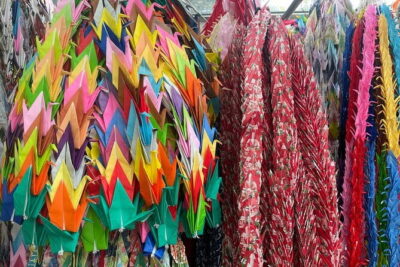
At the Children’s Peace Monument stop, the guide tells the story of Sadako Sasaki and the thousand paper cranes. This is the moment where the memorial shifts from large-scale history to human scale, especially through the lens of childhood.
Even if you think you already know the basic story, having it explained in context changes the experience. The cranes become more than a legend. They become a way to show grief, hope, and the decision to keep going.
You will also notice the tour’s overall rhythm here. The route keeps the walking steady, but the guide builds space for meaning at each point. Past guests emphasized that questions were welcomed and that the guide gave people time to process, and that is exactly what you want at a stop like this.
Pairing the city with Miyajima. Other itineraries
- Peaceful Hiroshima & Miyajima UNESCO 1 Day Bus Tour★ 5.0 · 5,309 reviews
- Hiroshima: Hiroshima and Miyajima UNESCO Sites 1-Day Tour★ 4.9 · 2,330 reviews
- Hiroshima / Miyajima Full-day Private Tour with Government Licensed Guide★ 5.0 · 1,298 reviews
- Hiroshima in a Nutshell: Morning Bike Adventure★ 5.0 · 524 reviews
- Hiroshima City 4hr Private Walking Tour with Licensed Guide★ 5.0 · 437 reviews
Korean Atomic Bomb Victims Cenotaph, remembering beyond one chapter
One of the most important stops on the route is the Korean Atomic Bomb Victims Cenotaph. It is easy for a Hiroshima visit to feel like a single national story, but this stop broadens the frame. You are reminded that the bombing’s impact was not limited to one group or one geography.
I also appreciate that the tour includes memorials that honor different perspectives, including major peace figures named in the included stops such as Dr. Marcel Junod Memorial and Norman Cousins Memorial. That doesn’t turn the visit into a political lecture. It gives you more ways to understand how peace advocacy grows after catastrophe.
This is also where you might feel the subject most strongly. If you prefer a lighter pace emotionally, plan to go in with time afterward to decompress. The tour itself keeps moving, but your mind might need a second run.
Peace Bell and Aioi Bridge, the view you come for
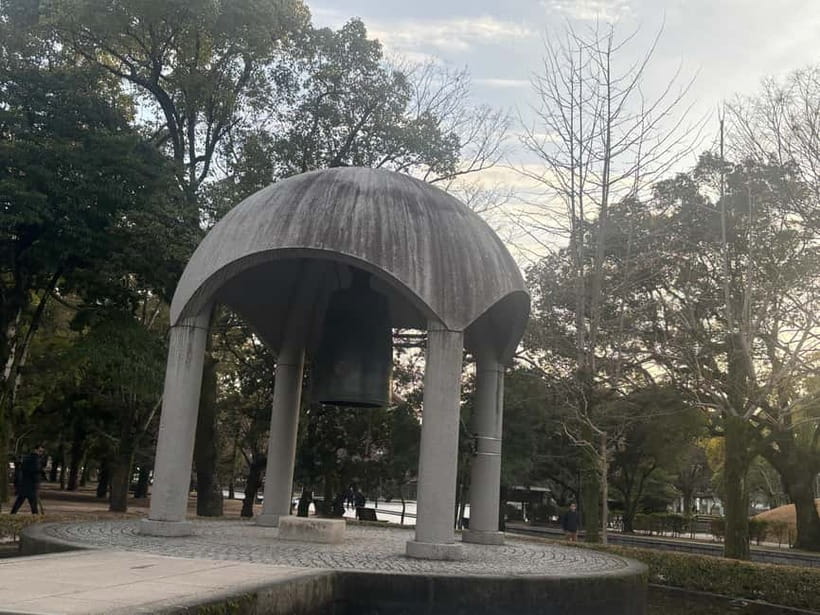
The tour includes the Bell of Peace, Hiroshima, and you get the chance to ring it as a symbol of hope and world peace. That participation matters. You are standing in a place that encourages action, not just reflection.
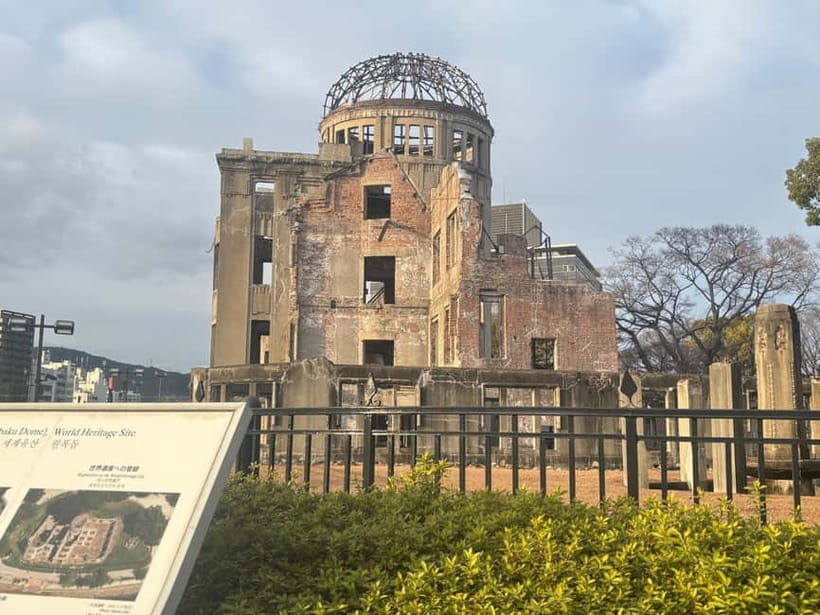
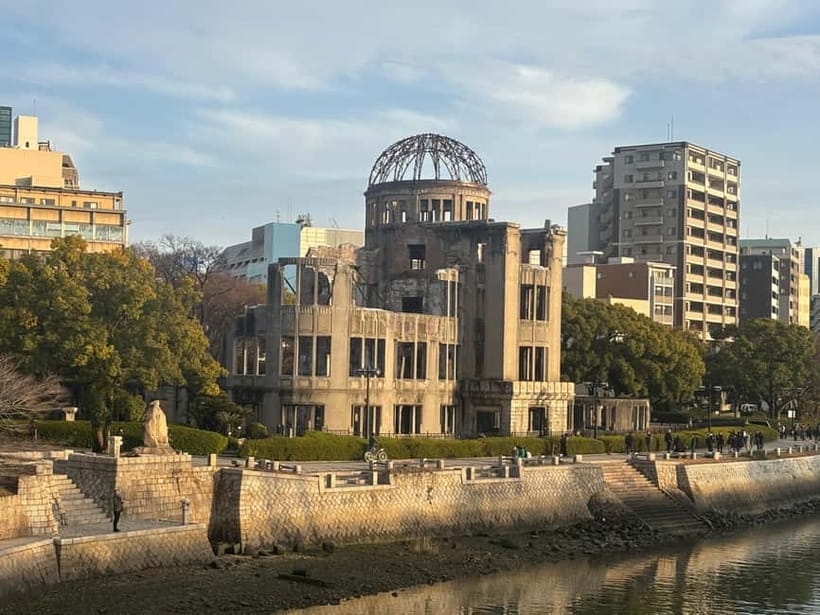
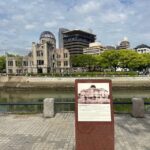
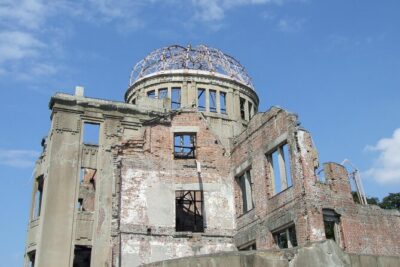
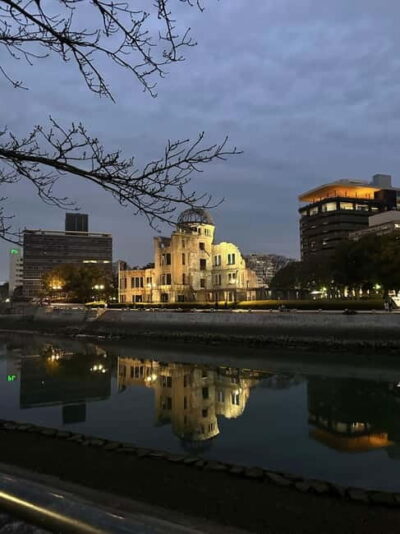
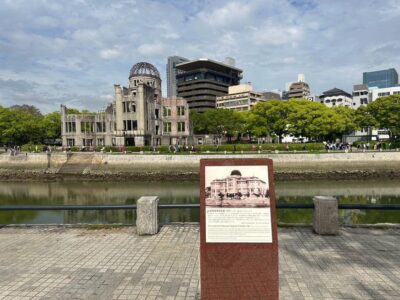
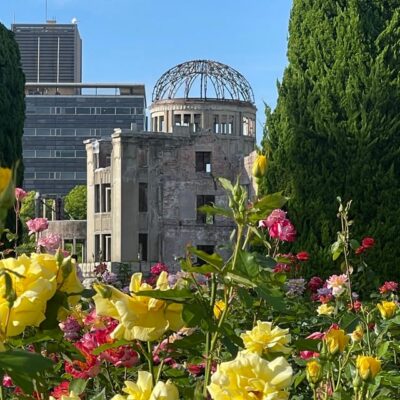
Next comes the Aioi Bridge stop, followed by the Atomic Bomb Dome. The dome is the UNESCO World Heritage Site that people recognize instantly, but the difference with a guided walk is that you do not just see a famous building. You understand what you are looking at and why it became a focal point for memory.
This is where I think the guide’s role is most practical. The dome can feel like a postcard unless you have context. With a guide, the stop becomes a moment to connect symbol to history, and history to the city that grew around it.
One more practical point: photography is allowed, but be respectful in memorial areas. That means slower steps, fewer blocking poses, and taking your photos without turning the moment into a race.
Finish at the Hiroshima Atomic Bomb Hypocenter Monument
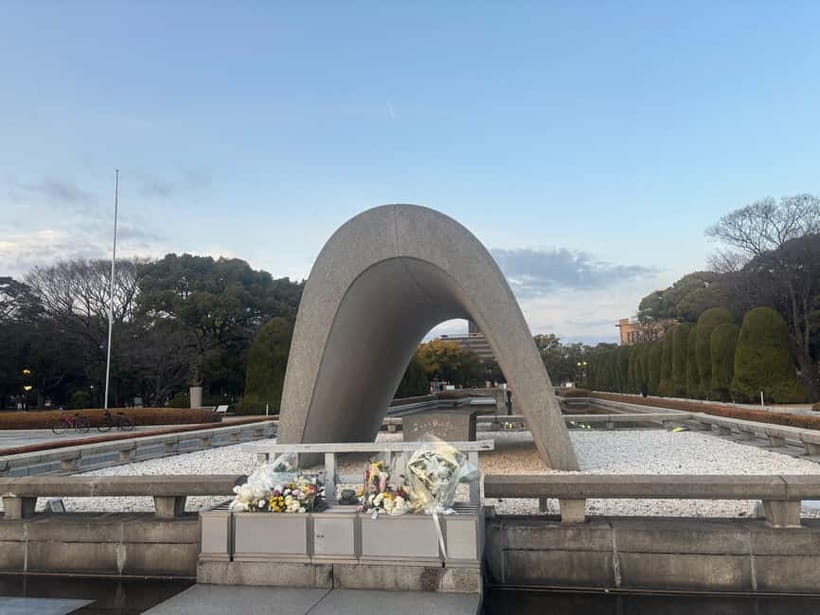
The tour ends at the Hiroshima Atomic Bomb Hypocenter Monument, which is a fitting place to close. It pulls everything together by focusing your attention on the exact reference point of the blast.
I like ending here because it gives a clear mental “final anchor.” You have seen the park symbols, you have heard multiple story threads, and you have approached the dome with purpose. Then you finish at the hypocenter, where the meaning becomes more precise and harder to blur into vague history.
After this stop, you are ready to explore Hiroshima on your own with better bearings. You will likely notice things you would normally skip, because you now understand how the city organizes remembrance across space.
Price and logistics for a $23, 2-hour walking tour that actually works
At $23 per person for about 2 hours, this is strong value if you want structure without paying for a long, separate museum day. You get a live guide plus a route that strings together major memorial stops, including the Hiroshima National Peace Memorial Hall and other included memorials named in the experience.
The biggest constraint is physical. The tour involves a significant amount of walking, and it is not suitable for wheelchair users. If your legs do not do well on uneven, long stretches, you may want to consider a different format.
Here is what I recommend you pack so the experience stays comfortable:
- Comfortable shoes (you will be glad you chose real walking traction)
- Hat and sunscreen (sun can hit hard outdoors)
- Camera (shots matter more when you understand what you are photographing)
- Water (bring enough for the whole walk)
If you get offered lunch suggestions at the end, take them. In one case, a guide recommendation included okonomiyaki nearby, which is exactly the kind of practical local tip that turns a memorial visit into a complete day.
Should you book this Hiroshima Peace Memorial Park and Atomic Bomb Dome tour?
Book it if you want a focused, respectful route that connects the big story to specific memorial moments, and you like learning from an expert guide while walking. This tour is especially worth it if you care about the details people often miss, like the Korean Atomic Bomb Victims Cenotaph and the way the Children’s Peace Monument ties remembrance to hope.
Skip or rethink it if mobility limits your walking, since it is not suitable for wheelchair users. Also consider whether you want to carry a heavy topic for two hours. If you do, plan a calm buffer after the tour so you do not rush straight into more crowds.
In my view, the best reason to choose this one is simple: it turns the Atomic Bomb Dome from a famous landmark into part of a guided message, ending at the hypocenter so the meaning stays clear.
FAQ
How long is the Hiroshima Peace Memorial Park and Atomic Bomb Dome tour?
The duration is about 2 hours.
Where do I meet the guide?
You meet at the Gates of Peace, front side of the Italian restaurant Mario.
What is included in the tour?
The tour includes a live guided tour plus stops at the Children’s Peace Monument, Atomic Bomb Dome, Peace Bell, Prayer Fountain, Cenotaph of the Hiroshima Victims Memorial, Flame of Peace, Gates of Peace, the Korean Atomic Bomb Victims Cenotaph, Dr. Marcel Junod Memorial, Norman Cousins Memorial, and Hiroshima National Peace Memorial Hall. It also finishes at the Hiroshima Atomic Bomb Hypocenter Monument.
Is food served during the tour?
No food is served on this tour.
What languages are the guides available in?
The live tour guide is available in English, Urdu, and Hindi.
What should I bring and wear?
Bring comfortable shoes, a hat, a camera, sunscreen, and water. Dress for all weather conditions since the tour runs in all weather.
Is smoking allowed, and is the tour wheelchair-friendly?
Smoking is not allowed. The tour is not suitable for people with mobility impairments and wheelchair users.
Hiroshima and Miyajima Together
Guided Visits to the Peace Memorial Park

Newest Hiroshima write-ups from the Loving Japan desk
Hiroshima Peace Memorial Park and Museum, side by side.
 ★ 4.8Hiroshima Historical Walking Tour – Why A-Bomb was DroppedFrom $35893 reviews
 ★ 5.0Hiroshima Peace (Heiwa) Walking Tour at World Heritage SitesFrom $94872 reviews
 ★ 4.9Miyajima Peace Memorial Icons of Peace and BeautyFrom $163361 reviews
 ★ 5.0Hiroshima/Guided Virtual Tour of Peace Park/PEACE PARK TOUR VRFrom $33157 reviews
 ★ 5.0Hiroshima; Hiroshima Peace Memorial Museum and Castle TourFrom $6789 reviews
 ★ 5.0Hiroshima & Miyajima: UNESCO A-Bomb Dome & ItsukushimaFrom $17776 reviews
 ★ 5.0Hiroshima History Tour : A-Bomb Dome, Peace Memorial & CityFrom $10343 reviews
 ★ 5.0Hiroshima Peace Memorial and Atomic Bomb Dome Private TourFrom $8537 reviews
Filed on these lists too