
REVIEW · HIROSHIMA PEACE MEMORIAL PARK AND MUSEUM
Hiroshima/Guided Virtual Tour of Peace Park/PEACE PARK TOUR VR
Peace Park VR hits hard in one short session. This guided Hiroshima experience uses VR reenactments based on historical facts, including survivor testimonies and old photos, so you move through the park and time periods in a guided way.
I really like how the tour keeps its focus on key memorial spots rather than covering a long walk. I also like that you get an English speaking guide plus VR goggles rental included, which means you can concentrate on the story instead of logistics.
One consideration: it is a short, video-based VR experience, so if you are expecting high-end, game-like VR immersion for your money, you might find the visuals less impressive than other VR content you have seen.
In This Review
- Key things to know before you go
- What this Peace Park Tour VR actually does
- Price and value, $33.03 for about 1 hour 20 minutes
- Meeting point and how the tour starts at the Rest House
- Stop 1, Rest House of Hiroshima Peace Park and Eizo Nomura
- Stop 2, Peace Clock Tower and the Atomic Bomb Dome moment
- Stop 3, Aioi Bridge and the two-month aftermath
- Stop 4, Motoyasu Bridge and recovery from the first year to today
- Stop 5, the River of Hope wall and leaving with respect
- The guide, small group size, and why questions feel easier
- Who should book, and who might want to skip
- Practical tips so the day goes smoothly
- Should you book Peace Park Tour VR?
- FAQ
- How long is the Peace Park Tour VR?
- What does the price include?
- Do I need to buy separate admission tickets for the stops?
- Where is the meeting point?
- When does the tour run?
- What is the group size limit?
- Is transportation or food included?
- Is the tour in English?
- What is the cancellation policy?
Key things to know before you go
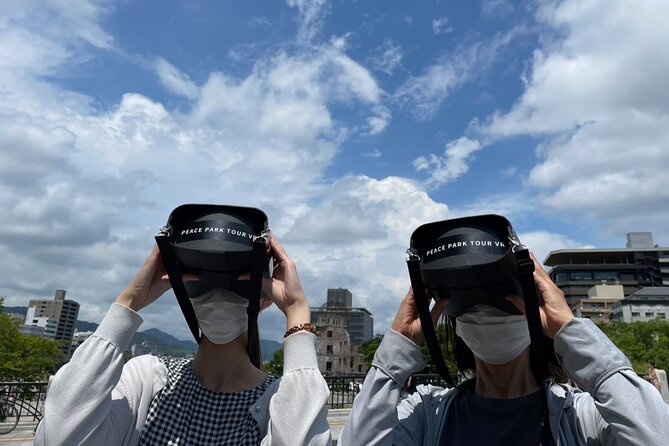
- VR reenactments tied to historical facts, including survivor testimony and historical photographs
- Small group size (up to 6), which helps questions feel welcome
- A tight itinerary built around the Peace Park core, not a long walk
- Three time layers you see through VR, before the bombing, the moment, and the present
- Time to reflect at the River of Hope message wall at the end
- Short duration (about 1 hour 20 minutes), which is easier to fit into a day than a bigger tour
The Peace Memorial Park and Museum, further guided visits
- Hiroshima Historical Walking Tour – Why A-Bomb was Dropped
★ 4.8 · 893 reviews - Hiroshima Peace (Heiwa) Walking Tour at World Heritage Sites
★ 5.0 · 872 reviews - Hiroshima: Miyajima Peace Memorial Icons of Peace and Beauty
★ 4.9 · 361 reviews - Hiroshima/Guided Virtual Tour of Peace Park/PEACE PARK TOUR VR
★ 5.0 · 157 reviews
What this Peace Park Tour VR actually does
This is not just a “watch videos” device-and-go situation. The tour is guided through Peace Memorial Park, then uses VR to help you experience what happened across time, not only what you read in a museum.
You are led to the Rest House of Hiroshima Peace Park area first, then through landmark points like the Peace Clock Tower and the bridges. The VR portion is built around a simple arc: what the streets were like before the atomic bombing, what the city became during that day, and the path forward to modern Hiroshima.
The emotional weight is part of the design. The experience is meant to be moving and factual, not sensational. And because the route is short, you do not spend the whole time between stops trying to find your bearings.
Price and value, $33.03 for about 1 hour 20 minutes
At $33.03 per person, this sits in a midrange price spot for a Hiroshima tour. Here is where the value comes from.
First, VR goggles rental is included, so you are not adding a surprise cost. Second, you get an English speaking guide, and the stops are built around specific places in Peace Memorial Park that people actually come to see. Third, each stop is marked as admission ticket free in the experience flow, which helps keep your total out-of-pocket costs predictable.
Now the tradeoff. The tour is brief and VR is mostly a sequence of guided scenes rather than long free-roaming VR time. That is why it can feel very fair if you want a focused, respectful overview. But it can feel less fair if you are mainly buying VR entertainment value.
Meeting point and how the tour starts at the Rest House
The tour begins at the Hiroshima Peace Park Rest House reception. The meeting address is listed as Hiroshima, Naka Ward, Nakajimachō, 1-1, Hiroshima Peace Memorial Park Rest House (in Japanese on the listing). The tour ends back at the meeting point.
Start time is 10:30 am, and the experience is built to run for about 1 hour 20 minutes. You also get a mobile ticket, so you will want your phone ready when you arrive.
A practical tip: when you first meet your guide, pay close attention to the quick VR setup. VR experiences go smoother when you get comfortable with the goggles right away, because later in the tour you will want your attention on what you are seeing, not on figuring out the controls.
Pairing the city with Miyajima. Other itineraries
- Peaceful Hiroshima & Miyajima UNESCO 1 Day Bus Tour★ 5.0 · 5,309 reviews
- Hiroshima: Hiroshima and Miyajima UNESCO Sites 1-Day Tour★ 4.9 · 2,330 reviews
- Hiroshima / Miyajima Full-day Private Tour with Government Licensed Guide★ 5.0 · 1,298 reviews
- Hiroshima in a Nutshell: Morning Bike Adventure★ 5.0 · 524 reviews
- Hiroshima City 4hr Private Walking Tour with Licensed Guide★ 5.0 · 437 reviews
Stop 1, Rest House of Hiroshima Peace Park and Eizo Nomura
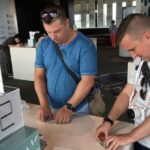
You start at the Rest House of Hiroshima Peace Park, where your guide meets you at reception and shows you how to use the VR goggles. Then you go down to the basement to relive a story connected to Eizo Nomura.
The experience highlights Eizo Nomura as the only survivor of the fuel building, and it uses VR reenactment to bring his life and that section of history into focus. This first stop works as a tone-setter. If you arrive at Peace Park feeling overwhelmed by the scale of the site, this is a way to begin with a specific human anchor.
Why it helps: starting with one person makes the story less abstract. You are not jumping immediately from memorial site to memorial site. You are being guided into the meaning behind the place, then the route continues from there.
A small downside to note: because it is a short tour, the time spent here is not long enough for deep museum-level reading. If you want long-form detail, you may still want to plan time for the museum separately on another day.
Stop 2, Peace Clock Tower and the Atomic Bomb Dome moment
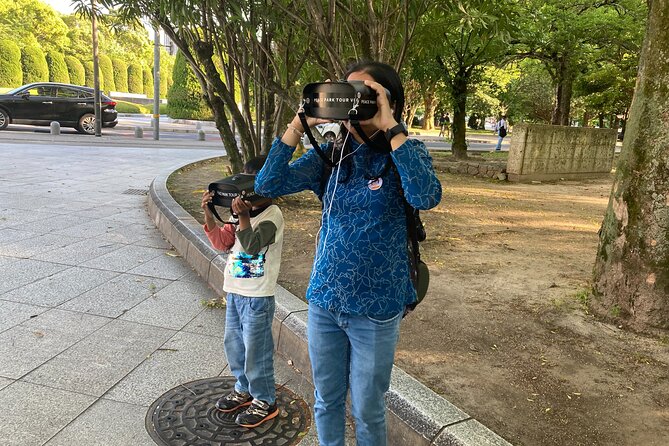
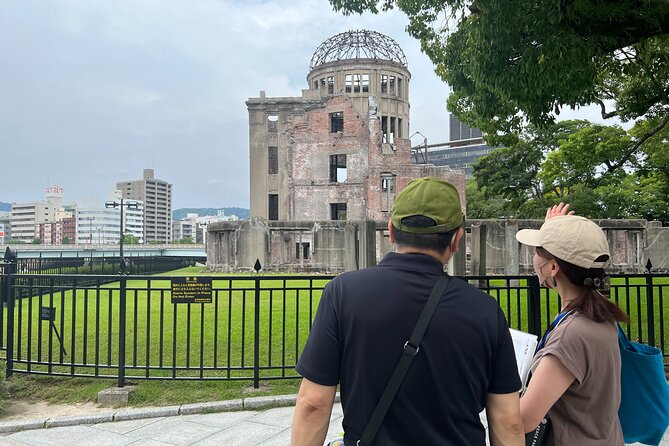
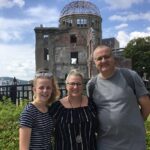
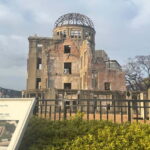
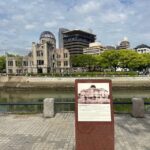
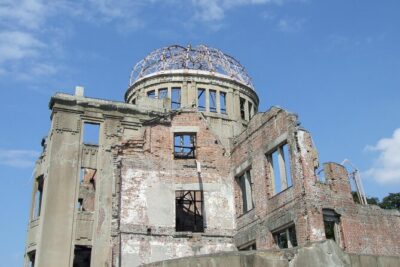
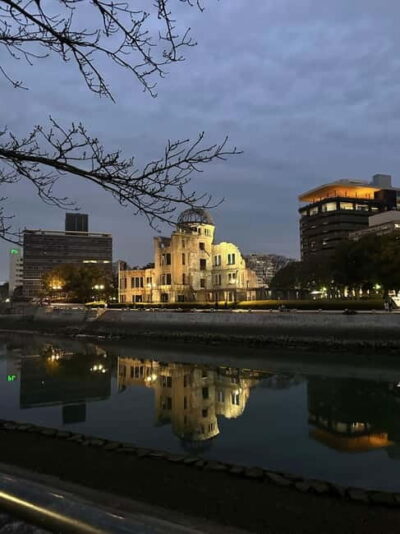
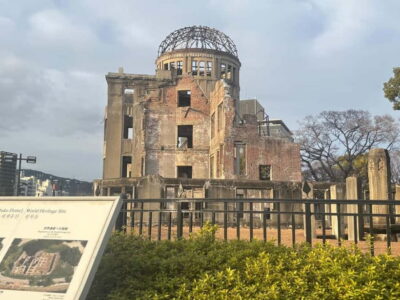
Next comes the Peace Clock Tower area. Through the VR headset, you see what is implied as a before-and-after view of the moment, then you learn how the Atomic Bomb Dome was destroyed by the atomic bomb and how it became what you see today.
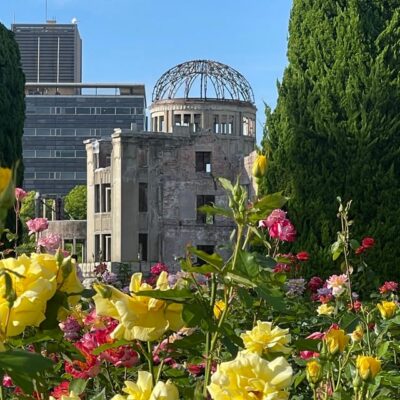
This is also where the experience ties a landmark to its meaning. The Atomic Bomb Dome is the only building in the world left with visual traces of the atomic bombing, and it is registered as a World Heritage site in 1996. The VR portion is what makes those facts feel spatial, not just textual.
What to expect practically: the VR scene here is designed to give you a sudden shift in perspective. You go from present-day Peace Park into a reenacted historical view, and the guide helps connect that shift to what the landmark represents.
If you have already visited the museum the day before, you might notice that this stop feels more like interpretation than new information. That can still be valuable, because VR changes the way the site clicks in your brain.
Stop 3, Aioi Bridge and the two-month aftermath
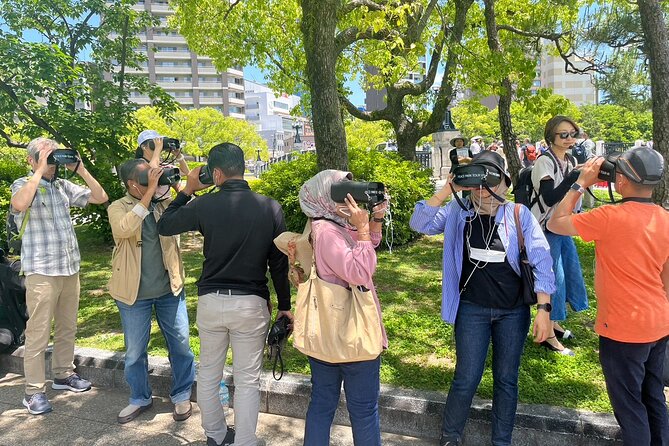
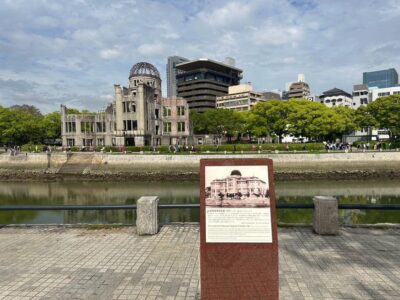
Then you move to Aioi Bridge. The tour uses VR to convey the townscape as it is described as turning into a sea of fire about two months after the atomic bombing, and it includes the testimonies of A-bomb survivors.
This stop is important because a bridge is not just a pretty photo spot. It is a divider and a connector. Being guided here helps you understand how the city’s physical layout and daily movement were altered.
The VR setup also changes how you process the testimony. Instead of listening while standing back from the site, you get a visual frame that helps your mind place the words in a remembered or reenacted setting.
Possible drawback: if your expectation is that each stop delivers hours of unique, high-resolution VR scenes, you may feel the VR content is brief. The point here is not to linger in VR. The point is to connect each memorial location to a specific time and message.
Stop 4, Motoyasu Bridge and recovery from the first year to today
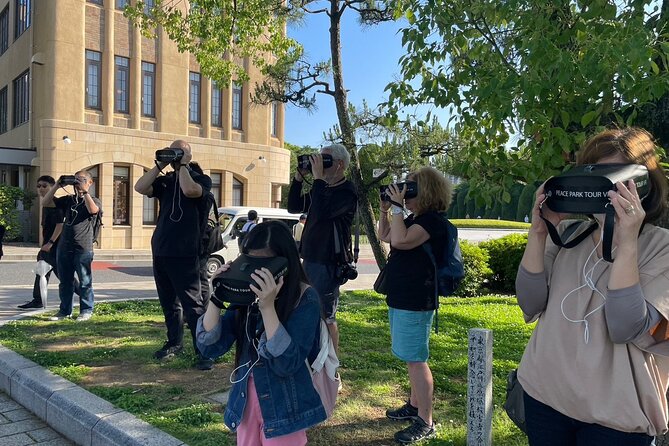
After Aioi Bridge, the tour moves to Motoyasu Bridge. This part is framed as a timeline that stretches from the first year after the atomic bombing to the present.
The guide focuses on an episode of people rising and taking steps toward recovery amid chaos. It shifts the tone from immediate destruction to the choice to rebuild and continue living.
Why I think this matters to visitors: Peace Park can overwhelm you with tragedy. A tour that includes the recovery phase helps your brain hold a fuller picture of Hiroshima. You do not only leave with pain. You leave with the idea of continued effort and endurance.
Because the tour is short, you will not get every detail of how the recovery unfolded. But you do get a guided emotional arc that keeps the story from staying trapped in one moment.
Stop 5, the River of Hope wall and leaving with respect
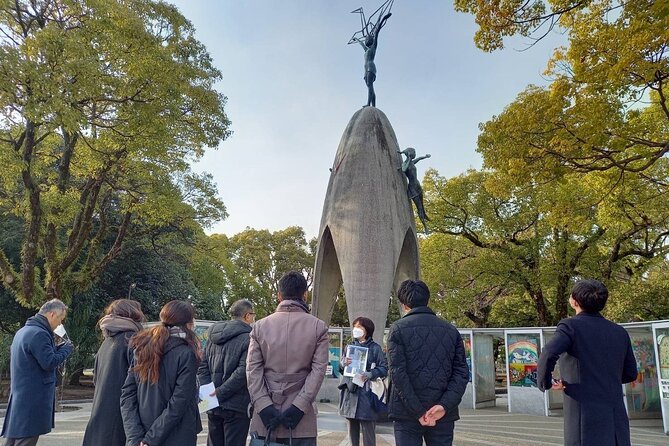
The final stop returns you to the Rest House of Hiroshima Peace Park. This part is less about VR and more about reflection.
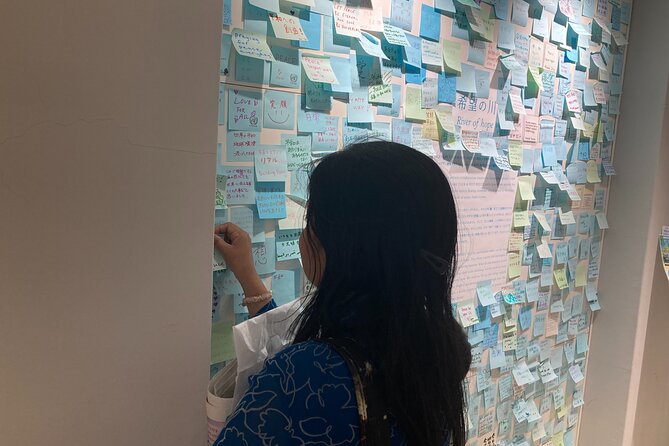
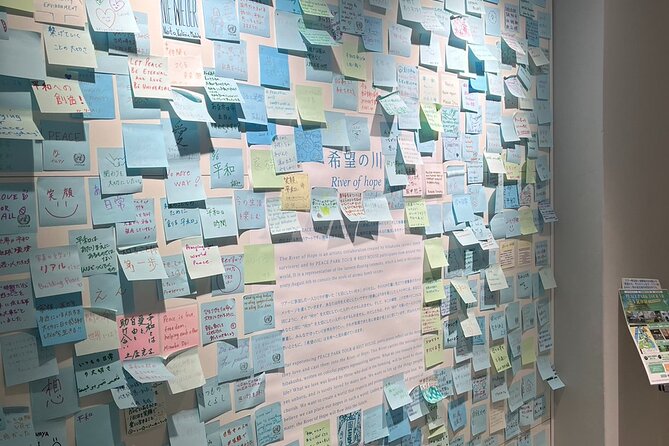
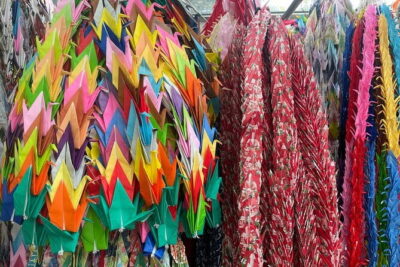
You are invited to output what you feel on the wall of the River of Hope, which is described as a place where people write wishes for peace, and you can also express condolences. The guide may guide you through the process, but the activity is personal.
This last step is one reason I think the tour is better as a short guided experience rather than a self-guided VR session. You get structure, then you get a respectful outlet for your own thoughts.
If you are the kind of traveler who likes a concrete takeaway at the end of a memorial visit, this is it. It is not a souvenir. It is a moment of acknowledgment.
The guide, small group size, and why questions feel easier
The tour is capped at a maximum of 6 travelers. That matters more than you might think. With a small group, your guide can adjust explanations and you are more likely to get answers to questions instead of being rushed past them.
Also, the tour includes an English speaking guide, which is a big practical win in Hiroshima, where not every site explanation is offered in English. You can ask about the places you see, what the timelines mean, and how the VR scenes relate to the real locations.
One review specifically praised a guide named Kazuko for bringing the experience to life and answering questions well. Even if you do not get the same guide, the emphasis on clear guidance and Q and A is consistent with how this format works.
Who should book, and who might want to skip
This tour fits best if you:
- want a short, focused guided experience inside Peace Memorial Park
- like VR scenes but prefer them as part of a guided story, not endless VR time
- need an English speaking guide to connect landmarks to meaning
- are traveling with limited time, since the whole experience is about 1 hour 20 minutes
You might want to skip or at least temper expectations if you:
- already visited the museum the day before and are chasing brand-new details
- expect advanced, high-quality VR visuals that rival the best VR games you have tried
- are very sensitive to value, since the experience is mostly a few VR video sequences rather than a long VR journey
Practical tips so the day goes smoothly
Here are the small things that make a big difference with a VR memorial tour.
- Arrive a bit early at the Rest House reception so you can get your VR setup done calmly.
- Wear comfortable clothing. You will be moving between stops and wearing goggles, so comfort helps.
- Bring a readiness for reflection. This tour is designed to be emotionally serious, so it helps to treat it like a respectful visit, not a casual attraction.
- If you are combining this with other Hiroshima sights, plan enough time around it. Since it returns to the meeting point, it is easy to build a simple schedule before or after.
Should you book Peace Park Tour VR?
I think you should book if you want a guided Hiroshima Peace Park overview that uses VR to connect before-and-after history to specific landmarks like the Atomic Bomb Dome, Aioi Bridge, and Motoyasu Bridge. The guided structure and small group size help you absorb the story without turning it into an all-day grind.
I would hesitate if your main goal is VR entertainment quality or you want a long, deep museum-style walkthrough in VR form. In that case, the short and somewhat video-style VR format may feel like less value, even though the guide and the locations are strong.
If you are on a realistic schedule, this is a respectful way to see Peace Memorial Park with your eyes, then with a guided time-travel layer that helps the facts stick.
FAQ
How long is the Peace Park Tour VR?
The tour is about 1 hour 20 minutes.
What does the price include?
The price includes VR goggles rental and an English speaking guide.
Do I need to buy separate admission tickets for the stops?
The experience flow lists admission ticket free for the stops.
Where is the meeting point?
The tour meets at Hiroshima Peace Memorial Park Rest House, reception, in Naka Ward, Nakajimachō (Japanese address provided in the listing).
When does the tour run?
The start time is 10:30 am, and it ends back at the meeting point.
What is the group size limit?
The tour has a maximum of 6 travelers.
Is transportation or food included?
No. Transportation to the meeting place and food and drinks are not included.
Is the tour in English?
Yes. It includes an English speaking guide.
What is the cancellation policy?
You can cancel for a full refund up to 24 hours before the experience’s start time, and cancellations follow the local time at the experience.
Hiroshima and Miyajima Together
Guided Visits to the Peace Memorial Park
Newest Hiroshima write-ups from the Loving Japan desk
Hiroshima Peace Memorial Park and Museum, side by side.
 ★ 4.8Hiroshima Historical Walking Tour – Why A-Bomb was DroppedFrom $35893 reviews
 ★ 5.0Hiroshima Peace (Heiwa) Walking Tour at World Heritage SitesFrom $94872 reviews
 ★ 4.9Miyajima Peace Memorial Icons of Peace and BeautyFrom $163361 reviews
 ★ 4.9Peace Memorial Park and Atomic Bomb Dome TourFrom $2391 reviews
 ★ 5.0Hiroshima; Hiroshima Peace Memorial Museum and Castle TourFrom $6789 reviews
 ★ 5.0Hiroshima & Miyajima: UNESCO A-Bomb Dome & ItsukushimaFrom $17776 reviews
 ★ 5.0Hiroshima History Tour : A-Bomb Dome, Peace Memorial & CityFrom $10343 reviews
 ★ 5.0Hiroshima Peace Memorial and Atomic Bomb Dome Private TourFrom $8537 reviews
Filed on these lists too