
REVIEW · RAMEN AND NOODLE TOURS
Home made Ramen you made from scratch!!
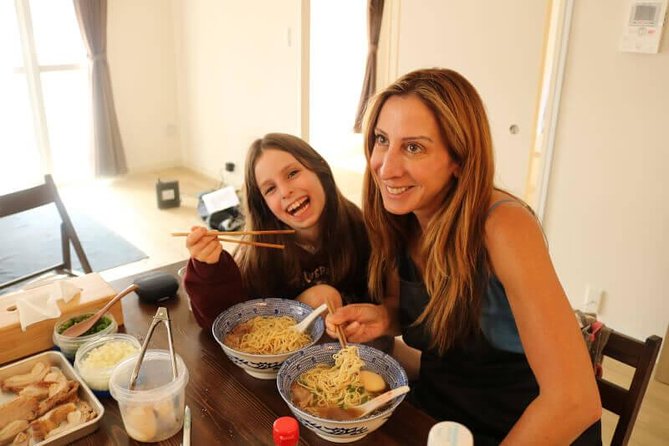
Tokyo smells amazing when ramen is near. This class is all about making real ramen from scratch with Hideki, a chef with about 10 years in ramen restaurants, so you learn the why, not just the how. I love that you actually handle key steps like dashi and assembling a full bowl, and I also love the patient, step-by-step way Hideki guides you in a small group. One thing to consider: drinks are extra, so if you want alcohol, budget more than the base price.
The session runs about 3 hours and ends right where you started. You’ll cook homemade ramen components and gyoza together, and you leave with a small instruction booklet you can use later at home. If you want a hands-on cooking experience (not a sit-and-watch meal), this is the kind of class that fits.
In This Review
- Key Highlights You’ll Care About
- Where You Meet and Why This Location Works
- Your Guide: Hideki, a Pro Chef Who Keeps It Calm
- From the Station to the Home Kitchen
- The Core Skill: Making Dashi, Then Understanding Why It Matters
- Noodles and the Bowl Assembly Mindset
- Nitamago and Chashu: Turning Simple Ingredients Into Ramen Toppers
- Gyoza Dumplings: The Hands-On Bonus Meal Skill
- Lunch: Eating What You Actually Made
- Take-Home Booklet: How You Keep the Class Alive After Tokyo
- Price and Value: Is $115 Worth It?
- What Could Feel Challenging for Some People
- Should You Book This Ramen-From-Scratch Class in Tokyo?
- FAQ
- How long is the ramen cooking class?
- What does the class cost?
- What is included in the price?
- What is not included?
- Where do I meet for the class?
- How many people can join the class?
- What will I learn to cook during the class?
- Is confirmation provided after I book?
- What is the cancellation policy?
Key Highlights You’ll Care About
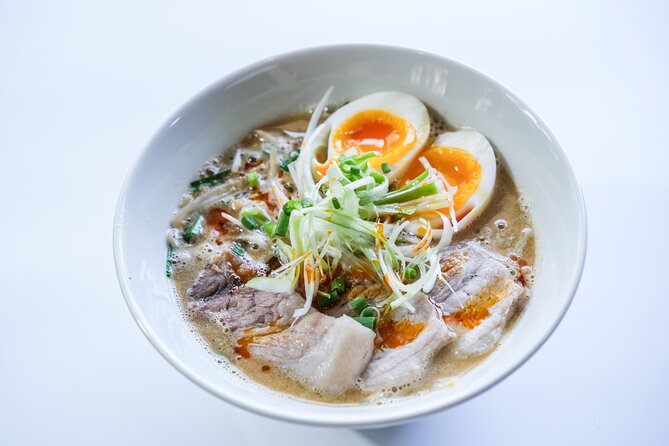
- From-scratch ramen focus: dashi, nitamago (ramen-style egg), and chashu (pork)
- Small group feel: max 4 travelers, so it stays personal
- Hands-on noodles and soup: not just assembly, you learn core techniques
- Gyoza included: you make dumplings, not just ramen
- Take-home recipe notes: an instruction booklet to recreate the results
- Convenient Tokyo area: close to Ginza, Shibuya, Shinjuku, Shinagawa, and Haneda airport
A bowl somewhere else in Tokyo
- Eat and Drink Like a Local: Tokyo Ueno Food Tour-Taverns&Ramen
★ 5.0 · 957 reviews - Ramen & Gyoza Cooking Class in Tokyo with Local Supermarket Visit
★ 5.0 · 823 reviews - Tokyo: Ramen Tasting Tour with 6 Mini Bowls of Ramen
★ 4.9 · 432 reviews - Tokyo: Easy Ramen Cooking Experience in Kabukicho, Shinjuku
★ 4.6 · 321 reviews
Where You Meet and Why This Location Works
This cooking class is based in Shinagawa City, near Minamishinagawa, and it is easy to tuck into a Tokyo itinerary. You’re close to several big-name areas, including Ginza, Shibuya, and Shinjuku, so you can do this lesson without feeling like you crossed the city just for food.
The meeting point is at Hideki ramen cooking studio, in Minamishinagawa. You also get a direct start and finish, since the activity ends back at the meeting point. That sounds simple, but in Tokyo, time is everything. A class that starts and ends cleanly lets you plan your day around it instead of reorganizing everything late in the afternoon.
Practically, you will want to plan your arrival around train time. The experience runs for about 3 hours, so if you show up frazzled or late, you lose momentum. The good news is that Hideki communicates clearly and can help if you are running behind.
Your Guide: Hideki, a Pro Chef Who Keeps It Calm
Hideki is the heart of this class. He’s not a generic “cooking teacher.” He has worked in ramen restaurants for about 10 years, and it shows in how he breaks down each step and keeps the pace steady.
In the reviews, people praise how patient he is when walking you through multiple components. That matters because ramen is not one thing. It is soup stock, noodles, toppings, heat control, and timing. If the class rushes, you end up guessing. Here, Hideki’s approach helps you understand what each step is doing.
You also get a more personal setup than many group classes. This is a small group with a maximum of 4 travelers, which means you’re more likely to get direct attention when you need it. One review also notes that Hideki meets you and helps with timing and orientation, even escorting you to and from the station. For a first-time Tokyo visitor, that reduces the stress that can come from finding small local spaces.
From the Station to the Home Kitchen
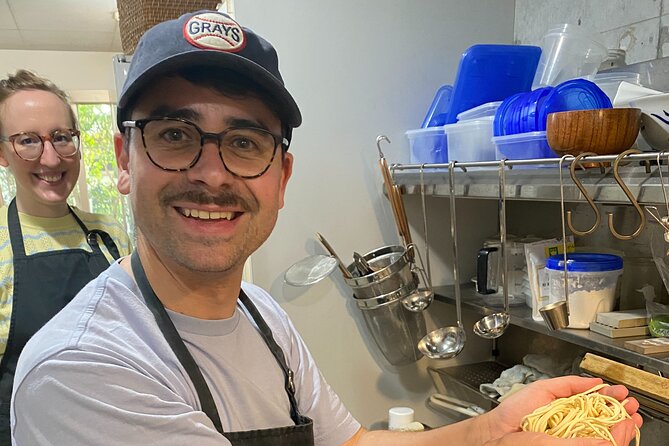
The class experience is not staged in a big classroom. You meet at the studio location, then Hideki guides you from there into the kitchen space where the cooking happens. Reviews describe it as an intimate, home-based class, with Hideki welcoming you once you arrive.
That home-kitchen format is part of what makes the learning transferable. You are not just following steps. You’re seeing how ramen tools and workflows look in real life. You also tend to learn faster when the environment is comfortable and the host keeps things practical.
If you are nervous about navigating Tokyo, take comfort in the fact that Hideki meets you and helps with contact if you’re late. One review specifically mentions communication via WhatsApp when timing got messy on the train. That is exactly what you want, because the biggest risk in cooking classes abroad is not the food. It’s missing the start time.
- Mt Fuji and Hakone 1-Day Bus Tour Return by Bullet Train★ 5.0 · 26,383 reviews
- 1-Day Tokyo Bus Tour★ 5.0 · 14,250 reviews
- Tokyo: teamLab Planets TOKYO Digital Art Museum Entry Ticket★ 4.6 · 9,779 reviews
- Mt Fuji & Hakone Cruise, Drum Show Bullet Train 1 Day from Tokyo★ 4.0 · 7,413 reviews
- Tokyo Mt Fuji 5th St & Hakone Cruise Bus Tour w/Bullet Train★ 4.4 · 5,024 reviews
The Core Skill: Making Dashi, Then Understanding Why It Matters
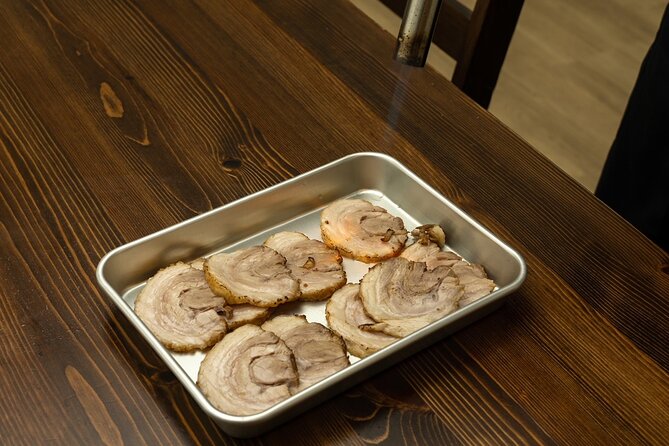
Dashi is the flavor engine. In this class, you learn how to prepare it as part of building authentic ramen. You are not just tasting and moving on. You learn the process well enough to reproduce it.
Here’s what I think you’ll take away. When you learn dashi step-by-step, you stop treating ramen soup like magic. You understand it as a stock with a purpose: balance, body, and that savory backbone that makes a bowl taste like ramen and not like “hot noodles in broth.”
In class, you also learn how to think about timing and temperature. Ramen is unforgiving if you rush the stock stage. Even if you remember the recipe, you still need to understand what to watch for while it cooks.
The best practical advice you can use later is to pay attention to cues. Does the stock smell right? Is it clear enough? Is it strong enough for your toppings? In ramen, a little adjustment early prevents problems later.
Noodles and the Bowl Assembly Mindset
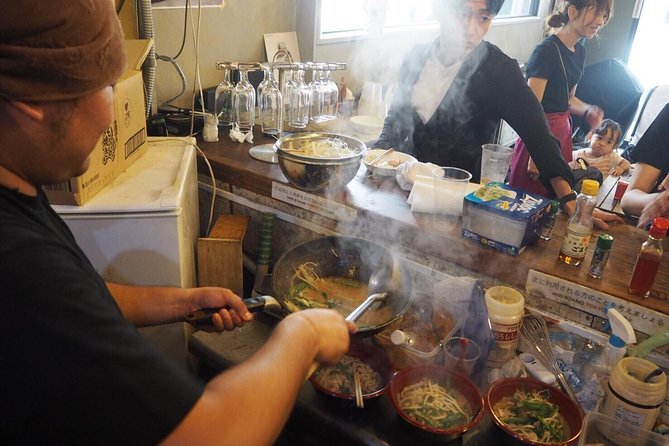
One of the most praised parts of this experience is that you learn noodles and soup from scratch. That is a big deal, because many ramen classes stop at toppings or assembly. Here, you get the real foundation work.
You’ll work through how to make the noodle component and how it should behave when cooked. That gives you a clear target when you cook at home later. Instead of guessing, you can compare texture and timing to what you practiced in the class.
Then comes assembly. Ramen is all about balance. You need enough broth to coat the noodles properly, the right toppings in the right order, and heat that keeps everything at the right level.
If you’re the type who loves learning technique, you’ll probably enjoy the fact that Hideki walks you through each stage carefully. That patient approach shows up again and again in feedback. You are guided, not thrown into chaos.
Nitamago and Chashu: Turning Simple Ingredients Into Ramen Toppers
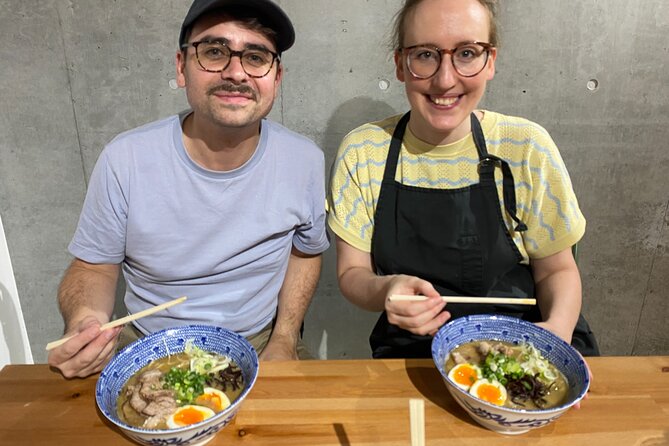
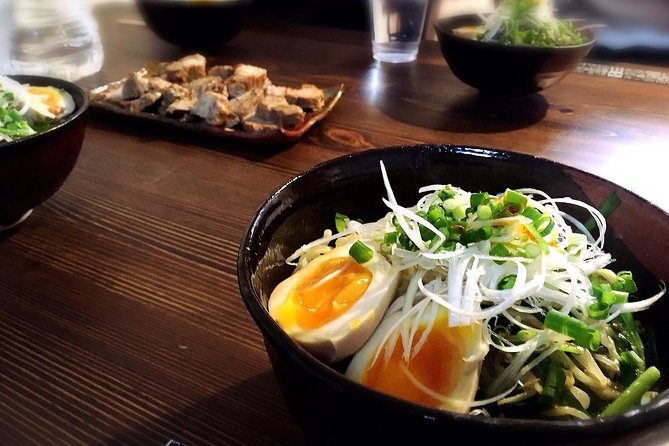
The toppings are where ramen becomes restaurant-level. This class teaches you how to make nitamago and chashu, two of the most iconic elements in a classic bowl.
Nitama go, the ramen-style boiled egg, is about more than boiling. You’re learning how to season and time it so you get that satisfying result you see in great ramen shops: yolk texture, flavor penetration, and a clean finish with the sauce.
Chashu is similar in spirit. Pork for ramen is not just cooked. It is cooked and handled in a way that keeps it tender and ready to perform inside a bowl. Hideki’s experience in ramen restaurants helps here, because he knows what makes it taste right in context. One review notes that Hideki sometimes takes charge near the end to make the final result match what you’d get at a ramen restaurant. That’s a good thing, because it protects quality while you focus on learning the flow.
Practical takeaway for your own kitchen: you’ll likely remember these topping steps more easily than you think. Eggs and pork are familiar ingredients, and once you learn the timing and flavor logic, you can reuse that skill for other meals too.
Gyoza Dumplings: The Hands-On Bonus Meal Skill
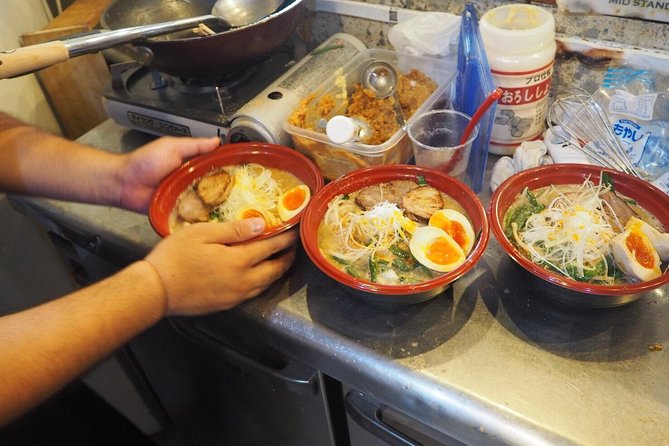
You’ll also cook gyoza dumplings alongside the ramen. This is a smart addition because it gives you extra practice with dough handling, filling, and pan-cooking rhythm.
In a home class, gyoza feels less like a side dish and more like a second project that teaches you a different cooking style than broth. You get a chance to see how texture changes on a hot pan, how they need attention as they cook, and how timing matters for a satisfying result.
Many people love this part because it is interactive. Even if ramen is the main goal, gyoza gives you another way to recreate the meal later, and it makes dinner feel special when you cook your takeaway recipe at home.
Lunch: Eating What You Actually Made
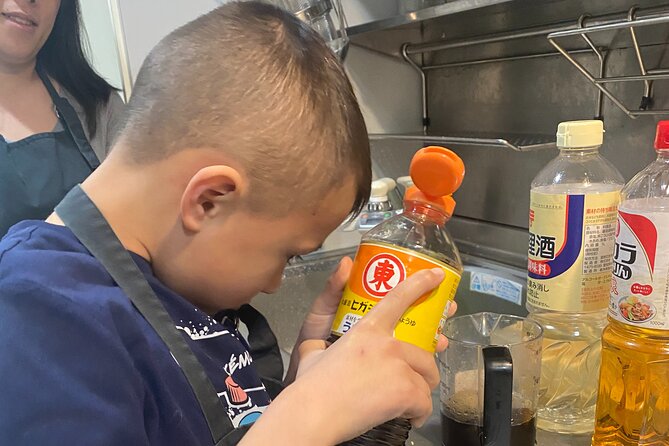
Lunch is included, meaning you eat the ramen you cooked. That is one of the best forms of learning. You get immediate feedback on whether your dashi tasted right, whether your toppings were cooked properly, and whether your assembly created the bowl you expected.
This matters because ramen is layered. You can follow steps and still miss the final harmony. Eating what you made gives you a chance to adjust in your brain for the next time, especially if you plan to cook again.
You’re also not stuck on an awkward waiting period. In a 3-hour class, the pace tends to stay active: prep, cook, assemble, eat. Reviews mention a process that starts calmly and then moves faster as cooking ramps up. That means you stay engaged, but you also need to pay attention once the heat is on.
Take-Home Booklet: How You Keep the Class Alive After Tokyo
A strong theme in the reviews is that Hideki provides a take-home instruction booklet. That is huge value because it turns the class from a one-time meal into a repeatable skill.
A printed guide is also easier than relying on your phone with shaky photos and partial memory. You can reread the steps later when you’re shopping for ingredients and when you are setting up your kitchen.
If you’ve ever tried to recreate a foreign cooking class from memory and ended up with something close but not quite, you’ll appreciate this. The booklet makes the next attempt more likely to succeed, which is where the real value lies.
Price and Value: Is $115 Worth It?
At $115 per person for about 3 hours, this isn’t a cheap “snack class.” But it is priced like a real instruction experience, and the value is practical.
Here’s what you get for the money, based on what the class includes:
- The lunch is the ramen you make from scratch
- You learn multiple foundational parts: dashi, nitamago, chashu
- You also make gyoza
- The group is small, up to 4 people
- You leave with an instruction booklet
Then consider the host. Hideki has about 10 years working in ramen restaurants. That kind of experience is hard to buy elsewhere for the same price, especially in a context where you can ask questions and get feedback while cooking.
One more point: alcoholic beverages are not included. Soft drinks and alcohol cost extra. If you want drinks, budget for that. If you’re the type who sticks to water or soda, the base price covers most of what you need.
Also, the class is often booked about 7 days in advance on average. That suggests demand, but it also tells you this is not a last-minute, casual drop-in. If you want a slot, lock it sooner rather than later.
What Could Feel Challenging for Some People
This class is hands-on, and that’s the point. But it can be a drawback if you want a slow, relaxed cultural experience where you watch mostly from the side.
It is also set in a small home-style space, which can feel more intimate than a commercial studio. If you prefer big, impersonal facilities, you might find the setup simpler than what you expect.
Finally, ramen schools are traditional by design. This class focuses on authentic ramen components like dashi, nitamago, and chashu. If you have strong dietary restrictions, you’ll want to confirm what can be accommodated, since the menu is clearly ramen-forward.
Should You Book This Ramen-From-Scratch Class in Tokyo?
Book it if you love ramen enough to want the real building blocks. This is ideal for you if you want to learn how dashi, noodles, and classic toppings come together, then eat the results for lunch. The small group size and Hideki’s patient instruction are a big part of why it gets consistent five-star praise.
Skip it if your goal is mainly to taste ramen without cooking. You’ll get much more out of this if you enjoy using your hands, asking questions, and learning timing and technique.
If you’re juggling a Tokyo schedule, the location near major neighborhoods and airport access is another plus. Plan to arrive on time, bring your appetite, and treat the class like a skill-building session, not just a meal.
FAQ
How long is the ramen cooking class?
It runs about 3 hours (approx.).
What does the class cost?
The price is listed as $115.00 per person.
What is included in the price?
Lunch is included, meaning you eat the ramen you made from scratch.
What is not included?
Alcoholic beverages and soft drinks are additional cost.
Where do I meet for the class?
You meet at Hideki ramen cooking studio, 6-chōme-15-3 Minamishinagawa, Shinagawa City, Tokyo 140-0004, Japan.
How many people can join the class?
The maximum group size is 4 travelers.
What will I learn to cook during the class?
You’ll learn how to prepare dashi (soup stock), make nitamago (ramen-style boiled egg), cook chashu (boiled pork), and also make ramen and gyoza dumplings.
Is confirmation provided after I book?
Yes. Confirmation is received within 48 hours of booking, subject to availability.
What is the cancellation policy?
Free cancellation is available. You can cancel up to 24 hours in advance for a full refund, and cut-off times are based on local time.
One More Bowl




Newest Tokyo write-ups from the Loving Japan desk






Ramen and Noodle Tours, side by side.
 ★ 5.0Ramen Cooking Class at Ramen Factory in KyotoFrom $1311,937 reviews
 ★ 5.0Eat and Drink Like a Local: Tokyo Ueno Food Tour-Taverns&RamenFrom $95957 reviews
 ★ 5.0Ramen & Gyoza Cooking Class in Tokyo with Local Supermarket VisitFrom $122823 reviews
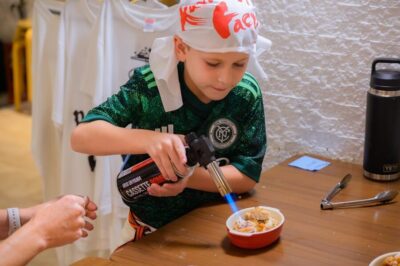 ★ 4.9Ramen Cooking Class at a Ramen Factory with SouvenirFrom $127532 reviews
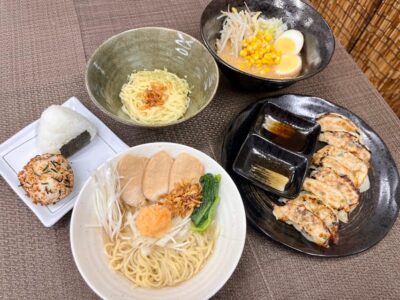 ★ 5.0Ramen, Gyoza, and Onigiri Cooking ClassFrom $90445 reviews
 ★ 4.9Ramen Tasting Tour with 6 Mini Bowls of RamenFrom $122432 reviews
 ★ 4.7Five Must-See Highlights Walking Tour & Ramen LunchFrom $56411 reviews
 ★ 5.0Ramen and Gyoza Cooking Class in DotonboriFrom $70378 reviews
Filed on these lists too