
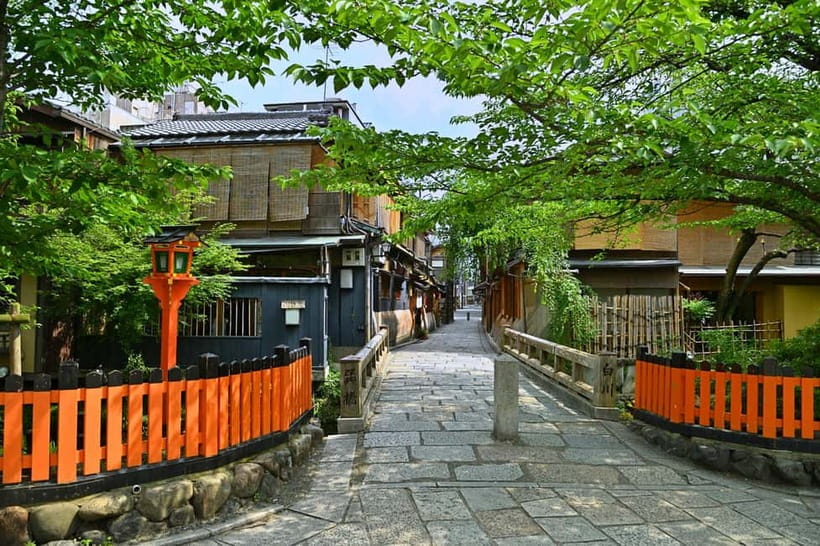
REVIEW · GION, GEISHA AND MAIKO EXPERIENCES
Kioto: Gion Tour, recorrido a pie (Español/Castellano)
Gion feels like Kyoto in miniature, and this walking tour shows how the details work. I love the small-group, Spanish-guided pace, and I love how the guide turns ordinary streets into a map of how Kyoto’s hanamachi districts function. The main drawback is that a Maiko or Geiko sighting is not guaranteed, so go for the stories and atmosphere, not for a scheduled celebrity encounter.
You’ll cover three of Kyoto’s hanamachi areas on foot, including Pontocho, Gion-Kobu, and Gion-Higashi, with stops that connect alleyways, bridges, shrines, and daily life. If you like asking questions while you walk, this tour is built for that, and the guide’s tone in reviews is consistently described as close, flexible, and very responsive to curiosity like what you are seeing and why it matters.
In This Review
- Key highlights worth planning for
- Why Gion at walking speed changes what you notice
- Getting started at Disney Kyoto Shijo-Kawaramachi, and how the tour feels in real life
- The 2-hour route: what you actually walk, and what you learn along the way
- Pontocho alleyway start, then Kamogawa statues and classic bridge views
- Gion-Kobu streets and the routines behind Maiko and Geiko life
- Tatsumi Jinja and the calm stop that breaks up the walking
- Gion-Higashi and the name connection to Yasaka Shrine
- About those Maiko and Geiko sightings, and what to do with that reality
- Price and value: $35 for 2 hours that actually teaches you
- Timing choices: 9:45 vs 12:30, and what changes in cherry blossom season
- What to bring so the walk stays comfortable
- Who this tour suits best
- Should you book the Gion tour, or wander on your own?
- FAQ
- How long is the Kioto Gion walking tour?
- What language is the guided tour in?
- How large is the group?
- How much does the tour cost?
- Where do we meet the guide?
- How far do we walk?
- Which areas of Gion are visited?
- Is Hanamikoji-Dori included?
- Can I expect to see a Maiko or Geiko?
- Does the tour change in cherry blossom season, or offer an extra stop?
Key highlights worth planning for
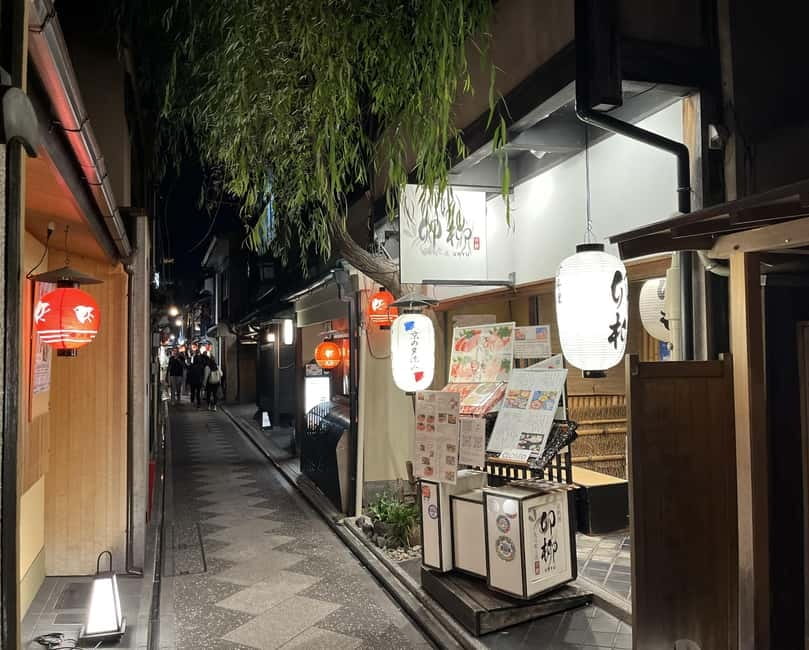
- Three hanamachi in 2 hours: Pontocho, Gion-Kobu, and Gion-Higashi on foot
- Historic spots you might miss alone: overlooked locations that explain how the district works
- Question-friendly guiding: you are encouraged to ask a lot as you go
- Signature alley and bridge moments: Pontocho alleys, Kamogawa area statues, and key crossings
- Gion name origin if time allows: a stop connected to Yasaka Shrine and the Gion Festival background
Evening walks through the old quarters, compared
- Kyoto Geisha Walking Tour: Gion District & Hidden Gems
★ 4.7 · 3,273 reviews - Kyoto: Gion Magical Night Walking Tour with Geisha Trivia
★ 4.9 · 2,393 reviews - Kyoto: Gion Geisha District Walking Tour – Stories of Geisha
★ 4.7 · 2,187 reviews - Best of Kyoto: Gion, Geisha, Pagodas & Cobblestones
★ 4.9 · 2,058 reviews
Why Gion at walking speed changes what you notice
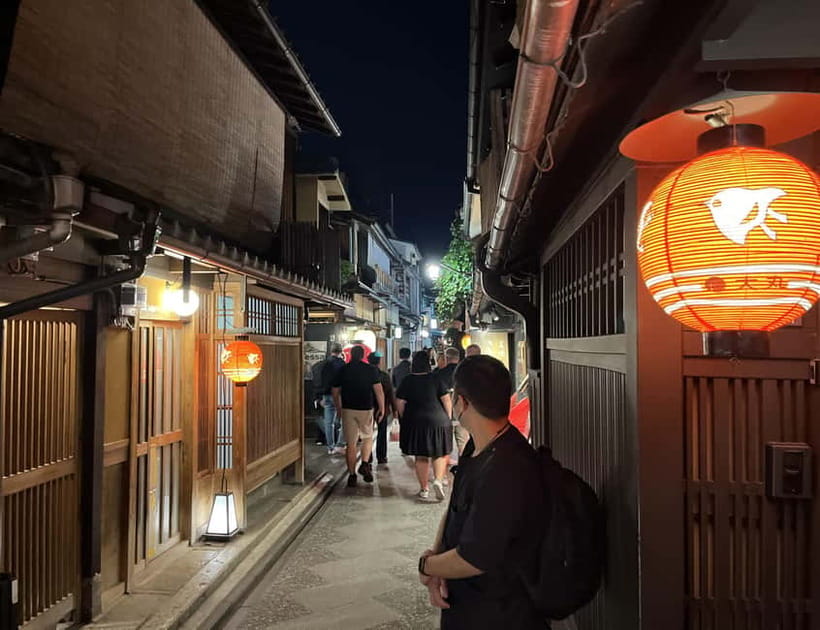
Kyoto can look like a set of famous photos until you slow down and learn how the neighborhood is laid out. This tour is useful because it gives you a simple framework for what you are looking at: Gion is not only the idea of geisha entertainment. It is a network of streets, preserved areas, rituals, and routines that have shaped daily life here for a very long time.
I particularly like tours where the guide treats the street level seriously. You are not just moving from landmark to landmark. You are learning how the district’s structure affects what you see, where people go, and how traditions keep showing up in small ways.
One more honest point: this is a sight-and-stories experience, not a guaranteed show. That means your best attitude is, enjoy what you learn even if you never catch a Maiko or Geiko in motion.
Getting started at Disney Kyoto Shijo-Kawaramachi, and how the tour feels in real life
Your meeting point is right in the middle of the action, in front of the Disney store at Kyoto Shijo-Kawaramachi. The guide will be sitting and holding an iPad with the tour image. This is a good setup because it is easy to spot quickly and meet without guesswork.
The group size is capped at 6 participants, which matters more than it sounds. In a small group, the guide can steer the walk based on your questions, not just the clock. Reviews keep pointing to guides like José and Juan being close, flexible, and detailed, with a real knack for picking up on what you are curious about.
You should also know the tour runs in Spanish. If you are not fully comfortable yet, plan to rely on pictures, street context, and the guide’s willingness to clarify when needed, since that showed up in at least one review.
The 2-hour route: what you actually walk, and what you learn along the way
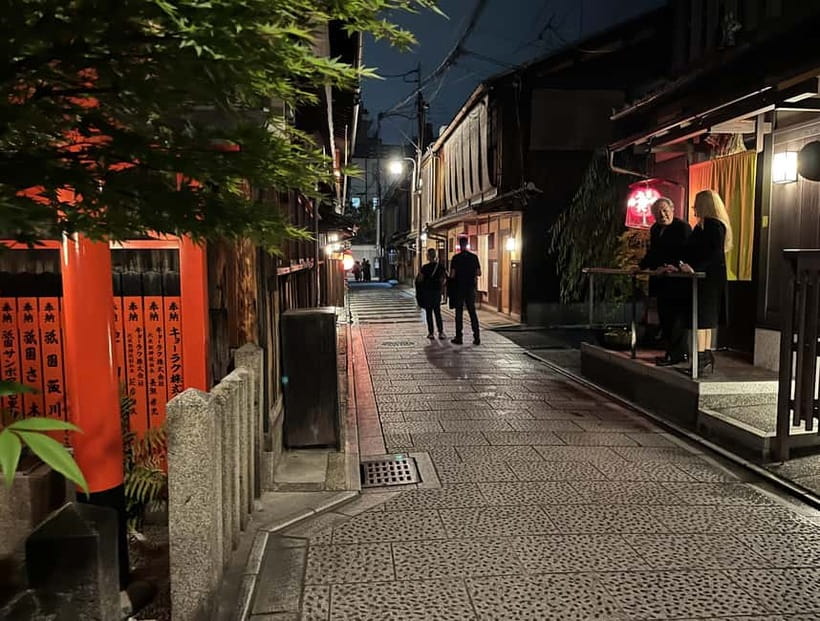
This tour is 2 hours and covers about 3.3 km (2 miles). That distance is very manageable, especially if you wear shoes you can stand in comfortably for a while. The upside of a shorter walk is that it stays focused. You spend energy understanding the neighborhood instead of cranking through long distances.
The route targets three hanamachi areas across downtown Kyoto. In practice, that means you are seeing how different parts of the same tradition-related geography feel, rather than repeating one street theme three times.
Also, you are not just walking Gion. You are connecting it to surrounding context. That is why the itinerary includes waterside and shrine-linked stops, plus bridges and alleyways that help the whole district make sense as one system.
- PERFECT KYOTO 1-Day Bus Tour★ 5.0 · 13,518 reviews
- Kyoto: Fushimi Inari, Kinkakuji, Bamboo Grove 1 Day Bus Tour★ 4.8 · 4,316 reviews
- Kyoto: Tea Ceremony in a Traditional Tea House in Kiyomizu★ 4.9 · 3,519 reviews
- Kyoto Geisha Walking Tour: Gion District & Hidden Gems★ 4.7 · 3,273 reviews
- Kyoto: Tea Ceremony Ju-An at Jotokuji Temple★ 4.9 · 3,207 reviews
Pontocho alleyway start, then Kamogawa statues and classic bridge views
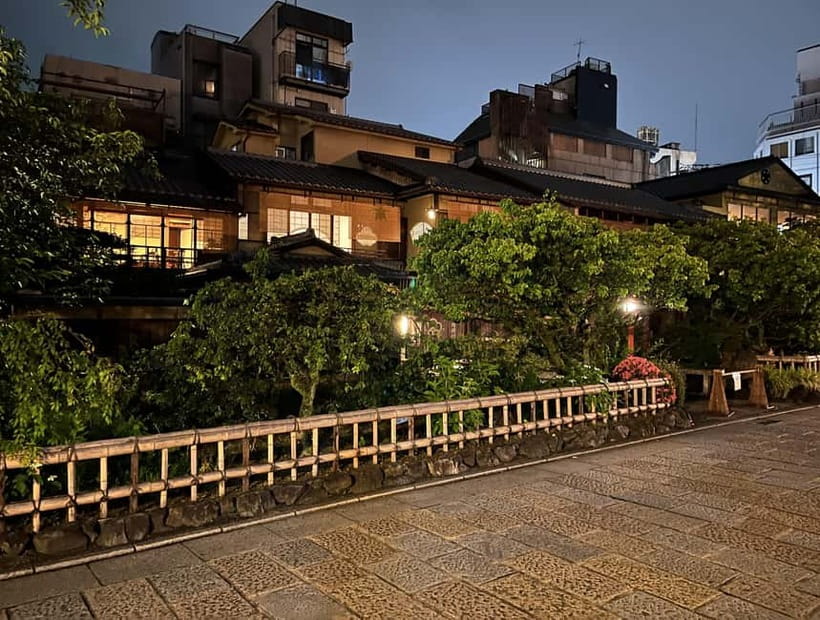
The first stretch brings you into the world-famous alley area around Pontocho. You will walk through Pontocho alley and pass by Pontocho Kaburenjo, which anchors the neighborhood’s identity in entertainment and tradition.
Next comes a Kamogawa-related moment: you’ll see Yagi-san and Kita-san statues connected to the Kamogawa area, then you move toward Sanjo Ohashi bridge. Bridges are underrated for understanding Kyoto. They force you to look at the district’s shape from a new angle. Even when you stay on foot, these crossings help you connect street life to the riverside geography that shaped the city’s layouts.
What I like here is that the guide uses these transitions to explain why places earned their roles. You are not only seeing a photo location. You are building a mental map of where people travel, where sightlines open up, and why certain areas became social hubs.
Gion-Kobu streets and the routines behind Maiko and Geiko life
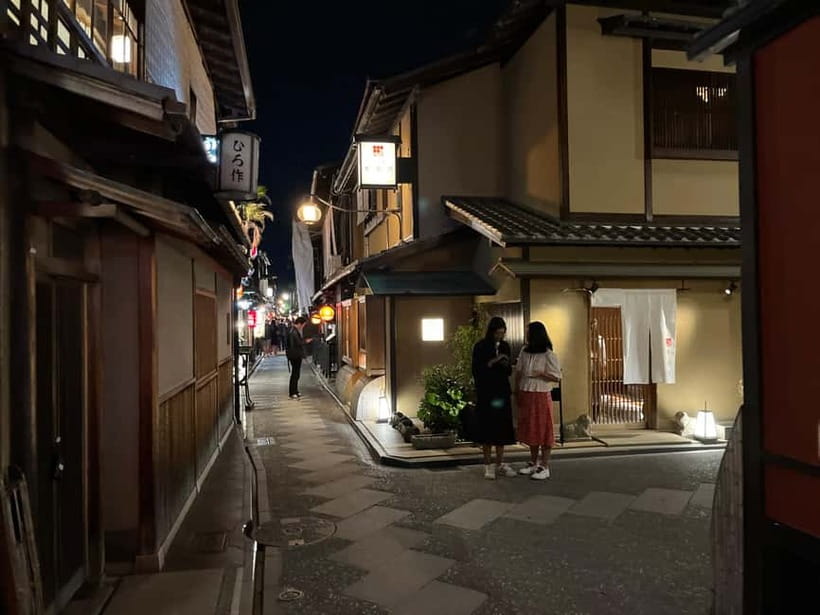
After the first area, the tour shifts into Gion-Kobu, including Gion-Kobu (Gion Shinbashi Dori) and later Gion-Kobu (Gion Shirakawa). This is where the tour’s “don’t just look, understand” style really matters.
Gion-Kobu is presented as a place to learn about hanamachi life, including the difference between Maiko and Geiko and the practices and routines tied to their world. The guide also points out how Maiko and Geiko life ties into the district’s calendar and daily rhythm, not just costumes and performances.
One thing to remember: you are being trained to see patterns. That means you may not notice the same things in every alley without context. When you have the guide’s framework, small details start to connect, like how streets feel different depending on the neighborhood boundary and preserved areas.
You may also hear about national historical preserved neighborhoods around Gion-Kobu (North). Even if you do not memorize every label, these explanations help you understand why Kyoto protects some streets and not others.
Tatsumi Jinja and the calm stop that breaks up the walking
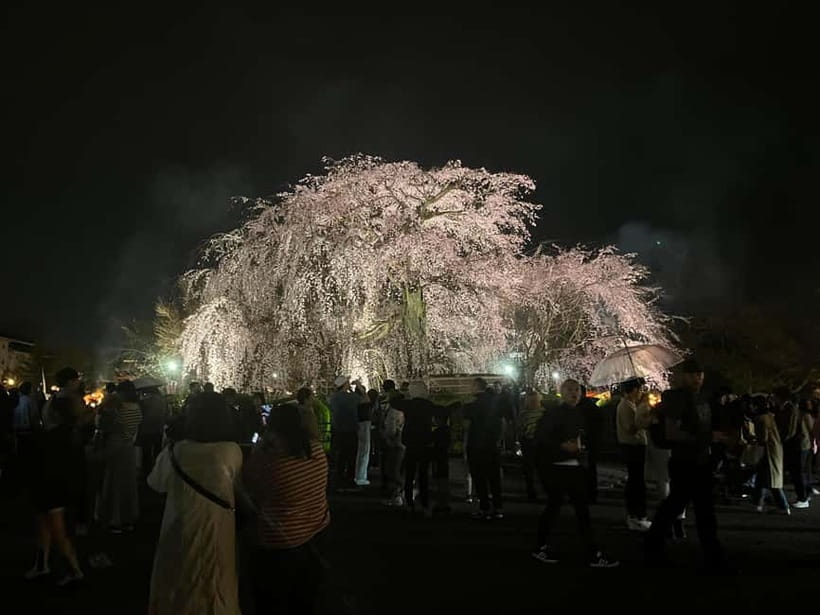
The route includes Tatsumi Jinja, followed by Tatsumi Hashi bridge. Temples and shrines on tours are sometimes treated like quick photo stops. Here, the point is the pacing and the perspective shift.
A shrine stop does two things for your brain. First, it interrupts the “alley sequence” so you can reset. Second, it gives you a cultural reference point that is not dependent on spotting anyone performing. If your primary goal is to see Maiko or Geiko, this is still valuable, because it gives you something meaningful to focus on even in quieter moments.
Gion-Higashi and the name connection to Yasaka Shrine
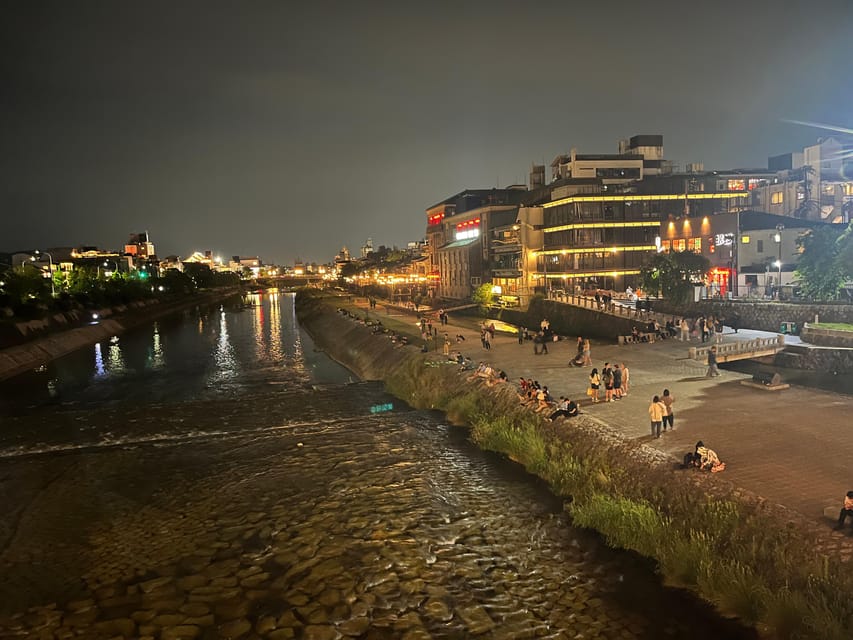
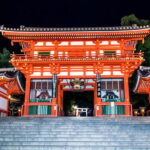
Next is Gion-Higashi, which continues the district lesson without repeating the same street vibe. Then, depending on timing, the tour may visit the former Gion Shrine area, now Yasaka Shrine. This stop is tied to the origin story for the name “Gion,” with background that traces the district’s roots more than 1100 years.
If time allows, you may also get an explanation of the Gion Festival, described as one of Japan’s three most important festivals. Even if you only catch the overview, it helps you connect why this part of Kyoto carries weight beyond the nightlife image.
A small practical note: Hanamikoji-Dori is not included. That means if your dream is to walk the most famous geisha-photo corridor end to end, you will want to plan a little extra time elsewhere. This tour uses other streets and preserved areas that many people skip.
About those Maiko and Geiko sightings, and what to do with that reality
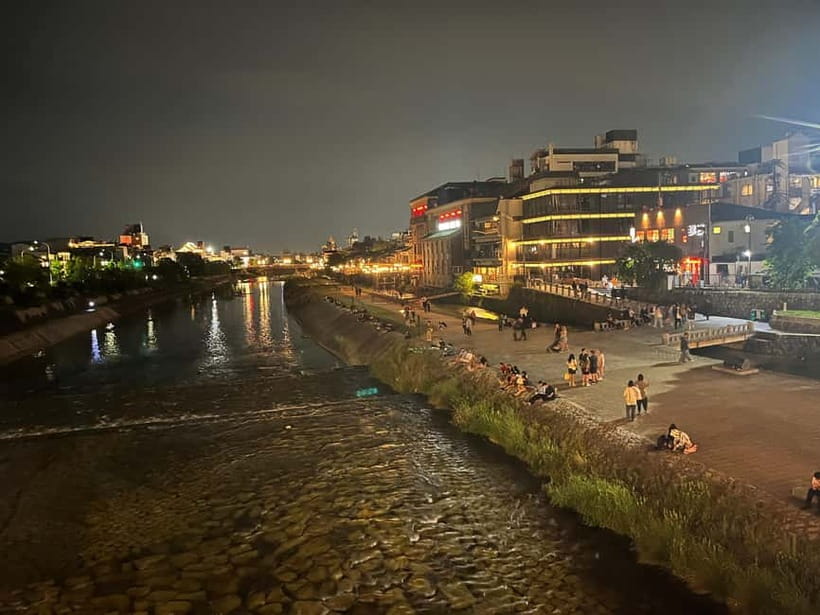
It is clearly stated that a Maiko or Geiko sighting cannot be guaranteed. I respect that honesty. Kyoto’s traditions are real life, not a timed stage, and people move through the district with privacy in mind.
So what should you do instead? Put your attention on cues and context rather than chasing a single visual goal. With the guide explaining the differences between Maiko and Geiko and the neighborhood routines, you will be better at recognizing what you are seeing when it happens.
If you get lucky and spot someone, great. If you do not, you still leave with a clearer understanding of how the district operates.
Price and value: $35 for 2 hours that actually teaches you
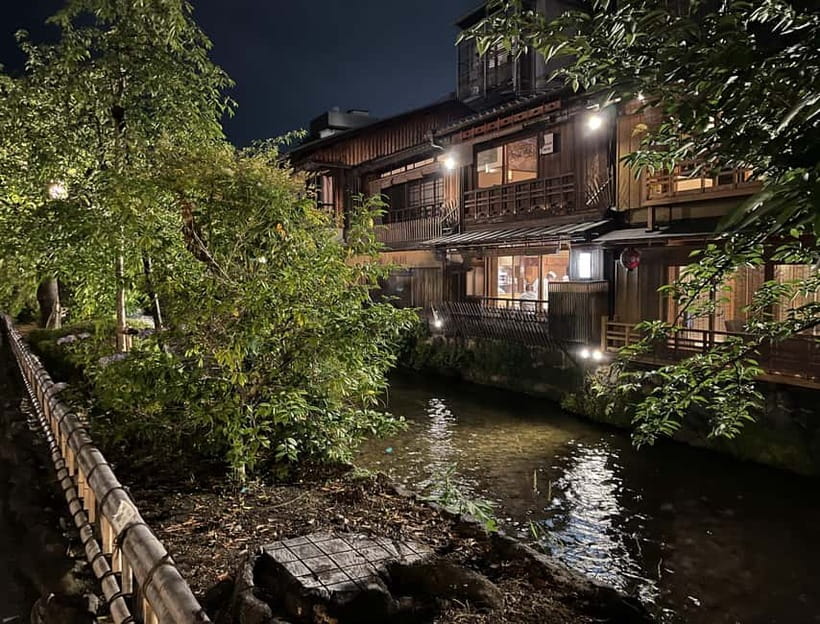
At $35 per person for a 2-hour guided walk, you are not paying for transportation, an attraction ticket, or added services. You are paying for a local guide’s time and for the ability to ask questions as you walk.
For me, the value comes from two factors. First is the limited group size which makes the experience feel more personal. Second is the guide focus on details you would otherwise miss, the kind of street-level explanations that turn random alleys into a coherent district story.
If you usually do self-guided wandering, this is a smart upgrade. Not because Kyoto needs you to buy information, but because Gion is the kind of neighborhood where names, boundaries, and traditions matter. A good guide helps you stop guessing and start noticing.
Timing choices: 9:45 vs 12:30, and what changes in cherry blossom season
There are start times at 9:45 and 12:30. If you take one of these, your tour can include a free visit to the Gion Gallery if you extend your time. That optional add-on is worth keeping in mind if you like context, photos, or a slower pace after the walk.
During cherry blossom season, roughly late March to early April, the route can be slightly altered to showcase blossoms around Gion. If you are visiting at that time, plan your expectations around a few extra scenic stops, while keeping in mind that the tour is still focused on district education.
What to bring so the walk stays comfortable
This tour is easy enough to do, but it is still a two-mile foot experience in real streets. Bring comfortable shoes first. Then think weather: sun hat, umbrella, sunscreen, and water.
You will also want an open mindset. The guide’s approach is very question-driven. The best way to get value is to keep a short list in your head, like one or two curiosities you want answered about Japan, Kyoto, or what you are seeing in the hanamachi area.
Who this tour suits best
This is a great fit if you:
- Want to understand Gion beyond the headline image of geisha entertainment
- Like guided context for street-level details, not just a checklist of sights
- Enjoy conversations and are comfortable asking questions in Spanish or using translation support
It is also a good pick for couples or small groups who want a quieter pace than a large group tour. The limited size makes it feel more like a guided walk with a local who is patient with questions.
If you are only interested in walking Hanamikoji-Dori specifically, you might feel the itinerary is a tradeoff. This tour offers a different set of streets and preserved areas, and that can be a win if you want variety and explanation.
Should you book the Gion tour, or wander on your own?
Book it if you want a guided explanation that makes Gion feel legible fast, especially in just two hours. The route connects three hanamachi areas, includes bridge and shrine context, and gives you a structure for understanding Maiko and Geiko life without promising sightings.
Skip it or pair it with extra self-time if your top priority is walking only the most famous corridor streets, like Hanamikoji-Dori. Since that street is not part of this plan, you will need a second day or extra minutes to cover that specific wish list item.
Overall, this is a solid value choice when you want the district’s names, boundaries, and routines to click in your head.
FAQ
How long is the Kioto Gion walking tour?
The tour lasts 2 hours.
What language is the guided tour in?
The live guide speaks Spanish.
How large is the group?
The experience is a small group limited to 6 participants.
How much does the tour cost?
The price is $35 per person.
Where do we meet the guide?
Meet the guide in front of the Disney – Kyoto Shijo-Kawaramachi store, looking for the person holding an iPad with the tour image.
How far do we walk?
The route is about 3.3 km (roughly 2 miles).
Which areas of Gion are visited?
The tour visits Pontocho, Gion-Kobu, and Gion-Higashi, covering 3 of the 5 hanamachi.
Is Hanamikoji-Dori included?
No, Hanamikoji-Dori is not included.
Can I expect to see a Maiko or Geiko?
A Maiko or Geiko sighting is not guaranteed.
Does the tour change in cherry blossom season, or offer an extra stop?
In cherry blossom season (late March to early April), the route may be slightly altered to include blossoms around Gion. Also, the 9:45 and 12:30 tours can include a free visit to the Gion Gallery if you extend your time.
Evenings in the Old Quarters
Newest Kyoto write-ups from the Loving Japan desk
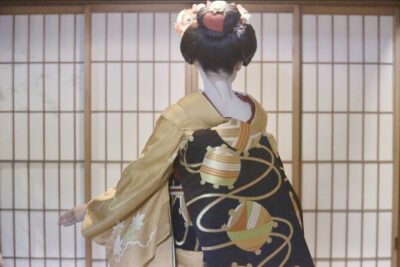

Gion, Geisha and Maiko Experiences, side by side.
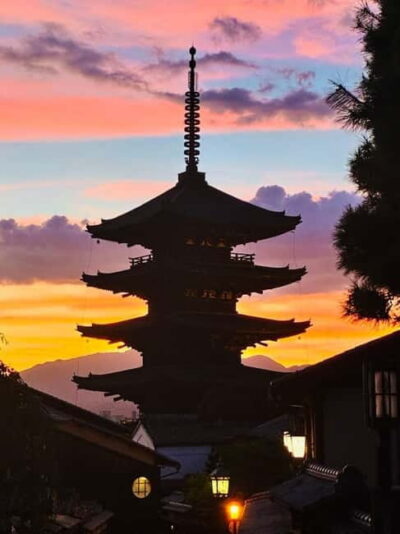 ★ 4.7Kyoto Geisha Walking Tour: Gion District & Hidden GemsFrom $253,273 reviews
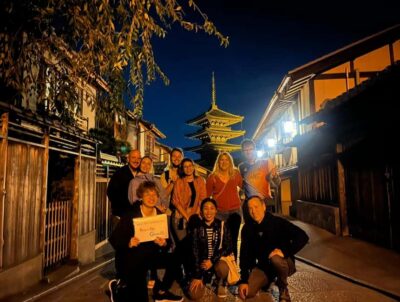 ★ 4.9Gion Magical Night Walking Tour with Geisha TriviaFrom $242,393 reviews
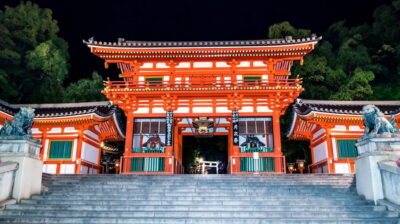 ★ 4.7Gion Geisha District Walking Tour – Stories of GeishaFrom $202,187 reviews
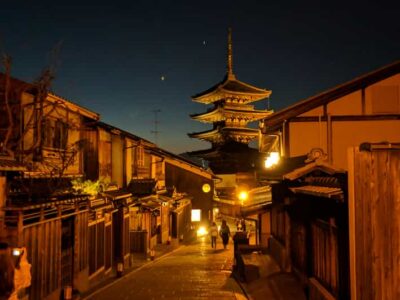 ★ 4.9Best of Kyoto: Gion, Geisha, Pagodas & CobblestonesFrom $242,058 reviews
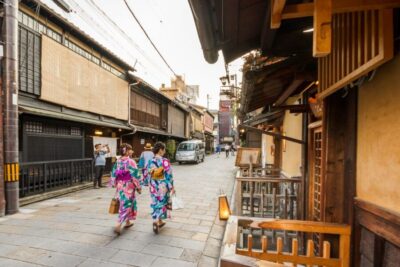 ★ 4.5Night Walk in Gion: Kyoto’s Geisha DistrictFrom $212,003 reviews
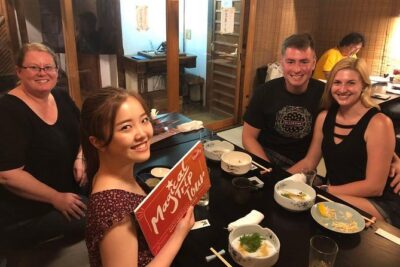 ★ 5.0Kyoto Night Foodie Tour in Gion (9+ dishes + 6 Sake tastings)From $1631,762 reviews
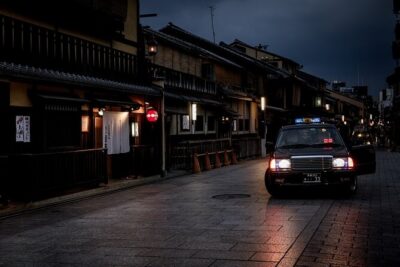 ★ 5.0Kyoto Gion Geisha District Walking Tour – The Stories of GeishaFrom $251,441 reviews
 ★ 5.0Kyoto Gion: 2-Hour Geisha Culture & History Walking TourFrom $231,186 reviews
Filed on these lists too