
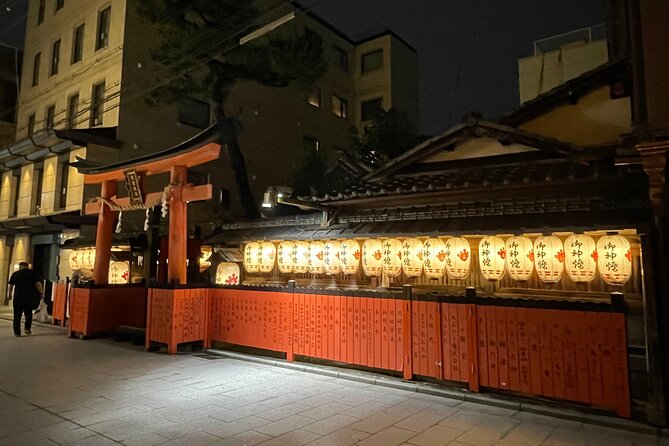
REVIEW · GION, GEISHA AND MAIKO EXPERIENCES
Kyoto Geisha District Walking Tour in Gion
Gion can feel like a maze at first. This 2-hour walking tour keeps you on track while you learn what you are actually seeing, from Shinto shrines to the geisha district streets. You get guide commentary as you walk, so the lanes and lanterns make sense fast.
I especially like the small group size (max 10 people). It makes it easier to ask questions and actually hear the story behind places like Yasaka Shrine and the quiet corners near Gion Shirakawa. I also love that the tour is built around photo-friendly stops, not just a check-the-box march.
One thing to consider: you are walking rain or shine, and the route is not suitable for people who need to avoid stairs. Also, like any experience with different guides, the delivery can vary, so pay attention to the guide language and pacing when you arrive.
In This Review
- Key highlights to know before you go
- Why Gion Makes Sense With This Guided Walk
- Starting at Gion Kōbu Kaburenjō: What to Expect Before You Walk
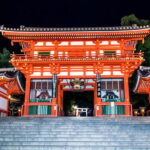
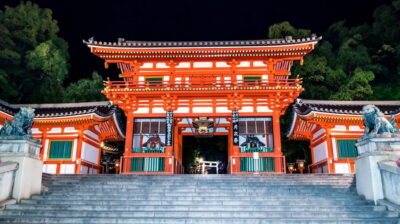
- Yasaka Shrine: Lanterns, Calm, and the Sacred Tone
- Gion on Foot: Narrow Streets, Machiya Houses, and Real Atmosphere
- Tatsumi Daimyojin and Tatsumi Bridge: The Quick Stops That Feel Like a Movie Scene
- Gion Shirakawa Canal: Weeping Cherry Trees and Street-Level Quiet
- Hanamikoji Street: The Main Stage of Gion
- Gion Corner: Traditional Arts as a Final Cultural Thread
- Price and Logistics: Is It Good Value for $29.85?
- Should You Book This Gion Geisha District Walk?
- FAQ
- How long is the Kyoto Geisha District Walking Tour in Gion?
- Where do I meet the tour guide?
- Is admission included for the shrine stops?
- How big is the group?
- Does the tour run in rain or shine?
- What should I wear for this walking tour?
- Is the tour suitable for people with mobility limitations?
- If I choose the kimono plan, what time do I need to return the kimono?
Key highlights to know before you go
- Max 10 people: easier conversation, better pace, and less crowd pressure in narrow streets.
- Geisha district storytelling: you get explanations about tradition and etiquette while you see the real scenery.
- Yasaka Shrine first: a calm sacred start that sets the tone before you hit Gion’s lantern lanes.
- Photo stops with meaning: lanterns, waterways, and machiya houses, explained rather than just pointed at.
- Short detours that matter: quick stops at Tatsumi Daimyojin and Tatsumi Bridge add variety without dragging.
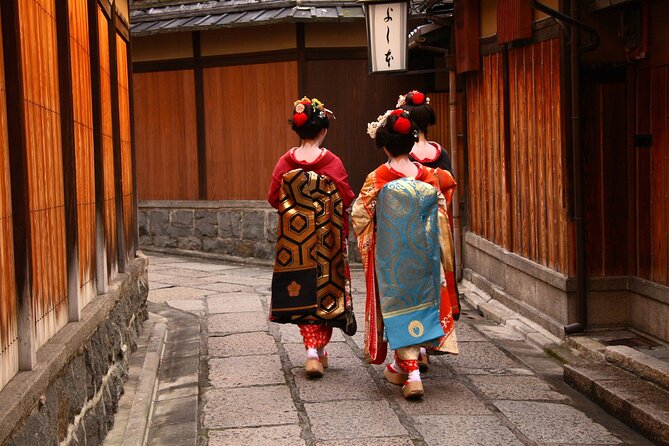
- Chance to spot geiko or maiko: you might see them headed between engagements, depending on timing.
Evening walks through the old quarters, compared
- Kyoto Geisha Walking Tour: Gion District & Hidden Gems
★ 4.7 · 3,273 reviews - Kyoto: Gion Magical Night Walking Tour with Geisha Trivia
★ 4.9 · 2,393 reviews - Kyoto: Gion Geisha District Walking Tour – Stories of Geisha
★ 4.7 · 2,187 reviews - Best of Kyoto: Gion, Geisha, Pagodas & Cobblestones
★ 4.9 · 2,058 reviews
Why Gion Makes Sense With This Guided Walk
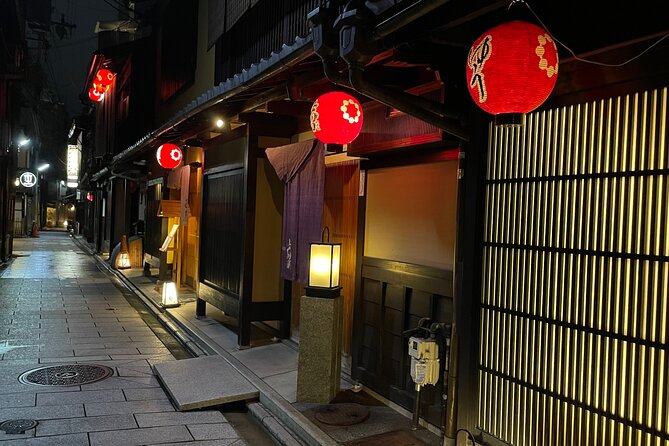
Gion is famous, but fame can also make it confusing. With this tour, you are not just wandering through the most photographed streets in Kyoto. You are walking with a guide who connects each stop to the people, beliefs, and traditions tied to the area.
The best part for me is the story-first approach. You start with a Shinto landmark, then move into the geisha district, and each transition feels intentional. That is what turns Gion from scenery into understanding.
For value, the pricing is hard to beat. At $29.85 per person for about 2 hours, you are paying mostly for interpretation, direction, and that “where do we go next” confidence. Many stops are marked as free admission, so you are not adding extra ticket costs just to see the core sights.
Starting at Gion Kōbu Kaburenjō: What to Expect Before You Walk
You meet at Gion Kōbu Kaburenjō, 570-2 Gionmachi Minamigawa, Higashiyama Ward, Kyoto 605-0074. The tour starts and ends at the same point, which is useful if you like knowing your day has a clean reset point.
You also get a mobile ticket, which cuts down on last-minute hassle. If you are the type who hates fumbling with paper in a crowd, this matters.
This is a walking tour, and that is not a metaphor. You should wear comfortable walking shoes. The tour also runs rain or shine, so plan for wet pavement and bring something for your comfort (like a small umbrella or rain layer).
Two practical cautions from the tour details:
- The route is not suitable for people who need to avoid stairs.
- Children must be accompanied by an adult.
If you are also thinking about a kimono plan, note this rule: after changing into kimono, you go on your own to the Japan Kanji Museum & Library (about a 5-minute walk from the kimono rental store). After the tour ends, you must return the kimono by 5:30 pm.
Yasaka Shrine: Lanterns, Calm, and the Sacred Tone
The first major stop is Yasaka Shrine, scheduled for about 40 minutes. Admission here is free, and the time is long enough to slow down instead of just taking a quick photo and moving on.
Yasaka Shrine is one of Kyoto’s best-known Shinto sites, and the descriptions you get on this tour focus on what makes it visually memorable: the architecture, the lanterns, and the serene atmosphere around the grounds. Starting here is smart because it gives context before you jump into the more cinematic feel of Gion.
A common problem in Kyoto is treating religious spaces like photo sets. A good guided start helps you notice how the space is meant to feel, not just how it looks. Expect your guide to frame what you are seeing in plain terms, especially where it relates to life in the area and the cultural backdrop for the district you will walk through next.
One realistic drawback: since it is a shrine stop, you may have to step into and out of crowds and foot traffic. If your group timing is tight, do not assume you will linger forever. The time block is there for a reason.
- PERFECT KYOTO 1-Day Bus Tour★ 5.0 · 13,518 reviews
- Kyoto: Fushimi Inari, Kinkakuji, Bamboo Grove 1 Day Bus Tour★ 4.8 · 4,316 reviews
- Kyoto: Tea Ceremony in a Traditional Tea House in Kiyomizu★ 4.9 · 3,519 reviews
- Kyoto Geisha Walking Tour: Gion District & Hidden Gems★ 4.7 · 3,273 reviews
- Kyoto: Tea Ceremony Ju-An at Jotokuji Temple★ 4.9 · 3,207 reviews
Gion on Foot: Narrow Streets, Machiya Houses, and Real Atmosphere
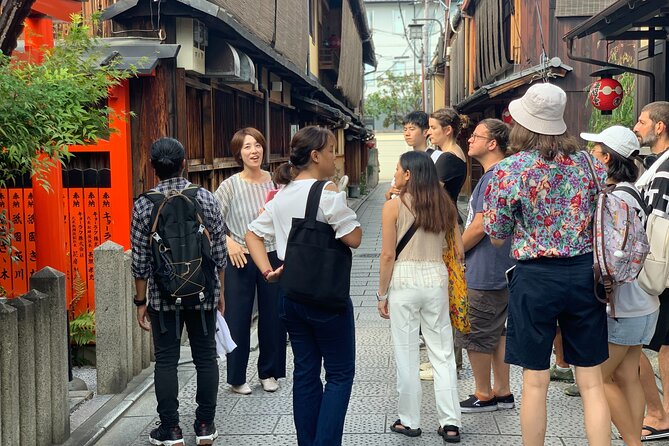
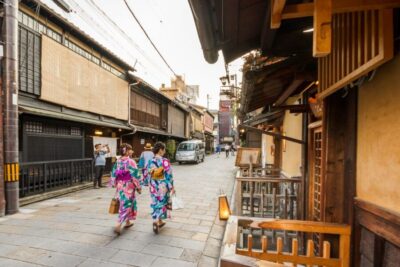
Next you head into Gion, the geisha district Kyoto is built around. You spend about 20 minutes here during the tour, and the route includes another stretch of Gion later as well, so you do not just see one side of the neighborhood.
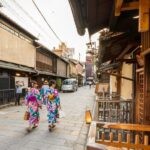
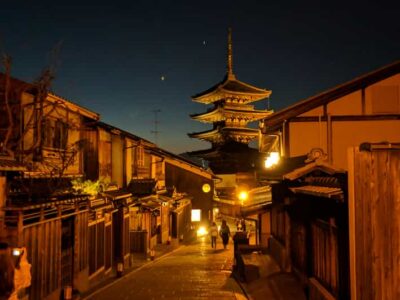
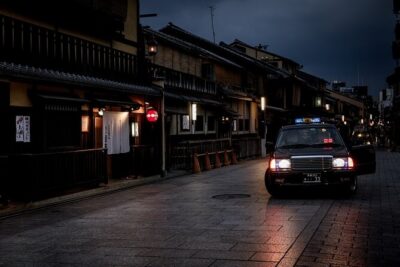
Gion’s look is part tradition, part urban design: traditional wooden houses and narrow streets. As the light changes, the paper lanterns create a mysterious mood, and the guided commentary helps you understand why people come back to this area again and again.
A tip that helps a lot: when you are in a place like this, small behavior matters. You will likely be surrounded by pedestrians and storefront activity. Keep your phone low while listening, then take pictures when your guide cues a stop. That way you get both the story and the shot without feeling like you are cutting in line.
If you are hoping for a sighting, this is where the “maybe” becomes more real. Some guides are known for timing that puts you near the right streets when performers are moving between engagements. The tour does not promise sightings, but the chance is part of why this walk draws repeat fans.
Tatsumi Daimyojin and Tatsumi Bridge: The Quick Stops That Feel Like a Movie Scene
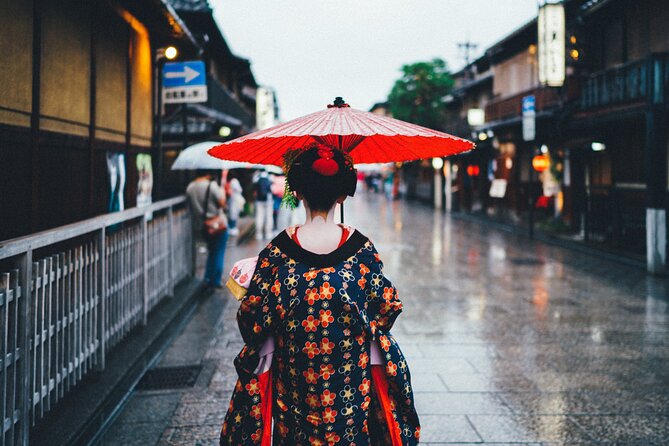
After Gion, the tour goes to Tatsumi Daimyojin Shrine for about 5 minutes. Admission is free. This is a short stop, but it is not filler. The tour framing highlights what the shrine represents, especially protection, good fortune, and safety, with a special link to travelers and warriors. The guide also covers its background, including that it was founded during the Heian period (794 to 1185).
Why a 5-minute stop can still be worth it: it breaks up the walk and adds variety. You are not just circling the same photo spots. You get a different slice of Kyoto, and you learn a specific reason the shrine matters.
Then you head to Tatsumi Bridge for about 10 minutes. This is one of those places where the vibe does the selling. It is described as a small traditional bridge set in a corner of Gion, with nearby machiya houses that feel like stepping into a scene from a movie.
This is also a good place for photos, but the better move is to pause and look around in 360 degrees. Bridges in Kyoto often act like natural framing devices. If you take one good minute to compose, you will get more from the spot than just a single quick click.
Gion Shirakawa Canal: Weeping Cherry Trees and Street-Level Quiet
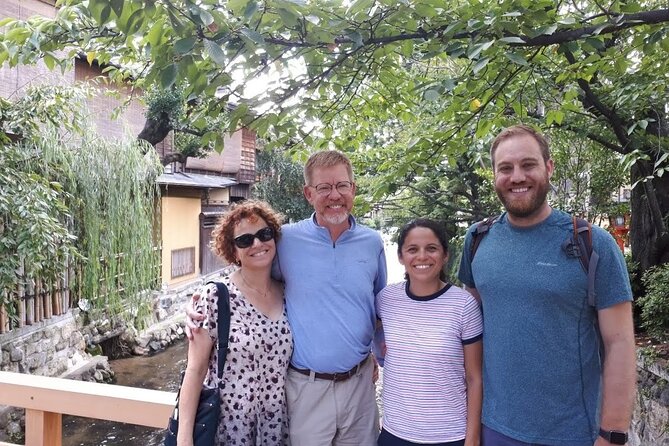
One of the most peaceful parts of the walk is Gion Shirakawa (the Shirakawa Canal), where the tour goes next. This stop is described as picturesque and tranquil, with well-preserved machiya houses along the water and weeping cherry trees in the seasonal mix.
Even if you are not traveling during peak cherry blossom time, canal-side areas tend to cool the whole experience down. Instead of only lanterns and alleyways, you get the gentle line of water and the architectural rhythm on the edges.
For photography, canal stops are often where your pictures look less touristy and more Kyoto. Water adds depth and reflection, and the guide’s commentary keeps you from treating it like a background.
One practical consideration: this part of the route can feel calmer than the busiest lanes, but it can still be crowded. If you are short on time, trust the guide’s plan. The route timing is designed so you do not spend the best light staring at your phone while missing the guided context.
Hanamikoji Street: The Main Stage of Gion
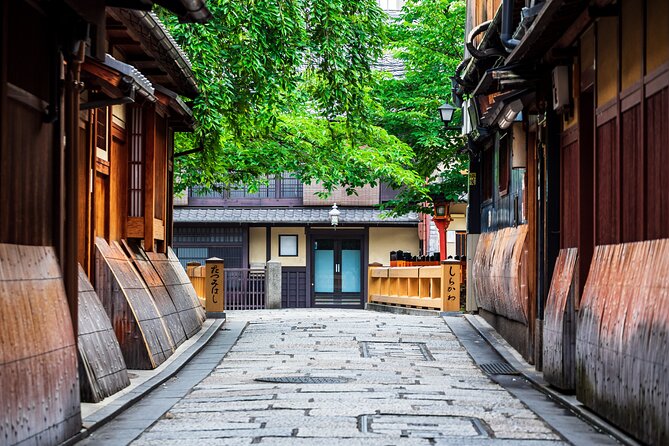
You then walk Hanamikoji Street for about 10 minutes. This is the area that feels instantly familiar to most first-timers: tea houses, shops, and traditional machiya houses packed along a main street.
The tour description calls out an old-world elegance feel, and that matches why Hanamikoji is such a highlight. It gives you the classic Gion street picture, but you also get help understanding what you are looking at, so it stays more meaningful than a scenic detour.
If you want a simple rule for Hanamikoji: treat it as your “window shopping while learning” moment. Look closely at facades and street layout, then listen. If your guide points out something specific, follow that cue. It is the difference between seeing a street and learning what makes it work.
This is also a place where crowds can build. Keep your group close, and don’t stop suddenly in the middle of foot traffic. It sounds basic, but it is the key to keeping the walk smooth for everyone.
Gion Corner: Traditional Arts as a Final Cultural Thread
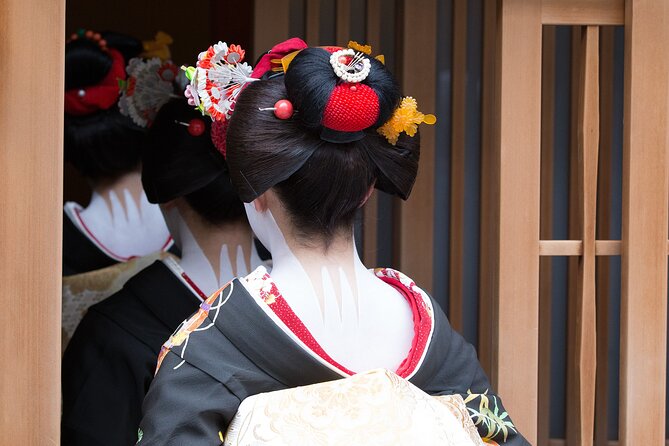
The walk includes Gion Corner, described as a venue that showcases traditional art performances and provides an introduction to Kyoto’s cultural heritage. The tour does not spell out details of what you watch during this stop, but it clearly positions the venue as a cultural capstone.
Why I think this makes sense on a geisha-district walk: you see the exterior world first, then end with a place that connects those living traditions to staged arts. It helps you understand that Gion culture is not only about streets and buildings. It also connects to performance arts and public cultural storytelling.
Depending on the time of day and what is running, you may find this stop more useful if you like cultural context rather than only sightseeing. Even if you are not there for a performance, the venue concept adds a final layer to the tour’s theme.
Price and Logistics: Is It Good Value for $29.85?
For $29.85, you are paying for a guided route that strings together multiple core sights in one go. The practical value comes from three areas:
- Time saved: Gion is easy to overcomplicate. A guide removes the guesswork of where to turn next.
- Interpretation: The tour is designed around commentary about geisha culture plus Shinto landmarks.
- Reduced ticket fatigue: Several stops list free admission, which keeps your day from turning into a pile of small entry fees.
Is it perfect value for everyone? Not necessarily. If your main goal is to roam freely and not listen to structured explanations, a tour like this can feel limiting. Also, because it is a walking format and not just a sit-and-look, you need decent stamina for a rainy or warm day.
On guide quality, the overall rating is very high, and names like Takuma, Yuko, Tom, Yuji, Hide, Eric, and Harry show up often in positive descriptions. People highlight friendly, funny, and clear explanations, plus a knack for making the district feel alive. Still, one negative note in the full set mentions disorganization and hard-to-follow English, so I suggest you arrive ready to communicate and ask questions early if anything feels off.
Should You Book This Gion Geisha District Walk?
If you want Kyoto that feels real, not just photographed, I think this is a strong pick. It is especially good for you if:
- You like learning while you walk, not after you get back to your hotel.
- You want an intimate group and a guide who can answer questions.
- You care about the connection between Shrines, Gion, and geisha culture, not just the look of Gion.
I would reconsider if:
- You cannot manage stairs or uneven walking conditions.
- You want a purely self-guided experience with zero structure.
- You are sensitive to variations in guide English and pacing.
One more helpful nudge: if you are aiming for a possible sighting of geiko or maiko, keep in mind it is about timing. The tour route and guide timing are designed to improve your odds, and some guides are praised for being at the right spots when performers move between engagements. But it is still a chance, not a guarantee.
If you want one practical move after booking, plan to arrive a bit early so you start calm. A good first ten minutes sets the tone for the whole walk.
FAQ
How long is the Kyoto Geisha District Walking Tour in Gion?
The tour is about 2 hours.
Where do I meet the tour guide?
You meet at Gion Kōbu Kaburenjō, 570-2 Gionmachi Minamigawa, Higashiyama Ward, Kyoto.
Is admission included for the shrine stops?
The tour details list free admission for Yasaka Shrine, and free admission for the shrine stops described in the route.
How big is the group?
The tour is capped at a maximum of 10 people.
Does the tour run in rain or shine?
Yes, the tour takes place rain or shine.
What should I wear for this walking tour?
Wear comfortable walking shoes since it is a walking tour.
Is the tour suitable for people with mobility limitations?
The tour is not suitable for people with disability to go up and down stairs.
If I choose the kimono plan, what time do I need to return the kimono?
After the tour, you need to return the kimono by 5:30 pm.
Evenings in the Old Quarters
Newest Kyoto write-ups from the Loving Japan desk

Gion, Geisha and Maiko Experiences, side by side.
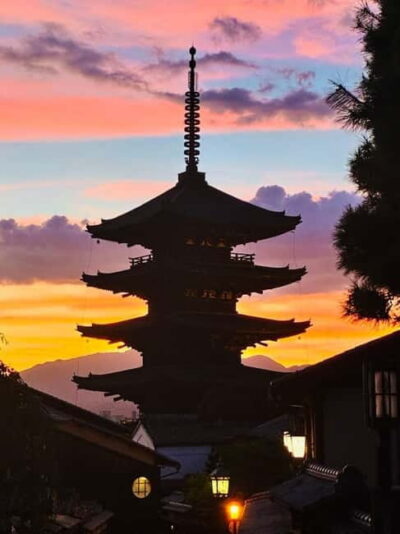 ★ 4.7Kyoto Geisha Walking Tour: Gion District & Hidden GemsFrom $253,273 reviews
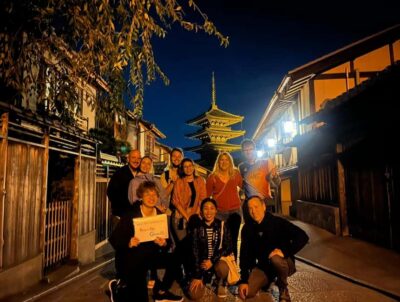 ★ 4.9Gion Magical Night Walking Tour with Geisha TriviaFrom $242,393 reviews
 ★ 4.7Gion Geisha District Walking Tour – Stories of GeishaFrom $202,187 reviews
 ★ 4.9Best of Kyoto: Gion, Geisha, Pagodas & CobblestonesFrom $242,058 reviews
 ★ 4.5Night Walk in Gion: Kyoto’s Geisha DistrictFrom $212,003 reviews
 ★ 5.0Kyoto Night Foodie Tour in Gion (9+ dishes + 6 Sake tastings)From $1631,762 reviews
 ★ 5.0Kyoto Gion Geisha District Walking Tour – The Stories of GeishaFrom $251,441 reviews
 ★ 5.0Kyoto Gion: 2-Hour Geisha Culture & History Walking TourFrom $231,186 reviews
Filed on these lists too