
REVIEW · GION, GEISHA AND MAIKO EXPERIENCES
Kyoto Geisha Show Cultural Hour with an apprentice geisha, Maiko
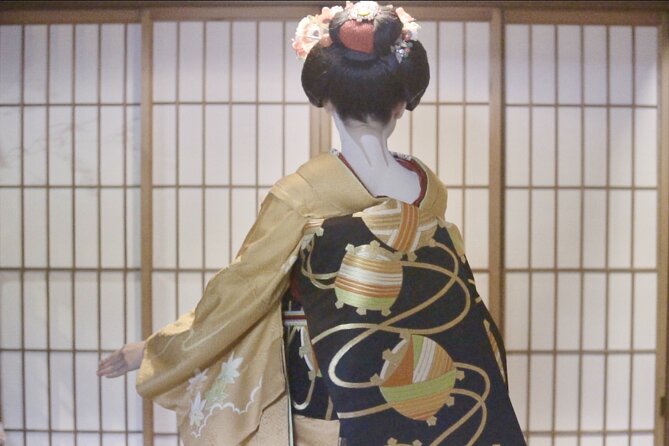
A maiko talk beats street sightings. This small-group Kyoto cultural hour pairs a real Maiko performance with a guided Q&A, so you get the training side of geisha culture, not just a stage show.
I especially like two parts: the English translation that keeps the conversation flowing, and the way the hour is structured around real Q&A with the apprentice geisha. One guide named Ken (and in some cases Saya) is praised for keeping things formal and respectful while still making you feel at ease, which matters a lot in this setting.
A key consideration is that the experience depends on good conditions and it is non-refundable, so you’ll want to pick a day you feel comfortable protecting.
In This Review
- Key Points at a Glance
- Meet a Maiko Up Close, Not a Street Sighting
- The 90-Minute Flow: From Honmachi Meeting to Dance
- Q&A With a Maiko: What You Can Ask and What You’ll Actually Learn
- Ken or Saya, the Translation Team, and How to Use It
- Performance Details: Small-Group, One-Hour Focus, Real Dances
- Price and Value: What $105.42 Really Buys in Kyoto
- Best Fit for This Kyoto Experience (And Who Should Skip It)
- FAQ
- FAQ
- How long is the Kyoto geisha show with a Maiko?
- Do I need to speak Japanese?
- How many people are in the group?
- What happens during the performance?
- Where does the tour start in Kyoto?
- What’s included, and what should I bring?
- Should You Book This Kyoto Geisha Show With a Maiko?
Key Points at a Glance
- Small group size (max 14) means you are not lost in the crowd.
- One-on-one style Q&A with an apprentice geisha, Maiko, guided in English.
- Honmachi meeting point puts you in the real geiko district area, not out in the suburbs.
- Short show format (about 1 to 2 songs/dances) makes it focused, not dragged out.
- English-speaking guide with translation helps you ask better questions and understand etiquette.
Evening walks through the old quarters, compared
- Kyoto Geisha Walking Tour: Gion District & Hidden Gems
★ 4.7 · 3,273 reviews - Kyoto: Gion Magical Night Walking Tour with Geisha Trivia
★ 4.9 · 2,393 reviews - Kyoto: Gion Geisha District Walking Tour – Stories of Geisha
★ 4.7 · 2,187 reviews - Best of Kyoto: Gion, Geisha, Pagodas & Cobblestones
★ 4.9 · 2,058 reviews
Meet a Maiko Up Close, Not a Street Sighting
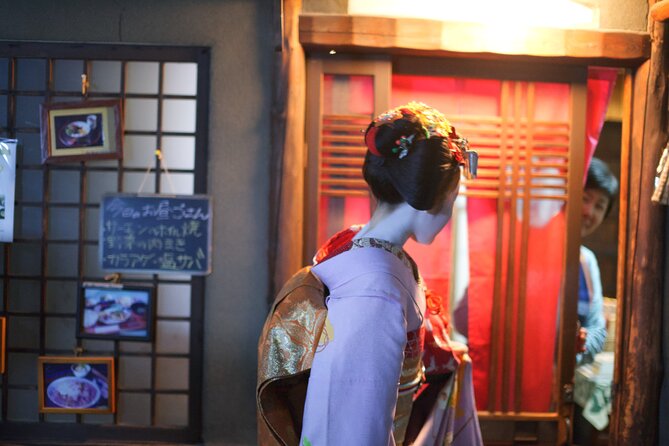
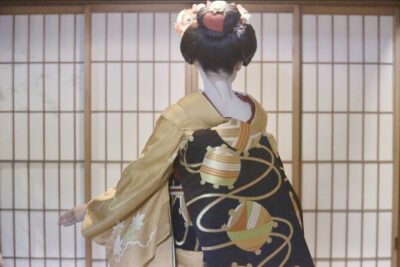
Kyoto is famous for geisha culture, but the truth is that you often see almost nothing from the street anymore. This kind of scheduled stage meeting gives you what street spotting cannot, a guaranteed chance to sit and watch a Maiko perform, then talk directly with her.
What makes this feel special is the balance. You are not just watching, you are also learning how the training and daily discipline actually work, in a way that tourists rarely get. The show is designed for conversation, not just photos.
Another smart part is the respectful tone. The guide keeps the interaction formal enough that you do not feel like you are barging into someone’s world, while still making sure you can understand what is being said.
The 90-Minute Flow: From Honmachi Meeting to Dance
The whole experience runs about 1 hour 30 minutes, and it is paced to keep your attention from fading. You start at 5-chōme-182 Honmachi in Kyoto, which is close to public transportation, so you are not fighting taxis or long walks.
From there, the guide leads the group into the setting for the Maiko meeting and performance. In a few accounts, the group is taken past geiko district landmarks and toward a more intimate tea-house or theatre-like space where the show happens. That walk matters, because it gives context before the Maiko performs, so your brain has something to connect to besides costumes and music.
Inside the show itself, you can expect a Q&A session plus a performance with one or two songs. One or two songs is a good length here. You get the essentials, but you do not feel trapped through a long program where you lose the personal connection.
A small detail to know: you will have time to ask questions, and the pace leaves room for tea as well. Coffee or tea is not listed as included, but reviews describe time with tea during the experience, so you should at least plan for a relaxed, seated moment.
Q&A With a Maiko: What You Can Ask and What You’ll Actually Learn
The biggest draw is the Q&A. This is not a lecture where you nod and move on. You sit with the apprentice geisha and get questions answered in plain language, thanks to the guide translating.
Because the interaction is guided, you can focus on the topics that make this culture real:
- how training works and what the Maiko practices
- what daily routine feels like during training
- how the Maiko understands etiquette, performance, and responsibilities
One reason this feels “less touristy” is that the questions tend to be human. People want to understand the work, the discipline, and the learning curve, not just how the kimono looks in photos. When those topics come up, you get answers that make the performance feel earned, not staged.
You also gain context for what you are seeing. When a dance is explained in terms of practice and meaning, it lands differently. Instead of watching movements as decoration, you start noticing how much training and control are behind it.
- PERFECT KYOTO 1-Day Bus Tour★ 5.0 · 13,518 reviews
- Kyoto: Fushimi Inari, Kinkakuji, Bamboo Grove 1 Day Bus Tour★ 4.8 · 4,316 reviews
- Kyoto: Tea Ceremony in a Traditional Tea House in Kiyomizu★ 4.9 · 3,519 reviews
- Kyoto Geisha Walking Tour: Gion District & Hidden Gems★ 4.7 · 3,273 reviews
- Kyoto: Tea Ceremony Ju-An at Jotokuji Temple★ 4.9 · 3,207 reviews
Ken or Saya, the Translation Team, and How to Use It
The tour includes an English-speaking guide, and translation is a core part of the value. Without translation, this kind of cultural conversation can become frustrating fast, because you might only catch a few words and then guess the rest. With translation, you can actually ask follow-ups and keep the conversation going naturally.
In reports tied to this operator, guides named Ken and Saya come up repeatedly as hosts who balance two jobs at once: staying respectful to the Maiko and keeping you comfortable. That combination matters. If the guide is too stiff, you feel unsure what is appropriate. If the guide is too casual, the interaction can feel disrespectful. These guides are described as walking that line well.
My practical advice: come with 3 to 5 questions ready. That way, when your turn comes, you do not blank. Also, listen for the translation to explain not only facts, but customs and etiquette. In this setting, the “how” matters as much as the “what.”
Performance Details: Small-Group, One-Hour Focus, Real Dances

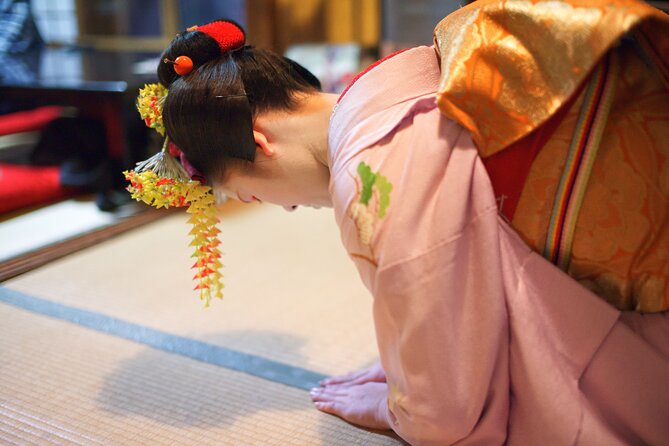
Let’s talk about the show itself. You are not paying for a big production with lots of performers. You are paying for a close encounter with one apprentice geisha performing traditional dance to music.
The format is short, around one or two songs within the performance segment. Reviews mention two traditional dances in some cases, and the general idea is consistent: you get a proper performance moment, then you return to conversation. That matters because it keeps the Maiko from feeling like a distant performer you only watch for a minute.
What you should expect visually is grace and precision. What you should expect emotionally is a sense that you are seeing something practiced, not just performed for tourists. When the guide connects the dance to what she has learned and what it takes to train, it becomes much more than a spectacle.
And because the group max is 14, you should feel that the Maiko is aware of the audience as people, not a single blur of camera clicks.
Price and Value: What $105.42 Really Buys in Kyoto

At $105.42 per person, you might be wondering if this is just paying for a stage show. The key difference here is that you are also buying:
- access to a Maiko for conversation
- English translation that makes the Q&A meaningful
- a small-group setting that keeps the experience personal
If you compare this to “see a geisha show” experiences that are more like entertainment-only, the value is clearly in the conversation and the close interaction. Here, your time with the Maiko is part of what you are paying for, not a bonus.
Also consider that scheduled cultural access in Kyoto can be unpredictable. When you want something both authentic and structured, you often pay for that certainty. This one is built to deliver the show and the meeting as one package.
My other value check: the length. 1 hour 30 minutes is long enough to cover context, questions, and performance. It is not so long that you lose attention or feel like you are stuck waiting.
Best Fit for This Kyoto Experience (And Who Should Skip It)
This is a great fit if you want more than photos. If your travel style is “ask questions, learn etiquette, understand the work behind the art,” you will probably love it.
You may also like it if you:
- prefer a small group over crowded shows
- want an experience with no language barrier
- enjoy guided context that connects performance to daily life
Who might skip it? If you only want a quick look from the back of the room, this won’t feel as efficient as a ticketed show with lots of performers. Also, if you are very sensitive to schedule changes, remember that the experience requires good weather and is listed as non-refundable, so plan carefully.
FAQ
FAQ
How long is the Kyoto geisha show with a Maiko?
It runs about 1 hour 30 minutes (approx.).
Do I need to speak Japanese?
No. The tour includes an English-speaking guide who translates for you during the Q&A and show.
How many people are in the group?
There is a maximum of 14 travelers.
What happens during the performance?
You’ll take part in a Q&A session and then watch a geisha performance with one or two songs.
Where does the tour start in Kyoto?
The meeting location is listed as 5-chōme-182 Honmachi, Kyoto. It is also noted as near public transportation.
What’s included, and what should I bring?
Included are the 1-hour geisha show and meeting (Q&A and performance) and the English-speaking guide. Coffee and/or tea are not included.
Should You Book This Kyoto Geisha Show With a Maiko?
If you want a Kyoto experience that is both close-up and actually conversational, book it. The combination of a real apprentice geisha performance plus English-guided Q&A is the part you cannot easily DIY.
I would especially book it if you are tired of “sit, watch, leave” activities and you want to understand training, etiquette, and daily life. Just pick your day thoughtfully since good weather is required and it is non-refundable, then show up with a few questions ready.
Evenings in the Old Quarters





Newest Kyoto write-ups from the Loving Japan desk

Gion, Geisha and Maiko Experiences, side by side.
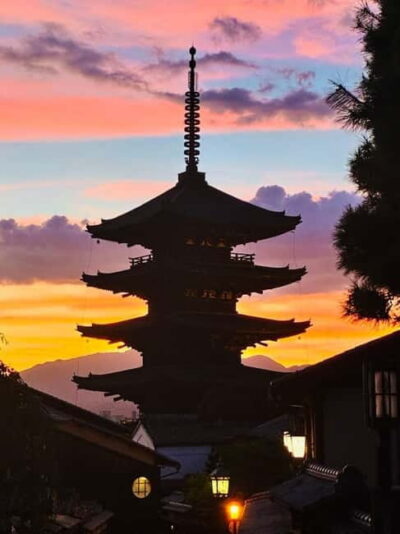 ★ 4.7Kyoto Geisha Walking Tour: Gion District & Hidden GemsFrom $253,273 reviews
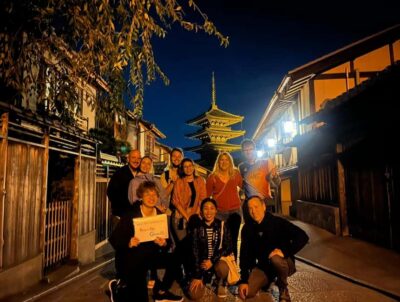 ★ 4.9Gion Magical Night Walking Tour with Geisha TriviaFrom $242,393 reviews
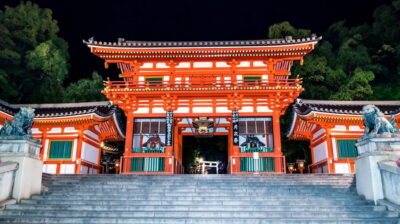 ★ 4.7Gion Geisha District Walking Tour – Stories of GeishaFrom $202,187 reviews
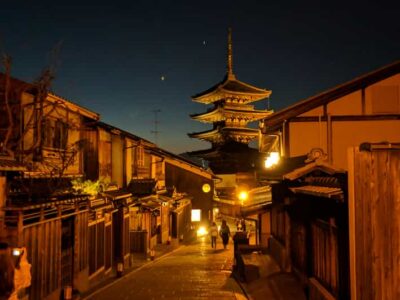 ★ 4.9Best of Kyoto: Gion, Geisha, Pagodas & CobblestonesFrom $242,058 reviews
 ★ 4.5Night Walk in Gion: Kyoto’s Geisha DistrictFrom $212,003 reviews
 ★ 5.0Kyoto Night Foodie Tour in Gion (9+ dishes + 6 Sake tastings)From $1631,762 reviews
 ★ 5.0Kyoto Gion Geisha District Walking Tour – The Stories of GeishaFrom $251,441 reviews
 ★ 5.0Kyoto Gion: 2-Hour Geisha Culture & History Walking TourFrom $231,186 reviews
Filed on these lists too