
REVIEW · GION, GEISHA AND MAIKO EXPERIENCES
Kyoto: Gion and Geisha District Walking Tour
Lantern-lit alleys change how you see Kyoto. This small-group walk focuses on Gion and the surrounding lanes, with an English-speaking guide who connects shrines, samurai-era stories, and everyday street details to geisha culture.
I especially like that you get two kinds of value at once: calm “Kyoto basics” like Yasaka Shrine and Maruyama Park, plus practical context so you know what you’re looking at on the way to Hanamikoji. A second plus is the pacing, about two hours, with enough stops to actually register the architecture and customs instead of just rushing through photos.
One thing to consider: you’ll get tips for where to spot geisha, but sightings are never guaranteed. If seeing a geiko or maiko is your only goal, keep expectations flexible and enjoy the streetscape either way.
In This Review
- Key highlights you will feel on this walk
- Two-Hour Gion Loop for 22.55: value and what to expect
- Finding the group at Starbucks Kyoto Gion Hotel
- Yasaka Shrine and Maruyama Park: Kyoto’s mood in about 30 minutes
- Nene-no-Michi to Sannenzaka and Ninenzaka: old streets with context
- Yasui-Konpiragu Power Stone: a playful shrine moment with meaning
- Hanamikoji Street: etiquette, atmosphere, and geisha spotting tips
- The guide’s role: what makes this walk feel personal
- After the walk: use what you learned the same day
- Should you book this Kyoto Gion and geisha district walk?
- FAQ
- How long is the Kyoto Gion and Geisha District walking tour?
- What does it cost per person?
- How many people are in the group?
- Where do we meet for the tour?
- Does the tour include an English speaking guide?
- Is a mobile ticket used?
- Is entry included for the sights?
- What are some of the main stops on the walk?
- Is free cancellation available?
Key highlights you will feel on this walk
- Small group size with a max of 10 people, so questions do not get swallowed
- Geisha culture explained through stories tied to the streets you walk
- Short, clear route that hits key areas around Gion in about two hours
- Multiple shrine stops including Yasui-Konpiragu and its famous Power Stone arch
- Good photo pacing and regular pauses so you can see details, not just frames
Evening walks through the old quarters, compared
- Kyoto Geisha Walking Tour: Gion District & Hidden Gems
★ 4.7 · 3,273 reviews - Kyoto: Gion Magical Night Walking Tour with Geisha Trivia
★ 4.9 · 2,393 reviews - Kyoto: Gion Geisha District Walking Tour – Stories of Geisha
★ 4.7 · 2,187 reviews - Best of Kyoto: Gion, Geisha, Pagodas & Cobblestones
★ 4.9 · 2,058 reviews
Two-Hour Gion Loop for 22.55: value and what to expect
For $22.55 per person and about 2 hours, you are buying more than walking time. You are paying for an English-speaking guide who can translate the neighborhood’s codes into plain talk, so Gion stops feeling like a maze of pretty lanes.
This route is designed for one area of Kyoto. You will not “collect” Kyoto in a checklist way. Instead, you will get the feel of how old streets, shrines, and traditional entertainment districts fit together, which is exactly what makes geisha culture make sense on the ground.
Because the group is capped at 10 travelers, you also get a better chance to ask follow-ups, especially if you care about what you should notice as you stroll. The mobile ticket is handy too, since you do not have to fuss with printouts.
Finding the group at Starbucks Kyoto Gion Hotel
You meet at Starbucks Coffee, Kyoto Gion Hotel, at the 1F level. The exact address is in Gionmachi Minamigawa, and the tour ends back at the meeting point, so you do not lose time figuring out where to go next.
This meeting spot is easy if you are already near public transit. It is also a nice mental reset: you can check your phone for the mobile ticket, regroup your party, and put on comfortable shoes before you step into narrower lanes.
I recommend arriving a few minutes early, not because the tour is hard to find, but because Gion can be warm, crowded, or both. One guide in the feedback was praised for keeping the group in shade when it was hot, which tells you the pace can adjust to conditions.
Yasaka Shrine and Maruyama Park: Kyoto’s mood in about 30 minutes
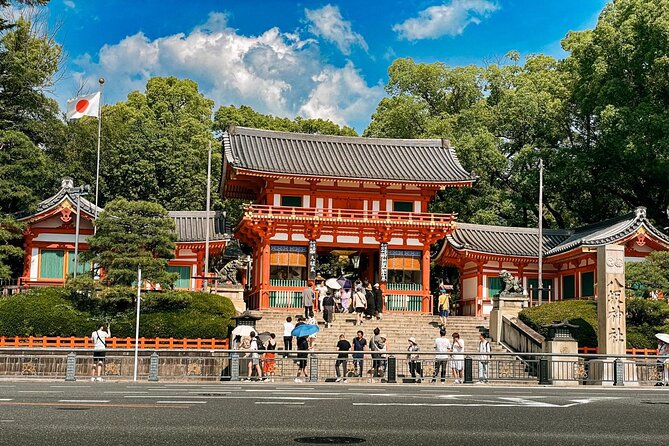
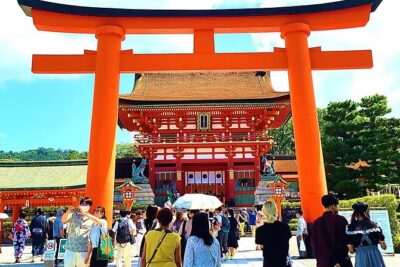
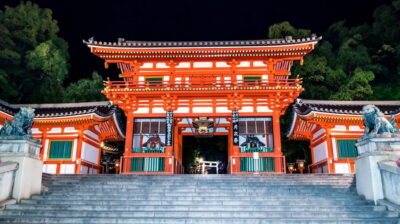
You start with Yasaka Shrine, a centuries-old Shinto sanctuary that sits near the border between Gion and Higashiyama. The vermilion gate and lantern-lit paths help you understand why this area is such a magnet for both spirituality and atmosphere.
This is not a long “sit and stare” stop. You get roughly 20 minutes, which is enough time to slow down, spot key features, and let your guide explain what people do here and why it matters in Kyoto’s calendar.
Next is Maruyama Park, about 10 minutes. It is Kyoto’s oldest public park and known for seasonal beauty, including weeping cherry trees. When you pair a shrine with a park, you start to see a pattern in Kyoto: seasonal celebrations and everyday strolling are tied together more tightly than you might expect.
Practical tip: be respectful with photos around shrine areas. If you want clear shots, wait for space, then take them quickly. Your guide’s pacing should help, but your own timing still matters.
- PERFECT KYOTO 1-Day Bus Tour★ 5.0 · 13,518 reviews
- Kyoto: Fushimi Inari, Kinkakuji, Bamboo Grove 1 Day Bus Tour★ 4.8 · 4,316 reviews
- Kyoto: Tea Ceremony in a Traditional Tea House in Kiyomizu★ 4.9 · 3,519 reviews
- Kyoto Geisha Walking Tour: Gion District & Hidden Gems★ 4.7 · 3,273 reviews
- Kyoto: Tea Ceremony Ju-An at Jotokuji Temple★ 4.9 · 3,207 reviews
Nene-no-Michi to Sannenzaka and Ninenzaka: old streets with context
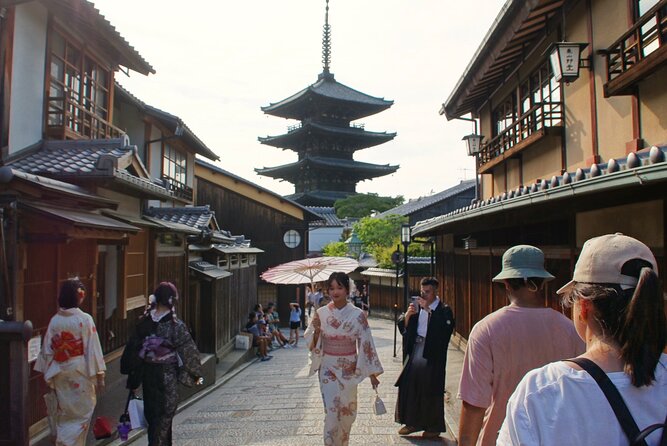
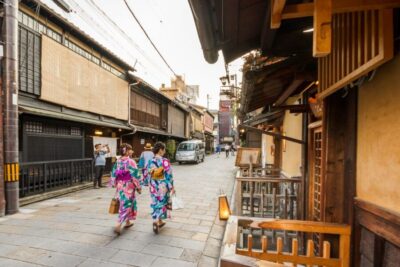
From Yasaka’s big presence, the walk moves into smaller, story-friendly lanes. Nene-no-Michi is a lane named after the beloved wife of samurai warlord Toyotomi Hideyoshi. You walk through a corridor of preserved traditional architecture, with quaint shops and teahouse atmosphere along the way.
This stop does two useful things. First, it helps you connect the samurai-era names you hear in Kyoto to the actual streets where that history shows up. Second, it gives you a break from the heavier crowds near major shrine flow, so you can actually look at details.
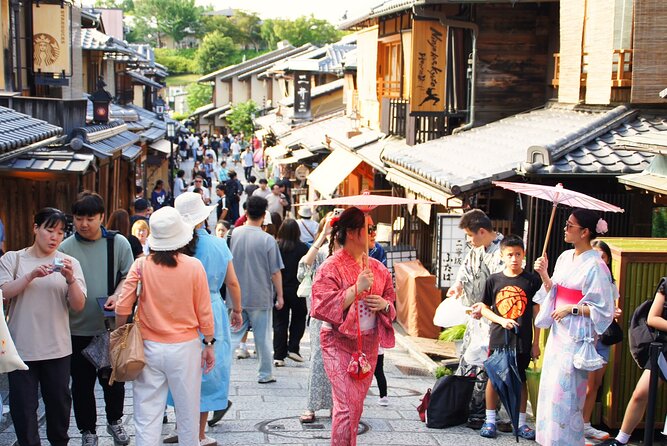
Then you head to the famous slope area of Sannenzaka and Ninenzaka, about 15 minutes. Expect stone-paved walkway, historic wooden buildings, and artisan boutiques. It feels like stepping back in time, but the guide’s job is to keep it from being just a pretty postcard.
What I love about a stop like this with a guide is that you learn how to read the streets. Instead of only noticing what looks old, you start noticing what was preserved on purpose, and why certain design choices still matter.
A small caution: these slopes can get busy, so think of it as a slow shuffle with occasional pauses. If you are the kind of person who takes a lot of photos, bring patience and let the group keep moving when your guide signals.
Yasui-Konpiragu Power Stone: a playful shrine moment with meaning
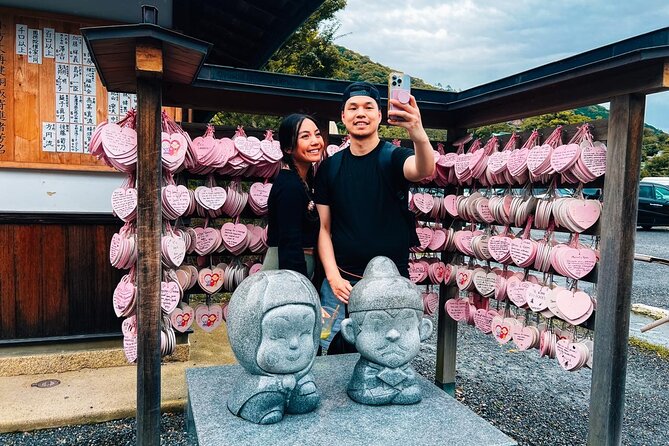
One of the most memorable stops is Yasui-Konpiragu in the Higashiyama area. It is known for a “Power Stone” archway, and the tradition is simple enough to explain yet interesting enough to stick with you.
Locals and visitors crawl through the archway to pray for strong relationships, or to break ties with the past. You will likely find the explanation a little funny in a gentle way, because the ritual is oddly relatable once someone gives you context.
This stop is around 10 minutes, which is perfect. You get the full idea without turning it into a long formal visit. And it pairs well with the geisha theme, because it reminds you that traditional culture in Kyoto is not only staged for tourists. It is lived, repeated, and refreshed through rituals.
Respect tip, especially if you want good photos: step aside when people are using the archway. If you join in the act, follow the flow and do not linger in the middle.
Hanamikoji Street: etiquette, atmosphere, and geisha spotting tips
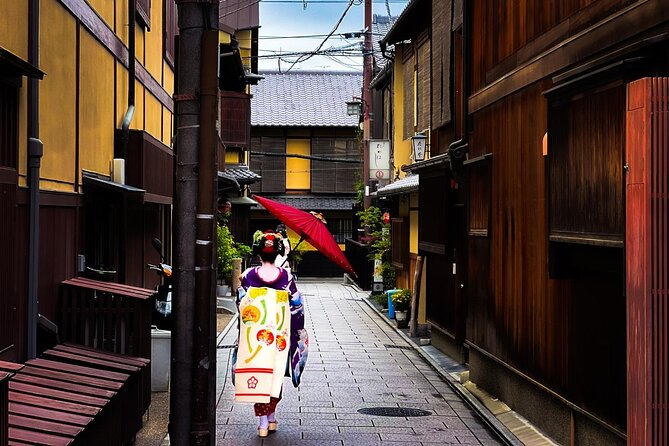
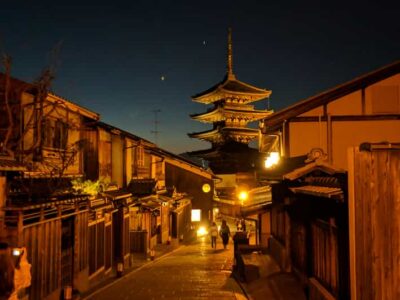
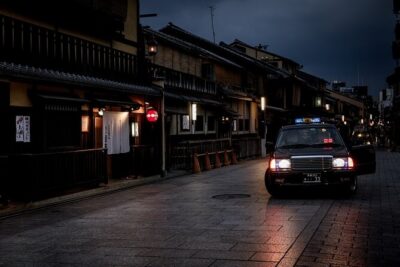
Then you reach Hanamikoji Street, the heart of Gion. This is where preserved machiya townhouses line the way, with traditional teahouses and soft lantern glow shaping what the district feels like.
You get about 15 minutes here, which is a smart length. Long enough to take in the architecture and watch how people move, short enough that you do not lose the rest of your energy.
This is also where geisha culture becomes practical. Your guide shares tips on where you might spot geisha, and more importantly, helps you understand what you are seeing without pushing the experience into rude territory. The point is learning the cues, not chasing someone down.
In the feedback, multiple guides were praised for explaining the world around maiko training and traditional entertainment customs. Even if you do not catch anyone in motion, that knowledge makes Hanamikoji Street feel less mysterious and more readable.
My advice for this stop:
- Keep your voice low in the lanes.
- Walk like you belong, not like you are searching.
- If you see someone heading into a teahouse area, give them space and let your curiosity wait.
The guide’s role: what makes this walk feel personal
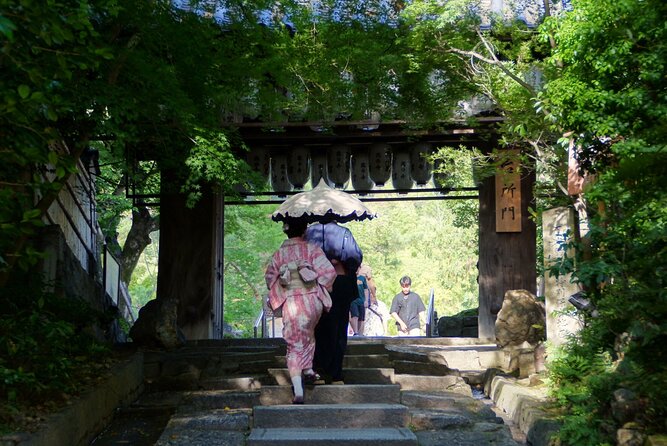
The biggest reason this tour earns consistently high scores is the guide quality. English speaking guides are central here, and people specifically mentioned clear English and friendly, accommodating pacing.
Names that show up include Sam, Shin, Amy, Tim, Naoya, and Maria. You can also pick up a theme in the praise: the best guides do not just list facts, they translate the atmosphere. One guide explained the Power Stone tradition in a humorous, easy-to-hold way. Another kept the group in shade during heat. Others were patient with photography stops.
That matters for you because Gion is full of “pretty stuff” that can feel random if you wander alone. A strong guide turns narrow streets into a sequence you understand: shrine to park, lane to slope, archway ritual to lantern-lined entertainment district.
Also, the guide adds “where to look” instincts. Even if geisha sightings do not happen, you will still learn what kind of scenes are typical, and what details to notice so you feel like you are part of Kyoto, not just watching from the sidelines.
After the walk: use what you learned the same day
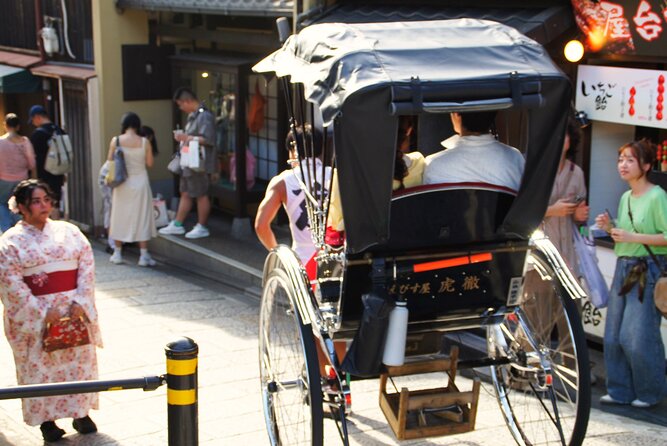
When this ends, you go back to the meeting point, right where many people want to head next. The best move is to stay in the same neighborhood spirit, not to rush across Kyoto just to fill time.
Use your guide’s spotting tips to choose your next lane carefully. Then pair it with a normal Kyoto dinner rhythm, something you can do without rushing. If you want to keep the same theme, consider revisiting a street you liked most and observing quietly.
One more smart move: tell yourself what you are looking for before you go out again. For example, you can focus on architecture details you noticed at Sannenzaka and Ninenzaka, or on shrine-to-season patterns you saw around Yasaka Shrine and Maruyama Park.
If you are short on time in Kyoto, this is a great way to get context fast. If you have a few days, it works as a foundation, so the next old street you walk feels connected instead of random.
Should you book this Kyoto Gion and geisha district walk?
Book it if you want a 2-hour, small-group introduction to Gion with clear stories, helpful explanations, and practical tips. This is especially good if you like culture that you can understand without needing a textbook, and if you appreciate a route that stays focused instead of trying to cover all of Kyoto.
I would pass or adjust expectations if you are coming mainly for a guaranteed geisha sighting. The experience is about learning the district and improving your street reading, not control over what you will see.
If your ideal Kyoto day includes shrines, traditional lanes, and lantern-light atmosphere, this walk is a solid value. At $22.55, you are paying for guidance that helps the neighborhood click, which is the best kind of souvenir.
FAQ
How long is the Kyoto Gion and Geisha District walking tour?
It runs for about 2 hours.
What does it cost per person?
The price is $22.55 per person.
How many people are in the group?
The tour has a maximum of 10 travelers.
Where do we meet for the tour?
You start at Starbucks Coffee – Kyoto Gion Hotel on 1F.
Does the tour include an English speaking guide?
Yes. An English speaking guide is included.
Is a mobile ticket used?
Yes, it uses a mobile ticket.
Is entry included for the sights?
The tour includes entry or admission related to Gion and Hanamikoji Street. The listed stops on the route show admission ticket free.
What are some of the main stops on the walk?
You visit places including Yasaka Shrine, Maruyama Park, Nene-no-Michi, Sannenzaka and Ninenzaka, Yasui-Konpiragu, and Hanamikoji Street.
Is free cancellation available?
Yes, you can cancel for a full refund up to 24 hours before the experience start time.
Evenings in the Old Quarters

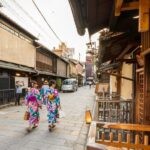
Newest Kyoto write-ups from the Loving Japan desk
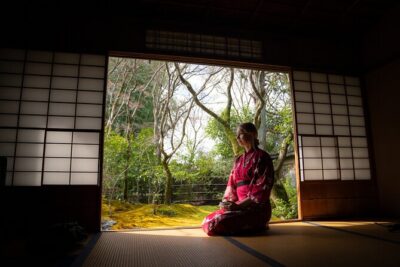
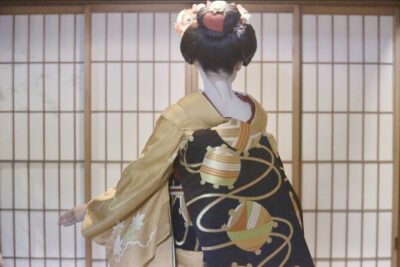
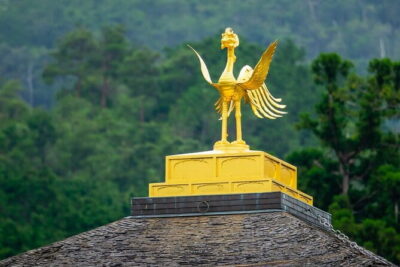

Gion, Geisha and Maiko Experiences, side by side.
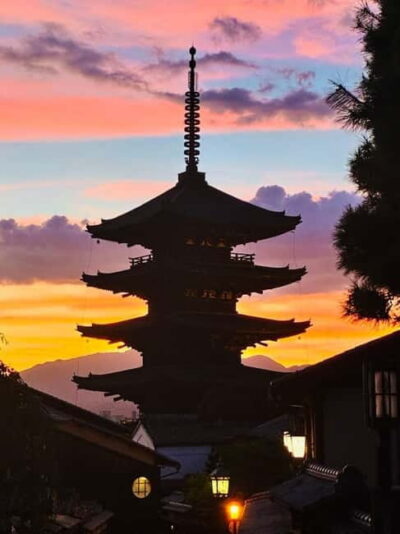 ★ 4.7Kyoto Geisha Walking Tour: Gion District & Hidden GemsFrom $253,273 reviews
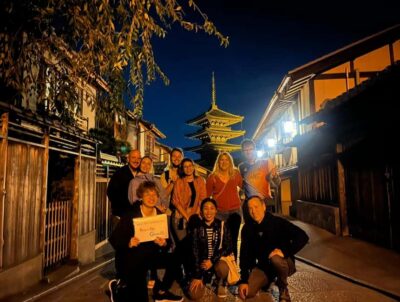 ★ 4.9Gion Magical Night Walking Tour with Geisha TriviaFrom $242,393 reviews
 ★ 4.7Gion Geisha District Walking Tour – Stories of GeishaFrom $202,187 reviews
 ★ 4.9Best of Kyoto: Gion, Geisha, Pagodas & CobblestonesFrom $242,058 reviews
 ★ 4.5Night Walk in Gion: Kyoto’s Geisha DistrictFrom $212,003 reviews
 ★ 5.0Kyoto Night Foodie Tour in Gion (9+ dishes + 6 Sake tastings)From $1631,762 reviews
 ★ 5.0Kyoto Gion Geisha District Walking Tour – The Stories of GeishaFrom $251,441 reviews
 ★ 5.0Kyoto Gion: 2-Hour Geisha Culture & History Walking TourFrom $231,186 reviews
Filed on these lists too