
REVIEW · GION, GEISHA AND MAIKO EXPERIENCES
Kyoto Gion Cultural Walk & Geisha Show with Dining Options
Gion is pretty, but it makes sense here. This small-group Kyoto walk pairs Gion-area culture with a 45-minute maiko meeting and dance show, plus time to ask questions. You follow a guide to the key sights, so you are not wandering around like a tourist in a quiz.
You also get a smart mix of stops, from theater history to Shinto and Zen temples, so the geisha story is not floating in a vacuum. One possible drawback is that this is a walking experience, and it is not recommended for travelers with leg problems.
In This Review
- Key takeaways before you go
- Start at theater roots, not a postcard
- Gion Shirakawa and Hanamikoji: learn the street map by learning the meaning
- Tatsumi-jinja and Kennin-ji: the belief system behind the performance culture
- Zenkyoan and its boar guardians: a tiny detail with a big vibe
- The maiko meeting and 45-minute dance show, with real Q&A
- Price and value: why $121.37 can work, and when it might not
- Logistics that matter on the ground
- Who should book this, and who should skip it
- Should you book the Kyoto Gion Cultural Walk & Geisha Show?
- FAQ
- How long is the Kyoto Gion Cultural Walk & Geisha Show?
- How large is the group?
- What is included in the geisha show portion?
- Is admission included for all stops?
- Where does the tour start and end?
- Is the tour suitable for people with mobility issues?
- Is a mobile ticket used?
- Does the tour require good weather?
- Can I cancel for a full refund?
Key takeaways before you go
- A small group, max 9 means you get more attention and less chaos while walking Gion.
- Kabuki origins meet Kyoto reality, from the Izumo-no-Okuni statue to Minamiza Theater.
- Gion Shirakawa and Hanamikoji Street give you the layout of where geiko and maiko life intersects with visitor views.
- Shinto and Zen stops are built into the walk, with Tatsumi-jinja and Kennin-ji explaining the religious backdrop.
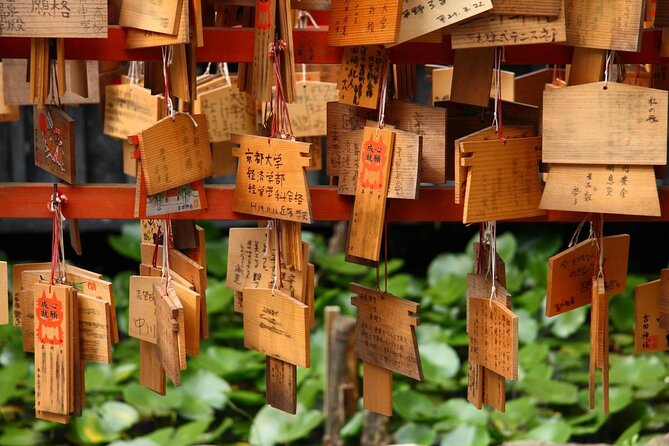
- Zenkyoan adds a specific local theme, boar guardians tied to luck, safety, and protection.
- The finale is a real Q&A, not just watch and leave, with an apprentice geisha dance.
Evening walks through the old quarters, compared
- Kyoto Geisha Walking Tour: Gion District & Hidden Gems
★ 4.7 · 3,273 reviews - Kyoto: Gion Magical Night Walking Tour with Geisha Trivia
★ 4.9 · 2,393 reviews - Kyoto: Gion Geisha District Walking Tour – Stories of Geisha
★ 4.7 · 2,187 reviews - Best of Kyoto: Gion, Geisha, Pagodas & Cobblestones
★ 4.9 · 2,058 reviews
Start at theater roots, not a postcard
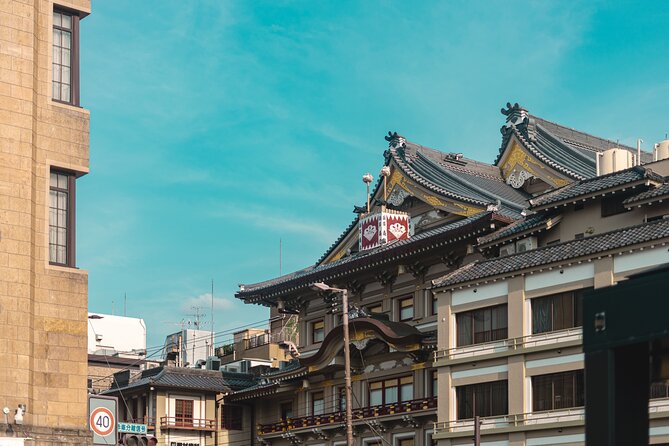
This tour gives you a helpful framing. Instead of jumping straight to Gion lanes, it starts with a statue tied to kabuki, the role of women in early theater, and why the arts in Kyoto have deep roots. It is a clever move, because geisha culture is not only about performances. It is also about how Japanese performing arts, tradition, and social life connect.
At the Izumo-no-Okuni spot, you get a quick lesson on kabuki’s early “feminine beginning.” Then the walking shifts to Minamiza Theater, where you see the architecture and hear the story connecting modern tech with the stage. Even if you have heard that kabuki is mostly performed by men today, this start helps explain how that became the norm and why the earlier roots matter.
Practical tip: plan for a short stop and a quick explanation here. This is not a long museum visit. You are building context so the later Gion sights land harder.
Gion Shirakawa and Hanamikoji: learn the street map by learning the meaning
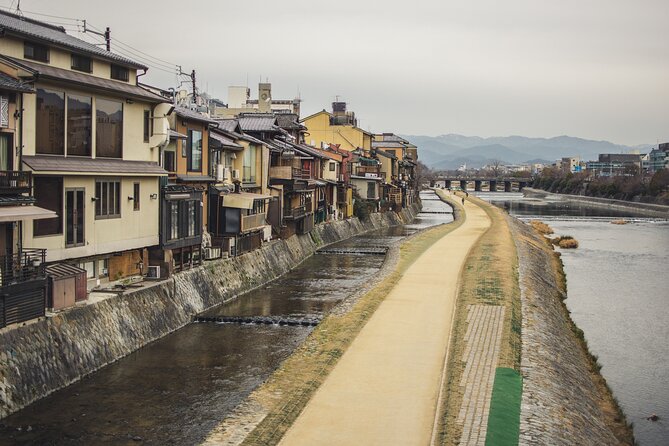
Once you hit Gion Shirakawa, the tour changes gear. This part is about atmosphere, but not in a vague way. You learn what makes this stretch of Gion feel different, with old-fashioned streets, traditional buildings, and a riverside setting that locals and visitors both orbit.
Gion Shirakawa also sets you up for the main showpiece: Hanamikoji Street. This is the lane people come to for geisha sightings, and the guide helps you understand what you are actually looking at. You might spot geisha or maiko walking around depending on timing, but the value is bigger than a photo moment. You come away with a clearer sense of what the area is designed for and why visitors sometimes misunderstand it.
What I like about the approach here is the way you keep tying visuals to culture. A shrine, a temple, a theater connection, and then a specific Gion street. The guide is basically teaching you how to read the neighborhood.
Tatsumi-jinja and Kennin-ji: the belief system behind the performance culture
A lot of Kyoto tours treat religion like scenery. This one uses religion as context. At Tatsumi-jinja Shrine, you get a practical primer on Shinto, Japan’s native religion, and the idea that there are said to be eight million gods. That may sound like mythology volume turned up, but it helps explain why shrines feel integrated into daily life rather than tucked away.
Then comes Kennin-ji, a Zen Buddhist temple built in 1202. You get a clear talk on what Zen Buddhism means, tied to why places like this matter in Kyoto. Zen is one of those topics people nod at but do not fully grasp until you connect it to real buildings and real rituals.
Here is the one thing to watch: the tour’s listed admissions for Kennin-ji and Zenkyoan are marked as not included. So you may need to pay entry on-site. It is usually manageable, but it is worth keeping some cash or a card handy just in case.
- PERFECT KYOTO 1-Day Bus Tour★ 5.0 · 13,518 reviews
- Kyoto: Fushimi Inari, Kinkakuji, Bamboo Grove 1 Day Bus Tour★ 4.8 · 4,316 reviews
- Kyoto: Tea Ceremony in a Traditional Tea House in Kiyomizu★ 4.9 · 3,519 reviews
- Kyoto Geisha Walking Tour: Gion District & Hidden Gems★ 4.7 · 3,273 reviews
- Kyoto: Tea Ceremony Ju-An at Jotokuji Temple★ 4.9 · 3,207 reviews
Zenkyoan and its boar guardians: a tiny detail with a big vibe
Zenkyoan, a subtemple of Kennin-ji in the Gion area, adds a very specific local storyline: boar guardians associated with luck, luck, and safety. That theme helps you see the area as more than “a cool place to walk.” It is a living system of symbols and protection, placed right where you are standing.
This is also a nice break point. After the streets and the bigger religious context, this smaller stop gives you something memorable that is easy to talk about later. If you like Kyoto for its small details, this part is a hit.
The maiko meeting and 45-minute dance show, with real Q&A
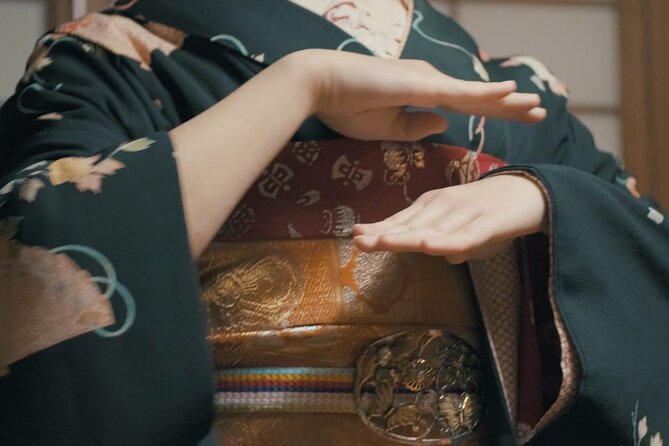
This is the reason to book. The tour builds up to a dedicated meeting and show segment featuring an apprentice geisha (maiko) with a dance performance that includes one or two songs. You get a focused 45-minute segment where you can ask questions, which is exactly what most people want. Watching is great, but understanding is the difference between a quick thrill and a lasting memory.
From what you can expect, the guide acts as translator and facilitator, helping you get past simple questions and into ones that actually make sense. Guides like Akari and Ken are particularly noted for answering questions and correcting misconceptions with a respectful tone. That matters, because geiko and maiko culture is easy to get wrong with vague stereotypes.
Possible photo reality check: some guests report rules about sharing photos from the experience online. If that is important to you, be ready to follow the host’s guidance during the meeting.
Dining options: what you should know
Your booking is described as including dining options, and the way the experience is often described suggests you may get a meal connected to the finale. Some guests highlight a family-style meal with lots of options and consideration for dietary restrictions. Others, however, have felt the meal portion did not match the price they paid.
My advice is simple: if you are shopping this tour mainly for the food, look closely at what your specific option includes. If you care most about the Gion walk plus the maiko dance and Q&A, treat the dining as a bonus rather than the main event.
Price and value: why $121.37 can work, and when it might not
At about $121.37 per person, this tour sits in the mid-to-upper range for Kyoto. So you want to be sure your money is buying something real, not just a route and a brief show.
Here is what you are paying for, based on what the experience delivers:
- A small group with guided context over roughly 3 hours total.
- A structured walking portion through meaningful sites where you get culture commentary, not just directions.
- A dedicated 45-minute maiko meeting and dance show.
- Time for questions, so you leave with understanding, not just visuals.
- Some departures include dining, which can add value if the meal quality and portion size match your expectations.
Where the price can feel less fair is when you assume the meal component is a big part of what you are buying. If you go in expecting a major sit-down dinner experience every time, you may be disappointed. If you go in expecting a cultural, guided night with a real Q&A finale, you are more likely to feel it was money well spent.
Logistics that matter on the ground
The meeting point is at the Statue of Izumo-no-Okuni in Kawabatacho, Higashiyama Ward, Kyoto. The tour ends in a different location, so you should plan your next stop with that in mind.
Good news for practical travelers: the start point is near public transportation, and you use a mobile ticket. Also, the group size caps at nine, which helps a lot in narrow lanes where you can otherwise get stuck in someone else’s group.
Weather matters too. The tour requires good weather. If it gets canceled due to poor weather, you are offered a different date or a full refund.
Who should book this, and who should skip it
This fits best if you:
- Want a Gion orientation that connects streets, shrines, and temples to the geiko and maiko world.
- Like Q&A and explanations, not just passive sightseeing.
- Prefer small groups over big buses.
- Enjoy theater history and cultural context, especially kabuki links and why those arts evolved.
You might skip it if:
- You have leg issues or trouble walking. The format is not built for mobility limits.
- You mainly want a meal experience. Dining value can be uneven depending on the option you choose.
Should you book the Kyoto Gion Cultural Walk & Geisha Show?
I think this is a strong booking if you care about context and conversation. The combo of a guided Gion walk, stops tied to Shinto and Zen, and a 45-minute apprentice geisha dance show with questions is the sweet spot. It is not trying to be everything. It is trying to be meaningful.
My final call: book if you want to understand the culture behind what you see in Gion, and you are comfortable walking for a few hours. If your top priority is a guaranteed, generous dining experience, confirm the meal details for your specific option first, then go in with the right expectations.
FAQ
How long is the Kyoto Gion Cultural Walk & Geisha Show?
The tour lasts about 3 hours.
How large is the group?
The tour has a maximum of 9 travelers.
What is included in the geisha show portion?
You get a 45-minute geisha meeting and show with an apprentice geisha, including a dance performance with one or two songs, plus time to ask questions.
Is admission included for all stops?
Some stops list admission as free, including the statue of Izumo-no-Okuni, Minamiza Theater, Gion Shirakawa, Tatsumi-jinja Shrine, and Hanamikoji Street. Kennin-ji and Zenkyoan are listed as not included.
Where does the tour start and end?
The tour starts at the Statue of Izumo-no-Okuni in Higashiyama Ward, Kyoto. It ends in a different location, so you will need to check the end details for planning your next activity.
Is the tour suitable for people with mobility issues?
No. It is not recommended for travelers with leg problems.
Is a mobile ticket used?
Yes, the tour uses a mobile ticket.
Does the tour require good weather?
Yes. It requires good weather, and if it is canceled due to poor weather you will be offered a different date or a full refund.
Can I cancel for a full refund?
Yes, you can cancel for a full refund if you cancel at least 24 hours in advance.
Evenings in the Old Quarters

Newest Kyoto write-ups from the Loving Japan desk

Gion, Geisha and Maiko Experiences, side by side.
 ★ 4.7Kyoto Geisha Walking Tour: Gion District & Hidden GemsFrom $253,273 reviews
 ★ 4.9Gion Magical Night Walking Tour with Geisha TriviaFrom $242,393 reviews
 ★ 4.7Gion Geisha District Walking Tour – Stories of GeishaFrom $202,187 reviews
 ★ 4.9Best of Kyoto: Gion, Geisha, Pagodas & CobblestonesFrom $242,058 reviews
 ★ 4.5Night Walk in Gion: Kyoto’s Geisha DistrictFrom $212,003 reviews
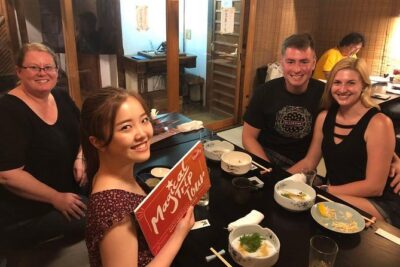 ★ 5.0Kyoto Night Foodie Tour in Gion (9+ dishes + 6 Sake tastings)From $1631,762 reviews
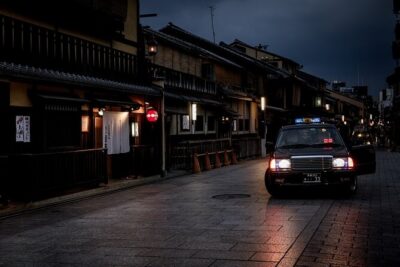 ★ 5.0Kyoto Gion Geisha District Walking Tour – The Stories of GeishaFrom $251,441 reviews
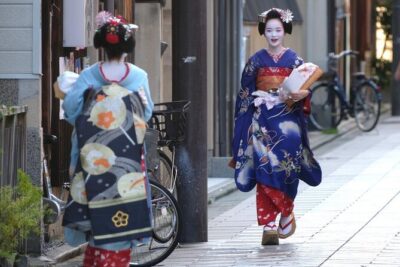 ★ 5.0Kyoto Gion: 2-Hour Geisha Culture & History Walking TourFrom $231,186 reviews
Filed on these lists too