
REVIEW · GION, GEISHA AND MAIKO EXPERIENCES
Kyoto Gion Early Morning Walking Tour
Kyoto before breakfast is a different world. This early-morning small-group walking tour threads together Gion Shirakawa, Hanamikoji Street, and the big hitters of Higashiyama, including Kiyomizu-dera Temple and Yasaka Shrine, before the late-day crush.
I like how tight the group stays, with a maximum of 12 travelers, so you actually get answers instead of just hearing a lecture while you drift behind. I also like the practical help built into the walk, from guide navigation so you do not waste your morning figuring out turns on your own.
One consideration: Kiyomizudera can still get busy even this early, and the temple fee is extra (¥500), so plan for a bit of crowd management and budget for that add-on.
In This Review
- Key highlights I’d center in your planning
- Gion Shirakawa at dawn: where Kyoto slows down
- Hanamikoji Street: the geisha district, without the afternoon chaos
- Kiyomizu-dera: the famous wooden stage and the crowd reality check
- Sannenzaka and Ninenzaka: stone steps, old-town streets, and shop windows
- Yasaka-no-To (Yasaka Pagoda): quick, photogenic, and easy to love
- Yasaka Shrine: vermilion gate energy in the morning calm
- Small-group format and English guide navigation that prevents wasted time
- Price and what you pay extra: turning $49.42 into a real plan
- Logistics that actually matter: meeting point, mobile ticket, and no hotel pickup
- Who this Kyoto Gion early morning walk suits best
- My booking verdict: should you take the early Gion walk?
- FAQ
- How long is the Kyoto Gion Early Morning Walking Tour?
- What is the price per person?
- Is there a group size limit?
- Where is the meeting point?
- Is hotel pick-up included?
- What admission fees are not included?
- Is there free cancellation?
Key highlights I’d center in your planning
- Gion Shirakawa at dawn with the Shirakawa River, machiya houses, and weeping willows for calmer photos
- Hanamikoji Street in the geisha district, walked when it feels quieter and more intimate
- Kiyomizu-dera in about an hour at one of Kyoto’s most famous view points, plus an extra admission fee
- Sannenzaka and Ninenzaka stone-paved lanes that feel like postcard Kyoto, with small shops along the way
- Yasaka-no-To (Yasaka Pagoda) and Yasaka Shrine packed in at a good pace, without rushing
- Max 12 people and English-speaking guides who happily take questions, like Caleb, Hiro, and Vincent in recent tour experiences
Evening walks through the old quarters, compared
- Kyoto Geisha Walking Tour: Gion District & Hidden Gems
★ 4.7 · 3,273 reviews - Kyoto: Gion Magical Night Walking Tour with Geisha Trivia
★ 4.9 · 2,393 reviews - Kyoto: Gion Geisha District Walking Tour – Stories of Geisha
★ 4.7 · 2,187 reviews - Best of Kyoto: Gion, Geisha, Pagodas & Cobblestones
★ 4.9 · 2,058 reviews
Gion Shirakawa at dawn: where Kyoto slows down
If you want Kyoto to feel like Kyoto, not like a train platform, start early. The first stop, Gion Shirakawa, is built for that. You’ll stroll through the Shirakawa River area with traditional machiya houses lining the street and weeping willows adding that soft, old-world feel. It is the kind of scene that works whether you love architecture, photography, or simply watching daily life.
What makes this start practical is timing. Afternoon hours can turn “pretty” into “pressure.” By coming in the early morning window, you get breathing room to look up at wooden facades, notice details along the river edge, and move at a human pace with your guide nearby.
The other win is mindset. Early walking here sets you up for the rest of the route. You are not just collecting monuments. You are learning how Gion’s old lanes connect to the wider Higashiyama area, so later stops make more sense as parts of one story.
Hanamikoji Street: the geisha district, without the afternoon chaos
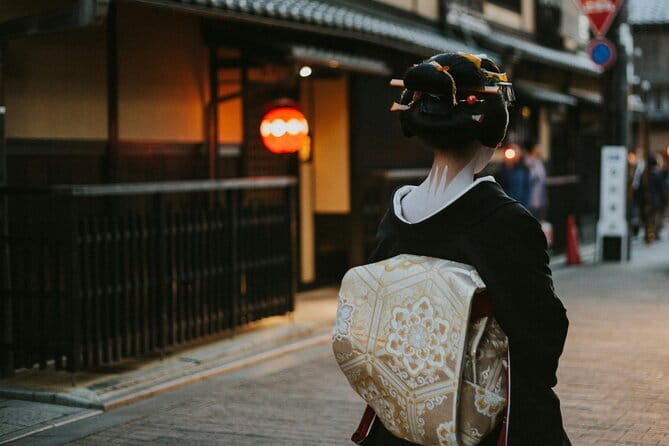
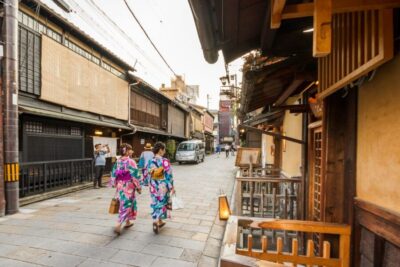
Next comes Hanamikoji Street, one of the iconic names people associate with Gion. This stretch is famous for its historic wooden machiya houses and traditional teahouses (ochaya). On this morning walk, you get to experience it in a different light.
In daytime crowds, Hanamikoji can feel like a wide hallway full of heads and phones. In the early hours, it feels more like a neighborhood you are passing through carefully. Your guide’s job here is important, because the buildings and street character can be easy to miss if you just walk quickly from one photo spot to the next.
Plan to slow down your pace for 20 minutes. Use your eyes more than your feet. Look for the way the street narrows, how the machiya facades frame the lane, and how the teahouse atmosphere shows up in the streetscape. That attention makes the rest of the tour more rewarding, especially when you reach the temples and shrines with real religious and cultural depth.
Kiyomizu-dera: the famous wooden stage and the crowd reality check
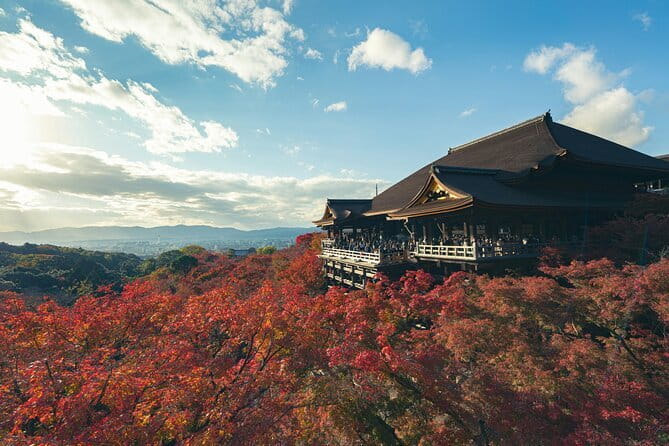
Then you move into the heavyweight attraction: Kiyomizu-dera Temple. You’ll spend about an hour here, and Kiyomizudera admission is not included, so budget ¥500 per person.
Kiyomizu-dera is famous for its wooden stage and big city views from the temple area. Even if you have seen photos before, the scale hits differently in person. The stage and the approach corridors help explain why this temple became such a magnet for pilgrims and visitors over time. It is also one of those places where your experience depends a lot on the hour you arrive.
Here is the balanced truth. Early morning helps, but it does not guarantee empty space. If you are hoping for totally crowd-free photos, go in with flexible expectations. You can still get great views and calm moments if you time your movement within the temple grounds and listen to your guide’s pacing.
A tip from the tour’s overall style: you are not rushing from stop to stop at full sprint. That is what makes the hour at Kiyomizu-dera feel more like a visit and less like a checklist.
- PERFECT KYOTO 1-Day Bus Tour★ 5.0 · 13,518 reviews
- Kyoto: Fushimi Inari, Kinkakuji, Bamboo Grove 1 Day Bus Tour★ 4.8 · 4,316 reviews
- Kyoto: Tea Ceremony in a Traditional Tea House in Kiyomizu★ 4.9 · 3,519 reviews
- Kyoto: Tea Ceremony Ju-An at Jotokuji Temple★ 4.9 · 3,207 reviews
- Kyoto: 45-Minute Tea Ceremony Lesson Experience★ 4.3 · 2,378 reviews
Sannenzaka and Ninenzaka: stone steps, old-town streets, and shop windows
After Kiyomizu-dera, you head into Sannenzaka and Ninenzaka. These are the kind of lanes you see on postcards, but walking them gives you a better sense of rhythm. You’ll have about 30 minutes here, with stone-paved streets, traditional wooden townhouses, and small local shops.
Why this stop matters is that it bridges the spiritual and the everyday. Temples feel grand and ceremonial. Sannenzaka and Ninenzaka feel lived-in, even when visitors are around. The historic lanes act like a transition zone, so you start absorbing Kyoto as a place, not just an itinerary.
The practical upside of arriving early is that you can actually browse without feeling squeezed. You still might notice people, especially near Kiyomizu-adjacent paths, but you will likely find it easier to pause, turn your head toward street details, and step into a shop doorway without everyone behind you bumping along.
If you love walking photography, this is where you slowest down. Those stone steps and tightly framed facades reward careful looking.
Yasaka-no-To (Yasaka Pagoda): quick, photogenic, and easy to love
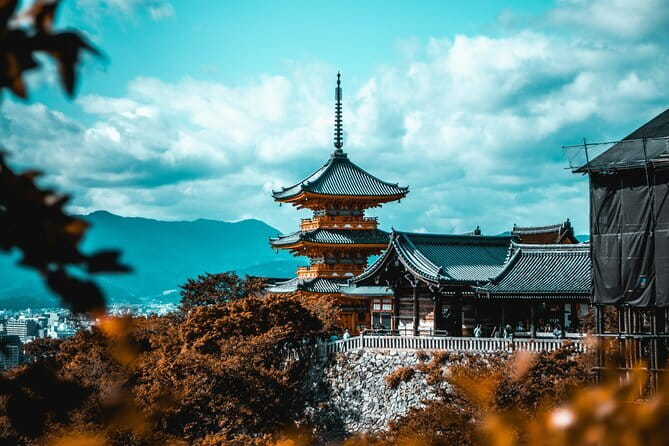
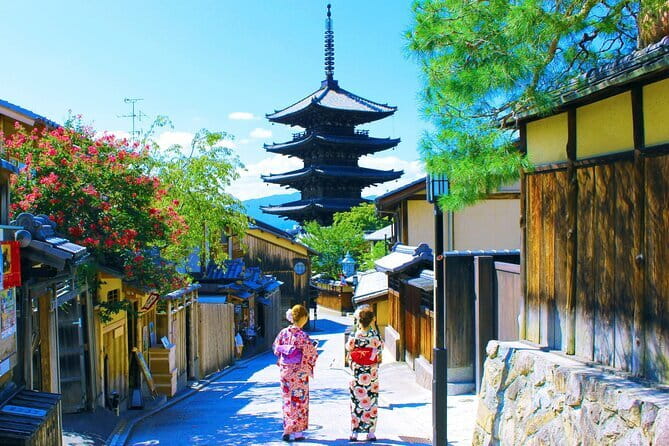
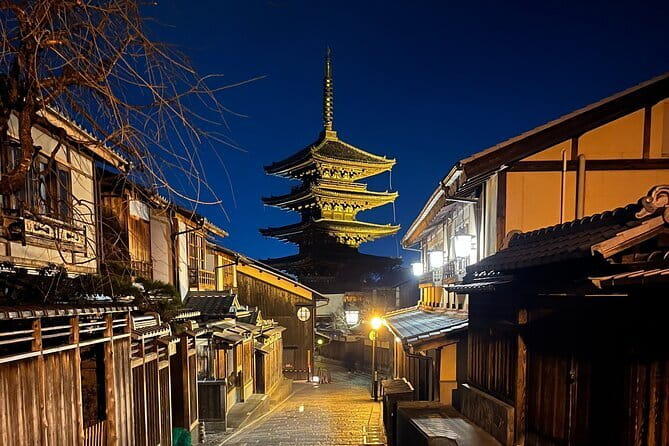
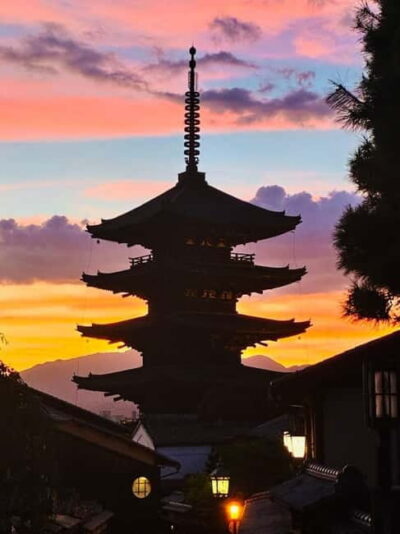
Next is a shorter stop: Yasaka-no-To, also known as Yasaka Pagoda. You’ll spend about 10 minutes here, and admission is listed as free.
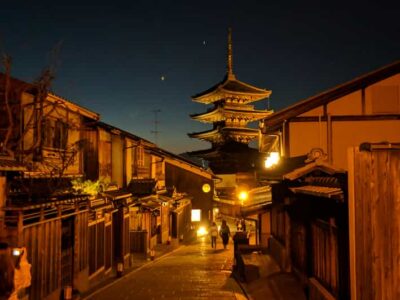
This is a classic Kyoto skyline element. Even for people who cannot identify every temple silhouette from memory, you usually recognize the general look right away once you see it in context. In the early morning, you can often get a cleaner view and more control over your framing.
Think of this as your reset button between bigger stops. You stand still, look up, and let the guide point out what makes the pagoda recognizable in the Kyoto setting. Because the stop is short, you do not lose time that you might want later at the shrine.
If you are the type who likes a “one-minute photo, one-minute learning” rhythm, you will probably enjoy this portion.
Yasaka Shrine: vermilion gate energy in the morning calm

The tour finishes at Yasaka Shrine, where you’ll spend around 30 minutes. Admission is listed as free.
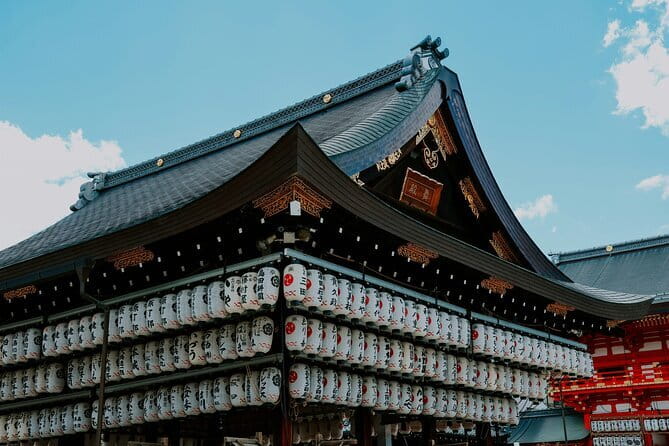
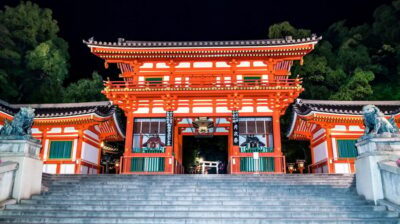
Yasaka Shrine is known for its vermilion gate and a famous lantern-lit dance stage. Even without going deep into festival details, the shrine’s look communicates why it matters. The colors, the structure, and the layout pull your attention in and give you a sense of place right away.
This stop also benefits from the early start. Shrines in Kyoto can draw big numbers later, especially as the day grows. In the morning, you can take a bit more time to look around, absorb the atmosphere, and ask questions without feeling like you are sharing your personal space with a moving crowd.
Yasaka Shrine is a strong closing note because it connects back to Gion. The shrine area and the historic entertainment district sit close enough that the cultural map in your head starts to click.
Small-group format and English guide navigation that prevents wasted time
A big part of the value here is how you move as a group. This tour runs with a maximum of 12 travelers, and it is designed for better access to the guide for questions. That matters in Kyoto, where it is easy to get turned around in tight streets.
Your guide provides navigation so you are not forced to pause every few minutes to re-check directions or figure out which lane you’re supposed to be on. You are also learning as you walk, not just getting dropped at places.
In recent experiences on this route, guides including Caleb, Hiro, and Vincent stood out for strong English skills and a willingness to answer extra questions. The tone described was friendly and question-friendly, and the pacing sounded designed for understanding rather than speed.
So if you like the idea of arriving at famous places and actually knowing what you are looking at, the guide style is where your money goes. If you prefer to wander freely with no structure, this may feel a little guided for your taste. But for most people, that structure is exactly what makes the early morning effort pay off.
Price and what you pay extra: turning $49.42 into a real plan
The listed price is $49.42 per person, and the tour lasts about 3 hours. What you get included is an English-speaking guide and the walking route that covers multiple top landmarks.
The only admission fee called out here is for Kiyomizudera Temple (¥500). Other listed stops like Gion Shirakawa, Hanamikoji Street, Yasaka-no-To, and Yasaka Shrine are marked as free admissions.
That fee structure is part of the value. You are paying for guided time and route logic, not for a bundle of expensive ticketed attractions. You can budget ahead because the only sure extra is Kiyomizudera.
Also keep in mind time value. Kyoto sites are famous for being time-consuming. This tour compresses several major areas into one early window. If you have limited days, that matters more than a small difference in price.
If you are a value hunter, this is a solid trade: one modest paid admission plus guided navigation, instead of spending your morning buying tickets and re-planning on the fly.
Logistics that actually matter: meeting point, mobile ticket, and no hotel pickup
This is a self-meet walking tour. There is no hotel pick-up, so you’ll want to position yourself near the start area ahead of time.
You meet at the Statue of Izumo-no-Okuni, located in Kawabatacho, Higashiyama Ward, Kyoto. The tour ends back at the meeting point, so you do not need to worry about getting to a second destination afterward.
They use a mobile ticket, and confirmation comes at the time of booking. The tour is also described as near public transportation, which is important for a morning start. You want an easy commute that does not eat your calm, quiet morning.
One more practical note: the group size is small, and most travelers can participate. Since it is a walking tour with about 3 hours on your feet, the main consideration is simply whether you feel good walking that long at an early hour.
If you hate early mornings, plan for it now. If you accept that you’re trading sleep for fewer crowds, the logistics make sense.
Who this Kyoto Gion early morning walk suits best
This tour is a great fit if you want famous Kyoto sights without feeling trapped in the afternoon surge. The itinerary is built around classic highlights like Kiyomizu-dera, Yasaka Shrine, and the iconic streets of Gion and Higashiyama.
It also suits you if you like history and context, because the guide presence seems central. In past experiences on this tour, guides like Caleb and Vincent were praised for being friendly, informative, and happy to answer questions, while Hiro was noted for deep knowledge and strong English.
You will likely enjoy it if:
- you want a morning rhythm and an easier time taking photos
- you prefer a structured route that keeps you from getting lost
- you appreciate a local guide who can explain what you are seeing
You might not love it if:
- you strongly prefer unguided wandering with no planned stops
- you need hotel pick-up at a specific time
- you expect every famous site to be empty at arrival time, because even early can still mean some crowds at the big names
My booking verdict: should you take the early Gion walk?
Book this tour if your top priority is experiencing Gion and Higashiyama in a calmer morning window, with English-speaking guidance and help getting around. For the price of $49.42, the value is strongest in the combination of route planning and the fact that most stops do not have extra admissions.
I’d book it especially if you only have one or two mornings in Kyoto and you want to cover multiple “must-see” areas without wasting time figuring it out yourself.
Skip it, or at least recalibrate expectations, if you are strict about crowds being totally absent at Kiyomizudera. Early helps, but it does not erase popularity. Also remember there is no hotel pickup, so be ready to get to the statue meeting point on your own.
If you’re game to trade a little sleep for smoother streets and better pacing, this one is a smart way to start your Kyoto day.
FAQ
How long is the Kyoto Gion Early Morning Walking Tour?
The tour runs for approximately 3 hours.
What is the price per person?
The price is $49.42 per person.
Is there a group size limit?
Yes. The tour has a maximum of 12 travelers.
Where is the meeting point?
You meet at the Statue of Izumo-no-Okuni in Kawabatacho, Higashiyama Ward, Kyoto.
Is hotel pick-up included?
No, hotel pick-up is not included.
What admission fees are not included?
Kiyomizudera Temple has an admission fee of ¥500 per person, and it is not included.
Is there free cancellation?
Yes. You can cancel for a full refund up to 24 hours in advance of the experience start time.
Evenings in the Old Quarters
Newest Kyoto write-ups from the Loving Japan desk
Gion, Geisha and Maiko Experiences, side by side.
 ★ 4.7Kyoto Geisha Walking Tour: Gion District & Hidden GemsFrom $253,273 reviews
 ★ 4.9Gion Magical Night Walking Tour with Geisha TriviaFrom $242,393 reviews
 ★ 4.7Gion Geisha District Walking Tour – Stories of GeishaFrom $202,187 reviews
 ★ 4.9Best of Kyoto: Gion, Geisha, Pagodas & CobblestonesFrom $242,058 reviews
 ★ 4.5Night Walk in Gion: Kyoto’s Geisha DistrictFrom $212,003 reviews
 ★ 5.0Kyoto Night Foodie Tour in Gion (9+ dishes + 6 Sake tastings)From $1631,762 reviews
 ★ 5.0Kyoto Gion Geisha District Walking Tour – The Stories of GeishaFrom $251,441 reviews
 ★ 5.0Kyoto Gion: 2-Hour Geisha Culture & History Walking TourFrom $231,186 reviews
Filed on these lists too