
REVIEW · GION, GEISHA AND MAIKO EXPERIENCES
Kyoto Gion Night Walk & Geisha District Guided Tour
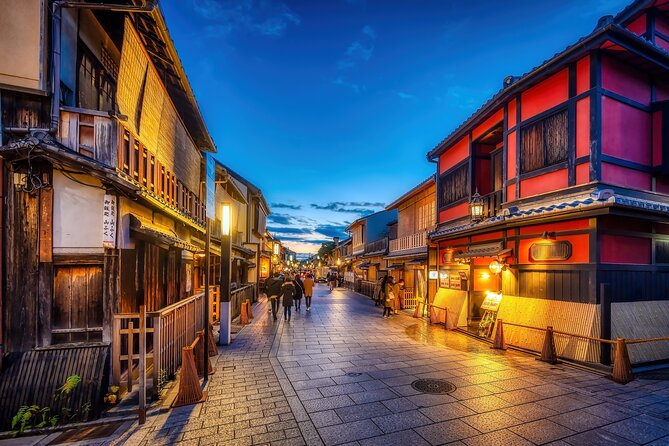
Lantern-lit Gion feels like another Kyoto. I love the small-group pace (up to 9 per outing) and how the guide steers you through the alleys with real explanations, not a rushed script. The only real drawback is the walk runs about 3 hours with lots of steps and stop-start street crossings, so comfy shoes are key.
You start near Kyoto Kawaramachi Garden (Shinchō area) and finish at Sanjō Ōhashi Bridge. The route focuses on the classic geisha-district sights, with enough offbeat corners that you feel like you found your own side streets, not just the postcard ones.
In This Review
- Quick highlights you’ll feel on your night walk
- Why Gion at night is the whole point for first-time Kyoto visitors
- Price and value: what $18 buys you in the Gion district
- Where you start and end, and how that affects your night
- Stop 1 in Gion: lantern-lit lanes, teahouses, and the maiko-or-geisha bonus
- Hanamikoji Street: the preserved street segment and where photos actually happen
- Yasaka Shrine near Gion: customs, architecture, and why it fits the walk
- How the small-group size changes your night (and why it matters with geisha districts)
- Practical comfort tips: shoes, cold nights, and timing around dinner
- Who should book this Kyoto Gion night walk?
- Should you book this tour or wing it on your own?
- FAQ
- How long is the Kyoto Gion Night Walk and Geisha District Guided Tour?
- How big is the group?
- What stops are included on the walk?
- Is the tour in English?
- Is a snack and water included?
- Where do I meet the group, and where do we end?
- Is hotel pickup or drop-off included?
- Are admission tickets included?
- What happens if the weather is poor?
Quick highlights you’ll feel on your night walk
- Small group, better conversations: Designed for groups of no more than 9 per outing, so your questions actually get answered.
- Three stops that match the vibe: Gion after dark, Hanamikoji Street, then Yasaka Shrine at the Gion edge.
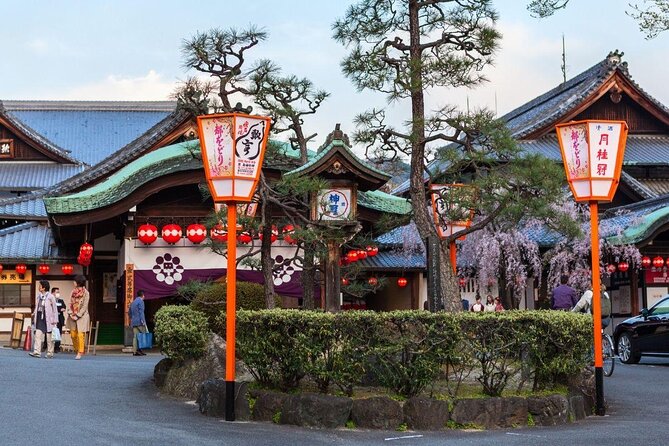
- Lanterns and teahouse lanes: The “night version” of Gion is the whole point, with illuminated streets and traditional spots.
- Snacks and drinks for a reset: Snack and water are included for comfort, with the snack specifically called out for Premium Group and Private options.
- Guides who tailor the moment: Names you might hear include Zied, Nobu Miyaki, Guillaume, Shingo, Eloise, Jasmine, Naoki, Vincent, and Rafael, and they tend to give practical context and recommendations.
Evening walks through the old quarters, compared
- Kyoto Geisha Walking Tour: Gion District & Hidden Gems
★ 4.7 · 3,273 reviews - Kyoto: Gion Magical Night Walking Tour with Geisha Trivia
★ 4.9 · 2,393 reviews - Kyoto: Gion Geisha District Walking Tour – Stories of Geisha
★ 4.7 · 2,187 reviews - Best of Kyoto: Gion, Geisha, Pagodas & Cobblestones
★ 4.9 · 2,058 reviews
Why Gion at night is the whole point for first-time Kyoto visitors
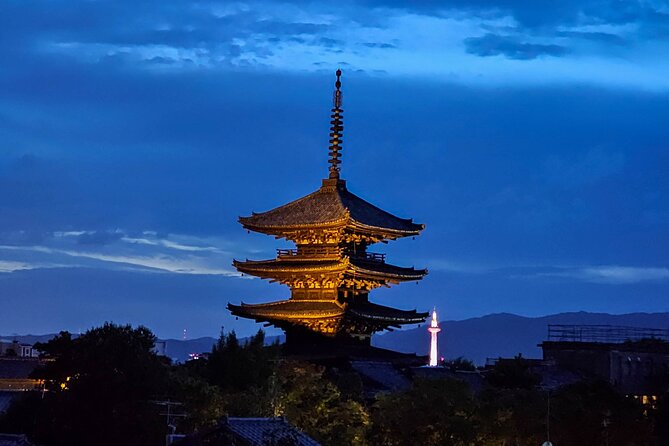
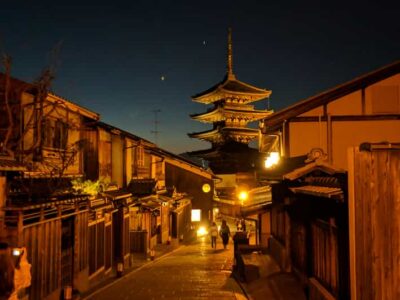
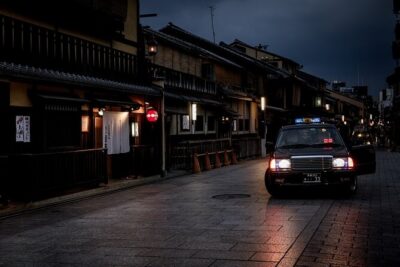
Gion looks special at any hour, but at night it changes. Lanterns glow, the lanes tighten visually, and the old architecture feels less like a museum and more like a living neighborhood. This is exactly why an evening walk is worth your time. You are not just sightseeing, you are watching Kyoto’s “traditional atmosphere” turn on.
A key thing I like is that the goal is not a checklist. The walk works like a guided drift: the guide cues what to look for, explains the customs behind what you are seeing, then moves you before the area gets too static. If you are lucky, you might spot a maiko or geisha near Hanamikoji Street, but treat that as a bonus, not the mission.
One practical note. If you go during a national holiday, you may notice the rhythm shift. Some nights can feel quieter than you expect, and you might not see geisha activity in the way you hoped. That does not mean the walk is a waste. It usually just means your value comes from the street atmosphere and the history behind it, not a guaranteed sighting.
Price and value: what $18 buys you in the Gion district
At $18 per person for about 3 hours, this is positioned as a low-cost way to get a local guide without paying a private-tour price. The value comes from three things you cannot easily replicate on your own:
1) Direction through the right streets
Gion has narrow lanes that can feel like a maze if you wander randomly. A guide helps you move efficiently, so you spend time on the best-lit streets instead of doubling back.
2) Context that changes how you see places
During the walk, your guide explains the area’s customs and architecture. Several guides mentioned by name in past groups, like Shingo and Naoki, tend to answer questions patiently, which is huge when you are trying to understand what is normal versus what is touristy.
3) Small-group energy
A crowded tour can turn Gion into a slow shuffle. Here, the design keeps the group small, with no more than 9 people per outing. That makes the experience feel more like walking with a friendly local than being herded.
You should also factor in what’s included. The walk itself and an English-speaking guide are included. Admission for the first stop is listed as free, and admission tickets are listed as included for the Hanamikoji Street and Yasaka Shrine segments. For comfort, snack and water are included, and the snack is explicitly called out for Premium Group and Private tours.
Where you start and end, and how that affects your night
This tour is built as an out-and-back walking plan, not a sit-down museum visit. You meet near Kyoto Kawaramachi Garden in the Shinchō area, then you end at Sanjō Ōhashi Bridge.
That ending spot matters. It usually means you can keep going right after the tour on your own, rather than returning to the exact same starting point. If you want dinner nearby, plan your reservation for earlier in the evening, because Gion is gorgeous at night but the timing can run close to peak meal hours for some families.
Also, the start point is in a busy area with multiple groups. If you hate hunt-the-guide moments, arrive a bit early and use the map pin. In one experience, meeting spot confusion was mentioned, especially when there are lots of guides and groups on the same street.
- PERFECT KYOTO 1-Day Bus Tour★ 5.0 · 13,518 reviews
- Kyoto: Fushimi Inari, Kinkakuji, Bamboo Grove 1 Day Bus Tour★ 4.8 · 4,316 reviews
- Kyoto: Tea Ceremony in a Traditional Tea House in Kiyomizu★ 4.9 · 3,519 reviews
- Kyoto Geisha Walking Tour: Gion District & Hidden Gems★ 4.7 · 3,273 reviews
- Kyoto: Tea Ceremony Ju-An at Jotokuji Temple★ 4.9 · 3,207 reviews
Stop 1 in Gion: lantern-lit lanes, teahouses, and the maiko-or-geisha bonus
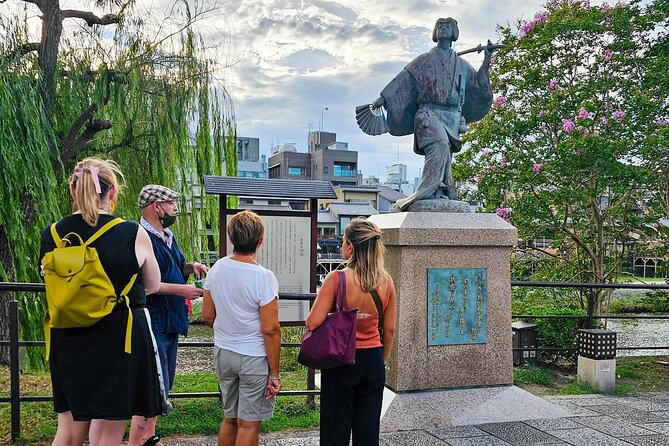
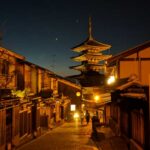
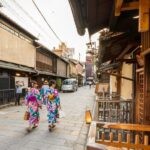
This is the heart of the tour. You spend about 2 hours in Gion after sunset, with the guide steering you along illuminated lantern streets and toward the neighborhood’s traditional vibe. Expect to pass things like restaurants, charming bars, and traditional teahouses along the route.
What makes this portion work well is that your guide helps you read what you are seeing. You are not just looking at buildings. You are learning why the streets and customs matter, and why certain areas feel more “Gion” than others.
Can you expect geisha or maiko sightings here? Sometimes yes, sometimes no. In past groups, people have managed to spot both maiko and geisha near Hanamikoji Street. Other nights were quiet, with restaurants closed and fewer visible performers. Either way, the walk still delivers because Gion at night is mostly about mood, architecture, and culture you can feel in the street.
One more practical tip: if you are traveling with an older parent, check in with the guide about pace early. Several guides, like Zied, were praised for being kind and helpful with elderly travelers. That is not automatic for every guide, but small-group tours tend to allow flexibility.
Hanamikoji Street: the preserved street segment and where photos actually happen
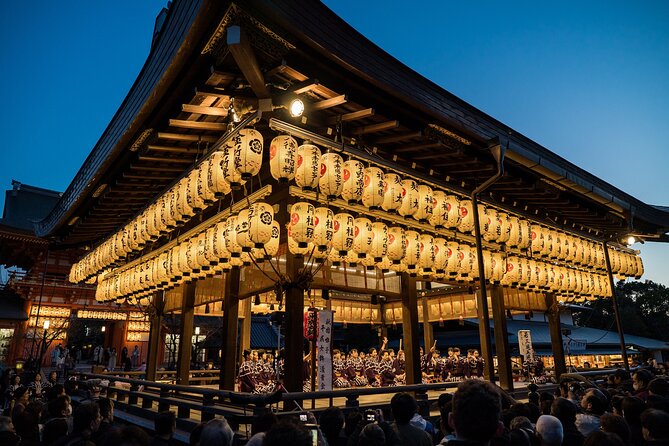
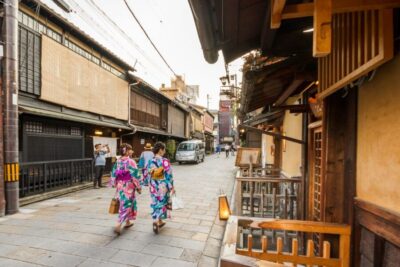
Next you shift to Hanamikoji Street, one of the best-preserved historic streets in the area. You spend about 30 minutes here, guided, which is the sweet spot. Long enough to soak in the atmosphere, short enough that you are not stuck in one spot while the crowd thickens.
This is where the lighting does its magic. The street gives you that classic geisha-district look, and your guide typically points out what to focus on so your photos do not become random. If you care about photos, pay attention when your guide slows down. That’s often when you are standing in the right angle for lantern light and traditional street details.
A reasonable expectation-setting note: on some nights, you may see fewer or no performers out in public. That does not mean the street is boring. It means the value is in the guide’s explanations and the feeling of the preserved streetscape.
Yasaka Shrine near Gion: customs, architecture, and why it fits the walk
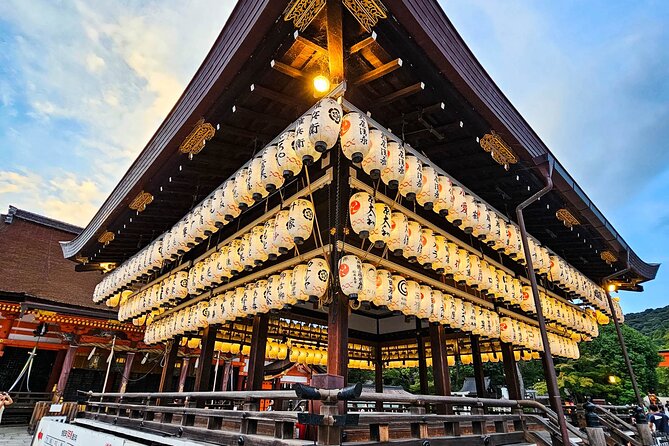
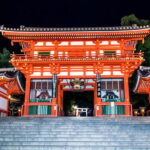
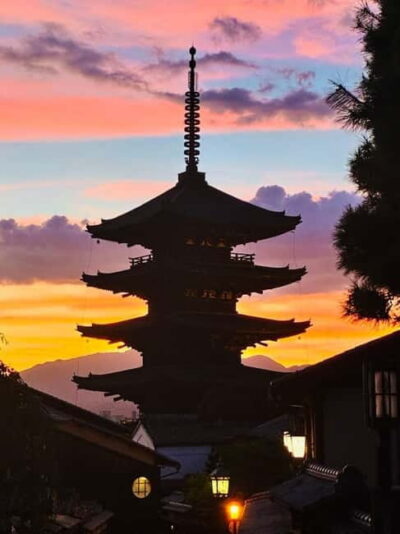
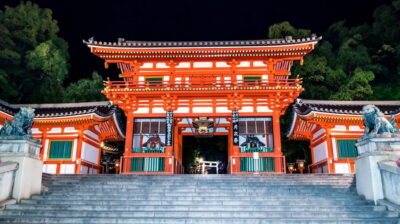
The final guided stop is Yasaka Shrine (also known as Gion Shrine). You spend about 30 minutes here. This is a good move at the end of the tour because the shrine gives you a cultural anchor. Gion is the scene, but Yasaka Shrine helps you understand why this area has the kind of spiritual and social significance it does.
During this portion, your guide focuses on history, architecture, and customs, then helps you understand what you are seeing in a respectful way. If you only do one shrine in Kyoto, it can be tempting to skip this kind of guided context. I think that would be a mistake. Even short shrine visits feel more meaningful when you know what features and traditions represent.
Also, it helps to be calm and slightly flexible. Shrine spaces can have their own flow and crowd patterns. If the group gets a little compressed, it usually passes. The guide usually keeps the movement moving at a walking pace that fits the group.
How the small-group size changes your night (and why it matters with geisha districts)
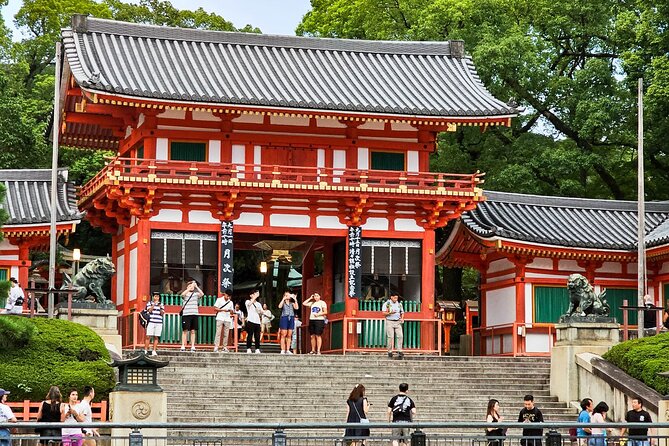
A “small group” sounds like a marketing line until you experience it in Gion. Here, it affects three real things:
- You get answers fast. When guides such as Eloise, Jasmine, or Rafael interact with the whole group, questions are answered thoroughly instead of being brushed aside.
- The pacing stays human. People have described comfortable pacing and patience, including side suggestions and explanations at points where the group needs a moment.
- You feel less lost. Even when streets look similar, a guide’s route choices keep you from drifting off into backstreets that are not part of the intended path.
That said, small groups do not automatically mean perfect communication. One disappointment in the past was tied to guide communication during a recommendation that did not match expectations, especially when the group was very small. The lesson for you is simple: if a suggestion feels unclear, ask your guide to clarify right away. You will get more out of the experience that way.
Practical comfort tips: shoes, cold nights, and timing around dinner
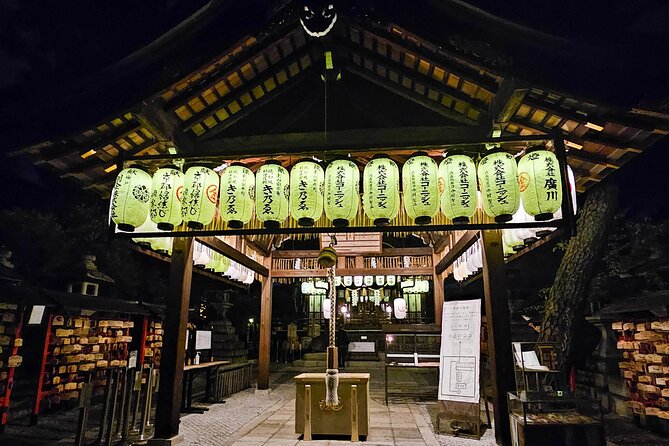
This is a walking tour. You should plan for it like one.
In past experiences, people noted that Gion nights can involve plenty of up-and-down streets, and some said their legs felt it after about 3 hours. If your mobility is limited, consider booking a Private upgrade if offered in multiple languages, or ask the guide on arrival about a comfortable pace.
Winter nights also have a habit of turning “pleasant” into “cold.” One group mentioned being chilly at the end of the tour. If you are visiting in colder months, dress for the late evening, not the early hour.
Food timing is another real-world concern. The tour can run right over dinner hours. If you hate feeling hungry while walking, eat earlier than you usually would, or plan to grab an easy snack before the tour. The good news is there is often a short reset with snack and drink for comfort, and the snack is called out for Premium Group and Private tours.
Who should book this Kyoto Gion night walk?
I’d point you toward this tour if you want:
- A guided introduction to Gion that does not require you to do homework.
- A route that hits Hanamikoji Street and Yasaka Shrine without you figuring out the timing alone.
- A night plan for your first Kyoto stay, when everything is new and you want a friend to help you see what matters.
It also works well for families with older kids. One group mentioned kids ages 12 to 16 enjoying the walk, especially because they got to explore alley streets they would not find on their own.
On the flip side, you might want to skip it if:
- You dislike walking long routes.
- You expect a guaranteed geisha or maiko sighting. Even well-guided nights can be quiet.
- You want a fully structured, sit-down experience. This is street time, not a lecture.
Should you book this tour or wing it on your own?
Book it if you want an efficient, low-stress way to experience Gion at night with a guide who can explain what you are looking at. With small groups, a focused route, and included guide support, it’s a strong value for $18.
Skip or change your expectations if you are mainly chasing a performer sighting, or if your schedule cannot handle late-evening walking. In that case, you can still enjoy Gion on your own, but you would likely miss the context that turns the streets from pretty to meaningful.
If you do book, my best advice is simple: wear good shoes, arrive at the meeting point a little early, and come ready with questions. That’s when tours like this go from sightseeing to a night that actually helps your Kyoto make sense.
FAQ
How long is the Kyoto Gion Night Walk and Geisha District Guided Tour?
The tour runs for about 3 hours.
How big is the group?
The experience avoids crowded tours, with no more than 9 people per outing. The tour is also capped at a maximum of 25 travelers.
What stops are included on the walk?
You visit Gion, Hanamikoji Street, and Yasaka Shrine.
Is the tour in English?
Yes, the tour guide is English-speaking.
Is a snack and water included?
A snack and water are included for your comfort. The snack is specifically listed as included for Premium Group and Private tours.
Where do I meet the group, and where do we end?
You start at Kyoto Kawaramachi Garden68 Shinchō, Shimogyo Ward, Kyoto, and you end at Sanjō Ōhashi Bridge.
Is hotel pickup or drop-off included?
No, hotel pickup and drop-off are not included.
Are admission tickets included?
Gion is listed as free admission, and admission tickets are listed as included for the Hanamikoji Street and Yasaka Shrine stops.
What happens if the weather is poor?
This experience requires good weather. If it is canceled due to poor weather, you will be offered a different date or a full refund.
Evenings in the Old Quarters
Newest Kyoto write-ups from the Loving Japan desk

Gion, Geisha and Maiko Experiences, side by side.
 ★ 4.7Kyoto Geisha Walking Tour: Gion District & Hidden GemsFrom $253,273 reviews
 ★ 4.9Gion Magical Night Walking Tour with Geisha TriviaFrom $242,393 reviews
 ★ 4.7Gion Geisha District Walking Tour – Stories of GeishaFrom $202,187 reviews
 ★ 4.9Best of Kyoto: Gion, Geisha, Pagodas & CobblestonesFrom $242,058 reviews
 ★ 4.5Night Walk in Gion: Kyoto’s Geisha DistrictFrom $212,003 reviews
 ★ 5.0Kyoto Night Foodie Tour in Gion (9+ dishes + 6 Sake tastings)From $1631,762 reviews
 ★ 5.0Kyoto Gion Geisha District Walking Tour – The Stories of GeishaFrom $251,441 reviews
 ★ 5.0Kyoto Gion: 2-Hour Geisha Culture & History Walking TourFrom $231,186 reviews
Filed on these lists too