
REVIEW · GION, GEISHA AND MAIKO EXPERIENCES
Kyoto: Gion Sunset Walking Tour with Local Guide
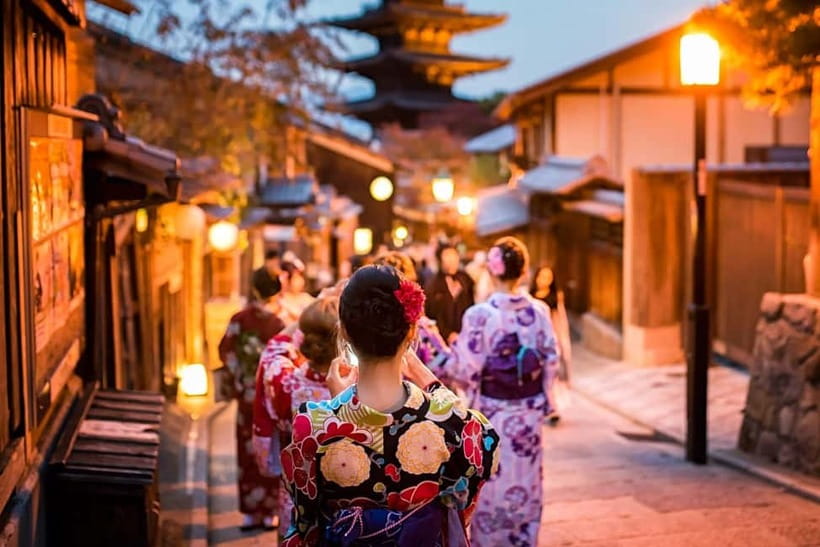
Gion turns electric after sundown. This 3-hour Kyoto walk threads you through lantern-lit lanes toward Hanamikoji Street, with stops timed for that shift from day to night. You start near Kawaramachi, then keep walking as the neighborhood looks more like a movie set and less like a map.
I love the small group setup, capped at no more than nine, because it makes it easier to ask questions and get photo help without feeling crowded. I also like the cultural grounding, and guides such as Jasmine and Raphael are repeatedly praised for clear English plus practical stories about Gion life, including how to spot geiko or maiko respectfully (not guaranteed).
One consideration: this is real walking, and it is not suitable for pregnant women, people with mobility impairments, heart problems, or respiratory issues. Plan to arrive early too, because guides wait only 10 minutes at the Kyoto Kawaramachi Garden meeting point.
In This Review
- Key highlights I’d prioritize
- Why a Gion sunset walk is better than a rushed daytime stop
- Meeting at Kyoto Kawaramachi Garden, then letting the neighborhood pull you along
- Hanamikoji Street: the classic lane, explained so it feels personal
- Scenic viewpoints plus Maruyama Park: why the route keeps changing elevation
- Yasaka Shrine, also called Gion Shrine: traditions you can actually connect to Gion
- Pontocho at night and finishing at Sanjo Bridge
- The snack break: a small inclusion that changes the whole vibe
- Guide quality: why Jasmine, Raphael, and others keep showing up in the praise
- Geiko and maiko: spotting them is luck, handling the moment is skill
- Price and value: $22 for a focused 3-hour evening
- What to bring and how to make it feel easy
- Who should book this Gion sunset walking tour
- Should you book it?
- FAQ
- Where is the meeting point?
- How long is the tour?
- How much does it cost?
- What languages are offered for the live guide?
- Is a snack included?
- Who is this tour not suitable for?
Key highlights I’d prioritize
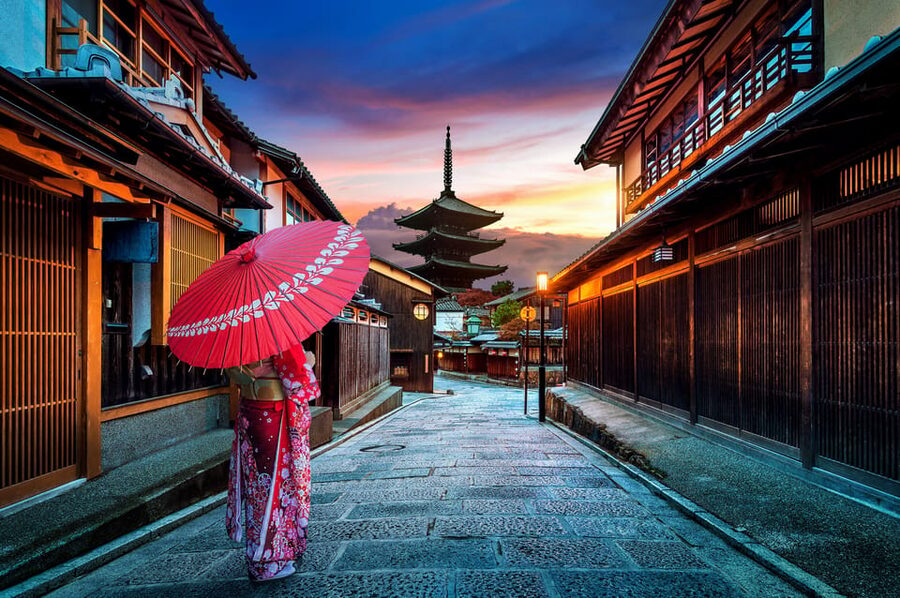
- Sunset-to-night pacing that makes Gion feel different as light fades
- Hanamikoji Street plus shrine and park stops that add meaning beyond photos
- Maruyama Park and scenic viewpoints for a better sense of the area’s layout
- Snack stop included, and some groups report matcha dessert moments
- Pontocho at night and a smooth finish at Sanjo Bridge
- Small-group feel you actually notice, with guides adjusting to the crowd
Evening walks through the old quarters, compared
- Kyoto Geisha Walking Tour: Gion District & Hidden Gems
★ 4.7 · 3,273 reviews - Kyoto: Gion Magical Night Walking Tour with Geisha Trivia
★ 4.9 · 2,393 reviews - Kyoto: Gion Geisha District Walking Tour – Stories of Geisha
★ 4.7 · 2,187 reviews - Best of Kyoto: Gion, Geisha, Pagodas & Cobblestones
★ 4.9 · 2,058 reviews
Why a Gion sunset walk is better than a rushed daytime stop
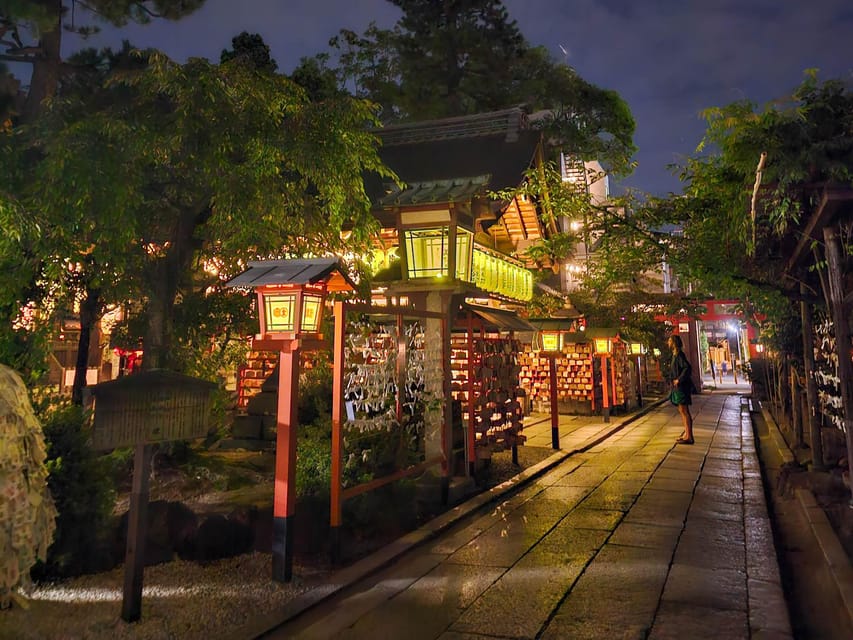
Gion is one of those Kyoto neighborhoods where the mood matters. At sunset, the streets start looking softer and more theatrical, with lanterns and warm lighting doing half the storytelling for you. This tour leans into that timing, so you do not spend your whole evening in bright, daytime crowds.
For me, the value is the mix of “where to go” plus “what you’re looking at.” You are not just collecting landmarks. You get context for why Gion has the look it does, what traditions are tied to the area, and how the nightlife fits into the wider Kyoto rhythm.
Also, the route is built for people with limited time. Three hours is long enough to feel like you saw a real chunk of the district, but short enough to keep your next day flexible. That matters if you are stacking temples, gardens, and day trips.
The tour is at its best if you like walking, asking questions, and getting oriented fast in a place with lots of side streets.
Meeting at Kyoto Kawaramachi Garden, then letting the neighborhood pull you along
Your meetup is Kyoto Kawaramachi Garden corner, in front of the big black world map. It helps to arrive early, because the guide will only wait up to 10 minutes before moving on.
The first “beat” is quick: you pass by Kyōto Minami-za for about 10 minutes. Since it is a stop done at walking pace, it works like a warm-up. You get the feeling of being in the Kyoto theater district orbit without turning the evening into a museum schedule.
From there, the tour shifts into heritage mode. You head toward Hanamikoji Street, one of the best-preserved historic streets in the area. This is where the narrow lanes start to feel like the real Gion experience, not just a backdrop you walk past.
If you are the kind of person who likes to understand the layout as you go, you’ll appreciate that the tour uses the flow of the streets. It is easier to remember where you are and how the neighborhood connects once you walk it in sequence.
Hanamikoji Street: the classic lane, explained so it feels personal
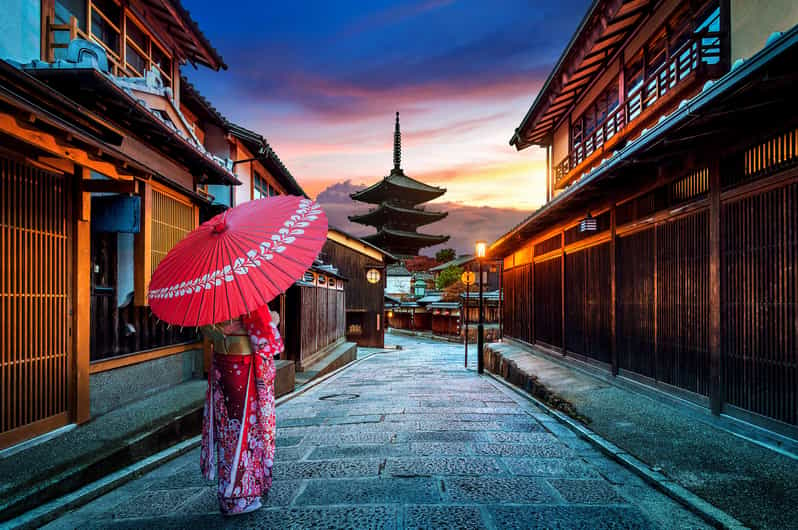
Hanamikoji Street gets about 30 minutes guided. That length is important. Short stops can turn historic streets into a drive-by photo contest. This tour gives enough time to actually look at details, ask questions, and learn what makes the street feel preserved.
The guide’s job here is translation, not narration. You learn what you are seeing as the group moves: what the architecture suggests, how the district functions socially, and why certain lanes are especially associated with Gion’s traditions.
Even if you have walked around Gion before, this is the part that often makes the difference. You will likely notice you were looking at the street as scenery rather than as a system with history behind it. That is the payoff of having an English-speaking guide leading you.
One practical tip: wear comfortable shoes. This part is where the walking surfaces and turns can sneak up on you, especially once it gets darker and you stop looking for direction.
- PERFECT KYOTO 1-Day Bus Tour★ 5.0 · 13,518 reviews
- Kyoto: Fushimi Inari, Kinkakuji, Bamboo Grove 1 Day Bus Tour★ 4.8 · 4,316 reviews
- Kyoto: Tea Ceremony in a Traditional Tea House in Kiyomizu★ 4.9 · 3,519 reviews
- Kyoto Geisha Walking Tour: Gion District & Hidden Gems★ 4.7 · 3,273 reviews
- Kyoto: Tea Ceremony Ju-An at Jotokuji Temple★ 4.9 · 3,207 reviews
Scenic viewpoints plus Maruyama Park: why the route keeps changing elevation
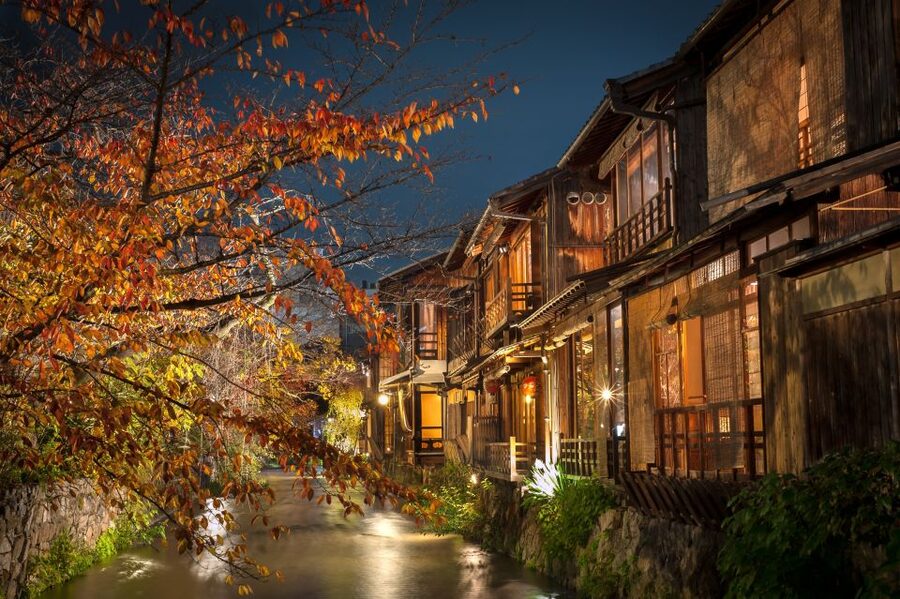
After Hanamikoji, the tour includes two stretch-and-look segments for scenic views, each with guided context. One is about 30 minutes, and another about 25 minutes. These pauses matter because they prevent the tour from becoming a straight line of “walk, point, move on.”
Then comes Maruyama Park for about 15 minutes. In a district known for lanterns and narrow lanes, a park stop is a useful reset. It also helps you understand the neighborhood’s balance between built-up tradition and open space.
The value here is orientation. Once you take in a view or two with a guide, Gion stops feeling like a maze. It starts feeling like a district with recognizable edges and connections. That makes it much easier to explore later on your own, especially if you plan to revisit Pontocho.
If you want to take photos, this is a good window. Lighting shifts fast at sunset, so the earlier scenic segment helps you avoid the “everything looks too dark” problem.
Yasaka Shrine, also called Gion Shrine: traditions you can actually connect to Gion
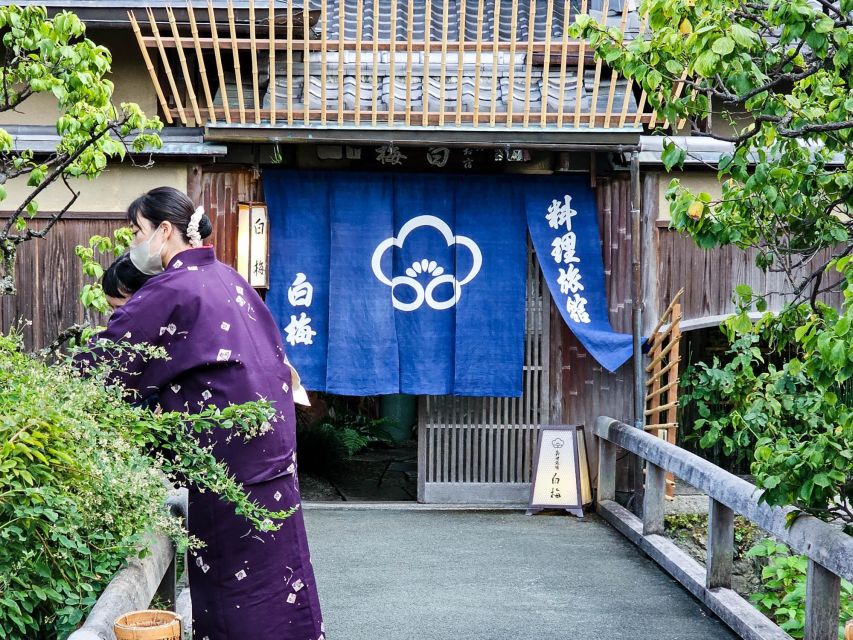
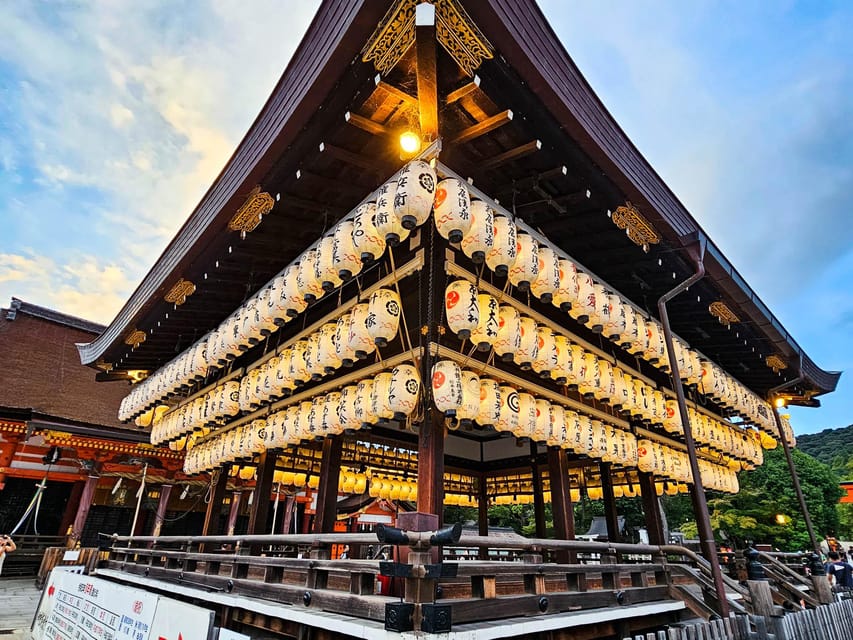
Next is Yasaka Shrine, also known as Gion Shrine, with about 20 minutes guided. This is not just a photo stop. You get explanation tied to what Gion represents culturally and how religious spaces intersect with the district’s identity.
You are walking through areas that many visitors only see briefly from the outside. With a guide, you connect the dots: why shrines and rituals matter in Kyoto, and why this part of town has such strong cultural gravity.
The tour also includes time both before and after for scenic walking, so the shrine stop does not feel like a separate errand. It feels like a chapter. That structure is part of why the whole evening feels cohesive.
A quick note for your expectations: the tour does not promise big-ticket performances. What it promises is context and atmosphere, and that is exactly the right approach for an area like Gion. Religion, tradition, and daily life all overlap here, and the guide helps you notice the overlap instead of just passing through.
Pontocho at night and finishing at Sanjo Bridge
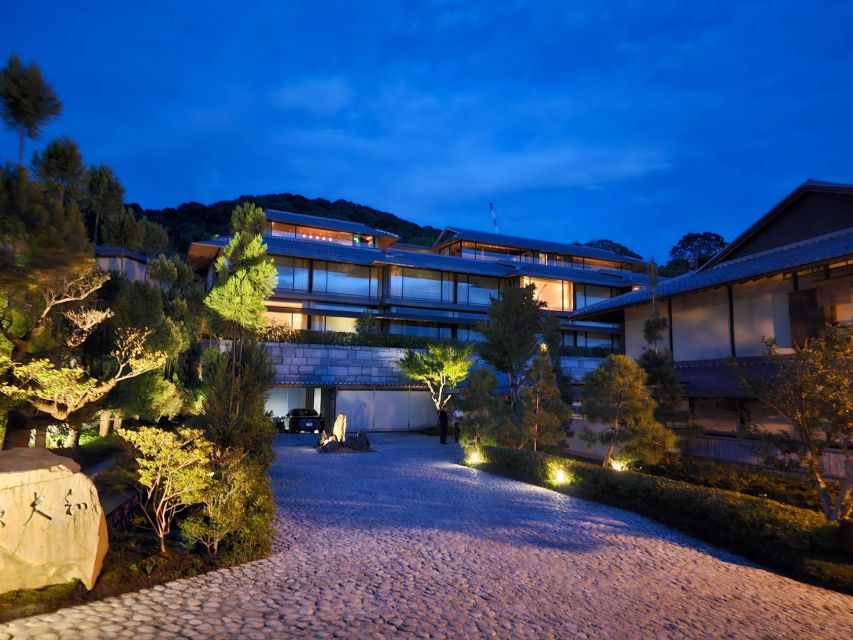
The final “main act” is Pontocho, with about 20 minutes guided. Pontocho is the kind of place where you can feel the nightlife energy without needing to do anything besides look around. The tour keeps you moving, so you get the feel of the lane and the surrounding mood before wrapping up.
Then you finish at Sanjo Bridge. This ending point is practical. It is a clear landmark you can use to orient yourself for the next step of your evening, whether that means dinner, a quick drink, or heading back toward your hotel area.
What I like about ending here is psychological. If you start an evening walking tour and you do not know where it ends, you can end up distracted. Ending at a bridge gives you a sense of arrival, and it makes the last moments feel like closure instead of “tour over, now what?”
The snack break: a small inclusion that changes the whole vibe
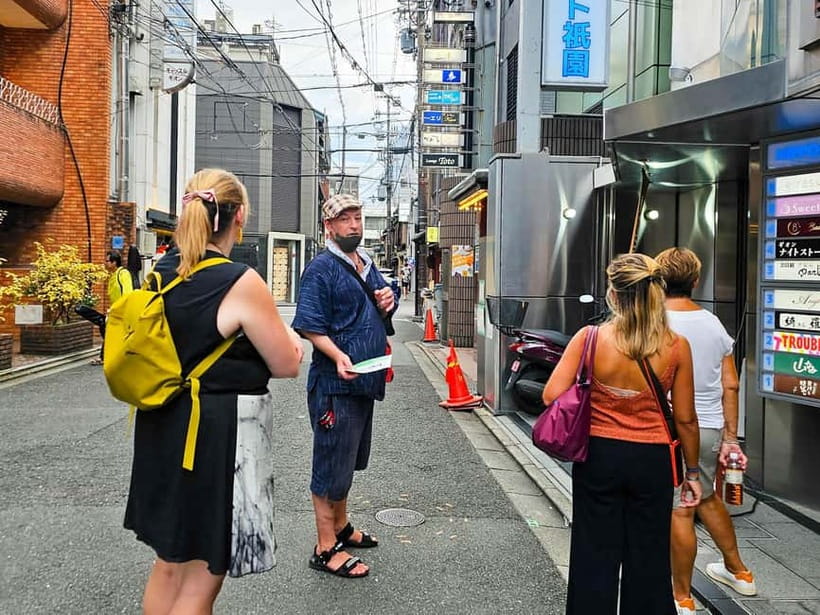
A local snacks stop is built into the schedule for about 20 minutes. The snack is included in the price, so you do not have to budget extra just to keep going.
From guide-led reports, this snack break can include treats like matcha desserts, and at least one group noted the snack value stayed under what they expected, with a stated cap around 1000 yen per person. That tells you the stop is meant to be simple and satisfying, not a full meal.
In cold weather or rainy conditions, having a short indoor-ish pause can also make the tour feel much more comfortable. One group described the guide adjusting the evening for wet weather, with a cafe stop that offered good views.
I think this is the inclusion that turns a walking tour into a real experience. You get to pause, warm up, and then keep walking with better energy.
Guide quality: why Jasmine, Raphael, and others keep showing up in the praise
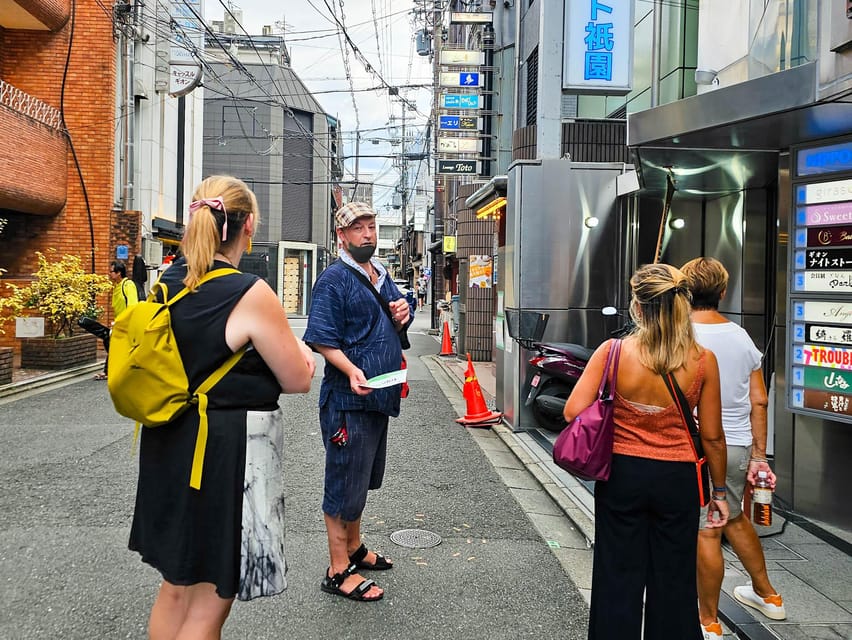
The tour is small-group and guide-led, and the reviews make one thing clear: the guide is the product. People mention that guides like Jasmine and Raphael deliver excellent English and explain Gion culture with stories and historical context that you cannot easily read off a sign.
Another theme is pacing. One review praised a guide for adjusting the pace for an older couple, and multiple reviews mention that the guide takes time for questions rather than just marching down the street.
That matters because Gion at night is easy to misread. There are lots of side lanes, lots of dark corners, and lots of places where it is tempting to guess what is going on. A good guide helps you slow down and see.
And since this is a walking tour, group size affects everything: photo timing, how you pass through narrow streets, and how quickly you can ask something without slowing the whole group.
Geiko and maiko: spotting them is luck, handling the moment is skill
The tour description is upfront: you may catch a glimpse of a geiko or maiko on their way to entertain guests, but it is not guaranteed. That honesty is good. It sets the right expectation.
What the tour also gives you is guidance on respectful behavior. If you encounter geiko or maiko, keep your distance, avoid interrupting their daily lives, and consider using a longer lens. If they come closer, stepping out of their path and offering a small bow and thank you is recommended.
This is not just etiquette theater. In a district like Gion, the difference between a respectful moment and an intrusive one is clear, and a guide can help you read the situation.
If you care about photos, bring a camera and get ready to shoot quickly. The best opportunities happen when people are moving normally and you are not trying to force a moment.
Price and value: $22 for a focused 3-hour evening
At about $22 per person for a 3-hour walking tour, the value is mostly in three things: the local guide, the small-group size, and the included snack.
If you tried to replicate this on your own, you would still pay for a snack, and you would still need time to figure out a smart route that hits the right parts of Gion without wasting your night. The tour compresses that work into a guided walk, which is a big deal when you only have a couple hours free.
You also get reassurance on timing. The tour accepts last-minute bookings, and it offers free cancellation up to 24 hours in advance. That makes it an easier decision if your Kyoto day plan is fluid.
What is not included is equally important. There is no hotel pickup and no included meals beyond the snack. So if you are hungry, plan dinner separately.
What to bring and how to make it feel easy
Bring comfortable shoes. This is a walking tour, and you’ll want grip and comfort more than style. Bring a camera too, because the lantern-lit streets and scenic pauses are exactly the kind of moments you want to remember.
Cash is also recommended. That lines up with the snack stop and helps you handle any small, personal extras without confusion.
If you are prone to motion fatigue or get tired after steady walking, consider taking it easy earlier in the day. The tour is only three hours, but it is three hours that you will actually spend moving.
Also, plan your arrival. The guide waits a maximum of 10 minutes, so you do not want to cut it close.
Who should book this Gion sunset walking tour
This is a great match if you:
- Have limited time in Kyoto and want a concentrated evening in the Gion area
- Enjoy guided context, not just landmark photos
- Like small groups and Q-and-A conversations
- Want a chance to experience the geiko and maiko district with respectful guidance
It may not be your best pick if you:
- Cannot do steady walking
- Have heart or respiratory issues, or if you are pregnant
- Need hotel pickup or easier transit handling (not provided)
Should you book it?
I would book this Kyoto Gion sunset tour if you want your first look at Gion to feel guided, calm, and meaningful. The route makes sense for an evening: classic historic streets, a shrine and park connection, scenic view moments, then the Pontocho night atmosphere, finishing at Sanjo Bridge.
The biggest reason to choose it is the guide element. With small-group pacing and guides praised for clear explanations, you’ll come away understanding Gion beyond what you can see from the sidewalk.
If you want an evening that feels like you’re walking with someone who knows the district, this is one of the simplest ways to do it in just three hours.
FAQ
Where is the meeting point?
You meet at the Kyoto Kawaramachi Garden corner, in front of the big black world map. The guide will be wearing a TripGuru shirt or holding a TripGuru sign.
How long is the tour?
The tour runs for 3 hours.
How much does it cost?
The price is $22 per person.
What languages are offered for the live guide?
The live guide is available in English, Spanish, and French.
Is a snack included?
Yes. A local snack is included in the tour.
Who is this tour not suitable for?
It is not suitable for pregnant women, people with mobility impairments, people with heart problems, or people with respiratory issues.
Evenings in the Old Quarters

Newest Kyoto write-ups from the Loving Japan desk

Gion, Geisha and Maiko Experiences, side by side.
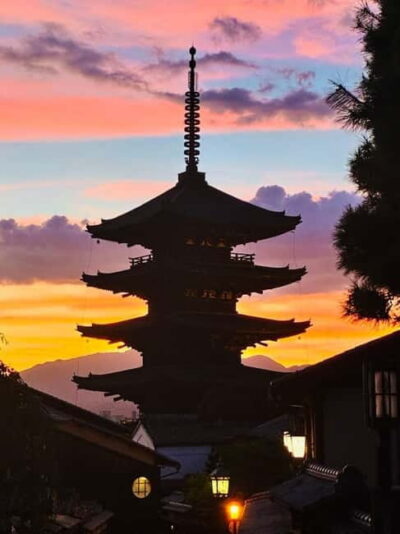 ★ 4.7Kyoto Geisha Walking Tour: Gion District & Hidden GemsFrom $253,273 reviews
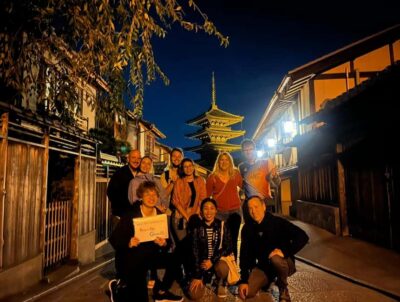 ★ 4.9Gion Magical Night Walking Tour with Geisha TriviaFrom $242,393 reviews
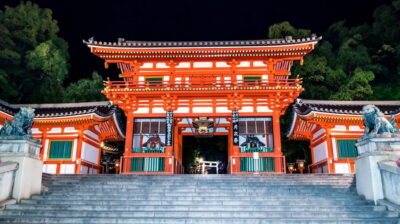 ★ 4.7Gion Geisha District Walking Tour – Stories of GeishaFrom $202,187 reviews
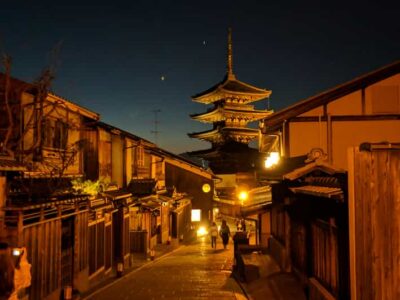 ★ 4.9Best of Kyoto: Gion, Geisha, Pagodas & CobblestonesFrom $242,058 reviews
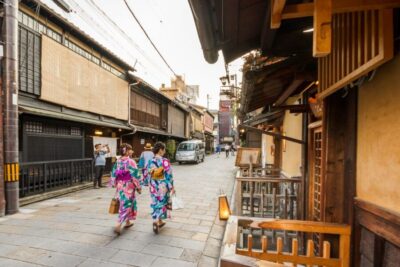 ★ 4.5Night Walk in Gion: Kyoto’s Geisha DistrictFrom $212,003 reviews
 ★ 5.0Kyoto Night Foodie Tour in Gion (9+ dishes + 6 Sake tastings)From $1631,762 reviews
 ★ 5.0Kyoto Gion Geisha District Walking Tour – The Stories of GeishaFrom $251,441 reviews
 ★ 5.0Kyoto Gion: 2-Hour Geisha Culture & History Walking TourFrom $231,186 reviews
Filed on these lists too