
REVIEW · GION, GEISHA AND MAIKO EXPERIENCES
Kyoto Gion Walking Tour for First Time Visitors
Gion makes sense when someone points the way. This 2-hour walk helps you spot the parts of Gion that solo wandering can miss, with a guide who shares context as you pass landmarks near Yasaka Shrine. I especially like the small group size, and I love getting clear cultural background on what I’m actually seeing.
One thing to plan for: this tour does not include snacks. If you’re out all morning or afternoon, you’ll want water and a small bite strategy so you can enjoy the full route without feeling rushed.
In This Review
- Key things to know before you go
- Gion in two hours, with a route that won’t fight you
- Meeting point, mobile ticket, and small-group size
- How the guide makes Kyoto understandable, not just photographed
- Stop 1: Gion streets and machiya atmosphere near Yasaka Shrine
- Stop 2: Kennin-ji Temple and Zen’s early roots
- Stop 3: Yasui-Konpiragu Shrine and the enkiri/enmusubi stone
- Stop 4: Hōkan-ji Temple, also known as Yasaka Pagoda
- Stop 5: Ninenzaka slope and the stone-paved Higashiyama walk
- Stop 6: Yasaka Shrine’s vermilion gates and lanterns
- Where the value really comes from: $20 plus a real guide
- Who this tour suits best, and who might want a different plan
- Should you book this Gion walking tour?
- FAQ
- How long is the Kyoto Gion Walking Tour for First Time Visitors?
- How much does the tour cost?
- What’s included in the price?
- What ticket type do I use?
- How many people are in a group?
- Where does the tour start and end?
Key things to know before you go
- Small group up to 15 people, so the route feels manageable instead of chaotic
- Mobile ticket, which keeps things simple when you’re moving through the streets
- A first-timer route, built to connect major Gion and Higashiyama sights efficiently
- Free entries at each stop, so your money stays focused on the guide experience
- A guide who answers questions, with visual explanations that make Kyoto’s traditions easier to follow
Evening walks through the old quarters, compared
- Kyoto Geisha Walking Tour: Gion District & Hidden Gems
★ 4.7 · 3,273 reviews - Kyoto: Gion Magical Night Walking Tour with Geisha Trivia
★ 4.9 · 2,393 reviews - Kyoto: Gion Geisha District Walking Tour – Stories of Geisha
★ 4.7 · 2,187 reviews - Best of Kyoto: Gion, Geisha, Pagodas & Cobblestones
★ 4.9 · 2,058 reviews
Gion in two hours, with a route that won’t fight you
If Gion is your first stop in Kyoto, this tour works because it’s designed for orientation. Instead of aiming you at one highlight, it threads together the places that shape the district’s look and mood, then slows down at the sites that need a little context.
You’ll also get a practical advantage: you can stop thinking about directions. The guide handles the navigation, so you can focus on learning how to read what you’re seeing, from street layout to temple and shrine details. That matters in Kyoto, where one side street can feel like a different world.
I like that the pace matches the goal. It’s long enough to feel like you explored, but short enough that you still have time to keep walking afterward on your own terms.
Meeting point, mobile ticket, and small-group size
You start at Kyoto Tourist Lounge Gion, at 557-4 Komatsu Cho (Pare Gion, four-chome area, Higashiyama Ward). The tour ends at Yasaka Shrine, 625 Gionmachi Kitagawa, Higashiyama Ward.
This matters because it sets you up well. You begin near central Gion, then finish at a shrine that many people use as a launchpad for the rest of their Higashiyama day. Also, the ending location means you can pair this with nearby strolling without having to backtrack.
The tour uses a mobile ticket, and the group size is capped at 15 travelers, which is a big deal in Gion. Smaller groups mean you’re not constantly waiting for people to catch up at every turn, and you’re more likely to hear explanations clearly.
Good weather is required for the tour to run, so I’d plan to dress for a true walk, and keep an eye on the sky.
How the guide makes Kyoto understandable, not just photographed
The best part of this tour is what the guide does while you’re walking. You don’t just get a list of names. You get context, so the route becomes a story you can follow.
I love tours where the guide keeps the focus on what you can actually see. Here, that means you’ll hear why certain buildings and sacred spaces are important, and what to notice while you’re passing by. When the guide shares examples with pictures, it clicks faster, especially if you’re new to Kyoto’s mixture of Shinto shrines and Zen temples.
It also helps that the guide is flexible with questions. If something doesn’t make sense, you’re not stuck waiting until the end. That’s useful in Gion, where people often see forms, signs, and stone details they want explained on the spot.
- PERFECT KYOTO 1-Day Bus Tour★ 5.0 · 13,518 reviews
- Kyoto: Fushimi Inari, Kinkakuji, Bamboo Grove 1 Day Bus Tour★ 4.8 · 4,316 reviews
- Kyoto: Tea Ceremony in a Traditional Tea House in Kiyomizu★ 4.9 · 3,519 reviews
- Kyoto Geisha Walking Tour: Gion District & Hidden Gems★ 4.7 · 3,273 reviews
- Kyoto: Tea Ceremony Ju-An at Jotokuji Temple★ 4.9 · 3,207 reviews
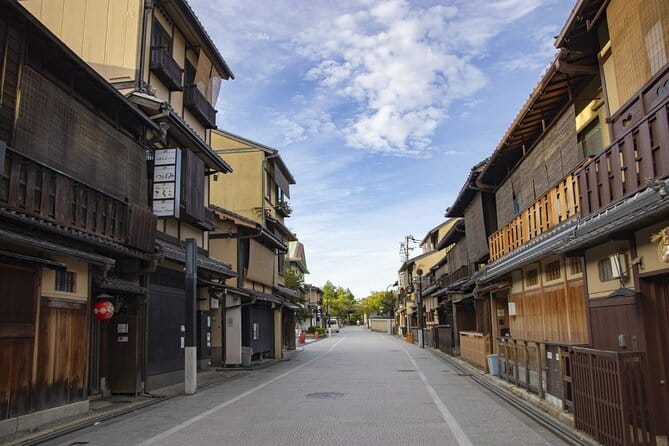
Stop 1: Gion streets and machiya atmosphere near Yasaka Shrine
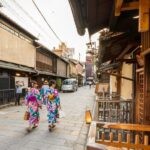
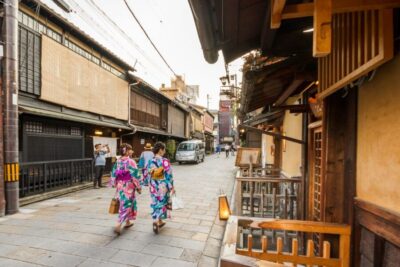
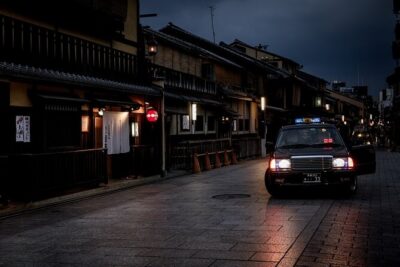
Gion is Kyoto’s best-known geisha district, famous for preserved wooden machiya townhouses, traditional teahouses, and cobblestone streets. You spend about 20 minutes here, which is long enough to go from first glance to real observation.
What you should notice on the ground: the texture of the neighborhood. Machiya townhouses and teahouses are not just pretty exteriors, they’re part of why Gion feels like a historic district rather than a theme street. The cobblestones also change your pace, which makes the area feel slower, more deliberate.
A practical upside to starting in Gion is momentum. You get oriented early, then later stops make more sense because you’re already familiar with the district’s visual language.
A possible drawback is that Gion’s popularity can make it feel busy at times. Even though this tour is designed to avoid crowding, you’ll still be walking through an area that attracts attention. If you’re hoping for quiet, you may want to treat this as your orientation visit, then return later at a calmer hour.
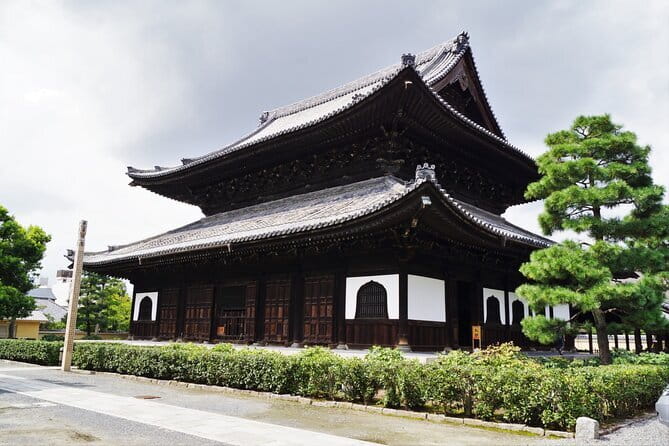
Stop 2: Kennin-ji Temple and Zen’s early roots

Next is Kennin-ji Temple, one of Kyoto’s oldest Zen Buddhist temples. It was founded in 1202 by the monk Eisai, who introduced Zen Buddhism and tea culture to Japan. You get about 15 minutes here, and that time is just right for a first encounter.
This stop is valuable because it anchors the tour in a deeper thread than “pretty Kyoto streets.” When you learn that Eisai helped bring Zen practice and tea culture into Japan, the temple becomes more than scenery. It becomes a starting point for understanding how ideas traveled and took root.
Since you’re only there about 15 minutes, go in with a simple goal: look for calm and order. Zen temples are about making you slow down. Even if you’re not a religion expert, you’ll likely feel the difference in tone once you step into the space.
The main consideration is time. Fifteen minutes passes quickly, so this is not the stop to treat like a long, independent visit. If you fall in love with the temple atmosphere, you’ll want to plan a second visit later on your own.
Stop 3: Yasui-Konpiragu Shrine and the enkiri/enmusubi stone
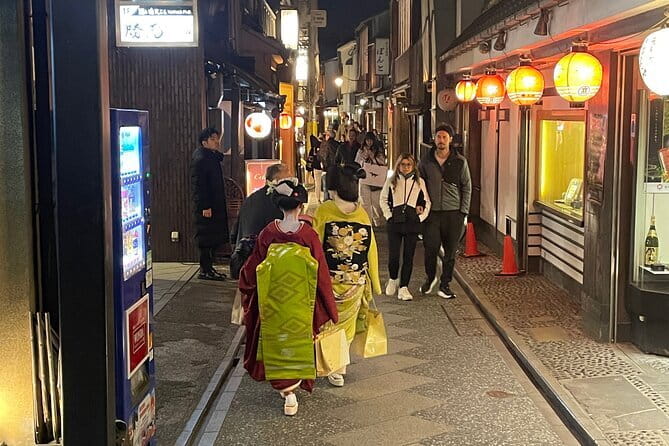
Yasui-Konpiragu Shrine is a small shrine tucked away near Gion streets, and it’s known for its unique enkiri/enmusubi stone. You spend around 15 minutes here.
This is the kind of stop that makes a walking tour worth it. A place like this can be easy to miss if you’re simply following the main lanes. The guide’s job is to point you toward the quieter details that give Kyoto its character.
If you’re curious about the meaning of the stones, it helps to pause instead of just walking past. A good shrine visit is part observation and part respect. Even when you don’t fully understand the tradition, the setting and the way people interact with the space teach you how to behave.
A drawback is that this stop is shorter and more detail-focused. If you want bigger-photo moments, you might feel it’s subtle. But if you like learning one specific thing deeply, this is a strong payoff.
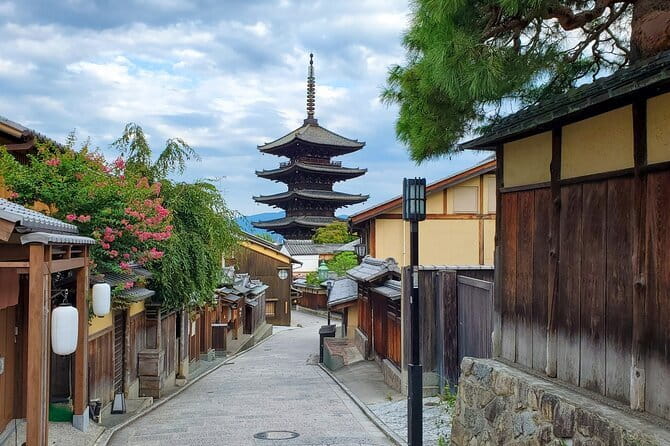
Stop 4: Hōkan-ji Temple, also known as Yasaka Pagoda
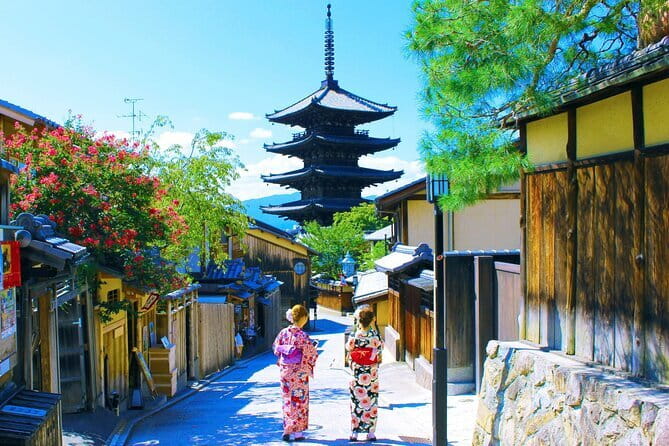
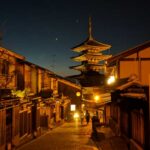
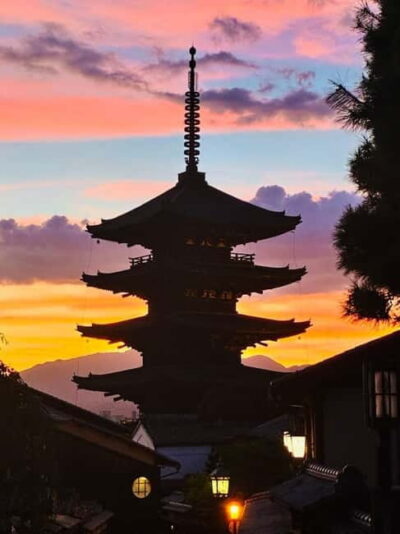
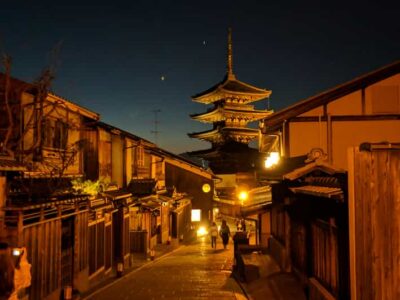
Then you reach Hōkan-ji Temple, commonly connected to the Yasaka Pagoda. It’s one of Kyoto’s iconic landmarks, a five-story pagoda that rises gracefully above the traditional streets of the Higashiyama district.
You’ll have about 10 minutes here. That’s not a long time, but it’s enough to take in the key effect: scale. Pagodas look different depending on where you stand, and the fact that it rises above the surrounding streets helps you see why it became a visual anchor for the area.
This stop is also a natural photo moment, but the tour adds value by helping you place it within the broader neighborhood. Instead of thinking of the pagoda as a standalone object, you can see it as part of the Higashiyama skyline and street rhythm.
If rain or crowds make it harder to get a clean angle, the short time can feel limiting. On a busy day, you may want to take your best shot quickly and then shift attention back to the streets around it.
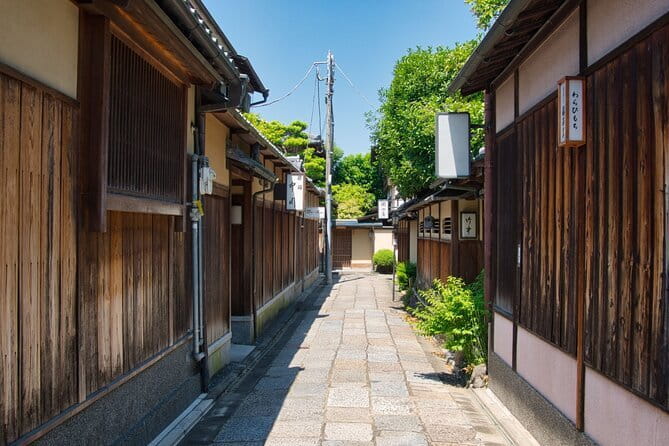
Stop 5: Ninenzaka slope and the stone-paved Higashiyama walk
Next is Ninenzaka, a historic slope in the Higashiyama district known for well-preserved traditional architecture and a lively street scene. The time here is about 10 minutes.
This stop matters because it connects “landmark Kyoto” with the everyday texture of walking. Slopes like this shape the experience. They slow you down, change how you frame buildings, and make you feel like you’re moving through a preserved district rather than passing through it.
You’ll likely enjoy it most if you lean into the slow stroll. Look at the stone-paved path, notice how the architecture lines up along the slope, and pay attention to how the streets feel slightly different at different angles.
A possible consideration is that you’re on foot for multiple stops, and this is not a step-free route. If you have knee issues or you’re dealing with shin splints from prior walking, take it gently and consider a slower pace than you might normally use.
Stop 6: Yasaka Shrine’s vermilion gates and lanterns
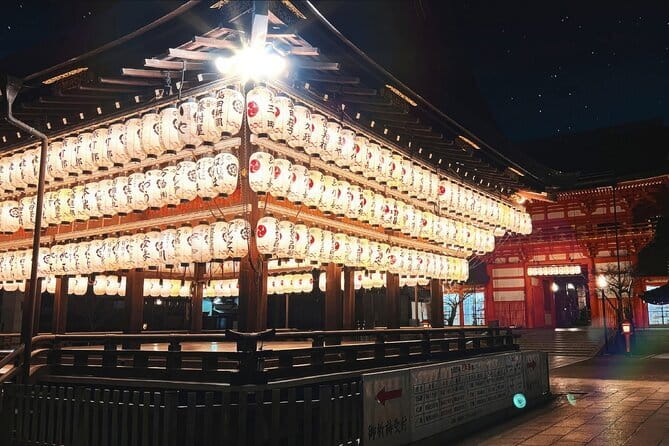
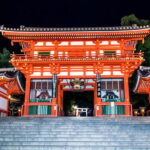
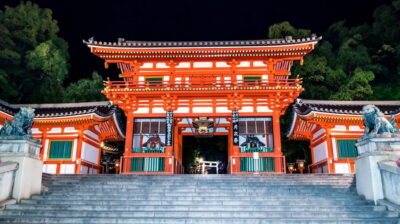
The final stop is Yasaka Shrine, also called Gion Shrine. It’s one of Kyoto’s most important shrines, famous for its vermilion gates and lanterns that light up.
You get about 10 minutes here. That’s enough time to understand the visual signature and to appreciate why this shrine is often used as a focal point in the district’s day-to-day rhythm.
This stop is a smart finish because it gives you a strong ending memory. Walking up to a major shrine after seeing temple and shrine details along the way makes the differences feel more meaningful. It also helps you transition from guided learning to your own exploration in the broader area.
If you’re hoping for a long, uninterrupted shrine moment, keep expectations realistic. This is a walk-through with context, not a long independent visit. I’d treat it like your guided introduction, then return later if the atmosphere pulls you in.
Where the value really comes from: $20 plus a real guide
At $20 per person for about two hours, the biggest value is not the sights alone. Many of these places are free to enter, so the cost is really paying for someone to connect the dots while you’re walking.
That’s why the guide’s approach matters. In the accounts I’ve read about this tour, Jay has been singled out for informative explanations with interesting pictures, clear English, and a genuine habit of taking time for questions. I like that kind of guide because it turns a pretty area into something you can talk about later.
Also, the tour keeps the group small and the route tight. That reduces wasted time. In Kyoto, time is part of the budget, and this kind of structured walk helps you avoid the common first-timer problem of wandering in circles.
One more value point: snacks are not included. That might sound like a negative, but it also keeps the experience focused on walking and sights, not a restaurant stop. Just bring your own water and a simple snack plan so you don’t end up hungry and distracted.
Who this tour suits best, and who might want a different plan
This is ideal for first-time visitors who want to get their bearings fast. If you’re in Kyoto for a short trip, or if Gion feels confusing and you’d rather not guess your way through, the guided structure is a win.
It also fits people who like a balanced route across Shinto and Zen sites. You get Gion streets, then Kennin-ji, then Yasui-Konpiragu, then a famous pagoda, a traditional slope, and finally Yasaka Shrine.
If you’re the kind of traveler who wants hours at one place, you might feel the pacing is too quick. But if you want to see the main anchors in one smooth loop and learn enough to explore confidently afterward, this tour hits the sweet spot.
Should you book this Gion walking tour?
Book it if you want a first-timer orientation and you’d rather learn from a guide than rely on guesswork. The small group size, the focused 2-hour timing, and the blend of Gion streets plus Kennin-ji and Yasaka Shrine make it a smart way to start.
Skip it if you’re very sensitive to walking and want long, unhurried time in one spot, or if you already have a strong handle on how these districts connect. For most people arriving in Kyoto, though, this is a practical, high-value way to start seeing the city with clarity.
FAQ
How long is the Kyoto Gion Walking Tour for First Time Visitors?
The tour lasts about 2 hours.
How much does the tour cost?
The price is $20.00 per person.
What’s included in the price?
All fees and taxes are included, and there is an in-person guide.
What ticket type do I use?
You’ll use a mobile ticket.
How many people are in a group?
The maximum group size is 15 travelers.
Where does the tour start and end?
It starts at Kyoto Tourist Lounge Gion, 557-4 Komatsu Cho (Pare Gion area), and ends at Yasaka Shrine, 625 Gionmachi Kitagawa, Higashiyama Ward.
Evenings in the Old Quarters
Newest Kyoto write-ups from the Loving Japan desk
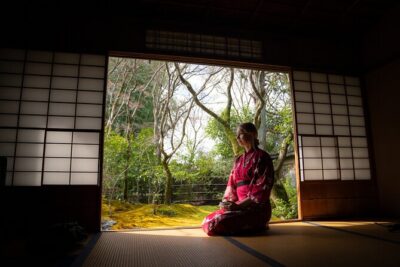
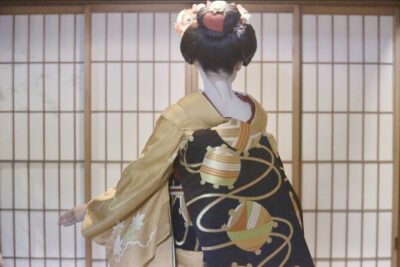
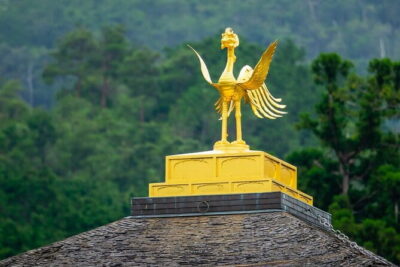

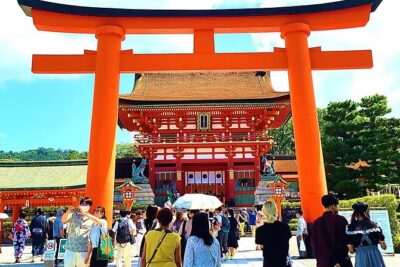
Gion, Geisha and Maiko Experiences, side by side.
 ★ 4.7Kyoto Geisha Walking Tour: Gion District & Hidden GemsFrom $253,273 reviews
 ★ 4.9Gion Magical Night Walking Tour with Geisha TriviaFrom $242,393 reviews
 ★ 4.7Gion Geisha District Walking Tour – Stories of GeishaFrom $202,187 reviews
 ★ 4.9Best of Kyoto: Gion, Geisha, Pagodas & CobblestonesFrom $242,058 reviews
 ★ 4.5Night Walk in Gion: Kyoto’s Geisha DistrictFrom $212,003 reviews
 ★ 5.0Kyoto Night Foodie Tour in Gion (9+ dishes + 6 Sake tastings)From $1631,762 reviews
 ★ 5.0Kyoto Gion Geisha District Walking Tour – The Stories of GeishaFrom $251,441 reviews
 ★ 5.0Kyoto Gion: 2-Hour Geisha Culture & History Walking TourFrom $231,186 reviews
Filed on these lists too