
REVIEW · GION, GEISHA AND MAIKO EXPERIENCES
Kyoto: Gion Walking Tour
Gion looks different after this walk. In two hours, I like how a small group plus a talkative guide turns Kyoto’s famous lanes into something you can actually read and understand. You’ll connect the dots between old neighborhoods, shrine names, and the working rhythm of maiko and geiko culture.
I especially love the stop-by-stop focus on the district’s day-to-day details, not just postcard views. You’ll also get a clear guided route through three of Kyoto’s hanamachi areas, including Pontocho and Gion-Kobu, with the pace built around your questions.
One consideration: a maiko or geiko sighting is not guaranteed, and Hanamikoji-dori is not part of the route. So plan to learn the neighborhood even if you do not spot performers.
In This Review
- Key highlights you should care about
- Why Gion Is Better on Foot Than From the Sidewalk
- Meeting in Front of Kyoto’s Disney Store, Then Getting Your Bearings
- Pontocho Alley and Sanjo Bridge: Street Life You Can Read
- Gion-Kobu Lanes: Where You Learn What Maiko and Geiko Life Looks Like
- What you should watch for in Gion-Kobu
- Tatsumi Shrine and the Second Bridge Stop: Names, Ritual, and Continuity
- Gion-Higashi to Yasaka Shrine: The District Name Origin
- The Guide Style That Makes It Feel Personal (Jose and Saskia Stand Out)
- What You’ll Actually See: A Real Route Through Preserved Neighborhoods
- What You Might See, and What You Should Not Count On
- Packing Tips for a 2-Hour, 3.3 km Walk in Kyoto
- Price and Value: Is $35 Fair for This Tour?
- Should You Book This Kyoto Gion Walking Tour?
- FAQ
- How long is the Kyoto Gion Walking Tour?
- How many people are in the group?
- What parts of Gion are included?
- Is Hanamikoji-dori included?
- Can I guarantee seeing a maiko or geiko?
- What should I bring since no amenities are provided?
Key highlights you should care about
- Three hanamachi covered in 2 hours: Pontocho, Gion-Kobu, and Gion-Higashi
- Question-friendly guiding: ask about anything you notice, big or small
- Historic lanes beyond the obvious: wooden machiya houses and overlooked sites get explained
- Yasaka Shrine visit when timing allows: linked to the district’s origin story
- A tight route with frequent stops: you cover about 3.3 km on foot without feeling rushed
- Best-case culture bonus: some tours line up with seasonal changes like cherry blossoms
Evening walks through the old quarters, compared
- Kyoto Geisha Walking Tour: Gion District & Hidden Gems
★ 4.7 · 3,273 reviews - Kyoto: Gion Magical Night Walking Tour with Geisha Trivia
★ 4.9 · 2,393 reviews - Kyoto: Gion Geisha District Walking Tour – Stories of Geisha
★ 4.7 · 2,187 reviews - Best of Kyoto: Gion, Geisha, Pagodas & Cobblestones
★ 4.9 · 2,058 reviews
Why Gion Is Better on Foot Than From the Sidewalk
Gion is one of those Kyoto areas where you can walk for days and still miss the point. A good guide helps you spot what matters, like the shape of machiya houses, the layout of lanes, and why certain places feel important even when they look quiet.
This tour is built around that idea. You do not just pass famous corners. You learn how the neighborhood works, how it got its name, and how traditional entertainment life fits into modern Kyoto.
Meeting in Front of Kyoto’s Disney Store, Then Getting Your Bearings
Your guide meets you in front of the Disney Store – Kyoto Shijo-Kawaramachi. Look for the person holding an iPad with Get Your Guide wording and tour details, so you can join fast and stress less.
Once you start walking, the pace is easy to follow because the group stays small, capped at 6 people. That small size matters. You can hear the guide in crowded stretches and you can actually ask questions instead of saving them for later.
Also, the guides use iPad videos and photos during stops. That makes it easier to understand what you are seeing in real time, especially for things like old neighborhood layouts and cultural routines.
Pontocho Alley and Sanjo Bridge: Street Life You Can Read
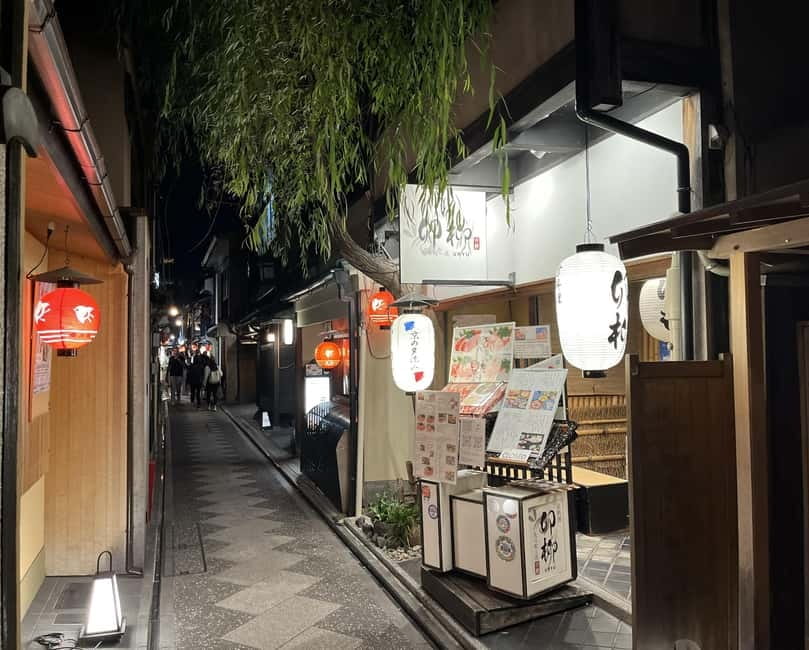
The walk begins with Pontocho, the classic riverside lane area where Kyoto’s character shows up fast. You’ll move through the alleys at a comfortable speed, with short stops to talk about what you’re seeing.
Pontocho is especially good for orientation. You get a sense of where sightlines open up and where the neighborhood feels more enclosed. That helps later when you move into the hanamachi lanes that look similar at first glance, but actually have different flavors.
Then you’ll work toward the Sanjo Ohashi bridge area. Bridges in Kyoto are more than crossings. They create views and reference points that shape how locals navigate the city’s river geography.
- PERFECT KYOTO 1-Day Bus Tour★ 5.0 · 13,518 reviews
- Kyoto: Fushimi Inari, Kinkakuji, Bamboo Grove 1 Day Bus Tour★ 4.8 · 4,316 reviews
- Kyoto: Tea Ceremony in a Traditional Tea House in Kiyomizu★ 4.9 · 3,519 reviews
- Kyoto Geisha Walking Tour: Gion District & Hidden Gems★ 4.7 · 3,273 reviews
- Kyoto: Tea Ceremony Ju-An at Jotokuji Temple★ 4.9 · 3,207 reviews
Gion-Kobu Lanes: Where You Learn What Maiko and Geiko Life Looks Like
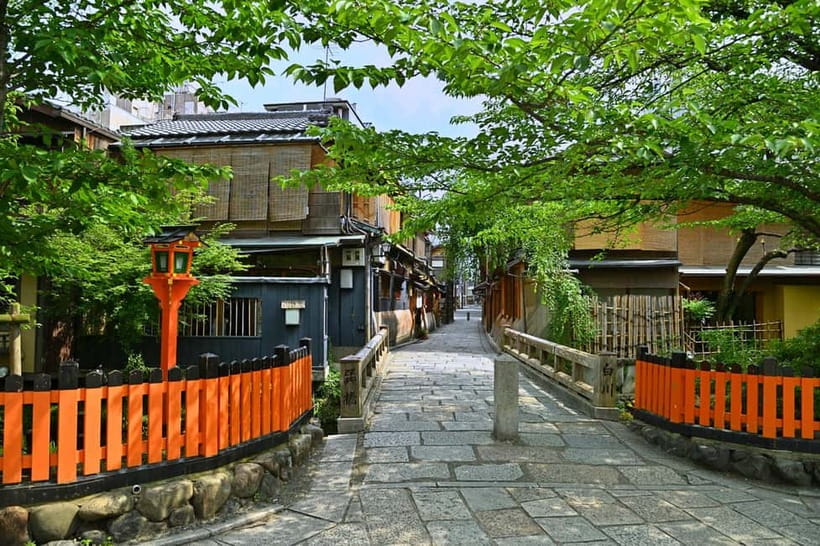
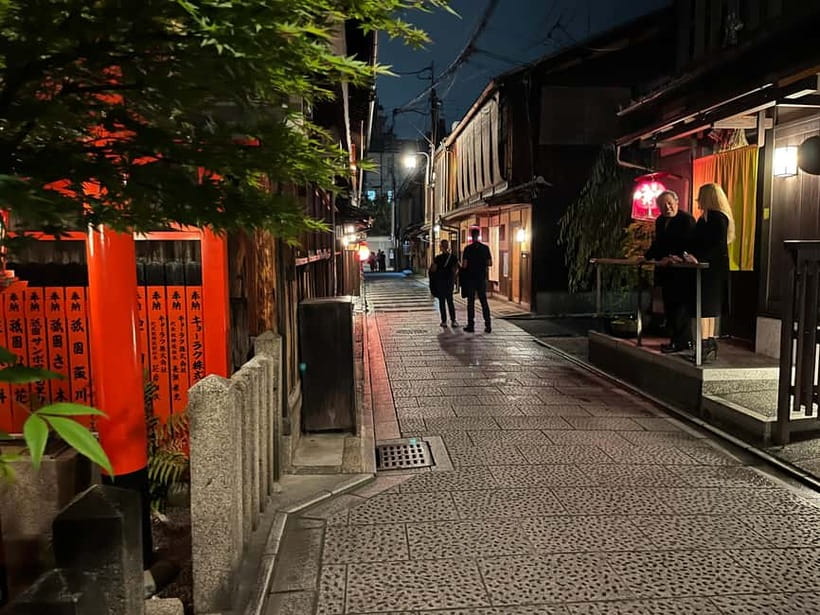
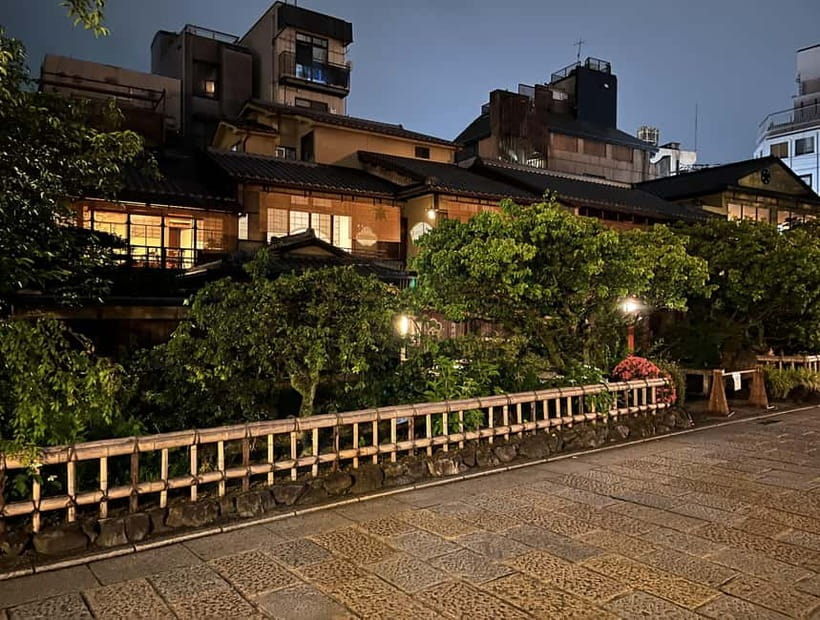
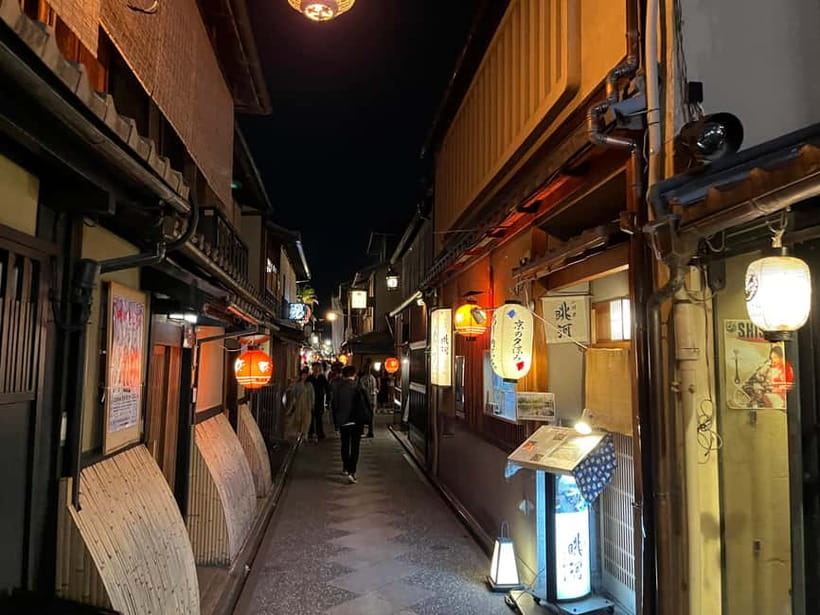
After Pontocho, you shift into Gion-Kobu, including stops along Gion Shinbashi dori and Gion Shirakawa. This is where the tour turns from pretty streets into “wait, that’s why that matters.”
You’ll learn about the history of the area and the hanamachi system itself. That includes how maiko and geiko life connects to public appearances, training rhythms, and the neighborhood’s daily flow.
One thing I appreciate here is the way the guide handles questions. The best moments on this kind of tour are when something catches your eye, like a building detail, a lane name, or a sign, and your guide explains the context on the spot.
In reviews, people keep praising the guides for staying upbeat while answering tons of questions. That matters because you can go into Gion with curiosity, then leave with real clarity instead of surface-level facts.
What you should watch for in Gion-Kobu
You will not be handed a checklist, but you can help yourself by slowing down at every stop. Look at how machiya houses face the street, notice how lanes bend, and pay attention to small shrine or architectural details the guide calls out.
Tatsumi Shrine and the Second Bridge Stop: Names, Ritual, and Continuity
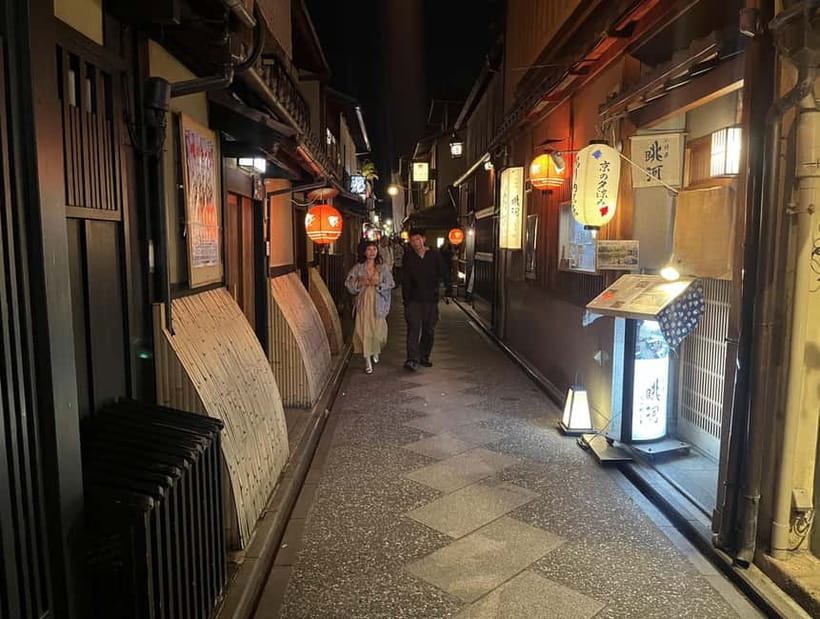
Next up is Tatsumi Jinja and another bridge crossing in the route. Shrines often feel “quick photo stops” to visitors. With this kind of guiding, they become part of the story instead.
You’ll hear how religious spaces and local traditions connect to the district’s identity. Even if you do not study Japanese history in advance, you’ll leave with a better sense of how old institutions shaped what visitors now call the geisha district.
This part of the walk also helps with momentum. After the intense cultural talk in the hanamachi lanes, a shrine stop gives your brain a breather. You can look around with a calmer pace, then re-enter the neighborhood story with fresh attention.
Gion-Higashi to Yasaka Shrine: The District Name Origin
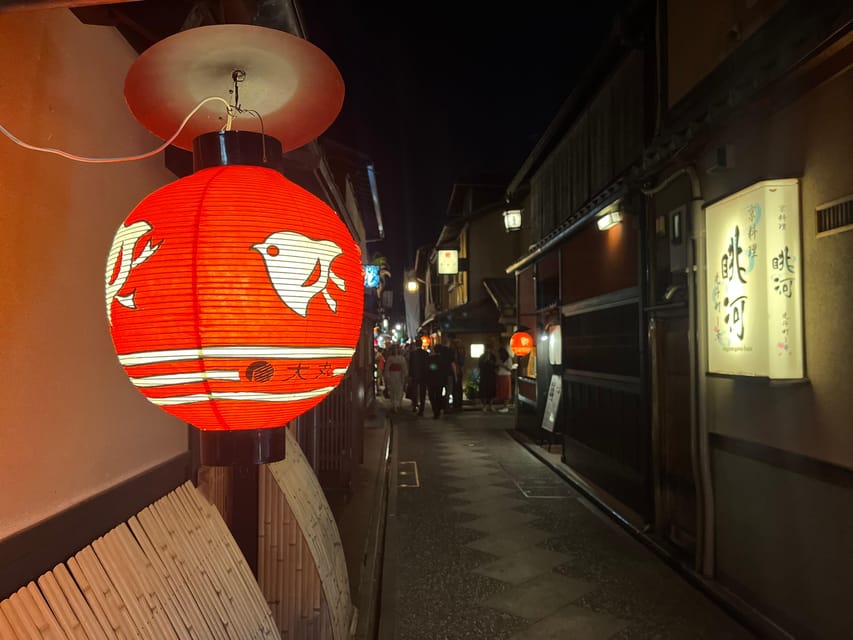
The route continues into Gion-Higashi, Kyoto’s east-side hanamachi area, before heading to Yasaka Shrine when timing allows.
This matters because the tour links Gion’s name to the formerly named Gion Shrine, which is now Yasaka Shrine. In other words, you’re not only learning about performance culture. You’re learning why the neighborhood got called what it’s called.
If time allows, your guide may also explain the Gion Festival, one of Japan’s major festivals, tied to the district’s origins going back more than 1100 years. Even if you only catch a chunk of the story, it helps you understand why locals treat this area like more than a tourist zone.
And Yasaka Shrine at night (when the schedule lines up that way) has a special feel. The tour format typically makes it a real stop, not a rushed pass-by.
The Guide Style That Makes It Feel Personal (Jose and Saskia Stand Out)
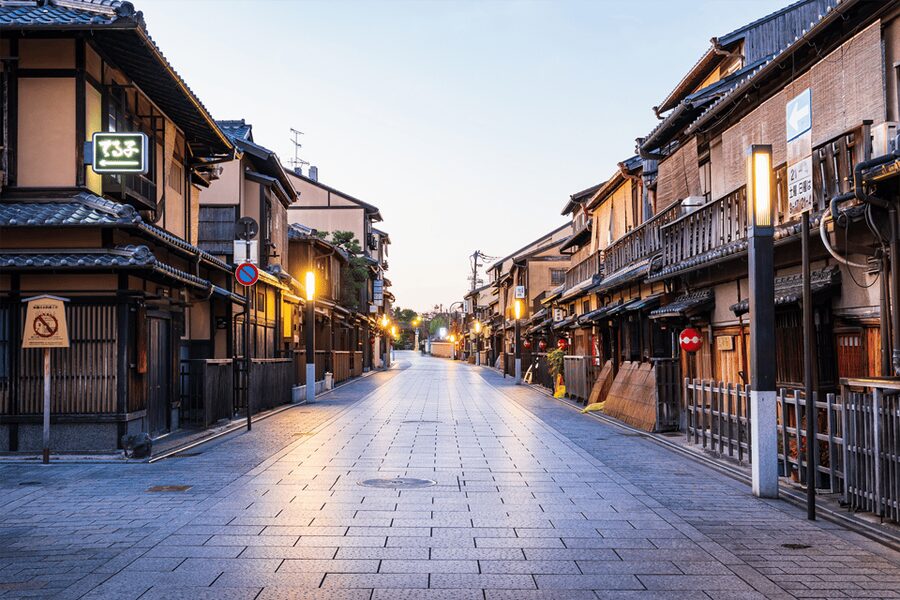
The biggest reason this tour keeps earning top scores is the guide energy and the focus on interaction.
Several guests highlight guides like Jose and Saskia for enthusiasm, high energy, and a habit of answering questions repeatedly without losing patience. That’s not just a nice personality trait. It changes how much you learn because you are free to ask what you genuinely want to know.
Another detail that pops up in reviews: the guide and their partner-like rhythm (when both are involved) keeps explanations frequent but not exhausting. You stop often enough to understand the meaning of each place, but you still move through the district at a sensible walking pace.
You also get personal tailoring in small ways. People mention that the guide connected with family interests and with whatever questions popped up during the walk. For you, that means the tour is more likely to match your curiosity, whether you’re here for history, architecture, or everyday life in Japan.
What You’ll Actually See: A Real Route Through Preserved Neighborhoods
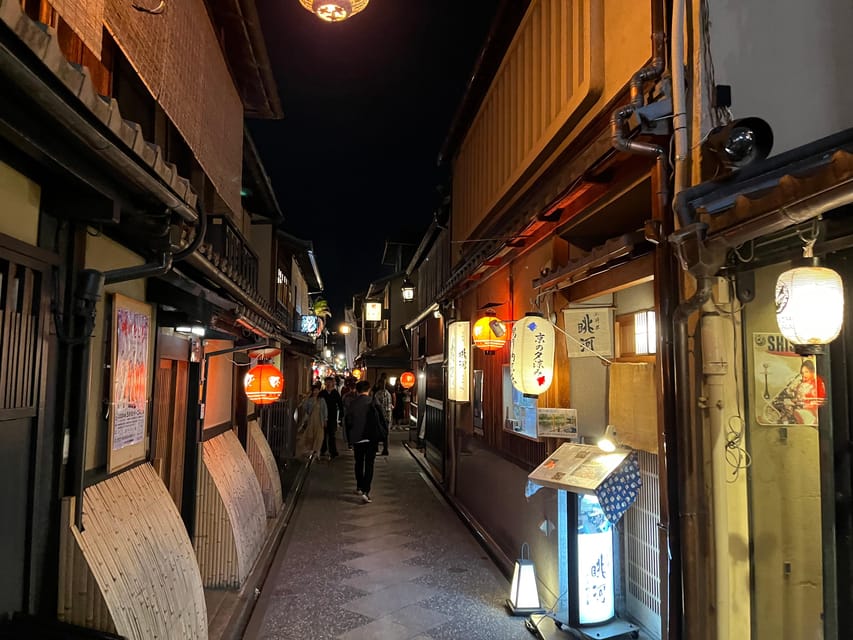
This walk covers about 3.3 km and roughly 2 miles over two hours. It’s not a marathon, but you are on your feet for the full time, mostly on uneven streets and narrow lanes.
The route also visits national historical preserved neighborhood sections, which is part of why the explanations feel grounded. You’re not just told stories about Gion. You’re shown the physical setting those stories come from.
One important note: Hanamikoji-dori is not included. That’s a street many visitors expect to see. If you’re fixated on one specific lane, adjust your expectations now and focus on the broader hanamachi and shrine route you will get instead.
What You Might See, and What You Should Not Count On
Let’s be honest. A maiko or geiko sighting is not guaranteed. That line is important, because Gion is famous, and sometimes the performers are not visible during your time window.
Still, guides do talk about what to look for, how life in the hanamachi works, and what routines mean in practice. Some guests report seeing maiko during their walk, and a few mention even multiple sightings.
So here’s the smart approach: go for learning, and treat any sighting as a bonus. If your main goal is definitely spotting performers, you may feel disappointed if your timing does not line up.
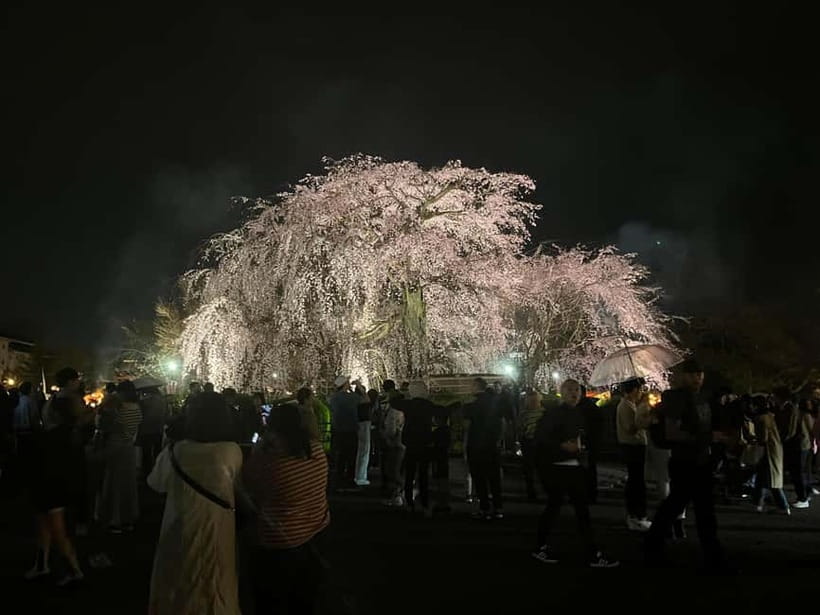
Also, cherry blossom season changes the route slightly. During late March into early April, expect the walk to shift to show cherry blossoms around Gion. That’s a nice perk for scenery, and it also means your exact stop sequence can vary a little by season.
Packing Tips for a 2-Hour, 3.3 km Walk in Kyoto
Because no amenities are provided, bring what keeps you comfortable. Comfortable shoes are non-negotiable. The lanes are narrow and Kyoto streets can be uneven, especially when you’re stopping often.
Also bring water and consider a sun hat, umbrella, and sunscreen. Your two hours can be sunny, rainy, or humid, and the tour does not slow down just because weather is being dramatic.
If you want photos, your best move is to pause when the guide pauses. That way you’re not sprinting to the next corner while missing what is being explained.
Price and Value: Is $35 Fair for This Tour?
At $35 per person for 2 hours, the value comes from three things: small-group size, guided specificity, and the Q&A format.
Compared to cheaper group tours, this one caps at 6 people. That reduces the “everyone shuffles behind the guide” feeling and makes it easier to hear explanations in crowded areas. For you, that means more learning per minute.
Compared to self-guided wandering, you save time. Gion has lots of details that look similar at first. Your guide’s job is to point out why certain lanes and preserved neighborhoods matter, and then connect them to how the hanamachi system functions.
Finally, the guide tech helps you process the story. The iPad photos and videos are used during the walk, not as a separate lecture. That keeps the experience active while still adding context.
So if you want an efficient introduction to Gion that goes beyond postcards, $35 feels like a solid fit.
Should You Book This Kyoto Gion Walking Tour?
Book it if you want a clear, friendly introduction to Gion with room for questions. This tour is a strong choice for first-timers who feel lost in the lanes, and for return visitors who want the “why” behind what they already see.
It’s also a good fit if you like conversation-style guiding. The guide energy, frequent stopping, and willingness to answer many questions shows up again and again in reviews.
Skip it or rethink it if your top goal is guaranteed performer spotting, or if you specifically need Hanamikoji-dori included. Since those sightings are not promised and that street is not on the route, you’ll want the bigger picture instead.
FAQ
How long is the Kyoto Gion Walking Tour?
It runs for 2 hours.
How many people are in the group?
The tour is limited to a small group of up to 6 participants.
What parts of Gion are included?
You’ll visit three of Kyoto’s hanamachi areas: Pontocho, Gion-Kobu, and Gion-Higashi.
Is Hanamikoji-dori included?
No, Hanamikoji-dori is not included in the itinerary.
Can I guarantee seeing a maiko or geiko?
No. A maiko-san and/or geiko-san sighting cannot be guaranteed.
What should I bring since no amenities are provided?
Bring comfortable shoes, a sun hat, an umbrella, sunscreen, and water.
Evenings in the Old Quarters

Newest Kyoto write-ups from the Loving Japan desk

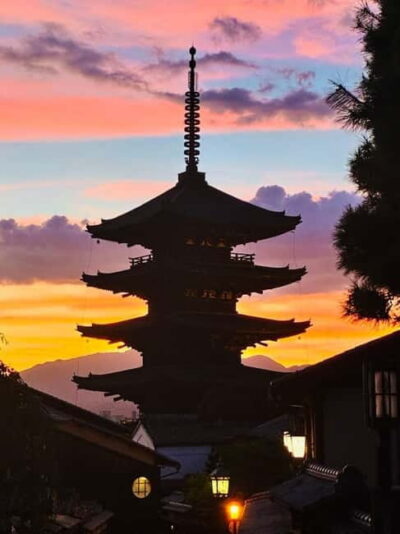
Gion, Geisha and Maiko Experiences, side by side.
 ★ 4.7Kyoto Geisha Walking Tour: Gion District & Hidden GemsFrom $253,273 reviews
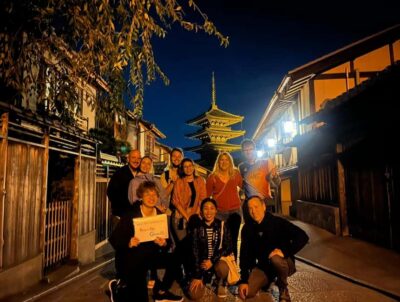 ★ 4.9Gion Magical Night Walking Tour with Geisha TriviaFrom $242,393 reviews
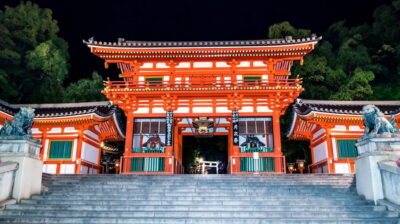 ★ 4.7Gion Geisha District Walking Tour – Stories of GeishaFrom $202,187 reviews
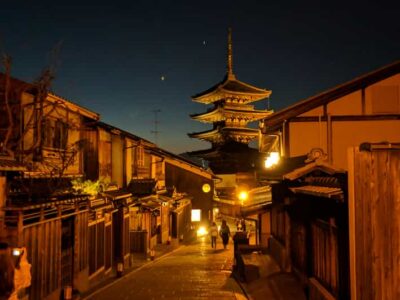 ★ 4.9Best of Kyoto: Gion, Geisha, Pagodas & CobblestonesFrom $242,058 reviews
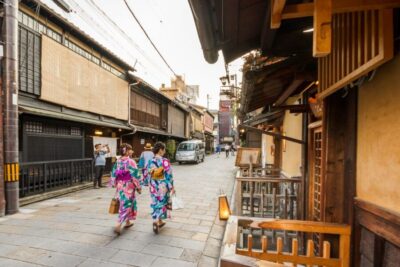 ★ 4.5Night Walk in Gion: Kyoto’s Geisha DistrictFrom $212,003 reviews
 ★ 5.0Kyoto Night Foodie Tour in Gion (9+ dishes + 6 Sake tastings)From $1631,762 reviews
 ★ 5.0Kyoto Gion Geisha District Walking Tour – The Stories of GeishaFrom $251,441 reviews
 ★ 5.0Kyoto Gion: 2-Hour Geisha Culture & History Walking TourFrom $231,186 reviews
Filed on these lists too