
REVIEW · KYOTO TEA CEREMONIES AND MATCHA
Kyoto Japanese Tea Ceremony Experience in Ankoan
A Kyoto tea ceremony can feel intimidating, not here. At Ankoan in Kita Ward, you start with conversation over welcome tea, then move into the real structure of the Japanese ceremony, including a teacher’s demonstration and your own matcha practice.
I especially like the mix of guided steps and relaxed talk. You are not just watching, you’re preparing tea, tasting, and learning what matters in the manners, gestures, and flow of the ritual.
One consideration: this experience is not recommended for knee pain, so if sitting on the floor is an issue, you’ll want to think twice.
In This Review
- Quick highlights for Kyoto tea lovers
- What $32.84 Buys You at Ankoan, and What to Plan For
- Finding Ankoan in Kyoto: the meeting point that matters
- Welcome Tea, Tea Ceremony Manners, and the Flow You’ll Follow
- The Matcha-Making Workshop: hands-on steps, not magic tricks
- Moving to a second tearoom: tasting, wagashi, and learning by contrast
- Where ikebana fits in, and why it pairs well with tea
- Conversation time that actually teaches, not just chatting
- Indoor photos and the small-group vibe you feel right away
- Who this suits best in Kyoto, and who should reconsider
- Practical tips so you enjoy it more
- Should you book Kyoto Japanese Tea Ceremony Experience in Ankoan?
- FAQ
- How long is the Kyoto tea ceremony experience at Ankoan?
- Is private transportation included?
- Is ikebana included, or just tea?
- What languages are available for the experience?
- Can I take photos during the ceremony?
- Is this experience suitable if I have knee pain?
Quick highlights for Kyoto tea lovers
- Welcome tea with conversation right at the start, so you can loosen up before the formal bits
- Teacher-led matcha with step-by-step guidance, so you get it instead of guessing
- Wagashi and matcha tasting in a second tearoom setting during the session
- Small group limit of 8, which makes it easier to ask questions
- Indoor photos allowed, so you can document the calm without rushing
- English or Chinese OK, supported by instructors with strong language skills
Sit down somewhere quieter. Other tea rooms we booked
- Kyoto: Tea Ceremony in a Traditional Tea House in Kiyomizu
★ 4.9 · 3,519 reviews - Kyoto: Tea Ceremony Ju-An at Jotokuji Temple
★ 4.9 · 3,207 reviews - Kyoto: 45-Minute Tea Ceremony Lesson Experience
★ 4.3 · 2,378 reviews - Kyoto: Table-Style Tea Ceremony at a Kyo-Machiya
★ 4.9 · 1,211 reviews
What $32.84 Buys You at Ankoan, and What to Plan For
At $32.84 per person, this is priced like a focused cultural workshop rather than a long half-day tour. You’re paying for a real matcha experience: explanation of tea ceremony manners, a demonstration, your own tea-making practice, and tasting.
The time on offer is listed as about 1 hour, but the service is described as about 90 minutes, and some sessions run closer to two hours in practice. Either way, it’s short enough to fit into a Kyoto day without wiping you out, but long enough to take you past the beginner level.
Logistics are straightforward. You use a mobile ticket, and the activity starts and ends at the studio in Kita Ward at 暗香庵 (Ankoan). Private transportation is not included, so you’ll want to rely on public transit or arrange your own ride.
Finding Ankoan in Kyoto: the meeting point that matters
You’ll meet at Tea ceremony Japan, 603-8216 Kyoto, Kita Ward, Murasakino Monzenchō, 63 暗香庵. That address matters, because the experience is intentionally studio-based and not built around bouncing between multiple big landmarks.
The listing notes it is near public transportation. Translation: you should be able to get there without a complicated setup, but you still need to budget for the last stretch from the station on foot.
If you’re trying to stack this with temples nearby, it can work well as a palate cleanser. The ceremony is designed to help you reset after travel fatigue, and the studio setting supports that slow pace.
Welcome Tea, Tea Ceremony Manners, and the Flow You’ll Follow
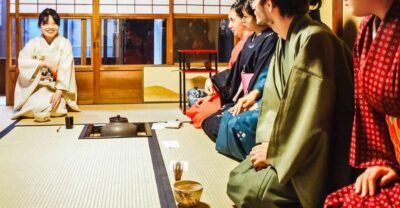
The session starts with welcome tea and conversation. This is more than a friendly greeting. It’s a smart way to settle you into the rhythm of a Japanese tea space, especially if you’ve been moving all day.
After that, you get an explanation of key parts of the tea ceremony: what the ceremony represents, the manners involved, and what you should notice while the tea master demonstrates. In a lot of tours, you learn facts after the fact. Here, you’re given the framework first, so when the actions happen, they mean something.
The demonstration phase matters because it shows how the “rules” are really about respect and focus, not performance for tourists. You then model the process yourself for the most essential part, preparing matcha, so you’re actively participating rather than just observing.
- PERFECT KYOTO 1-Day Bus Tour★ 5.0 · 13,518 reviews
- Kyoto: Fushimi Inari, Kinkakuji, Bamboo Grove 1 Day Bus Tour★ 4.8 · 4,316 reviews
- Kyoto: Tea Ceremony in a Traditional Tea House in Kiyomizu★ 4.9 · 3,519 reviews
- Kyoto: Tea Ceremony Ju-An at Jotokuji Temple★ 4.9 · 3,207 reviews
- Kyoto: 45-Minute Tea Ceremony Lesson Experience★ 4.3 · 2,378 reviews
The Matcha-Making Workshop: hands-on steps, not magic tricks
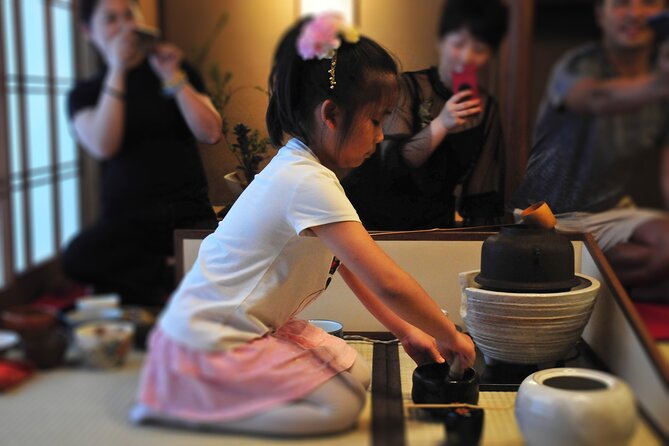
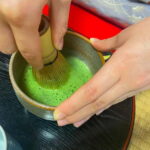
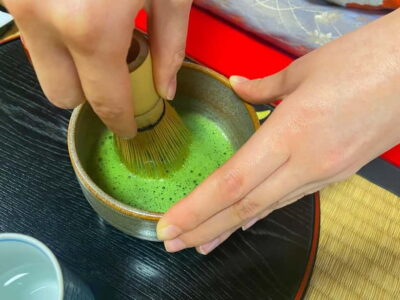
This is the core of the experience. You watch how matcha is made, then you do it yourself, with the teacher staying close to instruct and explain. That teacher support is the difference between a fun souvenir activity and a genuine skill you can repeat later.
The session includes your own matcha preparation, followed by tasting. You’ll also taste matcha along the way, plus wagashi. In other words, the workshop doesn’t stop at technique. It connects technique to flavor and to the traditional pairing of sweets with tea.
One important point: the goal is not speed or perfection. It’s doing the motions the way the ceremony teaches them, while understanding why those motions exist. That keeps the experience calm and makes it easier to learn even if you’re nervous at first.
Moving to a second tearoom: tasting, wagashi, and learning by contrast
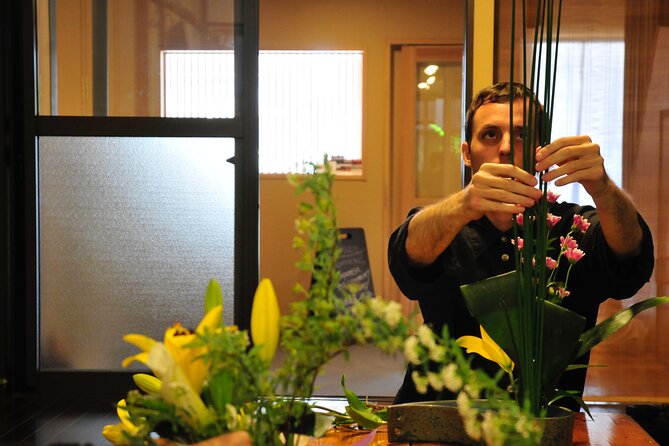
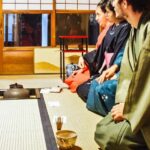
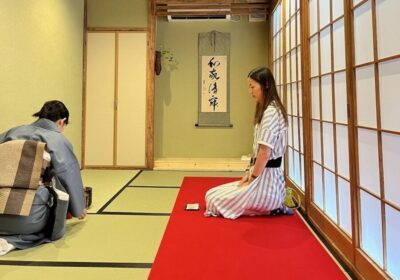
The experience is described as having you enjoy welcome tea in one part of the studio experience, then move to another matcha tearoom setting. That change of setting is useful. It keeps your attention refreshed and gives you a chance to see the tea ritual in a slightly different environment.
In the second tearoom portion, you’ll watch the process of making matcha, taste matcha, and enjoy wagashi. Then you get to make matcha personally again, which is helpful if you felt a little lost during the first pass.
This structure also gives you a natural sequence for learning:
1) relax and learn the basics
2) watch the process clearly
3) taste what you’re aiming for
4) make your own tea with better context
Where ikebana fits in, and why it pairs well with tea
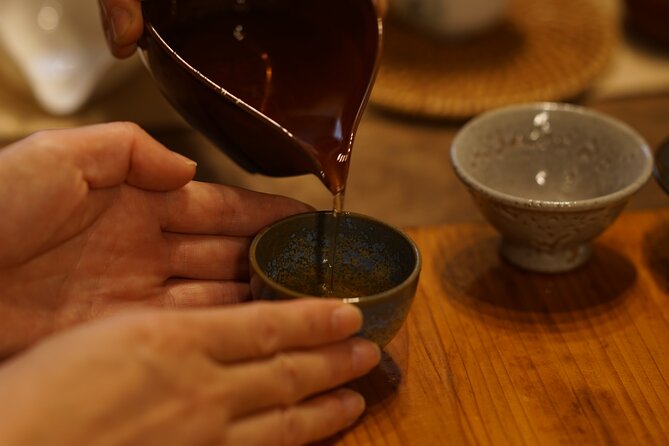
The studio offers the tea ceremony experience along with ikebana as part of the reservation. Even if you’re new to both arts, they complement each other in a very Kyoto way.
Tea ceremony trains your attention and manners through a sequence of actions. Ikebana trains your attention through arranging form, space, and line. Together, they push you to slow down and observe, not just consume.
If you’re deciding whether to book, this pairing is a strong reason to consider it. You’ll come away with more than a drink-making story. You’ll have a sense of how Japanese culture uses careful form to create peace.
Conversation time that actually teaches, not just chatting
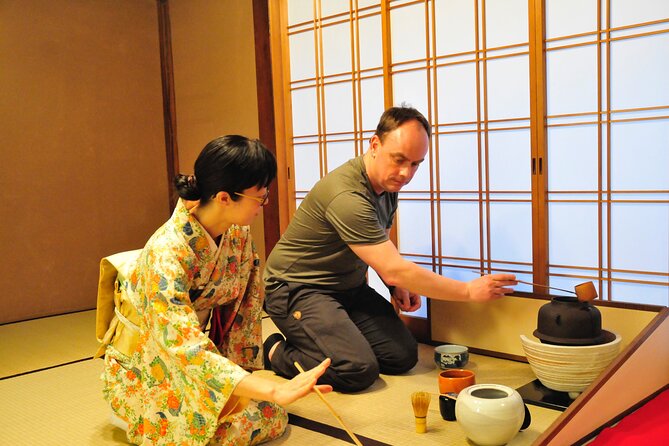
One of the most praised parts of this experience is that it’s interactive. You’re not sent silent into a corner. You sit with the teacher and talk while you learn.
The provided description explicitly mentions discussion around how Japanese people live and how Japanese culture formed. That kind of talk matters because it turns tea ceremony from a fixed performance into something rooted in daily life and values.
If you like practical cultural context, you’ll probably enjoy this. You can ask questions as the session unfolds, and you’ll likely get answers in a way that connects back to manners and meaning. Reviews also highlight strong English skills and a friendly, conversational host style.
Indoor photos and the small-group vibe you feel right away
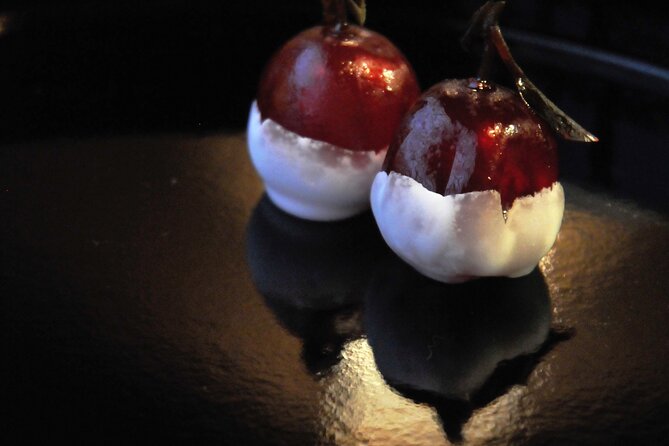
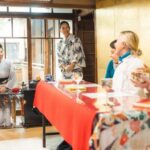
You can take pictures indoors freely. That reduces stress, because you don’t feel like you have to choose between participating fully and documenting the experience.
With a maximum of 8 travelers, the session stays personal. In a group that size, you get more chances to ask questions and get corrected in your matcha technique. It also means the space doesn’t feel chaotic when everyone is learning the same sequence.
This group size is a real value driver. For the price, you’re not competing for attention in a crowd.
Who this suits best in Kyoto, and who should reconsider
This experience is a good fit if you want a calm, structured cultural activity that still feels interactive. If you like workshops where you touch the subject, this works well because you’ll actually make matcha and taste it.
It also suits couples and friends who want something meaningful but not exhausting. The format is relaxing, and the conversation component helps it feel human, not scripted.
It may be less suitable if you have knee pain, since the experience is not recommended for that. Also, since private transportation is not included, plan around getting yourself to 暗香庵 in Kita Ward.
If you are traveling with children, you may find it workable, since the experience can be interactive and welcoming. Still, if your child has trouble sitting through a guided ritual, that’s something to consider.
Practical tips so you enjoy it more
Keep your expectations realistic. A tea ceremony is detailed, so you do not need to master everything in one go. Your win is participating and understanding the flow, not performing perfectly.
Wear comfortable clothing that allows you to move with ease during instruction. This matters for posture and for practicing the matcha steps without feeling stiff.
Arrive with a curious mindset. The ceremony teaches respect through small actions, and the teacher’s explanations help you catch what you might otherwise miss.
Finally, don’t skip the tasting. Matcha and wagashi are part of the lesson. Taste first, then connect flavors back to the choices you made while preparing.
Should you book Kyoto Japanese Tea Ceremony Experience in Ankoan?
Book this if you want a short, high-value Kyoto experience focused on tea manners and hands-on matcha making. The small group limit, teacher guidance, and the added taste of wagashi give it substance, not just photo opportunities.
I’d also recommend it if you enjoy cultural conversation, because you’ll get time to talk about tea ceremony, daily life, and meaning behind the ritual. If you’re looking for a calm reset during a busy Kyoto trip, this is a strong candidate.
Skip it or think carefully if you have knee pain, and plan your own way to the studio since private transportation is not included.
FAQ
How long is the Kyoto tea ceremony experience at Ankoan?
The duration is listed as about 1 hour. The service is also described as about 90 minutes, and the overall timing may vary depending on how the session runs.
Is private transportation included?
No. Private transportation is not included, and the tour starts and ends back at the Ankoan meeting point.
Is ikebana included, or just tea?
You can make a reservation to participate in the tea ceremony experience and ikebana in the studio.
What languages are available for the experience?
The provider notes that Chinese and English are OK. The experience description and feedback indicate English explanations are available.
Can I take photos during the ceremony?
Yes. You can take pictures indoors freely.
Is this experience suitable if I have knee pain?
It is not recommended for those with knee pain.
Kyoto by the Bowl
Newest Kyoto write-ups from the Loving Japan desk
Kyoto Tea Ceremonies and Matcha, side by side.
 ★ 4.9Tea Ceremony in a Traditional Tea House in KiyomizuFrom $493,519 reviews
 ★ 4.9Tea Ceremony Ju-An at Jotokuji TempleFrom $293,207 reviews
 ★ 4.345-Minute Tea Ceremony Lesson ExperienceFrom $222,378 reviews
 ★ 5.0World Heritage Kyoto & Nara Uji Authentic Matcha ExperienceFrom $1291,573 reviews
 ★ 4.9Tea Ceremony ExperienceFrom $251,426 reviews
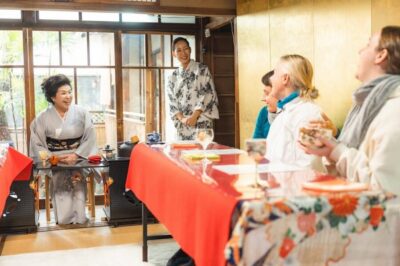 ★ 4.9Table-Style Tea Ceremony at a Kyo-MachiyaFrom $451,211 reviews
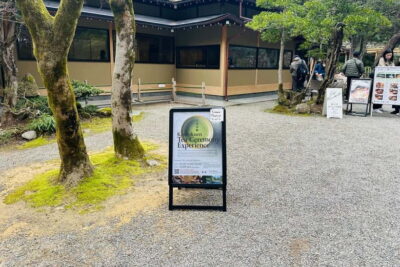 ★ 4.8Kenrokuen Tea Ceremony ExperienceFrom $351,139 reviews
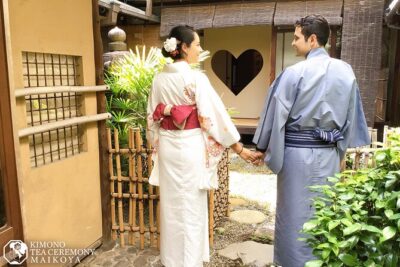 ★ 5.0Kimono Tea Ceremony at Kyoto Maikoya, NISHIKIFrom $65911 reviews
Filed on these lists too