
REVIEW · WALKING TOURS
Kyoto Lazy Bird Walking Tour
Kyoto mornings can be rough. This tour starts at 12:45 pm so jet lag has less say in your day, and you still hit three big hitters without the stress of figuring out routes. I especially like the private guide aspect, because you get clear pacing between sights and someone to handle the navigation. One thing to consider: it is a walking day, and you’ll want to budget extra for Kinkaku-ji admission and local transport.
The experience runs about 5 hours 45 minutes, and it loops you back to Kyoto Station at the end, which makes it easy to plan dinner. In guide feedback, I’ve seen names like Mitsue, Noriko, Keiko, and Saori highlighted for being friendly, organized, and helpful with practical details, including how to get to the next stop at the right time.
In This Review
- Key highlights that make this Kyoto walk worth it
- Why an afternoon start changes everything in Kyoto
- Getting to the tour: Kyoto Station meeting point and flow
- Stop 1: Arashiyama Bamboo Grove in the late-day light
- Stop 2: Kinkaku-ji Golden Pavilion and the UNESCO factor
- Stop 3: Fushimi Inari-taisha and the torii-gate tunnel effect
- What you really pay for: value of the $111.05 private format
- The guide factor: names that came up, and why it matters
- Walking, weather, and what to wear on this 5-hour-45-minute route
- Who this tour suits best (and who might want another option)
- Should you book Kyoto Lazy Bird Walking Tour?
- FAQ
- What time does the Kyoto Lazy Bird tour start?
- Where do we meet, and where does the tour end?
- How long is the tour?
- Is Kinkaku-ji admission included in the price?
- Is public transportation included?
- Is there free cancellation if weather changes?
Key highlights that make this Kyoto walk worth it
- Afternoon start at 12:45 pm, a smarter choice when mornings feel like a chore
- Three top sights in one go: Arashiyama Bamboo Grove, Kinkaku-ji, Fushimi Inari-taisha
- Private group only, so you are not swallowed by a giant crowd
- Fewer navigation headaches, your guide handles the getting-there moves
- A UNESCO stop included in the route, Kinkaku-ji is the centerpiece
- Back to Kyoto Station, easy end-of-day logistics
Still weighing up options in Kyoto? These are the ones our reviewers rated highest.
- PERFECT KYOTO 1-Day Bus Tour
★ 5.0 · 13,518 reviews - Kyoto: Fushimi Inari, Kinkakuji, Bamboo Grove 1 Day Bus Tour
★ 4.8 · 4,316 reviews - Kyoto: Tea Ceremony in a Traditional Tea House in Kiyomizu
★ 4.9 · 3,519 reviews - Kyoto Geisha Walking Tour: Gion District & Hidden Gems
★ 4.7 · 3,273 reviews
Why an afternoon start changes everything in Kyoto
If your Kyoto trip includes jet lag, early-morning tours can feel like punishment. This one starts at 12:45 pm, which is a big deal because you are not dragging yourself out before your brain fully warms up. You still get a full sightseeing arc, but at a time when you can actually enjoy the details instead of just surviving the commute.
That timing also helps with pacing. Kyoto’s top sights get busy. Starting later does not magically erase crowds, but it can make the day feel less frantic, especially if you want calm walking and time for photos.
Getting to the tour: Kyoto Station meeting point and flow
The meeting point is Kyoto Station, and the tour ends back at the meeting point. That round-trip structure is quietly valuable. Kyoto is not hard to navigate, but it is easy to waste time if you are switching trains, walking the wrong way, or trying to decode station exits while hungry and tired.
Because this is private (only your group participates), your guide can adjust the pace. If your group moves slower, stops for photos more often, or needs a brief reset, you are not stuck watching a fixed group shuffle forward.
One more practical perk: you get a mobile ticket. That saves a step versus hunting for paper vouchers.
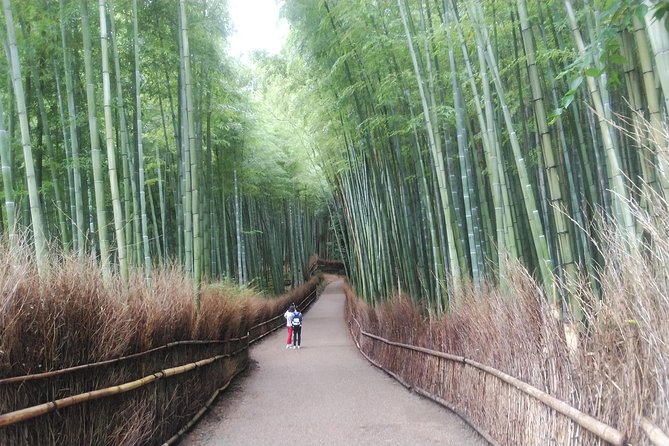
Stop 1: Arashiyama Bamboo Grove in the late-day light
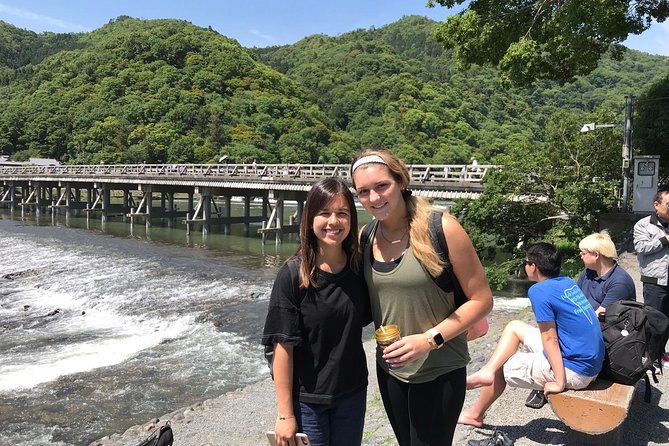
Arashiyama Bamboo Grove is famous for a reason. Even if you have seen photos, standing among the stalks feels different because of the sound and the rhythm of the breeze. The tour gives you about 1 hour here with no admission ticket required.
What I love about this stop is how it shifts from tourist-checklist to real sensory experience. The light is a major part. In the afternoon, you can often catch softer tones and angles that make the bamboo feel less like a postcard and more like a place.
What to watch for:
- You are outdoors and walking. Wear shoes you trust on uneven ground.
- The bamboo grove can still be crowded. Go slow, and focus on short sections of the path rather than trying to see everything at once.
If you want a photo, aim for a couple of “frameable” moments instead of chasing perfect shots nonstop. You have other big sites later, and you’ll be glad you saved your energy.
- PERFECT KYOTO 1-Day Bus Tour★ 5.0 · 13,518 reviews
- Kyoto: Fushimi Inari, Kinkakuji, Bamboo Grove 1 Day Bus Tour★ 4.8 · 4,316 reviews
- Kyoto: Tea Ceremony in a Traditional Tea House in Kiyomizu★ 4.9 · 3,519 reviews
- Kyoto: Tea Ceremony Ju-An at Jotokuji Temple★ 4.9 · 3,207 reviews
- Kyoto: 45-Minute Tea Ceremony Lesson Experience★ 4.3 · 2,378 reviews
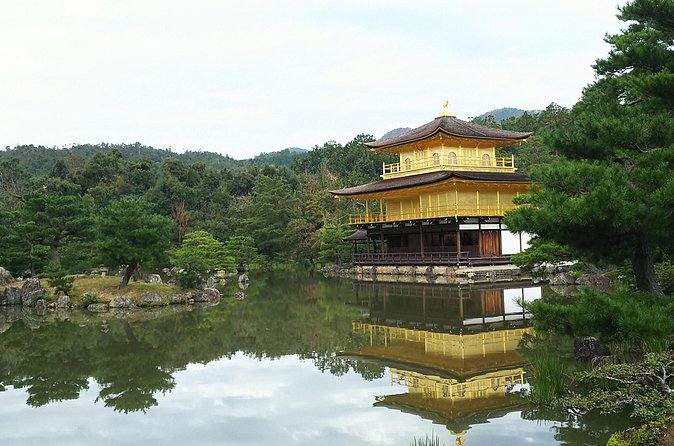
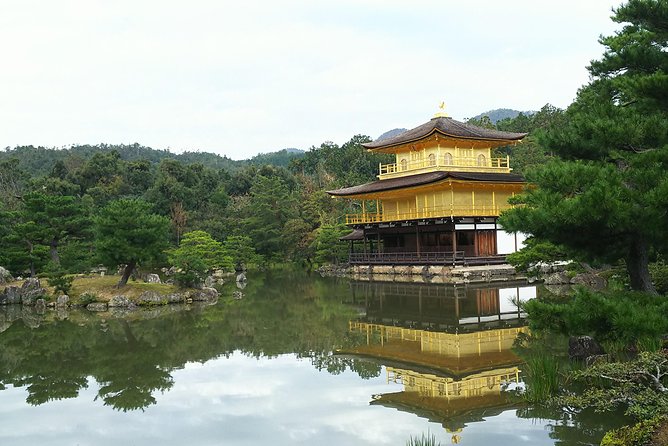
Stop 2: Kinkaku-ji Golden Pavilion and the UNESCO factor
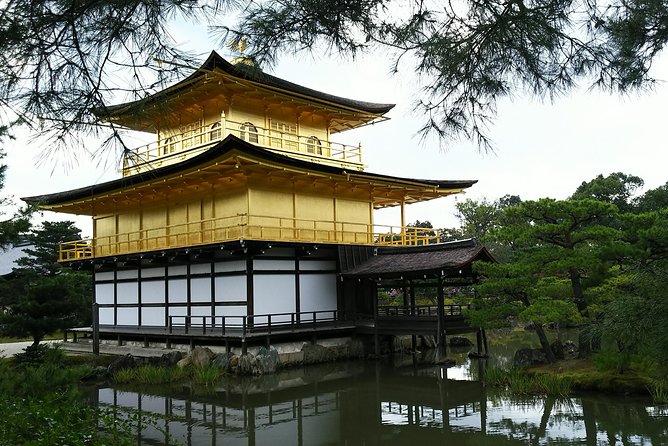
Kinkaku-ji is the icon in this trio. The Golden Pavilion is a Zen temple and an instantly recognizable sight tied to Kyoto’s samurai-era cultural story. You get about 1 hour at this stop.
Here’s the practical part: Kinkaku-ji admission is not included, so you’ll need to pay ¥500 per person. If you’re budgeting, treat this as a fixed cost you should plan for rather than a surprise at the entrance.
Why this stop is worth the fee:
- Kinkaku-ji is one of those places where the architecture and setting hit at the same time.
- The tour format keeps you from spending time trying to figure out the best viewing approach on your own.
A small reality check: because it is popular, expect lines and crowds at key viewpoints. Your guide can help you manage the flow so you spend your hour actually looking, not just shuffling forward.
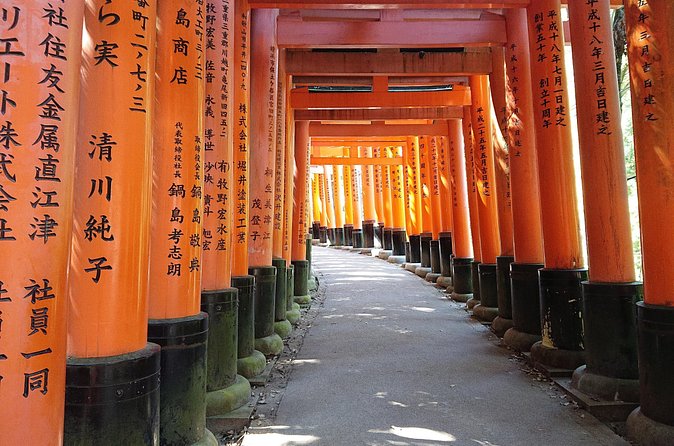
Stop 3: Fushimi Inari-taisha and the torii-gate tunnel effect
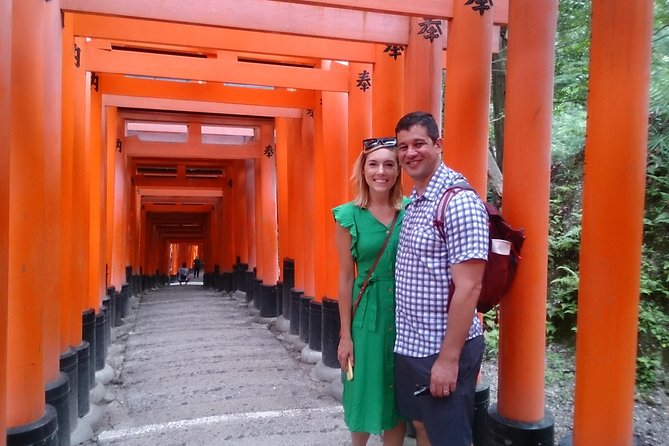
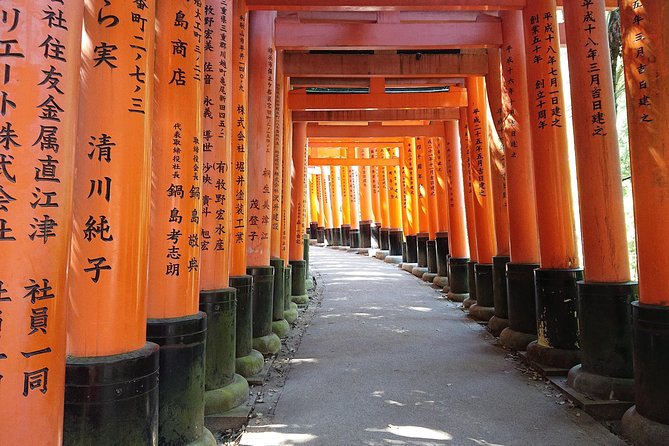
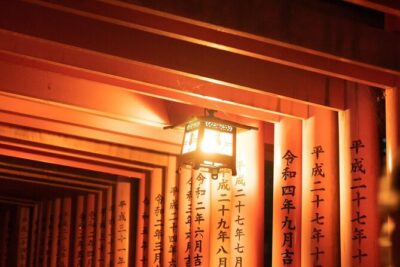
Fushimi Inari-taisha is the most dramatic in this lineup for sheer visual impact. The famous tunnel of thousands of vermilion torii gates gives you that wow feeling quickly, and it is also one of the best places in Kyoto for walking with purpose.
You get about 1 hour here, and admission is free.
The big thing to understand before you go: the torii tunnel invites you to wander. It is tempting to keep going farther up the path, but this tour gives you a guided timeframe. So if you want the full effect without burning out, let the guide set the pacing. You can still choose photo breaks, but you’ll keep the day from slipping away.
If it is raining or intermittently wet, the paths can feel slippery. Kyoto does not shut down because of weather, but you should be ready with grippy shoes and a plan for slower steps.
What you really pay for: value of the $111.05 private format
The price is $111.05 per person, and the included cost is the guide fare. That means you are paying primarily for two things: expert direction and time-saving.
In a city like Kyoto, time matters. Your guide helps you:
- avoid route confusion between major sights
- keep the day moving at a comfortable pace
- focus on what you are there to see, not how to get there
What is not included (and you should budget for):
- Public transportation fare: ¥1,220 per person
- Kinkaku-ji admission: ¥500 per person
- Food and drink
If you do the math, the guide value is strongest if you would otherwise spend time figuring things out, or if you dislike the mental load of switching trains and walking routes while trying to enjoy the sights.
If you are the type who loves building your own itinerary from station to station, you might find a do-it-yourself plan cheaper. But if you want the day to feel organized and low-stress, this price starts to make more sense.
The guide factor: names that came up, and why it matters
One of the most consistent strengths in guide feedback is how guides handle both information and logistics. I’ve seen Mitsue praised for being welcoming and providing local insight, and Noriko praised for making a cold, intermittently rainy day feel fun. Cheia and Keiko were also described as warm, helpful, and good at shaping a route that made the landmarks click.
A few practical benefits show up across guide notes:
- They stay organized and help you keep the timeline under control
- They help with transitions, like catching the right trains at the right moments
- They look for good photo spots, not just the obvious viewpoint
If you travel with kids, a guide’s flexibility matters. Michiko was highlighted for adapting to the challenges of traveling with a young child and still making sure you saw the best parts of each site.
This is why I like private tours more than “big group” formats. You are not just buying access. You are buying a smoother day.
Walking, weather, and what to wear on this 5-hour-45-minute route
This is a walking tour. Even though each stop is around 1 hour, the total time is about 5 hours 45 minutes, which includes getting between sights. Bring comfortable clothes and shoes you can walk in for a while.
Weather is a real factor in Kyoto. The experience is described as requiring good weather, and if conditions cause cancellation, you get an option to switch dates or receive a full refund. That is worth noting if you are scheduling around a forecast-sensitive week.
My quick packing advice for this specific route:
- Comfortable shoes with traction
- A light layer for cool or rainy afternoons
- A small umbrella or rain cover if the forecast looks iffy
Also, the tour notes that it is accessible for limited mobility and limited eye sight. That does not mean it is effortless for everyone, but it signals that the operator is thinking about participation, not just convenience for able-bodied travelers.
Who this tour suits best (and who might want another option)
This is a strong fit if:
- you want an afternoon-friendly Kyoto plan that avoids the stress of early departures
- you prefer a guide to handle directions and timing
- you care about seeing major sights without turning your day into a navigation puzzle
- you want a private setup, even if it ends up being just you or you and a small group
You might want to consider something else if:
- you enjoy long independent wandering and want to spend extra time climbing stairs or exploring far beyond a set hour at each stop
- you want a cheaper option where you pay only for entry fees and transport, not a guide
For a lot of visitors, this sits right in the sweet spot: major sights, sensible pacing, and a return to Kyoto Station so you can keep your evening plans intact.
Should you book Kyoto Lazy Bird Walking Tour?
I’d book this if your top priority is a calm, well-timed Kyoto afternoon that hits Arashiyama Bamboo Grove, Kinkaku-ji, and Fushimi Inari-taisha without you doing route math. The best part is the combination: afternoon start, private guidance, and a day structure that keeps you from losing time.
Before you commit, just plan for the extra costs you will pay in person: transport (¥1,220) and Kinkaku-ji admission (¥500). If walking does not scare you and you want a guide-led “see the best, relax the rest” approach, this tour is a solid value at $111.05 per person.
FAQ
What time does the Kyoto Lazy Bird tour start?
The tour starts at 12:45 pm.
Where do we meet, and where does the tour end?
You meet at Kyoto Station, and the tour ends back at the same meeting point.
How long is the tour?
The duration is about 5 hours 45 minutes.
Is Kinkaku-ji admission included in the price?
No. Kinkaku-ji admission is ¥500 per person and is not included.
Is public transportation included?
No. Public transportation costs ¥1,220 per person and is not included.
Is there free cancellation if weather changes?
Yes. Free cancellation is available, and you can cancel up to 24 hours in advance for a full refund. If the experience is canceled due to poor weather, you’ll be offered a different date or a full refund.
Newest Kyoto write-ups from the Loving Japan desk
Walking Tours, side by side.
 ★ 4.7Kyoto Geisha Walking Tour: Gion District & Hidden GemsFrom $253,273 reviews
 ★ 5.0Tokyo Tsukiji Fish Market Food and Culture Walking TourFrom $993,184 reviews
 ★ 4.9Gion Magical Night Walking Tour with Geisha TriviaFrom $242,393 reviews
 ★ 5.0Imperial Palace and Shogun Historical Walking TourFrom $222,251 reviews
 ★ 4.7Gion Geisha District Walking Tour – Stories of GeishaFrom $202,187 reviews
 ★ 4.5Night Walk in Gion: Kyoto’s Geisha DistrictFrom $212,003 reviews
 ★ 4.9Shinjuku Local Bar and Izakaya Guided Walking TourFrom $341,794 reviews
 ★ 5.0Tsukiji Fish Market Food and Walking tourFrom $301,724 reviews