
REVIEW · GION, GEISHA AND MAIKO EXPERIENCES
Kyoto: Meet the Geisha Maiko with Gion Walking Tour
You’re stepping into Kyoto’s geisha world, not just watching it.
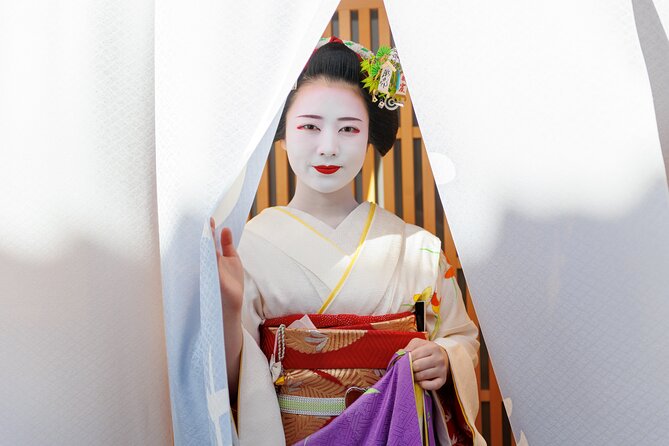
This small-group tour leads you through classic Gion streets before a rare visit inside a private tea house residence, where you meet a maiko and a former geiko and hear their stories firsthand. Expect a live performance, then an unusually personal conversation that goes past the usual tourist script.
I love the balance here: a guided walk that helps you read Gion, followed by an ochaya meeting where the conversation is as important as the dances. I also like that the experience is delivered in English by a live guide, with many recent participants praising guides like Takuma, Yuko, Mika, and Eric for clear explanations and patient Q&A.
The main thing to plan for is practical, not cultural: you must wear socks at the performance venue, and the tea house access is via stairs to a 2nd floor, so this is not a good fit if you have mobility limitations or if rain leaves you with wet socks and clothing.
In This Review
- Key moments worth planning for
- Why an Ochaya meeting beats a standard geisha performance
- The Gion walk that sets up what you’ll see upstairs
- Shirakawa Canal, where old Kyoto still reads like a map
- Tatsumi-jinja and quick stops that add meaning
- Gion Corner as a marker of the area’s performing identity
- Kenninji Temple photo stop
- Miyagawasuji, your longer, more photo-friendly finish
- Timing reality: expect a bit longer than you plan
- Upstairs performance etiquette: socks, stairs, and when you can record
- Socks are not optional
- Photography and video: there are strict windows
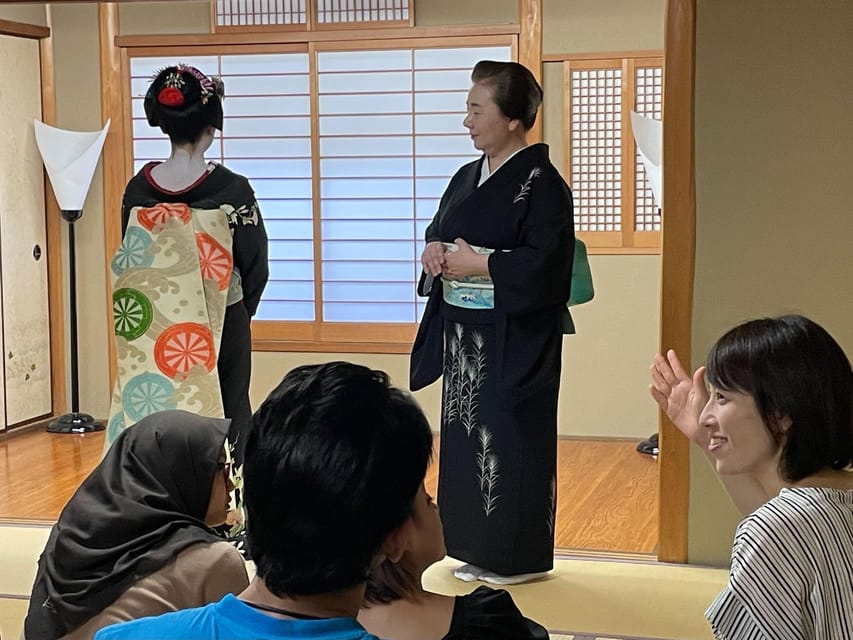
- The main event: meeting the maiko, meeting the former geiko, and the Q&A
- What makes the conversation feel real
- Photo session with the maiko
- What you might learn, besides the obvious beauty
- Kimono rental option: fun add-on, but plan your feet
- Who this tour suits best (and who should skip it)
- Price and value: is $106 a lot?
- Practical tips that will save you stress
- Should you book the Kyoto Maiko and Gion walk?
Key moments worth planning for
- Private ochaya access: meet a maiko and a former geiko in an intimate setting
- Live performance plus Q&A: 1 to 2 dances, then candid conversation with time for questions
- Photo session rules: photos are allowed during the performance and a dedicated photo time
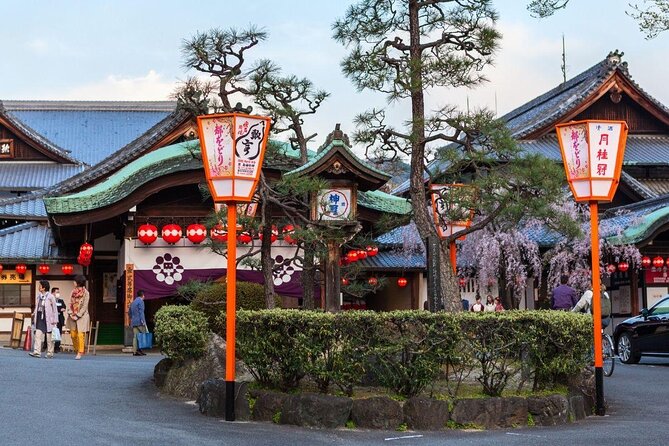
- Gion street context: you walk key areas like Hanamikoji and the Miyagawasuji photo zone
- Socks are required: bring socks, and protect them from getting soaked in rain
Evening walks through the old quarters, compared
- Kyoto Geisha Walking Tour: Gion District & Hidden Gems
★ 4.7 · 3,273 reviews - Kyoto: Gion Magical Night Walking Tour with Geisha Trivia
★ 4.9 · 2,393 reviews - Kyoto: Gion Geisha District Walking Tour – Stories of Geisha
★ 4.7 · 2,187 reviews - Best of Kyoto: Gion, Geisha, Pagodas & Cobblestones
★ 4.9 · 2,058 reviews
Why an Ochaya meeting beats a standard geisha performance
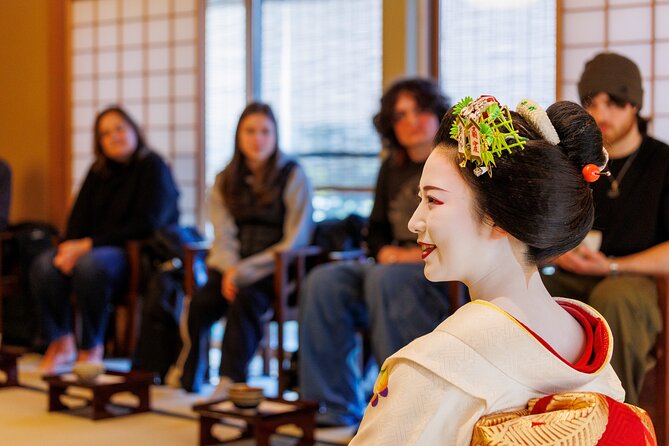
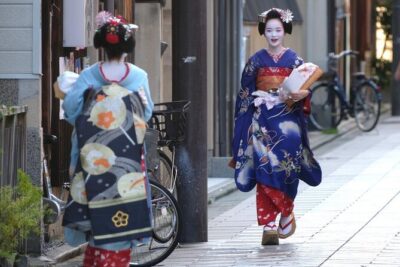
Kyoto has plenty of shows, but this one feels different because the center of gravity is conversation. You’re not just passing through a venue and leaving. You’re hosted inside a private tea house called an ochaya, in a private residence, where a maiko (an apprentice geisha) and a former geiko share stories about training, daily life, and Kyoto traditions.
That matters for your experience. When you hear the background in plain, human terms, you start noticing details that a quick performance alone never explains. The guide’s role helps you make sense of what you’re seeing, and the later talk is where it really clicks.
This tour also includes a venue owner conversation, which adds another layer. You get more than performer answers. You get the house perspective too, meaning you’re hearing how this world works from people who understand the rhythm of the space and the etiquette.
The Gion walk that sets up what you’ll see upstairs
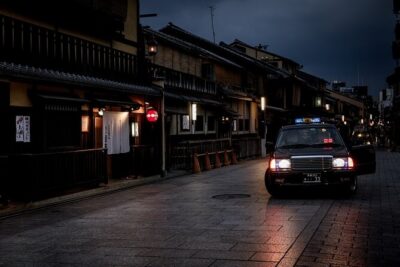
Before you reach the tea house, you get guided time in Gion so you know where you are and why these streets mattered to the geisha community.
Here’s how the walk is structured, with time built in for short stops and photos:
Shirakawa Canal, where old Kyoto still reads like a map
You start with a guided segment around Shirakawa Canal (about 30 minutes). The canal area is a great “orientation” moment, because Gion can look like a maze if you’re not sure what you’re looking at. This stop helps you connect the scenery to the culture you’re about to meet.
If you like photography, keep your camera ready but respectful. Your guide will point you toward useful vantage points without turning the walk into a sprint.
- PERFECT KYOTO 1-Day Bus Tour★ 5.0 · 13,518 reviews
- Kyoto: Fushimi Inari, Kinkakuji, Bamboo Grove 1 Day Bus Tour★ 4.8 · 4,316 reviews
- Kyoto: Tea Ceremony in a Traditional Tea House in Kiyomizu★ 4.9 · 3,519 reviews
- Kyoto Geisha Walking Tour: Gion District & Hidden Gems★ 4.7 · 3,273 reviews
- Kyoto: Tea Ceremony Ju-An at Jotokuji Temple★ 4.9 · 3,207 reviews
Tatsumi-jinja and quick stops that add meaning
Next are brief visits and pauses that don’t take over the day but provide context:
- Tatsumi-jinja Shrine (about 5 minutes)
- Hanamikoji Street (about 10 minutes)
These stops are short, but they help you see how layered Kyoto is. Gion isn’t only about entertainment. It sits next to shrines, neighborhood history, and everyday rituals.
Gion Corner as a marker of the area’s performing identity
You’ll also have time for Gion Corner (the tour includes a guided portion there). Even if you don’t spend long inside, it acts like a signpost: this is a district built around arts and tradition.
Kenninji Temple photo stop
You’ll reach Kenninji Temple with a guided photo stop (about 15 minutes). In a half-day like this, the goal is not to do deep temple tourism. It’s to add visual anchors so your tea house encounter doesn’t feel random. You’ll get a few memorable views and enough time to understand how the neighborhood connects to broader Kyoto culture.
Miyagawasuji, your longer, more photo-friendly finish
The walk culminates with Miyagawasuji (about 1.5 hours) and then you finish there. This longer window is where you can slow down, take pictures, and absorb the “streets where they practice and live” vibe your guide sets up earlier.
In practice, it’s also a good place to catch your breath. Some days are hotter or windier than others, and you’ll still feel like you got something real even if you keep moving carefully.
Timing reality: expect a bit longer than you plan
The tour duration is listed as 3 to 5 hours, but don’t assume it will be the shorter end. Some days run longer depending on the flow of the day and the timing of the tea house experience.
You’ll especially want buffer time if you’re traveling later that day. One review mentioned anxiety about train timing because the tour went beyond their expectation. I’d rather you arrive early and feel calm than rush through the tea house experience.
Upstairs performance etiquette: socks, stairs, and when you can record
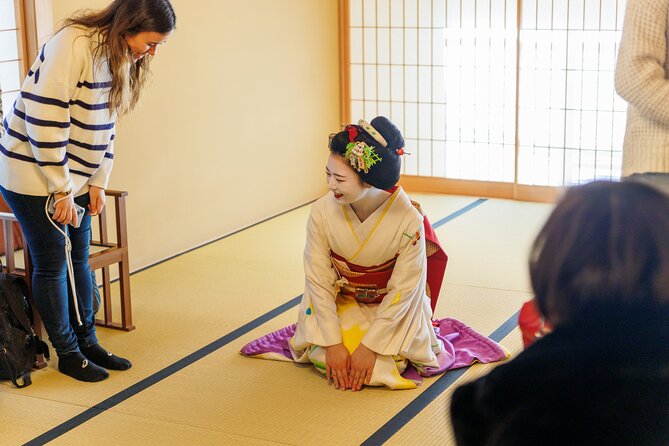
The ochaya performance happens in the tea house’s private setting on the 2nd floor, with access via stairs only. That affects two things for you right away:
- It’s not suitable if you have mobility impairments or use a wheelchair.
- You should plan for a little physical effort, even if you’re otherwise comfortable in Kyoto streets.
Socks are not optional
You MUST wear socks at the performance venue. That’s not a suggestion. That’s a rule.
Also note the rain guidance: on rainy days, no wet clothes and socks are allowed inside the venue. Translation: if you get caught in weather and your socks end up damp, you may be turned away from the venue experience. Bring an umbrella for the walk, and consider keeping spare dry socks in your bag if you’re the type who runs cold or plans for weather changes.
Photography and video: there are strict windows
This is a big deal, and it’s where a lot of people get tripped up.
- Photography and video recording are allowed only during the performance and the dedicated photo session.
- If you want to upload Maiko photos online, you need direct permission from the maiko beforehand.
- You cannot upload any video on the internet.
I love this boundary system, even if it sounds strict. It protects privacy and helps keep the moment respectful. Just plan your phone and camera settings so you’re ready when the window opens.
The main event: meeting the maiko, meeting the former geiko, and the Q&A
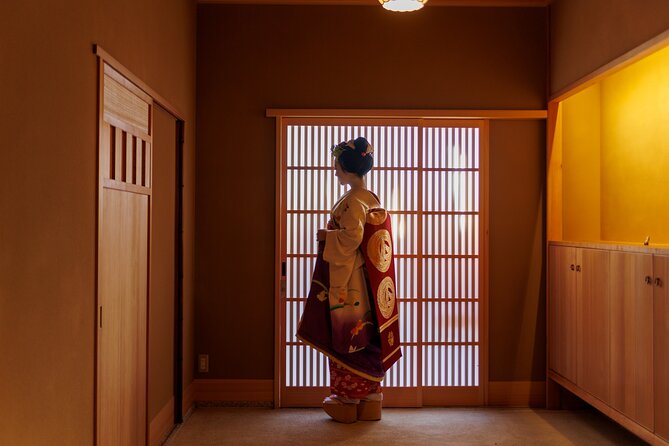
Your heart of the tour is a meeting that lasts about 90 minutes, plus:
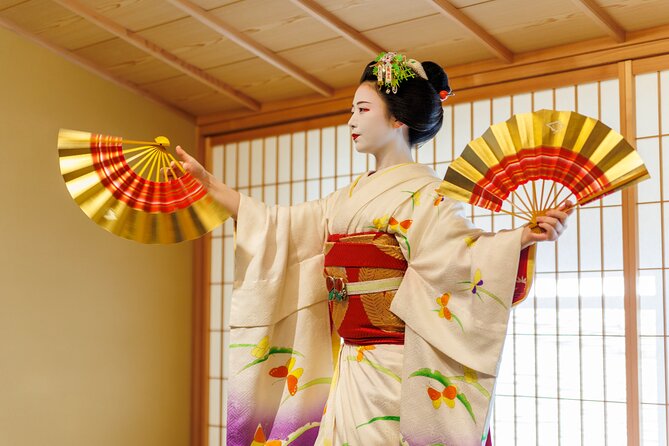
- A live performance by a maiko and a former geiko (typically 1 to 2 dances)
- A conversation with the maiko and the tea house owner
- A Q&A session
This is the part nearly everyone remembers. The performance is beautiful, but it’s the Q&A that turns the day from wow into understanding.
What makes the conversation feel real
A lot of the best moments come from how candid the answers can be. Reviews highlight that the maiko and former geiko talked about training and day-to-day life, and that they were friendly and willing to discuss questions.
Even better, the tea house owner adds “institutional reality.” You’re hearing about how etiquette and hosting work, not just how performers practice.
Photo session with the maiko
After the Q&A, you get a photo session with the maiko. This is your chance to capture a memory that feels like a meeting, not a snap-and-go moment.
Since permission rules are part of the experience, I’d treat this as a “listen first, shoot second” moment. If the group is asked to follow a certain flow, do it. It helps keep the atmosphere calm.
What you might learn, besides the obvious beauty
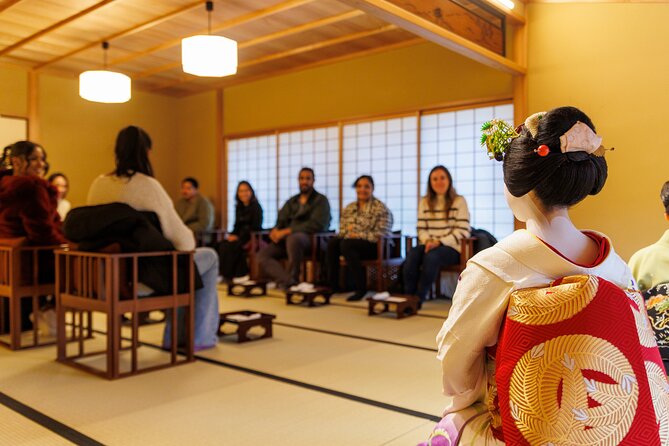
The obvious part is obvious: colorful kimono, stage-ready posture, music, and the kind of focused grace you don’t get from a two-minute street glance.
But you also come away with practical cultural understanding, like:
- how training shapes movement and etiquette
- why roles like maiko and geiko have specific cultural value in Kyoto
- how living tradition gets managed in a real neighborhood space
From the guide-and-guest structure, you also learn that geisha culture is not only about performance. It’s also about relationships, discipline, and community rules. The tour’s format is built to teach that in layers: street context first, then a private meeting where you can ask questions.
Kimono rental option: fun add-on, but plan your feet
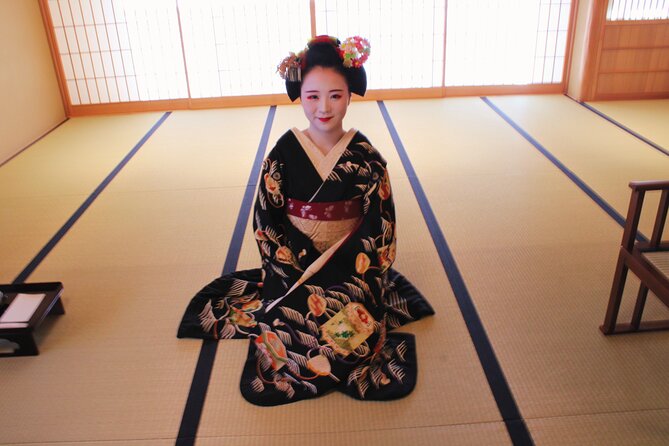
Some bookings include a Kimono rental option. If you choose that route, here’s the important thing you need to know so you don’t end up waiting around:
After changing into your kimono, you go on your own to the Izumo-no-Okuni statue, about a 3-minute walk from the rental store. Your guide waits there.
This matters because kimono days are usually a “timing and comfort” challenge. You’ll be on foot, and you’ll need to manage socks and the possibility of rain. If you’ve never worn a kimono before, consider arriving in comfortable shoes underneath and keeping your socks dry.
Who this tour suits best (and who should skip it)
This is best for you if:
- you want a rare inside-the-ochaya cultural experience
- you care about understanding the traditions, not only seeing a dance
- you’re comfortable with respectful photo rules and quiet etiquette
- you prefer a small group with an English-speaking guide
It’s not a match if:
- you’re traveling with children under 10
- you have mobility impairments or you use a wheelchair
- you need a fully step-free experience, since the performance is on a 2nd floor with stairs
- your rain plan is shaky, because wet socks and wet clothing are not allowed in the venue
Price and value: is $106 a lot?
At $106 per person for a 3 to 5 hour experience, you should judge value based on what you get, not just the headline cost.
Here’s what makes the price feel more justified than many “watch and go” options:
- rare access to a private ochaya in a residential setting
- a live performance by a maiko plus a former geiko
- a structured Q&A plus conversation with both the maiko and the venue owner
- a guided Gion walk with multiple key stops
- a dedicated photo session with the maiko
When you boil it down, you’re paying for access plus time. Not just the performance minutes, but the full back-and-forth. If you’re the type who asks questions and likes to understand how culture works, you’ll feel like this is worth it.
If you only want a quick spectacle photo, you might feel it’s longer than you expected. But even in that case, the unique access is the point.
Practical tips that will save you stress
- Bring socks and make sure they’re dry. This is required at the venue.
- Use an umbrella during the walk on rainy days, to protect clothing and socks.
- Know the camera rules: you can photograph during the performance and during the photo session. No video uploading.
- If you want to post photos online, ask for direct permission from the maiko first.
- Wear clothes you can move in, especially with the stair access to the tea house.
- Give yourself time buffers. The tour may run a bit longer than you expect on the day.
Also, since the tour runs rain or shine, treat weather as part of the plan, not an afterthought.
Should you book the Kyoto Maiko and Gion walk?
I think you should book this tour if you want the rare version of Kyoto geisha culture: the one with inside access, a real conversation, and enough street context to make everything click.
Skip it if you need step-free access, if sock-and-rain logistics are hard for you, or if you’re traveling with small kids under 10. And if you’re the type who hates strict photo rules, read them carefully first, because this experience protects the privacy of the maiko and sets clear windows for photography.
If your goal is understanding, respectful access, and a once-in-a-lifetime meeting in an ochaya, this is a strong choice.
Evenings in the Old Quarters


Newest Kyoto write-ups from the Loving Japan desk
Gion, Geisha and Maiko Experiences, side by side.
 ★ 4.7Kyoto Geisha Walking Tour: Gion District & Hidden GemsFrom $253,273 reviews
 ★ 4.9Gion Magical Night Walking Tour with Geisha TriviaFrom $242,393 reviews
 ★ 4.7Gion Geisha District Walking Tour – Stories of GeishaFrom $202,187 reviews
 ★ 4.9Best of Kyoto: Gion, Geisha, Pagodas & CobblestonesFrom $242,058 reviews
 ★ 4.5Night Walk in Gion: Kyoto’s Geisha DistrictFrom $212,003 reviews
 ★ 5.0Kyoto Night Foodie Tour in Gion (9+ dishes + 6 Sake tastings)From $1631,762 reviews
 ★ 5.0Kyoto Gion Geisha District Walking Tour – The Stories of GeishaFrom $251,441 reviews
 ★ 5.0Kyoto Gion: 2-Hour Geisha Culture & History Walking TourFrom $231,186 reviews
Filed on these lists too