
REVIEW · GION, GEISHA AND MAIKO EXPERIENCES
Kyoto: Meet the Geisha Maiko with Gion Walking Tour
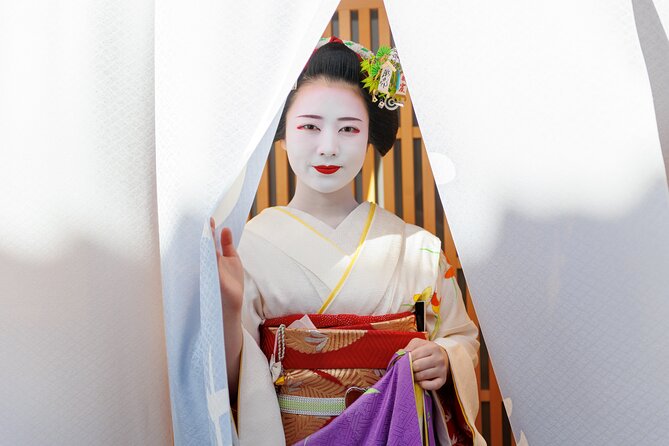
Kyoto geisha, no guessing games. I love the private ochaya access, and you get real conversation with a maiko and retired geiko, not just a photo from the sidewalk. The tour is built around a guided stroll through Gion, so you know what you are looking at.
I also like the structure: stops such as Hanamikoji Street and the Tatsumi Bridge area give context before the 1.5-hour show. The main catch is practical, you must wear socks inside the performance venue, and on rainy days you cannot show up with wet socks or wet cloth.
It is a 3-hour walking experience with a max group size of 30, and the performance happens on a second floor reached by stairs, so go with comfortable shoes and a bit of stamina.
In This Review
- Key things I’d plan for before you go
- Why this Gion tour works (and street chasing usually doesn’t)
- The private ochaya moment: meeting a maiko and retired geiko
- Gion Shirakawa: the calm, photo-friendly start
- Tatsumi Daimyojin Shrine and Tatsumi Bridge: a quiet pause with meaning
- Hanamikoji Street and Gion Corner: where culture gets packaged for learning
- A Zen temple precinct visit, without going inside
- Miyagawasuji performance: the part with the stairs and the socks
- Price and logistics: is $109.43 really good value?
- Photo rules, social posting, and how to be respectful without stressing
- Who should book this tour, and who might skip it
- Should you book the Kyoto Meet the Geisha Maiko with Gion Walking Tour?
- FAQ
- How long is the tour?
- Where do I meet and where does it end?
- Is the tour outdoors?
- Do I need socks for the performance?
- What happens if it rains?
- Can I take photos and video?
- Can I post the photos on social media?
- Is the tour suitable for kids?
Key things I’d plan for before you go
- A private ochaya visit, not a public show in a space that is typically off-limits to first-time visitors
- A real meeting plus Q and A with a maiko and a retired geiko, where you can ask questions
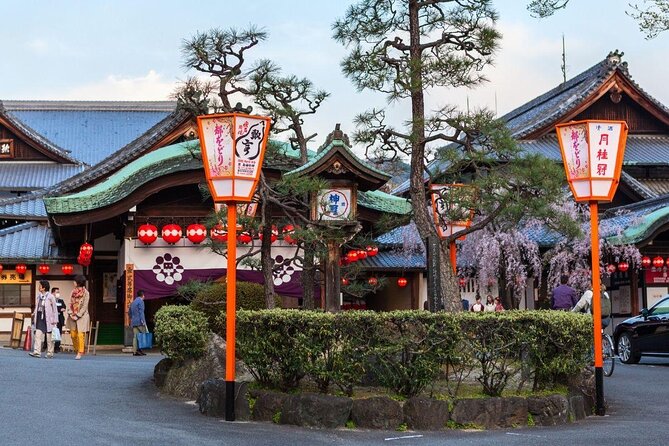
- Gion details on the walking portion like Gion Shirakawa, Hanamikoji Street, and Tatsumi Bridge
- Traditional performance time with translation so you can follow the story behind what you see
- Strict but clear etiquette rules around socks, rain, and when photos are allowed
Evening walks through the old quarters, compared
- Kyoto Geisha Walking Tour: Gion District & Hidden Gems
★ 4.7 · 3,273 reviews - Kyoto: Gion Magical Night Walking Tour with Geisha Trivia
★ 4.9 · 2,393 reviews - Kyoto: Gion Geisha District Walking Tour – Stories of Geisha
★ 4.7 · 2,187 reviews - Best of Kyoto: Gion, Geisha, Pagodas & Cobblestones
★ 4.9 · 2,058 reviews
Why this Gion tour works (and street chasing usually doesn’t)
Gion can look magical, but it can also feel frustrating. If you try to hunt for geiko and maiko on your own, you are mostly guessing where they might be, and you miss the meaning behind the neighborhoods and rituals.
This tour changes the game by putting you in the right place with context first, then delivering the main moment inside an ochaya. I especially like that it is not built around spotting people from a distance. You get structured time to understand what you are seeing and then meet a maiko up close.
The private ochaya moment: meeting a maiko and retired geiko
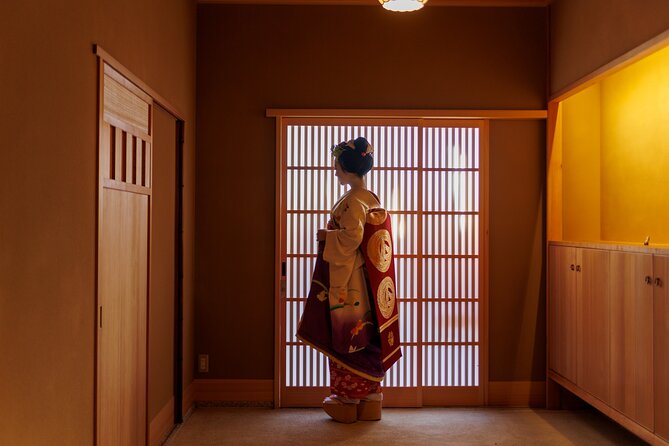
The highlight is the access to an ochaya, a Kyoto teahouse where geiko and maiko entertain guests. This is the kind of setting that usually stays closed to casual walk-ins, even for people who live nearby.
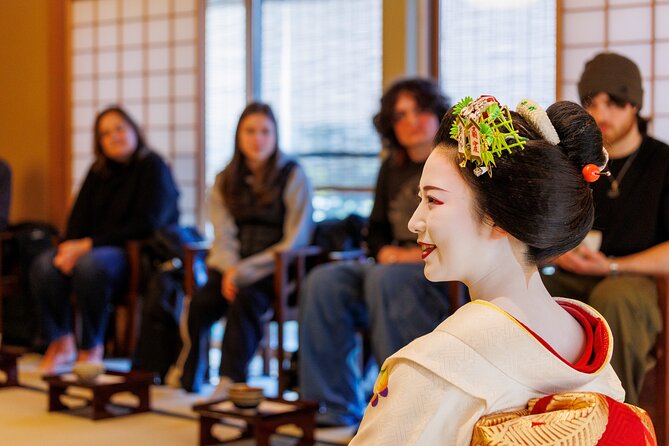
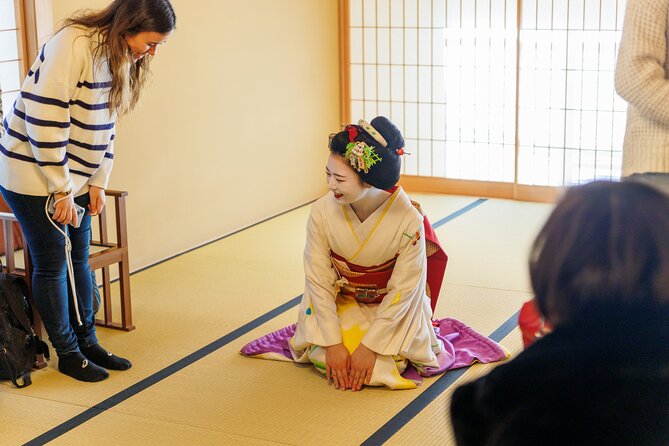
Inside, you meet a maiko and a retired geiko, and you watch a professional performance. What makes this feel different is the follow-up, you can talk, ask questions, and hear personal stories that connect the arts to daily life. One of the best parts, in my eyes, is that the experience is guided and translated, so you are not left staring at beautiful gestures with no idea what you are hearing.
A few guide names come up often in past groups, including Haruki, Takuma, Miko, Ayako, and Naomi, and the common thread is how they keep the pace clear and the conversation flowing. Translation quality matters here, because the most interesting part is the back-and-forth.
Gion Shirakawa: the calm, photo-friendly start
You begin in the Gion Shirakawa area, where the guide sets the stage for how geisha culture works in Kyoto. Expect a slow walk, about 30 minutes, with explanations of roles, customs, and lifestyle. This is the part where you learn the vocabulary, so later scenes make sense.
This stop is also a good reset for your senses. You are in a part of Gion that feels traditional and visually coherent, with the kind of streetscape that makes you understand why people come just to wander. But the point here is not just scenery, it is getting oriented before you move deeper into the district.
- PERFECT KYOTO 1-Day Bus Tour★ 5.0 · 13,518 reviews
- Kyoto: Fushimi Inari, Kinkakuji, Bamboo Grove 1 Day Bus Tour★ 4.8 · 4,316 reviews
- Kyoto: Tea Ceremony in a Traditional Tea House in Kiyomizu★ 4.9 · 3,519 reviews
- Kyoto Geisha Walking Tour: Gion District & Hidden Gems★ 4.7 · 3,273 reviews
- Kyoto: Tea Ceremony Ju-An at Jotokuji Temple★ 4.9 · 3,207 reviews
Tatsumi Daimyojin Shrine and Tatsumi Bridge: a quiet pause with meaning
Next comes Tatsumi Daimyojin Shrine, a small Shinto shrine connected to protection, good fortune, and safety for travelers. The time is brief, about 5 minutes, but it gives you a different lens on Kyoto: beyond dance and tea, you see how protection and good luck are part of everyday culture.
Then you step into the Tatsumi Bridge corner. This is one of those spots that feels like a film set, with traditional machiya houses nearby. It is short, but it helps the district feel real rather than staged. You get the sense that geisha life exists alongside normal Kyoto life, even when the world feels carefully curated.
Hanamikoji Street and Gion Corner: where culture gets packaged for learning
Hanamikoji Street is the main artery of Gion. It is where you see classic wooden machiya houses, tea houses, and shops lining the road, and it is one of those places where the architecture does half the explaining.
You also get time at Gion Corner, a cultural venue that showcases traditional arts. The value here is practical: it provides a quick orientation to the kinds of performance arts you will later see in a more intimate setting. In other words, it is like warming up your eyes and ears before the main show.
One caution to keep in mind: the walking portion can feel a bit like a loop. That is not a deal-breaker, but if you are sensitive to lots of straight-line sightseeing, focus on the guide’s explanations. Those details are what keep the time from feeling repetitive.
A Zen temple precinct visit, without going inside
You then visit the precinct of Kyoto’s oldest Zen Buddhist temple located next to the geisha district. The tour does not enter the temple buildings, but you still get the chance to walk through the grounds and absorb the atmosphere as locals might.
I like this stop because it prevents the day from becoming only about one narrow slice of Kyoto. Geisha culture is artistic, but it also sits inside a city where religion, etiquette, and daily routine shape what looks graceful and appropriate.
If you are the kind of person who notices the small contrasts in Kyoto, this part is quietly satisfying. It is a reminder that art and spirituality overlap here more than you might expect.
Miyagawasuji performance: the part with the stairs and the socks
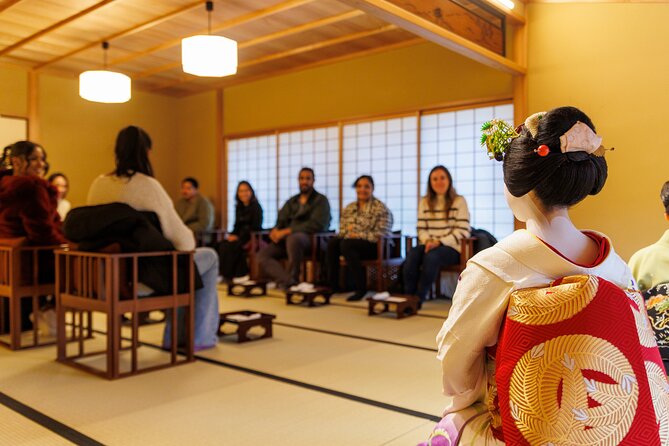
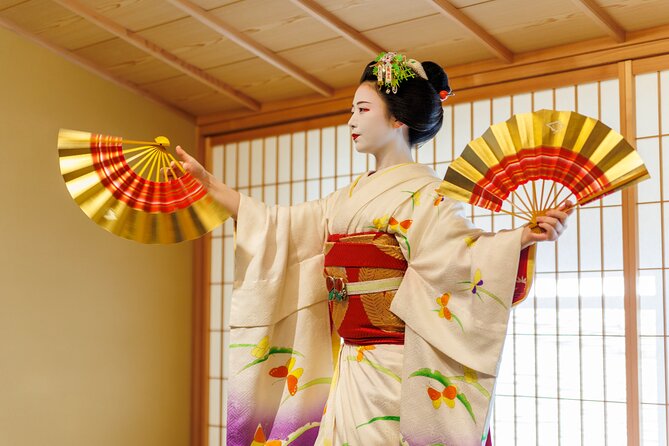
The final stretch brings you to the tea house performance at Miyagawasuji. The performance time is about 1 hour 30 minutes, and this is where you see the maiko and also interact with the hosts.
There are two practical things you must handle properly:
1) Socks are required at the venue
2) The performance happens on the second floor, reached by stairs
So bring socks you are comfortable staying with. And on rainy days, the rules are strict: no wet cloth and no wet socks at the venue. The tour does rain or shine, so plan to use an umbrella during the walk.
On the performance side, the guide translates, so you can follow what the maiko and retired geiko share. You also get designated windows for photography, which helps protect the atmosphere in a space that is meant to be respectful and calm.
Some groups describe the program as very conversational, where Q and A is part of the entertainment, not an afterthought. You will probably leave feeling like you learned what the arts mean to the people practicing them, not just what they look like on stage.
Price and logistics: is $109.43 really good value?
At $109.43 per person for about 3 hours, this is not a budget splurge. But the value is tied to rarity.
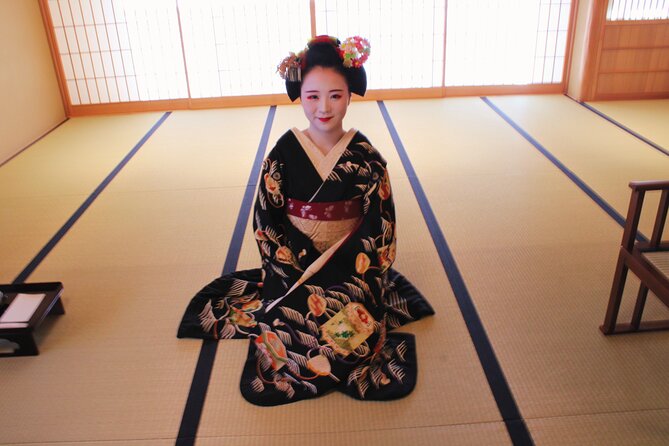
Street encounters in Gion are uncertain and can turn into a game of chance. Here, you pay for something organized: access to a private ochaya, time to meet a maiko and a retired geiko, and live performance plus Q and A. Add in guide translation and the pacing that keeps the day coherent, and the price starts to look more reasonable.
That said, there are two things to watch so you don’t feel shortchanged:
- The walking can run a little longer than you expect depending on the day. If you have a tight schedule right after, give yourself buffer time.
- Audio and translation can make or break the experience. Some groups have noted that guide volume or translation clarity can vary. If you are easily distracted by low sound, sit where you can hear best and be ready to ask for clarification during the Q and A.
In plain terms, this tour is worth it if you want the structured, inside-the-world version of Gion.
Photo rules, social posting, and how to be respectful without stressing
Photography rules are part of the etiquette here, and they are specific:
- Photography and video recording are allowed only during the performance and the photo session
- If you want to upload photos on social media, you need permission directly from the maiko beforehand
I treat that as a good sign, not a limitation. It means the experience is managed to protect the artists and the private setting. It also keeps you from ruining the mood by constantly filming during explanations.
If you care about social posting, plan your behavior early. Take your photos when allowed, then ask your guide how to handle permission for posting if that matters to you.
Who should book this tour, and who might skip it
This is a strong match for you if you want:
- A guided introduction to how geiko and maiko culture works in Kyoto
- A chance to ask questions and talk during a performance setting
- A curated Gion walk that helps you understand the streets rather than just move through them
It is probably not the best fit if:
- You do not want any rules around clothing, especially socks
- You dislike stairs, since the performance is on a second floor
- You are looking for a more flexible, wandering-only day without a set structure
Also note: there is a stated minimum age, no children under 10 years old. And the tour asks for moderate physical fitness because it is a walking format.
Should you book the Kyoto Meet the Geisha Maiko with Gion Walking Tour?
I think you should book if you want the real payoff of Gion in one afternoon: a private ochaya setting, a maiko meeting, live performance, and Q and A, all with guidance and translation. The private access is the money maker here, and it is hard to replicate on your own.
I would hesitate if your main goal is casual street spotting and you hate being constrained by rules. This is a structured cultural experience with etiquette built in, including socks and photo windows.
If you do book, do it with the right mindset: walk, listen, ask questions, then enjoy the show. That is when the day feels worth the price.
FAQ
How long is the tour?
The tour is about 3 hours.
Where do I meet and where does it end?
You start and end at Miyagawasuji in Higashiyama Ward, Kyoto. The end includes the private house venue for the performance.
Is the tour outdoors?
Yes, it includes a walking portion through Gion. It also includes a performance inside the private venue.
Do I need socks for the performance?
Yes. You must wear socks at the venue of the performance.
What happens if it rains?
The tour takes place rain or shine. On rainy days, no wet cloth and socks are allowed at the venue, so you should use an umbrella during the walk.
Can I take photos and video?
Photography and video recording are allowed only during the performance and the photo session.
Can I post the photos on social media?
If you wish to upload photos on social media, you must obtain direct permission from the maiko beforehand.
Is the tour suitable for kids?
No children under 10 years old are allowed.
Evenings in the Old Quarters



Newest Kyoto write-ups from the Loving Japan desk

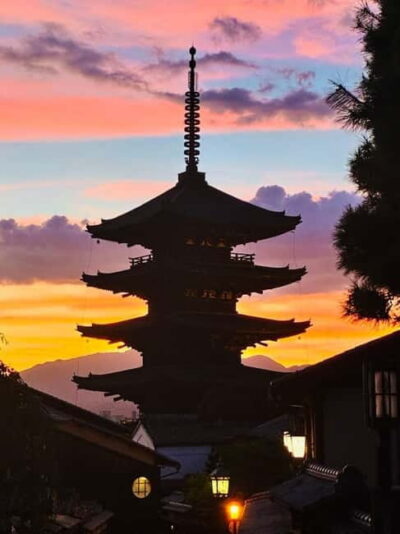
Gion, Geisha and Maiko Experiences, side by side.
 ★ 4.7Kyoto Geisha Walking Tour: Gion District & Hidden GemsFrom $253,273 reviews
 ★ 4.9Gion Magical Night Walking Tour with Geisha TriviaFrom $242,393 reviews
 ★ 4.7Gion Geisha District Walking Tour – Stories of GeishaFrom $202,187 reviews
 ★ 4.9Best of Kyoto: Gion, Geisha, Pagodas & CobblestonesFrom $242,058 reviews
 ★ 4.5Night Walk in Gion: Kyoto’s Geisha DistrictFrom $212,003 reviews
 ★ 5.0Kyoto Night Foodie Tour in Gion (9+ dishes + 6 Sake tastings)From $1631,762 reviews
 ★ 5.0Kyoto Gion Geisha District Walking Tour – The Stories of GeishaFrom $251,441 reviews
 ★ 5.0Kyoto Gion: 2-Hour Geisha Culture & History Walking TourFrom $231,186 reviews
Filed on these lists too