
REVIEW · MORNING
Kyoto Morning Tour from Kyoto or Osaka
Three Kyoto icons before lunch. This half-day morning tour strings together major UNESCO sites with an organized flow, so you can see a lot without wrestling transit. It typically runs about 4 hours 40 minutes, uses an air-conditioned vehicle between stops, and finishes near Kyoto Station.
I like that entrance fees and transport are built in, so the day stays simple from start to finish. I also like the direct focus on three “must-visit” places, not a long list that makes each stop feel like a blur.
One thing to consider is closures. Kyoto Imperial Palace is not always open (often Mondays or special event days), and Nijo Castle also has specific closed periods, so your first or third stop can switch to an alternate site.
In This Review
- Key highlights that make this tour work
- Where you meet and where you end up in Kyoto
- Ride in comfort, then walk with purpose
- Nijo Castle: Tokugawa power, gold-leaf interiors, and timed access
- Kinkakuji Golden Pavilion: the gold, the pond, and the one-way flow
- Kyoto Imperial Palace: what you see, and how closures change the day
- Getting the most from the guide and the group
- Pace and comfort: how a half-day tour fits real Kyoto days
- What’s included, what’s not, and how to handle food
- Price and value: is $87.19 a fair deal?
- Who should book this Kyoto morning highlights tour
- Should you book this tour from Kyoto or Osaka?
- FAQ
- How long is the Kyoto Morning Tour?
- What are the main stops on the tour?
- Are entrance fees included?
- Where do I meet and where do I get dropped off?
- Is food included?
- What happens if Kyoto Imperial Palace is closed?
- What happens if Nijo Castle is closed?
- Are there any child-related rules?
- Can I cancel for a full refund?
Key highlights that make this tour work
- A tight route across three top sights in one morning, with timed site visits
- Air-conditioned bus between landmarks, which matters when Kyoto mornings get busy
- Nijo Castle’s Tokugawa-era interiors, including the gold-leaf living quarters and famous palace rooms
- Kinkakuji’s Golden Pavilion and pond setting, with a visitor flow that can include uneven steps
- Imperial Palace-area backup plans, including Kitano Tenmangu Shrine or Nishi Hongan-ji on certain closure days
- Guides who keep things moving, and are often praised for organization and good storytelling in a group setting
Still weighing up options in Kyoto? These are the ones our reviewers rated highest.
- PERFECT KYOTO 1-Day Bus Tour
★ 5.0 · 13,518 reviews - Kyoto: Fushimi Inari, Kinkakuji, Bamboo Grove 1 Day Bus Tour
★ 4.8 · 4,316 reviews - Kyoto: Tea Ceremony in a Traditional Tea House in Kiyomizu
★ 4.9 · 3,519 reviews - Kyoto Geisha Walking Tour: Gion District & Hidden Gems
★ 4.7 · 3,273 reviews
Where you meet and where you end up in Kyoto
You start at Kyoto Avanti, address Kyoto Avanti 31 Higashikujō Nishisannōchō, Minami Ward, Kyoto, 601-8003. It’s across from Kyoto Station Hachijo Exit, which is a lifesaver if you land in Kyoto and want a straightforward start.
The tour ends in front of Kyoto Avanti as well, right across from the station. The practical point here is you’re not stuck wandering back to catch a train. If you’re heading onward in the afternoon, you can usually reset quickly around Kyoto Station.
Two extra details help you plan:
- Seats may not be designated, so you might end up anywhere in the vehicle depending on the group.
- The order and arrival times can shift due to road conditions and crowding, which is normal in Kyoto.
If you’re coming in from Osaka, the tour description notes an English-speaking assistant on the outbound trip from Hotel Granvia Osaka to the Sunrise Tours desk in Kyoto Avanti B1F. That’s handy if you’re not familiar with the station area. Just follow the instructions on your confirmation.
Ride in comfort, then walk with purpose
This is a bus tour, not a sit-and-scroll photo tour. The vehicle gets you between sites, but you’ll still do real walking and queueing at each attraction.
The upside is speed. You’re visiting three major anchors in one morning, with about:
- 50 minutes at Nijo Castle
- 45 minutes at Kinkakuji
- 40 minutes at Kyoto Imperial Palace
plus travel time between them, for an overall schedule of about 4 hours 40 minutes.
The downside is that it’s not built for slow wandering. If your style is to linger for an hour at one pavilion, you’ll probably feel the pressure to keep moving. Think of this as a high-efficiency introduction, then do deep repeats later on your own.
Group size is capped at 40 travelers, which is decent for a bus tour. Still, in crowded temple areas you can feel shoulder to shoulder. Bring comfortable shoes and plan on walking uphill at least a bit.
Nijo Castle: Tokugawa power, gold-leaf interiors, and timed access
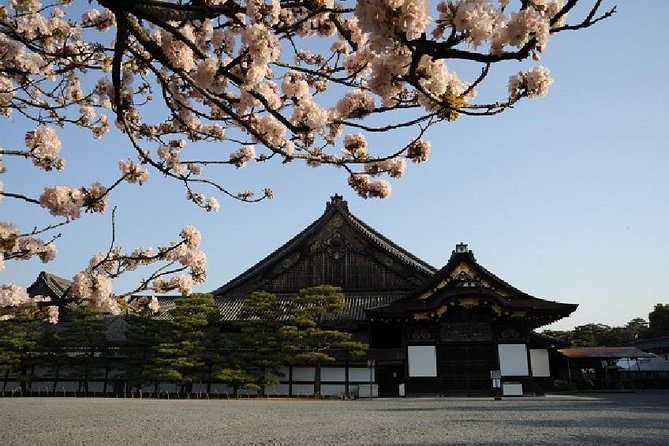
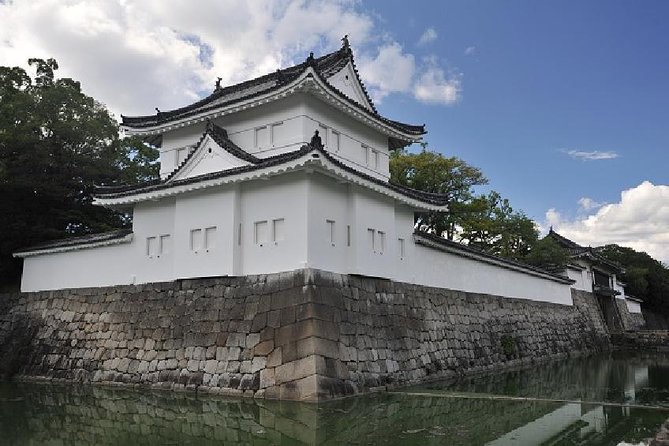
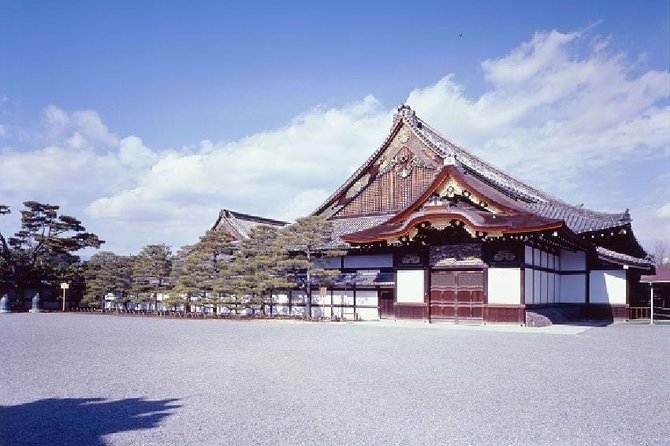
Your first major stop is Nijo Castle, a UNESCO World Heritage site built in 1603 on orders of Tokugawa Ieyasu, the first shogun of the Tokugawa shogunate. This matters because Nijo isn’t just a pretty castle. It’s a window into how power and control were designed into the space.
You’ll spend about 50 minutes here, with admission included. The highlights to look for:
- The castle is made of five connecting structures made of cypress wood, which is a detail you’ll likely hear explained.
- The Ninomaru Palace is the star for ornate carving and decoration.
- The interiors include gold leaf-covered living quarters, plus areas like a kitchen, guardhouse, and gardens.
Practical tip: arrive ready to look up and around. In many rooms, the drama is in the details, not just the overall view. If you want the best photos, pay attention to where people cluster for the front-facing angle, then step slightly aside to find a less blocked view.
A key heads-up: Nijo Castle is closed on Tuesdays during specific periods (January, July, August, and December), and from Dec 26 to Jan 3. If that happens, the tour substitutes Ryoan-ji Temple instead. That’s not a downgrade in Kyoto terms, but it does mean your first stop may change.
- PERFECT KYOTO 1-Day Bus Tour★ 5.0 · 13,518 reviews
- Kyoto: Fushimi Inari, Kinkakuji, Bamboo Grove 1 Day Bus Tour★ 4.8 · 4,316 reviews
- Kyoto: Tea Ceremony in a Traditional Tea House in Kiyomizu★ 4.9 · 3,519 reviews
- Kyoto Geisha Walking Tour: Gion District & Hidden Gems★ 4.7 · 3,273 reviews
- Kyoto: Tea Ceremony Ju-An at Jotokuji Temple★ 4.9 · 3,207 reviews
Kinkakuji Golden Pavilion: the gold, the pond, and the one-way flow
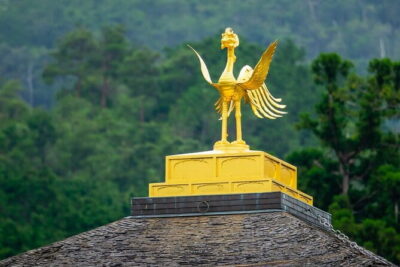
Next comes Kinkakuji (the Golden Pavilion), Kyoto’s most famous temple image for a reason. The wooden architecture is covered in thin layers of pure gold, and it sits beside a pond that mirrors the pavilion.
You’ll have about 45 minutes, admission included. This is plenty of time to see:
- the exterior, including how the gold catches light
- the pond view from different angles
- the garden spaces around the temple complex
One thing I’d plan for: visitor flow. At Kinkakuji, paths can be set up as one-way, and some routes may include uneven rocky steps. One review noted that you may climb over uneven ground to reach certain viewing points. You’ll feel that more than you expect if you’re wearing slippery shoes.
Simple move: wear grippy footwear. Then take a breath at each platform or viewpoint and let your eyes reset between crowds. Kinkakuji is one of those places where the first photo is never the best one, because your best angle depends on where you stand once you understand the flow.
Kyoto Imperial Palace: what you see, and how closures change the day
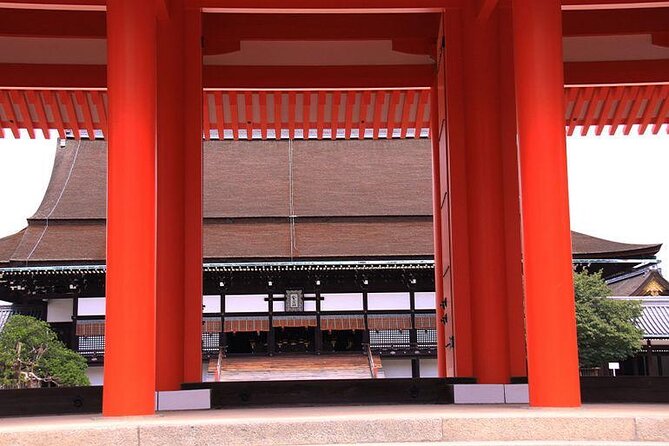
The final main stop is the Kyoto Imperial Palace, the Emperor’s former residence until the capital moved to Tokyo in 1868. You’re there for about 40 minutes, and admission is free under the tour.
What to focus on during your time:
- the former site of imperial enthronement ceremonies
- the elegant simplicity of the building’s interior design and architecture
- the idea that this is a court space, not a tourist attraction first
This stop can be the big reason people book the tour. The catch is, it does not operate like a temple that’s always open. The tour notes that the palace is closed to visitors on:
- Mondays (or the following day if Monday is a holiday)
- days with an Imperial Household Agency event
If the palace is closed, you visit an alternate site instead:
- Kitano Tenmangu Shrine is substituted on those closure days
- if the closed day falls on the 25th, the tour goes to Nishi Hongan-ji Temple
So here’s the decision rule I’d use: if Kyoto Imperial Palace is your top priority, check the calendar for your travel day. If it’s closed, accept that your tour will pivot, and decide in advance if Kitano Tenmangu or Nishi Hongan-ji still sounds appealing to you.
Getting the most from the guide and the group
This tour is built around a guide interpreter model: the included National Government Licensed English guide interpreter fee is part of the price. That’s a good sign for accuracy and pacing, especially when you’re dealing with details like political eras, architecture terms, and why certain spaces were designed the way they were.
There’s also mention of an English-speaking assistant on the outbound Osaka leg, which can help you find the meeting spot without stress.
In terms of what you might experience on the ground, a few review themes pop up:
- Some guides are praised for being organized and engaging, with good storytelling about the shogun and emperor eras.
- When crowds surge, it can be hard to hear the guide clearly in louder areas.
- You may find that microphone audio is not always consistent, so staying closer to the front can help.
My practical advice: plan to keep your questions for a moment when the group regathers at a bus stop or an easier-to-hear path. Trying to ask deep questions in a packed temple courtyard is like trying to read a book on a train. Doable only if you get lucky.
Pace and comfort: how a half-day tour fits real Kyoto days
This tour is aimed at people with limited time. That’s clear in the schedule: you’re moving quickly and seeing highlights rather than living inside each site.
What you’ll likely notice:
- You’ll go from one “wow” moment to the next, which helps first-time visitors build a mental map fast.
- Your feet may feel it by the end, especially if you’re also doing your own exploring after drop-off.
- You’re traveling in an air-conditioned vehicle, so the hottest part of Kyoto is less punishing.
A nice bonus from the tour design is that it ends at a major transit hub. Once you’re back by Kyoto Station, you can decide what to do next without committing to another long ride.
What’s included, what’s not, and how to handle food
The tour includes:
- Admission fees for Nijo Castle and Kinkakuji
- Transport between stops by vehicle
- An English guide interpreter
Not included:
- Food and drinks
- Hotel pick-up and drop-off
There is one timing detail to know: after sightseeing at Kyoto Imperial Palace, the bus stops by a lunch venue for a one-day tour. Then participants are dropped off at Kyoto Station. That does not automatically mean lunch is included for you. So treat it as a convenience for buying something, not a guaranteed meal.
My suggestion: carry a water bottle and a small snack. Kyoto mornings can move faster than you think, and you do not want your energy to tank right when you’re in the final stop.
Price and value: is $87.19 a fair deal?
At about $87.19 per person for a half-day, the value depends on how you plan to travel after your morning.
Here’s the value math I’d use:
- You’re paying for a guided route across three headline attractions.
- Admission fees are included for two major sites, Nijo Castle and Kinkakuji.
- You’re also paying for the bus time between areas, which reduces stress and wasted minutes compared with doing everything solo.
If you were doing this yourself, you’d still face ticket lines, transit planning, and the risk of ending up somewhere that doesn’t match your timing. For a “get my bearings fast” morning, this tour makes sense.
Where it might feel less worth it:
- If you end up on a substitution day because Kyoto Imperial Palace or Nijo Castle is closed, you may feel like you didn’t get what you came for.
- If you prefer slow travel, the time limits at each stop can feel rushed.
The fix for that is simple: decide what matters most to you. If it’s the big three, check closure days. If it’s more about learning the city quickly, you’ll probably appreciate the structure.
Who should book this Kyoto morning highlights tour
This tour fits best if you:
- are in Kyoto for a short time and want a strong first overview
- like guided context, not just sightseeing selfies
- want air-conditioned transport and a simple, timed plan
- are comfortable with a moderate amount of walking and crowds
It may not be ideal if you:
- can’t handle the idea of timed stops and “next group, next sight” pacing
- really need one of the specific buildings on a specific day
- have hearing challenges in busy places and need perfect audio for every detail
One more practical note: the tour maximum is 40 travelers. It’s not tiny, but it’s not a mega-bus either. You can usually still get decent personal space at each stop if you’re willing to move with the flow.
Should you book this tour from Kyoto or Osaka?
If you’re choosing between DIY and a guided morning, I’d say book this when your priorities are efficiency and major sights. The combination of UNESCO stops, entrance fees, and a smooth finish near Kyoto Station is exactly what makes a half-day tour worth it.
But book with your eyes open. Check whether your day hits Kyoto Imperial Palace closure rules and whether Nijo Castle is open. If your travel dates line up and you’re fine with a brisk pace, this tour is a smart way to see Kyoto’s headline landmarks without turning your morning into a logistics problem.
If palace access is the single thing you care about most, double-check the opening day first. If it’s closed, you’ll still see important Kyoto sites, but your experience will pivot.
FAQ
How long is the Kyoto Morning Tour?
The tour lasts about 4 hours 40 minutes.
What are the main stops on the tour?
The tour typically includes Nijo Castle, Kinkakuji Temple (Golden Pavilion), and Kyoto Imperial Palace.
Are entrance fees included?
Yes. Admission fees are included for Nijo Castle and Kinkakuji Temple. Kyoto Imperial Palace admission is listed as free.
Where do I meet and where do I get dropped off?
You meet at Kyoto Avanti (across from Kyoto Station Hachijo Exit). The tour ends in front of Kyoto Avanti as well.
Is food included?
No. Food and drinks are not included.
What happens if Kyoto Imperial Palace is closed?
If Kyoto Imperial Palace is closed to visitors, the tour will visit Kitano Tenmangu Shrine instead. If the closed day is the 25th, it will visit Nishi Hongan-ji Temple.
What happens if Nijo Castle is closed?
Nijo Castle is closed on certain Tuesdays in specific months, and also from Dec. 26 to Jan. 3. If it is closed, the tour visits Ryoan-ji Temple instead.
Are there any child-related rules?
Children up to 5 years old can join free of charge, but they will not be provided with bus seats. If bus seats are needed, book under the child rate.
Can I cancel for a full refund?
Yes. You can cancel up to 24 hours in advance for a full refund.
Newest Kyoto write-ups from the Loving Japan desk

Morning, side by side.
 ★ 5.0Kyoto Early Morning Tour with English-Speaking GuideFrom $681,427 reviews
★ 4.9Early Morning Tour with English-Speaking GuideFrom $1011,128 reviews
★ 5.0Kyoto Early Morning Tour with English-Speaking GuideFrom $681,427 reviews
★ 4.9Early Morning Tour with English-Speaking GuideFrom $1011,128 reviews
 ★ 4.9World Heritage Shirakawa-go Morning Guided TourFrom $77988 reviews
 ★ 5.0Nara Early Morning Tour (Kyoto or Osaka Departure Available)From $61676 reviews
 ★ 4.8Sumo Morning Practice Viewing TourFrom $81570 reviews
 ★ 5.0Hiroshima in a Nutshell: Morning Bike AdventureFrom $72524 reviews
 ★ 4.4Sumo Morning Training VisitFrom $77370 reviews
 ★ 4.6From Kyoto: Nara Guided Morning TourFrom $77335 reviews