
REVIEW · KYOTO TEA CEREMONIES AND MATCHA
Kyoto Newly Opened Tea Ceremony – Sanjo Chasuian
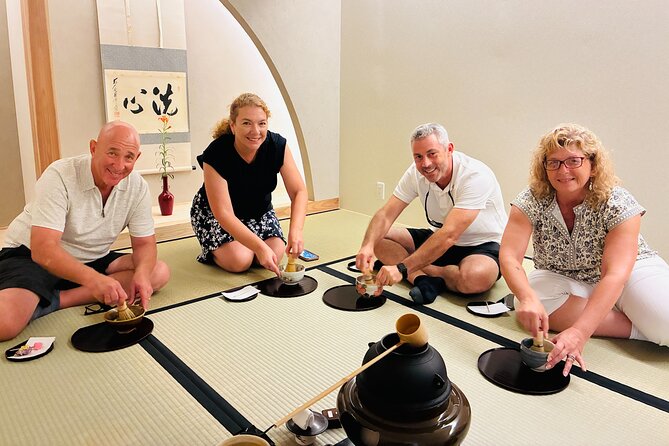
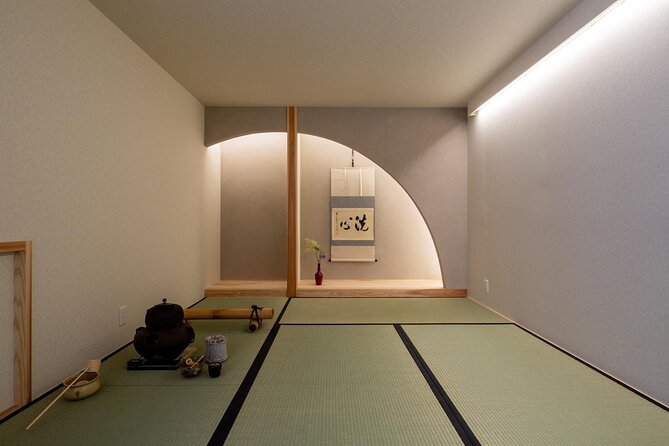
Kyoto is famous for tea, but this one is unusually practical. You’ll learn matcha step-by-step in a small room at Sanjo Chasuian, then whisk your own bowl. It’s also set up like a little time capsule, with a Nijiriguchi entrance that helps you switch off the street noise.
I love that you get both the host’s perfect, paced demonstration and then your turn to make matcha. I also like the inclusion of seasonal Kyoto sweets, not as an afterthought, but as part of the full tea-room rhythm.
One thing to plan for: the door locks once the session starts, and entry is only allowed about 5 minutes before. Also, you will spend time seated on the floor style, so bring socks and come ready to get comfortable.
In This Review
- Key highlights you will notice right away
- A calm one-hour matcha lesson at Sanjo Chasuian
- Entering through Nijiriguchi: the mood shift matters
- Two bowls of matcha, and what you actually learn
- The sweet break: seasonal Japanese confectionary in Kyoto style
- Small group size, English flow, and how questions fit
- Seating, socks, and the one timing rule that matters
- Price and value: why this feels fair for Kyoto
- Getting to the meeting point without stress
- If you have time, a sake add-on might happen
- Who should book this Kyoto tea ceremony class, and who might skip it
- Should you book Sanjo Chasuian’s tea ceremony?
- FAQ
- How long is the Kyoto tea ceremony at Sanjo Chasuian?
- How many people are in each group?
- What is included in the price?
- Do I get to make matcha myself?
- Is there a Nijiriguchi in the tea room?
- Do I need socks?
- Are chairs available?
- What happens if I’m late?
- Is transportation included?
- Where do I meet for the session?
Key highlights you will notice right away
- A hands-on matcha lesson where you whisk your own bowl
- Two cups of matcha total, one made by the host and one you make
- Nijiriguchi crawl-in entrance that sets the mood fast
- Seasonal Kyoto Japanese confectionary included with the tea
- Small group size with a max of 10, so your questions actually get time
Sit down somewhere quieter. Other tea rooms we booked
- Kyoto: Tea Ceremony in a Traditional Tea House in Kiyomizu
★ 4.9 · 3,519 reviews - Kyoto: Tea Ceremony Ju-An at Jotokuji Temple
★ 4.9 · 3,207 reviews - Kyoto: 45-Minute Tea Ceremony Lesson Experience
★ 4.3 · 2,378 reviews - Kyoto: Table-Style Tea Ceremony at a Kyo-Machiya
★ 4.9 · 1,211 reviews
A calm one-hour matcha lesson at Sanjo Chasuian
This experience is built for people who want the real steps, not just a performance. At Sanjo Chasuian in central Kyoto, you’ll watch a tea master demonstrate the ritual, then learn what each movement is supposed to do for the tea, the moment, and your own attention.
The session runs about 1 hour. That’s short enough to fit between sightseeing plans, but long enough to learn the process and taste the results twice. The overall price, $32.77 per person, may sound simple, but it adds up because you’re getting more than a tea drink. You’re getting utensils, guidance, and your own cup, plus sweets.
Entering through Nijiriguchi: the mood shift matters
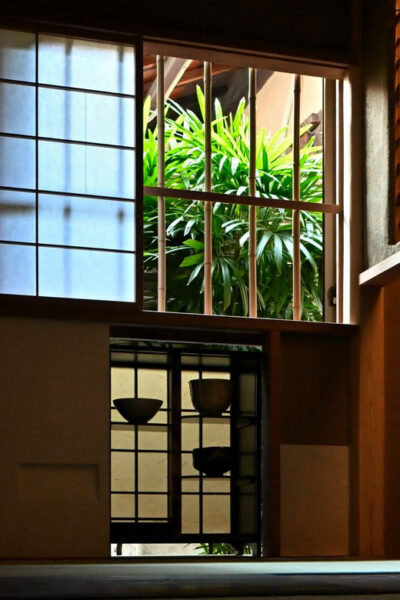
The tea room has a Nijiriguchi, a crawl-in entrance. You’ll use it to leave the outside world behind before you ever start learning the whisking.
This isn’t just for photos. That small physical action helps you slow down, and it changes how you sit, listen, and participate. In a city full of temples and crowds, that kind of boundary is a real gift.
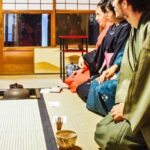
Chairs are available, so you won’t be forced into floor seating the entire time. Still, expect some sitting closer to the floor style, because that’s part of how these ceremonies are traditionally set up.
Two bowls of matcha, and what you actually learn
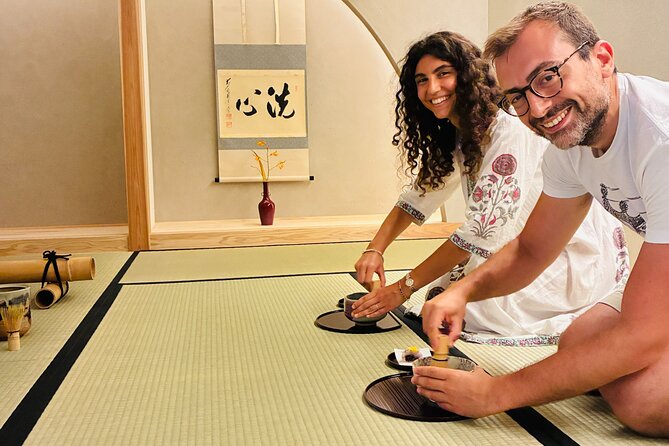
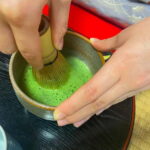
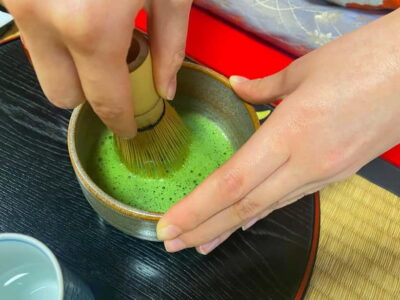
The structure is refreshingly clear. First, you’ll choose a tea bowl and whisk your matcha. Then you’ll get two servings: one prepared by the host, and one prepared by you (either solo or with a companion, depending on how they guide pairing).
Here’s the part that makes this class practical. The host gives step-by-step explanations of the tea making, but also the meaning behind the sequence. That matters because matcha isn’t just about taste. It’s about how you handle the bowl, how you whisk, and how you treat the moment like it has rules.
The host teaching style comes through in the feedback. Many people call out how warm and patient the instruction is, with explanations that connect the history and customs to what you’re doing with the utensils. One review even notes that a host named Yuko explains the history, the why, and the how clearly enough to ask questions comfortably.
Even if it’s your first time trying matcha, you’re not left guessing. You’ll watch the professional technique, then try your hand right away, tasting both versions so you can compare what changes.
- PERFECT KYOTO 1-Day Bus Tour★ 5.0 · 13,518 reviews
- Kyoto: Fushimi Inari, Kinkakuji, Bamboo Grove 1 Day Bus Tour★ 4.8 · 4,316 reviews
- Kyoto: Tea Ceremony in a Traditional Tea House in Kiyomizu★ 4.9 · 3,519 reviews
- Kyoto Geisha Walking Tour: Gion District & Hidden Gems★ 4.7 · 3,273 reviews
- Kyoto: Tea Ceremony Ju-An at Jotokuji Temple★ 4.9 · 3,207 reviews
The sweet break: seasonal Japanese confectionary in Kyoto style
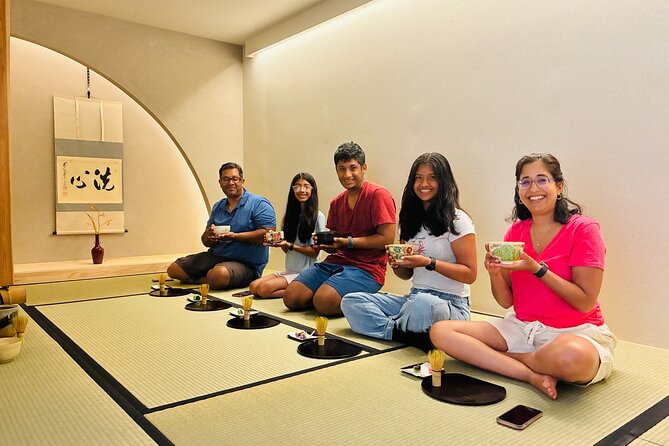
Tea ceremonies in Kyoto often include sweets, and here you get traditional seasonal Japanese confectionary as part of the session. This is a nice pairing because it gives your palate a change of texture and sweetness right inside the tea-room rhythm.
The sweets are also described as beautiful, which makes sense in a place that cares about presentation. You’ll likely have a moment to enjoy how it looks before you eat it, and then the matcha follows as the clean, grounded counterpart.
If you have a sweet tooth, this is a plus. If you don’t, you can still treat it like part of the cultural flow, not just dessert.
Small group size, English flow, and how questions fit
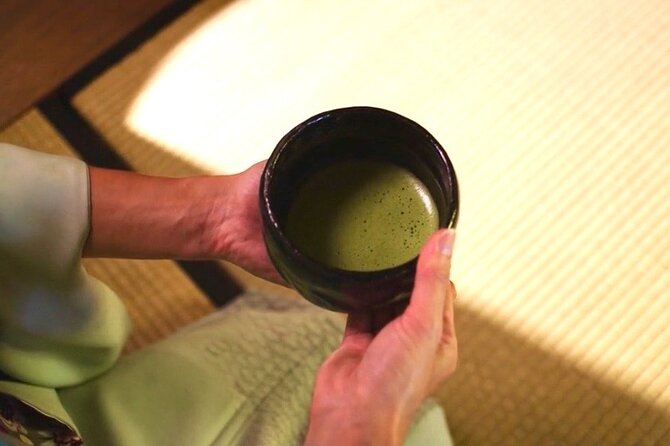
This is a maximum of 10 travelers. That’s a big deal for a hands-on activity. With fewer people, you get room for questions, and the host can correct your whisking without treating it like a factory line.
English instruction is part of the experience, and feedback highlights that the host speaks good English and stays friendly and welcoming. One person mentions a light accent, but that it was still easy to follow. That’s reassuring if your Japanese is limited.
You should still show up ready to participate. This is not a sit-and-watch only ceremony. You’ll be actively choosing tools, whisking, and tasting.
Seating, socks, and the one timing rule that matters
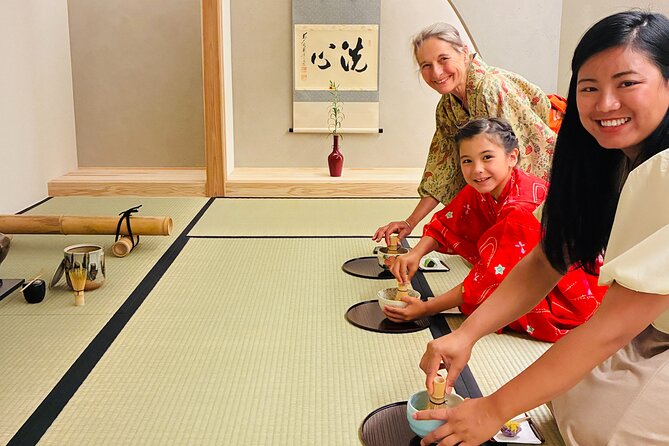
A couple practical rules can make or break your experience here.
First, you’re asked to bring or wear socks. This is common in Japanese spaces where you’ll sit and handle items, and it keeps things clean. If you forget, you may be uncomfortable or unable to join smoothly, so I’d treat it as a checklist item.
Second, timing is strict. Entry is allowed from 5 minutes before the start time, and once the session begins, the door is locked. Even a minute late can mean you miss the class, with no refund. That’s the kind of policy you should respect on purpose, not gamble on.
Finally, chairs are available. You can still plan on a quieter, slower pace, and you may still spend part of the session in floor-friendly posture.
Price and value: why this feels fair for Kyoto
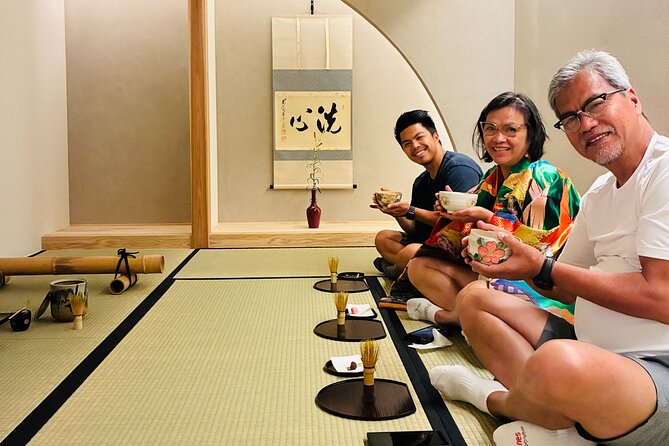
Let’s talk value in plain terms.
You pay $32.77 per person for about an hour. In return you get:
- Two servings of matcha (one by the host, one you whisk)
- Traditional seasonal Japanese confectionary
- Utensils and instruction tied directly to what you’re doing
- A small, intimate group setting rather than a crowd format
Some tea experiences charge for watching, and your part is mostly tasting. Here, your hands are involved. That changes the experience from educational to skill-based, which is why it tends to get such strong satisfaction.
Also, the setting is described as clean and calm, and the room looks new. That matters because tea is all about atmosphere, and the last thing you want is to fight a space that feels chaotic or worn-out.
Getting to the meeting point without stress
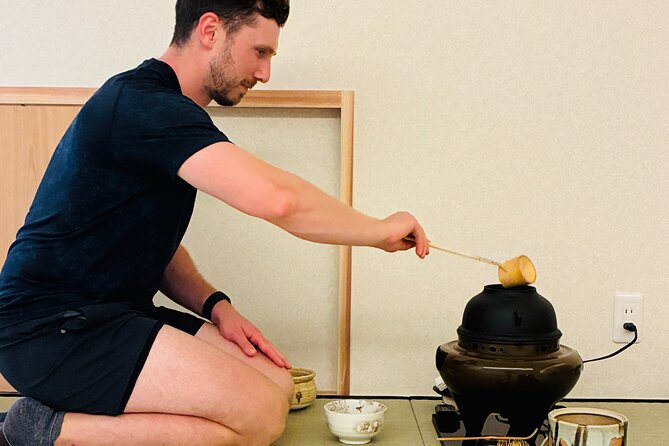
Your meeting point is Tea Ceremony & Sake Tasting Kyoto – Sanjo Chasuian, at 324-2 Sanjōchō, Nakagyo Ward, Kyoto, 604-8205. It’s near public transportation, and that’s helpful if you’re doing Kyoto the usual way, lots of walking between different neighborhoods.
One practical tip that comes up: Google Maps may send you to a smaller side street. Instead, stay on the main street and look for a green matcha ice cream cone in front. That kind of landmark tip is gold in Kyoto, where tiny streets can look the same until you’re actually lost.
Aim to arrive early enough to settle in. Since entry is limited to about 5 minutes before start, getting there 10 to 15 minutes ahead gives you buffer for finding the right door and adjusting to the socks rule.
If you have time, a sake add-on might happen
The name at the meeting point includes sake, and at least one person mentions staying after for an impromptu sake tasting. That isn’t guaranteed as part of this exact class, but it’s a reasonable suggestion for your schedule if you want to extend the evening mood in the same area.
If you do stay, keep it light. You just whisked matcha, which can be surprisingly full-flavored, and you’ll likely want to stay focused and present, not rushed.
Who should book this Kyoto tea ceremony class, and who might skip it
This one is a strong match if you want a hands-on introduction to matcha, with enough structure that you can recreate it later at home. It’s also great if you like calm, quiet settings and you want a break from Kyoto crowds.
I’d skip it if you want a very long deep-dive ceremony that lasts a lot more than an hour. The timing is fixed, and the experience is designed to be efficient and intimate, not sprawling.
It also works well for couples and small groups because you’ll each get a chance to make matcha, and the small size helps the host tailor guidance without turning it into a lecture.
Should you book Sanjo Chasuian’s tea ceremony?
Yes, if you want a Kyoto tea ceremony experience that teaches you the mechanics of matcha. The combination of two matcha servings, step-by-step instruction, included seasonal sweets, and a small group cap at 10 makes this feel like good value, not a pricey souvenir moment.
Book it especially if you care about doing something correctly the first time, because you get the professional demonstration first, then your own turn. And if you’re the type who appreciates small details, like the Nijiriguchi entrance and the quiet tea-room rules, this will likely feel like a real reset in the middle of a sightseeing day.
If you’re the kind of person who hates strict timing, plan your arrival carefully. The locked-door rule is the one part that can turn a great experience into a missed one, so show up early.
FAQ
How long is the Kyoto tea ceremony at Sanjo Chasuian?
It lasts about 1 hour.
How many people are in each group?
The experience has a maximum of 10 travelers.
What is included in the price?
You get two cups of matcha from Kyoto, one made by the host and one you make yourself, plus traditional seasonal Japanese confectionary.
Do I get to make matcha myself?
Yes. You’ll choose a tea bowl and whisk matcha, and you’ll receive a second serving made by you (or with a companion, depending on the session).
Is there a Nijiriguchi in the tea room?
Yes. The tea room has a Nijiriguchi, a crawl-in entrance.
Do I need socks?
You’re kindly asked to bring or wear socks during the experience.
Are chairs available?
Yes, chairs are available.
What happens if I’m late?
Entry is allowed from 5 minutes before the start time. Once the session begins, the door will be locked, and even 1 minute late means you cannot join.
Is transportation included?
No. Hotel transfers and transfer to the venue are not included.
Where do I meet for the session?
You meet at Tea Ceremony & Sake Tasting Kyoto, Sanjo Chasuian, 324-2 Sanjōchō, Nakagyo Ward, Kyoto, 604-8205, Japan. The activity ends back at the meeting point.
Kyoto by the Bowl
Newest Kyoto write-ups from the Loving Japan desk
Kyoto Tea Ceremonies and Matcha, side by side.
 ★ 4.9Tea Ceremony in a Traditional Tea House in KiyomizuFrom $493,519 reviews
 ★ 4.9Tea Ceremony Ju-An at Jotokuji TempleFrom $293,207 reviews
 ★ 4.345-Minute Tea Ceremony Lesson ExperienceFrom $222,378 reviews
 ★ 5.0World Heritage Kyoto & Nara Uji Authentic Matcha ExperienceFrom $1291,573 reviews
 ★ 4.9Tea Ceremony ExperienceFrom $251,426 reviews
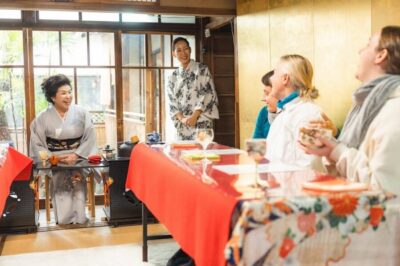 ★ 4.9Table-Style Tea Ceremony at a Kyo-MachiyaFrom $451,211 reviews
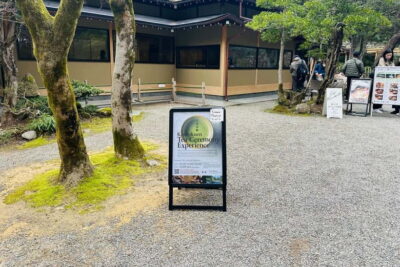 ★ 4.8Kenrokuen Tea Ceremony ExperienceFrom $351,139 reviews
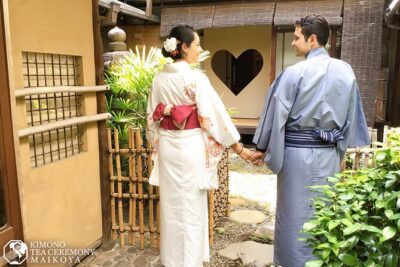 ★ 5.0Kimono Tea Ceremony at Kyoto Maikoya, NISHIKIFrom $65911 reviews
Filed on these lists too