
REVIEW · WALKING TOURS
Kyoto: Private 2.5 Hour Historical Walking Tour
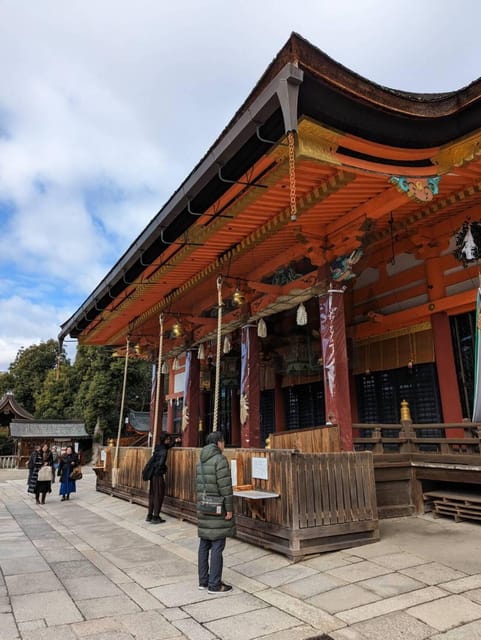
Kyoto feels like a puzzle where the pieces finally click. This private walk links Yasaka Shrine, a Zen temple garden, and Kiyomizu-dera so you understand what you are seeing and why it matters. I like how the guide starts with Kyoto basics and then uses the places themselves as your classroom.
Two standouts for me are the Zen stop at Entoku-in and the view from Kiyomizu-dera’s main hall stage. Entoku-in’s calm setting, dry rock-and-sand garden, and traditional rooms make the history feel quiet and real, not just spoken at you. At Kiyomizu-dera, the statues, the nail-less wooden stage, and the dramatic sightlines make the crowds make sense.
One consideration: admission to temples is not included, and you will also be doing some stairs and walking in the Gion and Higashiyama area. If you have limited mobility, plan your pace carefully and bring grippy shoes.
In This Review
- Key things you will notice on this tour
- Starting at Yasaka Shrine’s red gate, then learning shrine basics
- Maruyama Park to Entoku-in: Nene-no-michi and the Zen quiet
- Koshindo and the Yasaka-no-to pagoda viewpoint that earns your photos
- Kiyomizu-dera: Kannon, the nail-less stage, and the pure-water ritual
- Price and value: is 80 dollars per group worth it?
- Who this tour suits best, and how to prepare so it feels easy
- Should you book this Kyoto historical walking tour?
- FAQ
- Where is the meeting point?
- How do I get there by train?
- How do I get there by bus?
- What is the tour length?
- Is this a private tour?
- Is the guide included, and what language do they speak?
- Are meals and drinks included?
- Are temple admission fees included?
- What should I bring?
Key things you will notice on this tour
- Red-gate meetup at Yasaka Shrine, then shrine etiquette explained before you walk deeper
- Nene-no-michi and the story connection to Nene and Toyotomi Hideyoshi
- Entoku-in’s dry garden plus traditional room interiors and sliding-door artwork
- Yasaka-no-to (five-storied pagoda) seen near Koshindo, with a famous nearby photo spot
- Kiyomizu-dera’s nail-less wooden stage, plus views toward the Koyasu Pagoda
- Pure-water stream details and the playful iron objects in the precincts
Still weighing up options in Kyoto? These are the ones our reviewers rated highest.
- PERFECT KYOTO 1-Day Bus Tour
★ 5.0 · 13,518 reviews - Kyoto: Fushimi Inari, Kinkakuji, Bamboo Grove 1 Day Bus Tour
★ 4.8 · 4,316 reviews - Kyoto: Tea Ceremony in a Traditional Tea House in Kiyomizu
★ 4.9 · 3,519 reviews - Kyoto Geisha Walking Tour: Gion District & Hidden Gems
★ 4.7 · 3,273 reviews
Starting at Yasaka Shrine’s red gate, then learning shrine basics
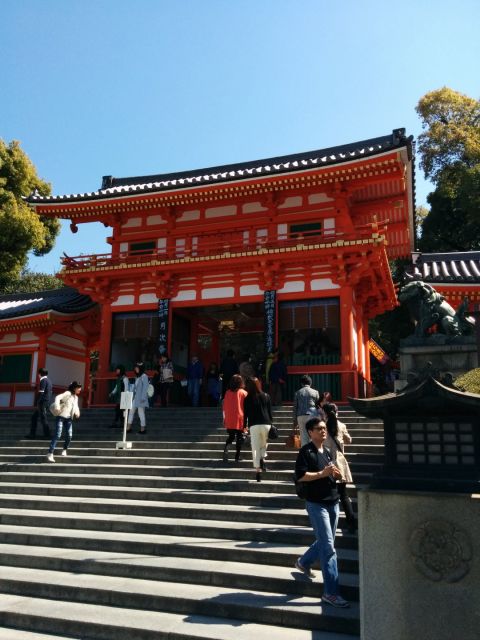
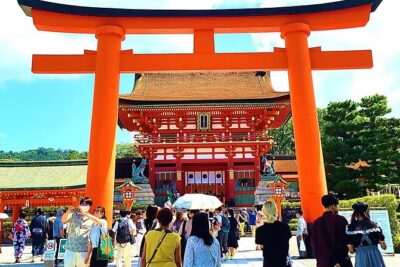
Meet your guide at the west gate (red gate) of Yasaka Shrine. This matters because you get oriented right away, instead of wandering through Gion like a tourist with a map and no compass. The guide typically uses a Kyoto map at the start to set the bigger picture, then begins with what Yasaka Shrine is, how it developed, and how worship works.
You do not just get facts. You get practical context, like what you are supposed to notice when you are standing in front of shrine spaces, and how people perform common acts of worship. It is the kind of grounding that makes the next stops easier to read, even when the area is crowded.
Expect an easy walking pace early on, and a clear handoff from shrine history to the nearby park and streets. Also, you are on a private group setup (up to 5), so you can ask questions as they come up instead of waiting your turn.
Maruyama Park to Entoku-in: Nene-no-michi and the Zen quiet
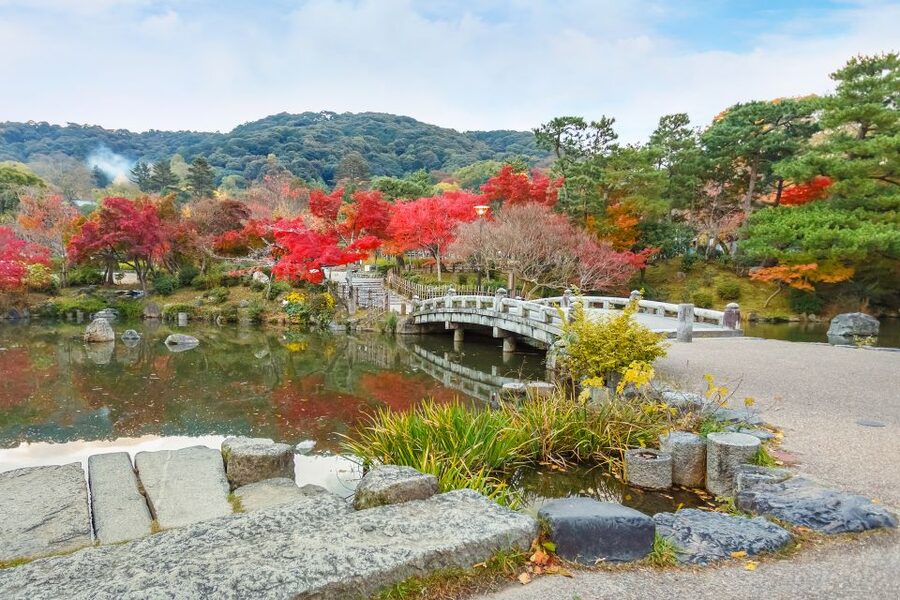
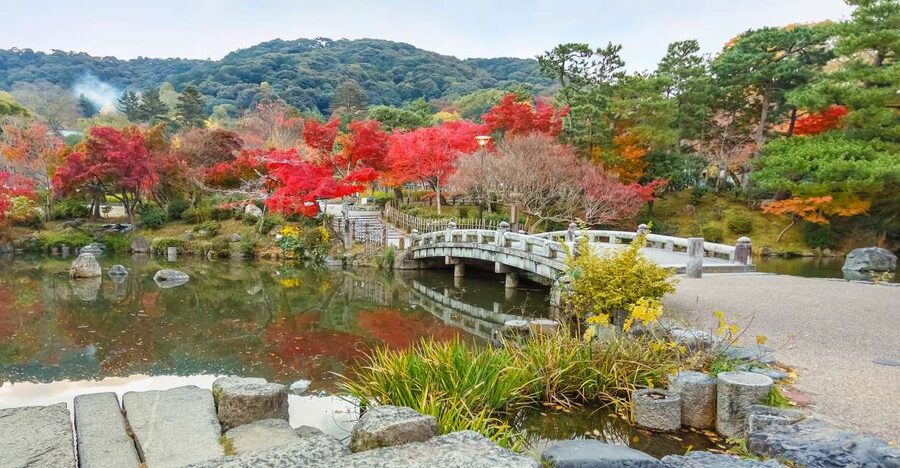
From Yasaka Shrine you head through Maruyama Park, then into the lively street area known as Nene-no-michi. Nene is the wife of Toyotomi Hideyoshi, a major political figure in Japan’s late 1500s era, and this is one of those details that turns a normal street into a story you can follow on foot.
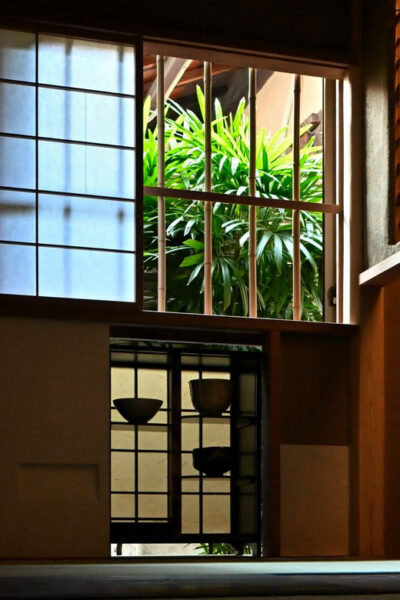
Next comes Entoku-in, a Zen temple connected with Nene. The highlight here is the serene feel: a dry rock-and-sand garden, traditional rooms you can look into, and sliding-door artwork that shows scenes through painted panels. This is a nice contrast after the busy streets, and it is often one of the stops that makes people slow down, breathe, and actually watch the details.
Some guides also bring extra hands-on touches at the Zen visit, such as a calligraphy moment, depending on the day and guide. Either way, what you gain is a way to look at a Zen space without turning it into a checklist.
Practical note: this is still temple ground, so be respectful with your photos and noise level. You do not need to whisper, but you should act like you are entering someone’s calm.
Koshindo and the Yasaka-no-to pagoda viewpoint that earns your photos
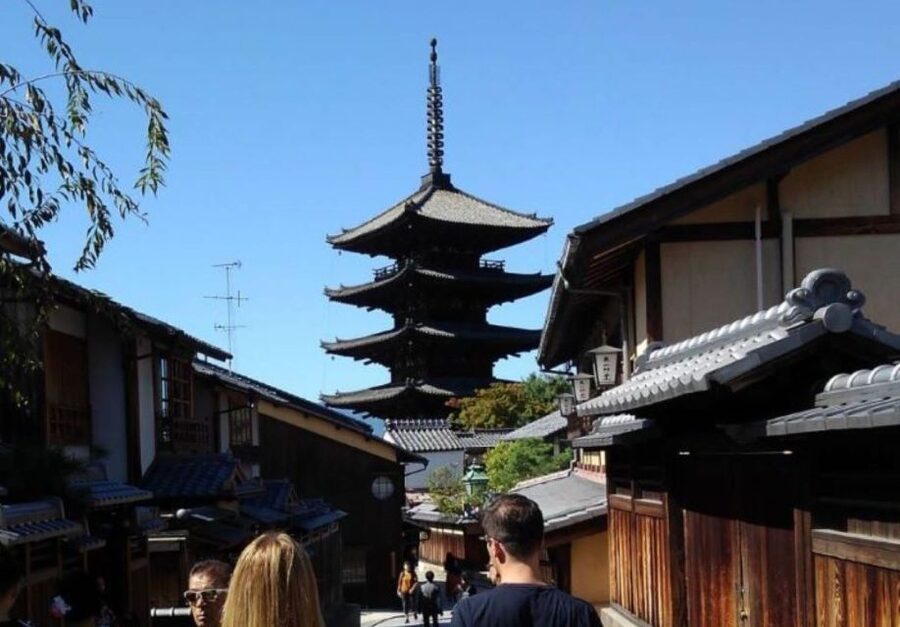
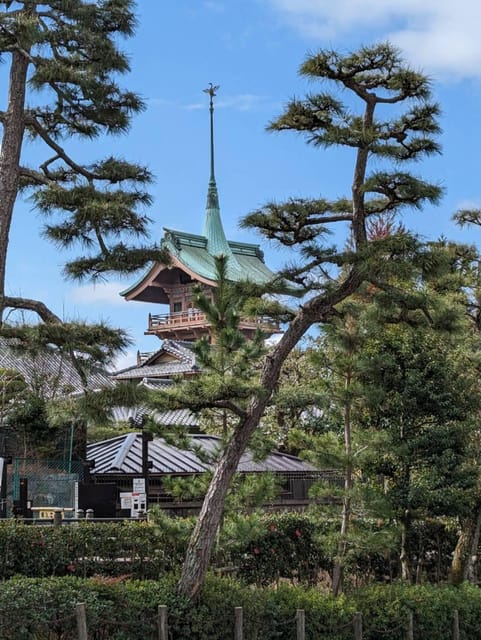
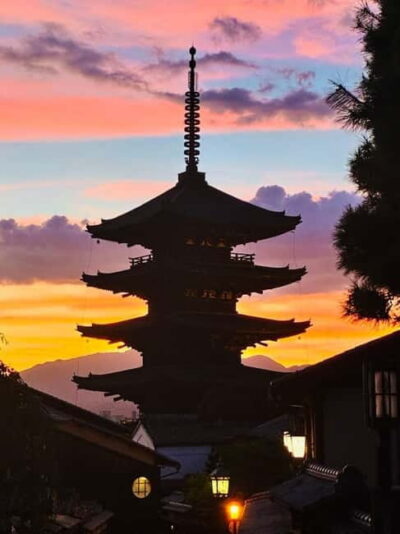
After Entoku-in, the route moves toward Yasaka Kōshin-dō Temple. This is where the tour delivers one of Kyoto’s most photogenic “wow” moments, the five-storied pagoda you will hear called Yasaka-no-to. You see it from outside near Koshindo, so you get the silhouette without the stress of trying to pack your way into every ticketed interior.
There is also a famous photo spot nearby on the street. You will want to use the guide’s timing here, because this is the kind of view where a minute matters. When you stand in the right place, with the pagoda framed properly, the photo looks like you planned it. When you stand slightly off, it just looks like you happened to be in front of a wall of buildings.
This section is short, but it functions like a palate cleanser. You go from Zen quiet to a classic Kyoto skyline icon, and then you are ready for the bigger experience at Kiyomizu-dera.
- PERFECT KYOTO 1-Day Bus Tour★ 5.0 · 13,518 reviews
- Kyoto: Fushimi Inari, Kinkakuji, Bamboo Grove 1 Day Bus Tour★ 4.8 · 4,316 reviews
- Kyoto: Tea Ceremony in a Traditional Tea House in Kiyomizu★ 4.9 · 3,519 reviews
- Kyoto Geisha Walking Tour: Gion District & Hidden Gems★ 4.7 · 3,273 reviews
- Kyoto: Tea Ceremony Ju-An at Jotokuji Temple★ 4.9 · 3,207 reviews
Kiyomizu-dera: Kannon, the nail-less stage, and the pure-water ritual
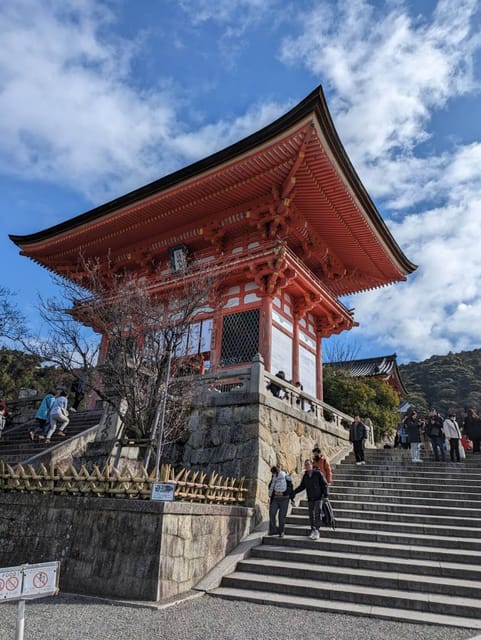
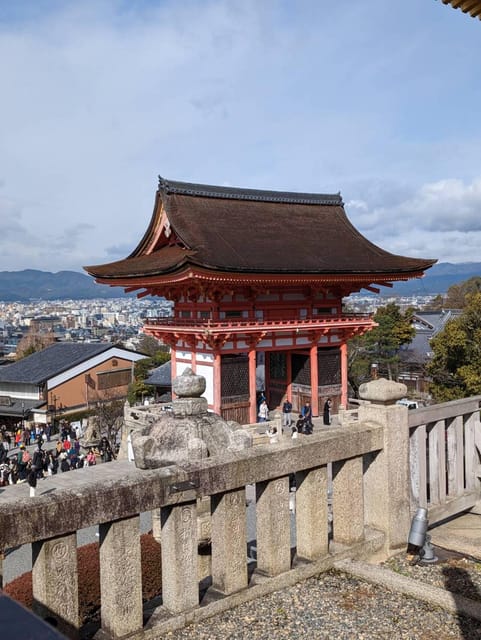
Kiyomizu-dera is the main event, and the tour handles it with the right sequence. You start with the setting and key religious focus, including Kannon Bodhisattva, so when you see the statues, you know what you are looking at and why worshipers come here.
One of the most memorable features is the wooden main hall stage. It is built as a wooden structure without nails, and it gives you a sense of scale that is hard to understand from the ground. From that vantage point, you can look out and also see the three-storied pagoda called Koyasu Pagoda, a view that connects to the prayers for easy birth. The guide explains how people engage with the space for those wishes, including the fact that many women visit to pray for easy birth.
The route also gives you a strong sense of Kiyomizu-dera’s meaning. Kiyomizu literally means pure water, referring to the stream running down from the mountain behind the temple. The tour notes that the stream has never been dried up, which is why people queue to drink the water right on-site.
Then you get a few of those small, practical Kyoto details that make the place feel lived-in. In the precincts you will see iron stick and iron clogs presented as donated items to the temple. The iron stick is very heavy, and you can try lifting it if you are curious, though do it at your own pace and do not block others.
As the tour wraps up, your guide also shares what to know about Jishu Shrine, famous for match making. Even if you do not stop there long, the explanation helps you recognize why people keep returning to this area.
Price and value: is 80 dollars per group worth it?
The price is $80 per group for up to 5 people, with about 2 hours on the clock (the experience is often positioned as a 2.5 hour walking tour, so build in a small buffer). Since it is private, your cost per person drops fast if you are traveling with family or friends.
What makes the value feel real is not the number on the ticket. It is the way the guide turns three major temple areas into one connected story, with clear explanations of shrine worship, Zen temple space, and Buddhist context at Kiyomizu-dera. If you plan to do Kiyomizu-dera anyway, this tour is essentially paying to understand it without guessing.
What you should budget for separately: admission fees to the temples are not included, and transportation to and from the meeting point is on you. Also, food and drinks are not included, so if you are doing this early in your day, plan to grab something afterward.
Who this tour suits best, and how to prepare so it feels easy
This is best for you if you want Kyoto with context. I especially like it for first-timers in the Higashiyama and Gion orbit, because you get the religious and cultural “decoder ring” early. It is also a strong pick if you are tired of just collecting photos and want to understand what people are doing when they bow, pray, and pause.
You might consider another style of tour if you hate stairs or do not like walking neighborhoods. The route starts with a gate meetup, then includes temple grounds and the Kiyomizu-dera area, where you will be on your feet for most of the experience.
Preparation is simple: bring comfortable shoes with grip. The route includes stone steps, and you will move between different areas with different crowd levels. If you are the type who likes asking questions, you will get extra value, because the private group format means you can steer the conversation.
One more thing: English guides for this experience often come with personal tools like hand-drawn maps and illustrated notes. Names you may see mentioned include Hisako, Hiroshita, Hiroko, Takayuki Ishii, Hidakosan, and Masumi-san, and multiple guests praise guides for using their own drawings and clear pacing.
Should you book this Kyoto historical walking tour?
I think you should book it if your goal is to make Kyoto click. You will walk from Yasaka Shrine to Kiyomizu-dera with real context, not just locations, and you will get a Zen garden and a five-storied pagoda view in the middle so the day feels varied.
Skip it only if you want maximum time inside specific buildings, or if you already feel confident about shrine versus temple basics and just want unstructured wandering. If you like a guided thread that holds the day together, this private 2 hour walk is a very solid value at $80 per group.
FAQ
Where is the meeting point?
Meet at the west gate (red gate) of Yasaka Shrine.
How do I get there by train?
If using the Keihan Line, get off at Gion Shijo Station. If using the Hankyu Line, get off at Kawaramachi Station and walk toward the east along Shijo Street, with stone steps up at the end.
How do I get there by bus?
Get off at the bus stop named Gion, then look for stone steps near the red gate.
What is the tour length?
The experience is listed as 2 hours.
Is this a private tour?
Yes, it is a private group tour.
Is the guide included, and what language do they speak?
A live English guide is included.
Are meals and drinks included?
No, meals and drinks are not included.
Are temple admission fees included?
No, admission fees to the temples are not included.
What should I bring?
Bring comfortable shoes for walking and stairs.
Newest Kyoto write-ups from the Loving Japan desk

Walking Tours, side by side.
 ★ 4.7Kyoto Geisha Walking Tour: Gion District & Hidden GemsFrom $253,273 reviews
 ★ 5.0Tokyo Tsukiji Fish Market Food and Culture Walking TourFrom $993,184 reviews
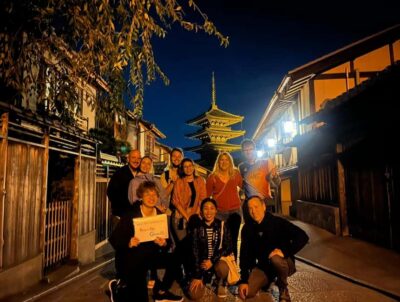 ★ 4.9Gion Magical Night Walking Tour with Geisha TriviaFrom $242,393 reviews
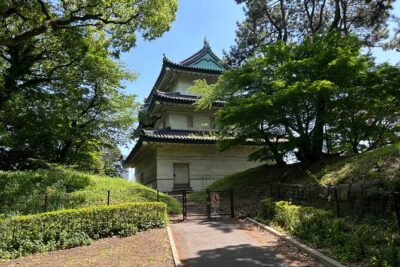 ★ 5.0Imperial Palace and Shogun Historical Walking TourFrom $222,251 reviews
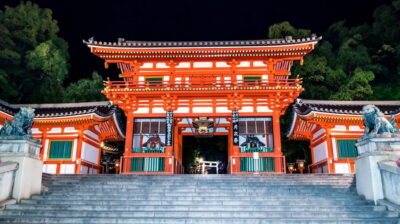 ★ 4.7Gion Geisha District Walking Tour – Stories of GeishaFrom $202,187 reviews
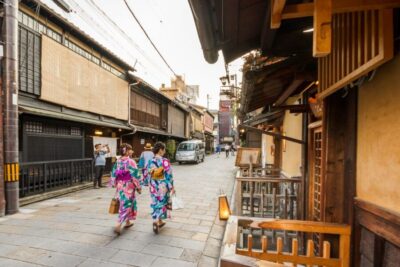 ★ 4.5Night Walk in Gion: Kyoto’s Geisha DistrictFrom $212,003 reviews
 ★ 4.9Shinjuku Local Bar and Izakaya Guided Walking TourFrom $341,794 reviews
 ★ 5.0Tsukiji Fish Market Food and Walking tourFrom $301,724 reviews
Filed on these lists too